Category Archives: Russia

Russian bombing triggers civilian exodus from Aleppo

BBC News reports: Tens of thousands of Syrian refugees are moving to Turkey’s border to flee heavy fighting near the city of Aleppo, officials and activists have said.

Turkish Prime Minister Ahmet Davutoglu said up to 70,000 might be heading to the border, while a monitoring group put the number at about 40,000.

Intense Russian air strikes have helped Syria’s government troops make advances near the country’s largest city.

Meanwhile, Russia accused Turkey of preparing an invasion into Syria.

Also on Thursday, a Saudi military spokesman said the country was ready to send ground troops to Syria to fight the so-called Islamic State group. [Continue reading…]

The Independent reports: Forces loyal to Bashar al-Assad claimed to have severed the last rebel supply line to Aleppo last night in what would be a devastating blow to the Syrian opposition.

The attack, backed by Russian warplanes, was condemned by France for “torpedoing” tentative peace talks in Geneva, while the US said it was “difficult” to see how the air strikes, which the State Department said were mostly on civilian targets, would help resolve the conflict.

Pro-government media said that forces from the Syrian army and the Lebanese militia Hezbollah had reached two Shia towns north of the city that had been besieged by rebel insurgents. They claimed to have captured part of the only road that runs from Turkey to the rebel-held half of Aleppo, cutting its only supply route.

With pro-government forces close to surrounding Syria’s second city, the United Nations under-secretary general for humanitarian affairs, Stephen O’Brien, spoke yesterday of grave consequences for its beleaguered population if Aleppo was besieged by regime forces.

“What is happening in Syria is bad enough without something like that happening in Aleppo. But if the situation there gets worse we will have a large population at risk and we would need to get immediate access for road convoys to provide the necessary humanitarian assistance” he told The Independent. Aid groups also warned that a huge humanitarian crisis was looming, while people in the area were stockpiling food and supplies in anticipation of a siege. [Continue reading…]

The Guardian reports: The Russian defence ministry said on Thursday it had hit almost 900 targets in Syria in the previous three days. While Moscow’s intervention has the declared aim of battling the Islamic State terror group, military observers claim at least 70% of airstrikes have targeted opposition groups fighting to oust Assad. [Continue reading…]


Facebooktwittermail

The worst is yet to come for Syria’s largest city, Aleppo

BuzzFeed reports: With the government of Syrian President Bashar al-Assad moving closer to encircling the rebel-held parts of the city — the most important patch of territory the opposition holds — rebels and analysts expect it to turn to the brutal tactics it has employed throughout the war. As in the past, the primary victims will be civilians.

Sending troops into rebel-held Aleppo would be a costly move for the Syrian military and its allies, said Firas Abi Ali, the head of Middle East and North Africa forecasting at IHS Country Risk in London. Instead, they are likely to attempt to starve out the rebels and civilians inside while using artillery and airstrikes to bring them to their knees. “They’re not going to dedicate the amount of resources required to capture a city of that magnitude. They’re going to go with starvation and bombardment tactics,” he said. “This is the standard military tactic developed by Assad.”

The government has spent years pounding Aleppo with airstrikes, raining chaos down on civilians. It also has notoriously employed a siege strategy in places like Madaya, near Damascus, and the central city of Homs, where starving rebels and civilians eventually agreed to surrender. Yet the potential for civilian suffering in Aleppo is far larger now. “There are still several hundred thousand people in the city and the province. The scale of the suffering here can be much greater,” Abi Ali said. “Assad can do much more damage, and he is willing to inflict enormous pain.”

Rami Jarrah, a Syrian journalist and activist who has worked extensively in Aleppo, said the government plan seemed to be “to promote as much desertion of the city as possible now in build up to performing a total siege of Aleppo. Sieges have proven to be successful in terms of draining the opposition into submission.” [Continue reading…]

Facebooktwittermail

The military and political significance of Aleppo

Faysal Itani and Hossam Abouzahr write: Retaking Aleppo city would be a substantial win for the regime. Militarily, it would cut off opposition forces south of the city. It would also allow the regime to further isolate opposition forces in nearby Idlib and Hama. Rebel forces in northwestern Syria receive supplies from Turkey through two border crossings: Bab al-Salama in Aleppo province and Bab al-Hawa in Idlib province. If the regime takes Aleppo city, it could then target supply lines between Idlib- and Hama-based insurgents and Turkey. The regime may opt not to take Aleppo now, however, preferring to bomb and besiege it instead. That would simply freeze the Aleppo city frontlines and allow Assad and his allies to deploy fighters and resources elsewhere, including in Idlib and Hama. Regardless, the regime’s strategy will be isolating the opposition into manageable pockets and dealing with each individually.

Crucially, progress in Aleppo will free up resources against the Islamic State (ISIS). It is true that Assad and his allies have always prioritized fighting the insurgency over ISIS. The changing international environment, however, allows for a more sophisticated regime strategy. Despite frequent accusations, the regime and ISIS are not really allies. The regime simply sees the entire conflict through the prism of ensuring its own survival by any means necessary. Throughout the war, this has meant ignoring ISIS or facilitating its war against the rebels. Now, however, the regime would benefit enormously at the international level by clearing the Aleppo area of insurgents and ISIS alike (or following the Aleppo victory with some anti-ISIS wins elsewhere, such as Palmyra). That would demonstrate to the world that it must choose between Assad and ISIS, and that ISIS and the various insurgent groups are one and the same enemy. Considering the West’s singular focus on ISIS and tolerance of the regime, this would actually be a sound strategy. [Continue reading…]

Facebooktwittermail

The Syrian regime is close to a victory that could turn the war

Vice News reports: Rebels north of Aleppo had already been stretched thin, attempting to balance fronts against the regime, the Islamic State, and the Kurdish People’s Protection Units (YPG) and their allies. The latest push by the regime of Bashar al-Assad – and, in particular, relentless Russian bombing from the air – proved too much to handle.

“The regime is relying primarily on the Russian air force. Its jets are in the air constantly,” said Col. Ahmed Uthman, military commander of local rebel faction Firqat al-Sultan Murad.

Locals described the nonstop aerial bombing and the shelling of the area as “scorched earth” tactics.

“There’s no parity between these Russian jets and rebel forces,” said Firas Pasa, commander of Aleppo brigade Liwa al-Mu’tasem Billah. “We need anti-aircraft weapons as soon as possible.”

In addition to Russian airpower, the regime’s Syrian Arab Army is also backed by various paramilitary forces, including Iraqi Shi’ite units. “We’re no longer facing Bashar’s army, the army of Abu Flip-flops,” said a media official with a rebel brigade in the north who requested anonymity, using a derisive nickname for the regime’s exhausted military. [Continue reading…]

Facebooktwittermail

Diplomats say the U.S. has handed over Syria to the Russians for free

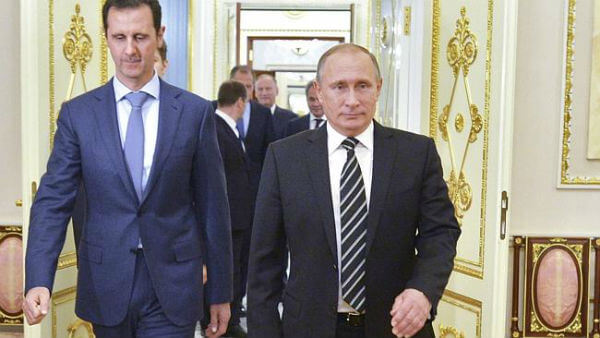
assad-putin

Following the suspension of UN-led peace talks, Lina Sinjab reports: Teams of diplomats representing countries supporting the opposition are pushing behind the scenes in Geneva for concessions from all parties involved in the war.

But almost everyone, whether diplomats or the opposition, says it is the US which is key to success – by using its leverage on Russia.

Russia is the only world power involved in the Syrian conflict with a military base in the country – therefore it could bring exert significant pressure on the regime of Bashar al-Assad to stop the violence.

But there is a limit to what the US is prepared to do.

A senior US Department of State official told me: “We are not ready to go to World War Three to solve this.”

The US, however, is spending billions of dollars in the battle against the self-proclaimed Islamic State (IS), which controls large parts of Syria.

Many Syrians feel the selective involvement of the US is hypocritical.

The US official was adamant that Secretary of State John Kerry wants to end the violence, and is determined to succeed.

But everyone here thinks the opposite. Almost at every corner, you hear the same thought: The US has handed over Syria to the Russians for free. [Continue reading…]

Facebooktwittermail

U.S. and allied support for Syrian opposition is dwindling

The New York Times reports: Four Syrian rebel commanders huddled in a knot, all broad shoulders and shiny gray suits, surveying the hotel lounge. Gigantic portraits of Jim Morrison and Jimi Hendrix gazed down at the carpet, a checkerboard of faux zebra-hide in squares of orange and magenta. On a low sofa, a couple snuggled to the sounds of Amy Winehouse.

The fighters decamped to a smokers’ enclosure behind a plate-glass window, its back wall a trompe-l’oeil image of electric-blue waves that made it seem as though they were submerged in a fish tank. It was an effect that fit their mood. They were in Geneva, notionally at least, for peace talks, but back in Syria, the government and its Russian allies were battering insurgents with scores of airstrikes. With their men under fire, the commanders were asking themselves how much longer they could credibly stay.

“Maybe a day,” one, Maj. Hassan Ibrahim, said on Monday night.

By Wednesday, the talks were indeed suspended, as the intense fighting on the ground proved there was as little to talk about as ever.

In an interview earlier, under the watchful eye of an adviser from Saudi Arabia, Major Ibrahim had dutifully projected strength and determination. But when the Saudi man walked away, the Syrian, who had defected from the government army in 2011, leaned forward and confided that the fighters he led in southern Syria were struggling. Supplies of weapons and salaries from the United States and its allies are dwindling. Moving in and out of Jordan is getting harder.

“They are doing it to put pressure on us to accept a political process,” he said, one in which he doubted that the Syrian government — or Russia, a sponsor of the talks — would make any compromise.

Major Ibrahim was reflecting a growing foreboding among the opposition’s fighters and civilians, mirrored by growing hope on the government side, that Washington, interested only in bombing the Islamic State militant group, is ceding the field to Russia and leaving the opposition on its own. [Continue reading…]

Facebooktwittermail

After four months, Russia’s campaign in Syria is proving successful for Moscow

The Washington Post reports: Four months after launching airstrikes in Syria, the Kremlin is confident that Moscow’s largest overseas campaign since the end of the Soviet Union is paying off.

Under the banner of fighting international terrorism, President Vladimir Putin has reversed the fortunes of forces loyal to Syrian President Bashar al-Assad, which were rapidly losing ground last year to moderate and Islamist rebel forces in the country’s five-year-old crisis. Government forces are now on the offensive, and last week, they scored their most significant victory yet, seizing the strategic town of Sheikh Miskeen from rebels who are backed by a U.S.-led coalition.

According to analysts and officials here, the Russian government believes it has won those dividends at a relatively low cost to the country’s budget, with minimal loss of soldiers’ lives and with largely supportive public opinion.

“The operation is considered here to be quite successful,” said Evgeny Buzhinsky, a retired lieutenant general and senior vice president of the Russian Center for Policy Studies in Moscow. It could probably continue for one year or longer, he said, “but it will depend on the success on the ground.”

Whether the benefits of Russia’s gambit to put soldiers on the ground in Syria will continue long term remains to be seen. President Obama warned last year that Russia was entering a “quagmire” reminiscent of the Soviet invasion of Afghanistan, and it is unclear when Moscow could declare victory and whether it has an exit strategy.

But as Assad’s forces push forward and as diplomatic talks in Geneva broke off in recriminations Wednesday after just two days, there is little pressure right now on the Kremlin to pull back. [Continue reading…]

Facebooktwittermail

If Russia started a war in the Baltics, NATO would lose — quickly

Dan De Luce writes: If Russian tanks and troops rolled into the Baltics tomorrow, outgunned and outnumbered NATO forces would be overrun in under three days. That’s the sobering conclusion of war games carried out by a think tank with American military officers and civilian officials.

“The games’ findings are unambiguous: As currently postured, NATO cannot successfully defend the territory of its most exposed members,” said a report by the RAND Corp., which led the war gaming research.

In numerous tabletop war games played over several months between 2014-2015, Russian forces were knocking on the doors of the Estonian capital of Tallinn or the Latvian capital of Riga within 36 to 60 hours. U.S. and Baltic troops — and American airpower — proved unable to halt the advance of mechanized Russian units and suffered heavy casualties, the report said.

The study argues that NATO has been caught napping by a resurgent and unpredictable Russia, which has begun to boost defense spending after having seized the Crimean peninsula in Ukraine and intervened in support of pro-Moscow separatists in eastern Ukraine. In the event of a potential Russian incursion in the Baltics, the United States and its allies lack sufficient troop numbers, or tanks and armored vehicles, to slow the advance of Russian armor, said the report by RAND’s David Shlapak and Michael Johnson. [Continue reading…]

Facebooktwittermail

Russia carried out practice nuclear strike against Sweden

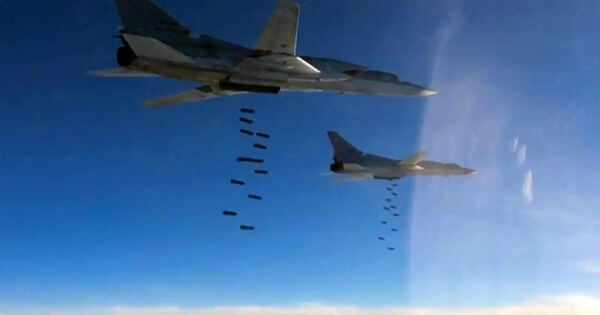
Tupolev-Tu-22M3

The Local reports: When Russian planes carried out a simulated attack against Sweden in 2013, it included nuclear warfare, a Nato report has revealed.

The training mission by the Russian military took place just beyond the eastern edge of the Stockholm archipelago three years ago. It grabbed global headlines because Sweden’s military was slow to react due to staff being on vacation and had to rely on help from Nato.

Several Swedish media outlets had previously speculated that the exercises also included a simulated nuclear attack, but this was never confirmed.

Now, Nato’s Secretary General Jens Stoltenberg has revealed that this was indeed the case – a revelation that appears in the defence alliance’s annual report.

The text, which was released last week but only widely reported in Sweden on Wednesday, also confirmed that four Russian Tupolev Tu-22M3 bombers had participated in the training exercise as well as two Sukhoi Su-27 jets. [Continue reading…]

Facebooktwittermail

The war in Ukraine is back — so why won’t anyone say so?

Pierre Vaux reports: Russia’s dirty war in Ukraine is far from frozen, and despite the deteriorating situation, the West appears keen to turn a blind eye.

While the fighting in southeast Ukraine has rumbled on incessantly throughout the winter, inducing conflict fatigue and a drop in media coverage, the last weeks have seen a marked spike in the number of attacks.

Ukrainian officials are reporting up to 71 attacks a day, with most of the fighting concentrated around the separatist-held cities of Donetsk and Gorlovka, as well as the countryside east of the Azov port city of Mariupol.

Both sides accuse each other of daily using heavy mortars, which were supposed to have been withdrawn in accordance over a year ago in accordance with the first Minsk agreement. [Continue reading…]

Facebooktwittermail

Assad’s military momentum

TSG IntelBrief: On February 2, Syrian government forces, backed by Russian air support, continued a major push to cut rebel supply lines north of Aleppo. On top of recent successes against the rebels elsewhere, it appears that President Assad is determined to maintain military momentum even while peace talks stutter along in Geneva. In fact, given the opposition demand for a ceasefire against civilians—as called for by Security Council resolution 2254 (2015) adopted in mid-December—Assad’s actions appear calculated to bring the peace talks to a halt.

This is understandable for Assad, but unfortunate for Syria. Opposition groups have come a long way towards agreeing to a common position since the last attempt to hold talks in early 2014, and their representatives are far more likely to be able to implement an agreement now. The previous talks suffered from a disconnect between the political opposition around the table and the fighters on the ground, as well as from disagreements surrounding objectives. Efforts by Qatar, Turkey and Saudi Arabia—aided by the United States—have brought the majority of rebel groups together as the High Negotiations Committee (HNC). And although the alliance is fragile—and the extent to which it also represents Ahrar al-Sham, a key element of the opposition, remains unclear—the HNC has more credibility than any opposition alliance that has emerged previously.

The so-called Islamic State and al-Qaeda affiliate Jabhat al-Nusra (JaN) are expressly excluded from the HNC, as they are from the peace talks. Ahrar al-Sham, though a deeply conservative Islamist group that was originally seen as a sister organization to JaN, has steadily distanced itself from the global aspirations of al-Qaeda towards a strictly nationalist platform with no stated ambition beyond Syria. This has created divisions among its supporters and led to the assassinations of its leaders, but the group has nonetheless survived as a major force. JaN has tried repeatedly to merge with Ahrar al-Sham before it drifts too far away, but recent talks collapsed when JaN agreed to change its name, but not to abandon its affiliation to al-Qaeda. Tensions between the two groups have risen as a result and have led to armed clashes. JaN now faces an impending split as pressure builds to relax its hard line. [Continue reading…]

Facebooktwittermail

Britain says Russia trying to carve out mini-state for Assad in Syria

Reuters reports: Britain said on Tuesday Russia could be trying to carve out an Alawite mini-state in Syria for its ally President Bashar al-Assad by bombing his opponents instead of fighting Islamic State militants.

Russia and Britain have been trading barbs after British Foreign Secretary Philip Hammond told Reuters he believed President Vladimir Putin was worsening the Syrian civil war by bombing opponents of Islamic State.

Hammond dismissed Russian criticism that he was spreading “dangerous disinformation”, saying there was a limit to how long Russia could pose as a promoter of the peace process while bombing Assad’s opponents, who the West hopes can shape Syria once the president is gone.

“Is Russia really committed to a peace process or is it using the peace process as a fig leaf to try to deliver some kind of military victory for Assad that creates an Alawite mini state in the northwest of Syria?” Hammond told reporters in Rome.

The comments indicate growing frustration in Western capitals about Putin’s intervention, alongside Iran, in Syria but also give a frank insight into the Western assessment of the Kremlin’s potential objectives for Syria. [Continue reading…]

Facebooktwittermail

Russia’s manipulation of Germany’s refugee problems

Judy Dempsey writes: Russia’s propaganda machine—which went full blast against members of the Ukrainian government during the Ukraine crisis, labeling them fascists and anti-Semites—is in full swing again. This time, the target is Germany, once considered Russia’s closest ally in Europe.

Ever since Chancellor Angela Merkel declared her intention to allow refugees from Syria to enter Germany, the Russian media have been reporting every twist and turn of the opposition that is building up in her conservative bloc and among sections of the German public to her open-door refugee policy.

But in recent days, the Russian state media, joined by none other than Sergey Lavrov, the Russian foreign minister, have taken a different turn. They are tapping into Germany’s community of 1.2 million ethnic Russians to criticize Merkel’s policies and boost those who are unequivocally against Germany taking in refugees. The community is known for its conservative if not xenophobic views, as witnessed during demonstrations by Germany’s anti-Islam Pegida movement, in which ethnic Russians participate.

Now, Russia may be using Germany’s Russian-speaking community to create further opposition to Merkel, similar to the way it tries to instrumentalize the ethnic Russian communities in the Baltic states. Merkel is an easy target, certainly for many Russians living in Germany and for Russians back home. To the surprise and annoyance of the Kremlin, Merkel has managed to keep the EU united over maintaining sanctions on Russia after it annexed Crimea in March 2014 and subsequently invaded eastern Ukraine. [Continue reading…]

Facebooktwittermail

Russia beefs up air group in Syria with advanced fighters

The Associated Press reports: The Russian military has beefed up its air group in Syria with state-of-the art fighter jets amid tensions with Turkey.

Russian Defense Ministry spokesman Igor Konashenkov said Monday that Su-35 fighters have been deployed to Hemeimeem air base in Syria. Konashenkov on Monday didn’t say how many Su-35s had been sent to Syria, but Russian media reports said there were four of them and state television showed them parked in Hemeimeem.

Russian warplanes so far have flown about 6,000 missions since Moscow launched its air campaign four months ago. [Continue reading…]

Facebooktwittermail

Putin’s dragon in Chechnya

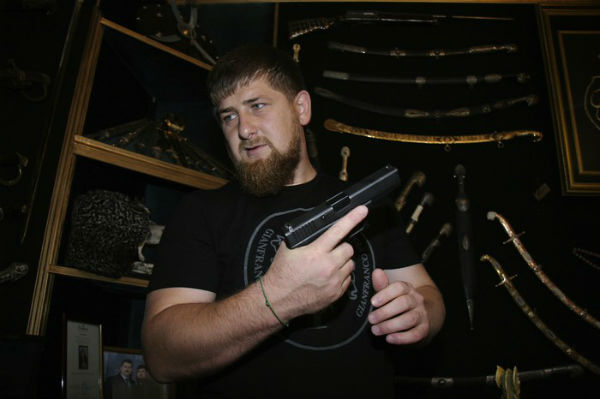
Ramzan-Kadyrov

Joshua Yaffa writes: Since 2001, to keep the peace, the Russian government has flooded Chechnya with cash, including at least fourteen billion dollars for postwar reconstruction. Today, more than eighty-five per cent of Chechnya’s budget comes from Moscow. Another untold sum comes from an opaque fund named after Kadyrov’s father, which is financed by business owners and public employees — who are informally required to pay a portion of their income to the fund — and by Chechen oligarchs paying tribute to [Chechnya’s leader — shown above — Ramzan] Kadyrov. The fund, in turn, disburses money for everything from repairing local hospitals to sending Chechens to Mecca for the hajj. Chechen officials have said that donations to the foundation are voluntary, but a staff member at a public institution in Grozny told me that as soon as the workers’ salaries are deposited they get a call from a superior, asking for around thirty to fifty thousand rubles, or four to six hundred dollars. “One time, he explained it was for organizing a big soccer match,” the person said. “Other times, he doesn’t give any explanation at all.” The fund, an indulgence granted to no other Russian governor, frees Kadyrov from complete financial dependence on the Kremlin.

Since succeeding his father, Kadyrov has wrested power not just from the Russian generals and intelligence officers who once oversaw Chechnya but also from internal rivals hailing from other prominent Chechen clans. In this, he resembles Putin, who built what has been called a “vertical of power” across the whole of Russia under his centralized authority. Chechnya is far smaller and more homogenous, so Kadyrov’s power is even more pronounced. Putin has eliminated opponents largely through political trickery and co-optation, reserving outright force for rare occasions. Kadyrov prefers blunter, unmistakably violent means.

For many years, Kadyrov’s chief rivals were the Yamadayev brothers, who had powerful patrons in Moscow. In 2008, Ruslan Yamadayev, a member of the Russian parliament, was shot and killed in his car, outside the Russian White House, the chief office of government administration in Moscow; in 2009, his younger brother Sulim was killed in the parking garage of a luxury apartment tower in Dubai, where he was living under an assumed name. A Dubai court tried and convicted two men, including an Iranian who worked as a stable hand for Kadyrov—Kadyrov keeps racehorses in Dubai — for carrying out the assassination. Dubai police testified in court that Adam Delimkhanov — Kadyrov’s closest ally, enforcer, and heir apparent — provided the killers with the murder weapon, a gold-plated 9-mm. pistol, and they put him on the Interpol wanted list. Delimkhanov denied involvement. He is a deputy in the Russian parliament, and maintains an unblemished legal record in Russia—though he once got into a fistfight with another deputy inside the parliament building in Moscow and a gold-plated handgun fell to the floor beside him. A third Yamadayev brother, Isa, published an open letter in a Moscow newspaper in 2009, claiming that Kadyrov had tried to kill him, but he reached an apparent truce with Kadyrov the next year. The end of the Yamadayev brothers as a political force left Kadyrov with nearly unchecked power. “These were strong guys with connections to the F.S.B.,” the successor agency to the K.G.B., Alexey Malashenko, an expert on the Caucasus at the Carnegie Moscow Center, told me. “But it turns out that even the F.S.B. couldn’t defend them, because Kadyrov isn’t protected by the F.S.B., or by the state writ large, but by Putin himself.” [Continue reading…]

Facebooktwittermail

Will Turkey risk military confrontation with Russia?

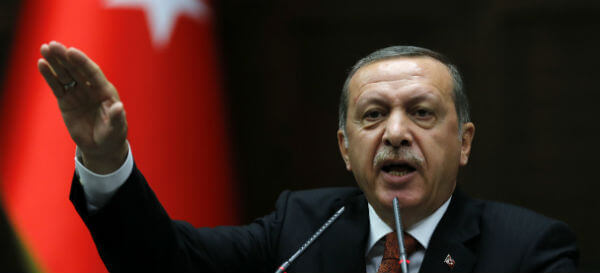
erdogan

Semih Idiz writes: Tensions between Russia and Turkey continue to escalate following the downing in November of a Russian Su-24 fighter jet that strayed into Turkish airspace.

Questions are being raised now whether the two countries are heading for a military confrontation. A leading Turkish military expert told Al-Monitor that such a Russian move could spell disaster for Turkey.

Turkey accused Russia of violating its airspace again last week and summoned Russia’s ambassador in Ankara to lodge a formal protest. President Recep Tayyip Erdogan and Prime Minister Ahmet Davutoglu also warned Moscow that it was playing with fire and would have to face the consequences. [Continue reading…]

Facebooktwittermail

From Iraq, general rebukes Ted Cruz’s plan to ‘carpet-bomb’ ISIS

The Washington Post reports: The top U.S. general in Iraq on Monday addressed recent political rhetoric in the presidential campaign that the United States should “carpet-bomb” the Islamic State, saying that the Pentagon is bound by the laws of armed conflict and does nt indiscriminately bomb civilian areas.

“We’re the United States of America, and we have a set of guiding principles and those affect the way we as professional soldiers, airmen, sailors, Marines, conduct ourselves on the battlefield,” MacFarland said. “So indiscriminate bombing, where we don’t care if we’re killing innocents or combatants, is just inconsistent with our values. And it’s what the Russians have been accused of doing in parts of northwest Syria. Right now we have the moral high ground, and I think that’s where we need to stay.”

The comments came in response to a question from CNN’s Barbara Starr during a Pentagon news conference. The general was asked why the military isn’t engaged in “so-called carpet-bombing,” a phrase that has been used often by presidential candidate Sen. Ted Cruz (R.-Tex.). [Continue reading…]

Facebooktwittermail

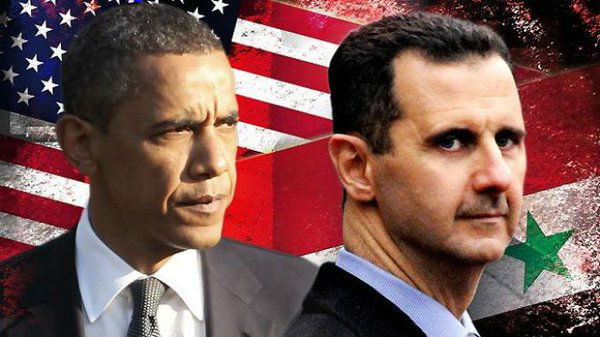
The U.S. botched the Syria talks before they even began

obama-assad

Steven Heydemann writes: When the latest negotiations to end Syria’s long, bloody conflict began on Friday, Jan. 29 — the first round of U.N.-sponsored talks in two years — one party was conspicuous by its absence. As diplomats and representatives of the Assad regime gathered in Geneva, the High Negotiations Committee (HNC), the main opposition umbrella group, refused to attend unless airstrikes and city sieges stopped — conditions that were not met. Over the weekend, the HNC traveled to Geneva, but the status of the talks remained uncertain. Even as this standoff all but derailed the meeting, however, the Obama administration has been steadfast in its determination that the Geneva talks proceed. Expressing cautious optimism in the months leading up to the meeting, U.S. Secretary of State John Kerry described the talks as the best chance to “chart a course out of hell.”

Success in Geneva is unlikely, however — but not because of opposition intransigence. Rather, the Obama administration itself has increased the odds of failure. Its recent tilt toward Russia’s position on the fate of Syrian President Bashar al-Assad — accepting that he might have a role in a future political transition — has undermined prospects for success, damaged U.S. credibility with the opposition, and further eroded America’s leverage in the Middle East. This shift in U.S. policy has almost certainly made a negotiated settlement in Geneva less likely. Even worse, it could well spur the continued escalation of the Syrian conflict.

It is not too late for the administration to change course, but the odds that it will do so are slim. President Barack Obama has verged on the self-righteous in defending his approach to the brutal war that has battered Syria for nearly five years, destabilized the Middle East, and driven waves of refugees into Europe. He has made clear that he remains determined to take only those measures necessary to “contain” the conflict, but nothing more. Even though the evidence that no aspect of the Syrian conflict has been contained is overwhelming, Obama has continually brushed aside criticism that he has not been sufficiently assertive, characterizing the options he’s been offered as “mumbo jumbo.” Senior White House officials have complained that proposals to expand U.S. involvement recommend a course of action but do not take into account what happens next.

If we take the U.S. president’s claims about the rigor of his policy process seriously, what are we to make of the pivot, led by Kerry, to align with Russia in rejecting regime change — a goal the administration once embraced? Or of the administration’s flip-flop in accepting the possibility that Assad, who is complicit in war crimes and crimes against humanity, and is currently starving besieged civilians in Madaya, might remain in power in Syria indefinitely? These concessions to Russia violate a core Obama principle: “Don’t do stupid shit.” Moreover, they reflect the administration’s own failure to think through what happens next, or how shifts in policy would help the United States to achieve its objectives. [Continue reading…]

Facebooktwittermail