Category Archives: Syria

Putin, Assad, and the nexus of torture and terror

Assad

Last October, Patrick Cockburn welcomed the arrival of Russian forces in Syria, suggesting that the “intervention of Russia could be positive in de-escalating the war”. He wrote:

Overall, it is better to have Russia fully involved in Syria than on the sidelines so it has the opportunity to help regain control over a situation that long ago spun out of control. It can keep Assad in power in Damascus, but the power to do so means that it can also modify his behaviour and force movement towards reducing violence, local ceasefires and sharing power regionally.

Posturing as a neutral observer, Cockburn no doubt preferred the language of “de-escalation” rather than military solutions, yet having noted that “Russia is at least a heavy hitter, capable of shaping events by its own actions,” he could hardly have been surprised by the massive onslaught on Aleppo over the last few days.

After Obama’s hollow demands for Assad’s departure, Washington has now moved towards what almost amounts to a quiet alliance with the regime by shutting down what was left of a meager weapons supply to rebel groups.

As Emile Hokayem writes:

Just as Russia escalates politically and militarily, the Obama administration is cynically de-escalating, and asking its allies to do so as well. This is weakening rebel groups that rely on supply networks that the U.S. oversees: In the south, the United States has demanded a decrease in weapons deliveries to the Southern Front, while in the north, the Turkey-based operations room is reportedly dormant.

The result is a widespread and understandable feeling of betrayal in the rebellion, whose U.S.-friendly elements are increasingly losing face within opposition circles. This could have the ironic effect of fragmenting the rebellion — after years of Western governments bemoaning the divisions between these very same groups.

Assad is far from being able to declare he has won the war, but he is close to winning the argument about how it gets framed.

He always claimed that he was fighting terrorism — deploying the rhetorical gift which neoconservatism freely bestowed on authoritarian rulers around the globe after 9/11 — and before long, it looks like this is how the war in Syria will neatly be defined: the regime vs ISIS and al Qaeda. And that’s a fight Assad has no interest in winning.

Nevertheless, it’s worth being reminded why the continuation of Assad’s rule should not be mistaken as a harbinger of peace. If a year or two from now, violence no longer rains down from the sky in the form of barrel bombs and Russian airstrikes, it will most likely continue without restraint in the domain where this regime has always exercised its ruthless power: by imprisoning, torturing, and murdering its opponents.

In “Out of Sight, Out of Mind: Deaths in Detention in the Syrian Arab Republic,” a newly released report for the UN Human Rights Council, we learn:

Interrogators and guards employed gruesome methods of torture to kill detainees. In 2014, a detainee held in a centre under the control of the 4th Division of the Syrian army had his genitals mutilated during torture. Bleeding severely and left without treatment, he died three days later. A detainee of a Military Security branch in Homs witnessed an elderly man being severely beaten, and then hung by his wrists from the ceiling. The guards burned his eyes with a cigarette, and pierced his body with a heated, sharp metal object. After hanging in the same position for three hours, the man died.

Other detainees died as a result of injuries and wounds sustained during torture. Victims received little or no medical care to treat the wounds and developed severe infections that eventually led to their demise. In the Air Force Intelligence Branch in Aleppo, a detainee suffered severely from an infected wound in his leg sustained during torture. Unable to stand up, he was eventually placed in the corridor outside the cell, receiving no medical care. After a few days, fellow detainees observed that he was dead. His family was later able to obtain the body through unofficial channels. Due to marks of torture and the severe emaciation of his corpse, his family could first only recognise him by an identifying tag. A 15-year-old boy detained in 2013 by the 4th Division in a detention facility near Yafour (Rif Damascus) reported seeing several male detainees dying due to torture and inhuman prison conditions and denial of medical assistance.

A large number of deaths were caused by the squalid conditions in which detainees were kept. Prison conditions were similar across detention facilities. They included severely overcrowded cells where prisoners were often forced to stand and sleep in shifts, stripped to their underwear. Lack of clean drinking water, sanitation, lice infestations and other unhygienic conditions caused the spread of disease and infections. Many prisoners were forced to use their toilet as a source of drinking water.

Anyone who believes this is “the lesser of two evils” or the kind of toughness required for “stability,” is delusional.

On the contrary, this type of institutionalized violence has long had an instrumental role in fostering terrorism.


Facebooktwittermail

Syria: Putin policy has become Obama policy because the U.S. has offered no serious alternative

Roger Cohen writes: the Obama administration still pays lip service to the notion that Assad is part of the problem and not the solution, and that if the Syrian leader may survive through some political transition period he cannot remain beyond that. But these are words. It is President Vladimir Putin and Russia who are “making the weather” in Syria absent any corresponding commitment or articulable policy from President Obama.

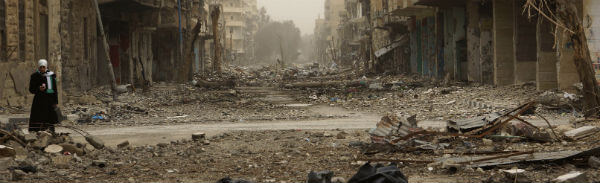
Aleppo, Syria’s largest city, is now virtually encircled by the Syrian Army. A war that has already produced a quarter of a million dead, more than 4.5 million refugees, some 6.5 million internally displaced, and the destabilization of Europe through a massive influx of terrorized people, is about to see further abominations as Aleppo agonizes.

Aleppo may prove to be the Sarajevo of Syria. It is already the Munich.

By which I mean that the city’s plight today, its exposure to Putin’s whims and a revived Assad’s pitiless designs, is a result of the fecklessness and purposelessness over almost five years of the Obama administration. The president and his aides have hidden at various times behind the notions that Syria is marginal to core American national interests; that they have thought through the downsides of intervention better than others; that the diverse actors on the ground are incomprehensible or untrustworthy; that there is no domestic or congressional support for taking action to stop the war or shape its outcome; that there is no legal basis for establishing “safe areas” or taking out Assad’s air power; that Afghanistan and Iraq are lessons in the futility of projecting American power in the 21st century; that Syria will prove Russia’s Afghanistan as it faces the ire of the Sunni world; and that the only imperative, whatever the scale of the suffering or the complete evisceration of American credibility, must be avoidance of another war in the Middle East.

Where such feeble evasions masquerading as strategy lead is to United States policy becoming Putin’s policy in Syria, to awkward acquiescence to Moscow’s end game, and to embarrassed shrugs encapsulating the wish that — perhaps, somehow, with a little luck — Putin may crush ISIS. [Continue reading…]

Facebooktwittermail

Kerry ‘blames opposition’ for continued Syria bombing

Middle East Eye reports: US Secretary of State John Kerry told Syrian aid workers, hours after the Geneva peace talks fell apart, that the country should expect another three months of bombing that would “decimate” the opposition.

During a conversation on the sidelines of this week’s Syria donor conference in London, sources say Kerry blamed the Syrian opposition for leaving the talks and paving the way for a joint offensive by the Syrian government and Russia on Aleppo.

“‘He said, ‘Don’t blame me – go and blame your opposition,’” one of the aid workers, who asked to remain anonymous to protect her organisation, told Middle East Eye.

Kerry told reporters on Friday, as tens of thousands fled the Syrian government and Russian bombardment of Aleppo, that both Russia and Iran, another of Syria’s allies, have told him that they are prepared for a ceasefire in Syria.

He said he would know “whether or not these parties are serious” after a meeting of the International Syria Support Group – 17 nations including the US and Russia – scheduled to be held in Munich next week.

But Kerry left the aid workers with the distinct impression that the US is abandoning efforts to support rebel fighters. [Continue reading…]

Facebooktwittermail

Trump to Syrian refugee children: ‘You can’t come here’

The Hill reports: Donald Trump said he’d be able to look into the eyes of Syrian refugee children to tell them they cannot come to schools in America in light of concerns about safely vetting refugees.

“We don’t know where their parents come from, they have no documentation whatsoever,” Trump said Monday during a town hall in New Hampshire.

“I’ve talked to the greatest legal people, spoken to the greatest security people. There’s absolutely no way of saying where these people come from. They may be from Syria, they may be ISIS, they may be ISIS related.”

During the event, a man who said he was from Connecticut told Trump about plans to relocate Syrian families into the community and let their children come to schools. When asked whether he’d be able to “look at these children” to tell them they couldn’t go to school, Trump said: “I can look in their faces and say, ‘You can’t come here.’”

The crowd applauded his answer. [Continue reading…]

Facebooktwittermail

Under the watchful Western eyes, Syria unravels

Syria1

Hisham Melhem writes: Once again tens of thousands of Syrians are being uprooted and forced to flee their ancestral lands around the ancient city of Aleppo by the incessant assaults waged against them by the government that claims to represent them in Damascus. The country roads leading to the Turkish borders are being traversed by haggard people carrying with them remnants of shattered lives, dragging little children shivering in February’s cold, wandering under the last skies of Syria, and wondering if they will ever return.

Syria’s northern skies have been given by the Assad regime to Russia’s prowling bombers which have been spewing deadly fires and cluster bombs indiscriminately against areas controlled by the opposition groups. The ground has been given to marauding fighters from neighboring Lebanon and Iraq and from as far away as Afghanistan and other Central Asian states, in what can only be called a new “Shiite Internationale”, to help a minority regime bereft of the manpower needed to retake and subdue the rebellious country.

Those in the West, particularly in the United States, who may have allowed themselves to entertain the scandalous notion that things could not get worse in Syria, should be forced to see the blank and numb faces of people on the move who are already beyond pain and hope, to realize the folly of their wishful thinking. Syria’s new tragic chapter is unfolding under watchful but impotent Western eyes.

Secretary of State John Kerry, who has a deep and almost mystical belief in the power of diplomacy to settle violent disputes, a belief based on the naïve assumption that his peers are as rational and as well-meaning like him, found himself doing what he does best with Russia; pleading for cooperation, and reminding Russians of their obligation to enforce the U.N. Security Council Resolution 2254 that they co-sponsored to provide a roadmap to a political agreement.

White House press secretary Josh Earnest was truly earnest when he borrowed one of Kerry’s retorts, reminding the Russians that their “military strategy inside of Syria undermines the goals of their political strategy”. If only those obtuse Russians would listen to us explaining to them how best to reconcile their seemingly contradictory goals. The naiveté of this political position is matched only by the immense self-deception the Obama administration shared with many Syria “hands” in academe claiming that there is no ‘military’ solution to the civil war in Syria. [Continue reading…]

Facebooktwittermail

Obama’s disastrous betrayal of the Syrian rebels

Emile Hokayem writes: What a difference a year makes in Syria. And the introduction of massive Russian airpower.

Last February, President Bashar al-Assad’s regime and its Shiite auxiliaries mounted a large-scale attempt to encircle Aleppo, the northern city divided between regime and rebels since 2012 and battered by the dictator’s barrel bombs. Islamist and non-Islamist mainstream rebels — to the surprise of those who have derided their performance, let alone their existence — repelled the offensive at the time. What followed was a string of rebel advances across the country, which weakened Assad so much that they triggered Moscow’s direct intervention in September, in concert with an Iranian surge of forces, to secure his survival.

Fast-forward a year. After a slow start — and despite wishful Western assessments that Moscow could not sustain a meaningful military effort abroad — the Russian campaign is finally delivering results for the Assad regime. This week, Russian airpower allowed Assad and his allied paramilitary forces to finally cut off the narrow, rebel-held “Azaz corridor” that links the Turkish border to the city of Aleppo. The city’s full encirclement is now a distinct possibility, with regime troops and Shiite fighters moving from the south, the west, and the north. Should the rebel-held parts of the city ultimately fall, it will be a dramatic victory for Assad and the greatest setback to the rebellion since the start of the uprising in 2011.

In parallel, Russia has put Syria’s neighbors on notice of the new rules of the game. Jordan was spooked into downgrading its help for the Southern Front, the main non-Islamist alliance in the south of the country, which has so far prevented extremist presence along its border. Turkey’s shooting down of a Russian military aircraft that crossed its airspace in November backfired: Moscow vengefully directed its firepower on Turkey’s rebel friends across Idlib and Aleppo provinces. Moscow also courted Syria’s Kurds, who found a new partner to play off the United States in their complex relations with Washington. And Russia has agreed to a temporary accommodation of Israel’s interests in southern Syria.

Inside Syria, and despite the polite wishes of Secretary of State John Kerry, the overwhelming majority of Russian strikes have hit non-Islamic State (IS) fighters. Indeed, Moscow and the Syrian regime are content to see the United States bear the lion’s share of the effort against the jihadi monster in the east, instead concentrating on mowing through the mainstream rebellion in western Syria. Their ultimate objective is to force the world to make an unconscionable choice between Assad and IS. [Continue reading…]

Facebooktwittermail

Rebel setbacks in Syria have far reaching consequences

Hassan Hassan writes: Is Syrian president Bashar Al Assad finally winning? One can feel a deep sense of grief running through opposition factions whether inside or outside Syria over how events have unfolded over the past two weeks.

Pro-regime forces have made a series of major gains in northern, central and southern Syria over the past week.

More strikingly, they broke a three-year siege imposed by the rebels around the Shia towns of Nubbol and Zahraa, 20 kilometres from Aleppo city, which represents a major setback for the rebels especially as it could disrupt a game of encirclement and counter-encirclement that sustained the rebels’ control of much of Aleppo since 2012.

Five months after the regime’s forces seemed incapable of halting the string of victories achieved by the rebels in northern Syria, which led to the Russian military intervention to prop up their ally, the regime appears to be on the offensive. The offensive is seen n northern Latakia, the western Ghouta near Damascus, Deraa and in the rural areas of Hama, Idlib and Aleppo. The regime appears to have made an impressive comeback.

It is hard to judge how one side is doing through such tactical gains. The rebels were clearly on the winning side just a year ago, while the regime’s army suffered from a shortage in manpower, as admitted by Mr Al Assad himself during his last speech in August.

The breaking of the siege of Nubbol and Zahraa last week, as well as the siege of Kweiris airbase near Raqqa in November and the takeover of Sheikh Maskeen in Deraa last month, were spearheaded by foreign militias beholden to Iran.

The opposition’s real crisis is much deeper, hence the state of grieving widely felt by the rebels. These setbacks come amid profound internal, regional and international challenges that could tip the balance dramatically in favour of the regime. [Continue reading…]

Facebooktwittermail

As Syrians flee anew, neighbors’ altruism hardens into resentment

refugee5

The New York Times reports: When the Syrian refugees first started streaming into this bedraggled border town, Gassim al-Moghrebi was their tireless benefactor, distributing donations of food, money and clothes and sheltering as many as possible in two apartments he owned.

“All of Ramtha was just like me,” Mr. Moghrebi said, describing a good will rooted in family ties that spanned the border, and sympathy for the victims of a pitiless war. “One man had 10 apartments. He gave them to the Syrians for free.”

But now, as Syria witnesses a new escalation of violence, including waves of Russian airstrikes, and as Syrians flee for safety again by the tens of thousands, neighboring countries are increasingly overwhelmed and reluctant to let them in. In many places, that early altruism has hardened into resentment — an ominous turn for those fleeing war.

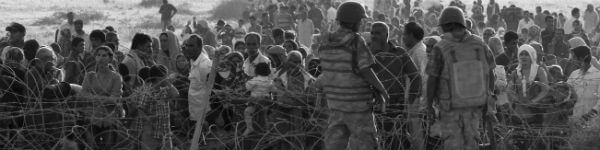
Desperate Syrians are backed up at the borders of Jordan and Turkey, barred from entering or else just allowed to trickle in. Increasingly, they find escape routes closing. [Continue reading…]

Facebooktwittermail

Bombarded Aleppo lives in fear of siege and starvation

The Guardian reports: The bombs are falling so fast in Aleppo now that often rescuers don’t have time to reach victims between blasts. If the deadly explosions that struck on just one day last week had been evenly spaced, they would have struck every other minute around the clock.

“Sometimes there are so many airstrikes, we are just waiting and waiting at our headquarters, and the jets don’t leave the skies,” says Abdulrahman Alhassan, a 29-year-old former bank engineer from the city who coordinates “white helmet” rescue teams in the city.

“When at last we can’t see any more, we have to rush to all the sites to rescue people and evacuate them at once,” he said. On Friday, the group counted 900 airstrikes by government forces and their Russian backers, apparently throwing every weapon they have at the already devastated city.

Aid groups and people still inside the city believe the barrage is preparing the way for a blockade. The main supply line north of Aleppo has already been cut, and it will not take long before shortages bite in a ruined, desperate city.

“The Russian airstrikes are trying to completely destroy the area before they get on the ground and start the siege,” said Saad, a 35-year-old aid worker who chose to stay on and is now trapped inside the city. He says the bombing campaign was hitting both morale and food supplies. [Continue reading…]

Facebooktwittermail

Another ISIS jailer who held Western hostages identified as British

BuzzFeed reports: A second member of the notorious ISIS execution cell once headed by “Jihadi John” has been unmasked as a “quiet and humble” football fan from west London, BuzzFeed News and the Washington Post can reveal.

Thirty-two-year-old Alexanda Kotey has been identified by British and American intelligence services as one of four ISIS guards, collectively known as the “Beatles”, who are responsible for beheading 27 hostages. The guards were given their nickname by hostages because of their British accents.

It can be revealed that Kotey travelled to the Middle East alongside three other known extremists on a controversial aid convoy to Gaza organised by the London mayoral candidate George Galloway in 2009 – and friends in west London have not heard from him since.

He is the second member of the cell to be identified, after “Jihadi John” was exposed as west Londoner Mohammed Emwazi, who was killed by US a drone strike in November. The other members of the cell, nicknamed “Ringo”, “George”, and “Paul”, remain among the world’s most wanted men and are being hunted by intelligence and security services on both sides of the Atlantic. [Continue reading…]

Facebooktwittermail

Russian bombing triggers civilian exodus from Aleppo

BBC News reports: Tens of thousands of Syrian refugees are moving to Turkey’s border to flee heavy fighting near the city of Aleppo, officials and activists have said.

Turkish Prime Minister Ahmet Davutoglu said up to 70,000 might be heading to the border, while a monitoring group put the number at about 40,000.

Intense Russian air strikes have helped Syria’s government troops make advances near the country’s largest city.

Meanwhile, Russia accused Turkey of preparing an invasion into Syria.

Also on Thursday, a Saudi military spokesman said the country was ready to send ground troops to Syria to fight the so-called Islamic State group. [Continue reading…]

The Independent reports: Forces loyal to Bashar al-Assad claimed to have severed the last rebel supply line to Aleppo last night in what would be a devastating blow to the Syrian opposition.

The attack, backed by Russian warplanes, was condemned by France for “torpedoing” tentative peace talks in Geneva, while the US said it was “difficult” to see how the air strikes, which the State Department said were mostly on civilian targets, would help resolve the conflict.

Pro-government media said that forces from the Syrian army and the Lebanese militia Hezbollah had reached two Shia towns north of the city that had been besieged by rebel insurgents. They claimed to have captured part of the only road that runs from Turkey to the rebel-held half of Aleppo, cutting its only supply route.

With pro-government forces close to surrounding Syria’s second city, the United Nations under-secretary general for humanitarian affairs, Stephen O’Brien, spoke yesterday of grave consequences for its beleaguered population if Aleppo was besieged by regime forces.

“What is happening in Syria is bad enough without something like that happening in Aleppo. But if the situation there gets worse we will have a large population at risk and we would need to get immediate access for road convoys to provide the necessary humanitarian assistance” he told The Independent. Aid groups also warned that a huge humanitarian crisis was looming, while people in the area were stockpiling food and supplies in anticipation of a siege. [Continue reading…]

The Guardian reports: The Russian defence ministry said on Thursday it had hit almost 900 targets in Syria in the previous three days. While Moscow’s intervention has the declared aim of battling the Islamic State terror group, military observers claim at least 70% of airstrikes have targeted opposition groups fighting to oust Assad. [Continue reading…]

Facebooktwittermail

As long as the linkage between authoritarian regimes and extremism is ignored, ISIS and al Qaeda will never be defeated

Joyce Karam writes: “What are you talking about, 7000…No,no. We killed 38,000”, those were the words of former Syrian General Rifaat Assad in1982 as recounted by Thomas Friedman in his book “From Beirut to Jerusalem”. Rifaat, who is now in exile, was exulting about the number of Syrians his forces killed in Hama 34 years ago, quashing a rebellion against his brother’s dictatorship and setting the stage to what has followed.

The ghosts of Hama today hover all over Syria, cementing the pillars of the Assad doctrine to rule by fear and hold on to power at any cost even if it means surrendering the country to devastation, radicalization and ultimate death. From father to uncle to son, the Assad playbook has not changed, copying the narrative of Hama to Homs, Douma, Ghouta, Idlib, Daraa and Aleppo, and in the process leaving behind more than 250 thousands dead, millions displaced, and a society in shambles.

The 3-week assault on Hama in 1982 has laid the ground for how the Assad regime reacts to any signs of rebellion later. Not coincidentally, the same horror tactics utilized in Hama in 1982 with Assad the father were replicated by the son across Syria following the 2011 uprising.

In a chilling report by Amnesty International in 2012, survivors of the Hama massacre give their account of what happened, describing images of the dead splintered in the streets, left to be eaten by dogs and as a red flag for those whose lives were spared. Snipers were on the roofs, neighborhoods were razed and one survivor recalls the the attack on Mas’oud Mosque, where “some 60 men were killed before the security forces cut off their fingers and placed them along the mosque’s walls.” She tells Amnesty “for around two years after the massacre, no one dared remove the fingers. They were so frightened.” [Continue reading…]

Facebooktwittermail

The worst is yet to come for Syria’s largest city, Aleppo

BuzzFeed reports: With the government of Syrian President Bashar al-Assad moving closer to encircling the rebel-held parts of the city — the most important patch of territory the opposition holds — rebels and analysts expect it to turn to the brutal tactics it has employed throughout the war. As in the past, the primary victims will be civilians.

Sending troops into rebel-held Aleppo would be a costly move for the Syrian military and its allies, said Firas Abi Ali, the head of Middle East and North Africa forecasting at IHS Country Risk in London. Instead, they are likely to attempt to starve out the rebels and civilians inside while using artillery and airstrikes to bring them to their knees. “They’re not going to dedicate the amount of resources required to capture a city of that magnitude. They’re going to go with starvation and bombardment tactics,” he said. “This is the standard military tactic developed by Assad.”

The government has spent years pounding Aleppo with airstrikes, raining chaos down on civilians. It also has notoriously employed a siege strategy in places like Madaya, near Damascus, and the central city of Homs, where starving rebels and civilians eventually agreed to surrender. Yet the potential for civilian suffering in Aleppo is far larger now. “There are still several hundred thousand people in the city and the province. The scale of the suffering here can be much greater,” Abi Ali said. “Assad can do much more damage, and he is willing to inflict enormous pain.”

Rami Jarrah, a Syrian journalist and activist who has worked extensively in Aleppo, said the government plan seemed to be “to promote as much desertion of the city as possible now in build up to performing a total siege of Aleppo. Sieges have proven to be successful in terms of draining the opposition into submission.” [Continue reading…]

Facebooktwittermail

The military and political significance of Aleppo

Faysal Itani and Hossam Abouzahr write: Retaking Aleppo city would be a substantial win for the regime. Militarily, it would cut off opposition forces south of the city. It would also allow the regime to further isolate opposition forces in nearby Idlib and Hama. Rebel forces in northwestern Syria receive supplies from Turkey through two border crossings: Bab al-Salama in Aleppo province and Bab al-Hawa in Idlib province. If the regime takes Aleppo city, it could then target supply lines between Idlib- and Hama-based insurgents and Turkey. The regime may opt not to take Aleppo now, however, preferring to bomb and besiege it instead. That would simply freeze the Aleppo city frontlines and allow Assad and his allies to deploy fighters and resources elsewhere, including in Idlib and Hama. Regardless, the regime’s strategy will be isolating the opposition into manageable pockets and dealing with each individually.

Crucially, progress in Aleppo will free up resources against the Islamic State (ISIS). It is true that Assad and his allies have always prioritized fighting the insurgency over ISIS. The changing international environment, however, allows for a more sophisticated regime strategy. Despite frequent accusations, the regime and ISIS are not really allies. The regime simply sees the entire conflict through the prism of ensuring its own survival by any means necessary. Throughout the war, this has meant ignoring ISIS or facilitating its war against the rebels. Now, however, the regime would benefit enormously at the international level by clearing the Aleppo area of insurgents and ISIS alike (or following the Aleppo victory with some anti-ISIS wins elsewhere, such as Palmyra). That would demonstrate to the world that it must choose between Assad and ISIS, and that ISIS and the various insurgent groups are one and the same enemy. Considering the West’s singular focus on ISIS and tolerance of the regime, this would actually be a sound strategy. [Continue reading…]

Facebooktwittermail

The Syrian regime is close to a victory that could turn the war

Vice News reports: Rebels north of Aleppo had already been stretched thin, attempting to balance fronts against the regime, the Islamic State, and the Kurdish People’s Protection Units (YPG) and their allies. The latest push by the regime of Bashar al-Assad – and, in particular, relentless Russian bombing from the air – proved too much to handle.

“The regime is relying primarily on the Russian air force. Its jets are in the air constantly,” said Col. Ahmed Uthman, military commander of local rebel faction Firqat al-Sultan Murad.

Locals described the nonstop aerial bombing and the shelling of the area as “scorched earth” tactics.

“There’s no parity between these Russian jets and rebel forces,” said Firas Pasa, commander of Aleppo brigade Liwa al-Mu’tasem Billah. “We need anti-aircraft weapons as soon as possible.”

In addition to Russian airpower, the regime’s Syrian Arab Army is also backed by various paramilitary forces, including Iraqi Shi’ite units. “We’re no longer facing Bashar’s army, the army of Abu Flip-flops,” said a media official with a rebel brigade in the north who requested anonymity, using a derisive nickname for the regime’s exhausted military. [Continue reading…]

Facebooktwittermail

Syrian refugees in Jordan: ‘If they cut the coupons, we will probably die’

The Guardian reports: Just look at how we’re living,” says Umm Majd, a Syrian who fled to Jordan. She stands in a tiny single-room apartment in Amman, the capital. It lies deep underground, next to a subterranean car park, and measures just two metres by two and a half. It is here that she, her husband and their two sons live out their exile.

“Just look,” says Umm Majd, gesturing at the room. “That’s enough to understand what’s happening to Syrians here in Jordan.”

There are between 630,000 and 1.27 million Syrian refugees in the country, depending on whose estimate you believe. Like most of them, Umm Majd’s husband does not have the right to work – so he works illegally as a carwasher for 100 Jordanian dinars a month (about £100, half the minimum wage). The family collectively receives 40 dinars in food coupons from the UN – down from 80 a year ago. Their rent is 50 dinars, leaving them just 90 each month for any other living expenses.

“Right now we’re not thinking of going to Europe,” says Umm Majd’s husband. “But if they cut our funding again then we’ll have to. If they cut the coupons we’d probably die.” [Continue reading…]

Facebooktwittermail

U.S. confirms involvement in Syria airfield expansion

VOA reports: At the urging of an American contingent, Syrian Kurds are expanding an airbase on farmland in northeast Syria that could be used for military purposes, according to Kurdish and U.S. officials.

Known as Abu Hajar airport, the airbase is located in the Rmelan area of northern Syria, and is controlled by the Kurdish People’s Defense Units and the Syrian Democratic Forces. Neither has an air force.

A team of Americans pitched the idea to Syrian Democratic Forces to extend the runway, a defense official told VOA on the condition of anonymity.

The official Wednesday said the airfield is being extended from 700 meters to 1,300 meters.

The extension would be long enough to allow C-130 transport planes to land on the strip and potentially supply those fighting Islamic State forces in the area. [Continue reading…]

Facebooktwittermail

Diplomats say the U.S. has handed over Syria to the Russians for free

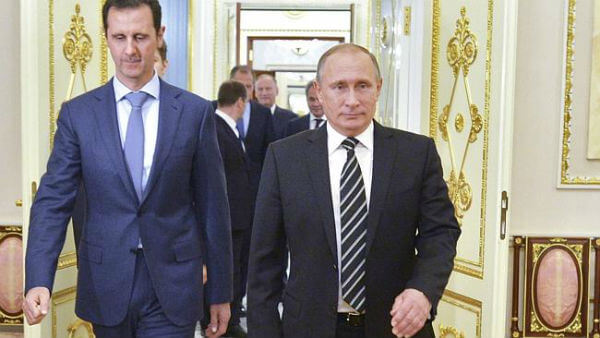
assad-putin

Following the suspension of UN-led peace talks, Lina Sinjab reports: Teams of diplomats representing countries supporting the opposition are pushing behind the scenes in Geneva for concessions from all parties involved in the war.

But almost everyone, whether diplomats or the opposition, says it is the US which is key to success – by using its leverage on Russia.

Russia is the only world power involved in the Syrian conflict with a military base in the country – therefore it could bring exert significant pressure on the regime of Bashar al-Assad to stop the violence.

But there is a limit to what the US is prepared to do.

A senior US Department of State official told me: “We are not ready to go to World War Three to solve this.”

The US, however, is spending billions of dollars in the battle against the self-proclaimed Islamic State (IS), which controls large parts of Syria.

Many Syrians feel the selective involvement of the US is hypocritical.

The US official was adamant that Secretary of State John Kerry wants to end the violence, and is determined to succeed.

But everyone here thinks the opposite. Almost at every corner, you hear the same thought: The US has handed over Syria to the Russians for free. [Continue reading…]

Facebooktwittermail