Category Archives: Syria

Forget the sympathy – asylum is a refugee’s right

By Renos Papadopoulos, University of Essex

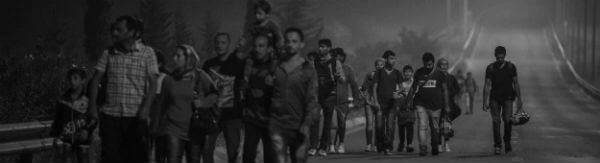
This year, the media has been full of tragic images of people risking their lives in a desperate attempt to flee their troubled countries. This phenomenon is not new, by any means, but the number of people involved has increased dramatically over a short period.

The statistics – which change almost daily – are staggering. It is estimated that more than 130,000 refugees and migrants have entered the European Union this year and more than 3,000 are known to have perished during their perilous crossing in the Mediterranean from Libya. Around 7,200 landed on just one Greek island, Lesvos, during May 2015. The numbers are equally shocking in other known crossings, notably from Somalia to Yemen and in the Far East to Indonesia and Australia.

The phenomenon is truly overwhelming. Whenever we are overwhelmed, we tend to oversimplify our perception in order to minimise our discomfort.

Perhaps the most common form of oversimplification is polarisation – and this is what we are witnessing around us now in relation to these images and statistics. On one side, some strongly oppose the uncontrolled influx of foreigners, arguing that developed countries can ill afford to host hordes of people. On the other are those who base their argument on compassion, urging governments to offer people dignified assistance in their hour of need.

In fact, neither view hits the mark.

Continue reading

Facebooktwittermail

Syria refugees: Family’s tragedy goes beyond one boy

refugees3

The New York Times reports: When Alan Kurdi’s tiny body washed up on a beach in Turkey, forcing the world to grasp the pain of Syria’s refugees, the 2-year-old boy was just one member of a family on the run, scattered by nearly five years of upheaval.

As a Turkish officer lifted the boy from the shallow waves at the edge of the Mediterranean Sea, one of Alan’s teenage cousins was alone on a bus in Hungary, fleeing the fighting back home in Damascus.

An aunt was stuck in Istanbul, nursing a baby, as her son and daughter worked 18-hour shifts in a sweatshop so the family could eat. Dozens of other relatives — aunts, uncles and cousins — had fled the war in Syria or were making plans to flee.

And just weeks after Alan’s image shocked the world in September, another aunt prepared to do what she had promised herself to avoid: set sail with four of her children on the same perilous journey.

“We die together, or we live together and make a future,” her 15-year-old daughter said, concluding, as have hundreds of thousands of other Syrians, that there was no going back, and that the way to security led through great risk. [Continue reading…]

Facebooktwittermail

Terror: After Paris, Tunisia and California, can we stop it spreading?

shadow7

Jason Burke writes: On a bleak day in November, Annelise Augustyns led her two children to the playground near their home in Brussels. Just over a week before, Islamist militants had killed 130 people and injured many more in a series of attacks in Paris. The Belgian capital had been under unprecedented lockdown for three days amid fears of a new attack there. Several of the Paris attackers had been traced to the Brussels neighbourhood of Molenbeek, a few miles from Augustyns’ apartment. They included at least one man who was now on the run.

To protect the population, the Belgian government had shut schools, cancelled sporting events and deployed soldiers on the streets. If the scenes were reminiscent of earlier conflicts, the enemy now was very different: a hybrid terrorist and insurgent entity in the Middle East calling itself the Islamic State.

Augustyns, a local government administrator, glanced at the armoured vehicle posted outside the entrance of the Gare du Midi. “We are worried of course,” she told me. “But what to do? We have to get on with our lives.”

Her words summed up the feelings of many across Europe that week, and indeed across much of the world last year. If 2014 was a year that set a grisly new record in the number of casualties inflicted by terrorist attacks – 33,000 people were killed, almost double the year before – then 2015 appears to have been worse. [Continue reading…]

Facebooktwittermail

The most unconventional weapon in Syria: Wheat

wheat

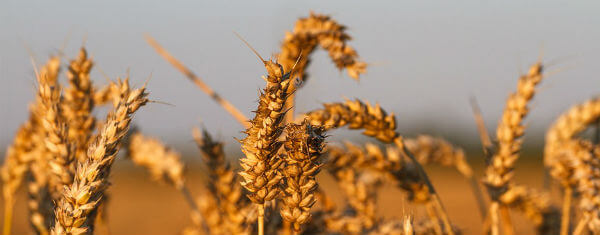
Annia Ciezadlo writes: In the fall of 2012, fighters from the Free Syrian Army took over Eastern Ghouta, a semi-agricultural area about eight miles northeast of Damascus. Government forces responded by placing the area under siege, cutting off water, electricity, gas, medical assistance and bread.

The regime’s goal was to starve the people of Eastern Ghouta into submission, and it was working: The price of bread and rice went up 50 times. Locals were living on animal feed or sometimes eating nothing at all. “They began to wage war against the people even through their daily bread,” says Majd al-Dik, an aid worker for a Syrian humanitarian group called Spring of Life.

Nine months later, the Free Syrian Army mounted a military operation in a regime-controlled area called al-Matahin, the Mills, just outside Eastern Ghouta. Its objective was a flour mill, flanked by two rows of grain silos that housed part of the Syrian government’s strategic wheat reserves — a potent weapon in the conflict that now, after 4 1/2 years, has killed at least a quarter of a million people. If the opposition could capture the mill, it could keep the wheat, break the siege, gain a strategic point on the airport road — and perhaps even make some money.

The firefight lasted a day and a half. Before the battle ended on the second day, anti-government fighters sent a message via walkie-talkie to aid workers waiting inside Eastern Ghouta: We are in partial control of the mill. Come and help us get the flour. Dik and other volunteers drove toward the mill, taking a back road to avoid government snipers.

When they arrived, they were alarmed to see about 80 people, mostly civilians. Everyone in Eastern Ghouta had heard that there would be flour, and some people were desperate enough to run through shelling and sniper fire to get it. Locals climbed out of their cars and rushed toward the mill, eager to grab the sacks of flour inside the central storage area. The fighters tried to stop them, but they kept coming.

“They explained that they were hungry,” Dik says, “and they were ready to die just to be able to eat.” Too many of them would make exactly that sacrifice.

Bread is the staple food in the Middle East. Daily bread is “liqmet aeesh” — a Levantine idiom that translates as “morsel of life.” In addition to its crucial carbohydrates, it is the main source of protein for many people in poor and rural areas. “You can’t imagine life without bread,” says a Syrian aid worker from Aleppo, who spoke on the condition of anonymity. “The calories, the energy it gives you, is equivalent to anything else you eat. Except it’s a lot cheaper. So there’s a chance for survival.”

The Syrian government understands the importance of bread. So does the Islamic State, as well as the constellation of other armed groups vying to control the country’s land and its people. Strategically, bread is as important as oil or water. Civilians are dependent on the authority that distributes it, and profiteers are eager to resell it to hungry people at grotesque prices. “When you control bread and fuel,” says a Syrian analyst from Damascus who spoke on the condition of anonymity, “you control the whole society.” [Continue reading…]

Facebooktwittermail

ISIS leader challenges U.S. and allies in appeal to followers

Baghdadi-bw

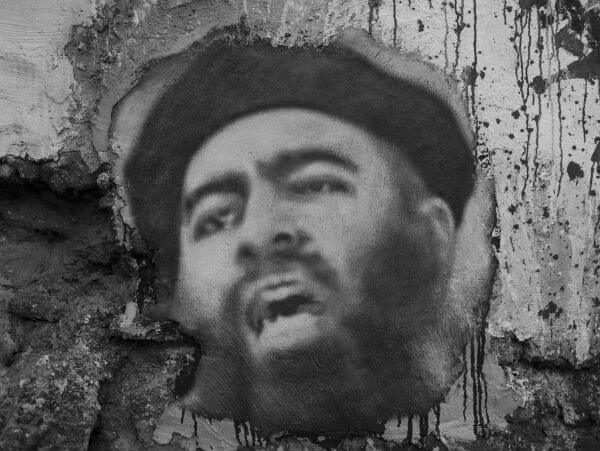
The Wall Street Journal reports: The leader of Islamic State challenged the U.S. and its European and Arab allies to confront his extremist group on the ground in Iraq and Syria, while telling his followers to persevere despite major recent battlefields setbacks, according to a purported audio message released on Saturday.

“Here are the Christian Crusaders and the nations of disbelief and their group with them, and behind them the Jews. They do not dare to come here on the ground to fight a small group of mujahedeen,” said Abu Bakr al-Baghdadi in the audio message, transcribed and translated by the U.S.-based monitoring agency Site Intelligence Group.

“They do not dare to come, because their hearts are full of fear from the mujahedeen,” he added in what is believed to be his first message since May.

In the audio message, Mr. Baghdadi consoled his followers for what he described as recent hardships and tragedies but promised them they would come out stronger and victorious if they persevered. He reminded them of the early trials of the group when it was formed in 2006 as an offshoot of al Qaeda, known as Islamic State of Iraq, only to be weakened by the U.S. and its local Iraqi allies. The group then made a major comeback starting in 2013 when it split from al Qaeda and captured large swaths of Iraq and Syria the following year.

“So the hardship must become more and the tragedies greater so that hypocrisy escapes and belief becomes stronger, and so that victory is laid down,” he said.

“So be steadfast O mujahedeen. In front of you are one of the two good things: either victory or martyrdom,” he added.

Mr. Baghdadi said the fact that major world powers have decided to destroy the group was proof Islamic State was on the righteous path. He accused the West and its allies of waging war against Islam by targeting his group and chastised Muslims everywhere for not realizing this and rising up to defend their faith.

“We are putting you all on alert everywhere and specifically the sons of the Land of the Two Holy Mosques,” he said, referring to Saudi Arabia. “Mobilize, whether you are light or heavy, old and young.”

He rebuked Saudi Arabia’s ruling family for announcing a coalition to fight Islamic State instead of defending Sunni Muslims in Iraq and Syria. [Continue reading…]

Facebooktwittermail

Syria rebel group will survive leader’s death

Hassan Hassan writes: Zahran Alloush, the former leader of Jaish Al Islam who was killed by Russian air strikes on Friday evening near Damascus, was more widely mourned than any other opposition figure since the start of the Syrian conflict. He has also been condemned for having made sectarian statements alluding to the extermination of Shia in Syria.

Sectarian statements are unjustifiable because they stoke tensions in an already polarised landscape. Jaish Al Islam was guilty of playing a cynical game of religious one-upmanship against extremist groups, especially at the height of religious polarisation in late 2013, during the Hizbollah-led offensive inside Syria. But it is a mistake to equate the group with extremist organisations, especially since such statements by no means reflect the group’s intentions or actions.

People who met Alloush and members of his faction, including members of Syria’s religious minorities, challenged such perceived views. Bassam Malouf, a Christian dissident, for example, recalled a meeting he had with Alloush, in which the former warned against targeting Christian churches in the suburbs of Damascus where the faction operated. Alloush replied, according to Mr Malouf, referring to Christians, by saying: “You are part of us and we are part of you. We will not allow anybody to violate the sanctity of homes, churches or people. Even Alawites, they are not our enemies, they are victims of the regime.”

Mr Malouf added: “His religious discourse was meant to encourage young people living under siege to join Jaish Al Islam and pull them away from ISIL.”

Alloush was one of the earliest, if not the earliest, rebel leader to unequivocally and consistently combat ISIL. Unlike other forces that reluctantly or intermittently fought ISIL, Jaish Al Islam can be credited for single-handedly preventing ISIL from establishing a foothold for itself in the areas it controlled near Damascus. If ISIL is a minor player at the outskirts of Damascus, it is because of Jaish Al Islam. [Continue reading…]

Facebooktwittermail

Syrian rebel leader killed in airstrike: Who was Zahran Alloush?

Aron Lund writes: Mohammed Zahran Alloush (1971-2015), also known as Abu Abdullah, was a salafi activist from Douma, a town east of Damascus in the Ghouta region. His father, Abdullah Alloush, is a salafi theologian resident in Saudi Arabia.

Alloush was arrested several times before the uprising for his religious and political activism and sent to the ”Islamist wing” of the Seidnaia prison north of Damascus. There, he formed close connections to many other Syrian Islamists, including people who now run large rebel factions like Ahrar al-Sham. He was released from jail in June 2011 and quickly joined the armed uprising, eventually emerging as the strongman of his home region in the Eastern Ghouta and one of the most powerful rebel leaders in all of Syria.

He was also one of the most controversial ones. His supporters were taken in by his forceful personality and his personal bravery, as a commander who lived with his men in the warzone and visited the frontline. They admired his knack for organization and politics and credited him with the semi-stability that reigned inside the besieged Eastern Ghouta enclave—a bombed out and starved suburban region that resembles nothing so much as a giant version of the Gaza Strip in Palestine. The Ghouta has been under constant pressure since the marginalized Sunni suburbs of Damascus, where hatred against Bashar al-Assad and his government ran strong, began to throw out the police and security servies in 2011 and 2012. Since then, the region has been under siege and functioned as a world of its own. Holding the frontline in Damascus, where Assad has concentrated so much of his army, was no small feat and it was much thanks to Alloush’s men. Coordinating the rebels there and limiting their infighting was no less of an achievement, especially considering the all-out chaos that reigned in other areas of Syria, where conditions were much better. For many supporters of the opposition, defending and stabilizing the Eastern Ghouta despite unceasing war and artillery bombardment, including with nerve gas, was enough to make Zahran Alloush a hero of the Syrian revolution. Continue reading

Facebooktwittermail

Stateless in Europe: ‘We are no people with no nation’

The Guardian reports: Sitting in the living room of her Berlin apartment, Sanaa* [her and her daughter’s name have been changed] watches proudly as her one-year-old daughter clings to the edge of a coffee table and hauls herself to her feet. Siba* squeals with delight, then drops back down with a giggle. Being a single mother is hard work, but filled with daily rewards. Sanaa, who fled the Syrian war, is just thankful for the chance to raise a child.

Experts are warning that children such as Siba could turn into a stateless generation. Though the infant was born in Berlin after her mother arrived from Damascus, there is no automatic German citizenship. And under Syrian law, a child can only inherit nationality from its father. As a single mother, Sanaa was well aware that Siba would be stateless.

“There is no paper for Siba in Syria. Because it’s the law, you don’t have any relations before you are married. People have boyfriends but it’s secret,” Sanaa says. “We just grow up and this is the rule. We didn’t know that the women in other countries can give their nationality [to their children], or we didn’t care because we would get married and the child would have a nationality.”[Continue reading…]

Facebooktwittermail

Over a million migrants and refugees have reached Europe this year

refugees3

The Guardian reports: More than a million people have now reached Europe through irregular means in 2015, the International Organisation for Migration has announced, in what constitutes the continent’s biggest wave of mass migration since the aftermath of the second world war.

Out of a total of 1,005,504 arrivals by 21 December, the vast majority – 816,752 – arrived by sea in Greece, the IOM said. A further 150,317 arrived by sea in Italy, with much smaller figures for Spain, Malta and Cyprus. A total of 34,215 crossed by land routes, such as over the Turkish-Bulgarian border.

The overall figure is a four-fold increase from 2014’s figures, and has largely been driven by Syrians fleeing their country’s civil war. Afghans, Iraqis and Eritreans fleeing conflict and repression are the other significant national groups.

The European migration flow is nevertheless far more manageable than in the Middle East, where roughly 2.2 million Syrian refugees live in Turkey alone. In Lebanon, 1.1 million Syrians form about one-fifth of the country’s total population, while Jordan’s 633,000 registered Syrian refugees make up around a tenth of the total.

The denial of basic rights to refugees in those countries, where almost all Syrians do not have the right to work, is one of the causes of Europe’s migration crisis. Refugees who have lived for several years in legal limbo are now coming to Europe to claim the rights bestowed on them by the 1951 UN refugee convention. [Continue reading…]

Facebooktwittermail

Christmas in Syria: Children’s hospital in Aleppo bombed by Russian jets

Anadolu Agency reports: At least six civilians were killed and dozens were injured Friday in airstrikes carried out by Russian warplanes in Aleppo, Syrian security sources said.

The sources added that the airstrikes, which targeted Azaz district, caused heavy damage to the hospitals’ buildings. One of the medical facilities is believed to be a children’s hospital.

Russian airstrikes have killed more than 250 civilians this week alone across Syria.

According to a report released earlier this month by Amnesty International, Russian airstrikes in Syria have killed “hundreds” of Syrian civilians over the last three months. [Continue reading…]

Facebooktwittermail

A Christmas of despair for Syrian Christian refugees in Lebanon

refugees4

The Washington Post reports: Not so many years ago, Christmas Day for the Kouriehs began with Mass at the village church. The family would return home for an afternoon feast of rice and meat with sides of salad and hummus.

Neighbors would stop by to extend holiday greetings. Children would play next to the Christmas tree.

That was before the Islamic State and other extremists started kidnapping Christians like the Kouriehs, before the relentless violence, before civil war tore apart their country.

That was before the Kouriehs had to flee Syria for their lives.

“It used to be beautiful there,” Joseph Kourieh, 57, recalled from the dilapidated apartment in Lebanon’s capital, Beirut, where he, his wife and five of his grown children now live.

More than a million Syrians have taken refuge in neighboring Lebanon, a country of barely 4 million people that can hardly cope with the influx. Among the mostly Muslim refugees are hundreds and possibly thousands of Syrian Christian families that also endure the hardship and humiliation of displacement. [Continue reading…]

Facebooktwittermail

Christmas message in UK will be delivered by father of drowned Syrian boy

Channel 4 News reports: Abdullah Kurdi, the father of the drowned Syrian boy whose body was photographed on a Turkish beach, will deliver Channel 4’s Alternative Christmas message.

The heartbreaking images, which will be shown as part of the broadcast, shocked the world and came to symbolise the horror of the refugee crisis.

They prompted European leaders to do more to tackle the stark reality of the desperate situation facing many refugees. Abdullah lost his wife Rehanna and two sons: Alan, 3 and Galeb, 5, as they attempted to flee the war ravaging their Syrian homeland.

Over 4 million people have fled the country since the start of the civil war. More than 250,000 have been killed. This year alone 500,000 Syrian refugees attempted to reach Europe and North America.

In the Alternative Christmas Message, which will be broadcast on Christmas Day at 3.35pm on Channel 4, Kurdi calls for empathy and understanding for those caught up in the current refugee crisis:

My message is I’d like the whole world to open its doors to Syrians. If a person shuts a door in someone’s face, this is very difficult. When a door is opened they no longer feel humiliated.

Kurdi appeals as a parent, speaking of the desperation of the Syrian people:

At this time of year I would like to ask you all to think about the pain of fathers, mothers and children who are seeking peace and security.

We ask just for a little bit of sympathy from you.

Kurdi’s powerful words are interspersed with footage of the refugee crisis and the dangerous Mediterranean crossings from Libya to Italy and from Turkey to Greece. [Continue reading…]

Facebooktwittermail

U.S. pursued secret contacts with Assad regime for years

The Wall Street Journal reports: At the center of that effort was a businessman and confidante of Mr. Assad, Khaled Ahmad, who has served as the Syrian leader’s main interlocutor in recent years with Western officials, including U.S. diplomats. Mr. Ahmad didn’t respond to questions sent by The Wall Street Journal.

“Assad was looking for ways to talk to the White House,” said Joshua Landis, a Syria expert and professor at the University of Oklahoma. Mr. Ahmad, a businessman from Homs province, was his point man.

In late 2013, the former ambassador to Damascus Mr. Ford—then a special administration envoy on Syria—met Mr. Ahmad in Geneva ahead of planned peace talks there. Mr. Ford told Mr. Ahmad the U.S. was still seeking a political transition away from Mr. Assad’s rule.

Mr. Ahmad countered that the U.S. and the West should help the Syrian government fight terrorism.

The rise of Islamic State in 2013 caught the U.S. administration off guard. Mr. Assad found in it a better opening to position himself as a partner in a fight against terror consuming the region, and rippling to the West.

By 2014, when the U.S. expanded airstrikes against the militants from Iraq to Syria, State Department officials were making phone calls to their counterparts at the Syrian foreign ministry to make sure Damascus steered clear of U.S. jets in Syrian skies, U.S. officials and others familiar the communications said.

Today, when Washington wants to notify Damascus where it is deploying U.S.-trained Syrian fighters to battle Islamic State so the fighters aren’t mistaken for rebels, Samantha Power, the U.S. envoy to the U.N., dispatches a deputy to talk to the Syrian envoy, Bashar Jaafari, these people said.

The White House says the notifications are not collaboration with the regime. But Mr. Assad has used them to his advantage.

“The regime was re-legitimized,” said Ibrahim Hamidi, a Syrian journalist who until 2013 ran the Damascus bureau for Al Hayat, a major pan-Arab newspaper. “Any communication with the U.S.—even the perception of it—gives them the upper hand.” [Continue reading…]

Facebooktwittermail

Amnesty: Russia’s bombing in Syria has killed hundreds of civilians

Amnesty reports: Russian air strikes in Syria have killed hundreds of civilians and caused massive destruction in residential areas – striking homes, a mosque and a busy market, as well as medical facilities – in a pattern of attacks that show evidence of violations of international humanitarian law, said Amnesty International in a new report published today (23 December).

Amnesty’s 28-page report – ‘Civilian objects were not damaged’: Russia’s statements on its attacks in Syria unmasked – highlights the high price civilians have paid for suspected Russian attacks across the country, focusing on six attacks in Homs, Idleb and Aleppo between September and November, attacks which killed at least 200 civilians and around a dozen fighters.

The report includes evidence suggesting that Russian authorities may have lied to cover up civilian damage to a mosque from one air strike and a field hospital in another. It also documents evidence suggesting Russia’s use of internationally-banned cluster munitions and of unguided bombs in populated residential areas. [Continue reading…]

Facebooktwittermail

Assad is reaching out to Washington insiders

Josh Rogin writes: Early this year, a former top White House official secretly went to Damascus and met with leaders of the Syrian regime. The visit is part of a broader effort by the Syrian government to reach out to Washington’s power brokers and gain influence.

The former official, Steven Simon, served as the National Security Council senior director for Middle Eastern and North African affairs from 2011 to 2012. He has not publicly disclosed his trip, but two senior Obama administration officials said he was not acting as a back channel between the two governments. He traveled there as a private citizen and was representing only himself. The officials said he met with the Syrian president, Bashar al-Assad.

Simon had been a paid consultant at the Middle East Institute, but the think tank ended their relationship after he made the Syria trip. Two employees there told me that the institute did not want to be associated with the trip, which they did not organize and were not consulted about.

Simon declined to comment for this article. MEI also declined to comment. Several Syria scholars who were aware of this visit told me that the trip was part of Assad’s broader recent outreach to Washington scholars and officials.

The timing of Assad’s courting of Washington’s elite makes sense. The Obama administration has been slowly altering its long-held stance that Assad must give up power immediately to make way for a transitional government in Syria and the end of the long civil war. Just last week, the U.S. endorsed a United Nations Security Council resolution that would establish an 18-month transition process during which Assad could stay as Syria’s president and even run for elections sometime in 2017. [Continue reading…]

Facebooktwittermail

The state of the Syrian economy: An expert survey

assad-2

Aron Lund writes: As 2015 draws to a close and Syria prepares to enter its sixth year of conflict, the economic conditions and transformations brought by the war are taking center stage.

The country has shattered into zones under the control of rival politico-military factions, but the economy remains curiously cohesive, connecting the Syrian population through a web of trade links, transportation, service and aid distribution channels, and decaying national systems for the provision of water, gas, and electricity. The Syrian central state economy is deteriorating at a faster pace since 2014—with food subsidies now being slashed, wages left unpaid, an ever more erratic electricity grid, failing trade and fuel distribution, a rapidly depreciating currency, as well as growing discontent in government-controlled areas—which has sent shockwaves throughout the country. Meanwhile, foreign nations penetrate ever deeper into the Syrian economy. Despite the war, or perhaps because of it, the Syrian north is growing more integrated with the Turkish economy, while Iran is emerging as a major financial stakeholder in the Syrian government. [Continue reading…]

Facebooktwittermail