Category Archives: Syria

Iran warns of ‘divine vengeance’; Saudi Arabia breaks relations

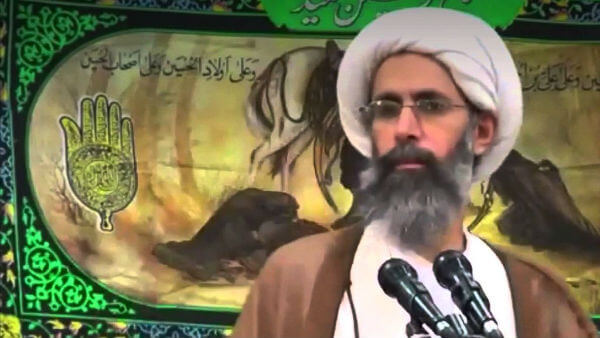
Sheikh-Nimr-Baqr-al-Nimr

The Washington Post reports: Saudi Arabia severed relations with Iran on Sunday amid the furor that erupted over the execution by the Saudi authorities of a prominent Shiite cleric.

Foreign Minister Adel al-Jubair told reporters in Riyadh that the Iranian ambassador to Saudi Arabia had been given 48 hours to leave the country, citing concerns that Tehran’s Shiite government was undermining the security of the Sunni kingdom.

Saudi Arabian diplomats had already departed Iran after angry mobs trashed and burned the Saudi embassy in Tehran overnight Saturday, in response to the execution of Sheikh Nimr Baqr al-Nimr earlier in the day.

Iran’s Supreme Leader warned on Sunday that there would be divine retribution for Saudi Arabia’s rulers after the execution of a renowned Shiite cleric, sustaining the soaring regional tensions that erupted in the wake of the killing.

The warning came hours after crowds of protesters stormed and torched the Saudi embassy in Tehran to vent their anger at the execution of Nimr Baqr al-Nimr, who was among 47 people put to death in the kingdom on Saturday.

Shiites around the world expressed outrage, potentially complicating a surge of U.S. diplomacy aimed at bringing peace to the region, according to Toby Matthiesen, an expert on Saudi Arabia at the University of Oxford.

“Nimr had become a household name amongst Shiite Muslims around the world. Many had thought his execution would be a red line and would further inflame sectarian tensions,” he said. “So this will complicate a whole range of issues, from the Syrian crisis to Yemen.”

Saudi Arabia and Iran are backing rival sides in Syria’s war, and their enmity risks derailing a diplomatic effort led by the United States and Russia to convene peace talks between the factions in Geneva this month.

The two feuding powers also support opposing sides in the war in Yemen and more broadly find themselves in opposition in the deeply divided politics of the mixed Sunni-Shiite nations of Iraq and Lebanon.

The Obama administration’s hopes that the conclusion last summer of an agreement limiting Iran’s nuclear program would help bridge the sectarian divide between Tehran and the United States’ biggest Arab ally were further diminished by the eruption of fury that followed Nimr’s death. [Continue reading…]


Facebooktwittermail

War in Syria: Up to 40,000 civilians are starving in besieged Madaya, say campaigners

The Independent reports: Up to 40,000 civilians are slowly starving to death in the Syrian town of Madaya, activists have warned, after six months under a punishing siege.

Encircled by land mines and forces from the Lebanese militia Hezbollah, hundreds are suffering from malnutrition. With severe shortages of basic foodstuffs, many have resorted to eating wild plants, insects and even cats.

A media activist in the town, who used the pseudonym Nasir Ibrahim to protect his family, said that on New Year’s Eve he had managed to eat 50g of rice. Today, with snow covering the mountain-top town, he expected to go hungry. “The humanitarian situation is very dangerous,” he told The Independent. “Many have died starving and many more will follow them if no immediate aid is allowed in.”

In recent weeks, photographs of emaciated corpses have begun to emerge from the town, which is high in the mountains a few miles from the border with Lebanon. Around 20 men have so far perished from starvation, according to Mr Ibrahim. [Continue reading…]
Facebooktwittermail

On perilous refugee trail, women often become prey to sexual abuse

The New York Times reports: One Syrian woman who joined the stream of migrants to Germany was forced to pay down her husband’s debt to smugglers by making herself available for sex along the way. Another was beaten unconscious by a Hungarian prison guard after refusing his advances.

A third, a former makeup artist, dressed as a boy and stopped washing to ward off the men in her group of refugees. Now in an emergency shelter in Berlin, she still sleeps in her clothes and, like several women here, pushes a cupboard in front of her door at night.

“There is no lock or key or anything,” said Esraa al-Horani, the makeup artist and one of the few women here not afraid to give her name. She has been lucky, Ms. Horani said: “I’ve only been beaten and robbed.”

War and violence at home, exploitative smugglers and perilous seas along the way, an uncertain welcome and future on a foreign continent — these are some of the risks faced by tens of thousands of migrants who continue to make their way to Europe from the Middle East and beyond. But at each step of the way, the dangers are amplified for women.

Interviews with dozens of migrants, social workers and psychologists caring for traumatized new arrivals across Germany suggest that the current mass migration has been accompanied by a surge of violence against women. From forced marriages and sex trafficking to domestic abuse, women report violence from fellow refugees, smugglers, male family members and even European police officers. There are no reliable statistics for sexual and other abuse of female refugees. [Continue reading…]

Facebooktwittermail

Meltdowns, crises and ISIS: A terrible year in the Middle East

By Simon Mabon, Lancaster University

As we approach the fifth anniversary of the Arab Uprisings, it’s hard to remember the days of popular protests, of democratic revolutions and of dreams of a better future that rocked the Middle East in 2011. Nearly five years on, tensions between rulers and the ruled have exploded across the region – and the ensuing struggles for survival have continued to take all manner of ugly forms.

At the centre of things, the Syrian conflict has deepened – and while the brutality of Islamic State (IS) has been responsible for much of the recent chaos and tragedy across Syria, the regime of Bashar al-Assad has been responsible for seven times as many Syrian deaths as IS. Assad’s position was strengthened by continued support from Russia, Iran and Lebanon’s Hezbollah, antagonising powerful states in the West and the Gulf – particularly Saudi Arabia. The Gulf states also faced domestic threats from IS, with the group carrying out a number of attacks on Shia sites and communities across the region.

The Syrian conflict became ever more internationalised in 2015. The number of foreign fighters on the ground – on all sides – continued to grow, while on the diplomatic level, the Vienna talks tried to resolve the seemingly intractable conflict – though they have yet to yield any decisive action.

The task of dealing with IS was further complicated by a batch of new wilayats, groups who declared allegiance to IS. Wilayat Sinai in particular was purportedly responsible for a range of acts, allegedly including a massive bomb attack in Cairo and the downing of a Russian passenger jet over Egypt’s Sinai Peninsula.

Continue reading

Facebooktwittermail

Iran’s plan for Syria without Assad

assad-dumped

Joyce Karam writes: On February 25, 1987, late Syrian President Hafez al-Assad sent his troops to the Fathallah barracks in West Beirut, where they killed twenty-seven members of Hezbollah in a move designed to show Syria’s upper hand over Iran in Lebanon. Almost three decades later, this modus operandi is completely reversed under Assad the son, as Syria sinks into a war of attrition and Tehran gains the upper hand in Damascus.

For Iran, Bashar al-Assad has been a valuable ally but not an indispensable one. His coming to power in 2000, followed by the Iraq war in 2003 and Syria’s withdrawal from Lebanon in 2005, freed Iran’s hand in the Levant. Hezbollah under Bashar al-Assad has received weaponry and political backing unthinkable in his father’s time, including long-range Scud missiles and a 2010 Damascus visit by the party’s chief Hassan Nasrallah. But while Tehran has worked since the beginning of the Syrian war in 2011 to prolong Assad’s hold on power, it has also planned from the very early stages of the conflict for the day after, should its ally fall or should the regime lose Damascus.

Even as Iran sits at the negotiating table in Vienna, its strategy overlooks the political debate and the successive failed processes. It is instead rooted in creating new realities and proxies on the ground in Syria, looking beyond Assad and preserving its core interests. These interests are defined today by three goals: (1) Ensuring arms shipments continue to Hezbollah; (2) Gaining a strategic foothold in Levant and against Israel; (3) Preventing a stable government opposed to Iran from fully ruling over Syria. [Continue reading…]

Facebooktwittermail

Middle East still rocking from First World War pacts made 100 years ago

isis-sykes-picot

Ian Black writes: In an idle moment between cocktail parties in the Arab capital where they served, a British and French diplomat were chatting recently about their respective countries’ legacies in the Middle East: why not commemorate them with a new rock band? And they could call it Sykes-Picot and the Balfour Declaration.

It was just a joke. These first world war agreements cooked up in London and Paris in the dying days of the Ottoman empire paved the way for new Arab nation states, the creation of Israel and the continuing plight of the Palestinians. And if their memory has faded in the west as their centenaries approach, they are still widely blamed for the problems of the region at an unusually violent and troubled time.

“This is history that the Arab peoples will never forget because they see it as directly relevant to problems they face today,” argues Oxford University’s Eugene Rogan, author of several influential works on modern Middle Eastern history.

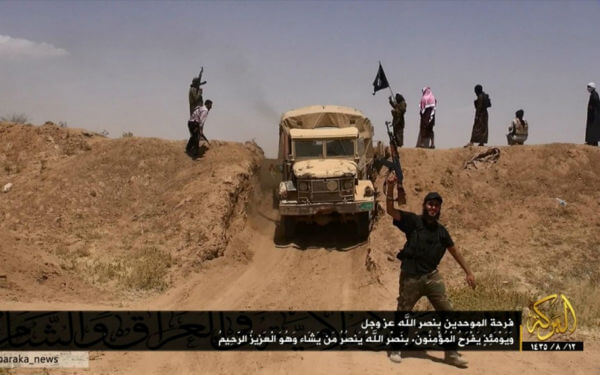
In 2014, when Islamic State fighters broke through the desert border between Iraq and Syria – flying black flags on their captured US-made Humvees – and announced the creation of a transnational caliphate, they triumphantly pronounced the death of Sykes-Picot. That gave a half-forgotten and much-misrepresented colonial-era deal a starring role in their propaganda war – and a new lease of life on Twitter. [Continue reading…]

Facebooktwittermail

Could an end to Syria’s civil war be in sight?

By James L Gelvin, University of California, Los Angeles

If, as cliché has it, the definition of insanity is doing the same thing over and over and expecting different results, isn’t the recent flurry of diplomatic activity aimed at bringing about a negotiated settlement to the Syrian civil war insane?

None of the previous attempts to resolve the conflict among the warring parties through negotiations, such as the Geneva II talks in the beginning of 2014, has had a happy ending. And, in retrospect most observers would go so far as to say that they were doomed to failure.

But if, until now, there was zero chance for all principals, both external and internal, to work out a settlement, there currently exists a slender – a very slender – chance for success.

This is the straw at which Secretary of State John Kerry is grasping on the eve of talks in New York.

Continue reading

Facebooktwittermail

New Jaish al-Islam chief says group will not pull out of peace talks

Middle East Eye reports: The new head of a key rebel group in Syria has denied that it is pulling out of peace talks after its previous leader was killed in an airstrike last week.

Zahran Alloush was head of Jaish al-Islam, and was killed in a strike east of Damascus that was launched on Friday by forces loyal to President Bashar al-Assad, with conflicting reports indicating that the plane might have been Russian or Syrian.

Immediately after the killing the group announced that it would be pulling out of a negotiations council formed during an opposition conference in Riyadh earlier this month.

However, in his first public statements since taking over leadership of the group, Abu Hammam al-Buyedhani said Jaish al-Islam’s stance on negotiations “has not changed”.

“We will not adopt a position on our own without discussing it with our partners.”

The United Nations has set 25 January as a target date to begin peace talks on Syria. [Continue reading…]

Facebooktwittermail

Turkey may finally be ‘accepting the inevitable’ in Syria

Business Insider reports: A Kurdish militia with ties to an organization waging an insurgency in Turkey’s southeast region violated Turkey’s “red line” in Syria over the weekend by crossing the Euphrates River during an anti-ISIS operation.

The operation to take back Tishrin Dam from ISIS was staged by the Western-backed Syrian Democratic Forces and spearheaded by the Kurdish YPG — the military arm of the Kurdish Democratic Union Party (PYD).

It served as a huge blow to ISIS, which had relied on the dam to move weapons and fighters between its de-facto capital of Raqqa in Syria and the cities of Manbij and Jarablous it controls in the northern countryside of Aleppo Province.

But ISIS was not the only loser. The operation was also a major affront to Turkey, which declared the Euphrates a “red line” for Kurdish territorial expansion over the summer. Indeed, Turkey struck the YPG twice in October after it defied Ankara’s warning not to cross the river. [Continue reading…]

Facebooktwittermail

ISIS leaders fall, ISIS remains

Kyle Orton writes: Last night, Steve Warren, the American colonel who is the spokesman for the international campaign against the Islamic State (IS), the U.S.-led Operation INHERENT RESOLVE, announced that between December 7 and December 27, ten IS “leaders” had been killed. Col. Warren adumbrated the positions of the IS leaders, allowing the conclusion that five had been part of IS’s external operations wing, which conducts international terrorism, and five were part of IS’s internal operations, i.e. part of the military operations and security infrastructure that helps IS maintain and expand its statelet in Syria and Iraq. Col. Warren presented this as an important blow to IS that had assisted in the recent loss of territorial losses for IS. There is reason for scepticism on these points. [Continue reading…]

Facebooktwittermail

War by other means in the shadow of globalization

destruction

Peter Pomerantsev writes: perhaps this year’s most spectacular propagandists are those of ISIS, with its aggressive use of social media to recruit new combatants and slick, gruesome execution videos to provoke and frighten opponents. Though ISIS has killed roughly seven times fewer people in Syria than the Assad regime, the group has used social media (some 46,000 accounts on Twitter alone) to make itself look even more menacing than it is. Every social-media user who retweets or posts ISIS material, whether in support or censure, ultimately helps strengthen ISIS’s narrative of history-making stature and millenarian significance. The Islamic State’s terrorist attacks in Paris left 130 people dead in a spate of horrific violence, but the operation was executed in a manner that made it seem as if the organization had killed orders of magnitude more.

There is, of course, nothing new about using information as a vital instrument of war. But in the past information tended to be a handmaiden to action. Now the informational element appears to be as important as, if not more important than, the physical dimension. Take Russia’s air strikes in Syria. The Kremlin’s official rationale for the military campaign was to combat the Islamic State. But very few of its operations have actually been aimed at ISIS, with many more directed at U.S.-supported rebels fighting Syrian President, and Russian client, Bashar al-Assad. The Kremlin clearly has more in mind than defeating ISIS militarily. Russia has entered the Syrian stage in such a way as to surprise the West and ensure it will play a starring role in any narrative going forward — whether that narrative involves keeping Assad in power or a “global fight against terror.” The Russian military might be small compared to America’s, and the Russian economy may be a mess, but Vladimir Putin has cleverly undermined America’s reputation as a “global policeman” and boosted his stature as the man who is restoring Russia as a Great Global Power.

This is not “soft power” in the classic sense of projecting a positive national image through culture and public relations, but rather a case of using strategic narrative to keep your opponent intimidated, confused, and dismayed — of exploiting ubiquitous information to appear bigger, scarier, and more indispensable than reality would suggest. Russia’s bombing raids in Syria also have the positive side effects (for Moscow) of distracting from the conflict in Ukraine and helping maintain a steady torrent of refugees to Europe, which in turn strengthens right-wing parties in countries such as France and Hungary that peddle anti-refugee fears, are supported by the Kremlin, and advocate dropping Western sanctions against Russia. What matters in the information age is not so much “military escalation dominance” — the Cold War doctrine emphasizing the ability to introduce more arms than the enemy into a conflict. Rather, it’s “narrative escalation dominance” — being able to introduce more startling storylines than your opponent. [Continue reading…]

Facebooktwittermail

I revealed the truth about President Erdogan and Syria. For that, he had me jailed

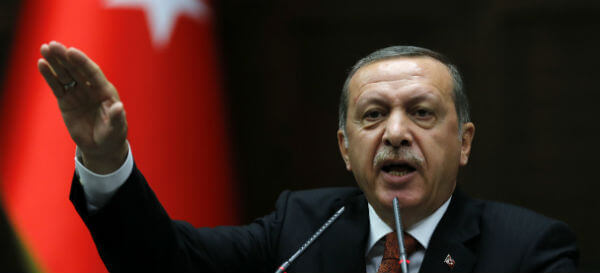
erdogan

Can Dündar writes: In Turkey, a debate as old as government itself is on the agenda again. This time, it is the Turkish government’s secret arms transfer to Syria that has revitalised the subject.

Early in 2014, a truck understood to belong to the Turkish intelligence service (MIT) was stopped near the Syrian border. The gendarmerie and the intelligence officials in control of the convoy pulled guns on each other. This was the moment the two blocks vying to rule the state came face to face. The truck was searched. Beneath the camouflage composed of medicines boxes, weapons and ammunition were found. The truck was held for a while, but following the intervention of government officials a safe passage into Syria was granted.

The government immediately discharged the prosecutor and gendarmerie who stopped the convoy and had them arrested. It was declared that the trucks contained humanitarian aid. This incident, which fuelled allegations that President Recep Tayyip Erdoğan’s government was intervening in the Syrian civil war, was rapidly covered up.

In May 2015, however, Cumhuriyet Daily, the newspaper I serve as the editor-in-chief, acquired the footage of this incident. It was clearly visible that the truck was loaded with arms. It was thus documented that the intelligence service was illegally carrying arms into the civil war raging in a neighbouring country. This was big news. We published details of the operation with photos, and uploaded the video to our website. [Continue reading…]

Facebooktwittermail

Strike that killed Syrian rebel chief complicates peace talks push, says U.S.

Reuters reports: Russian air strikes like the one that killed a top Syrian rebel leader last week send the wrong message to groups engaged in a political dialogue to end the conflict and complicate efforts to begin negotiations, the U.S. State Department said on Monday.

Syrian rebel chief Zahran Alloush, the leader of Jaysh al Islam who commanded thousands of fighters in the Damascus suburbs, was killed on Friday in an air strike that rebel sources said was carried out by Russian warplanes.

Jaysh al Islam was a participant in the Riyadh conference where Syrian opposition groups agreed on common aims for proposed political negotiations to end the country’s civil war and chose a former Syrian prime minister to represent them in the dialogue.

State Department spokesman Mark Toner said the United States did not provide support to Alloush’s group and had concerns about its “behavior on the battlefield,” but noted that Jaysh al Islam had fought Islamic State rebels and was participating in the political dialogue to end Syria’s civil war. [Continue reading…]

Facebooktwittermail

State Dept ‘pivotal foreign policy moments of 2015’: Bringing peace to Syria?

The Christmas Eve post on the U.S. State Department’s official blog, DipNote, includes this improbable accomplishment: “Bringing Peace, Security to Syria.”

Is this supposed to be an expression of the Christmas spirit — peace on Earth and all that?

Facebooktwittermail

This Syrian filmmaker was assassinated in broad daylight after receiving death threats

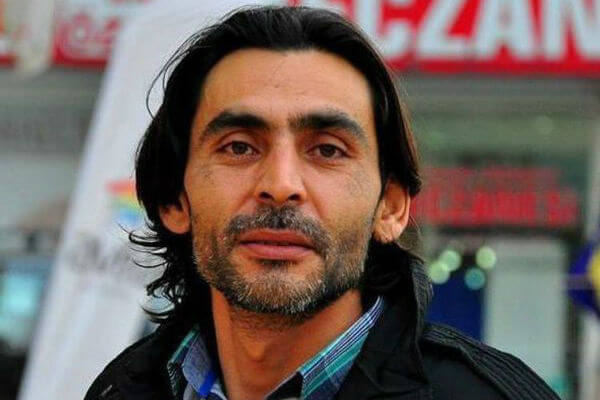
Naji-al-Jerf

Borzou Daragahi reports: If all had gone according to plan, Syrian filmmaker and activist Naji al-Jerf, his wife, and their two daughters would be in the relative safety of France right now, 2,000 miles from Turkey’s troubled southeast.

But on Sunday, the violence increasingly spilling over from Syria into Turkey caught up with Jerf when he was gunned down in broad daylight by a masked assassin. He was 37.

Amid wailing and stunned friends and colleagues, he was buried in a hilltop cemetery plot Monday afternoon. “Congratulations, congratulations!” his anguished wife, Bushra Kashmar, cried as she gripped his coffin. “Now you will have the freedom that you wanted,” she said, wrapped in the flag of Syria’s revolution. “Now you will have the peace that you wanted.”

A foe of both ISIS and the Syrian regime, the independent filmmaker and native of Salamia, a town near the city of Hama, was among the peaceful democracy activists who spearheaded the 2011 uprising against Bashar al-Assad. They are now being subsumed by the ensuing violence and sidelined by a war that has become a regional conflagration with no end in sight. [Continue reading…]

Facebooktwittermail

A century after Sykes-Picot

Eugene Rogan writes: The British wartime alliance with the sharif of Mecca would be concluded after months of increasingly anxious negotiations, with both sides driven by wartime fears. Sharif Hussein had reason to believe the Young Turks sought his overthrow. Moreover, to realize his ambitious goal of carving an independent Arab kingdom from Ottoman domains, he needed Great Power support. The British feared their recent string of defeats to the Ottomans would encourage colonial Muslims to rebel against the Entente Powers. War planners in Cairo and Whitehall hoped that an alliance with the custodian of Islam’s holiest shrines would neutralize the appeal of the Ottoman sultan-caliph’s jihad at a moment when Britain’s military credibility was at its lowest point since the start of the war.

On the eve of the Arab Revolt, the Anglo-Hashemite alliance offered far less than both sides originally believed they were securing on first entering into negotiations. The British were not the invincible power they had appeared to be in early 1915 when first setting off to conquer Constantinople. The Germans had inflicted terrible casualties on the British on the western front, and even the Ottomans had dealt them humiliating defeats. Sharif Hussein and his sons had every reason to question their choice of ally.

Yet the Hashemites were in no position to bargain. All through their correspondence with Sir Henry McMahon, the high commissioner in Egypt, Sharif Hussein and his sons had presented themselves as leaders of a pan-Arab movement. By May 1916 it was apparent that there would be no broader revolt in Syria and Iraq. The most the sharifs could do was challenge Ottoman rule in the Hijaz. Success depended on their ability to mobilize the notoriously undisciplined Bedouin to their cause.

Arguably, the alliance survived because the Hashemites and the British needed each other more in the summer of 1916 than ever. Sharif Hussein had strained relations with the Young Turks to the breaking point; he knew they would seize the first opportunity to dismiss—even murder—him and his sons. The British needed the sharif’s religious authority to undermine the Ottoman jihad, which officials in Cairo and Whitehall feared recent Turkish victories had strengthened. Whatever the results of a Hashemite-led revolt, the movement would at least weaken the Ottoman war effort and force the Turks to divert troops and resources to restore order in the Hijaz and possibly in other Arab provinces. For their own reasons, both the British and the Hashemites were in a hurry to launch the revolt. [Continue reading…]

Facebooktwittermail

U.S. sees key goals met for Russia with bearable costs in Syria so far

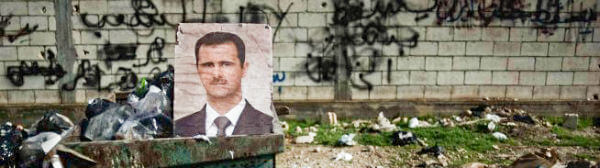
Assad

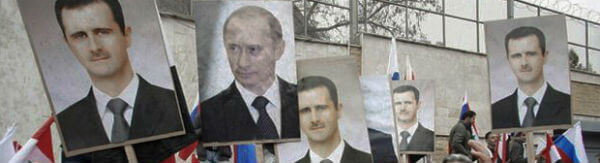
Reuters reports: Three months into his military intervention in Syria, Russian President Vladimir Putin has achieved his central goal of stabilizing the Assad government and, with the costs relatively low, could sustain military operations at this level for years, U.S. officials and military analysts say.

That assessment comes despite public assertions by President Barack Obama and top aides that Putin has embarked on an ill-conceived mission in support of Syrian President Bashar al-Assad that it will struggle to afford and that will likely fail.

“I think it’s indisputable that the Assad regime, with Russian military support, is probably in a safer position than it was,” said a senior administration official, who requested anonymity. Five other U.S. officials interviewed by Reuters concurred with the view that the Russian mission has been mostly successful so far and is facing relatively low costs.

The U.S. officials stressed that Putin could face serious problems the longer his involvement in the more than four-year-old civil war drags on.

Yet since its campaign began on Sept. 30, Russia has suffered minimal casualties and, despite domestic fiscal woes, is handily covering the operation’s cost, which analysts estimate at $1-2 billion a year. The war is being funded from Russia’s regular annual defense budget of about $54 billion, a U.S. intelligence official said. [Continue reading…]

Facebooktwittermail

Homs: Syria’s Stalingrad

Homs

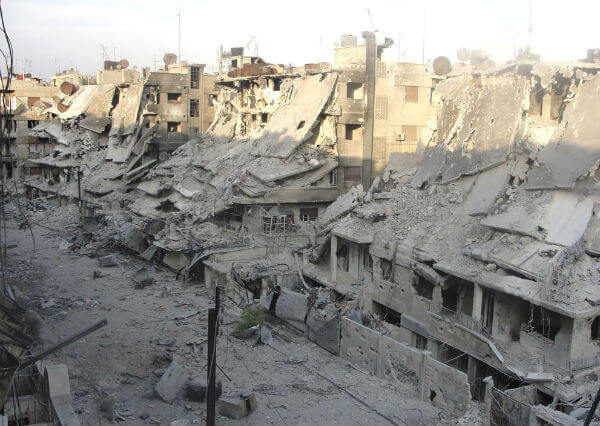
Thanassis Cambanis writes: More than four years of relentless shelling and shooting have ravaged beyond recognition this city, which once served as the symbolic capital of the revolution.

The buildings hang in tatters, concrete floors collapsed like sandcastles, twisted reinforced metal bars and window frames creaking in the wind like weather vanes. The only humans are occasional military guards, huddling in the foundations of stripped buildings. Deep trenches have been dug in thoroughfares to expose rebel tunnels. Everywhere the guts of buildings and homes face the street, their private contents slowly melting in the elements. Ten-foot weeds have erupted through the concrete.

As far as the government of Syria is concerned, the war in Homs is over. Rebel factions were defeated more than a year ago in the Old City, and the last holdouts, who carried on the revolt from the suburb of al-Waer, signed a cease-fire agreement this month. A few weeks before Christmas, busloads of fighters quit al-Waer for rebel-held villages to the north, under what the Syrian government and the United Nations hailed as a breakthrough cease-fire agreement to bring peace to one of the Syrian war’s most symbolic battlefields.

Gov. Talal al-Barazi, an energetic Assad-supporting Sunni, has been instrumental in pushing the cease-fires in Homs’s Old City and recently in al-Waer district. But almost none of the pro-uprising Sunnis who once filled its center have returned, and at times he seems to be presiding over a graveyard — an epic ruin destined to join Hiroshima, Dresden, and Stalingrad in the historical lexicon of siege and destruction.

By the end of a two-year siege of the Old City, the entire population of about 200,000 had fled, and more than 70 percent of the buildings in the area were destroyed. Today, according to the Syrian government, less than one-third of those who left have returned to the Homs area — but the ravaged city center is largely uninhabitable. Barazi said the cost of physically rebuilding the city would be enormous; without help from Russia, Iran, China, and other international donors, he said, full reconstruction would be impossible. Experts estimate it will cost upwards of $200 billion to rebuild across the entire country, or three times the country’s pre-war GDP.

And yet the Syrian government hopes to turn this shattered city into a symbol of its resurgent fortunes. Authorities showcase the reconstruction of Homs to spread a clear message: They intend to regain full control of the country. If they can tame Homs, a Sunni city where the majority of people actively embraced the revolt, they can do it anywhere.

There’s another more menacing message in the Homs settlement, however, as the neighborhoods that wholeheartedly sided with the revolution were entirely destroyed and have been left to collapse after the government’s victory. Almost no Sunnis have been allowed to return. Displaced supporters of the revolt from Homs understand that this is the regime’s second wave of punishment — they might never be allowed to go home. [Continue reading…]

Facebooktwittermail