AFP reports: Iran’s president has criticised moves by a powerful committee to exclude thousands of candidates, mostly reformists, from next month’s parliamentary election, saying Thursday the decision could undermine the vote’s legitimacy.
Hassan Rouhani openly questioned the actions of the Guardian Council, a conservative-dominated panel that vets all prospective lawmakers, after it said Monday that 60 percent of 12,000 election hopefuls had been excluded.
Reformists, largely sidelined from Iranian politics since the disputed 2009 re-election of hardline conservative president Mahmoud Ahmadinejad, bore the brunt of the vetting, with just one percent of its hopefuls winning approval.
Speaking in Tehran, Rouhani was warmly applauded when he suggested the public would see through steps that could amount to favouritism, saying it would dent the ballot’s competitiveness.
“It is called the House of the Nation, not the house of one faction,” he told an audience of provincial governors, implying that not only conservatives should contest the election for seats in parliament.
“If there is one faction and the other is not there, they don’t need the February 26 elections, they go to the parliament,” Rouhani said, laughing but then scorning such a prospect. [Continue reading…]
In December 1950, Woody Guthrie signed his name to the lease of a new apartment in Brooklyn. Even now, over half a century later, that uninspiring document prompts a double-take.
Below all the legal jargon is the signature of the man who had composed “This Land Is Your Land,” the most resounding appeal to an equal share for all in America. Below that is the signature of Donald Trump’s father, Fred. No pairing could appear more unlikely.
Guthrie’s two-year tenancy in one of Fred Trump’s buildings and his relationship with the real estate mogul of New York’s outer boroughs produced some of Guthrie’s most bitter writings, which I discovered on a recent trip to the Woody Guthrie Archives in Tulsa. These writings have never before been published; they should be, for they clearly pit America’s national balladeer against the racist foundations of the Trump real estate empire.
Recalling these foundations becomes all the more relevant in the wake of the racially charged proclamations of Donald Trump, who last year announced, “My legacy has its roots in my father’s legacy.”
Think Progress reports: A growing number of Muslims, Sikhs, and people of Middle Eastern descent are reporting incidents of racial and religious profiling while trying to board planes, sparking concerns that rising anti-Islam sentiment is sparking a new wave of discrimination at airports.
American Muslims have long encountered difficulties at airports, where security officials have been accused of unfairly profiling, questioning, searching, and detaining passengers simply for “looking” Muslim — including people who are not devotees of Islam, such as Sikhs and Arab Christians. Policies that support such profiling — many enacted in the years immediately following the September 11 attacks (although most have proven largely ineffective at catching terrorists) — remain in place today and have been defended by White House officials, even though Transportation Security Administration (TSA) agents have voiced misgivings about programs that single out people based on race or religion.
But as the United States endures an unprecedented wave of anti-Islam hatred following the terrorist attacks in Paris and San Bernardino late last year, Muslim Americans and others affected by Islamophobia are reporting a rash of new airport profiling cases — this time not just at the hands of the TSA, but also airline companies and fellow passengers. [Continue reading…]
How do you feel when you see so many of your fellow citizens on the run from the most horrible conflict of our time? Did you expect an exodus like that?
Weeks ago, I helped smuggle my sister-in-law and my nephew from Turkey to Greece. As a beginner, I consulted friends, met smugglers, and chose one.
I was anxious about their safety, and was relieved when they arrived in a European country, even if it was not the one they wanted to go to. The other half of my brother’s family, he and his two younger sons, are to join the first half someday. With the help of friends, we are trying to arrange things for another brother and his family to take refuge in another European country, after a mutual friend of ours, the journalist and film maker Naji Jerf, was assassinated in Turkey on 27 December 2015.
We are helping ourselves to a world that did not help to liberate us at home. Never had I contemplated the possibility of such an exodus. I did not expect that the regime would kill hundreds of thousands of people and that its chances of staying in power would grow bigger as the numbers of its victims soared. I did not expect the emergence of a monstrous creature like Da’esh [ISIS]. I did not expect that around 70 countries would be partners in bombing my country: not against the ruling criminal, but against an offshoot of his monstrosity.
How do you see the European handling of the refugee crisis?
I am impressed by many people from many European countries, mostly individual volunteers. Their generosity, courage and humanity dignify the human race. I was touched by a message from a Norwegian woman who was in Lesbos helping refugees. As for governments, while it is not fair to include all of them in one category – Germany is not like Hungary, Sweden is not Denmark – I think they are unified in building higher walls in the face of the influx of refugees, specifically the poorest and most vulnerable ones.
For months now, European governments have been pressuring Ankara not to allow refugees to depart from Turkey. In November, they promised to pay €3 billion to the Turkish governments to guard European borders.
With all this blood that has been spilt over the past five years right under the world’s nose, humanity has led itself down the path to full ethical numbness. I suppose the indifference the world showed towards the Syrian ordeal will lead to even less sensitivity to human suffering in political institutions everywhere. [Continue reading…]
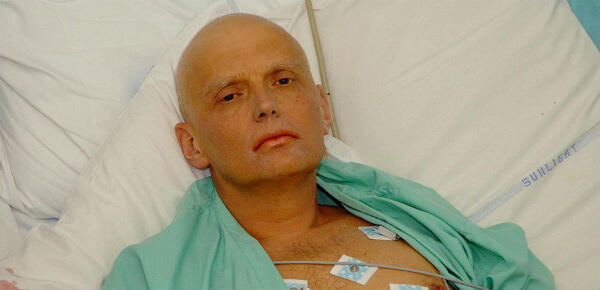
The Guardian reports: The former Russian spy Alexander Litvinenko was probably murdered on the personal orders of Vladimir Putin, the UK public inquiry into his death has found.
Litvinenko, who died from radioactive poisoning in a London hospital in November 2006, was killed by two Russian agents, Andrei Lugovoi and Dmitry Kovtun, the inquiry report said. There was a “strong probability” they were acting on behalf of the Russian FSB secret service, the report added.
Sir Robert Owen, the inquiry chair, said that taken as a whole the open evidence that had been heard in court amounted to a “strong circumstantial case” that the Russian state was behind the assassination.
But when he took into account all the evidence available to him, including a “considerable quantity” of secret intelligence that was not aired in open court, he found “that the FSB operation to kill Mr Litvinenko was probably approved by [Nikolai] Patrushev [head of the security service in 2006] and also by President Putin”.
Marina Litvinenko, Alexander’s widow, welcomed the report’s “damning finding” and called for the UK to impose sanctions on Russia, in a statement read outside the Royal Courts of Justice, where the inquiry took place. But she claimed she had been given indications that the UK would do nothing. [Continue reading…]
Luke Harding writes: The Soviet Union had a long tradition of bumping off its enemies. They included Leon Trotsky (ice-pick in the head), Ukrainian nationalists (poisons, exploding cakes) and the Bulgarian dissident Georgi Markov (ricin pellet fired from an umbrella, on London’s Waterloo Bridge). There was a spectrum. It went from killings that were demonstrative, to those where the KGB’s fingerprints were nowhere to be found, however hard you looked. Such murders were justified by what you might call Leninist ethics: they were necessary to defend the Bolshevik revolution, a noble experiment.
Under Boris Yeltsin these exotic killings mostly stopped. Moscow’s secret poisons lab, set up by Lenin in 1917, was mothballed. After 2000 though, with Putin in the Kremlin, such Soviet-style operations quietly resumed. Critics of Russia’s new president had an uncanny habit of ending up … well, dead. In power, Putin steered the country in an increasingly authoritarian direction, snuffing out most sources of opposition and dissent. The president’s fellow KGB comrades, once subordinate to the Communist party, were now in sole charge.
The murders of journalists and human rights activists could not be explained in terms of protecting socialism. Rather, the state was now synonymous with something else: the personal financial interests of Putin and his friends.
As an FSB officer in the 1990s, Litvinenko had been shocked to discover how thoroughly organised crime had penetrated Russia’s security organs. In his view, criminal ideology had replaced communist ideology. He was the first to describe Putin’s Russia as a mafia state, in which the roles of government, organised crime and the spy agencies had grown indistinguishable. [Continue reading…]
The murder of former Russian spy Alexander Litvinenko was one of the most high-profile assassinations of the decade. It particularly captured the public imagination because Litvinenko was killed using polonium-210, a rare but deadly substance that was thought to have been slipped into Litvinenko’s tea. Now a UK public inquiry has issued its findings on the case. But what is polonium?
Rare and radioactive
Polonium is a radioactive element that occurs naturally in tiny amounts (which are harmless to us). It was discovered in 1898 by Marie Curie, during her research on pitchblende, an ore of uranium. It has the chemical symbol “Po” and Curie named it after Poland, her native country. If you look at a periodic table, you’ll find polonium at the bottom of the group headed by oxygen and sulfur.
James Miller writes: The last two years have been rather tough for the Russian government’s main English-language propaganda outlet, RT.
Following Russia’s illegal and nearly-universally-condemned annexation of the Crimean peninsula, RT anchor Liz Wahl, then anchor and correspondent Sara Firth, quit in protest of what they called “propaganda” which they were forced to spread in order to cover up the Kremlin’s foreign policy activity.
AFP reports: Russian airstrikes in Syria have killed more than 1,000 civilians since they were launched almost four months ago, a monitoring organisation has said.
The raids, which started on 30 September, have killed 1,015 civilians, including more than 200 children, the Britain-based Syrian Observatory for Human Rights (SOHR) said on Wednesday.
The group, which relies on a network of sources on the ground for its reports, said the strikes had also killed 893 Islamic State jihadis and 1,141 other opposition militants, including members of al-Qaida affiliate al-Nusra Front.
The toll of 3,049 includes almost 700 deaths in just three weeks. [Continue reading…]
Reuters reports: Internationally brokered talks between Syria’s government and opposition groups due to start on Jan. 25 may be delayed, but major powers must keep up the pressure to bring participants to the table, the United Nations envoy said on Wednesday.
A Syrian opposition council backed by Saudi Arabia said on Wednesday it will not attend the negotiations in Geneva with the government if a third group takes part, a reference to a Russian bid to widen the opposition team.
U.N. Special Envoy Staffan de Mistura spoke in an interview with broadcaster CNN, hours after U.S. Secretary of State John Kerry and Russian Foreign Minister Sergei Lavrov held talks in Zurich despite no sign of agreement on who should represent the opposition. [Continue reading…]
Kyle Orton writes: Yesterday, the Islamic State (IS) released their thirteenth issue of Dabiq. Among many things, it contained an admission of death for Mohammed Emwazi (“Jihadi John”). Referred to by his kunya, Abu Muharib al-Muhajir, Dabiq said Emwazi had been hit by an “unmanned drone in the city of ar-Raqqah” on November 12, “destroying the car and killing him instantly.” The biography that Dabiq offered gave some intriguing details, confirming some surmises I had made about Emwazi when his identity was revealed last spring, including his early involvement in an al-Qaeda network in London sending fighters to al-Shabab in Somalia — the thing that brought him to the attention of the security services, confirming that the truth was the inverse of CAGE’s infamous claim that harassment by the MI5 had radicalized Emwazi — and that Emwazi had left Britain to do jihad in Syria in the company of another British citizen. Emwazi was also in the thick of it when IS broke from al-Qaeda and offers an interesting and rare example of a European IS fighter entrusted with an internal security role for the caliphate. [Continue reading…]
The latest terror attack in Burkina Faso’s capital, Ouagadougou, on Friday 15 January, announced the bloody entry of an al-Qaeda franchise into a country that had so far been spared the traumas of radical Islamism.
At first glance, this looks like the spillover from a wider conflict with militant Islamists across North and West Africa – but the attacks have as much to do with Burkina Faso itself as with global jihadist movements and their goals.
Nestled just underneath Mali and Niger in West Africa, Burkina Faso is still in the midst of a democratic transition which began in 2014 with the ousting of its president of 27 years, Blaise Compaoré. Compaoré was a towering regional figure: having orchestrated the assassination of his predecessor Thomas Sankara in 1987, he changed course and made his country a staunch ally of the West.
As abductions by militant groups in the region steadily mounted from the early 2000s onwards, he became a go-to negotiator whenever Western powers tried to free hostages held in the Sahara. Ouagadougou became a natural base for negotiations and regional dealmaking, whilst at the same time remaining a crucial logistical base for the French army.
Al Jazeera reports: On January 7, a low-flying agricultural aircraft sprayed herbicides on to Palestinian farmlands along the eastern border, eradicating or damaging up to 162 hectares of crops and farmland along the Israeli border fence.
“Herbicides are sprayed in high concentrations. Thus, they remain embedded in the soil, and then find their way to the water basin. This constitutes a real hazard for the population,” said Anwar Abu Assi, manager of the chemical laboratory at the Ministry of Agriculture.
The sprayed areas belong to Israel’s unilaterally imposed and poorly delineated “buffer” or “no-go zone”.
The zone, which amounts to an estimated 17 percent of the entire territory of the Gaza Strip and a third of its agricultural lands, erodes into the Strip’s most vital and fertile soils. [Continue reading…]
Bloomberg reports: To say that 2015 was hot is an understatement. The average recorded temperature across the surface of the planet was so far above normal that it set a record for setting records.
The year was more than a quarter of a degree Fahrenheit warmer than the last global heat record—set all the way back in 2014—according to National Oceanic and Atmospheric Administration figures released on Wednesday. A quarter of a degree may not sound like much, but on a planetary scale it’s a huge leap. Most previous records were measured by hundredths of a degree.
A powerful El Niño is largely responsible for the year’s extremes, but make no mistake: This is what global warming looks like. Temperatures are rising 10 times faster than during the bounce back from the last ice age. Fifteen of the hottest 16 years on record have come in the 21st century. [Continue reading…]
The New York Times reports: California’s attorney general is investigating Exxon Mobil on whether the company lied to the public and shareholders about the risks of climate change, and whether the company’s statements over the years constitute violations of securities laws and other statutes.
Mr. Schneiderman, calling climate change “the defining issue of our time,” applauded the action taken by Kamala D. Harris, the attorney general.
“Just like any other publicly traded company, these energy giants have an obligation to ensure that their disclosures to investors of known and reasonably likely risks are truthful and not misleading, and to disclose to the public the risks associated with their products,” he said.
The California investigation was first reported by The Los Angeles Times, and was confirmed by people with knowledge of details of the inquiry. [Continue reading…]
Science magazine reports: The solar system appears to have a new ninth planet. Today, two scientists announced evidence that a body nearly the size of Neptune — but as yet unseen — orbits the sun every 15,000 years. During the solar system’s infancy 4.5 billion years ago, they say, the giant planet was knocked out of the planet-forming region near the sun. Slowed down by gas, the planet settled into a distant elliptical orbit, where it still lurks today.
The claim is the strongest yet in the centuries-long search for a “Planet X” beyond Neptune. The quest has been plagued by far-fetched claims and even outright quackery. But the new evidence comes from a pair of respected planetary scientists, Konstantin Batygin and Mike Brown of the California Institute of Technology (Caltech) in Pasadena, who prepared for the inevitable skepticism with detailed analyses of the orbits of other distant objects and months of computer simulations. “If you say, ‘We have evidence for Planet X,’ almost any astronomer will say, ‘This again? These guys are clearly crazy.’ I would, too,” Brown says. “Why is this different? This is different because this time we’re right.”
Outside scientists say their calculations stack up and express a mixture of caution and excitement about the result. “I could not imagine a bigger deal if — and of course that’s a boldface ‘if’ — if it turns out to be right,” says Gregory Laughlin, a planetary scientist at the University of California (UC), Santa Cruz. “What’s thrilling about it is [the planet] is detectable.” [Continue reading…]
CBC News reports: Many Syrian refugees have already arrived and more are coming to the Waterloo Region [in Southern Ontario], leading some to wonder about what we can do to make these people feel at home in a new country.
In Waterloo Region, a crash course in conversational Arabic is available to residents and several have leaped at the opportunity to learn new language while becoming more useful to those arriving. The workshop is meant to teach private refugee sponsors and volunteers.
An organization known as Bring Back Hope, which was founded by Iman Arab, is working in association with Muslim Social Services to put together the four-hour course. The sessions are facilitated by Dr. Amir Al-Azraki, who teaches Arabic at the University of Waterloo and is also a lecturer and playwright.
Leanne Brown works with Carizon Family and Community Services as a school mental health co-ordinator and told CBC’s Melanie Ferrier that the opportunity to help others makes her feel really good.
“I’m here to learn Arabic because of the new refugees coming into our city and just to know how to make them feel welcome,” Brown said. “It’s pretty easy, actually. And I guess for me, learning a new language is very exciting.” [Continue reading…]
Tom Anderson and Eliza Egret write: “We have cleared 1.5 million tonnes of rubble,” Abdo Rrahman Hemo (known as Heval Dostar), head of the Kobanê Reconstruction Board, tells us humbly as we sit in his office in Kobanê city in November 2015. But as we walk through the bombed streets, with collapsed buildings all around us and dust filling our lungs, it’s hard to believe that Kobanê could have been any worse. “We have estimated that 3.5 billion dollars of damage has been caused,” he continues.
It’s been one year since the US bombing of Kobanê – then partly occupied by Daesh – and most of the buildings are still in tatters. Kobanê is in Rojava (meaning ‘west’ in Kurdish), a Kurdish majority region in the north of Syria that declared autonomy from the Assad regime in 2012.
When Daesh approached, the majority of those who were not involved in defending the city left, most to neighbouring Turkey. The People’s Protection Units of the YPG and YPJ remained to defend the city, and were eventually given air support by the US. Most of the refugees have now returned, only to find a city almost entirely destroyed and littered with mines and booby traps, planted by Daesh before they were defeated. As we walk around, a family waves at us from the wreckage of their home, which no longer has three of its walls. Washing lines are hung up and clothes are dried amongst the wrecked houses as people continue their daily lives.
So why is Kobanê still in ruins one year on? Unsurprisingly, the US – whose bombs caused the majority of destruction in Kobanê – has not provided any support for the reconstruction. This is a mixed blessing, as US reconstruction efforts are aimed at creating markets for US companies and generating allies for US foreign policy. But it leaves a vacuum that grassroots solidarity movements need to fill. [Continue reading…]
Amnesty International reports: Peshmerga forces from the Kurdistan Regional Government (KRG) and Kurdish militias in northern Iraq have bulldozed, blown up and burned down thousands of homes in an apparent effort to uproot Arab communities in revenge for their perceived support for the so-called Islamic State (IS), said Amnesty International in a new report published today.
The report, Banished and dispossessed: Forced displacement and deliberate destruction in northern Iraq, is based on field investigation in 13 villages and towns and testimony gathered from more than 100 eyewitnesses and victims of forced displacement. It is corroborated by satellite imagery revealing evidence of widespread destruction carried out by Peshmerga forces, or in some cases Yezidi militias and Kurdish armed groups from Syria and Turkey operating in coordination with the Peshmerga.
“KRG forces appear to be spearheading a concerted campaign to forcibly displace Arab communities by destroying entire villages in areas they have recaptured from IS in northern Iraq. The forced displacement of civilians and the deliberate destruction of homes and property without military justification, may amount to war crimes,” said Donatella Rovera, Amnesty International’s Senior Crisis Response Advisor, who carried out the field research in northern Iraq. [Continue reading…]
This website or its third-party tools use cookies, which are necessary to its functioning. By closing this banner, you agree to the use of cookies.