Robin Yassin-Kassab blogs at Qunfuz.




Robin Yassin-Kassab blogs at Qunfuz.
The Telegraph reports: Fresh evidence has emerged of how starving Syrians are being forced to eat grass to survive as President Bashar al-Assad’s regime defies the UN to tighten sieges across Syria.
International aid agencies say that the regime is using humanitarian aid – which is supposed to be delivered freely under both international law and United Nations resolutions – as a bargaining chip.
Aid workers claim the crisis has now spread well beyond the town of Madaya, north west of Damascus, where photographs of emaciated children caused an international outcry earlier this month.
Omar Hakim, a doctor in Syrian capital, reported similar scenes of horror in the south-west suburb of Moadhamiya last week.
“Twelve people died last week, six of them children,” he told The Sunday Telegraph.“There are 1,500 patients here suffering chronic diseases which require treatment or medicine which is not available. Six hundred children need breast-feeding but their mothers can’t feed them because they’re malnourished too.
“People are eating grass, and rice if it’s available. The aid which has been sent is not enough to keep people alive.”
Sieges have been used as a weapon since the start of the war, but the situation has worsened in recent weeks. [Continue reading…]
The Associated Press reports: Libya’s internationally recognized parliament on Monday rejected a U.N.-sponsored unity government and political agreement with rival authorities based in the capital, Tripoli, the media office said.
House of Representatives member Essa al-Areibi says 90 out of 140 members who attended Monday’s session rejected the unity Cabinet and 84 rejected the political agreement. Both were the result of months of negotiations, and were backed by some members of each faction.
The international community has been pushing the rivals to unite against the rising threat of Islamic militants, including an increasingly powerful Islamic State affiliate that has seized the central city of Sirte and launched attacks across the country. [Continue reading…]
Religion News Service reports: Hundreds of Muslim scholars will meet in Morocco next week to reassert the rights of non-Muslims living among them as Christians and other religious minorities flee extremism across the Middle East for safety and freedom elsewhere.
In these times, Muslims must affirm their tradition’s true teachings on tolerance, said Shaykh Hamza Yusuf, co-founder of Zaytuna College, the first Muslim liberal arts college in the U.S. The summit meeting, expected to attract more than 300 Muslim religious leaders, will hark back to the Charter of Medina, in which the Prophet Muhammad enumerated the rights of non-Muslims 1,400 years ago.
“The prophet was religiously persecuted, so he knew firsthand what it was to experience religious persecution,” said Yusuf, speaking on a pre-conference media call Thursday (Jan 21). “His religion ensured the rights of religious minorities,” and Islamic history reveals a generally strong record of tolerance. [Continue reading…]
Natalie Nougayrède writes: In 1947 George Marshall, the US secretary of state, went to Europe. He was shocked by what he saw: a continent in ruins, and rampant hunger. The mood in Paris, Berlin and other capitals was resigned and doom-laden. On returning to Washington, Marshall told President Truman that something dramatic needed to be done – and very soon. The initiative would have to come from Washington, he said.
On 5 June, in a speech to students at Harvard, Marshall announced his European recovery programme. It became, in the words of the British politician Ernest Bevin, “a lifeline to sinking men”. The Marshall plan not only helped Europe back on its feet, it laid the groundwork for the cooperation that ultimately led to the creation of the European Economic Community, the European Union’s predecessor.
In Davos this week Joe Biden, the US vice-president, may well have had a shock similar to Marshall’s. Of course today’s gloom in Europe is not comparable to the devastation left by the second world war – but alarmist language is being heard all the same. Manuel Valls, the French prime minister, has spoken of a risk of European “dislocation”. “Europe has forgotten that history is fundamentally tragic,” he said. Joachim Gauck, the German president, also used the word “tragic” when describing Europe’s difficulties over the refugee crisis.
Europe today is in such a shambles that it is not absurd to ask whether the US should again do something about it, or whether the old continent even matters to American strategic interests any more. The answer to both questions should be a resounding “yes”.
It is obviously unrealistic to think the US is likely to repeat the kind of assistance it deployed in 1947. But the US urgently needs to seriously re-engage on European matters. Failing that, it risks seeing the European project unravel, with more disorder pouring into and across the continent and, ultimately, the loss of key allies.
Europe is currently struggling with the danger of Brexit and major security threats (which include terrorism, and Russian aggression), as well as the political fallout of the refugee crisis. It’s not that US action in itself would miraculously solve all these problems, but its aloofness has arguably contributed to making them worse. [Continue reading…]
Update in response to comments: Natalie Nougayrède’s reference to the Marshall Plan seems to have led readers to conclude the lifeline she’s calling for is financial. After all, that’s what foreigners always do, isn’t it: beg for money from the U.S.!
Actually, her first appeal is for Obama to be forthright in making it clear that the U.S. has a strong interest in Britain remaining in the EU. The British naively and nostalgically cling on to the UK’s (one-sided) “special relationship” with the U.S.. A wake up call from Washington might alienate a few people, but I think they’d be outnumbered by those who recognized that this kind of counsel was well-intentioned and realistic. Moreover, departure from the EU would have much larger repercussions than diminishing the value of U.S.-UK relations. It may well lead to the rapid breakup of the UK as Scotland seeks swift independence so that it can remain in the EU.
How much would this piece of political engagement cost the U.S.? Nothing.
Second, she calls for “more US political leverage” in supporting a common European defense policy. Cost? Nothing.
Third, “the US cannot continue to treat the refugee crisis destabilising Europe as if it were a far-flung problem that doesn’t affect its direct interests. Around 4.5 million refugees have fled the Syrian civil war. The US has taken just 2,600.”
Refugees are not only fleeing from Syria but also Iraq and Afghanistan (and many other countries).
Instability across the Middle East cannot be attributed solely to American meddling and yet in the last two decades there was no single action that had a more destabilizing effect than the decision to invade Iraq.
Americans who supported the war and many of those who opposed it are now apparently unified in believing that, like a hit-and-run driver, the best course of action is to flee the scene of the crime.
Certainly, those who argue that America’s military interventions invariably seem misguided have plenty of evidence to support their argument.
But when it comes to the issue of helping Europe handle the refugee crisis, the primary impediment in the U.S. is not financial; it’s Islamophobic cowardice.
After the United States had finished carpet-bombing Vietnam and dousing its jungles with Agent Orange and the war’s failure had become undeniable, part of the aftermath of that unconscionable and delusional intervention was that there was sufficient decency in the U.S. to accept what eventually amounted to 1.3 million refugees settling here.
For the U.S. to now step up and welcome tens or even hundreds of thousands more refugees from the Middle East is not to make some unreasonable demand on American generosity. It’s part of paying the price of war.
It’s one thing to argue in advance against meddling in the affairs of other countries and on that basis to promote a relatively benign insularity, but when the meddling has been rampant and long-running, then insularity is just another name for irresponsibility. The United States doesn’t have the option of becoming Switzerland.
Having said that, Nougayrède’s appeal here is less blaming and by no means strident: it is for the U.S. to recognize that it really does have a stake in Europe’s future and it should not remain a mute bystander watching the European project fall apart.
Is that too much to ask?
Writers from across the Arab world offer their reflections on the last five years. Robin Yassin-Kassab writes: Five years ago the Guardian asked me to evaluate the effects of the Tunisian uprising on the rest of the Arab world, and specifically Syria. I recognised the country was “by no means exempt from the pan-Arab crisis of unemployment, low wages and the stifling of civil society”, but nevertheless argued that “in the short to medium term, it seems highly unlikely that the Syrian regime will face a Tunisia-style challenge”.
That was published on 28 January 2011. On the same day a Syrian called Hasan Ali Akleh set himself alight in protest against the Assad regime in imitation of Mohamed Bouazizi’s self-immolation in Tunisia. Akleh’s act went largely unremarked, but on 17 February tradesmen at Hareeqa in Damascus responded to police brutality by gathering in their thousands to chant “The Syrian people won’t be humiliated”. This was unprecedented. Soon afterwards, the Deraa schoolboys were arrested and tortured for writing anti-regime graffiti. When their relatives protested on 18 March, and at least four were killed, the spiralling cycle of funerals, protests and gunfire was unleashed. In 2011, I wrote that Assad personally was popular, and so he remained until his 30 March speech to the ill-named People’s Assembly. Very many had suspended judgment until that moment, expecting an apology for the killings and an announcement of serious reforms. Instead, Assad threatened, indulged in conspiracy theories, and, worse, giggled repeatedly.
I underestimated the disastrous effects of Assad’s neo-liberal/crony-capitalist restructuring during the previous decade. I was soon to be wrong about many other things too. In April the regime made conciliatory gestures to Islamists and Kurds. At first I thought this showed how hopelessly out of touch it was – the protest movement at this stage was pan‑Syrian and non-sectarian. Then I understood its misinterpretation was deliberate. In the following years the regime would stick to reading the revolution through ethnic and sectarian lenses; and largely due to its own efforts, these eventually came to dominate the field. [Continue reading…]
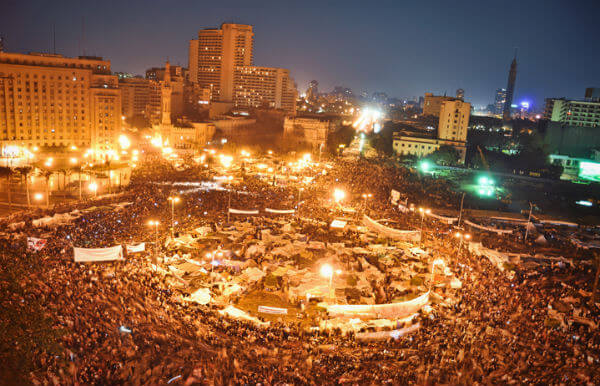
The New York Times reports: The normally invasive Egyptian authorities had long left Studio Emad Eddin alone, seeing no threat from a performance space that houses rehearsal studios and offers classes in set design and drama.
But this month, 18 plainclothes men from the Interior Ministry showed up with a warrant, asked about licenses and then confiscated equipment, including some speakers and a sound mixer, according to Nevine El Ibiary, one of the studio’s founders.
The search came within weeks of similar raids at several cultural venues and amid a vast security dragnet in downtown Cairo — part of an extraordinary effort by the government of President Abdel Fattah el-Sisi to prevent any protest commemorating the uprising that started on Jan. 25, 2011, and toppled President Hosni Mubarak.
The security response has been in keeping with the government’s reputation for repressing most kinds of dissent. But the scale of the clampdown has baffled many people here, as has the level of official alarm, from a government that has faced no challenge from large-scale protests in years. In word and deed, Mr. Sisi and other officials have treated even the possibility of demonstrations on the anniversary as a grave threat to the nation.
The sense of panic has been attributed to concerns that the public is losing patience with the government amid high unemployment, rising prices and a persistent militant insurgency that, among other things, has devastated Egypt’s tourism industry.
But those factors alone were not sufficient to explain the overheated response, analysts said. From the perspective of the security services, the date — Jan. 25 — was itself a danger, as a reminder of their catastrophic, if momentary, loss of control. [Continue reading…]

Lauren Bohn writes: It takes about 30 minutes to drive from the teeming Cairo neighborhood of Faisal to what locals call “El Sijn” — Arabic for “the prison.” There are many in Egypt, but everyone seems to know the prison: Tora Prison, opened in 1908. It has housed a diverse assortment of the country’s dissidents, businessmen, Islamists, and statesmen — including the ousted president Hosni Mubarak, who had ruled Egypt for nearly three decades before his regime fell in the uprising that began almost exactly five years ago.
Since then, the upheaval hasn’t stopped, and it’s as much personal as it is collective. The country saw its first-ever democratic elections; another wave of protest over the rule of Mohammed Morsi, the Islamist president those elections brought to power; a military coup, led by then-Army Chief Abdel Fattah el-Sisi; and a reinstatement, under now-President Sisi, of the kind of authoritarianism protesters risked their lives to escape five years ago. The crackdown has ensnared liberals and Islamists alike, leaving the prison as a burial chamber for the aspirations of the revolution, in all their wide variety.
Nourhan Hefzy has memorized the way there. The route winds through Faisal’s trash-strewn maze of narrow streets and past the more manicured fringes of Cairo, beyond the French School and the boutiques. It ends at a sepia-toned compound of cement in a bleak, brown desert. Somewhere inside that compound is her husband, Ahmed. He has been locked away there for the past two years.
“It’s been five years since we’ve toppled Mubarak and we’re back to square one,” Nourhan says. At 26, Ahmed was one of Egypt’s most prominent liberal activists, and remains a living symbol of the revolution: once vibrant and triumphant on Cairo’s streets, now languid and silenced behind bars. The young couple used to talk for hours about their plans to open a bookstore, maybe even start a publishing house dedicated to fostering freedom and democracy in a country with a severe deficit of both. Now their conversations are limited to a hurried, supervised 20 minutes every other week.
“It is worse than square one,” corrects Ahmed’s mother Fathia, who often accompanies her daughter-in-law on visits to El Sijn. For her, the journey to the prison evokes a more-distant past, after her father and almost all her male relatives were arrested decades ago for being members of the then-banned Islamist Muslim Brotherhood. The organization, whose political party was briefly in charge of Egypt’s government following Morsi’s ascent to the presidency, has once again been banned. But Fathia never thought her son — a staunch critic of the very group she and her husband have dedicated their lives to — would also end up behind bars. [Continue reading…]
Aron Lund writes: The Syrian Democratic Forces, or SDF, is a coalition of Kurdish, Sunni Arab and Syriac Christian fighters, but is completely dominated by its Kurdish element, which is a powerful and well organized militia known as the Popular Defense Units, YPG, with an all-female branch called the Women’s Defense Units, or YPJ. These organizations, in turn, are Syrian front groups for the Kurdistan Workers’ Party or PKK. The other militias involved in the Syrian Democratic Forces are either long-standing PKK allies or proxies, such as the armed wing of the Syriac Union Party, or more recent allies drawn from the Sunni Arab tribal landscape in this part of Syria and from the remains of small Sunni Arab rebel groups crushed by the so-called Islamic State.
The coalition as a whole receives American air support for operations against Islamic State, as did the YPG/J before it. That started in the Battle of Kobane that began in autumn 2014, which was enormously successful — really the first major battlefield defeat inflicted on Islamic State. It has provided the template for US-PKK cooperation. In addition, the Pentagon has picked out a number of these little Arab groups that work under the SDF umbrella as favored recipients of arms and support. It terms them, collectively, the Syrian Arab Coalition, though no one else seems to use that name.
The idea is to use the SDF as an incubator to breed Sunni Arab militias able to take over where Kurdish territory ends and push deep into Islamic State’s heartland, which is in the Sunni Arab tribal region that connects Syria with Iraq. Relying on the Kurds in that region would create resentment among other Syrian and regional allies, and it would risk pushing locals into the arms of the jihadis. Also, it’s not obvious that the Kurds are interested in dying for U.S. interests that far away from their own home areas. They have many other priorities, chief among them to try to secure their population, to keep Turkey out of Syria and to link the Kurdish enclaves in Kobane and Efrin, which are separated by territory held by Islamic State and rival Turkey-backed Sunni Arab rebels north of Aleppo. In those battles in northwestern Syria, the SDF fighters seem to have received some level of Russian support, but they do not enjoy any U.S. backing – though they like to pretend they do, in order to sell their war on Turkey’s allies as part of the “War on Terror.” Of course, this has embarrassed the Pentagon in front of other American allies, but what can be done? All sides in Syria, including the United States, must balance between allies that do not fully share their own interests. [Continue reading…]
The New York Times reports: As recently as 2011, shares in Peabody Energy, the world’s biggest private sector coal company, traded at the equivalent of $1,000. Today, they hover around $4 each. Over that time, investors who held the stock lost millions.
Peabody, like other coal companies, has been hammered as cheap natural gas erodes the demand for coal. But concerns about climate change are also an issue for the company as customers and investors turn away from fossil fuels.
Peabody saw this coming. Even as the company privately projected that coal demand would slump and prices would fall, it withheld this information from investors. Instead, Peabody said in filings with the Securities and Exchange Commission that it was not possible to know how changing attitudes toward climate change would affect its business.
Peabody’s double talk was revealed as part of a two-year investigation by the New York attorney general. In a settlement in November, Peabody agreed that it would disclose more about climate change risks in its regular filings with the S.E.C.
In theory, however, Peabody should have been making such disclosures all along. [Continue reading…]
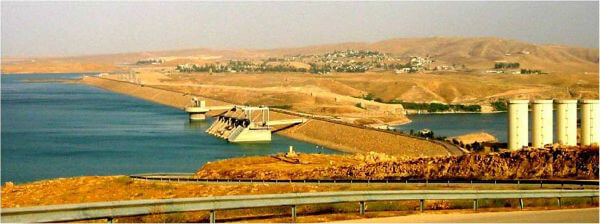
National Interest reports: A lethal threat sits in Iraq right now, one that could kill hundreds of thousands of civilians with little notice. The weapon briefly fell into the jihadis’ hands last summer, and still poses a destructive risk to much of the country.
The 750-megawatt Mosul Dam is the country’s largest, and one of the most productive in the Middle East. But its proximity to Mosul, ISIS’s biggest Iraqi city, has caused nightmares in both Baghdad and Washington.
Built during the Saddam era on a weak foundation of gypsum, the dam requires continuous maintenance and reinforcement with fresh concrete. Without these efforts, some ten billion tons of water threaten to sweep down the Tigris, flooding towns and villages hundreds of miles downriver. Baghdad could see flooding of more than fifteen feet, according to one report. A U.S. Army Corps of Engineers study in 2006 called it “the most dangerous dam in the world” and estimates of the potential civilian death toll reach as many as half a million. [Continue reading…]

The New York Times reports: When President Obama secretly authorized the Central Intelligence Agency to begin arming Syria’s embattled rebels in 2013, the spy agency knew it would have a willing partner to help pay for the covert operation. It was the same partner the C.I.A. has relied on for decades for money and discretion in far-off conflicts: the Kingdom of Saudi Arabia.
Since then, the C.I.A. and its Saudi counterpart have maintained an unusual arrangement for the rebel-training mission, which the Americans have code-named Timber Sycamore. Under the deal, current and former administration officials said, the Saudis contribute both weapons and large sums of money, and the C.I.A takes the lead in training the rebels on AK-47 assault rifles and tank-destroying missiles.
The support for the Syrian rebels is only the latest chapter in the decadeslong relationship between the spy services of Saudi Arabia and the United States, an alliance that has endured through the Iran-contra scandal, support for the mujahedeen against the Soviets in Afghanistan and proxy fights in Africa. Sometimes, as in Syria, the two countries have worked in concert. In others, Saudi Arabia has simply written checks underwriting American covert activities. [Continue reading…]
The Independent reports: British arms companies have cashed-in on Saudi Arabia’s military campaign in Yemen by ramping up arms sales to the country’s autocratic government by over a hundred times, new figures show.
Sales of British bombs and missiles to the Saudi Arabia surged to over £1bn just three months last year, according to an official record of arms export licences quietly released by the Government this week.
The sales, up from just £9m in the preceding three-month period, have occurred while the oil-rich autocracy conducts a military campaign in its neighbour’s territory, where the United Nations has said a “humanitarian catastrophe” is unfolding. [Continue reading…]
Erdogan aide Yusuf Yerkel REALLY wants to forget this moment, kicking a mourning miner in #Soma. Let's remind him. pic.twitter.com/ivY6YqZQG2
— Capulcu Tonella (@diehimbeertonis) January 22, 2016
Mashable reports: Famous images showing an aide to Turkey’s prime minister kicking a protester in the wake of a national tragedy are slowly vanishing from the internet in Turkey.
The photographs were taken after a fire killed 301 miners in the spring of 2014 and they quickly became symbols of the government’s callous reaction to the worst industrial accident in Turkey’s history.
Yet anyone in Turkey today who tries to find the famous photos of Yusuf Yerkel winding up for a kick aimed a protester who was already on the ground — and restrained by security — will find that many webpages showing the image are blocked. [Continue reading…]
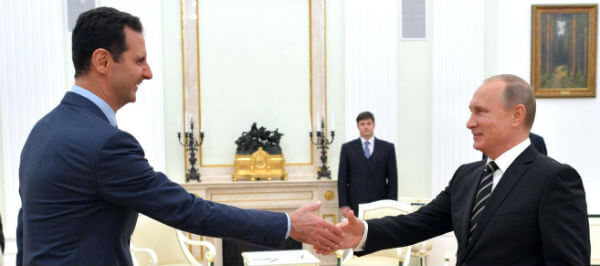
Financial Times reports: Just weeks before his death on January 3, Colonel-General Igor Sergun, director of Russia’s GRU military intelligence agency, was sent to Damascus on a delicate mission.
The general, who is believed to have cut his teeth as a Soviet operative in Syria, bore a message from Vladimir Putin for President Bashar al-Assad: the Kremlin, the Syrian dictator’s most powerful international protector, believed it was time for him to step aside.
Mr Assad angrily refused.
Two senior western intelligence officials have given the FT details of Sergun’s mission. The Russian foreign ministry referred a request for comment to the defence ministry, which said it was unable to comment.
Russia’s failed gamble in Damascus left Mr Assad more entrenched than before, and hopes for a diplomatic solution to the vicious civil war appear again to be ebbing away.UN officials have spent the past week lowering expectations that the talks between the warring factions planned for January 25 in Geneva will go ahead, let alone produce a diplomatic breakthrough.
It is a dramatic reversal of fortunes. News of the secret proposal delivered by Sergun — a choreographed transition of power that would maintain the Alawite regime but open the door to realistic negotiations with moderate rebels — added to a growing mood of optimism among western intelligence agencies in late 2015. [Continue reading…]

Following the release of the UK report on the 2006 death of Alexander Litvinenko, Julia Ioffe writes: It’s a salacious tale of revenge and espionage, straight out of a John le Carre novel: an F.S.B. man turned whistleblower meets in a posh London hotel with his former colleagues, who slip polonium 210 into his green tea. Investigators find a clump of debris laced with the radioactive stuff in a sink drainpipe a few floors above, near where one of the F.S.B. men was staying. The other suspected assassin gave Litvinenko’s wealthy benefactor, the banished oligarch Boris Berezovsky, a T-shirt that said, “nuclear death is knocking your door [sic].”
And yet, in Russia the report merited little more than a yawn. Immediately, the familiar reactions kicked in. Putin’s spokesman, Dmitry Peskov, said the report wasn’t of any interest to the Kremlin and, in a pointed turn of phrase, expressed regret that the report “only poisoned” relations between Russia and Britain. Maria Zakharova, spokeswoman for the Russian Foreign Ministry, called the findings “politicized,” and a report on the main evening-news program on Russia’s Channel One hinted that the British killed two key witnesses in the case. The British, in turn, said they would freeze the assets of Andrei Lugovoi and Dmitry Kovtun, the two former F.S.B. agents accused of poisoning Litvinenko. Theresa May, the British home secretary, said that the Russian ambassador to London was summoned for a talking-to.
All of this changes exactly nothing. Relations between Russia and Britain could hardly have been worse before the report was released, and Lugovoi and Kovtun haven’t been to London in ages — not since the British police fingered them in Litvinenko’s murder and sought their extradition, which Russia has flatly refused. Lugovoi now has immunity as a member of the Russian Parliament, as well as a medal from Putin for “service to the nation.” The murder itself took place nine years ago, and since then, the sordid details have become endlessly familiar. Even the le Carre comparison has become a nauseatingly common cliché, bandied about endlessly since Litvinenko’s death.
It may be crass to be bored by the details of a man’s murder, but here we are. The West and Putin’s opponents at home believe that the Kremlin killed Litvinenko — that his death was a Cosa Nostra-style murder of a traitor. Putin loyalists and the masses who will see the news on Russian television believe this is all a Western ploy to tarnish Russia’s image. Nothing that came out in Judge Owen’s report will sway them; in fact, it only hardens the two positions. The same happened this summer with the release of another supposedly scandalous report on Russia’s nefarious deeds: The Dutch marshaled reams of evidence in the shooting down of Malaysia Airlines Flight 17 over eastern Ukraine, carefully laying it out in a report that pointed to Moscow’s role in the tragedy. The Russians pooh-poohed it and showed their own report on television, one that directly contradicted the Dutch investigation. Only 3 percent of Russians believe the Dutch narrative of the crash. [Continue reading…]
BuzzFeed reports: The United Nations altered a key humanitarian aid plan for Syria after consultation with the Assad regime, including deleting references to “besieged” areas such as Madaya where thousands of people are starving, Buzzfeed News can reveal.
UN insiders in the region and NGOs have accused the organisation of pandering to the regime by allowing it to censor the document.
A leaked copy of an original draft of the Syria Humanitarian Response Plan shows that a number of key changes were made to the final report after it was sent to the regime by the Damascus arm of the UN Office for the Coordination of Humanitarian Affairs.
The proposal, which will form the basis of a $3.1 billion global aid appeal, was written in consultation with other UN teams and NGOs working in Syria, but the changes were made after it had been sent to the government by the Damascus office without consultation with the other authors. [Continue reading…]
The Guardian reports: The president of Iraq’s autonomous Kurdish north has called on global leaders to acknowledge that the Sykes-Picot pact that led to the boundaries of the modern Middle East has failed, and urged them to broker a new deal paving the way for a Kurdish state.
Massoud Barzani, who has led the troubled country’s Kurds for the past decade, said the international community had started to accept that Iraq and Syria in particular would never again be unified and that “compulsory co-existence” in the region had been proven wrong.
“I think that within themselves, [world leaders] have come to this conclusion that the era of Sykes-Picot is over,” Barzani told the Guardian. “Whether they say it or not, accept it or not, the reality on the ground is that. But as you know, diplomats are conservatives and they give their assessment in the late stages of things. And sometimes they can’t even keep up with developments.”
The political map of northern Iraq has changed drastically in the 18 months since Islamic State overran Iraq’s second city, Mosul. Kurdish forces are now in full control of Kirkuk and Sinjar and have claimed control of thousands more miles of land that had been under control of Iraq’s central government. [Continue reading…]