The Surveillance State of America

Shane Harris writes: March 2002, John M. Poindexter, a former national security adviser to President Ronald Reagan, sat down with Gen. Michael V. Hayden, the director of the National Security Agency. Mr. Poindexter sketched out a new Pentagon program called Total Information Awareness, that proposed to scan the world’s electronic information — including phone calls, e-mails and financial and travel records — looking for transactions associated with terrorist plots. The N.S.A., the government’s chief eavesdropper, routinely collected and analyzed such signals, so Mr. Poindexter thought the agency was an obvious place to test his ideas.

He never had much of a chance. When T.I.A.’s existence became public, it was denounced as the height of post-9/11 excess and ridiculed for its creepy name. Mr. Poindexter’s notorious role in the Iran-contra affair became a central focus of the debate. He resigned from government, and T.I.A. was dismantled in 2003.

But what Mr. Poindexter didn’t know was that the N.S.A. was already pursuing its own version of the program, and on a scale that he had only imagined. A decade later, the legacy of T.I.A. is quietly thriving at the N.S.A. It is more pervasive than most people think, and it operates with little accountability or restraint.

The foundations of this surveillance apparatus were laid soon after 9/11, when President George W. Bush authorized the N.S.A. to monitor the communications records of Americans who analysts suspected had a “nexus to terrorism.” Acting on dubious legal authority, and without warrants, the N.S.A. began intercepting huge amounts of information.

But the N.S.A. came up with more dead ends than viable leads and put a premium on collecting information rather than making sense of it. The N.S.A. created what one senior Bush administration official later described as a “mirror” of AT&T’s databases, which allowed ready access to the personal communications moving over much of the country’s telecom infrastructure. The N.S.A. fed its bounty into software that created a dizzying social-network diagram of interconnected points and lines. The agency’s software geeks called it “the BAG,” which stood for “big ass graph.”

Today, this global surveillance system continues to grow. It now collects so much digital detritus — e-mails, calls, text messages, cellphone location data and a catalog of computer viruses — that the N.S.A. is building a 1-million-square-foot facility in the Utah desert to store and process it. [Continue reading…]


Facebooktwittermail

What Ryan represents

David Bromwich writes: On 11 August, Mitt Romney stirred excitement in a dull election by announcing that he would share the Republican ticket with Paul Ryan: a seven-term congressman, chairman of the House Budget Committee and intellectual guru of the congressional Tea Party. The choice was not altogether surprising. The moderate lawmakers whom Romney might have picked were without popular appeal, and it must have seemed possible that Ryan’s extreme proposals for federal budget-cutting and lowering taxes on the rich could be presented as evidence of a manly concern with principle which any impartial spectator ought to admire.

News presenters, keen on human interest, point out again and again that Ryan’s father died suddenly when he was 16. He learned independence the hard way, the story seems to say. In fact, Ryan grew up in Janesville, Wisconsin, close to grandparents and aunts and uncles who constituted an aristocracy in the town. The Ryans were numerous and they were rich. In time of trouble, Paul could always fall back on the network of a family that lived in concentric circles around him. His proposals to reduce the social ‘safety net’ for the unlucky may be seen as drawing a convenient but contortedly wrong lesson from his own life.

Ryan learned his anti-government ideology from an intoxicated early exposure to the writings of Ayn Rand.[*] It is now clear that Rand has been the most influential thinker in American politics of the last fifty years. Her novels The Fountainhead and Atlas Shrugged promote, as Rand put it, a ‘morality of rational self-interest – or of rational selfishness’. The central tenets of her politics, hatred of anything that could be construed as self-sacrifice and cruelty towards the helpless, are the exact inverse of the worship of collective sacrifice and blind solidarity that she detested in communism. For a lonely but well-fed achiever in Janesville, this doctrine was a gift – just as it had been once for Alan Greenspan, a young cultist before he became chairman of the Federal Reserve and presided over the bubble and collapse of the Clinton and Bush years.

What signal did Romney send by choosing Ryan? He is on the ticket to make sure that Romney will let Wall Street write its own rules. Free the dollar men, and free them not abashedly but proudly. The odd thing about the choice is that Ryan, though he is running for vice-president, was immediately taken to be the counter-Obama. At 42, he is young, as Obama was young in 2008. He, too, is an ‘idealist’. What the country has vaguely now been promised is an honourable contest of ideals. Yet it was natural for people to compare Ryan with Obama on other grounds. Both are handsome, athletic, comfortable with their early success, and irritating in no obvious way. Somewhere beneath the Obama presentation was always the message: ‘No one (ultimately) can resist my serious charm, and all problems (eventually) find solutions by listening to my voice.’ Ryan’s appeal is just as in-the-groove, but it takes the delivery to the edge of aggression: ‘I am clever and quick, I never lose my temper, and people can only pretend I didn’t win the argument if they ignore my facts and numbers.’

Where Obama projected the calm consciousness of a grave but unnamed mission, Ryan’s self-love is more recognisably American-boyish. He radiates ambition, healthy ambition, as if ambition were one of those permitted substances you could take at the gym to enhance performance. He has a lean and hungry look even when he smiles; and a relentless eagerness also, which will wear on people over time. His constant demeanour is cocksure; his face never registers reflection. Listening to other people is a formality, for Ryan, to be endured before he springs his answers. And how the answers pour out! There is an attractive, efficient speed in the way he works, but also a kind of deadness. And the deadness is there in his eyes – the hard eyes of the self-fulfilled and self-justified, clean of mind and clean of body, a whole mental mansion trip-wired against invasion by entities seeking pity and bearing excuses. [Continue reading…]

Since the beginning of the age of television, Americans have been deeply affected by the way candidates look and the deadness Bromwich rightly observes in Ryan’s eyes reminds me of my first response to the Romney-Ryan combination: these guys look like undertakers.

Romney offers the saccharin words of condolence, while Ryan gives a suitably concise presentation on the options for choosing a casket. And perhaps that’s fitting, now that the contrived hopes inspired during the last election have given way to a pervasive sense of cynicism and despair.

Facebooktwittermail

‘Hunting season for Arabs is upon us’

Ynet reports: Two east Jerusalem teens are claiming they were assaulted by three men in Tel Aviv earlier this week in what could be another case of racist violence after last week’s Jerusalem lynch. One suffered a head injury and required eight stitches and the other sustained light wounds.

Suhib Hushia, 19, said he and his friend were assaulted on their way back from a Tel Aviv beach as they stopped at a parking lot to ask for directions.

“Suddenly three armed men approached us and started yelling at us,” he recalled. “We explained we were looking for directions but they shouted at us to leave.”

According to Hushia, one of the men was wearing a spike glove and slapped his friend. The three then assaulted Hushia using various objects he was unable to see.

Suhib’s brother reported that damage was caused to the victims’ car. He noted that the two had called the police and Magen David Adom but that no forces were sent to the scene as the operators could not understand the two who do not speak Hebrew.

He noted that officers at the Jerusalem police station, where they tried to file a complaint after the incident, told them to return later in the day as there was no Arabic-speaking officer. “This shows us the police’s powerlessness in dealing with racist assaults against Arabs.”

“I thought I was going to die,” Subib said, adding that the assailants had called him a “dirty Arab” and other swear words.

MK Ahmad Tibi (United Arab List Ta’al) said in response, “Hunting season for Arabs is at its height with support from a rightist government and racist Knesset.” He blamed the Israel Police for allowing hate crimes against Arabs to happen.

“Imagine Israel’s response had the tables been turned and a Jew was lynched at an Arab town. We are outraged and appalled over the wave of racist violence sweeping the country sponsored by the Right.”

Facebooktwittermail

The U.S. weapons depots in Israel, fully stocked and ready for war

Al Monitor reports: When the drums of war reach a fever pitch throughout the Middle East, cooperation with Israel’s most important ally assumes even more urgency than ever. The IDF is, of course, a powerful and independent army but in the event of an extensive confrontation, even Israel — a regional power — may run out of ammo. Meanwhile, six secret American bases are spread out throughout the country. According to foreign reports, these depots are chock-full of ammunition, smart bombs, missiles, an assortment of military vehicles and a military hospital with 500 beds. If Israel will be forced to take action against Iran, whether alone or together with the US, there is high probability that it will need a strategic home front — in the guise of those bases full of goodies.

According to the reports, the bases are situated in Herzliya Pituah (in the vicinity of Tel Aviv, on the coastline), Ben Gurion Airport, and air-force bases Ovda and Nevatim (Israeli Air Force bases in Southern Israel). These bases are crammed full of expensive equipment worth more than $1 billion. “These [supply] depots do not constitute the central consideration in deciding when to go to war, but they definitely figure in the overall calculations,” says David Ivri, former Israeli Air Force (IAF) Commander at the beginning of the negotiations with the Americans regarding establishing the depots. Later on, Ivri served as Director-General of the Defense Ministry and as Israel’s Ambassador to the US from 2000 to 2002.

Negotiations between Israel and the US over the emergency reserve depots in Israel extended over a 10-year period. The Israelis asked for huge depots filled with heavy equipment and tanks, while the Americans agreed at first only to store medical equipment. Finally, the US began to build the depots in the early 1990s; according to foreign reports, some were built as underground bunkers. High-echelon Israeli (and American) sources are very familiar with the emergency installations and their great importance to Israel’s warfare deployment. Three weeks ago, the White House issued a special announcement mentioning the existence of these storage sites: “The Israeli forces have access to the American emergency depots.” Defense Minister Ehud Barak said, in internal discussions in the Defense Ministry, that the United States will allow Israel to use equipment from these depots during an emergency.

“The fact that we have these depots definitely improves the way we feel,” says Dani Yatom, former Knesset Member and former head of the Mossad, who served as the Head of the IDF’s Planning Directorate of the General Staff in the period when the US began to transfer emergency reserves to Israel. “I was in favor of the depots. My instincts told me it was a good idea. These depots give us the feeling that we have more equipment than we actually possess. Our military inventory is never sufficient, a prolonged war can lead to a shortage of shells, bombs and other [military] equipment but inventory is always slashed in the defense budget. When we have to decide between stocking up on inventory or transferring funds to [military] training or acquisition of MRPVs [Mini Remote-Piloted Vehicle] or tanks, inventory is usually the lowest priority. The American storage depots alleviate our planning of military operations because we can take into account the American equipment as well. Officially we are not allowed to use anything without American authorization, but there definitely might be someone out there who thinks that if we really will need this equipment, and the Americans won’t allow our access to the emergency depots, we’ll take it anyway.” [Continue reading…]

Facebooktwittermail

Israeli policeman watched Palestinians being beaten by mob and did nothing

The Times of Israel reports: A policeman was present during a mass brawl in Jerusalem Thursday night that nearly left an Arab teen dead, but reportedly did nothing to stop what officials are calling an attempted “lynch.”

An eighth person was arrested late Wednesday in the Zion Square incident which officials say nearly killed 17-year-old East Jerusalemite Jamal Julani. Police are continuing to investigate the beating, which has roiled the country over the racist nature of the attack.

Eyewitnesses said they called the police at the start of the brawl, some 40 minutes before Julani was severely beaten. As a result, a policeman arrived on a motorcycle, but he stood and watched without stopping the mob as violence unfolded, Maariv reported on Wednesday.

“He was right in the mess,” and could see and hear everything going on, one of the witnesses told the Hebrew daily. The policeman “saw how they [the mob] were chasing Arabs and hitting them, but he didn’t care,” the witness said.

Phone records from the night of the attack show that both witnesses spoke to the police dispatcher, Maariv wrote.

The police confirmed that the policeman arrived at the scene. A Jerusalem police spokesperson did not address the questions of whether he witnessed the beating and whether he intervened or not.

Facebooktwittermail

Congressional vacations-for-votes corruption exposed

Every once in a while most of us get offered a free vacation and most of us are smart enough to know that they are not free — there’s got to be some kind of quid pro quo. Corporate marketing departments simply don’t exist to give things away unless such “gifts” offer a reasonable rate of return.

When Rep. Kevin Yoder stripped off his clothes on the shores of the Sea of Galilee last summer, a few drinks might have helped him shed his inhibitions, or he might have momentarily forgotten he was a Republican, or he might have been thinking “Thank God I’m not in Kansas,” but whatever was going through his mind, it turns out that what got exposed wasn’t his genitals — let’s be honest, Yoder indiscretion hardly compares with Anthony Weiner’s — it was AIPAC: the night flower that thrives in darkness and can’t even tolerate moonlight.

The New York Times reports: The trip was much like any of the hundreds hosted in recent years by a nonprofit offshoot of the American Israel Public Affairs Committee, a powerful Washington lobby, and the purpose was much the same: to solidify the support of American lawmakers for Israel at a time of Middle East tumult.

For eight expense-paid days, House Republicans visited Israel’s holiest sites, talked foreign policy with its highest officials and dined at its most famous restaurants, including Decks, known for its grilled beef, stunning views of the Sea of Galilee, and now, for an impromptu swim party.

With hundreds of Washington lawmakers having gone to Israel courtesy of the program, the trips have a reputation as being the standard-bearer for foreign Congressional travel. “We call it the Jewish Disneyland trip,” said one pro-Israel advocate in Washington.

But for lawmakers, the attention surrounding last summer’s trip — thanks to reports of a skinny-dipping Kansas lawmaker who was part of the delegation — has cast an unwanted spotlight once again on the practice of private groups paying for foreign travel, a source of frequent criticism in the past.

One of the most famous travel boondoggles — a golf trip to Scotland for members of Congress and staff members, hosted by the lobbyist Jack Abramoff — led Congress in 2007 to tighten restrictions on who could sponsor trips and for how long. But despite the new restrictions, the number of Congressional trips paid for by outside groups has actually increased since 2007, to more than 1,600 from about 1,300, according to Legistorm, a research group that tracks Congressional data. To comply with the new restrictions, many political and lobbying groups have turned to nonprofit groups they set up and finance to host the Congressional trips.

Since 2000, the American Israel Education Foundation has been more prolific than any other in sponsoring overseas trips for members of Congress and their staffs, organizing 733 trips for both Republicans and Democrats at a cost of more than $7 million. Last year, it spent $2 million to sponsor 146 trips, far outpacing a Turkish coalition that ranked second, sponsoring 32 trips.

Last summer, there were so many members of Congress traveling — about 80 — that the education fund sponsored two separate trips. Israeli officials who met with the Congressional delegation that included the swim party said it seemed to include many first-time visitors, who knew little about Israel and appeared a bit naïve about its policies and traditions. Many of them were newcomers in Congress who were elected in 2010 with Tea Party support.

“What was remarkable about that group was most of them were freshmen; it was their first visit in Israel, and they did not know much, but they were very interested,” said one senior Israeli official who met with the delegation and spoke on the condition of anonymity. “I’m used to meeting members of Congress, and usually they’ve been here, we know them from the past.”

Among the donors who have helped to finance the trips is Sheldon Adelson, the casino magnate who is a strong Israel supporter and has pledged to spend as much as $100 million to defeat President Obama. A charitable trust operated by Mr. Adelson and his wife gave $1.2 million in 2006 to the American Israel Education Foundation, records show.

The mealy-mouthed New York Times might describe these trips as having the aim of solidifying support for Israel, but let’s be honest: we’re talking about bribery. It doesn’t involve unmarked bills in plain brown envelopes, but no one in Congress is in any doubt about how they are expected to show their thanks for a free vacation to Israel. Take vacations; pay with votes.

Facebooktwittermail

U.S. deaths in Afghanistan have grown exponentially under Obama’s command

The New York Times reports: His war was almost over. Or so Marina Buckley thought when her son Lance Cpl. Gregory T. Buckley Jr. told her that he would be returning from southern Afghanistan to his Marine Corps base in Hawaii in late August, three months early.

Instead, Lance Corporal Buckley became the 1,990th American service member to die in the war when, on Aug. 10, he and two other Marines were shot inside their base in Helmand Province by a man who appears to have been a member of the Afghan forces they were training.

A week later, with the death of Specialist James A. Justice of the Army at a military hospital in Germany, the United States military reached 2,000 dead in the nearly 11-year-old conflict, based on an analysis by The New York Times of Department of Defense records. The calculation by The Times includes deaths not only in Afghanistan but also in Pakistan and other nations where American forces are directly involved in aiding the war.

Nearly nine years passed before American forces reached their first 1,000 dead in the war. The second 1,000 came just 27 months later, a testament to the intensity of fighting prompted by President Obama’s decision to send 33,000 additional troops to Afghanistan in 2010, a policy known as the surge.

In more ways than his family might have imagined, Lance Corporal Buckley, who had just turned 21 when he died, typified the troops in that second wave of 1,000. According to the Times analysis, three out of four were white, 9 out of 10 were enlisted service members, and one out of two died in either Kandahar Province or Helmand Province in Taliban-dominated southern Afghanistan. Their average age was 26.

The dead were also disproportionately Marines like Lance Corporal Buckley. Though the Army over all has suffered more dead in the war, the Marine Corps, with fewer troops, has had a higher casualty rate: At the height of fighting in late 2010, 2 out of every 1,000 Marines in Afghanistan were dying, twice the rate of the Army. Marine units accounted for three of the five units hardest hit during the surge. [Continue reading…]

Facebooktwittermail

Ethiopian leader highlighted Obama’s hypocrisy in Africa

The New York Times reports: There was probably no leader on the African continent who exemplified the conflict between the American government’s interests and its highest ideals better than Prime Minister Meles Zenawi of Ethiopia.

Mr. Meles, who died on Monday after more than 20 years in power, played the American battle against terrorism brilliantly, painting Ethiopia, a country with a long and storied Christian history, as being on the front lines against Islamist extremism. He extracted prized intelligence, serious diplomatic support and millions of dollars in aid from the United States in exchange for his cooperation against militants in the volatile Horn of Africa, an area of prime concern for Washington.

But he was notoriously repressive, undermining President Obama’s maxim that “Africa doesn’t need strongmen, it needs strong institutions.”

Mr. Meles was undoubtedly a strongman. Despite being one of the United States’ closest allies on the continent, Mr. Meles repeatedly jailed dissidents and journalists, intimidated opponents and their supporters to win mind-bogglingly one-sided elections, and oversaw brutal campaigns in restive areas of the country where the Ethiopian military has raped and killed many civilians.

No matter that Ethiopia receives more than $800 million in American aid annually. Mr. Meles even went as far as jamming the signal of Voice of America because he did not like its broadcasts. Human rights groups have been urging the United States to cut aid to Ethiopia for years.

Facebooktwittermail

‘A warplane came to fire on the mourners’

The Guardian‘s Mona Mahmood has been talking on the phone to a resident of Mouadamiyeh, 7km west of Damascus. The man, who gave his name as Ahmed Mua’dami, described the events there over the last few days:

A large number of Syrian army and security entered Mouadamiyeh the day before yesterday, raiding houses and arresting people. Soon after that, warplanes, tanks and artillery started to shell the the district from different directions. More than 18 people were killed.

The Syrian army left the district at about 12 midnight the day before yesterday but came back yesterday at 7am.

The first thing they did, they arrested three people. Later on, their bodies were found in one of the alleys. They were all executed by gunshot, their names are Imad Fadhl Allah, Zuhair Ma’touq and Muhammed Ali al-Hamshari who was about 80 years old. Another body found was that of Waleed Tawfiq abd al-Ghani who was executed too but in a different place.

After that, a large number of the Syrian army raided the district accompanied by the so-called People’s Committees – which means committees made up of the retired officers or sons of officers in the Syrian army. Most of them are Alawite, and they wear civilian clothes. They were formed soon after the outbreak of the revolution.

The Syrian army came with a large number of vehicles, some of them were even civilian [vehicles] but with guns on their tops.

When they first came, they broke inside the stores and emptied everything that was inside them – almost 50 shops. After that all these shops were burned.

Soon after, the Syrian army started to raid houses and just at the end of their campaign they burned 30 houses. [Many of] these houses were deserted already as their owners had left to escape the shooting. They were arresting any man they found in the houses where people were still living. Some of the men were executed inside these houses. More than 10 bodies were found inside the houses.

Facebooktwittermail

Syrian rebels fight on for Aleppo despite lack of local support

The Guardian reports: More than a month into the battle for Aleppo, the rebels who seized control of much of the city sense that its residents do not yet fully support them. Opposition fighters – around 3,000 of them – are almost the only people moving around the eastern half that the Free Syrian Army now controls. The small numbers of non-fighters who remain seem to pay them little heed. Few seem openly welcoming.

“Yes it’s true,” said Sheikh Tawfik Abu Sleiman, a rebel commander sitting on the ground floor of his fourth new headquarters – the other three were bombed. “Around 70% of Aleppo city is with the regime. It has always been that way. The countryside is with us and the city is with them. We are saying that we will only be here as long as it takes to get the job done, to get rid of the Assads. After that, we will leave and they can build the city that they want.”

As the sun set on the first day of Eid al-Fitr marking the end of Ramadan on Sunday, Sheikh Abu Sleiman visited a mosque in the north of the city and took up the microphone. “I told them that we understand their suffering,” he said. “We are sensitive to their needs and we know that this has been a major disruption. And that when we finish, Aleppo is theirs.” The sheikh’s words echoed from a minaret in a rebel-held district across residential streets long since deserted.

Facebooktwittermail

The shape of Egypt’s second republic

Hind M Ahmed Zaki writes: Most Egyptians will come to remember 13 August 2012 as more than just another long hot day of the holy month of Ramadan. Just a few hours before sunset when millions waited eagerly to break their fast, news broke out of a major development in the ongoing power struggle between two main power houses: the generals representing the country’s military past, and the political faction seeking to control its future. President Mohamed Morsy tipped the balance in favor of the Muslim Brotherhood in mid-June, when he announced the revocation of the supplement to the Constitutional Declaration issued by the Supreme Council of the Armed Forces. Moreover, a presidential decree announced a major reshuffle within the ranks of the military establishment, including, most noticeably, the forced retirement of Field Marshal Hussein Tantawi, the head of the Supreme Council of the Armed Forces and de-facto military ruler since 11 February 2011, as well as the military chief of staff, Lieutenant General Sami Anan.

The president’s decree could be interpreted in two different ways, each suggesting a different scenario for Egypt’s future. On the one hand, it could signal the start of a new Islamist-military pact, one that confirms the speculations of those who believe that a power-sharing scheme between the two has been in place for a while now. In the eyes of many, the presidential decree is simply a reshuffle of the power structure within the military establishment, one that would rid it of those that stand against the Islamic penetration of the state’s institutions. The appointment of military intelligence chief Abdel Fattah al-Sisi, who was promoted two ranks from major general to general and now heads the ministry and the armed forces, and who also happens to be the same general who first admitted (and later defended) that military personnel performed virginity tests on a number of female demonstrators in April 2011, is seen as further evidence that little will change in current ‘dual’ ruling structure. According to this view, the Islamists and the generals will continue to form an anti-revolutionary pact that serves to suppress the democratic forces of the revolution, that are yet too weak to have any meaningful say on the shape of things to come. To those that adhere to this view, the future of Egypt resembles that of Pakistan, since both countries share three main ingredients: an Islamic-military ruling pact, a more fundamentalist Islamic grassroot movement and a soaring poverty rate.

On the other hand, there are others who see Morsy’s decision in a different light, interpreting it as the end of the tenuous pact that existed for the past 18 months between the two forces, rather than its beginning. According to this opinion, the historical struggle for power between the Muslim Brotherhood and the military state has culminated in a clear victory for the former. The weakness of the nation’s non-Islamic democratic forces, coupled with the sidelining of the military, paves the way for the Muslim Brotherhood to control the political sphere uncontested, and for a long time to come.

But the reality is not as straightforward as either scenario claims it to be. Out of the dramatic events of the past week, one fact emerges slowly but surely: it is officially and unceremoniously the end of an era. The military state that has dominated the political scene since the 1952 coup d’état is definitively withering away, and with a speedier rate than most expected. The transitional period, an expression Egyptians heard extensively about but saw little of until now, is finally about to begin. A second republic is coming into being, but it might turn out differently than either of the above scenarios predict. [Continue reading…]

Facebooktwittermail

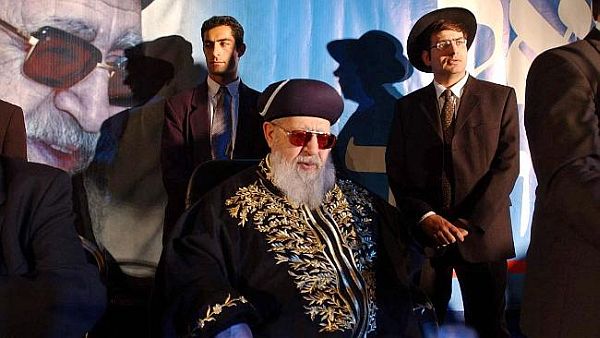
Racist senior rabbi may decide whether Israel should attack Iran

Haaretz reports: Senior defense officials have recently been visiting the ultra-Orthodox Shas party’s spiritual leader, Rabbi Ovadia Yosef, to discuss a possible Israeli attack on Iran.

Some want the 91-year-old rabbi to support it, others to oppose it. At least one visit, in which the rabbi was briefed on Iran’s nuclear program, came at the behest of Prime Minister Benjamin Netanyahu, who is battling for support in the cabinet to strike Iran.

One of the visitors to Yosef’s Jerusalem home was National Security Council head Ya’akov Amidror, accompanied by Interior Minister and Shas political leader Eli Yishai, the Kikar Hashabat website reported.

Yishai reportedly objects to an Israeli attack on Iran in the current circumstances, although he has not made his position clear in public.

It is not known whether Amidror or any of the others succeeded in persuading Yosef. However, on Saturday evening, a day after his meeting with Amidror, Yosef said in his weekly sermon: “You know what situation we’re in, there are evil people, Iran, about to destroy us. … We must pray before [the almighty] with all our heart.”

Two years ago Yosef was very blunt in expressing his visceral contempt for non-Jews. The Jerusalem Post reported:

The sole purpose of non-Jews is to serve Jews, according to Rabbi Ovadia Yosef, the head of Shas’s Council of Torah Sages and a senior Sephardi adjudicator.

“Goyim were born only to serve us. Without that, they have no place in the world – only to serve the People of Israel,” he said in his weekly Saturday night sermon on the laws regarding the actions non-Jews are permitted to perform on Shabbat.

According to Yosef, the lives of non-Jews in Israel are safeguarded by divinity, to prevent losses to Jews.

“In Israel, death has no dominion over them… With gentiles, it will be like any person – they need to die, but [God] will give them longevity. Why? Imagine that one’s donkey would die, they’d lose their money.

This is his servant… That’s why he gets a long life, to work well for this Jew,” Yosef said.

“Why are gentiles needed? They will work, they will plow, they will reap. We will sit like an effendi [master] and eat.

That is why gentiles were created,” he added.

I guess from Yosef’s perspective Americans are useful because we pay taxes that help support Israel, but Iranians? It sounds like they would fall into the category of Goyim who “have no place in the world.”

This comes from a spiritual leader in the only nuclear-armed nation in the Middle East and yet we are told it’s the “mad mullahs” we are supposed to worry about.

Who knows what pronouncement Yosef might make. What’s scary is that he’s even been asked.

Facebooktwittermail

A lynching in Jerusalem: Anatomy of Jewish racism

Jesse Benjamin writes: The news of an attempted mob lynching in Jerusalem’s Zion Square is trickling into Western news sources. It has been translated from angst-filled Hebrew-language Facebook pages written by eyewitnesses, stunned and harassed first responders, and translations gleaned from Haaretz via Mondoweiss, IMEU and others. The lack of outrage, and coverage, is almost as disturbing as the street level racial violence that showed itself in the heart of Israel, rolling in from the Wild West/West Bank where this is more common.

As I processed this, and recalled my own experiences in this exact spot, it seemed that somebody needed to shed light on what the significance of Zion Square is, why mob violence there is especially significant, and why Jews especially need to see this moment as yet another wake up call. My own privileged perspective on this is far removed from the daily violence and dispossession of Palestinian experiences, but my intention is to push other privileged Jews, Israelis and far away Western liberals to take this incident more seriously. Writing from Atlanta, I also want to underscore what the idea of lynching means, and what histories this act is therefore irrevocably connected to.

Zion Square was a refuge for me as a 16 year old. I slipped out the yeshiva side door and chose to live there, on the street, as a pathway to reinvention. The hippie musicians and jewelry makers who lined the streets back then, in 1987, took me in, and I eventually made it off the street, into a youth hostel where I got a bed in exchange for selling beer and running errands. I was an Israeli/US citizen who grew up secular in Toronto and upstate New York, before becoming a teenage Hassid in Brooklyn, en route to Israel and eventual re-engagement with my natal society. I became friends with 16 year olds Israelis who, unlike me, could not get a one-year deferment from military service or make a plan to get out before the draft grabbed hold of their lives. They were beatnikim , Hebrew plural for beatniks or hippies, in open rebellion and angst at the violence of military service that awaited them inescapably in a few short months, smoking hash, growing long hair, engaging world travelers and sometimes Palestinians anyone in our mixed street world in deep philosophical/political discussions about how to end, avoid or cope with the conflict. It was a powerful coming of age for me, and the pedestrian mall of Ben Yehuda, ending in the stone courtyard of Zion Square, was the hub of this activity, the nerve center of integration, questioning, folk music, exchange students, and occasional political protest. Ok, it was not utopian, things were already pretty segregated, and structural imbalance was already endemic, but it was very different then than now.

I left Israel in 1988, and returned a year later with a final one-year deferment, to study and check in on my still yeshiva-bound brother. All my friends were gone from the street, off to the front lines of the Intifada, carrying out Ariel Sharon’s orders to break the bones of young Palestinian protesters. When I did see them on Zion Square, they were broken people, with vacant eyes, literally unable to embrace me and engage in conversation of any kind. They were rushing to the bars to drink themselves into oblivion, filled with post-traumatic stress and suppressed rage/trauma, from the violent contradiction between their peace-loving souls and their new roles as occupation troops. Their long curly hair had been shaved to the scalp, and with it any pretense of humanity. Recognizing me long enough to talk and share was too painful for my old buddies. This was a shocking personal experience of Israel’s dissipating soul, and it also happened at Zion Square. Younger Israeli beatnikim continued to make the scene and mix with travelers and students, but the number of Palestinians who were willing to congregate or just pass through before sundown was already decreasing precipitously. [Continue reading…]

Facebooktwittermail

In Iraqi town where Saddam Hussein was captured, the man who hid him speaks up

The Washington Post reports: Alaa Namiq doesn’t want to talk about it. Or he’s dying to. It’s hard to tell. One minute he’s shaking his head, stone silent. Then he starts bragging about it and he won’t stop talking.

“I dug the hole for him,” he says, his eyes burning with pride.

“The hole,” known to the world as the “spider hole,” is the tiny underground bunker on Namiq’s farm where former Iraqi dictator Saddam Hussein was captured by U.S. soldiers on Dec. 13, 2003.

Namiq and his older brother Qais have rarely spoken publicly about how they helped hide the world’s most sought-after fugitive for nearly nine months after the U.S.-led invasion.

But now, sipping tea in the modest little restaurant he opened this summer, a couple of football fields away from “the hole,” Alaa Namiq seems willing.

Maybe enough time has passed. Maybe few have asked. But for whatever reason, Namiq now folds his tall, broad-shouldered frame into a little plastic chair, tugs on a cigarette and talks about hiding the man his family had known for decades.

“He came here and he asked us for help and I said yes,” says Namiq, 41, wearing a long white dishdasha robe. “He said, ‘You might be captured and tortured.’ But in our Arab tribal tradition, and by Islamic law, when someone needs help, we help him.”

Hussein was born in a village near Tikrit, just north of this little town on the banks of the Tigris River. When the U.S. military was searching for him, it became convinced, correctly, that he would find shelter among his Tikriti clansmen in these lush orchards of date palms and orange and pear trees.

Namiq says he and Qais were arrested along with Hussein and spent a miserable six months in Abu Ghraib prison. Once a driver and an aide to Hussein, he has spent the past few years driving a taxi, finally saving enough to open his family restaurant a few weeks ago.

At his restaurant on the riverbank, Namiq greets an American reporter graciously, offering grilled chicken and sweet tea on a sweltering evening. The restaurant is a small cinder-block shack, with a couple of grills and a few plastic tables set outside. Four of his brothers cook and wait tables for customers watching a big flat-screen TV showing Turkish dramas and men’s volleyball.

“I won’t tell you everything,” Namiq says, over and over, during the course of a couple of hours. “Someday I will say all I know. Maybe I will write a book. Maybe a movie. But I won’t tell you everything.”

Then he starts talking.

Namiq says his family, mainly he and Qais (who declined to be interviewed), helped move Hussein among various houses in the area after the March 2003 invasion.

Hussein never used a phone, he says, knowing that the Americans were listening for his voice. Namiq says that Hussein read and wrote extensively, prose and poetry, and that his writings were confiscated by the U.S. troops who captured him.

Namiq says Hussein wrote to his wife and daughters but he never saw them. His only visitors were his sons Uday and Qusay — Namiq says he helped arrange their secret trips to the farm.

Hussein released several fiery speeches during the time he was in hiding, exhorting his supporters to fight the Americans. Namiq says he and Hussein recorded them together on a small tape recorder.

Knowing the Americans would be analyzing the recordings for clues to Hussein’s whereabouts, Namiq says he once drove 10 miles to the city of Samarra, parked on the side of the road and recorded the sounds of urban traffic.

“I wanted to make the Americans feel dizzy and confused,” he says.

Namiq clearly still reveres Hussein, who was hanged in 2006.

“Saddam knew there would be a day that he would be captured and executed,” Namiq says. “In his heart, he knew that everything was gone and that he was no longer president. So he started something new — jihad against the occupiers. He sacrificed everything he had, including his two sons, for the sake of the country.” [Continue reading…]

Facebooktwittermail

Afghanistan’s peace hopes may rest on Taliban captive

Reuters reports: In the cloistered circles of the Taliban high command, Mullah Abdul Ghani Baradar had no equal.

As military chief of the hardline Islamic movement that once ruled Afghanistan and was ousted by a U.S.-led alliance, he oversaw the campaign of ambushes and roadside bombings that proved his fighters could threaten the most advanced armies.

When the talismanic leader was caught in the Pakistani city of Karachi in 2010, some Afghan officials hoped the magnetism he forged in war would persuade his former comrades to start talking peace. Indeed, news that Islamabad had allowed Afghan officials to visit Baradar two months ago sparked speculation in both countries of the prospects for a settlement.

Instead, Pakistan’s refusal to hand him over to Afghanistan symbolises one of the biggest obstacles to negotiations: a legacy of bone-deep suspicion dividing the neighbours.

Afghanistan fears that Pakistan is only pretending to support dialogue while its intelligence agencies harbour Taliban leaders to project influence across their shared frontier.

Any move to repatriate Baradar would raise Afghan hopes that Pakistan is willing to play a genuinely constructive role and open the door to other prominent insurgents.

“Releasing Mullah Baradar would encourage other Taliban leaders to embrace reconciliation,” Ismail Qasemyar, an adviser to Afghanistan’s High Peace Council, told Reuters. “It would be a huge symbolic step.” [Continue reading…]

Facebooktwittermail

Somalia’s old problems litter path to new future

Reuters reports: Yusuf Garaad left his comfortable home and job as head of the BBC Somali Service in London to run for the presidency of Somalia when the Horn of Africa nation embraced a plan to shed its image as the archetypal failed state.

He is one of several new faces who have returned home to try and lead the country out of two decades of lawlessness and violence at the hands of gun-toting militias, fanatical Islamist militants and rapacious pirates.

“I watched for so long from afar, not doing anything but reporting and pretending it was not up to me to do something,” Garaad told Reuters in his villa in the capital Mogadishu.

Since the outbreak of civil conflict in 1991 there has been no central government control over most of the country, but now there is opportunity to close that long chapter in a regionally brokered and U.N.-backed roadmap.

As part of that process, a speaker of a reformed parliament and a new president should have been elected before August 20.

In spite of heavy cajoling by donors, that deadline has been missed, though Western diplomats hope the delay will be just a few weeks. The bigger question is whether the new government can represent a break from the string of ineffective interim administrations of recent years.

Garaad and other newcomer contenders for the presidency are up against a determined phalanx of old-guard politicians. The top leaders of the existing transitional federal government (TFG) are all competing to be president.

So while the end of the interim administration is being touted as a new dawn in Somali politics, there are fears the new government will look much like previous ones, with the same security problems, corruption and fractious clan politics.

“If the current TFG leadership succeeds in manipulating the outcome, the end of the transition will be in some ways a distinction without a difference,” said Ken Menkhaus, a Somalia expert and professor of political science at Davidson College.

By Monday, a new slimmed-down parliament is expected to convene, though not all members will have been appointed. About 220 of the 275 parliamentarians have so far been selected. [Continue reading…]

Facebooktwittermail

Life with Syria’s rebels in a ruthless war

C.J. Chivers reports: Abdul Hakim Yasin, the commander of a Syrian antigovernment fighting group, lurched his pickup truck to a stop inside the captured residential compound he uses as his guerrilla base.

His fighters had been waiting for orders for a predawn attack on an army checkpoint at the entrance to Aleppo, Syria’s largest city. The men had been issued ammunition and had said their prayers. Their truck bomb was almost prepared.

Now the commander had a surprise. Minutes earlier, his father, who had been arrested by the army at the same checkpoint in July, had called to say his jailers had released him. He needed a ride out of Aleppo, fast.

“God is great!” the men shouted. They climbed onto trucks, loaded weapons and accelerated away, barreling through darkness on nearly deserted roads toward a city under siege, to reclaim one of their own.

Mr. Yasin was pensive as he drove, worried that the call was a ploy to lure him and his fighters into a trap. “Often the government does this,” he said. “Usually it is an ambush.”

He had sent an empty freight truck ahead, he said, to check the way. But he never slowed down.

During five days last week, Mr. Yasin and his group, the Lions of Tawhid, allowed two journalists from The New York Times to live and travel beside them as they fought their part in the war to unseat President Bashar al-Assad.

This group falls under the command of Al Tawhid Brigade, a relatively new structure in Aleppo Province that has unified several groups and fights under the banner of the Free Syrian Army, the loose coalition of armed rebels.

While broad extrapolations are difficult to glean from one fighting group in a complex society, the activities and personal stories of these men, a mix of civilians who took up arms and dozens of army defectors who joined them, offers a fine-grained look of the uprising, and the momentum and guerrilla energy it has attained.

Mr. Yasin, 37, was a clean-shaven accountant before the war. He lived a quiet life with his wife and two young sons. Now thickly bearded and projecting a stoic calm under fire, he has been hardened by his war in ways he could not have foreseen. [Continue reading…]

And this is the point that everyone outside the war must remember, be they critics or supporters of the revolution: with our glib certainties we might imagine we know what course of action our political beliefs and moral values would dictate at a time of war, but we really don’t actually know what we would do if we found ourselves faced with the stark choices that now shape the lives of so many Syrians. Paradoxically, the ability to put ourselves in someone else’s shoes often depends on our ability to acknowledge how limited is the experience we share.

In this report and many others, the religiosity of the rebels is apparent and its mix with chilling violence will for many Western observers confirm their fears about the rise of Islamic extremism. But think about it. This doesn’t simply reflect the conservative religious trends that permeate the Middle East. Religiosity in this case is as much as anything reactive. It is in part a reaction to the fact that across the region, secularism, corruption, and dictatorship seem to have always ended up working together hand in hand. Thus those who are concerned that the fragile growth of democracy requires the protection that secularism might seem to offer must acknowledge that in the Middle East, secularism has too often been the vehicle of injustice. (I note this as an atheist.)

Facebooktwittermail