The accidental empire

George Soros writes: It is now clear that the main cause of the euro crisis is the member states’ surrender of their right to print money to the European Central Bank. They did not understand just what that surrender entailed – and neither did the European authorities.

When the euro was introduced, regulators allowed banks to buy unlimited amounts of government bonds without setting aside any equity capital, and the ECB discounted all eurozone government bonds on equal terms. Commercial banks found it advantageous to accumulate weaker countries’ bonds to earn a few extra basis points, which caused interest rates to converge across the eurozone. Germany, struggling with the burdens of reunification, undertook structural reforms and became more competitive. Other countries enjoyed housing and consumption booms on the back of cheap credit, making them less competitive.

Then came the crash of 2008. Governments had to bail out their banks. Some of them found themselves in the position of a developing country that had become heavily indebted in a currency that it did not control. Reflecting the divergence in economic performance, Europe became divided into creditor and debtor countries.

When financial markets discovered that supposedly riskless government bonds might be forced into default, they raised risk premiums dramatically. This rendered potentially insolvent commercial banks, whose balance sheets were loaded with such bonds, giving rise to Europe’s twin sovereign-debt and banking crisis.

The eurozone is now replicating how the global financial system dealt with such crises in 1982 and again in 1997. In both cases, the international authorities inflicted hardship on the periphery in order to protect the center; now Germany is unknowingly playing the same role. [Continue reading…]

Facebooktwittermail

Egyptian women protesters sexually assaulted in Tahrir Square

The Guardian reports: A mob of hundreds of men assaulted women holding a march demanding an end to sexual harassment in Cairo, as attackers overwhelmed male supporters and molested several of the marchers in Tahrir Square.

Some victims said it appeared to have been an organised attempt to drive women out of demonstrations and trample the pro-democracy protest movement.

The attack on Friday follows a spate of smaller-scale assaults on women in Tahrir Square, the epicentre of the uprising that forced former president Hosni Mubarak to step down last year.

Earlier in the week, an Associated Press reporter witnessed around 200 men assault a woman who eventually fainted before others came to her aid.

Friday’s march demanded an end to all sexual assaults. Around 50 women participated, surrounded by a larger group of male supporters who joined hands to form a protective ring around them. The protesters carried posters and chanted. After the marchers entered a crowded corner of the square, a group of men waded into the women, heckling them and groping them. The attackers chased the the marchers as they tried to flee. Several women were cornered against railings and groped, according to reports. Eventually, the women found refuge in a nearby building.

Facebooktwittermail

Holder directs U.S. attorneys to track down paths of leaks

The New York Times reports: Attorney General Eric H. Holder Jr. on Friday assigned two United States attorneys to lead separate criminal investigations into recent disclosures to the news media of national security secrets, saying they were authorized to “follow all appropriate investigative leads within the executive and legislative branches of government.”

Their appointment followed calls in Congress this week for a crackdown on leaks after disclosures on topics including drone strikes and a computer virus attack against Iran’s nuclear program. Several of the revelations were published by The New York Times.

“The unauthorized disclosure of classified information can compromise the security of this country and all Americans, and it will not be tolerated,” Mr. Holder said in a statement. “The Justice Department takes seriously cases in which government employees and contractors entrusted with classified information are suspected of willfully disclosing such classified information to those not entitled to it, and we will do so in these cases as well.”

Several members of Congress from both parties this week expressed alarm about recent leaks, and some Republicans had called for the appointment of a special prosecutor with greater independence from day-to-day supervision by the Obama administration to investigate.

But Mr. Holder instead assigned two prosecutors — Ronald C. Machen, the United States attorney for the District of Columbia, and Rod J. Rosenstein, his counterpart in Maryland — to take over direction of existing investigations by the Federal Bureau of Investigation, elevating the stature of the cases but not giving them any special powers. [Continue reading…]

Facebooktwittermail

In one year, we have learned the worst about Bashar Assad

Rami G Khouri writes: We have learned many things about Syria during the past year, while some other aspects of the situation there remain unclear.

The most important thing that we have learned is that President Bashar Assad is not the modern, liberal reformer that many had painted him as being during the past decade.

The truth is that nobody really knew the reality of Assad’s personality or political instincts. In the past year, since many of his own people have openly risen up against him and demanded his ouster, he has responded with consistent force and the employment of frequently inhuman tactics, lies, and broken promises.

This has culminated to date in the two recent massacres of helpless villagers in Houla and Qubayr. We now know, without any ambiguity whatsoever, what Assad represents, and what he will do, and it is very ugly indeed.

The Syrian president has pursued a policy that requires the continued use of massive and cruel violence against his own people. Assad’s expectation is that he will terrorize and traumatize the Syrian population into submission. That policy has not worked in the past year. In fact, repression usually does not work for long in any other such authoritarian police state that relies on fear rather than legitimacy as its basis for authority and incumbency.

Facebooktwittermail

Stay out of Syria

Joshua Landis writes: Let’s be clear: Washington is pursuing regime change by civil war in Syria. The United States, Europe, and the Gulf states want regime change, so they are starving the regime in Damascus and feeding the opposition. They have sanctioned Syria to a fare-thee-well and are busy shoveling money and helping arms supplied by the Gulf get to the rebels. This will change the balance of power in favor of the revolution. It is also the most the United States can and should do.

President Barack Obama does not want to intervene directly in Syria for obvious reasons, and he is right to be cautious. The United States has failed at nation-building twice before in the Middle East. The Libyan example of limited intervention by using air power alone could suck the United States into a protracted and open-ended engagement. One cannot compare Libya to Syria. The former is a relatively small, homogeneous, and wealthy society. Syria has a population four times larger, which is poor and wracked by an increasingly violent civil war across religious lines. Moreover, the chance that the United States can end the killing in Syria by airpower alone is small.

The argument that the United States could have avoided radicalization and civil war in Iraq by toppling Saddam Hussein in 1991 is unconvincing. Similar arguments are now being offered to talk Americans into jumping into Syria. Iraq was not a mature nation-state and was likely to fall apart. The fact that it imploded into civil war when the United States roto-rootered Saddam’s regime should have been expected.

U.S. intervention in Syria will likely lead to something similar: civil war and radicalization. Syrians have never agreed on basic questions of identity and policy, and it is unlikely that they will decide these issues peacefully today.

Facebooktwittermail

Survivor says Syrian village had been warned not to shelter anti-Assad activists

McClatchy reports: A massacre that took as many as 80 lives in Qubeir may have had its origins in a warning that government sympathizers issued to the village’s residents against harboring known anti-government activists.

A resident of Qubeir who survived the massacre said Friday that the attack took place shortly after an activist wanted by the government, known as Abu Hassan, went to Qubeir. When an army unit based nearby was notified of Abu Hassan’s presence, it began to shell the village and then sent in six tanks, accompanied by local militiamen, who killed the villagers with gunfire, sticks and knives.

“There had been threats against the village before not to harbor people who are wanted,” said the resident, who used the pseudonym Laith al-Hamway for fear of retaliation from the Syrian government.

The deaths at Qubeir, which is near the city of Hama, are the latest in what has becoming a pattern of mass killings that have followed government assaults on villages. More than 80 women and children were shot or hacked to death in May in the village of Houla in an attack that bore a striking similarity to what happened at Qubeir – government shelling, followed by house-to-house searches and killings. At both Qubeir and Houla, survivors said militiamen burned bodies and homes.

Facebooktwittermail

Syrian rebels tried to get me killed, says British TV correspondent

The Guardian reports: The chief correspondent of Channel 4 News has claimed that Syrian rebels deliberately tried to get him and his crew killed by gunfire from government forces in a bid to discredit the regime of Bashar al-Assad.

Alex Thomson alleged a small group from the Free Syrian Army deliberately guided the vehicle in which he and his Channel 4 News colleagues were travelling into what he described as a “free-fire zone” on a blocked road near the city of al-Qusayr, because “dead journos are bad for Damascus”.

Thomson said that after being led into a “no man’s land” between Syrian army and rebel forces by four men in a black car, his team were fired upon and forced to take evasive action, eventually managing to “floor it back to the road we’d been led in on”.

He also claimed that later on the same car of rebels blocked the road between their vehicle and the UN vehicles accompanying them, which he said prompted the UN escort to drive off and abandon them after seeing the Channel 4 team surrounded by “shouting militia”. The incident took place last weekend and Thomson is now back in the UK.

Facebooktwittermail

Syrian rebels buy weapons from Syrian army

Global Post reports: At the Free Syrian Army base here, a group of men led a nervous prisoner from his cell to a car waiting outside. A few hours later, the rebels returned alone, with a trunkload of weapons.

As they loaded the store room with new bullets and rocket-propelled grenades, Hamza Fatahallah, an army defector who joined the Free Syrian Army nine months ago, described the transaction that had taken place.

“We have caught many army prisoners,” he said. “We send them back home for a small amount of money on the condition they do not return to the regime. We use the money to buy weapons.”

For the release of this prisoner, Ahmed Haseeba, the group received $500. With this money, Fatahallah said they were able to buy ammunition from their main supplier: Syria’s national army, also known as the enemy.

This strange cycle of exchanging prisoners for weapons has been playing out between rebel forces and President Bashar al-Assad’s army since the beginning of the revolution.

Fatahallah estimated that his village purchased 40 percent of their weapons from the regime. Prisoner exchanges have so far contributed almost $80,000 toward weapons purchases, he said. And they obtain an additional 50 percent of their weapons during battle. The remaining 10 percent are donated and smuggled from outside the country, or are purchased from private merchants, mostly from Iraq.

Facebooktwittermail

Bahrain police battle biggest protests in weeks

The Associated Press reports: Riot police in Bahrain fired tear gas and stun grenades Friday as tens of thousands of protesters staged the biggest anti-government demonstrations in weeks in the divided Gulf nation.

Opposition groups called for major rallies after a prominent rights activist, Nabeel Rajab, was placed back in detention earlier this week on fresh charges linked to his social media posts.

Bahrain has experienced near daily protests for 16 months caused by an uprising by the kingdom’s Shiite majority seeking greater political rights from the Western-backed Sunni monarchy. At least 50 people have died in the unrest since February 2011.

Facebooktwittermail

Good leak, bad leak

Foreign Policy: There’s something troubling about the recent leaks to the New York Times about President Barack Obama’s involvement in authorizing the targeted killings of suspected terrorists and launching cyberattacks against an Iranian nuclear enrichment facility: they’re coming from the same administration that has prosecuted more government officials under the Espionage Act of 1917 for sharing classified information with the media than all previous administrations combined. (As Director of National Intelligence James Clapper wrote in a 2010 memo, “People in the intelligence business should be like my grandchildren — seen but not heard.”) Just this week, an American general who suggested that U.S. and South Korean Special Forces were parachuting into North Korea to conduct espionage was replaced in what the military insisted, amid murmurs of disbelief, was a routine personnel change.

This contradictory posture toward national security leaks has exposed the White House to accusations this week that it clamps down on whistleblowing when the disclosures undermine its agenda but eagerly volunteers anonymous “senior administration officials” for interviews when politically expedient. Salon’s Glenn Greenwald condemned the “administration’s manipulative game-playing with its secrecy powers,” the Washington Post‘s Charles Krauthammer called the report on Obama’s targeted killings a “White House press release” (the report’s authors dispute that claim), and lawmakers from both sides of the aisle decried the “accelerating pace of such disclosures,” calling for an investigation and new legislation to address the problem. “They’re intentionally leaking information to enhance President Obama’s image as a tough guy for the elections,” Senator John McCain (R-AZ) charged on Tuesday.

The White House, for its part, has dismissed this allegation as “grossly irresponsible” and argued that, in fact, it seeks to plug leaks that could jeopardize counterterrorism or intelligence operations. But as the examples below suggest, the Obama administration hardly has dealt consistently with counterterrorism and intelligence leaks over the past three-and-a-half years. [Continue reading…]

Facebooktwittermail

Egypt transition on brink of collapse

Sharif Abdel Kouddous reports: As Egypt enters the final days of its so-called “transition,” the entire political process is on the verge of collapse.

The essential foundations of a post-Mubarak government that were supposed to have been lain over the past 16 months – the legislature, the presidency, the constitution – each suffer a crisis of legitimacy, the result of a military-managed transitional process so deformed that it barely make sense anymore.

Meanwhile, the lack of any semblance of reform within key state institutions – most notably the security forces, the judiciary and the media – was reconfirmed in the most dramatic of ways this month with the verdict in the trial of Hosni Mubarak, his sons and other top regime officials.

The turmoil has triggered massive protests across the country barely three weeks from the scheduled handover of power from military to civilian rule, with hundreds of thousands of Egyptians taking to the streets in a bid to reclaim their revolution.

The escalation of political crises began last month in the wake of the highly anticipated presidential elections. The first round of the poll left the country with a bitter, divisive outcome, pitting Ahmed Shafik, a stalwart of the Mubarak regime against Mohammed Mursi of the Muslim Brotherhood.

The result has left the majority of voters facing the most difficult of dilemmas, forced to choose between one candidate who is the very embodiment of the former regime that they rose up against last year; and the other a member of a conservative Islamist group that is that is, in many ways, the mirror establishment – highly hierarchical and disciplined, supported by patronage networks – and is widely viewed as having abandoned the revolution early on in the pursuit of its own interests. [Continue reading…]

Facebooktwittermail

Netanyahu — Israel’s editor-in-chief

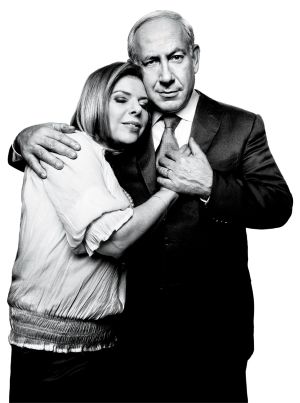
David Margolick writes: Seconds into any conversation about Netanyahu, the subject of Sara, whom he married in 1991, invariably comes up. It’s amazing how many otherwise sane Israelis see her Lady Macbeth–like hand in every corner of her husband’s life and work — whom he hires, what he does and doesn’t do, whom he can and cannot see. One hears constantly that Sara “has something” on her husband, stemming from her decision to stick by him after the highly publicized affair to which he admitted early in their marriage when his political career hung in the balance. One also hears of a supposed contract between the two of them, said to have been drafted by a former attorney general of Israel, squirreled away in some safe. Or of Bibi cowering in the bathroom, calling the childhood friends of his whom she has excommunicated.

Friend and foe alike have stories about Sara — about a tantrum or feud or some abuse of the household help — or some illustration of her vanity, like the time when, dissatisfied with the picture of her that Yediot Aharonot was about to run, she had her husband call the paper’s famously private owner, Noni Mozes, from Washington, demanding it be changed. People offer medical or psychological diagnoses, and speculate, without any apparent knowledge, about the medications she might be on. Her every misstep or peccadillo is covered minutely in the Israeli press (at least that portion Adelson doesn’t own), particularly her repeated run-ins with the help, several of which have led to lawsuits. Since ordering employees to call her “Ha Giveret” (“The Lady”) — an act of colossal hubris in a country rooted in unpretentious egalitarianism — it’s what she’s routinely and derisively called.

Numerous former staffers say her imbroglios periodically bring governance to a halt, forcing her husband to leave key meetings to tend to trivial matters or simply to calm her down. No one seriously contends that she will determine what happens with Iran. But many think she denies Netanyahu the serenity a man in his position needs. “She is a clear and present danger to the national security of the state of Israel,” one of Netanyahu’s prime critics, Ben Caspit, of the Israeli tabloid Maariv, told me. Just how, foreign minister Avigdor Lieberman is said to have asked, can a man control a government when he can’t control his wife? (Already hobbled by a pending corruption investigation, Lieberman, who heads the party of former Soviet immigrants, is considered a big loser in the recent political machinations. So too are Yair Lapid, a former anchorman who’d recently launched his own party, and Shelly Yachimovich, whose Labor Party stood to regain some seats — and at least some of its historic influence — in a new vote.)

For all his political pre-eminence, Netanyahu, still convinced Israeli liberal elites consider him a “usurper,” remains highly suspicious, even paranoid. “In every criticism, Bibi sees an attempt to bring him down,” Uzi Arad, his former national-security adviser and one of many people with whom he has had a falling-out, told Yediot Aharonot in March. So he’s insular: his principal lawyer — David Shimron, who handles the numerous lawsuits Bibi and Sara have brought against their household employees and the press — is his cousin; a cousin-in-law, Yitzhak Molcho, is his most important diplomat, marginalizing both Lieberman (at least as foreign minister) and Israel’s ambassador to Washington, Michael Oren; Netanyahu’s long-time chief of staff, Natan Eshel, forced to resign earlier this year in a sexual-harassment scandal, never really went away and handled the recent negotiations with Kadima. Shimon Shiffer of Yediot Aharonot says that Netanyahu once told him that he has no friends, something Netanyahu denies saying. One often hears — and not just from Netanyahu’s detractors — “Bibi has two types of friends: those he has betrayed, and those he will betray.”

Netanyahu was recently quoted by Steve Linde of The Jerusalem Post as saying that Israel’s most formidable foes were The New York Times and Haaretz, the newspaper of Israel’s intelligentsia. (He denies saying or believing this, and Linde subsequently published a clarification.) But Netanyahu has feuded with the Times and, one former aide tells me, considers Times columnist Thomas Friedman, a frequent critic, to be a mouthpiece of the Obama administration. That battle pales, though, next to Netanyahu’s wars with the Israeli press, which pilloried him during his first term. Like many Israelis on the left, it never forgave Netanyahu for Rabin’s assassination, which it believed his inflammatory language helped foment.

Netanyahu has expended vastly more energy — and enjoyed far greater success — reshaping the Israeli media than seeking peace with the Palestinians. As one observer puts it, he is less Israel’s prime minister than its editor in chief.

Netanyahu’s influence over the media comes in large part due to the financial support of his friend, American billionaire casino boss Sheldon Adelson.

Adelson, who reportedly first met Netanyahu in the 1990s, speaks no Hebrew and does not live in Israel, though his wife is Israeli. But, most likely with Netanyahu’s coaching, he came to believe that Israel’s three main newspapers did not represent the diverse Israeli public, and resolved to give Israelis what he called — borrowing Fox News’s slogan — a more “fair and balanced” alternative. At first he tried to buy Maariv. His pitch wasn’t subtle; he accused the paper’s owner, Ofer Nimrodi, of being a bad Zionist. (Nimrodi, his parents, and his two sons have all served in either Israeli intelligence or the Israeli Defense Forces.) Not surprisingly, a deal never happened. So, in 2007, Adelson launched a new paper, Israel Hayom (“Israel Today”). Instantly, understandably, it was dubbed “Bibiton”: “Bibi’s Newspaper” in Hebrew. Israeli journalists compare it half-facetiously to Pravda or Tishreen, the house organ of Syrian president Bashar al-Assad. Because its biases are so blatant, the conservative columnist Kalman Libeskind, of Maariv, recently wrote, he’d never thought it worth criticizing. But its “complete symbiosis” with Netanyahu and his interests, he complained, sometimes “really makes you want to puke.”

From its debut, Adelson’s paper — the tens or even hundreds of millions of dollars he has dumped into it dwarfs the comparative pittance he invested in Newt Gingrich’s failed presidential bid — enjoyed two advantages: it’s free (even with home delivery) and ubiquitous, handed out everywhere. By leaching away readers and advertisers, it posed a mortal threat to Yediot Aharonot and Maariv. Maariv has already fallen into new, more Bibi-friendly hands. And after a period of all-out war with Netanyahu — in which, for instance, it plastered details of a maid’s lawsuit against the First Couple over several pages — Yediot Aharonot has recently toned things down. Many see that as evidence of a hudna, or truce, between Netanyahu and the paper, though who has conceded what isn’t clear.

“Almost the whole Israeli media is dependent upon Bibi,” says a former editor of Maariv, Amnon Dankner, “and while I won’t say they’re not criticizing him, the music has changed — to quieter, less vociferous tones.” [Continue reading…]

Facebooktwittermail

Most Israeli Jews agree: African migrants are ‘a cancer’

The Times of Israel reports: Fifty-two percent of Jewish Israelis identify with the statement by MK Miri Regev last month that African migrants are “a cancer in the body” of the nation, and over a third condone anti-migrant violence, according to the Israel Democracy Institute (IDI) Peace Index for May 2012.

Broken down by political and religious affiliation, the monthly index’s findings reveal that among Jews there is a direct correlation between right-wing political affiliation and a racist attitude toward migrants. Thus, 86 percent of Shas voters and 66 percent of Likud voters polled expressed identification with Regev’s controversial statement, as opposed to 32 percent of Labor voters and four percent of Meretz voters.

The degree of religiosity attested to by respondents also accounted for a large disparity in the findings, with 81.5% and 66% of self-described ultra-Orthodox and Orthodox, respectively, agreeing with Regev’s statement, as opposed to 38% of secular Israelis.

Only 19% of Arab respondents agreed that the migrants were “a cancer.”

Facebooktwittermail

Segregating Gazans has made them easier to demonise

Amira Hass writes: A stout sense of humour and self-irony is the least most Israelis expect of Gazans. It is certainly true today, when they are spoken of almost solely through the hyperbole of military commentators who jump frantically from discussing the Iranian threat to the danger that the tiny, overcrowded, impoverished and besieged enclave poses to the state of Israel, a global military power.

But that sense of humour is also lost in the victim-oriented Palestinian media reports or the militant statements of anonymous veiled speakers and lower-tier Hamas politicians of which the meagre Israeli media diet ordinarily consists.

Now we would struggle to understand stories such as the following anecdote, relayed to me by the Fatah activist Abu Mustafa. Thirty years ago, Mustafa was being tortured by an Israeli interrogator. “You must be getting a double salary,” Mustafa told the oversized interrogator, who was stepping on his back and squeezing his arms. “How come?” The Israeli was surprised. “Because of your weight,” said Mustafa, as he was struggling with the pain. According to this thin and shy man, the interrogator burst out laughing, was unable to continue his chore and left the room. Did Mustafa want to mellow his own memory of the torture when he shared that story with me, or did his humour indeed reach home with his tormentor?

Even 25 years ago, the relationship between Gazans and Israelis was very different. Back then, Gazans were a reservoir of cheap labour and still flocked to the streets of Israeli towns – to be found in every restaurant, clothing factory, garage and construction site. How were they seen then by the ordinary Israeli? Were they mere functional shadows who disappeared in their dorm shanties? Dispensable ghosts? Savages? An Uncle Tom? [Continue reading…]

Facebooktwittermail

Obama’s friend in Turkey

In his ongoing effort to atone for Davos 2009, David Ignatius writes: As President Obama was feeling his way in foreign policy during his first months in office, he decided to cultivate a friendship with Turkey’s headstrong prime minister, Recep Tayyip Erdogan. Over the past year, this investment in Turkey has begun to pay some big dividends — anchoring U.S. policy in a region that sometimes seems adrift.

Erdogan’s clout was on display this week as he hosted a meeting here of the World Economic Forum (WEF) that celebrated the stability of the “Turkish model” of Muslim democracy amid the turmoil of the Arab Spring. One panel had the enraptured title “Turkey as a Source of Inspiration.”

In a speech Tuesday, Erdogan named Turkey’s achievements over the decade he has been in power: Its economy has grown an annual average of 5.3 percent since 2002, the fastest rate of any country in the Organization for Economic Cooperation and Development; gross domestic product has more than tripled, as have its foreign reserves; investment from abroad has increased more than 16 times.

For Erdogan, receiving a visit from the WEF was a kind of vindication. The Turkish leader walked angrily offstage at the group’s 2009 meeting in Davos, Switzerland, after a panel moderator (yours truly) didn’t allow him time to respond to Israeli President Shimon Peres’s remarks about the Gaza war. This week, that moment seemed well in the past. [Continue reading…]

Facebooktwittermail

The Karzai Rule

Amy Davidson writes: If we’re talking about a Buffett Rule for taxes, we might also think about a Karzai Rule. This could be formulated as subjecting the the billions of taxpayer dollars we are sending to Afghanistan to the same rate of scrutiny we give to the income of a billionaire, or his secretary. That doesn’t seem to be the case now. The Times, this week, had a report on how the family of President Hamid Karzai is engaged in an end-of-days fight over whatever money and power is left to Kabul. The family has become rich enough on graft and other forms of corruption—funded, in many cases, by American contracts and piles of aid money—for factions to form among his relatives. One brother, Mahmoud Karzai, says another, Shah Wali Karzai, essentially stole fifty-five million dollars from a real-estate development venture called Aino Mena. Shah Wali says that he just moved the money because Mahmoud was going to steal it and move it abroad as he’s done with other funds (which Mahmoud denies). These charges are not mutually exclusive. Figuring out which brother of the President we’re keeping in power is guilty of stealing how much makes legal sense. But this may also be one of those cases where two people each tell you that the other is crazy, or corrupt, and all you can work out is that at least one of them is—and that maybe you shouldn’t be giving money to either of them.

Another question: Does anyone think that that Aino Mena, a big housing development outside of Kandahar, through which tens or hundreds of millions of dollars are apparently flowing, actually makes any economic sense? I could misapprehend the Afghan housing market, but it seems from a distance to be about as sensibly run as the Kabul Bank, where lending resembled looting and which ultimately failed, and involved some of the same characters. (See Dexter Filkins’s story for the details.) Then again, since, according to the Times, it is being built on “land that Afghan military officials have claimed was illegally seized from the Ministry of Defense,” it might make some money.

One odd aspect of the story is that a number of members of the Karzai family are actually American citizens, including Mahmoud. They lived here for many years in exile; they started a chain of Afghan restaurants, which are supposed to have pretty good food. This is also why Mahmoud is under investigation on various tax-evasion charges, and here the Karzai Rule suggests another question: If you can’t even tax the true income of the expatriate multimillionaire American associates of a corrupt foreign regime, should the taxes of a secretary in America be paying for it? [Continue reading…]

Facebooktwittermail

