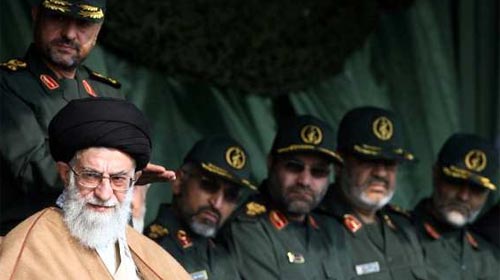
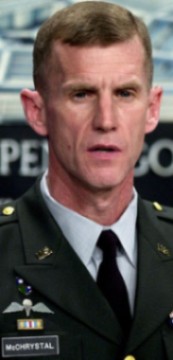
Iran update with editor’s comments

Mousavi lodges legal appeal against Ahmadinejad victory

The defeated Iranian presidential candidate Mir Hossein Mousavi today launched a formal appeal against the election result as his supporters took to the streets of the capital again, raising the prospect of more violent clashes.

Mousavi, who claimed his defeat by the hardliner Mahmoud Ahmadinejad was manipulated, said in a statement on his website that he had appealed to the ruling guardian council to overturn the result, and urged his supporters to continue protests “in a peaceful and legal way”.

“We have asked officials to let us hold a nationwide rally to let people display their rejection of the election process and its results,” said Mousavi…

Mousavi’s newspaper, Kalemeh Sabz, or the Green Word, did not appear on news stands today. An editor speaking anonymously said authorities had been upset with Mousavi’s statements. The paper’s website reported that more than 10m votes in Friday’s election were missing national identification numbers similar to US social security numbers, which made the votes “untraceable”. [continued…]

Editor’s CommentTehranbureau (an expat Iranian site that appears to be struggling to handle the traffic right now) says that Mousavi has called on all Reformist supporters to take part in a peaceful march and mass demonstration in 20 cities across Iran on Monday and for a general strike on Tuesday.

Iran: there will be blood

My contact predicted serious violence at the highest levels. He said that Ahmadinejad is now genuinely scared of Iranian society and of Mousavi and Rafsanjani. The level of tension between them has gone beyond civil limits — and my contact said that Ahmadinejad will try to have them imprisoned and killed.

Likewise, he said, Rafsanjani, Khatami, and Mousavi know this — and thus are using all of the instruments at their control within Iran’s government apparatus to fight back — but given Khamenei’s embrace of Ahmadinejad’s actions in the election and victory, there is no recourse but to try and remove Khamenei. Some suggest that Rafsanjani will count votes to see if there is a way to formally dislodge Khamenei — but this source I met said that all of these political giants have resources at their disposal to “do away with” those that get in the way.

He predicted that the so-called reformist camp — who are not exactly humanists in the Western liberal sense — may try and animate efforts to decapitate the regime and “do away with” Ahmadinejad and even the Supreme Leader himself.

I am not convinced that this source “knows” these things will definitely happen but am convinced of his credentials and impressed with the seriousness of the discussion we had and his own concern that there may be political killing sprees ahead.

This is not a vision he advocates — but one he fears. [continued…]

Iran’s day of anguish

I’ve also argued that, although repressive, the Islamic Republic offers significant margins of freedom by regional standards. I erred in underestimating the brutality and cynicism of a regime that understands the uses of ruthlessness.

“Here is my country,” a young woman said to me, voice breaking. “This is a coup. I could have worked in Europe but I came back for my people.” And she, too, sobbed.

“Don’t cry, be brave,” a man admonished her.

He was from the Interior Ministry. He showed his ID card. He said he’d worked there 30 years. He said he hadn’t been allowed in; nor had most other employees. He said the votes never got counted. He said numbers just got affixed to each candidate.

He said he’d demanded of the police why “victory” required such oppression. He said he’d fought in the 1980-88 Iraq war, his brother was a martyr, and now his youth seemed wasted and the nation’s sacrifice in vain. [continued…]

Iran: what now?

Clearly, the anti-Ahmadinejad camp has been taken by surprise and is scrambling for a plan. Increasingly, given their failure to get Khamenei to intervene, their only option seems to be to directly challenge — or threaten to challenge — the supreme leader.

Here’s where the powerful chairman of the Assembly of Experts, Mousavi supporter Akbar Hashemi Rafsanjani, comes in. Only this assembly has the formal authority to call for Khamenei’s dismissal, and it is now widely assumed that Rafsanjani is quietly assessing whether he has the votes to do so or not.

It may be that the first steps toward challenging Khamenei have already been taken. After all, Mousavi went over the supreme leader’s head with an open letter to the clergy in Qom. Rafsanjani clearly failed to win Khamenei’s support in a reported meeting between the two men Friday, but the influential Ali Akbar Mohtashamipour, who heads the vote-monitoring committee for Mousavi and fellow candidate Mehdi Karroubi, has officially requested that the Guardian Council cancel the election and schedule a new vote with proper monitoring.

The implications for Washington’s agenda, meanwhile, could be extensive. Although the United States is pursuing diplomacy with Iran in its own self-interest, electoral fraud (or the perception of fraud) complicates this strategy. And if political paralysis reigns in Iran, valuable time to address the nuclear issue through diplomacy will be lost. The White House’s posture thus far is a constructive one — while it cannot remain indifferent to irregularities in the elections, it must be careful never to get ahead of the Iranian people and the anti-Ahmadinejad candidates. [continued…]

Iran erupts as voters back ‘the Democrator’

Back on the streets, there were now worse scenes. The cops had dismounted from their bikes and were breaking up paving stones to hurl at the protesters, many of them now riding their own motorbikes between the rows of police. I saw one immensely tall man – dressed Batman-style in black rubber arm protectors and shin pads, smashing up paving stones with his baton, breaking them with his boots and chucking them pell mell at the Mousavi men. A middle-aged woman walked up to him – the women were braver in confronting the police than the men yesterday – and shouted an obvious question: “Why are you breaking up the pavements of our city?” The policeman raised his baton to strike the woman but an officer ran across the road and stood between them. “You must never hit a woman,” he said. Praise where praise is due, even in a riot.

But the policemen went on breaking up stones, a crazy reverse version of France in May 1968. Then it was the young men who wanted revolution who threw stones. In Tehran – fearful of a green Mousavi revolution – it was the police who threw stones.

An interval here for lunch with a true and faithful friend of the Islamic Republic, a man I have known for many years who has risked his life and been imprisoned for Iran and who has never lied to me. We dined in an all-Iranian-food restaurant, along with his wife. He has often criticised the regime. A man unafraid. But I must repeat what he said. “The election figures are correct, Robert. Whatever you saw in Tehran, in the cities and in thousands of towns outside, they voted overwhelmingly for Ahmadinejad. Tabriz voted 80 per cent for Ahmadinejad. It was he who opened university courses there for the Azeri people to learn and win degrees in Azeri. In Mashad, the second city of Iran, there was a huge majority for Ahmadinejad after the imam of the great mosque attacked Rafsanjani of the Expediency Council who had started to ally himself with Mousavi. They knew what that meant: they had to vote for Ahmadinejad.”

My guest and I drank dookh, the cool Iranian drinking yoghurt so popular here. The streets of Tehran were a thousand miles away. “You know why so many poorer women voted for Ahmadinejad? There are three million of them who make carpets in their homes. They had no insurance. When Ahmadinejad realised this, he immediately brought in a law to give them full insurance. Ahmadinejad’s supporters were very shrewd. They got the people out in huge numbers to vote – and then presented this into their vote for Ahmadinejad.” [continued…]

Editor’s Comment — “The outcome of the June 12 elections in Iran show the immense popularity of Iran’s policy,” read a statement by Hamas spokesman Fawzi Barhoum. “Ahmadinejad’s victory proves his success in sponsoring and maintaining the people’s interests and hopes and protecting them from the global threats,” he added.

I don’t know exactly when that statement was released, but it might have been prudent to have waited 24 or 48 hours. Right now, Hamas (and Hezbollah) look like they are positioning themselves glaringly on the wrong side of history.

And in Tehran, though one might have expected a brutal and effective clampdown on protests, it has certainly been brutal but not clearly effective. In these protests on Valiasr street today, the marchers are on the advance and the Basij seem to be on the retreat.

And in this video the Basij end up getting caught and rescued by bystanders. How long will it be before battons and tear gas get replaced with live fire? How many of its citizens can the security forces kill before governance becomes untenable?


Facebooktwittermail

Iran’s political coup

Iran’s political coup


If the reports coming out of Tehran about an electoral coup are sustained, then Iran has entered an entirely new phase of its post-revolution history. One characteristic that has always distinguished Iran from the crude dictators in much of the rest of the Middle East was its respect for the voice of the people, even when that voice was saying things that much of the leadership did not want to hear.

In 1997, Iran’s hard line leadership was stunned by the landslide election of Mohammed Khatami, a reformer who promised to bring rule of law and a more human face to the harsh visage of the Iranian revolution. It took the authorities almost a year to recover their composure and to reassert their control through naked force and cynical manipulation of the constitution and legal system. The authorities did not, however, falsify the election results and even permitted a resounding reelection four years later. Instead, they preferred to prevent the president from implementing his reform program.

In 2005, when it appeared that no hard line conservative might survive the first round of the presidential election, there were credible reports of ballot manipulation to insure that Mr Ahmadinejad could run (and win) against former president Rafsanjani in the second round. The lesson seemed to be that the authorities might shift the results in a close election but they would not reverse a landslide vote.

The current election appears to repudiate both of those rules. The authorities were faced with a credible challenger, Mir Hossein Mousavi, who had the potential to challenge the existing power structure on certain key issues. He ran a surprisingly effective campaign, and his “green wave” began to be seen as more than a wave. In fact, many began calling it a Green Revolution. For a regime that has been terrified about the possibility of a “velvet revolution,” this may have been too much. [continued…]

Political coup

In an interview, Mr. Mohsen Makhbalbaf, the distinguish movie director and spokesman for Mr. Mir Hossein Mousavi, has declared that there has been a coup in Iran whereby the elections have been rigged, and people’s vote have been altered on a vast scale, in order to declare President Mahmoud Ahmadinejad the “victor.”

According to Mr. Makhbalbaf, in the early hours after voting had ended, the Interior Ministry had called Mr. Mousavi’s campaign headquarters to inform them that Mr. Mousavi would be the winner and, therefore, Mr. Mousavi must prepare a victory statement. Mr. Mousavi was, however, asked by the Ministry not to boast too much, in order not to upset Mr. Ahmadinejad’s supporters. Many of the president’s supporters are among the ranks of the Basij militia, and thus armed.

According to Mr. Makhbalbaf, the Supreme Leader, Ayatollah Ali Khamenei, was also informed of the developments. He also recommended a “good management” of the victory statement, meaning not boasting greatly about the victory, because that would be in Iran’s national interests and stability.

At the same time, the reformist newspapers were also informed that they can prepare their Saturday edition to declare Mr. Mousavi the winner, but were not allowed to use the word pirouzi (victory) in their articles, in order not to upset Mr. Ahmadinejad’s supporters. One reformist newspaper prepared its front page with the title, “People took back the flag of their country [from Mr. Ahmadinejad].” [continued…]

What Ahmadinejad’s win means for Iran, Israel and the United States

The most obvious winner is Israel’s right-wing Likud government, led by Prime Minister Benjamin Netanyahu and Foreign Minister Avigdor Lieberman. There was never the slightest indication that a Mousavi victory would lead Iran to dial back its program for enriching uranium and, potentially, building nuclear weapons. And Israelis see that program as a threat to their existence, no matter who is president of Iran. But Mousavi’s touchy-feely image as a moderate reformist would have clouded the issue, obscuring the potential dangers as the Israelis see them, and making it harder, politically, for Netanyahu to keep open the option of a military attack to set back the nuclear program.

When it looked like Mousavi might win, the American Israel Public Affairs Committee (AIPAC ) started sending out e-mails to American journalists and opinion makers insisting that Mousavi was a very bad guy, too. Specifically, they said Mousavi was responsible for the secret deal with the underground network of Pakistani scientist A.Q. Khan that laid the foundations for Iran’s nuclear program. But now AIPAC doesn’t have to worry. Ahmadinejad’s solid reputation as a Jew-baiting Holocaust denier will make it easier for Netanyahu to frustrate American attempts at dialogue with Tehran. And for the same reason, in political terms, Iran under Ahmadinejad is a perfect target should Netanyahu decide war is his best or only option. [continued…]

Faulty election data

Iran’s Interior Ministry has declared President Mahmoud Ahmadinejad the winner of yesterday’s election. This has been rejected by all the three opponents of Mr. Ahmadinejad, Messrs Mir Hossein Mousavi, Mahdi Karroubi, and Mohsen Rezaaee.

The best evidence for the validity of the arguments of the three opponents of the President for rejecting the results declared by the Interior Ministry is the data the Ministry itself has issued. In the chart below, compiled based on the data released by the Ministry and announced by Iran’s national television, a perfect linear relation between the votes received by the President and Mir Hossein Mousavi has been maintained, and the President’s vote is always half of the President’s. The vertical axis (y) shows Mr. Mousavi’s votes, and the horizontal (x) the President’s. R^2 shows the correlation coefficient: the closer it is to 1.0, the more perfect is the fit, and it is 0.9995, as close to 1.0 as possible for any type of data. [continued…]

No new president – but a new red line for negotiations?

Israel’s leaders and the hawks within the Obama administration will have breathed a sigh of relief as the returns from Iran’s presidential election pointed to a decisive win for Mahmoud Ahmadinejad. They had feared that a win by his chief rival, the more pragmatic Mir-Hossein Mousavi, would have made it more difficult to rally international support for sanctions against Iran – after all, it’s a lot easier to brand a country as a rising menace when its president is a sabre-rattling provocateur than when he is a soft-spoken, reasonable conciliator. An editorial in the Israeli paper Yediot Ahronot on election day put it bluntly: “Mousavi is bad for Israel.”

The election turned largely on domestic issues, primarily the economy. Mr Mousavi ran against Mr Ahmadinejad’s mismanagement; Mr Ahmadinejad portrayed himself as a friend of the poor fighting an entrenched, self-serving political elite. A victory for the challenger would certainly have changed the climate in which negotiations with the West are handled, and eased the path of diplomacy. It would not, however, have altered the basic shape of the stalemate. Both candidates were committed to continuing Iran’s nuclear programme, which they insist is purely for peaceful purposes.

The Obama administration’s planned outreach is directed more at the Supreme Leader, Ayatollah Ali Khamenei, than at the president. And it is accompanied by US efforts to ratchet up sanctions, because the administration’s Iran policy chief, Dennis Ross, believes that diplomacy must be backed by intensified threats if it is to succeed. That position would not have changed even if Mr Mousavi had won. [continued…]

Obama administration officials say efforts to engage Iran will move forward

The Obama administration is determined to press on with efforts to engage the Iranian government, senior officials said Saturday, despite misgivings about irregularities in the re-election of President Mahmoud Ahmadinejad.

The White House’s cautious reaction reflected the combustible scene in Tehran, where riot police officers were cracking down on angry opposition supporters, and the likelihood that the administration would be forced to pursue its diplomatic initiative with a familiar and implacable foe, one who now also has a legitimacy problem.

“We, like the rest of the world, are waiting and watching to see what the Iranian people decide,” Secretary of State Hillary Rodham Clinton said during a visit to Niagara Falls, Ontario, on Saturday. “We obviously hope the outcome reflects the genuine will and desire of the Iranian people.” [continued…]

The election in a nutshell

Iran’s rancorous presidential election took a completely unexpected turn. All indications were that Mr. Mir Hossein Mousavi would win in a landslide, including the following: Fierce competition between the reformist and conservative camps, accusations of corruption and nepotism, disputed statistics cited by President Mahmoud Ahamadinejad on the state of Iran’s economy, and being called a liar for it by Mousavi, the main reformist candidate who also strongly criticized Iran’s foreign policy and international standing under Mr. Ahmadinejad.

In the last week of the campaign nearly 40 independent polls had all reached the same conclusion: that Mr. Mousavi’s vote would be at least twice that of Mr. Ahmadinejad. The best evidence supporting the polls was huge rallies held around the nation in which tens of thousands of people participated in support of Mr. Mousavi. But, the rallies had also frightened the hard-liners who have been terrified by the prospect of a “velvet revolution.” Indeed, Brigadier General Yadollah Javani, the political director of Iran’s Revolutionary Guards (IRI), which is the backbone of the armed forces, had warned on Wednesday that the Guards consider the rallies and their symbolic color, green, as part of a plan for a colorful revolution, and will not allow that to happen. [continued…]

Iran’s ex-foreign minister Yazdi: It’s a coup

To get some perspective on the crisis, today I went to see Ibrahim Yazdi, a leading Iranian dissident and Iran’s foreign minister in the early days of Islamic republic. Here is the text of the interview:

What is your reaction to the results of the election?

Many of us believe that the election was rigged. Not only Mousavi. We don’t have any doubt. And as far as we are concerned, it is not legitimate.

There were many, many irregularities. They did not permit the candidates to supervise the election or the counting of the ballots at the polling places. The minister of the interior announced that he would oversee the final count in his office, at the ministry, with only two aides present.

In previous elections, they announced the results in each district, so people could follow up and make a judgment about the validity of the figures. In 2005, there were problems: in one district there were about 100,000 eligible voters, and they announced a total vote of 150,000. This time they didn’t even release information about each particular district. [continued…]

Facebooktwittermail

NEWS & VIEWS ROUNDUP & EDITOR’S COMMENTS: June 12

Israelis to Obama – “Save us from ourselves!”

On June 5, when several hundred Israelis marched from Tel Aviv’s Yitzhak Rabin Square to the Israeli Defense Ministry to protest the anniversary of the Six Day War, I was able to meet some of the country’s most vociferous cheerleaders of Barack Obama. In complete contrast to the characters who appeared in my video report, “Feeling the Hate in Jerusalem,” those I interviewed at the demonstration (organized by the Israeli left-wing party Hadash) were invigorated by Obama’s speech in Cairo, and excited by the prospect of an American president who would pressure Israel into making meaningful concessions towards peace. As one demonstrator remarked to me, “[Obama] must save us from ourselves.”

Whether the two-state solution Obama proposes is possible is another story. Israelis view Obama’s policies towards Israel with extreme negativity, and consider him biased towards the Palestinians, though they simultaneously believe Benjamin “Yahoo” Netanyahu should bend to Washington’s will.

“You see how few we are,” said a demonstrator holding a sign reading “Obama, Yes-U-Can.” “This is about all the Israelis who really oppose the Occupation — it’s very small. Most of the Israelis don’t care about the Occupation and what goes on in the Occupied Territories and about the suffering of the Palestinians. I think it must come from the — the pressure must come from the outside… From here, there’s not enough.” [continued…]

Editor’s Comment — The Dahaf poll that Max links to here needs to be carefully parsed. First comes the progressive headline: majority of Israelis support Obama’s demand for a settlement freeze. 56% say Netanyahu should acquiesce to Obama’s demands. The problem is, 54% support “natural growth” in settlements. The headline should really be: Israelis think they can have their cake and eat it. They think they can make Obama happy and allow the settlements to grow. They can carry on with business as usual — a settlement freeze that’s melting at the edges.

There should be something instructive for America’s “pro-Israel, pro-peace movement” about witnessing the realism of peace protesters in Tel Aviv. The protesters have no illusions about the sentiment of most Israelis. They don’t pretend they’re speaking for a silent majority. Their blunt message is that Israel can’t save itself. They know that if there remains any possibility that a two-state solution will get implemented, it’s not going to happen by gently coaxing Israel in the right direction. If it’s going to happen, there’s going to be a lot of kicking and screaming and maybe even worse violence.

Can Netanyahu repair the rift with the U.S.?

When an Israeli cabinet minister proposes that his country impose sanctions on the United States, his government is clearly in a state of distress. Pressure from the Obama Administration to freeze Israeli settlement construction and move toward a two-state peace with the Palestinians has reportedly spurred Minister-without-Portfolio Yossi Peled (who belongs to Prime Minister Benjamin Netanyahu’s own Likud party) to recommended that Israel shop outside the U.S. for aircraft and military hardware, sell sensitive technology to clients disapproved of by Washington, and invite America’s rivals to play a greater role in the Middle East. And if that sounds like chutzpah given the continued U.S. direct aid to Israel — $2.5 billion in military aid this year alone — two Israeli newspapers reported Wednesday that Peled had even proposed that Israel use its influence with some Democratic donors in the U.S. as leverage against Obama’s positions. [continued…]

Commander maps new course in Afghan war

Gen. Stanley McChrystal, in his first interview since being named the U.S. commander in Afghanistan, said his front-row seat for the wars there and in Iraq has altered the view of combat he has held since training as a Green Beret to kill enemies quickly and stealthily.

After watching the U.S. try and fail for years to put down insurgencies in both countries, Gen. McChrystal said he believes that to win in Afghanistan, “You’re going to have to convince people, not kill them.

“Since 9/11, I have watched as America tried to first put out this fire with a hammer, and it doesn’t work,” he said last week at his home at Fort McNair in Washington. “Decapitation strategies don’t work.” [continued…]

US senator opens Iran nuclear debate

One of the most senior Democrats in Washington has dismissed a key element in the west’s long standing strategy on Iran’s nuclear programme as “ridiculous”. His comments throw open the debate about how far the US and its partners should go in seeking a compromise with Tehran after on Friday’s presidential election.

John Kerry, chairman of the Senate foreign relations committee and the Democrats’ 2004 presidential nominee, told the Financial Times in an interview that Iran had a right to uranium enrichment – a process that can produce both nuclear fuel and weapons grade material.

The US and the world’s other big powers have repeatedly demanded that Tehran suspend enrichment – a policy pioneered by the former Bush administration that has since been given the force of international law by successive United Nations Security Council resolutions. [continued…]

Some in Qaeda leave Pakistan for Somalia and Yemen

American officials say they are seeing the first evidence that dozens of fighters with Al Qaeda, and a small handful of the terrorist group’s leaders, are moving to Somalia and Yemen from their principal haven in Pakistan’s tribal areas. In communications that are being watched carefully at the Pentagon, the White House and the Central Intelligence Agency, the terrorist groups in all three locations are now communicating more frequently, and apparently trying to coordinate their actions, the officials said.

Some aides to President Obama attribute the moves to pressure from intensified drone attacks against Qaeda operatives in Pakistan, after years of unsuccessful American efforts to dislodge the terrorist group from their haven there.

But there are other possible explanations. Chief among them is the growth of the jihadist campaigns in both Somalia and Yemen, which may now have some of the same appeal for militants that Iraq did after the American military invasion there in 2003. [continued…]

Sentence reduced for Pentagon analyst who leaked to AIPAC officials

A former Pentagon analyst who pled guilty to passing secret information to two former AIPAC staffers had his sentence drastically reduced.

Larry Franklin was sentenced to probation and 10 months of “community confinement,” or a halfway house, along with 100 hours of community service. In 2005, he had received a sentence of 12 and 1/2 years in prison but was free pending his cooperation with prosecutors in the case against the two formers AIPAC staffers, Steve Rosen and Keith Weissman.

The charges against those two men for passing classified information were dropped by federal prosecutors last month who said that restrictions the judge had placed on the case made the government unlikely to prevail. [continued…]

Facebooktwittermail

NEWS & VIEWS ROUNDUP & EDITOR’S COMMENT: June 11

Cart blanche for McChrystal

The new American commander in Afghanistan has been given carte blanche to handpick a dream team of subordinates, including many Special Operations veterans, as he moves to carry out an ambitious new strategy that envisions stepped-up attacks on Taliban fighters and narcotics networks.
The extraordinary leeway granted the commander, Gen. Stanley A. McChrystal, underscores a view within the administration that the war in Afghanistan has for too long been given low priority and needs to be the focus of a sustained, high-level effort.

General McChrystal is assembling a corps of 400 officers and soldiers who will rotate between the United States and Afghanistan for a minimum of three years. That kind of commitment to one theater of combat is unknown in the military today outside Special Operations, but reflects an approach being imported by General McChrystal, who spent five years in charge of secret commando teams in Iraq and Afghanistan. [continued…]

Editor’s Comment — When Gen McChrystal told senators last week that “the measure of effectiveness will not be the number of enemy killed. It will be the number of Afghans shielded from violence,” these were lines surely delivered in the spirit that he would simply tell his audience exactly what it wanted to hear. It was a salable statement happy to be bought by the Senate and the New York Times. And if any skeptics remained before his confirmation vote passed, it turned out that they could easily be steamrolled by the melodramatic claim that the general was “literally waiting by an airplane” ready to head off on his mission.

That a general of whom it is said that “his nature isn’t to be second fiddle to anyone” now appears to have been granted unprecedented power, is disturbing in and of itself. But that that power is likely to be exercised in secrecy should be of even greater concern.

As Tom Hayden wrote recently:

The mystique of secrecy may come to shroud all public inquiry about Afghanistan and Pakistan. There are questions to be answered, however.

One is framed on page 380 of Bob Woodward’s book The War Within, in which the author describes a top-secret operation in 2006 that targeted and killed insurgents with such effectiveness that it gave “orgasms” to Derek Harvey, a top aide to Gen. David Petraeus and longtime tracker of Iraqi dissidents. The secret program was led by McChrystal, then a lieutenant general, using signals intercepts, informants and other tools of what McChrystal calls “collaborative warfare” through Special Access Programs (SAPS) and Special Compartmented Information (SCI.) McChrystal, according to the New York Times, conducted and commanded most of his secret missions at night. These missions were consistent with the proposals of Petraeus’s top counterinsurgency adviser at the time, David Kilcullen, to revive the discredited Phoenix Program used in South Vietnam.

This expanding secret war is crucial to understand for three reasons. First, according to Woodward’s claim, it was “more important than the surge” in reducing insurgent violence in Iraq. Second, the Special Ops units served as judge, jury and executioner in hundreds of extrajudicial killings. The targeted victims were from broad categories such as “the Sunni insurgency” and “renegade Shiite militias” or other “extremists.” Third, and most important, the operation was kept secret from the American public, media and perhaps even the US Congress.

Iran awakens yet again

They’re calling it the “green tsunami,” a transformative wave unfurling down the broad avenues of the Iranian capital. Call it what you will, but the city is agog at the campaign of Mir Hussein Moussavi, the reformist candidate seeking to unseat President Mahmoud Ahmadinejad in the 10th post-revolution election.

Iran, its internal fissures exposed as never before, is teetering again on the brink of change. For months now, I’ve been urging another look at Iran, beyond dangerous demonization of it as a totalitarian state. Seldom has the country looked less like one than in these giddy June days.

I wandered in a sea of green ribbons, hats, banners and bandannas to a rally at which Ahmadinejad was mocked as “a midget” and Moussavi’s wife, Zahra Rahnavard, sporting a floral hijab that taunted grey-black officialdom, warned the president that: “If there is vote rigging, Iran will rise up.” [continued…]

In Iran race, ex-leader works to oust president

In a makeshift campaign war room in north Tehran, two dozen young women clad in head scarves and black chadors are logging election data into desktop computers 24 hours a day, while men rush around them carrying voter surveys and district maps.

This nerve center in the campaign to unseat Mahmoud Ahmadinejad, Iran’s hard-line president, is not run by any of the three candidates who are challenging him in a hotly contested election on Friday.

Instead, it is part of a bitter behind-the-scenes rivalry that has helped define the campaign, pitting Mr. Ahmadinejad against the man he beat in the last election, Ali Akbar Hashemi Rafsanjani, a two-term former president and one of Iran’s richest and most powerful men. [continued…]

AIPAC wall beginning to crack

For years, AIPAC (The American Israel Public Affairs Committee) has helped to stonewall the Middle East peace process by building a solid wall around the Israeli government, protecting it from criticism in the US. Senators and representatives have feared the wrath of AIPAC come Election Day, even in states and districts where the Jewish vote is negligible. Whatever they may have thought privately about Israel’s policies toward the Palestinians, they’ve remained silent.

I got a first-hand glimpse of the process shortly after last year’s election, when I talked to an aide of a newly elected House member. The new member, who represents a district with hardly any organized Jewish community, knew very little about the Middle East when the campaign began. The representative had been “educated” on the issue, the aide told me, by a handful of wealthy Democrats – none from the member’s district, all generous contributors to the campaign, and all staunch supporters of the AIPAC line. That’s how it works, all over the country.

Or at least that’s how it used to work. Now, for the first time, there are signs of a crack in AIPAC’s vaunted political edifice. The wedge issue is the Obama administration’s public demand that Israel stop all new construction in its West Bank settlements, including what the Israelis call expansion to accommodate “natural growth.” [continued…]

Netanyahu speech may endorse Palestinian state

Israeli Prime Minister Benjamin Netanyahu will attempt to narrow a growing divide with the Obama administration when he delivers a major policy speech in the coming days, his aides say _ perhaps even endorsing the concept of a Palestinian state at the risk of alienating his hawkish coalition.

In one curious twist, Netanyahu’s message _ and his room to maneuver _ could be at least partially linked to the outcome of Friday’s election in Iran.

Painted into a corner by his right-wing coalition and an American president bent on progress toward peace, Netanyahu is facing a moment of truth when he will have to decide between the two. For now, it seems his all-important American allies will be the focus of his efforts, though it’s unclear if he will go far enough for Washington. [continued…]

Obama inspires possible shift in Hamas

The Arab world translates Obama’s Cairo speech as a change in American policy, and so does Hamas.

Hamas Political Bureau Director Khaled Mashal: “Hamas will not be an obstacle to a peace agreement in the 1967 borders, Hamas will be a positive element helping to reach a solution that is fair to the Palestinians and will enable them to realize their rights.”

In response, high-ranking Hamas figure Salah Bardawil told Makor Rishon-Hatzofe, “Mashal disclosed the first details of Hamas’s new policy, as a factor that will act in the framework of a Palestinian government, after there is Palestinian unity, and in the framework of the Mecca agreement.” [continued…]

Jimmy Carter visits Lebanon

Over the past month, a rumor made its way around journalistic circles here in Beirut: last Sunday’s parliamentary vote in Lebanon would be former President Jimmy Carter’s last stint as an election observer. It sounded plausible enough—after all, Carter is getting on in years and, through his organization, the Carter Center, he has participated in dozens of elections around the world.

And yet, last night, at a farewell reception for the Center’s observers at the Hotel InterContinental Phoenicia, Carter was looking enthused and animated, a glass of white wine in his hand, as he greeted friends and fellow observers. The rumor of his retirement from retirement, he said with a grin, was bunk.

“I hope it’s not the last one. I’m eighty-four-years-old, and I may be coming to my, you know…” he said. “But I hope I can have another one in Palestine in January. And I’ll be going to Bolivia in December.” [continued…]

The Mitchell visit: why it is important

George Mitchell is due to arrive in Syria on Friday for what promises to be a crucial visit. Syria wants a place in any emerging Obama peace plan for the region. Washington would be short sighted not to include Damascus. The Lebanon has been a leading factor in Syria’s isolation and Washington’s dominant concern in the Levant for five years very much to Syria’s detriment. Because of the election results, Lebanon can now take a back seat to other regional considerations.

The Lebanon elections produced results confirming the political status quo among Lebanon’s competing factions. The Doha, power-sharing agreement that resolved the Lebanon question last year – or something closely approximating it – is likely to be reformulated for the new government. All sides seem to be in agreement about the general outlines of a new government, eliminating the temptation on the part of all sides, including the US and Syria to renegotiate the regional balance of power. Lebanon has effectively been placed in deep freeze.

Obama has yet to speak the word Syria. He has spoken clearly and emphatically about the Palestinian track in resolving the Arab-Israeli conflict, but not about the Syrian track. [continued…]

Was detainee’s death a suicide?

To the prisoners at Guantánamo, Mohammed Ahmed Abdullah Saleh was simply known as Wadhah al-Abyani (Wadhah meaning ”one who clarifies” and Abyan the place where he came from in Yemen). Last week, it was announced that he had apparently committed suicide in his cell. After almost eight years in U.S. custody, Wadhah came home to his native Yemen in a coffin. He was no more than a few months older than I. He was born in 1978. Coincidentally, he was numbered 078 by the U.S. military.

At 5’10” in height, his weakened body weighed no more than 104 pounds the last time I saw him. Wadhah had, like many prisoners still held in Guantánamo, been on a hunger strike before I left, protesting the conditions, abuses and absence of justice we were all subjected to.

We were force-fed together, transported to the chair willing or unwilling, strapped to it according to the doctors orders. A sympathetic-looking nurse would ask which nostril we would like to have the tube inserted in. While the 25-inch of hard tube is forced through your nostril down to your stomach, your eyes swell with tears and run down your cheeks. It’s always comforting to hear the nurse say, ”Oh don’t worry. It’s OK, that happens to everyone,” as she wipes off your tears for you. And as the tube goes through the throat, you get the sensation of choking. Coughing is a norm but some start vomiting blood. With the years of hunger-striking, very few can keep what’s being pumped into them down. [continued…]

Facebooktwittermail

NEWS & VIEWS ROUNDUP & EDITOR’S COMMENTS: June 10

Netanyahu failed to build bond of trust with Obama

Three weeks after Benjamin Netanyahu returned from his visit to Barack Obama, there is no longer any doubt that the prime minister has failed in his most important mission – to build a bond of trust with the U.S. president. The signs are clear: Israel and the United States are trading messages through speeches and headlines instead of through discrete consultations. Netanyahu is convinced that Obama is seeking a confrontation with Israel, while the president and Secretary of State Hillary Clinton are publicly demanding that the prime minister change his political stripes, just as his predecessors Menachem Begin, Ariel Sharon and Ehud Olmert did.

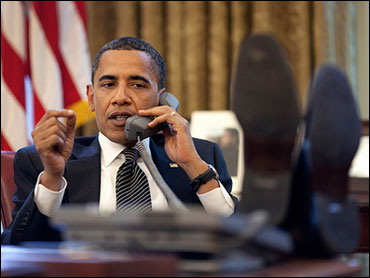
A photo released by the White House, which shows Obama talking on the phone with Netanyahu on Monday, speaks volumes: The president is seen with his legs up on the table, his face stern and his fist clenched, as though he were dictating to Netanyahu: “Listen up and write ‘Palestinian state’ a hundred times. That’s right, Palestine, with a P.” As an enthusiast of Muslim culture, Obama surely knows there is no greater insult in the Middle East than pointing the soles of one’s shoes at another person. Indeed, photos of other presidential phone calls depict Obama leaning on his desk, with his feet on the floor. [continued…]

Editor’s Comment — Oy vey! So the Muslim-loving US president is out to insult Israel’s prime minister!

Obama’s feet are actually pointing towards White House photographer Pete Souza, not Netanyahu. Somehow, however finely tuned the president’s multicultural sensibilities might be, I doubt that while based in Washington DC he feels obliged to follow Middle Eastern etiquette — especially when speaking on the phone to a thoroughly Westernized Benjamin Netanyahu.

No doubt the White House intended to send a message here, but rather than it being a calculated insult, I’d venture to say it was this: we haven’t forgotten the impression you made on Bill Clinton. Just in case you’re in any doubt: we’re the superpower.

As “an American official” (Rahm Emanuel, most likely) said: “We are going to change the world. Please, don’t interfere.”

You got that Bibi?

No we can’t, Israeli hardliners tell Obama as he pushes for peace

President Obama’s push for peace in the Middle East has provoked the ire of right-wing Israelis, who have launched a campaign against his initiative with the slogan “No you can’t”.

The words are a play on the “Yes we can” campaign that propelled Mr Obama into the White House.

As George Mitchell, the US President’s special envoy to the Middle East, arrived in Jerusalem yesterday he was confronted by a growing campaign against Mr Obama’s push for a halt to the construction of Jewish settlements in the West Bank. One poster depicted Mr Obama in a Palestinian keffiyeh headscarf; others made sure his full name — Barack Hussein Obama — was highlighted. One activist condemned Mr Obama as America’s most anti-Semitic president. [continued…]

Hamas political chief: Israeli settlement freeze essential

Hamas political chief Khaled Meshal said Tuesday that United States President Barack Obama’s pressure on Israel to freeze construction in West Bank settlements was an essential step toward restarting peace efforts.

The militant group – which is eager to win international acceptance of its rule in Gaza though it is shunned by the U.S. and others as a terrorist organization – has tried to sound more pragmatic since Israel’s Gaza offensive early this year.

Meshal’s endorsement of Obama’s push also included an appeal for the international community to consider Hamas a positive element in the search for Middle East peace.

“There is a new language from President Obama, but we expect real pressure on Israelis,” Meshal said. “There are demands Israel stop the settlements but this is not the price we are after … although it’s an essential step.” [continued…]

Editor’s Comment — Funny how if Hamas shows signs of moderation, reporters insinuate they’re faking it: Hamas isn’t being pragmatic; it wants to sound more pragmatic.

Imagine if Meshaal’s statement was defiant. Would AP be reporting that Hamas is trying to sound defiant?

Here’s the rule: treat every hostile statement as literal and charged with dire implications. Treat every positive statement as a ruse — an attempt to deceive a naive audience.

“I’m just a reporter,” says the wily journalist as he twists another story. Right!

Hamas: Fatah raids in West Bank hampering Palestinian unity

Egyptian efforts to heal a rift between rival Palestinian factions are being hampered by West Bank raids launched by Fatah against Hamas targets, Hamas leader Khaled Meshal said on Tuesday.

Damascus-based Meshal spoke on his first visit to Cairo for many months after Egyptian officials met leaders from Palestinian President Mahmoud Abbas’ Fatah movement, which launched the raids last week. Nine people were killed in ensuing violence in the West Bank city of Qalqilya.

The raids, whose casualties included members of both factions, had stoked fears of a wider showdown and highlighted tensions within Palestinian society over Abbas’ efforts to rein in militants under a long-stalled U.S.-backed peace “road map.” [continued…]

Palau to take Chinese Guantánamo detainees

The United States has won an agreement to transfer up to 17 Chinese Muslims from the prison camp at Guantánamo Bay, Cuba, to Palau, a sparsely populated archipelago in the North Pacific, according to a statement released by Palau to The Associated Press on Wednesday.

The president of Palau, Johnson Toribiong, said his government had “agreed to accommodate the United States of America’s request” to “temporarily resettle” the detainees, members of the Uighur ethnic group, “subject to periodic review.” Palau, the president said, would be “honored and proud” to take them in a “humanitarian gesture.”

The agreement opens the door to the largest single transfer of Guantánamo prisoners and is the first major deal on detainees since President Obama pledged soon after taking office in January to close the prison within a year. [continued…]

Editor’s Comment — So, while 306 million Americans tremble at the thought that a few men who didn’t even garner the label “enemy combatant” might be too dangerous to allow into the US, the fearless Palauans –all 21,000 of them — are willing to take the risk.

London’s Metropolitan Police accused of waterboarding suspects

Metropolitan Police officers subjected suspects to waterboarding, according to allegations at the centre of a major anti-corruption inquiry, The Times has learnt.

The torture claims are part of a wide-ranging investigation which also includes accusations that officers fabricated evidence and stole suspects’ property. It has already led to the abandonment of a drug trial and the suspension of several police officers.

However, senior policing officials are most alarmed by the claim that officers in Enfield, North London, used the controversial CIA interrogation technique to simulate drowning. Scotland Yard is appointing a new borough commander in Enfield in a move that is being seen as an attempt by Sir Paul Stephenson, the Met Commissioner, to enforce a regime of “intrusive supervision”. [continued…]

CIA stance on torture tape docs suggests Obama’s new open government era won’t materialize

It’s looking more and more like Barack Obama’s pledge to usher in a new era of openness in government may well go unfulfilled.

Yesterday, administration lawyers cited national security concerns to argue that Bush-era documents detailing the videotaped interrogations of detainees should not be released. And in the wake of that news, open-government advocates are reluctantly acknowledging that, despite Obama’s campaign promises, his approach to secrecy on issues of national security will likely not depart significantly from that of George Bush. [continued…]

Now Obama must include Iran in an axis of respect

Was it coincidence that Barack Obama scheduled his speech to Muslims last week on the eve of two closely fought regional elections ­– in Lebanon last Sunday and Iran this Friday? Now the “pro-western” coalition has won a narrow victory in Lebanon, some of the US president’s supporters are suggesting his timing was indeed calculated.

If so, it was disingenuous. Under Lebanon’s complex constitution the seats reserved for Sunnis and Shias were fixed, and Sunday’s result turned on the way Christians rather than Muslims voted. A majority showed their disappointment and anger with the senior Christian politician, General Michel Aoun, who aligned himself with the Shias. After the usual weeks of negotiation Lebanon is likely to continue with a national unity government, and the real task for Obama is not to discourage the victorious Sunni-Druze-Christian alliance from inviting the Shias, and in particular Hezbollah, into their cabinet. [continued…]

Iran’s new revolution

Every four years, in what has become a ritual of the country’s election season, Iran’s public broadcaster allots a half-hour of primetime to each of the country’s presidential candidates, to use as they see fit. Anticipation was highest for reformist candidate Mir Hossein Mousavi’s film. Not only had Mousavi earned the devotion of much of the country’s youth and its urban middle and upper classes, but it was widely considered a coup that his campaign had signed one of Iran’s most beloved directors, Majid Majidi, to direct his campaign documentary. The film — inspiring set pieces from around the country and selections from the candidate’s life devoted to service, all deftly woven with religious undertones and nationalist music — didn’t disappoint.

There were also plenty of visual reminders that Mousavi has become a vessel for the hopes of the country’s fervent population of university students — the film didn’t lack for shots of chicly-dressed, flatteringly lit young people. But as Ali, a student at University of Tehran who supports Mousavi, put it, “You get the feeling that the filmmaker was more impressive than the star.” Ali shook his head contemplating all the mistakes his preferred candidate had made in the single half-hour of footage. Recounting a scene in the film where a young man together with his toddler boards Mousavi’s campaign bus to complain about the country’s lack of equality, Ali shrieked in despair: “Why didn’t he kiss that baby?” [continued…]

At least 40,000 civilians in Pakistan’s Swat: Red Cross

Some 40,000 civilians remain in Pakistan’s troubled Swat region where they lack access to electricity and water amid a military assault against the Taliban, the Red Cross said on Tuesday.

“Every time we entered a village, hundreds of people asked for help,” said Michael von Bergen, an International Committee of the Red Cross representative who was part of a convoy delivering aid in the region last weekend.

“Those who did not leave are now desperate. They need food, clean water and working medical facilities,” he added in a statement. [continued…]

Facebooktwittermail

NEWS & VIEWS ROUNDUP & EDITOR’S COMMENTS: June 9

The battle over what a “settlement freeze” means

When Benjamin Netanyahu came to Washington last month, Israeli media reported he was quite shocked at the reception he received in his closed-door meetings with Congress. It appeared the Obama administration had lined up fellow Democrats to make sure Netanyahu heard the same message as Obama had conveyed with respect to Israeli settlements and support for the two-state solution.

By last Monday, however, reports of cracks in the Democratic solidarity started to appear. Politico’s Ben Smith filed a report under the headline “Democrats pressure Barack Obama on Israel.” Smith’s article suggested Israeli supporters in the Congress were pushing back against the administration’s tough talk. Smith began with Rep. Shelley Berkley, the Democrat from Nevada, who manages to represent libertine, if not liberal, Las Vegas, while at the same time serving as the strongest ally in Congress of the right-wing Zionist Organization of America.

“My concern is that we are applying pressure to the wrong party in this dispute. I think it would serve America’s interest better if we were pressuring the Iranians to eliminate the potential of a nuclear threat from Iran, and less time pressuring our allies and the only democracy in the Middle East to stop the natural growth of their settlements.”

“When Congress gets back into session the administration is going to hear from many more members than just me.”

It is not surprising that Berkley was among the first to spring to the Netanyahu government’s defense. According to Ha’aretz’s Akiva Eldar, Berkley once reprimanded Palestinian negotiator Saeb Erekat for using the term “occupation.” After all “this [Israel] is our country” and “we” won the war. When Erekat responded, “So what am I, if I am not a person living under occupation?” Berkley answered, “War booty.” [continued…]

What exactly was U.S.-Israel agreement on settlements?

West Bank settlements have long been a bone of contention between Israel and the United States, which views them as an obstacle to peace. Over the past few years, however, Israel tried to reach a tacit understanding with Washington on settlement expansion, which is now put to the test: President Barack Obama demands a complete and utter construction freeze, whereas Prime Minister Benjamin Netanyahu insists on building in settlement blocs, as his predecessors Ariel Sharon and Ehud Olmert during George W. Bush’s term in office.

The settlement controversy reached its zenith at the twilight of Yitzhak Shamir’s government in 1992. Israel had asked for loan guarantees to help fund the absorption of hundreds of thousands of immigrants from the recently collapsed Soviet Union. Then U.S. President George H.W. Bush conditioned the aid on a complete settlement freeze. Shamir was defiant, and Bush remained firm.

Yitzhak Rabin, who succeeded Shamir as prime minister, reached an oral agreement with Bush on the loan guarantees. Rabin promised that Israel would complete the housing units that were under construction and limit future construction in all settlements in the Jordan Valley and the Jerusalem area, which Rabin dubbed “security areas.” The New York Times reported that the construction would be for “natural growth” purposes, and would amount to building additional rooms in existing houses and infrastructure. In practice, Israel went far beyond that. [continued…]

Editor’s Comment — It seems fitting if — as this report seems to imply — that it was the Times that coined this pernicious, contrived and utterly misleading phrase, “natural growth”. They borrowed some well-tested Madison Avenue wisdom that it’s easier to see any piece of crap if you call it “natural”. But as The Forward noted in an editorial last week, there is in fact nothing “natural” here:

    The Israeli government’s defense of “natural growth” masks its true intent. Ministers say that families deserve the right to stay in their communities as their broods increase, and that is why settlements should be allowed to add homes, schools and synagogues. That’s a “right” enjoyed by no one else in Israel, or the United States, for that matter.

Israel ministry wages settlement war against U.S.

Interior Minister Eli Yishai has begun to make good on a pledge to exploit all the resources of his ministry, “its branches and its influences over local government” to expand settlements in the territories.

Yishai, who is also chairman of Shas, made the promise last Thursday to the heads of the Yesha Council of settlements. His party is concerned by the freeze on construction that has been in effect since Prime Minister Benjamin Netanyahu took office, which Yishai said is “drying out” the settlements. [continued…]

Gas discovery changes Israel’s energy picture

A huge natural gas discovery 50 miles off the Israeli coast at Haifa could potentially meet Israel’s energy needs for 20 years once it eventually comes online. In January 2009, a consortium led by U.S. energy exploration company Noble Energy announced the discovery of three massive gas fields, with one of the group’s partners calling the find “one of the biggest in the world” that represented a “historic landmark in the economic dependence of Israel.”…

The huge Tamar prospect has almost certainly averted a major energy crisis for Israel within the next decade. Israel currently imports 85 percent of its energy. With no oil of its own, it must import supplies from as far afield as Russia, Norway, Mexico and West Africa. A deal cut with Egypt in 2005 guaranteed natural gas imports from the Nile Delta for 15 years, starting from last summer.

But the only other natural gas field of significance in the region is the 1.4 trillion cubic feet field discovered by the British Gas Group off the coast of Gaza in 2000. Any hope of gas from that source continues to be paralyzed by the Israeli-Palestinian political stand-off. Both BG and the Palestinians, to whom the field mostly belongs, are anxious to start pumping gas, but Israel refuses to buy it for fear that the proceeds will ultimately finance Hamas’ arms purchases. A recent bid by the BG Group to direct the Palestinian reserves to Egypt was blocked by Israel….

A potential hitch has arisen, however, in the claim by Lebanese authorities that at least part of the Tamar gas field might lie within a common basin straddling the two countries’ territorial waters. Lebanese Energy Minister Alain Tabourian wants the Tamar project formally registered with the United Nations and a study of the extent of the basins carried out.

One of the partners in the U.S.-Israeli consortium denied those claims, saying “the entire area of the license was within territorial waters of the state of Israel.” But with more than $15 billion of energy resources at stake, and with at least three years before the gas comes online, the huge find could prove yet another flashpoint for local conflict. [continued…]

Obama, the Holocaust and the Palestinians

The line in last Friday’s New York Times summed it up: Some Israelis and their American supporters are furious with President Barack Obama, the Times reported, because they saw his Cairo speech as “elevating the Palestinians to equal status.” And those who would be threatened by Palestinians being viewed as equal human beings to Israelis may have reason to be concerned. That’s because whatever its policy implications — and the jury is very much still out on those — Obama’s Cairo speech marked a profound conceptual shift in official Washington’s discourse on the nature and causes of the Israeli-Palestinian conflict, and of America’s obligations to each side. So much so that one as prone pessimism as I was before the speech was forced to note that the reason Israel’s more right-wing supporters are worried is that, rhetorically at least, Obama was trying to move the U.S. position towards one of an honest broker. [continued…]

Netanyahu convinced Obama seeks clash with Israel to appease Arabs

Political sources close to Netanyahu say that White House Chief of Staff Rahm Emanuel and Obama’s senior political consultant David Axelrod are behind the clash between the administration and Israel.

Israel historically has depended on the White House to balance the consensus of officials in the state and defense departments; this consensus usually leans toward the Arab side.

Israeli officials say that under Obama, the White House has become the main problem in relations. [continued…]

Jews gone wild: Why camcorders and booze don’t mix

The night before Barack Obama thrilled Cairo, two cameramen strolled through downtown Jerusalem and filmed a handful of drunken American kids doing their best David Duke impressions. Forty-eight hours later, the video has gone viral, linked from a hundred political blogs, and is circling the internet at a critical velocity on a mission to humiliate the Jewish people.

As someone who lives on and off in the American bubble in Tel Aviv and came to Israel on a Birthright tour like some of the kids in the video may have, this is embarrassing, shocking, bizarre, but familiar. And as someone who spent many nights grimacing at similar overheard conversations from American Jews in town for the week from Long Island, the booze-fueled hubris and uber-Zionism is not so strange at all. In the Jewish homeland for the first time, on a free trip, fleetingly experiencing a place gripped by a visceral realism and powerful sense of purpose, it’s easy to let the beer overtake you. [continued…]

Editor’s Comment — Editors of the PEP Huffington Post should take note: Max Blumenthal’s video might have been too provocative for the tender sensibilities of HuffPo’s staff and readers but apparently Israelis and other readers of Haaretz were deemed capable of handling it even while being told that the video was on “a mission to humiliate the Jewish people.”

Should the Jewish people be humiliated by the video? Of course not. It’s not the video, stupid — it’s the people in it!

As for the acronym I just used — PEP — although I generally loathe acronyms, this one needs to be repeated far and wide. PEP stands for “Progressive Except for Palestine” and Philip Weiss has been doing a great job of pinning the label on the guilty.

Huge campaign rallies snarl Tehran

A pair of sprawling demonstrations here brought the capital of Iran virtually to a standstill on Monday, with followers of President Mahmoud Ahmadinejad and his main electoral challenger struggling to demonstrate their street following ahead of presidential elections on Friday.

The demonstrations were the largest gatherings here in more than a decade, veteran political observers said.

Iranian elections always bring a loosening of the rules on public speech and behavior, but many say this year’s election is different, in part because of the social crackdown of the past four years under Mr. Ahmadinejad.

“What’s happening now is more than what should happen before an election,” said Mashalah Shamsolvaezin, a political commentator and former director of several reformist newspapers. “This is an expression of protest and dissatisfaction by people. They are venting their frustration and feeling very powerful.” [continued…]

Lebanon’s election surprise

After a victory for the Hizbollah-led opposition had been widely anticipated, a constellation of factors tipped the balance in the March 14 coalition’s favour bringing an end to the jinx of Western support, at least for now.

An election-eve warning from Lebanon’s Maronite Christian patriarch who warned that the country faced a threat to its existence may also have been decisive in promoting fear of the Islamist group and its allies.

As The New York Times noted: “for the first time in a long time, being aligned with the United States did not lead to defeat in the Middle East. And since Lebanon has always been a critical testing ground, that could mark a possibly significant shift in regional dynamics with another major election, in Iran, just four days away. [continued…]

Al Qaida plays key role on both sides of Pakistan-Afghan border

When a wave of 11 suicide bombers attacked this Afghan provincial capital in mid-May — among them several men dressed head to toe in blue burqas — panicked residents fled into their homes to avoid the street battles between the killers and local security forces. Twenty locals died in the melee.

That so many bombers could slip into town from North Waziristan in neighboring Pakistan on a single operation testified to the rising level of violence in Afghanistan, and the U.S. military said that al Qaida is playing a critical role in financing suicide bombings and other attacks on U.S. and NATO forces.

However, the relatively low death toll in the Khost assault indicated that the attackers’ preparation was deficient, at least by comparison with far more devastating suicide bombings in Iraq. [continued…]

North Korean labor camps a ghastly prospect for U.S. journalists

North Korea’s sentencing of two American TV journalists to 12 years of hard labor Monday could imperil the Obama administration’s already difficult goal of curtailing the authoritarian nation’s nuclear weapons ambitions.

If no deal is reached, the two women face a grim future in a brutal prison system notorious for its lack of adequate food and medical supplies and its high death rate.

Laura Ling and Euna Lee, reporters for San Francisco-based Current TV, were convicted by the nation’s top Central Court of an unspecified “grave crime” against the hard-line regime after they were arrested in March along the Chinese-North Korean border while reporting a story on human trafficking. [continued…]

CIA urges judge to keep Bush-era documents sealed

The Obama administration objected yesterday to the release of certain Bush-era documents that detail the videotaped interrogations of CIA detainees at secret prisons, arguing to a federal judge that doing so would endanger national security and benefit al-Qaeda’s recruitment efforts.

In an affidavit, CIA Director Leon E. Panetta defended the classification of records describing the contents of the 92 videotapes, their destruction by the CIA in 2005 and what he called “sensitive operational information” about the interrogations.

The forced disclosure of such material to the American Civil Liberties Union “could be expected to result in exceptionally grave damage to the national security by informing our enemies of what we knew about them, and when, and in some instances, how we obtained the intelligence we possessed,” Panetta argued. [continued…]

Facebooktwittermail

NEWS & VIEWS ROUNDUP & EDITOR’S COMMENT: June 8

Lebanese voters prevent Hizbollah takeover

There will be no Islamic Republic of Lebanon. Nor will there be a pro-Western Lebanese republic. There will, after yesterday’s vote – for the Hizbollah-Christian coalition and for the secular Sunni-Christian alliance – be a government of “national salvation” in Beirut, run by an ex-army general-president with ever-increasing powers.

Washington would have preferred that Saad Hariri, son of the assassinated ex-prime minister, came out with a clear win. But out of the shadows will come the same crippled, un-healable Lebanon; delightful, unworkable, poor old Lebanon, corrupt, beautiful, vanity-prone, intelligent, democratic – yes, definitely, democratic – and absolutely outside our powers to reform. [continued…]

March 14 bloc wins Lebanon election

Official results have confirmed the victory of Lebanon’s March 14 coalition over the opposition Hezbollah-led alliance in the country’s parliamentary elections.

Ziad Baroud, the interior minister, announced the figures on Monday, confirming what had already been predicted by the country’s newspapers.

The results showed the Sunni-led March 14 coalition, led by Saad Hariri, the son of Rafiq Hariri, the assassinated former prime minister, winning 71 seats in the 128-seat parliament, while the Hezbollah-led alliance took 57. [continued…]

Editor’s Comment — Even though there will not now be a Hezbollah-led government in Lebanon, the “Hezbollah lost” narrative is a bit misleading. All eleven Hezbollah candidates won their elections. It was Michel Aoun’s Christian party that lost — and thus Hezbollah lacks the coalition partner it would have needed to lead a new government — but since most Americans haven’t heard of Aoun, the media is much happier to ride with its favorite Islamists vs the West narrative. Add to that the “democracy wins” narrative and we can also expect to hear little about voting irregularities such as those The Guardian mentioned: widespread reports of vote-buying before the poll, with some Lebanese expatriates being offered free air tickets home. Just imagine the outcry if there had been any cases in which Hezbollah had been doling out hundreds of dollars to secure individual votes!

Report from Gaza: ‘We are a human experiment’

A few days ago, I left Gaza with Medea Benjamin (above, as we came through the Sinai) and four other members of her Code Pink delegations. I wasn’t really able to write about Gaza while I was there. We had so many wrenching meetings and encounters over nine days that it was all I could do to drag myself back into my room at 1 in the morning and then rise at 6 or 7 the next day to begin the cycle again.
When I said that I was witnessing bondage out of the Bible, a friend I made in Gaza, Mond Mishal, a would-be graduate student, (right), shook his head. Mond
“Don’t talk about the bible, or an old story. You must find a new metaphor. We are being experimented on. This is a human experiment,” he said.

The other friend I made there, Reem Abu Jaber, echoed the point: “This is beyond books and fairytales. Sometimes I think that words are not made for what we are going through.” [continued…]

House hunting in the West Bank

It’s Benjamin Netanyahu’s fault. Because of his insistence on allowing for “natural growth” of West Bank settlements, I decided to go real-estate shopping. I called Amana, the settlement-building organization, and said I was interested in homes in Binyamin, the name used by settlers and Israeli officialdom for the piece of the West Bank directly north of Jerusalem.

The sales rep was so helpful I could hear her smile. At Shilo, a 30-year-old settlement north of Ramallah, construction has recently begun on a new development. For about $160,000, she said, I could get a 1,200-square-foot house. To American ears, that sounds small, but for a Jerusalem apartment-dweller, it would be a step up. Besides, that’s a starter home; I could add a second floor now or later, she said.

At Eli, just up the road from Shilo, she offered homes in the center of the settlement and in outlying “neighborhoods.” In Hayovel, for instance, she had a house for $115,000, with a completed first floor and the outer shell for the second floor. She didn’t mention that the “neighborhood” of Hayovel is an illegal outpost, built partly on private Palestinian land. She offered me a similar house at a settlement called Ma’aleh Mikhmash. I thanked her and said I’d talk to my wife. [continued…]

What the new Jim Comey torture emails actually reveal

The New York Times was provided 3 extremely important internal Justice Department emails from April, 2005 (.pdf) — all written by then-Deputy Attorney General Jim Comey — which highlight how the Bush administration’s torture techniques became legally authorized by Bush lawyers. As Marcy Wheeler documents, the leak to the NYT was clearly from someone eager to defend Bush officials by suggesting that Comey’s emails prove that all DOJ lawyers — even those opposed to torture on policy grounds — agreed these techniques were legal, and the NYT reporters, Scott Shane and David Johnston, dutifully do the leakers’ bidding by misleadingly depicting the Comey emails as vindication for Bush/Cheney (Headline: “U.S. Lawyers Agreed on the Legality of Brutal Tactic”; First Paragraph: “When Justice Department lawyers engaged in a sharp internal debate in 2005 over brutal interrogation techniques, even some who believed that using tough tactics was a serious mistake agreed on a basic point: the methods themselves were legal”).

I defy anyone to read Comey’s 3 emails and walk away with that conclusion. Marcy has detailed many of the reasons the NYT article is so misleading, so I want to focus on what the Comey emails actually demonstrate about what these DOJ torture memos really are. The primary argument against prosecutions for Bush officials who ordered torture is that DOJ lawyers told the White House that these tactics were legal, and White House officials therefore had the right to rely on those legal opinions. The premise is that White House officials inquired in good faith with the DOJ about what they could and could not do under the law, and only ordered those tactics which the DOJ lawyers told them were legal. As these Comey emails prove, that simply is not what happened. [continued…]

Recently released Gitmo detainee talks to ABC News

For 7½ years, Lakhdar Boumediene was known simply by a number: “10005.”

These were the digits assigned to him when he arrived at the detention center at Guantanamo Bay, Cuba, swept up in a post-Sept. 11 dragnet and accused of plotting to blow up the U.S. and British Embassies in Sarajevo.

In an exclusive interview with ABC News, Boumediene said the interrogators at Gitmo never once asked him about this alleged plot, which he denied playing any part it.

“I’m a normal man,” said Boumediene, who at the time of his arrest worked for the Red Crescent, providing help to orphans and others in need. “I’m not a terrorist.”

The 43-year-old Algerian is now back with his wife and two daughters, a free man in France after a Republican judge found the evidence against Boumediene lacking. He is best known from the landmark Supreme Court case last year, Boumediene v. Bush, which said detainees have the right to challenge their detention in court.

That decision was a stunning rebuke of the Bush administration’s policies on terror suspects. It set up a ruling by District Court Judge Richard Leon, a former counsel to Republicans in Congress appointed to the bench by Bush, that there was no credible evidence to keep Boumediene detained.

After what Boumediene described as a 7½ year nightmare, he is now a free man. Boumediene: “I don’t think. I’m sure” about torture. [continued…]

America’s political paralysis over torture

If, like me, you’ve been following America’s torture policies not just for the last few years, but for decades, you can’t help but experience that eerie feeling of déjà vu these days. With the departure of George W. Bush and Dick Cheney from Washington and the arrival of Barack Obama, it may just be back to the future when it comes to torture policy, a turn away from a dark, do-it-yourself ethos and a return to the outsourcing of torture that went on, with the support of both Democrats and Republicans, in the Cold War years.

Like Chile after the regime of General Augusto Pinochet or the Philippines after the dictatorship of Ferdinand Marcos, Washington after Bush is now trapped in the painful politics of impunity. Unlike anything our allies have experienced, however, for Washington, and so for the rest of us, this may prove a political crisis without end or exit.

Despite dozens of official inquiries in the five years since the Abu Ghraib photos first exposed our abuse of Iraqi detainees, the torture scandal continues to spread like a virus, infecting all who touch it, including now Obama himself. By embracing a specific methodology of torture, covertly developed by the CIA over decades using countless millions of taxpayer dollars and graphically revealed in those Iraqi prison photos, we have condemned ourselves to retreat from whatever promises might be made to end this sort of abuse and are instead already returning to a bipartisan consensus that made torture America’s secret weapon throughout the Cold War. [continued…]

TV debates electrify Iranian presidential campaign

Iran’s president, Mahmoud Ahmadinejad, has now traded bare-knuckled verbal blows with both of his reformist challengers in American-style live televised debates that have electrified the atmosphere before Thursday’s watershed elections.

On Saturday night he and Mehdi Karrubi, a septuagenarian former speaker of parliament, accused each other of corruption, scorned each other’s foreign policy and clashed over Iran’s troubled economy. Each swatted aside his opponent’s allegations as self-serving attempts to win votes.

Mr Ahmadinejad, 52, was left reeling against the ropes by an early body-blow from the white-bearded reformist, who is the only cleric among the four presidential contenders. Mr Karrubi mocked the president for claiming that a halo-like, celestial green light had descended on him when he addressed the UN General Assembly four years ago. World leaders were supposedly so transfixed by Mr Ahmadinejad that they sat unblinking – literally – for nearly 30 minutes as he spoke. The president’s opponents have long used the tale to portray him as a hallucinating zealot who appears to believe he is on a divine mission. [continued…]

In Iran, harsh talk as election nears

The leading candidates are accusing each other of corruption, bribery and torture. The wife of the strongest challenger to President Mahmoud Ahmadinejad has threatened to sue him for defaming her. And every night, parts of the capital become a screaming, honking bacchanal, with thousands of young men dancing and brawling in the streets until dawn.

The presidential campaign, now in its final week, has reached a level of passion and acrimony almost unheard-of in Iran.

In part, that appears to be because of a surge of energy in the campaign of Mir Hussein Moussavi, a reformist who is the leading contender to defeat Mr. Ahmadinejad in the election, set for Friday. Rallies for Mr. Moussavi have drawn tens of thousands of people in recent days, and a new unofficial poll suggests his support has markedly increased, with 54 percent of respondents saying they would vote for him compared with 39 percent for Mr. Ahmadinejad. [continued…]

A relative unknown leads challenge in Iran

The main challenger to President Mahmoud Ahmadinejad in Friday’s presidential election is a relatively unknown candidate who says he joined the race to save Iran from his opponent’s “destructive” policies.

Mir Hossein Mousavi, 67, who served as prime minister in the early years of the Islamic revolution, had stayed away from politics for the past 20 years. But he entered the race on a main promise to stand up to Ahmadinejad, which has earned him the support of influential clerics, politicians and young people alike.

Each night, tens of thousands of youths gather in Tehran’s main squares to cheer their support for a man who just a month ago they barely knew by name. Mousavi has emerged as the only serious alternative for those who oppose the policies of Ahmadinejad, who has the support a small group of hard-line clerics and some influential members of Iran’s Revolutionary Guard Corps. [continued…]

Why the Taliban won’t take over Pakistan

It has become the statistic heard round the world. The Taliban are within 60 miles of Islamabad. Just 60 miles. Every dispatch about the insurgents’ recent advance into the Pakistani district of Buner carried the ominous number.

Washington quivered, too. A top counterinsurgency expert, David Kilcullen, reiterated that Pakistan could collapse within six months. Secretary of State Hillary Rodham Clinton said flatly if the country were to fall, the Taliban would have the “keys to the nuclear arsenal.” On a visit to Islamabad, Sen. John Kerry – the proctor of $7.5 billion in Pakistani aid as head of the Senate Foreign Relations Committee – warned bluntly: “The government has to ratchet up the urgency.”

The Pakistani military did launch a major counteroffensive that has sent 2 million people fleeing their homes. For now, both the US and many Pakistanis appear to be relieved that the military has drawn a line at least somewhere, in this case in the fruit orchards of the Swat Valley and the city of Mingora, north of Islamabad.

Yet Pakistani analysts and officials here caution that the casus belli of all the commotion – the infamous 60 miles and the threat of an imminent Taliban takeover – is overblown. The Visigoths are not about to overrun the gates of Rome. Bearded guys with fistfuls of AK-47s are not poised to breeze into Islamabad on the back of white Toyota pickups. [continued…]

Pakistan military campaign has broad support, but for how long?

Cradled in his father’s arms, 8-month-old Maaz Ayaz appeared listless and underweight.

A smudge of dirt marked the boy’s face. His father, Mohammed Ayaz, anxiously talked of how he and his wife could feed Maaz only tea and biscuits — the only food they could get their hands on at the refugee camp.

“We’ve asked for milk, but there’s none available,” Ayaz said. “We’re worried about our boy.”

Such moments of anguish abound at the Sheikh Yaseen camp in this chaotic, sun-baked city that has become the hub for Pakistanis fleeing the fighting in the Swat Valley, about 30 miles to the north.

Support for the military offensive against the Pakistani Taliban in the northwest has been widespread, cutting across economic and ethnic lines. But that support hinges precariously on how Pakistan manages the massive humanitarian crisis created by the war’s displacement of an estimated 3 million Pakistanis. [continued…]

Facebooktwittermail

NEWS & VIEWS ROUNDUP: June 7

Livni: Netanyahu endangering U.S. support for Israel

Opposition leader Tzipi Livni warned Sunday that Prime Minster Benjamin Netanyahu’s reluctance to declare support for a two-state solution may cause the United States to withdraw its support for Israel.

“In the past it was clear that Israel wanted to accept the peace process,” Livni told Army Radio. “The government today is not prepared to advance the process and set future borders, and the feeling in the world is that all Israel is trying to do is gain time.” [continued…]

Key U.S. Jews wary of Netanyahu’s unbending policy on settlements

For the first time in America’s decades of jousting with Israel over West Bank settlements, an American president seems to have succeeded in isolating the settlements issue and disconnecting it from other elements of support for Israel.

It is a disentanglement now seen most clearly in Congress, which in the past served as Israel’s stronghold against administration pressure on the issue. But when Israeli leader Benjamin Netanyahu came to Capitol Hill for a May 18 meeting after being pressed by President Obama to freeze the expansion of West Bank settlements, he was “stunned,” Netanyahu aides said, to hear what seemed like a well-coordinated attack against his stand on settlements. The criticism came from congressional leaders, key lawmakers dealing with foreign relations and even from a group of Jewish members.

They included Massachusetts Democrat John Kerry, who heads the Senate Foreign Relations Committee; Democrat Carl Levin of Michigan, who chairs the Senate Armed Services Committee; California Democrat Howard Berman, chairman of the House Foreign Relations Committee, and California Rep. Henry Waxman, a senior Democrat.

The Jewish lawmakers among them believed “it was their responsibility to make him [Netanyahu] very, very aware of the concerns of the administration and Congress,” said a congressional aide briefed on the meeting. The aide, who declined to be identified, stressed that despite the argument on settlement issues, members of Congress remained fully supportive of Israel on all other issues, including the need to deal with Iran and the concern over Hamas and Hezbollah’s activity. [continued…]

Censored by the Huffington Post and imprisoned by the past: why I made ‘Feeling the Hate in Jerusalem’

On Wednesday, I walked around central Jerusalem with my friend, Joseph Dana, an Israel peace activist who has lived in the country for three years. We interviewed young people on camera about the speech President Barack Obama planned to deliver to the Muslim world the following day in Cairo. Though our questions were not provocative at all – we simply asked, “What do you think of Obama’s speech” – the responses our interview subjects offered comprised some of the most shocking comments I have ever recorded on camera. They were racist, hateful, and incredibly ignorant, and were mostly couched within a Zionist context – “this is our land, Obama!” The following day, we edited an hour of interviews into a 3:30 minute video package and released it on Mondoweiss and on the Huffington Post.

Within a few hours, I received an email from a Huffington Post administrator informing me he had scrubbed my video from the site. “I don’t see that it has any real news value,” the administrator told me. “For me it only proves that one can find drunk people willing to say just about anything. Especially drunk, moronic people.” For the first time, the premier clearinghouse for online news and opinions had suppressed one of my posts. [continued…]

U.S. lawyers agreed on the legality of brutal tactic

When Justice Department lawyers engaged in a sharp internal debate in 2005 over brutal interrogation techniques, even some who believed that using tough tactics was a serious mistake agreed on a basic point: the methods themselves were legal.

Previously undisclosed Justice Department e-mail messages, interviews and newly declassified documents show that some of the lawyers, including James B. Comey, the deputy attorney general who argued repeatedly that the United States would regret using harsh methods, went along with a 2005 legal opinion asserting that the techniques used by the Central Intelligence Agency were lawful.

That opinion, giving the green light for the C.I.A. to use all 13 methods in interrogating terrorism suspects, including waterboarding and up to 180 hours of sleep deprivation, “was ready to go out and I concurred,” Mr. Comey wrote to a colleague in an April 27, 2005, e-mail message obtained by The New York Times. [continued…]

Iran has centrifuge capacity for nuclear arms, report says

A week before Iran’s presidential election, atomic inspectors reported Friday that the country has sped up its production of nuclear fuel and increased its number of installed centrifuges to 7,200 — more than enough, weapon experts said, to make fuel for up to two nuclear weapons a year, if the country decided to use its facilities for that purpose.

In its report, the International Atomic Energy Agency said that it had found no evidence that any of the fuel in Iran’s possession had been enriched to the purity needed to make a bomb, a step that would take months.

But it said that the country had blocked its inspectors for more than a year now from visiting a heavy-water reactor capable of being modified to produce plutonium that could be used in weapons. It also said that Tehran had continued to refuse to answer the agency’s questions about reports of Iranian studies obtained by Western intelligence agencies that suggest that its scientists had performed research on the design of a nuclear warhead. [continued…]

Uranium found at second Syria site – IAEA

The UN nuclear watchdog, the IAEA, says traces of undeclared man-made uranium have been found at a second site in Syria, at a reactor in Damascus.

The IAEA is investigating US claims that a Syrian site destroyed in a 2007 Israeli raid was a nuclear reactor that was not yet operational.

Separately, the agency says Iran is continuing to enrich uranium in defiance of the UN Security Council.

Both Iran and Syria deny allegations of illicit nuclear activities. [continued…]

Facebooktwittermail

Hamas’ response to Obama’s speech

Hamas leader to Obama: deeds, not words

The head of Hamas’s political bureau, Khaled Meshaal, gave a qualified welcome here Thursday to the big speech that Pres. Barack Obama addressed to the Muslim world in Cairo.

“The speech was cleverly written in the way it addressed the Muslim world… and in the way it showed respect to the Muslim heritage,” Meshaal told IPS in an exclusive interview. “But I think it’s not enough. What’s needed are deeds, actions on the ground, and a change of policies.”

His remarks came just hours after the speech, in a wide-ranging interview in one of the Hamas leader’s offices here in the Syrian capital.

In the interview, Meshaal was friendly, quietly self-confident, and thoughtful. He was firm in describing his movement’s positions, including when he restated that he wants Hamas to be treated as “part of the solution and not part of the problem”. [continued…]

After the talk, can Obama walk the walk?

Most people across Muslim and Arab lands viewed President Obama’s speech in Cairo, Egypt, as “excellent,” a spokesman for the hard-line Palestinian movement Hamas said.

But the official, Ahmed Yousef, interviewed on CNN’s “American Morning” from Gaza City, said there’s a question on the street: Is the American president “ready to walk the way he talks?”

“This is the question,” said Yousef, the senior adviser for former Palestinian Prime Minister Ismail Haniya.

In his address to Muslims, Obama called for bridging gaps between Israelis and Palestinians and urged the establishment of a two-state solution to the conflict. He called for an end to Israeli settlement building, and he called for the Palestinians to end violence against the Jewish state. [continued…]

Facebooktwittermail

Cairo speech responses

Obama’s speech marks a strategic revolution for Israel

For Israel, Obama’s “Cairo speech” marks nothing less than a strategic revolution. During the Bush era, Israel was America’s friendliest partner in the war on terror, and enjoyed military freedom of operation against the Palestinians, Hezbollah and Syria, for which it in return withdrew from the Gaza settlements. With Obama, Israel has to undergo a re-education, and will have to once again pass a test of its dedication to U.S. interests in the Middle East.

Until yesterday, Obama discussed the Israeli-Arab conflict in terms of interests, and refrained from speaking about values and ethics. But in Cairo, he used the vocabulary and narrative of the American liberal left, whence he came. He spoke unwaveringly about “the occupation” and about the “Palestinians aspiration for dignity, opportunity, and a state of their own,” and promised that the United States would not turn its back on the Palestinians. He called on Hamas to show responsibility and to recognize Israel’s right to exist; he did not call it a terror organization, but a movement that enjoys some popular support.

In addressing the Palestinians, Obama urged that they wage their war without violence, and he compared it to the struggle of black slaves in America to be freed from white domination, to the struggle of the blacks in South Africa, and to the struggles of other nations in South Asia and Eastern Europe. This is not an easy comparison for Israeli ears: In Obama’s view, the Palestinians are waging a just struggle for national liberation, which reminds him of past efforts to break free of colonialism and Soviet tyranny. [continued…]

Reaction in Israel ranges from relief to outrage

“The government of Israel expresses its hope that this important speech in Cairo will indeed lead to a new period of reconciliation between the Arab and Muslim world and Israel,” said a statement released by the office of Israeli Prime Minister Benjamin Netanyahu.

His three-paragraph response to the speech made no mention of the two-state solution to the Israeli-Palestinian conflict – a formula Obama again championed in his address – or to the U.S. leader’s demand that Israel halt all construction activity on Palestinian lands, something Israel is refusing to do.

Politicians on the far right condemned Obama’s speech and reaffirmed their claim to all Palestinian lands.

“Obama’s words are not the solution to peace and security,” said Rabbi Dov Volpo, leader of the extremist Land of Israel party, who warned a “tragedy” could befall the United States if it threatens the land of Israel, a term used here to refer to a region that also includes the Palestinian territories. [continued…]

Facebooktwittermail

Obama in Cairo

Obama’s speech in Cairo

Now is the time for Palestinians to focus on what they can build. The Palestinian Authority must develop its capacity to govern, with institutions that serve the needs of its people. Hamas does have support among some Palestinians, but they also have responsibilities. To play a role in fulfilling Palestinian aspirations, and to unify the Palestinian people, Hamas must put an end to violence, recognize past agreements, and recognize Israel’s right to exist.

At the same time, Israelis must acknowledge that just as Israel’s right to exist cannot be denied, neither can Palestine’s. The United States does not accept the legitimacy of continued Israeli settlements. This construction violates previous agreements and undermines efforts to achieve peace. It is time for these settlements to stop.

Israel must also live up to its obligations to ensure that Palestinians can live, and work, and develop their society. And just as it devastates Palestinian families, the continuing humanitarian crisis in Gaza does not serve Israel’s security; neither does the continuing lack of opportunity in the West Bank. Progress in the daily lives of the Palestinian people must be part of a road to peace, and Israel must take concrete steps to enable such progress. [continued…]

Editor’s Comment — It’s easy enough to criticize Obama’s speech in terms of specifics – the fact that he denounced Palestinian violence at a time when Palestinians are overwhelmingly the victims of Israeli violence; the fact that he implied that Hamas merely has fringe support from “some Palestinians” rather than acknowledging that they won one election fair and square and will most likely win the next – but probably the most important thing about the speech is that the US president comes away having accrued political capital and in a better position to continue applying persistent pressure on the Israelis.

The glaring gap in the political equation is an effective process that will lead to Palestinian reconciliation. Sooner or later the US is going to have to involve itself. Egyptian mediators, fearful that empowering Hamas will empower their own Muslim Brotherhood, are not up to the task.

In characterizing Obama’s approach I would say we should expect incremental advances without high drama. He will pressure the Israelis through persistence — by convincing them of his seriousness and unwillingness to become distracted.

Israel baffled as no suddenly means no

It is true, the official said, that a succession of U.S. administrations has called on Israel to halt expansion of Jewish settlements in East Jerusalem and the West Bank, but he insisted those demands were designed for public consumption.

Privately, he said, the two countries have agreed for years that some new construction could go ahead, provided it met certain conditions worked out informally between the two governments.

Traditionally, the official explained, a “halt” to new settlement construction meant Israel could go ahead with building, provided such activity took place within existing settlement boundaries, did not include financial incentives for prospective settlers, and did not involve expropriation of private land.

These were the rules worked out privately with Washington, he said, and Israel has abided by them.

“Israel,” he said, “has not been hoodwinking anyone.”

In the past, rather than condemn Israel for such activity, Washington would instead react with muted dissent, using vapid adjectives such as “unhelpful” to describe the ongoing settlement construction.

Such words, the official said, were actually meant to signal Washington’s acceptance of Israel’s actions, not its disapproval.

Now, he complained, the administration of President Barack Obama is abandoning such unwritten “understandings” by insisting its demand for a halt to new construction means exactly what it says – no new construction.

In other words, “no” no longer means “yes.” [continued…]

US guest list includes Egypt regime’s critics

The US has invited leading critics of the Egyptian regime, including members of parliament from the Muslim Brotherhood, the Islamist group, to attend President Barack Obama’s much-awaited speech to the Muslim world in Cairo on Thursday.

The audience at Cairo University will include bloggers critical of the Egyptian government, Ayman Nour, the former presidential candidate whose imprisonment had strained relations between Cairo and the previous US administration, as well as independent deputies who belong to the banned Brotherhood, the country’s largest opposition group.

The guest list marks an apparent US attempt to balance closer relations with Arab leaders with an outreach to civil society and opposition groups. Mr Obama has carefully refrained from criticising the Egyptian authorities even when pressed on their human rights record. And he arrives in Cairo after lavishing praise on King Abdullah of Saudi Arabia during a visit to Riyadh. [continued…]

Facebooktwittermail

NEWS & VIEWS ROUNDUP & EDITOR’S COMMENT: June 3

Obama to tell Israel: Form new peace policy by July

United States President Barack Obama intends to give Prime Minister Benjamin Netanyahu four to six weeks to provide an “updated position” regarding construction in West Bank settlements and the two-state principle.

Obama made a surprise appearance on Tuesday at a meeting Defense Minister Ehud Barak was holding in Washington, shortly before the U.S. leader was set to leave on a five-day trip to the Middle East.

Obama spoke for about 15 minutes with Barak, who was meeting with National Security Adviser General Jim Jones at the time. While Obama’s official schedule did not include a meeting with Barak, he has in the past dropped into other officials’ meetings with international figures.

According to an official Israeli source, Obama wants to complete the formulation of a preliminary six-month plan for progress toward a Middle East peace agreement and to present it in July. [continued…]

U.S. demands Israel halt construction in East Jerusalem market

Washington is furious over the Interior Ministry’s anticipated approval of a plan to build a new hotel in East Jerusalem, just 100 meters from the Old City’s walls. The plan, which would see the demolition of a wholesale market and kindergarten, is slated to be approved today.

In conversations with Israeli officials, senior American officials have made it clear that they want Israel to freeze all plans for expanding the Jewish presence in East Jerusalem, and especially in the Holy Basin – the area adjacent to the Old City.

The regional planning and building committee for Jerusalem will discuss the plan Tuesday. It was submitted by the Jerusalem municipality, which owns the land on which the hotel is slated to be built, and the state-owned Jerusalem Development Authority, which will actually construct it. The site in question is in the wholesale market, just east of the Rockefeller Museum. [continued…]

Likud: Obama has crossed the line

US President Barack Obama’s administration’s criticism of Prime Minister Binyamin Netanyahu’s policies has crossed the line into interfering in Israeli politics, top Likud ministers and MKs said Tuesday.

Kadima officials responded to the allegations by disagreeing that the US was meddling but expressing concern that such a perception by the Israeli public would harm their party and end up strengthening the prime minister. They accused Netanyahu’s associates of portraying Obama as an enemy of Israel in order to unite the public behind him.

The charges of American interference began April 16 when Yediot Aharonot quoted Obama’s chief of staff Rahm Emanuel telling an unnamed Jewish leader: “In the next four years there is going to be a permanent-status arrangement between Israel and the Palestinians on the basis of two states for two peoples, and it doesn’t matter to us at all who is prime minister [of Israel].”

Likud Minister-without-Portfolio Yossi Peled said Tuesday that the statement was inappropriate and was just one of many examples of American interference in Israeli politics since Netanyahu’s election in February. [continued…]

Can Obama offer change the Muslim world can believe in?

Obama’s openness to engagement and his legacy of opposition to the Iraq war has gone down well in the Middle East, with opinion polls showing the President having a remarkably high approval rating for a U.S. leader. But it’s hardly majority support, and even those who approve of Obama seem to retain a negative view of the United States. Here lies the rub: Obama has actually raised expectations that he will substantially change the policies that have antagonized much of the Middle East and beyond — expectations that, on current indications, he is unlikely to even come close to satisfying.

And that considerably raises the political peril of his planned speech to “the Muslim world” — I use quote marks in deference to the fact that the singularity of that noun may be more a figment of the jihadist imagination than a reality, but I’ll leave that conversation to others. The greater danger lies in the fact that Obama has no new policies to offer in Cairo. As his Deputy National Security Adviser Dennis McDonough told the Wall Street Journal, the Cairo speech will, instead, attempt to “change the conversation”. Said McDonough, “We want to get back on a shared partnership, back in a conversation that focuses on the shared values.”

The problem, of course, is that the breakdown between the U.S. and “the Muslim world” is not a misunderstanding of values, or a communication failure; it’s entirely about U.S. actions and policies, rather than the rhetoric in which they’re wrapped. People in Muslim countries understand American values, or the values America professes to uphold, and many are passionately attached to some of those same values. What they expect of America is that it apply its own values when dealing with the Middle East. They would like very much, for example, the U.S. to act on that basis of Lincoln’s “self evident truth” that Palestinian men and women were created equal to Israeli men and women — an approach Obama’s own Administration has yet to demonstrate, as my friend Rami Khouri notes. [continued…]

Can admitting a wrong make it right?

… there is a body of evidence to suggest that the most vital element in Middle East peacemaking may lie in questions of language and symbols–what social anthropologist Scott Atran calls a “moral logic” based on “sacred values.” And sometimes what that boils down to, essentially, is saying you’re sorry. As Atran sees it, this is not really a theological question. It’s more fundamental than fundamentalism. The need for dignity and respect—a craving for recognition and vindication—is at the heart of the region’s most intractable conflicts.

Such issues defy conventional notions of cost and benefit, says Atran, who holds distinguished posts at the University of Michigan, John Jay College in New York and the National Center for Scientific Research in France. Working with fellow scholar Jeremy Ginges, Atran has interviewed Israelis and Arabs, leaders and followers, throughout the region. And he has found that among the hardliners who now tend to dominate the debate and dictate stalemate on all sides, the offer of money or other material benefits not only is rejected, it increases their anger and their recalcitrance. “Billions of dollars have been sacrificed to demonstrate the advantages of peace and coexistence,” Atran and Ginges wrote earlier this year at the height of fighting in Gaza. “Yet still both sides opt for war.”

Even when ballots replace bullets, these factors that Atran calls “intangible” remain important. An obvious reason that extremists have done so well in the region’s elections in recent years, whether among the Arabs, Iranians or Israelis, is that they have addressed emotional and moral questions head on. Hamas’s essential message when it won the Palestinian elections in 2006 was one of resistance and dignity in the face of occupation and corruption. If a Hizbullah-led coalition wins at the polls in Lebanon this weekend, as many predict, its Kalashnikov-emblazoned banner of pride and defiance will have been key. And if President Mahmoud Ahmadinejad gets a second term out of voters later this month, his refusal to bow to international demands that Iran give up nuclear enrichment, along with his own demands that the United States apologize for its past actions toward Iran, will have helped to put him over the top. [continued…]

Obama says U.S. could be seen as a Muslim country, too

As President Obama prepared to leave Washington to fly to the Middle East, he conducted several television and radio interviews at the White House to frame the goals for a five-day trip, including the highly-anticipated speech Thursday at Cairo University in Egypt.

In an interview with Laura Haim on Canal Plus, a French television station, Mr. Obama noted that the United States also could be considered as “one of the largest Muslim countries in the world.” He sought to downplay the expectations of the speech, but he said he hoped the address would raise awareness about Muslims. [continued…]

Editor’s Comment — Not surprisingly, the rightwing blogosphere is all over this. Did Obama mean to say “America is one of the largest countries with a Muslim population”? Maybe that’s how Robert Gibbs will be trying to spin this. But here’s the quote in context:

    …I think that the United States and the West generally, we have to educate ourselves more effectively on Islam. And one of the points I want to make is, is that if you actually took the number of Muslims Americans, we’d be one of the largest Muslim countries in the world. And so there’s got to be a better dialogue and a better understanding between the two peoples.

Over to you Mr Gibbs: “Well, I think you should take note that the president did say ‘we have to educate ourselves’ and this is for him, as for everyone else, an ongoing process. There are more Muslims in America than Kuwait, but yes indeed, we do know that Kuwait is not a large Muslim country and neither is the US.

Obama faces a chasm in Mideast

The dirt overturned to bury some of the 24 people killed by U.S. Marines here in 2005 has turned to dust. The graves where women were interred with their children along the Euphrates River are bereft of tombstones. Weeds mark the passage of time, though not the pain of memories.

“No one cares whether an Iraqi dies,” said Yassin Salem, whose brother and uncle were killed here in their homes on a single day that year, Nov. 19. He looked down with bitterness at the plastic bottles and newspaper that now litter the cemetery. “What does it matter?”

When President Obama delivers his address to the Middle East on Thursday from Cairo, he will face the legacy of names like Haditha, Guantanamo and Abu Ghraib, places that have become more symbol than geography over nearly a decade of perhaps the most traumatic chapter in America’s relationship with the Muslim world.

More than any other president in a generation, Obama enjoys a reservoir of goodwill in the region. His father was Muslim. His outreach in an interview with an Arabic satellite channel, a speech to Turkey’s parliament and an address to Iranians on the Persian New Year have inclined many to listen. Just as important, he is not George W. Bush.

But Obama will still encounter a landscape in which two realities often seem to be at work, shaped by those symbols. There is America’s version of its policy toward Israel and the Palestinians, Iraq and Afghanistan, and Islamist movements such as Hamas and Hezbollah, defined in recent years by the legacy of the attacks on Sept. 11, 2001. There is another reality, from hardscrabble quarters of Beirut and Cairo to war-wrecked neighborhoods of Baghdad, where distrust of the United States runs so deep that almost anything it pronounces, however eloquent, lacks credibility, imposing a burden on Obama to deliver something far more than the unfulfilled pledges of Bush’s speeches. [continued…]

U.S. releases secret list of nuclear sites accidentally

The federal government mistakenly made public a 266-page report, its pages marked “highly confidential,” that gives detailed information about hundreds of the nation’s civilian nuclear sites and programs, including maps showing the precise locations of stockpiles of fuel for nuclear weapons.

The publication of the document was revealed Monday in an online newsletter devoted to issues of federal secrecy. That set off a debate among nuclear experts about what dangers, if any, the disclosures posed. It also prompted a flurry of investigations in Washington into why the document had been made public.

On Tuesday evening, after inquiries from The New York Times, the document was withdrawn from a Government Printing Office Web site. [continued…]

Another Club Gitmo guest kills himself

Some of the most cartoonish pseudo-tough-guy, play-acting-warrior-low-lifes of the Right — Rush Limbaugh, The Weekly Standard, National Review’s Andy McCarthy — have long referred to Guantanamo as “Club Gitmo.” Many leading national Republican politicians have (as usual) followed suit. Recently, some key Democrats have begun actively impeding plans to close it.

Today, Muhammad Ahmad Abdallah Salih — a 31-year old Yemeni who has been in a Gitmo cage since February, 2002 (more than seven years) without charges — became the latest Club Gitmo guest to successfully kill himself: [continued…]

Cheney edges away from claim that CIA docs will prove torture worked

There’s a very revealing moment buried in an interview that Dick Cheney gave to Fox News last night that really gives away his game plan on torture.

Specifically: Cheney seemed to edge away from the claim that the documents he’s asking the CIA to declassify will prove unequivocally that torture worked.

The key moment came when his interviewer said: “You want some documents declassified having to do with waterboarding.” Cheney replied:

    “Yes, but the way I would describe them is they have to do with the detainee program, the interrogation program. It’s not just waterboarding. It’s the interrogation program that we used for high-value detainees. There were two reports done that summarize what we learned from that program, and I think they provide a balanced view.”

[continued…]

Facebooktwittermail

GUEST CONTRIBUTOR – John Robertson: Obama’s Cairo speech: a chance to make an historical difference?

Obama’s Cairo speech: a chance to make an historical difference?

President Obama is scheduled to make an address Thursday, in Cairo, directed at the “Muslim world” (as many have noted, a rather unfortunate locution, as it dismisses tremendous diversity under an all-encompassing umbrella). The site is both unfortunate and highly symbolic.

Unfortunate, in that Obama has selected as the venue for this address a country whose repressive leadership under President Hosni Mubarak epitomizes in the eyes of many across the Middle East one of the evils that have retarded the advance of democracy and human rights across the region. By making his address from there, Obama will be seen as at least implicitly sanctifying, rather than sanctioning, the US’s embrace of that regime. Many will be watching hopefully for any phraseology censuring that regime, but one of the central and most enduring values of traditional Arab society is hospitality: that it be offered to a guest, and that when it is offered, the guest accept it graciously and uncritically. Therefore, any criticism that Obama expresses will have to be sheathed in the most velvetized of gloves.

Symbolic, in that since the mid-10th century CE, Cairo has been one of the great political and cultural capitals of the Arab world (another umbrella concept, admittedly) – and the region of what became Cairo included the most ancient of Egyptian capitals, Memphis, founded around 3000 BCE by (according to ancient Egyptian legend) the unifier king known as Menes. The pyramids at Giza, which now lie within the confines of Cairo, were once one of several huge royal cemeteries devoted to Egypt’s earliest rulers. In 1798, on the eve of the Battle of the Pyramids, which ensured the French conquest (albeit a temporary one) of Egypt, Napoleon Bonaparte admonished his soldiers that thousands of years of history were looking down upon them.

Now, more than two centuries later, Mr. Obama would do well to take heed of Napoleon’s admonition. For, depending on what he says, his address may be about to assume for future generations the status of a major episode, even a turning point, in “histories” : the “(Middle) East” vs. the “West,” Israel vs. the Arab world, Jewish Israelis vs. Muslim and Christian Palestinian Arabs, and, within the United States, those who assume its prerogative of global hegemony as a righteous, militarized “Christian nation” vs. those who advocate its example of global leadership as a largely secular, tolerant democracy. These histories are, of course, hardly segregated from each other. Rather, they are intertwined – or perhaps, nestled within each other, like a series of Russian dolls. The scores of books and articles produced on each of them over just the last few years are too numerous to catalog here. But the vast majority of them show that those histories have been drenched in tension, conflict, and all too often, death, destruction, and the continual ramping-up of distrust and hatred.

Ever since his election – indeed, even during the months that led up to it – a mountain of expectation has been piled upon Mr. Obama’s shoulders by those who deeply hope that he might have an important impact on all these histories. Already, in some of his actions, he has moved to inaugurate a new era of US global outreach and partnership – specifically, in both improving international relations and combating global warming. It is perhaps too much to ask that Mr. Obama’s upcoming speech in Cairo will mark a turning point in each of the histories I’ve noted above. But seldom in recent memory has one man positioned himself so well to pull the planet away from the precipice at whose edge his predecessor’s policies poised it.

John Robertson is a professor of Middle East history at Central Michigan University and has his own blog, Chippshots.

Facebooktwittermail

NEWS & VIEWS ROUNDUP & EDITOR’S COMMENT: June 2

Gambling with conflict: How a neocon casino king from California funds the Israeli settler movement

The Israeli government has repeatedly announced plans to forge ahead with plans to expand settlements in the occupied West Bank in direct opposition to President Barack Obama’s demand for an absolute settlement freeze. On May 27, Secretary of State Hillary Clinton leveled strong criticism at Israeli policy, telling reporters that President Barack Obama “wants to see a stop to settlements – not some settlements, not outposts, not ‘natural growth’ exceptions.” Israeli government spokesman Mark Regev responded by declaring that “normal life” in the settlements would continue, using a phrase that is code for continued construction. [continued…]

Obama talks of being ‘honest’ with Israel

President Obama indicated on Monday that he would be more willing to criticize Israel than previous administrations have been, and he reiterated his call for a freeze of Israeli settlements.

“Part of being a good friend is being honest,” Mr. Obama said in an interview with NPR News. “And I think there have been times where we are not as honest as we should be about the fact that the current direction, the current trajectory, in the region is profoundly negative, not only for Israeli interests but also U.S. interests.

“We do have to retain a constant belief in the possibilities of negotiations that will lead to peace,” he added. “I’ve said that a freeze on settlements is part of that.” [continued…]

Editor’s Comment — Honesty is good but it’s not enough. Obama and Netanyahu are now in a power struggle. If the US does not back up its position on settlements in some kind of punitive way, then in the eyes of the world in spite of all the fine talk and refreshing honesty, nothing will actually have changed in the US-Israeli dynamic — the Israelis will have demonstrated yet again that their ability to be unyielding and the fact that they suffer no consequences for their obstinacy, continues to be an effective political tactic.

UN: Israeli buffer zone eats up 30 percent of Gaza’s arable land

Israel’s warning came from the sky, as it often does in the Gaza Strip. But this time warplanes dropped neither bombs nor missiles on the impoverished Palestinian territory, but thousands of tiny leaflets warning Gaza’s residents to keep away from the 30-mile-long border they share with Israel.

Stay at least 300 meters (1,000 feet) from the border, the May 25 pamphlets advised Palestinians, or risk being shot by Israeli Defense Forces (IDF).

Once a plush scene of rolling olive, citrus, and pomegranate groves, much of the border region is now just a barren landscape, marked only by the presence of IDF tanks, military watchtowers, and the occasional pop of gunfire. [continued…]

Hezbollah spices up Israel-Iran mix

Where Iran has Hezbollah, Israel has Jundallah, given Israel’s apparent efforts to destabilize Iran by playing an “ethnic card” against it. This, by some reports, it is doing by nurturing the Sunni Islamist group Jundallah to parallel Tehran’s support for Lebanon’s formidable Shi’ite group, Hezbollah, that is favored to win parliamentary elections on June 7.

Should the Hezbollah-led coalition win as anticipated, the result will be even closer military-to-military relations between Iran and Lebanon, reflected in Hezbollah leader Hassan Nasrollah’s recent statement that he would look to Tehran to modernize Lebanon’s army.

Rattled by the prospect of an even-stronger Iranian influence in Lebanon in the near future, the Israeli government, which is on the defensive internationally over its stance on the Palestinian issue, has gone on the offensive. It is upping the ante against Iran by focusing on covert activities inside Iran, according to a recent report in the Washington Post, to “disrupt Iran’s nuclear program” – so far without much success. [continued…]

Inside Lebanese Hezbollah militia

Ahead of key elections in Lebanon, BBC News has gained rare access to a fighter of the powerful military wing of Hezbollah, which stands a strong chance of making political gains via the ballot box.

As President Barack Obama prepares to address the Arab world in Cairo this week, one dilemma that his administration will face is the growing political clout of Hezbollah.

In the US and Britain, the group is proscribed, but in Lebanon, Hezbollah and its allies stand a strong chance of winning the upcoming parliamentary election. [continued…]

Pakistan releases ‘top militant’

Pakistani court has ordered the release of the leader of an Islamic charity suspected of being a front for a group accused of the Mumbai attacks.

The court ruled the continued house arrest of Jamaat-ud-Dawa founder Hafiz Mohammad Saeed was unconstitutional.

The charity is accused of being a front for Lashkar-e-Taiba, the group India says was behind the attacks. Jamaat-ud-Dawa denies any links with militants. [continued…]

No winner seen in Somalia’s battle with chaos

Somalia is once again a raging battle zone, with jihadists pouring in from overseas, preparing for a final push to topple the transitional government.

The government is begging for help, saying that more peacekeepers, more money and more guns could turn the tide against the Islamist radicals.

But the reality may be uglier than either side is willing to admit: Somalia has become the war that nobody can win, at least not right now.

None of the factions — the moderate Islamist government, the radical Shabab militants, the Sufi clerics who control some parts of central Somalia, the clan militias who control others, the autonomous government of Somaliland in the northwest and the semiautonomous government of Puntland in the northeast — seem powerful enough, organized enough or popular enough to overpower the other contenders and end the violence that has killed thousands over the past two years. [continued…]

Facebooktwittermail

EDITORIAL: Cheney, 9/11 and Mossad

Cheney, 9/11 and Mossad

Just suppose… as Dick Cheney launched his springtime assault in defense of the war on terrorism and the use of torture, that a new piece of information had come to light providing circumstantial evidence that there might indeed have been a connection between the 9/11 hijackers and Saddam Hussein.

The connection might be a bit tenuous, but suppose one of the principal hijackers had a cousin who had been on the payroll of Saddam’s Mukhabarat for 25 years and during that period he had received $300,000.

How likely is it that Cheney would dismiss such a connection, that he would accept the claim that the two cousins did not know each other well, and that he would agree that really this was the kind of connection to which no significance should be attached?

Since this is an imaginary scenario the answer must be purely speculative, but this much we do know: several men were brought close to death in the hope that under intense pressure they might divulge some scrap of information on a possible al Qaeda-Saddam connection.

We can take this much for granted: Someone who had spied for Saddam and who was related to a 9/11 hijacker would — if Dick Cheney had any say in the matter — at the very least face some serious questioning.

So why should we bother with this kind of idle speculation?

Here’s why.

Last July, Ali al-Jarrah was arrested by Hezbollah in Al-Marej in the Bekaa Valley, Lebanon. He was later handed over to Lebanese government security services and now sits in jail.

As the New York Times reported in February:

Lebanese investigators say he has confessed to a career of espionage spectacular in its scope and longevity, a real-life John le Carré novel. Many intelligence agents are said to operate in the civil chaos of Lebanon, but Mr. Jarrah’s arrest has shed a rare light onto a world of spying and subversion that usually persists in secret.

Mr. Jarrah’s first wife maintains that he was tortured, and is innocent; requests to interview him were denied.

From his home in this Bekaa Valley village, Mr. Jarrah, 50, traveled often to Syria and to south Lebanon, where he photographed roads and convoys that might have been used to transport weapons to Hezbollah, the Shiite militant group, investigators say. He spoke with his handlers by satellite phone, receiving “dead drops” of money, cameras and listening devices. Occasionally, on the pretext of a business trip, he traveled to Belgium and Italy, received an Israeli passport, and flew to Israel, where he was debriefed at length, investigators say.

At the start of the 2006 war between Israel and Hezbollah, Israeli officials called Mr. Jarrah to reassure him that his village would be spared and that he should stay at home, investigators said.

Since Jarrah’s arrest, Israeli spy rings have been falling like dominoes all across Lebanon. Ironically, the unraveling of Mossad’s intelligence network has resulted in part from technical assistance provided to the Lebanese by the Bush administration — assistance that was intended to target Syrians.

But what’s all of this got to do with 9/11?

It turns out that Ali al-Jarrah had a famous cousin: Ziad al-Jarrah, hijacker and pilot of United Airlines Flight 93, which crashed near Shanksville, Pennsylvania on September 11, 2001.

The New York Times says “the men were 20 years apart in age and do not appear to have known each other well.”

Maybe this isn’t the kind of connection that concerns Cheney and maybe Ziad knew nothing about his cousin’s 25 years of service to Mossad.

Still, it’s interesting. No?

Facebooktwittermail

NEWS & VIEW ROUNDUP: June 1

U.S. weighs tactics on Israeli settlements

As President Obama prepares to head to the Middle East this week, administration officials are debating how to toughen their stance against any expansion of Israeli settlements in the West Bank.

The measures under discussion — all largely symbolic — include stepping back from America’s near-uniform support for Israel in the United Nations if Prime Minister Benjamin Netanyahu of Israel does not agree to a settlement freeze, administration officials said.

Other measures include refraining from the instant Security Council veto of United Nations resolutions that Israel opposes and making use of Mr. Obama’s bully pulpit to criticize the settlements, officials said. Placing conditions on loan guarantees to Israel, as the first President Bush did nearly 20 years ago, is not under discussion, officials said.

Still, talk of even symbolic actions that would publicly show the United States’ ire with Israel, its longtime ally, would be a sharp departure from the previous administration, which limited its distaste with Israel’s settlement expansions to carefully worded diplomatic statements that called them “unhelpful.” [continued…]

Death and devastation in Gaza neatly filed and documented

We have a way of codifying the consequences of conflict. We collect the dead into lists and tidy ruins into databases. We map gravesites and calculate the cost. It is a process that produces sums and totals, graphs and tables, which in the end are far less meaningful than the reality of what occurred. It numbs and dehumanises even as the gathering is done.

In Gaza the shells of buildings have been labelled and collated, exhibits from a violent event already passing into history after only half a year. G1086-01 designates the parliament building, a collapsed grey ribcage of concrete. The site of the ruined ministries in the Tal al-Hawa district of Gaza City is recorded as G10177-01, green and grey towers gutted by the bombs dropped from Israeli F-16s.

The numbers are entered in the book of Gaza’s destruction. There are houses – more than 1,300 of them – and police stations, apartment blocks and offices, schools and hospitals, each labelled with neat spray-painted letters. Tagged fetishistically in blue and green.

In a Hamas-run ministry Dr Ibrahim Radwan attempts to log on to the recently completed database of damage. “Problems, problems,” he mutters at his screen. This being Gaza, he explains, the network will not work, and so his colleague, Mohammed al-Ostaz, the director of urban planning, comes bearing armfuls of questionnaires that correspond to each number. [continued…]

Israel begins its biggest civil defense drill

Irael is holding the biggest civil-defense drill in its history.

Amid growing tensions with Iran, Israel is training soldiers, emergency crews, and civilians for the possibility of all-out war. Major Chezi Deutch is an officer in Israel’s Home Front Command.

“It is part of the overall plan to increase preparedness and readiness in the country, dealing with civil defense and with emergencies in the civilian population,” Deutch said. [continued…]

In Pakistan, an exodus that is beyond biblical

The language was already biblical; now the scale of what is happening matches it. The exodus of people forced from their homes in Pakistan’s Swat Valley and elsewhere in the country’s north-west may be as high as 2.4 million, aid officials say. Around the world, only a handful of war-spoiled countries – Sudan, Iraq, Colombia – have larger numbers of internal refugees. The speed of the displacement at its height – up to 85,000 people a day – was matched only during the 1994 genocide in Rwanda. This is now one of the biggest sudden refugee crises the world has ever seen.

Until now, the worst of the problem has been kept largely out of sight. Of the total displaced by the military’s operations against the Taliban – the army yesterday claimed a crucial breakthrough, taking control of the Swat Valley’s main town, Mingora – just 200,000 people have been forced to live in the makeshift tent camps dotted around the southern fringe of the conflict zone. The vast majority were taken in by relatives, extended family members and local people wanting to help.

But this grassroots sense of charity is slowly starting to show real strain. In a week when the relentless danger of the militants was underlined by a massive car bomb in the city of Lahore that killed at least 30 people and injured hundreds more, aid groups have warned that the communities taking people in – already some of the planet’s poorest people – could themselves be displaced as they desperately sell their few assets to help the homeless. [continued…]

Mysterious ‘chip’ is CIA’s latest weapon against al-Qaida targets hiding in Pakistan’s tribal belt

The CIA is equipping Pakistani tribesmen with secret electronic transmitters to help target and kill al-Qaida leaders in the north-western tribal belt, in a tactic that could aid Pakistan’s army as it takes the battle against extremism to the Taliban heartland.

As the army mops up Taliban resistance in the Swat valley, where a defence official predicted fighting would be over within days, the focus is shifting to Waziristan and the Taliban warlord Baitullah Mehsud.

But a deadly war of wits is already under way in the region, where tribesmen say the US is using advanced technology and old-fashioned cash to target the enemy. [continued…]

Al-Qaeda seen as shaken in Pakistan

Drone-launched U.S. missile attacks and Pakistan’s ongoing military offensive in and around the Swat Valley have unsettled al-Qaeda and undermined its relative invulnerability in Pakistani mountain sanctuaries, U.S. military and intelligence officials say.

The dual disruption offers potential new opportunities to ferret out and target the extremists, and it has sparked a new sense of possibility amid a generally pessimistic outlook for the conflict in Afghanistan and Pakistan. Although al-Qaeda remains “a serious, potent threat,” a U.S. counterterrorism official said, “they’ve suffered some serious losses and seem to be feeling a heightened sense of anxiety — and that’s not a bad thing at all.”

The offensive in Swat against its Taliban allies also poses a dilemma for al-Qaeda, a senior military official said. “They’re asking themselves, ‘Are we going to contest’ ” Taliban losses, he said, predicting that al-Qaeda will “have to make a move” and undertake more open communication on cellphones and computers, even if only to gather information on the situation in the region. “Then they become more visible,” he said. [continued…]

General Rick Sanchez calls for War Crimes Truth Commission

In front of a packed audience tonight at the Times Center in New York City, General Ricardo Sanchez, the former commander of all coalition forces in Iraq, called for a truth commission to investigate the abuses and torture which occurred there.

The General described the failures at all levels of civilian and military command that led to the abuses in Iraq, “and that is why I support the formation of a truth commission.” [continued…]

Is Halliburton forgiven and forgotten?

The Houstonian Hotel is an elegant, secluded resort set on an 18-acre wooded oasis in the heart of downtown Houston. Two weeks ago, David Lesar, CEO of the once notorious energy services corporation Halliburton, spoke to some 100 shareholders and members of senior management gathered there at the company’s annual meeting. All was remarkably staid as they celebrated Halliburton’s $4 billion in operating profits in 2008, a striking 22% return at a time when many companies are announcing record losses. Analysts remain bullish on Halliburton’s stock, reflecting a more general view that any company in the oil business is likely to have a profitable future in store.

There were no protestors outside the meeting this year, nor the kind of national media stakeouts commonplace when Lesar addressed the same crew at the posh Four Seasons Hotel in downtown Houston in May 2004. Then, dozens of mounted police faced off against 300 protestors in the streets outside, while a San Francisco group that dubbed itself the Ronald Reagan Home for the Criminally Insane fielded activists in Bush and Cheney masks, offering fake $100 bills to passers-by in a mock protest against war profiteering. And don’t forget the 25-foot inflatable pig there to mock shareholders. Local TV crews swarmed, a national crew from NBC flew in from New York, and reporters from the Financial Times and the Wall Street Journal eagerly scribbled notes. [continued…]

Facebooktwittermail

NEWS & VIEWS ROUNDUP & EDITOR’S COMMENTS: May 31

Lebanon’s intelligence war with Israel

Israel’s ability to wage another war against the militant Shia movement Hezbollah may have been compromised by an unprecedented wave of arrests of people in Lebanon alleged to have been spying for the Israelis.

Experts say the arrests appear to add up to a major strategic blow to Israel.

Mobile phone footage circulating in Beirut shows one of the suspected agents being slapped and insulted as he was manhandled out of his house and into the boot of a car.

Lebanese newspapers have reported that more than 40 members of more than a dozen spy networks have been detained so far in a campaign that has gathered pace over the past six weeks, and shows no sign of stopping. [continued…]

Editor’s Comment — In the next couple of weeks, the Obama administration is likely to face the same Middle East challenge that proved too great for the Bush administration: demonstrating that its support for democracy is more than an empty slogan. At issue is whether Washington can respect the choice of Lebanese voters if Hezbollah ends up leading a coalition government. And, if Iranian voters favor reformist Mir Hossein Mousavi over the Israelis favorite nemesis, Mahmoud Ahmadinejad, can the administration respond appropriately and thus defuse Netanyahu’s ticking time bomb?

In this context, the fact that Israel has suffered a strategic setback in what might have been its chosen combat ground through which it could incite a pretext for a direct attack on Iran, is highly significant.

Israel is rapidly running out of excuses for avoiding dealing with the core political issue that will determine the Jewish state’s viability: whether it can accept a just resolution to the 60-year old Arab-Israeli conflict.

Obama’s bold settlements unsettledness

Freezing settlements is seen in Washington as critical to kick-starting an Arab-Israeli negotiating process; but any negotiations that hope to succeed will have to tackle the much more difficult issue of the status and rights of the Palestinian refugees. The danger is that so much political muscle and negotiating time will be expended on achieving a settlement freeze that prospects for getting the concessions needed on the refugees issue will lessen significantly.

Israel’s strategy is to make it seem that its concessions on settlements are so huge that the Palestinians have to make counter-concessions on the refugee issue. The trade-off Israel seeks is to drop its right to expand settlements in return for the Palestinians dropping their demand to offer the refugees a full range of options in a permanent peace accord, including the right of return for some refugees to their original homes and lands in Israel today. This is a dangerous approach because it equates Israeli settlements – an illegal, criminal act that is widely condemned by the entire world – with the legitimate rights of the refugees, which are widely recognized in law and many United Nations resolutions. [continued…]

Israel to U.S.: ‘Stop favoring Palestinians’

Tensions between Washington and Jerusalem are growing after the U.S. administration’s demand that Israel completely freeze construction in all West Bank settlements. Israeli political officials expressed disappointment after Tuesday’s round of meetings in London with George Mitchell, U.S. President Barack Obama’s envoy to the Middle East.

“We’re disappointed,” said one senior official. “All of the understandings reached during the [George W.] Bush administration are worth nothing.” Another official said the U.S. administration is refusing every Israeli attempt to reach new agreements on settlement construction. “The United States is taking a line of granting concessions to the Palestinians that is not fair toward Israel,” he said. [continued…]

Editor’s Comment — The US-Israeli tussle over freezing settlements makes for good political theater. Obama gets to look tough. The Israelis can wallow in the histrionics of making yet another heart-wrenching “major concession” and yet in this display that the press is so enthusiastically lapping up, little if anything is being noted about the fact that freezing settlements is not in fact a major concession.

It’s not a minor concession. It’s not even the most miserly of concessions. If it happens it will be nothing more nor less than a demonstration that Israel has a good faith intention to facilitate rather than obstruct the creation of a Palestinian state. In other words, right now it is a test to see whether after all these years Israel can finally demonstrate that its word is not worthless. If it passes the test, it’s allies can let out a small sigh of relief but it would be no occasion for the kind of congratulations that might mark a major step towards peace.

Obama offers olive branch of ‘respect’ to Middle East

President Barack Obama will offer his personal commitment to “change the conversation” with the Muslim world in a long-awaited speech in Cairo this week.

White House advisers vowed that Obama would “take on the tough issues”, including the Israeli-Palestinian conflict, and offer to bridge differences with Muslims based on “mutual interests and mutual respect” – the same words used in his address to the Turkish parliament last month.

Administration officials say privately that Obama has given himself two years for a diplomatic breakthough on a two-state solution for Israel and the Palestinians, despite the opposition of Binyamin Netanyahu, the Israeli prime minister, to America’s minimum demand for a freeze on all settlement building in disputed territory. [continued…]

Netanyahu: “What the hell do they want from me?”

Last night, shortly after U.S. Secretary of State Hillary Clinton told journalists that the Obama administration “wants to see a stop to settlements — not some settlements, not outposts, not natural growth exceptions,” Israeli Prime Minister Benjamin Netanyahu called a confidant. Referring to Clinton’s call for a settlement freeze, Netanyahu groused, “What the hell do they want from me?” according to his associate, who added, “I gathered that he heard some bad vibes in his meetings with [U.S.] congressional delegations this week.”

In the 10 days since Netanyahu and President Barack Obama held a meeting at the White House, the Obama administration has made clear in public and private meetings with Israeli officials that it intends to hold a firm line on Obama’s call to stop Israeli settlements. According to many observers in Washington and Israel, the Israeli prime minister, looking for loopholes and hidden agreements that have often existed in the past with Washington, has been flummoxed by an unusually united line that has come not just from Obama White House and the secretary of state, but also from pro-Israel congressmen and women who have come through Israel for meetings with him over Memorial Day recess. To Netanyahu’s dismay, Obama doesn’t appear to have a hidden policy. It is what he said it was.

“This is a sea change for Netanyahu,” a former senior Clinton administration official who worked on Middle East issues said. The official said that the basis of the Obama White House’s resolve is the conviction that it is in the United States’ as well as Israel’s interest to end the Israeli-Palestinian conflict. “We have significant, existential threats that Israel faces from Iran and that the U.S. faces from this region. It is in our mutual interest to end this conflict, and to begin to build new regional alliances.” [continued…]

Threat of the ‘thought police’ alarms Israel’s Arab minority

Israeli Arab leaders have called an emergency meeting today to discuss their growing alarm over a series of “racist and fascist” bills being promoted by right-wing members of the country’s parliament. One of the bills has already brought fierce accusations from two prominent Jewish Knesset members that its backers are trying to create a “thought police” and “punish people for talking”.

The Higher Arab Monitoring Committee – the main umbrella body of Arab political and civic leaders in Israel – cited special concern over another bill which would outlaw the commemoration of the Nakba or catastrophe on Israel’s Independence Day. While Israel’s Declaration of Independence on 14 May 1948 is celebrated annually as the foundation of the state, Palestinians in Israel, Gaza, the West Bank and in refugee camps abroad mark the expulsion and flight of some 700,000 Arabs during the war of that year.

But the Committee is also protesting at another bill, which was given its first reading in the Knesset this week, that would make it a crime to negate Israel’s right to exist as a “Jewish and democratic state”. [continued…]

Change in the air in Iran

… the fact that Mousavi is mounting a strong challenge illustrates the political ferment in Iran. Westerners often imagine that country as an Islamic boot camp with everyone marching in lock step, but there’s a surprisingly open debate in the Iranian media. Mousavi’s supporters have loudly criticized Ahmadinejad for Iran’s rising unemployment and inflation and for its growing international isolation.

Mousavi argued in a speech a week ago in Isfahan that Ahmadinejad’s fulminations are “disgracing” Iran. “The president . . . jeopardized the stature of the Iranian nation with thoughtless policies,” Mousavi said, referring to his rival’s anti-Israel diatribe at the United Nations conference on racism in Geneva in April. All Iranians share in the country’s prestige, he explained, and Ahmadinejad’s administration “undermines that prestige,” according to Xinhua.

Ahmadinejad’s supporters seem to be getting nervous. They burned Mousavi election banners at a rally in Isfahan on Wednesday and used tear gas to break up a Mousavi rally in the city of Malard two weeks ago, according to Iranian news reports. These are isolated incidents, but they demonstrate Ahmadinejad’s ability to use intimidating tactics as Election Day nears. [continued…]

Iran president’s rivals slam his foreign policy

In a political race most analysts predicted would hinge on domestic bread-and-butter issues, foreign policy has emerged as a major battleground — and a potential Achilles’ heel for Iranian President Mahmoud Ahmadinejad.

With campaigns for the June 12 presidential election in full swing, none of the three challengers have shied away from publicly criticizing Ahmadinejad on topics long considered off-limits for debate in Iran, such as his stance on the country’s nuclear program and his vitriol for Israel. [continued…]

Iran reformist candidate wants end of US sanctions

The leading reformist challenger to Mahmoud Ahmadinejad in the Iranian presidential race said Friday his country’s ties with the U.S. could improve if Washington were to halt economic sanctions against Iran.

A suspension of the U.S. sanctions imposed since 1995 would be a “positive sign” and inspire optimism, Mir Hossein Mousavi said at a press conference in Tehran. [continued…]

Pakistan army claims control of main Swat town

Pakistan’s military said Saturday that it had taken full control of Mingora, the most populous city in the Swat Valley, scoring a significant victory against Taliban forces three weeks after the start of an offensive in the area.

Maj. Gen. Athar Abbas, a military spokesman, said at a news conference that the army was able to flush out militants, in part with the help of locals who showed soldiers Taliban hiding places in hotels and other buildings. The military estimates it has killed more than 1,000 militants since the campaign began on May 8. [continued…]

Pakistani cities are new battleground for Taliban

Only a week ago, the military said it was expecting a long, hard-fought battle with Pakistani Taliban militants who had fortified themselves in the city’s hotels and buildings. It now appears that, after initially putting up stiff resistance, many militants chose to flee.

“When they realized that they were being encircled and the noose was tightening, they decided not to give a pitched battle,” Abbas said.

But the militants may have decided to fight another way: seeding fear in other parts of the country through well-coordinated bombing attacks. [continued…]

Amateurs use Google Earth to uncover Kim’s sinister secrets

For all the billions of dollars worth of surveillance technology directed at North Korea as it breathes fire this weekend, its closed society is so impervious to spying that diplomats in Asia are forced to admit that they might as well rely on Google Earth.

A set of images – “North Korea Uncovered”, released by Curtis Melvin, a keen American amateur – includes a tantalising view of the site where the North Koreans detonated a nuclear device last week that diplomatic sources say may have been based on a Chinese design.

Melvin’s satellite map of the country, collated from Google Earth, reveals palaces, labour camps, mass graves and the entrance to the subterranean test base in the remote northeast of the country. [continued…]

Who is to blame for the next attack?

After watching the farce surrounding Dick Cheney’s coming-out party this month, you have to wonder: Which will reach Washington first, change or the terrorists? If change doesn’t arrive soon, terrorists may well rush in where the capital’s fools now tread.

The Beltway antics that greeted the great Cheney-Obama torture debate were an unsettling return to the post-9/11 dynamic that landed America in Iraq. Once again Cheney and his cohort were using lies and fear to try to gain political advantage — this time to rewrite history and escape accountability for the failed Bush presidency rather than to drum up a new war. Once again Democrats in Congress were cowed. And once again too much of the so-called liberal news media parroted the right’s scare tactics, putting America’s real security interests at risk by failing to challenge any Washington politician carrying a big stick.

Cheney’s “no middle ground” speech on torture at the American Enterprise Institute arrived with the kind of orchestrated media campaign that he, his boss and Karl Rove patented in the good old days. It was bookended by a pair of Republican attack ads on the Web that crosscut President Obama’s planned closure of the Guantánamo Bay detention center with apocalyptic imagery — graphic video of the burning twin towers in one ad, a roar of nuclear holocaust (borrowed from the L.B.J. “daisy” ad of 1964) in the other. [continued…]

The trauma of 9/11 is no excuse

Top officials from the Bush administration have hit upon a revealing new theme as they retrospectively justify their national security policies. Call it the White House 9/11 trauma defense.

“Unless you were there, in a position of responsibility after September 11, you cannot possibly imagine the dilemmas that you faced in trying to protect Americans,” Condoleezza Rice said last month as she admonished a Stanford University student who questioned the Bush-era interrogation program. And in his May 21 speech on national security, Dick Cheney called the morning of Sept. 11, 2001, a “defining” experience that “caused everyone to take a serious second look” at the threats to America. Critics of the administration have become more intense as memories of the attacks have faded, he argued. “Part of our responsibility, as we saw it,” Cheney said, “was not to forget the terrible harm that had been done to America.”

I remember that morning, too. Shortly after the second World Trade Center tower was hit, I burst in on Rice (then the president’s national security adviser) and Cheney in the vice president’s office and remember glimpsing horror on his face. Once in the bomb shelter, Cheney assembled his team while the crisis managers on the National Security Council staff coordinated the government response by video conference from the Situation Room. Many of us thought that we might not leave the White House alive. I remember the next day, too, when smoke still rose from the Pentagon as I sat in my office in the White House compound, a gas mask on my desk. The streets of Washington were empty, except for the armored vehicles, and the skies were clear, except for the F-15s on patrol. Every scene from those days is seared into my memory. I understand how it was a defining moment for Cheney, as it was for so many Americans. [continued…]

Facebooktwittermail