



By James Dyke, University of Southampton
It’s official. 2015 was the warmest year ever recorded. In fact, one would need to go back some 130,000 years to experience such high surface temperatures.
This really just confirms what we already assumed. The monster El Niño that began to erupt towards the end of 2014 further amplified the background signal of global warming that is being driven by greenhouse gas emissions. While the forecast is for a diminishing El Niño as we move towards the northern hemisphere summer, it hasn’t done with us yet – 2016 may prove to be even warmer.
Beyond this year temperatures may decrease. For a while. This of course will be seized upon by some people who continue to dispute the Earth is experiencing significant and sustained warming – let alone that humans are primarily responsible for such a trend. People with this attitude have fallen for the “escalator” fallacy; it’s possible to show a short-term decrease in temperature if you pick your start and end times carefully, but looking at the longer-term produces a clear increasing trend.

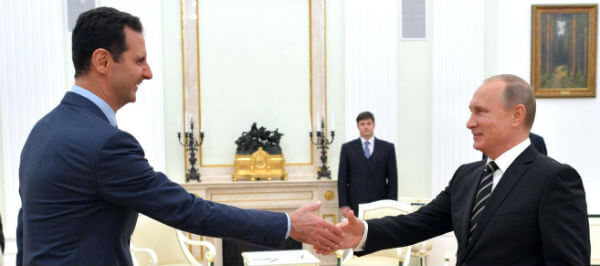
Financial Times reports: Just weeks before his death on January 3, Colonel-General Igor Sergun, director of Russia’s GRU military intelligence agency, was sent to Damascus on a delicate mission.
The general, who is believed to have cut his teeth as a Soviet operative in Syria, bore a message from Vladimir Putin for President Bashar al-Assad: the Kremlin, the Syrian dictator’s most powerful international protector, believed it was time for him to step aside.
Mr Assad angrily refused.
Two senior western intelligence officials have given the FT details of Sergun’s mission. The Russian foreign ministry referred a request for comment to the defence ministry, which said it was unable to comment.
Russia’s failed gamble in Damascus left Mr Assad more entrenched than before, and hopes for a diplomatic solution to the vicious civil war appear again to be ebbing away.UN officials have spent the past week lowering expectations that the talks between the warring factions planned for January 25 in Geneva will go ahead, let alone produce a diplomatic breakthrough.
It is a dramatic reversal of fortunes. News of the secret proposal delivered by Sergun — a choreographed transition of power that would maintain the Alawite regime but open the door to realistic negotiations with moderate rebels — added to a growing mood of optimism among western intelligence agencies in late 2015. [Continue reading…]

Following the release of the UK report on the 2006 death of Alexander Litvinenko, Julia Ioffe writes: It’s a salacious tale of revenge and espionage, straight out of a John le Carre novel: an F.S.B. man turned whistleblower meets in a posh London hotel with his former colleagues, who slip polonium 210 into his green tea. Investigators find a clump of debris laced with the radioactive stuff in a sink drainpipe a few floors above, near where one of the F.S.B. men was staying. The other suspected assassin gave Litvinenko’s wealthy benefactor, the banished oligarch Boris Berezovsky, a T-shirt that said, “nuclear death is knocking your door [sic].”
And yet, in Russia the report merited little more than a yawn. Immediately, the familiar reactions kicked in. Putin’s spokesman, Dmitry Peskov, said the report wasn’t of any interest to the Kremlin and, in a pointed turn of phrase, expressed regret that the report “only poisoned” relations between Russia and Britain. Maria Zakharova, spokeswoman for the Russian Foreign Ministry, called the findings “politicized,” and a report on the main evening-news program on Russia’s Channel One hinted that the British killed two key witnesses in the case. The British, in turn, said they would freeze the assets of Andrei Lugovoi and Dmitry Kovtun, the two former F.S.B. agents accused of poisoning Litvinenko. Theresa May, the British home secretary, said that the Russian ambassador to London was summoned for a talking-to.
All of this changes exactly nothing. Relations between Russia and Britain could hardly have been worse before the report was released, and Lugovoi and Kovtun haven’t been to London in ages — not since the British police fingered them in Litvinenko’s murder and sought their extradition, which Russia has flatly refused. Lugovoi now has immunity as a member of the Russian Parliament, as well as a medal from Putin for “service to the nation.” The murder itself took place nine years ago, and since then, the sordid details have become endlessly familiar. Even the le Carre comparison has become a nauseatingly common cliché, bandied about endlessly since Litvinenko’s death.
It may be crass to be bored by the details of a man’s murder, but here we are. The West and Putin’s opponents at home believe that the Kremlin killed Litvinenko — that his death was a Cosa Nostra-style murder of a traitor. Putin loyalists and the masses who will see the news on Russian television believe this is all a Western ploy to tarnish Russia’s image. Nothing that came out in Judge Owen’s report will sway them; in fact, it only hardens the two positions. The same happened this summer with the release of another supposedly scandalous report on Russia’s nefarious deeds: The Dutch marshaled reams of evidence in the shooting down of Malaysia Airlines Flight 17 over eastern Ukraine, carefully laying it out in a report that pointed to Moscow’s role in the tragedy. The Russians pooh-poohed it and showed their own report on television, one that directly contradicted the Dutch investigation. Only 3 percent of Russians believe the Dutch narrative of the crash. [Continue reading…]
BuzzFeed reports: The United Nations altered a key humanitarian aid plan for Syria after consultation with the Assad regime, including deleting references to “besieged” areas such as Madaya where thousands of people are starving, Buzzfeed News can reveal.
UN insiders in the region and NGOs have accused the organisation of pandering to the regime by allowing it to censor the document.
A leaked copy of an original draft of the Syria Humanitarian Response Plan shows that a number of key changes were made to the final report after it was sent to the regime by the Damascus arm of the UN Office for the Coordination of Humanitarian Affairs.
The proposal, which will form the basis of a $3.1 billion global aid appeal, was written in consultation with other UN teams and NGOs working in Syria, but the changes were made after it had been sent to the government by the Damascus office without consultation with the other authors. [Continue reading…]
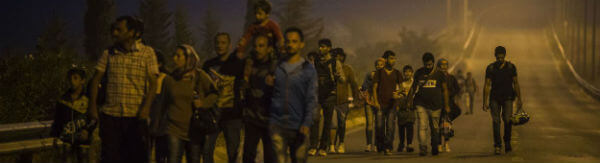
The Guardian reports: The French prime minister, Manuel Valls, has said Europe cannot take in all the refugees fleeing wars in Iraq and Syria and that the crisis was putting the concept of Europe itself in grave danger.
Speaking to the BBC at the economic forum in Davos, Valls said Europe needed to take urgent action to control its external borders. “Otherwise,” he said, “our societies will be totally destabilised.”
Asked about border controls inside Europe, which many fear put the passport-free Schengen zone at risk, Valls said the concept of Europe was in jeopardy. “If Europe is not capable of protecting its own borders, it’s the very idea of Europe that will be questioned,” he said.
He said a message to refugees that says “Come, you will be welcome”, provoked major shifts in population. “Today, when we speak in Europe, a few seconds later it is mainly on the smartphones in the refugee camps,” Valls said.
The large numbers of refugees in Europe has been a persistent theme of the Davos summit. The Dutch prime minister, Mark Rutte, on Thursday said Europe was close to breaking point and needed to come up with a common response or run the risk that one of the European Union’s founding principles would start to unravel. [Continue reading…]

The Guardian reports: The president of Iraq’s autonomous Kurdish north has called on global leaders to acknowledge that the Sykes-Picot pact that led to the boundaries of the modern Middle East has failed, and urged them to broker a new deal paving the way for a Kurdish state.
Massoud Barzani, who has led the troubled country’s Kurds for the past decade, said the international community had started to accept that Iraq and Syria in particular would never again be unified and that “compulsory co-existence” in the region had been proven wrong.
“I think that within themselves, [world leaders] have come to this conclusion that the era of Sykes-Picot is over,” Barzani told the Guardian. “Whether they say it or not, accept it or not, the reality on the ground is that. But as you know, diplomats are conservatives and they give their assessment in the late stages of things. And sometimes they can’t even keep up with developments.”
The political map of northern Iraq has changed drastically in the 18 months since Islamic State overran Iraq’s second city, Mosul. Kurdish forces are now in full control of Kirkuk and Sinjar and have claimed control of thousands more miles of land that had been under control of Iraq’s central government. [Continue reading…]
AFP reports: Iran’s president has criticised moves by a powerful committee to exclude thousands of candidates, mostly reformists, from next month’s parliamentary election, saying Thursday the decision could undermine the vote’s legitimacy.
Hassan Rouhani openly questioned the actions of the Guardian Council, a conservative-dominated panel that vets all prospective lawmakers, after it said Monday that 60 percent of 12,000 election hopefuls had been excluded.
Reformists, largely sidelined from Iranian politics since the disputed 2009 re-election of hardline conservative president Mahmoud Ahmadinejad, bore the brunt of the vetting, with just one percent of its hopefuls winning approval.
Speaking in Tehran, Rouhani was warmly applauded when he suggested the public would see through steps that could amount to favouritism, saying it would dent the ballot’s competitiveness.
“It is called the House of the Nation, not the house of one faction,” he told an audience of provincial governors, implying that not only conservatives should contest the election for seats in parliament.
“If there is one faction and the other is not there, they don’t need the February 26 elections, they go to the parliament,” Rouhani said, laughing but then scorning such a prospect. [Continue reading…]
Soraya Chemaly writes: Men today do a higher share of chores and household work than any generation of men before them. Yet working women, especially working mothers, continue to do significantly more.
On any given day, one fifth of men in the US, compared to almost half of all women do some form of housework. Each week, according to Pew, mothers spend nearly twice as long as fathers doing unpaid domestic work. But while it’s important to address inequality at home, it’s equally critical to acknowledge the way these problems extend into the workplace. Women’s emotional labor — which can involve everything from tending to others’ feelings to managing family dynamics to writing thank-you notes — is a big issue that’s rarely discussed.
In the early 1980s, University of California, Berkeley sociologist Arlie Russell Hochschild coined the term “emotional labor” in her book The Managed Heart. Hochschild observed that women make up the majority of service workers — flight attendants, food service workers, customer service reps — as well as the majority of of child-care and elder-care providers. All of these positions require emotional effort, from smiling on demand to prioritizing the happiness of the customer over one’s own feelings. [Continue reading…]
By Will Kaufman, University of Central Lancashire
In December 1950, Woody Guthrie signed his name to the lease of a new apartment in Brooklyn. Even now, over half a century later, that uninspiring document prompts a double-take.
Below all the legal jargon is the signature of the man who had composed “This Land Is Your Land,” the most resounding appeal to an equal share for all in America. Below that is the signature of Donald Trump’s father, Fred. No pairing could appear more unlikely.
Guthrie’s two-year tenancy in one of Fred Trump’s buildings and his relationship with the real estate mogul of New York’s outer boroughs produced some of Guthrie’s most bitter writings, which I discovered on a recent trip to the Woody Guthrie Archives in Tulsa. These writings have never before been published; they should be, for they clearly pit America’s national balladeer against the racist foundations of the Trump real estate empire.
Recalling these foundations becomes all the more relevant in the wake of the racially charged proclamations of Donald Trump, who last year announced, “My legacy has its roots in my father’s legacy.”

Benjamin Naddaff-Hafrey writes: Few companies could announce a new office in the messianic way that Google did last February. Then again, few companies have ever built this sort of office.
‘Google’s presence in Mountain View is simply so strong that it can’t be the fortress that shuts away… the neighbours. It really needs to become a neighbourhood in Mountain View,’ intones the lead architect Bjarke Ingels of the Danish firm Bjarke Ingels Group (BIG) in the introductory video. The camera sweeps high over an edenic Mountain View in the San Francisco Bay Area. It pulls back to reveal Google’s proposed new office: a neighbourhood nested beneath glittering glass domes.
On approximately 3.5 million square feet of commercial land, Google intended to build a campus office that might best be described as a new part of town. Beneath the glass canopies, a thriving neighbourhood hosts stores, bike paths and modular office spaces. In building this new neighbourhood, Google hoped to expand their working space while accommodating the Mountain View population inclined to view them as a ‘fortress’. The utopian campus was meant to assuage fears that spiking numbers of Google employees would create a Google voting bloc, according to The New York Times. Such fears are understandable. As of 2013, the company employed roughly 10 per cent of Mountain View’s workforce and owned approximately the same proportion of taxable property. [Continue reading…]
In an article titled, “One Nation Under Fear,” Mark Edmundson writes:
How did a people who settled a continent, created enormous wealth, and fought and (mostly) won war after war devolve into a nation of such tremulous souls? And how did it happen so quickly? Where once there was the generation of the Second World War, ready to leave home and fight fascists on the far sides of the world, we now have a nation that at times seems composed largely of field mice, prone to quiver when they detect an unfriendly shadow.
In the latest wave of mass hysteria, the barriers of entry to the United States imposed on people with darker skins will once again be raised higher.
The Visa Waiver Program Improvement and Terrorist Travel Prevention Act of 2015 does not make any mention of skin color, yet the officials who are responsible for enforcing this law will inevitably notice skin color when determining if it needs to be applied. Since the law will apply, for instance, to British citizens who are also Iranian nationals simply by virtue of having an Iranian father — such an individual might have been born in the UK, have never visited Iran and not possess an Iranian passport — the way in which they will get flagged for questioning will most likely be because they are Middle Eastern in appearance.
Ostensibly, the law was designed to block U.S. entry to Europeans who have joined ISIS.
Let’s imagine how that would work: A British citizen who fought with ISIS in Syria has now returned home and then decides to fly to New York. He shows up at the airline check-in desk, presents his passport and the clerk, seeing the stamp entered when he visited Syria, says: “Sorry mate, no trip to America for you!” The thwarted traveler responds: “Damn that Terrorist Travel Prevention Act!” … except, of course, such an individual would in reality neither declare nor present any evidence that they had been in Syria or belonged to ISIS. The terrorist would — surprise, surprise — break the rules.
In truth, this isn’t a serious piece of legislation. Those who drafted and passed this law were engaged in a piece of political theater. Indeed, anyone who can coin a phrase like “terrorist travel prevention” would be better employed at The Onion than in the U.S. Congress.
The only people who will be reliably prevented from travel are those innocently trying to do what most travelers do — visit relatives and friends; engage in tourism or business.
The terrorists are not so dumb that they would run afoul of such restrictions — just as no terrorist would subvert his own objectives by tangling himself in the vetting process imposed on asylum seekers. Continue reading
Think Progress reports: A growing number of Muslims, Sikhs, and people of Middle Eastern descent are reporting incidents of racial and religious profiling while trying to board planes, sparking concerns that rising anti-Islam sentiment is sparking a new wave of discrimination at airports.
American Muslims have long encountered difficulties at airports, where security officials have been accused of unfairly profiling, questioning, searching, and detaining passengers simply for “looking” Muslim — including people who are not devotees of Islam, such as Sikhs and Arab Christians. Policies that support such profiling — many enacted in the years immediately following the September 11 attacks (although most have proven largely ineffective at catching terrorists) — remain in place today and have been defended by White House officials, even though Transportation Security Administration (TSA) agents have voiced misgivings about programs that single out people based on race or religion.
But as the United States endures an unprecedented wave of anti-Islam hatred following the terrorist attacks in Paris and San Bernardino late last year, Muslim Americans and others affected by Islamophobia are reporting a rash of new airport profiling cases — this time not just at the hands of the TSA, but also airline companies and fellow passengers. [Continue reading…]
How do you feel when you see so many of your fellow citizens on the run from the most horrible conflict of our time? Did you expect an exodus like that?
Weeks ago, I helped smuggle my sister-in-law and my nephew from Turkey to Greece. As a beginner, I consulted friends, met smugglers, and chose one.
I was anxious about their safety, and was relieved when they arrived in a European country, even if it was not the one they wanted to go to. The other half of my brother’s family, he and his two younger sons, are to join the first half someday. With the help of friends, we are trying to arrange things for another brother and his family to take refuge in another European country, after a mutual friend of ours, the journalist and film maker Naji Jerf, was assassinated in Turkey on 27 December 2015.
We are helping ourselves to a world that did not help to liberate us at home. Never had I contemplated the possibility of such an exodus. I did not expect that the regime would kill hundreds of thousands of people and that its chances of staying in power would grow bigger as the numbers of its victims soared. I did not expect the emergence of a monstrous creature like Da’esh [ISIS]. I did not expect that around 70 countries would be partners in bombing my country: not against the ruling criminal, but against an offshoot of his monstrosity.
How do you see the European handling of the refugee crisis?
I am impressed by many people from many European countries, mostly individual volunteers. Their generosity, courage and humanity dignify the human race. I was touched by a message from a Norwegian woman who was in Lesbos helping refugees. As for governments, while it is not fair to include all of them in one category – Germany is not like Hungary, Sweden is not Denmark – I think they are unified in building higher walls in the face of the influx of refugees, specifically the poorest and most vulnerable ones.
For months now, European governments have been pressuring Ankara not to allow refugees to depart from Turkey. In November, they promised to pay €3 billion to the Turkish governments to guard European borders.
With all this blood that has been spilt over the past five years right under the world’s nose, humanity has led itself down the path to full ethical numbness. I suppose the indifference the world showed towards the Syrian ordeal will lead to even less sensitivity to human suffering in political institutions everywhere. [Continue reading…]
The Guardian reports: The former Russian spy Alexander Litvinenko was probably murdered on the personal orders of Vladimir Putin, the UK public inquiry into his death has found.
Litvinenko, who died from radioactive poisoning in a London hospital in November 2006, was killed by two Russian agents, Andrei Lugovoi and Dmitry Kovtun, the inquiry report said. There was a “strong probability” they were acting on behalf of the Russian FSB secret service, the report added.
Sir Robert Owen, the inquiry chair, said that taken as a whole the open evidence that had been heard in court amounted to a “strong circumstantial case” that the Russian state was behind the assassination.
But when he took into account all the evidence available to him, including a “considerable quantity” of secret intelligence that was not aired in open court, he found “that the FSB operation to kill Mr Litvinenko was probably approved by [Nikolai] Patrushev [head of the security service in 2006] and also by President Putin”.
Marina Litvinenko, Alexander’s widow, welcomed the report’s “damning finding” and called for the UK to impose sanctions on Russia, in a statement read outside the Royal Courts of Justice, where the inquiry took place. But she claimed she had been given indications that the UK would do nothing. [Continue reading…]
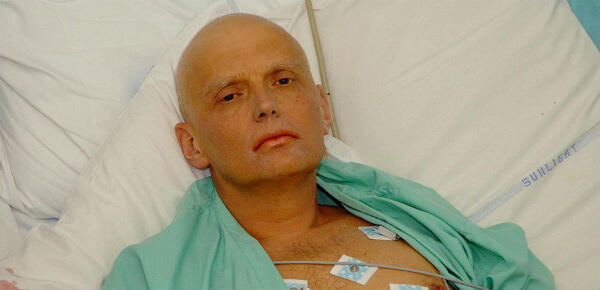
Luke Harding writes: The Soviet Union had a long tradition of bumping off its enemies. They included Leon Trotsky (ice-pick in the head), Ukrainian nationalists (poisons, exploding cakes) and the Bulgarian dissident Georgi Markov (ricin pellet fired from an umbrella, on London’s Waterloo Bridge). There was a spectrum. It went from killings that were demonstrative, to those where the KGB’s fingerprints were nowhere to be found, however hard you looked. Such murders were justified by what you might call Leninist ethics: they were necessary to defend the Bolshevik revolution, a noble experiment.
Under Boris Yeltsin these exotic killings mostly stopped. Moscow’s secret poisons lab, set up by Lenin in 1917, was mothballed. After 2000 though, with Putin in the Kremlin, such Soviet-style operations quietly resumed. Critics of Russia’s new president had an uncanny habit of ending up … well, dead. In power, Putin steered the country in an increasingly authoritarian direction, snuffing out most sources of opposition and dissent. The president’s fellow KGB comrades, once subordinate to the Communist party, were now in sole charge.
The murders of journalists and human rights activists could not be explained in terms of protecting socialism. Rather, the state was now synonymous with something else: the personal financial interests of Putin and his friends.
As an FSB officer in the 1990s, Litvinenko had been shocked to discover how thoroughly organised crime had penetrated Russia’s security organs. In his view, criminal ideology had replaced communist ideology. He was the first to describe Putin’s Russia as a mafia state, in which the roles of government, organised crime and the spy agencies had grown indistinguishable. [Continue reading…]

By Simon Cotton, University of Birmingham
The murder of former Russian spy Alexander Litvinenko was one of the most high-profile assassinations of the decade. It particularly captured the public imagination because Litvinenko was killed using polonium-210, a rare but deadly substance that was thought to have been slipped into Litvinenko’s tea. Now a UK public inquiry has issued its findings on the case. But what is polonium?
Polonium is a radioactive element that occurs naturally in tiny amounts (which are harmless to us). It was discovered in 1898 by Marie Curie, during her research on pitchblende, an ore of uranium. It has the chemical symbol “Po” and Curie named it after Poland, her native country. If you look at a periodic table, you’ll find polonium at the bottom of the group headed by oxygen and sulfur.

James Miller writes: The last two years have been rather tough for the Russian government’s main English-language propaganda outlet, RT.
Following Russia’s illegal and nearly-universally-condemned annexation of the Crimean peninsula, RT anchor Liz Wahl, then anchor and correspondent Sara Firth, quit in protest of what they called “propaganda” which they were forced to spread in order to cover up the Kremlin’s foreign policy activity.
Many of the personalities who remained on the network had their reputations damaged by their own words. The Interpreter alone documented an RT editor who knew information on their website was fake but kept the content up for weeks; a German “expert” and frequent guest who is really a major neo-Nazi leader and publicist; another frequent RT guest who is a 9/11 truther and avowed racist; an RT host who believes that some of the victims of 9/11 knew about the attack beforehand and tried to capitalize on it; a “whistle-blower” and financial expert for RT who thinks that the World Bank and the Vatican are run by a species of non-human coneheads (which is why the pope wears a big hat); yet another RT host who thinks North Korea would be a nice place to live; an anchor who interviewed an entertainer (named by RT as a journalist) who thinks HIV does not cause AIDS; an (already discredited) RT field correspondent who made up a story about being shot at in Ukraine and filmed evidence that proves he was lying; a “human rights expert” who, despite being a holocaust denier who is friends with convicted hate criminals, is a frequent guest on RT; and an RT columnist who is an associate of a now-deported Russian agent and who threatened to sue us just for asking basic questions about his resume. Our work on RT had an effect — basic Google searches of some of RT’s favorite guests and personalities netted our articles exposing these people as cranks. And this, of course, does not even mention our near-daily debunking of Kremlin propaganda, spread by RT, concerning Russia’s foreign and domestic policy, and our special reports tearing apart RT’s coverage of the Russian invasion of Ukraine and the shooting down of civilian airliner MH17. [Continue reading…]