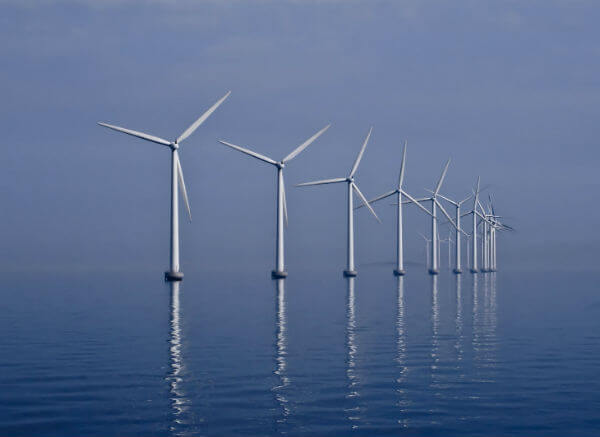
Denmark just broke a world record for wind power — again

denmark-wind-power

Climate Progress reports: One European country can’t seem to stop breaking records when it comes to wind power.

In 2015, Denmark produced almost half of its electricity from wind power, breaking a world record for the most wind production ever recorded — a world record set last year, by Denmark.

The record 42 percent electricity generated from wind represents a three percent increase from the 39 percent it generated in 2014, which at the time broke the world record for the most electricity from wind production by a single country. According to the Danish national grid operator Energinet, this year’s number represents both the highest figure ever and the highest proportion of electricity from wind for any country.

Moreover, for 16 percent of the year, two Western regions in Denmark produced more electricity than the region’s residents consumed, leading to an electricity surplus. While it’s not unusual for wind power production to exceed consumption some of the time, the fact that it happened for such a significant period of time means that Denmark can sell surplus energy to consumers in Norway, Sweden, and Germany. Denmark also imports some hydroelectric power from Norway and solar energy from Germany. [Continue reading…]


Facebooktwittermail

Most threats to humans come from science and technology, warns Hawking

structure10

The Guardian reports: The human race faces one its most dangerous centuries yet as progress in science and technology becomes an ever greater threat to our existence, Stephen Hawking warns.

The chances of disaster on planet Earth will rise to a near certainty in the next one to ten thousand years, the eminent cosmologist said, but it will take more than a century to set up colonies in space where human beings could live on among the stars.

“We will not establish self-sustaining colonies in space for at least the next hundred years, so we have to be very careful in this period,” Hawking said. His comments echo those of Lord Rees, the astronomer royal, who raised his own concerns about the risks of self-annihilation in his 2003 book Our Final Century.

Speaking to the Radio Times ahead of the BBC Reith Lecture, in which he will explain the science of black holes, Hawking said most of the threats humans now face come from advances in science and technology, such as nuclear weapons and genetically engineered viruses. [Continue reading…]

Facebooktwittermail

Overfishing causing global catches to fall three times faster than estimated

The Guardian reports: Global fish catches are falling three times faster than official UN figures suggest, according to a landmark new study, with overfishing to blame.

Seafood is the critical source of protein for more than 2.5 billion people, but over-exploitation is cutting the catch by more than 1m tonnes a year.

The official catch data, provided by nations to the UN’s Food and Agriculture Organisation (FAO), rarely includes small-scale, sport or illegal fishing and does not count fish discarded at sea. To provide a better estimate, more than 400 researchers around the world spent a decade finding other data to fill in the gaps.

The results, published in the journal Nature Communications, show the annual catches between 1950 and 2010 were much bigger than thought, but that the decline after the peak year of 1996 was much faster than official figures. [Continue reading…]

Facebooktwittermail

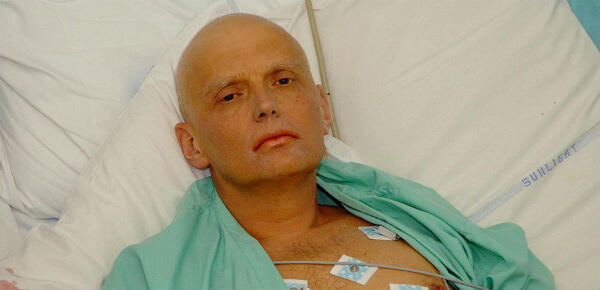
Alexander Litvinenko: The man who solved his own murder

Alexander-Litvinenko

Luke Harding writes: The Millennium hotel is an unusual spot for a murder. It overlooks Grosvenor Square, and is practically next door to the heavily guarded US embassy, where, it is rumoured, the CIA has its station on the fourth floor. A statue of Franklin D Roosevelt – wearing a large cape and holding a stick – dominates the north side of the square. In 2011 another statue would appear: that of the late US president Ronald Reagan. An inscription hails Reagan’s contribution to world history and his “determined intervention to end the cold war”. A friendly tribute from Mikhail Gorbachev reads: “With President Reagan, we travelled the world from confrontation to cooperation.”

The quotes would seem mordantly ironic in the light of events that took place just around the corner, and amid Vladimir Putin’s apparent attempt to turn the clock back to 1982, when the former KGB boss Yuri Andropov – the secret policeman’s secret policeman – was in charge of a doomed empire known as the Soviet Union. Next to the inscriptions is a sandy-coloured chunk of masonry. It is a piece of the Berlin Wall, retrieved from the east side. Reagan, the monument says, defeated communism. This was an enduring triumph for the west, democratic values, and for free societies everywhere.

Five hundred metres away is Grosvenor Street. It was here, in mid-October 2006, that two Russian assassins had tried to murder someone, unsuccessfully. The hitmen were Andrei Lugovoi and Dmitry Kovtun. Their target was Alexander Litvinenko, a former officer in Russia’s FSB spy agency. Litvinenko had fled Moscow in 2000. In exile in Britain he had become Putin’s most ebullient and needling critic. He was a writer and journalist. And – from 2003 onwards – a British agent, employed by MI6 as an expert on Russian organised crime. [Continue reading…]

Facebooktwittermail

Palestine must stand in solidarity with the Syrian people

Mariam Barghouti writes: When Syrians were chanting “revolution, revolution, Syria! Revolution of dignity and freedom” in the streets of Damascus in 2011, they undoubtedly expected suppression from the regime of Bashar al-Assad. What they probably did not foresee, however, is complacency from the international community, including from Palestinians.

But, that is what they received. The Syrian conflict has uncovered disturbing shortcomings and contradictions among those who fight in the name of Palestine.

When Palestinians are being assaulted by Israeli forces, we often cry out “Where are the Arabs! Where are you, oh Arabs?” Yet, now that it is our turn to extend solidarity, we have become as faceless as our revered Handala.

Renowned Palestinian writer and thinker Ghassan Kanafani once wrote, “[i]f we were failing in defending the cause; then we ought to change the fighters and not the cause.” By failing to stand with our Arab brethren fighting in Syria, we have betrayed Palestine and tainted the principles that gave birth to the Palestinian cause, namely dignity and justice.

As we enter the Syrian civil war’s fifth year, I say to my fellow Palestinians: it is time – albeit very late – to stand in solidarity with the Syrian people. [Continue reading…]

Facebooktwittermail

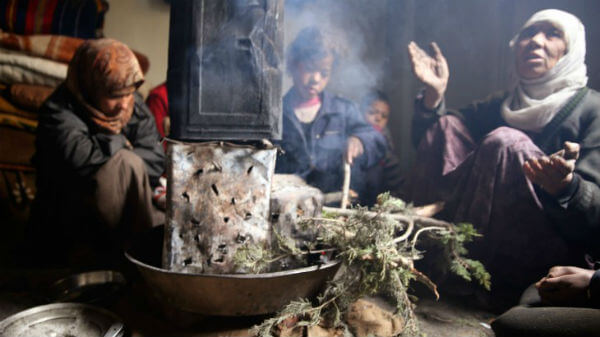
Madaya: A huge concentration camp where Hezbollah starves people to death

madaya

Azzam Tamimi writes: Lebanon’s Hezbollah was, until a few years ago, an inspiration to millions of people in the Middle East and around the world. It was a symbol of heroic resistance putting up a long fight to liberate the occupied territories of south Lebanon and continuing to stand up to Israeli aggression post-liberation.

There was a time when Hassan Nasrallah, Hezbollah’s leader, was hailed as “master of the resistance”. His pictures were posted all over Palestinian refugee camps in Lebanon and were treasured by households across the Arab world. When he gave one of his usually long speeches, people were glued to TV sets and his Almanar satellite TV channel was no less popular than Al Jazeera itself. Many Palestinians truly believed Nasrallah was such a great resistance leader and they wished they had someone like him to lead their own resistance.

Yet today Hezbollah has lost much of the popular support and sympathy it once enjoyed and its leader Nasrallah is ridiculed and condemned by many of those who previously adored him. It is fighting a completely different type of war. Acting upon instructions from its sponsors in Tehran, where a reactionary clerical regime reigns, it is fighting a war in defence of a corrupt despotic regime that reigns in Damascus.

Unlike Hezbollah, Hamas, the Palestinian Islamic Resistance Movement – which saw itself as a partner of Hezbollah in the struggle against Zionism, refused to bow to pressure from the Iranians. Although Syria was, according to Hamas leader Khaled Meshaal, the best haven Hamas ever had outside Palestine, the movement opted to sacrifice all the privileges it had there so as to avoid taking any part in oppressing the Syrian people.

Since leaving Damascus four years ago, Meshaal turned down several invitations from the Iranians to visit Tehran, whose rulers made his visit a precondition for the resumption of any financial aid. Undoubtedly, the Syrian crisis drove deep a wedge between Hamas on the one hand and Hezbollah and Iran on the other. [Continue reading…]

Facebooktwittermail

Iran parliament candidates: 99% of reformists rejected

AFP reports: Around 60 percent of would-be candidates for Iran’s parliamentary vote in February including many reformists have been rejected by the authorities, official media reported Monday.

“Out of more than 12,000 registered candidates, 4,700 — or about 40 percent — were approved,” Siamak Rah-Peyk, a spokesman for the Central Elections Supervising Committee was quoted as saying by state television.

The committee is dependent on the Guardian Council, a panel of conservative clerics and jurists, to vet registered candidates and overseeing the elections.

Reformist parties have protested against the rejections.

“Out of over 3,000 reformist candidates across the country, only 30 have been approved — only one percent,” Hossein Marashi, an official from the reformist camp, was quoted as saying in the Shaugh daily. [Continue reading…]

Facebooktwittermail

U.S. prisoner swap may help Iran arm Assad

Josh Rogin writes: In exchange for the release of four American prisoners, the Barack Obama administration agreed to free seven Iranians in U.S. custody and stop trying to arrest 14 others, two of whom the U.S. government had accused of funneling weapons to the Bashar al-Assad regime and Hezbollah in Syria.

For years, Iran’s privately-owned Mahan Air has been using its planes to bring soldiers and arms directly to the Syrian military and the Lebanese terrorist group Hezbollah by flying them from Tehran to Damascus, according to the U.S. Treasury Department. In 2013, Treasury sanctioned Mahan’s managing director, Hamid Arabnejad, for overseeing the company’s efforts to evade U.S. and international sanctions and aiding the Iranian Revolutionary Guards Corps’ elite Quds Force.

“Arabnejad has a close working relationship with IRGC-QF personnel and coordinates Mahan Air’s support and services to the paramilitary group,” the Treasury Department said. “He has also been instrumental in facilitating the shipment of illicit cargo to Syria on Mahan Air aircraft.” [Continue reading…]

Facebooktwittermail

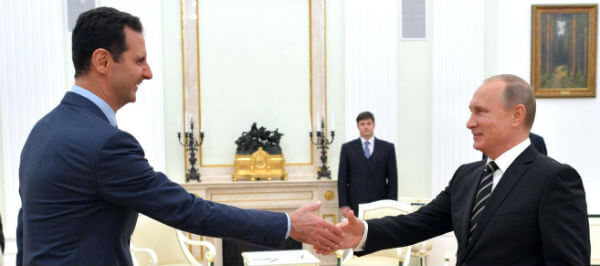
The secret pact between Russia and Syria that gives Moscow carte blanche

assad-putin

The Washington Post reports: When you are a major nuclear power and you want to make a secretive deployment to a faraway ally, what is the first thing you do? Draw up the terms, apparently, and sign a contract.

That’s what the Kremlin did with Syria in August, according to an unusual document posted this week on a Russian government website that details the terms of its aerial support for Syrian President Bashar al-Assad.

Among other revelations in the seven-page contract dated Aug. 26, 2015, the Kremlin has made an open-ended time commitment to its military deployment in Syria, and either side can terminate it with a year’s notice.

Russian military personnel and shipments can pass in and out of Syria at will and aren’t subject to controls by Syrian authorities, the document says. Syrians can’t enter Russian bases without Russia’s permission. And Russia disclaims any responsibility for damage caused by its activities inside Syria. Since Russia’s bombing campaign started at the end of September, Assad’s forces have been able to recapture some territory from rebels, and much of the humanitarian aid to the country has come to a halt. A war that already looked intractable now seems more so. [Continue reading…]

Jadaliyya has an English translation of the contract.

Facebooktwittermail

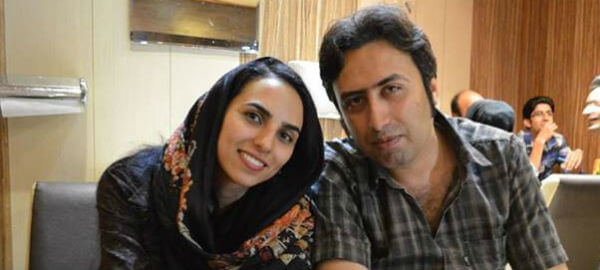
Two Iranian poets, facing lashings and prison, escape country

Fatemeh-Ekhtesari-Mehdi-Mousavi

The Associated Press reports: Two Iranian poets who face lashings and prison sentences have fled Iran, one of the writers said Monday, a rare escape for local artists and activists ensnared in an ongoing crackdown on expression in the country.

Fatemeh Ekhtesari and Mehdi Mousavi’s freedom came as world powers lifted sanctions on Iran over its contested nuclear program and as the country separately freed four Iranian-Americans in exchange for seven Iranians held in the U.S.

The poets’ escape is a reminder that despite the growing detente with the West, hard-liners still exert control over much of life in the Islamic Republic.

Ekhtesari told The Associated Press on Monday that both she and Mousavi escaped from Iran in recent days and made it to another country. She declined to elaborate out of continuing concerns about their safety.

Ekhtesari faced an 11½-year prison sentence, while Mousavi faced nine years on charges ranging from propaganda against the state to “insulting sanctities.” Each was sentenced to 99 lashings. They likely were targeted because their work is known abroad. Both are self-described “postmodern Ghazal” poets who seek to revive the traditional Persian love sonnet by applying it to contemporary political and social issues. [Continue reading…]

Facebooktwittermail

Why are we looking on helplessly as markets crash all over the world?

Will Hutton writes: There has always been a tension at the heart of capitalism. Although it is the best wealth-creating mechanism we’ve made, it can’t be left to its own devices. Its self-regulating properties, contrary to the efforts of generations of economists trying to prove otherwise, are weak.

It needs embedded countervailing power – effective trade unions, law and public action – to keep it honest and sustain the demand off which it feeds. Above all, it needs an ordered international framework of law, finance and trade in which it can do deals and business. It certainly can’t invent one itself. The mayhem in the financial markets over the last fortnight is the result of confronting this tension. The oil price collapse should be good news. It makes everything cheaper. It puts purchasing power in the hands of business and consumers elsewhere in the world who have a greater propensity to spend than most oil-producing countries. A low oil price historically presages economic good times. Instead, the markets are panicking.

They are panicking because what is driving the lower oil price is global disorder, which capitalism is powerless to correct. Indeed, it is capitalism running amok that is one of the reasons for the disorder. Profits as a share of national income in Britain and the US touch all-time highs; wages touch an all-time low as the power of organised labour diminishes and the gig economy of short-term contracts takes hold. The excesses of the rich, digging underground basements to house swimming pools, cinemas and lavish gyms, sit alongside the travails of the new middle-class poor. These are no longer able to secure themselves decent pensions and their gig-economy children defer starting families because of the financial pressures. [Continue reading…]

Facebooktwittermail

U.S. investigating Moscow’s divide and rule strategy in Europe

The Telegraph reports: American intelligence agencies are to conduct a major investigation into how the Kremlin is infiltrating political parties in Europe, it can be revealed.

James Clapper, the US Director of National Intelligence, has been instructed by the US Congress to conduct a major review into Russian clandestine funding of European parties over the last decade.

The review reflects mounting concerns in Washington over Moscow’s determination to exploit European disunity in order to undermine Nato, block US missile defence programmes and revoke the punitive economic sanctions regime imposed after the annexation of Crimea.

The US move came as senior British government officials told The Telegraph of growing fears that “a new cold war” was now unfolding in Europe, with Russian meddling taking on a breadth, range and depth far greater than previously thought.

“It really is a new Cold War out there,” the source said, “Right across the EU we are seeing alarming evidence of Russian efforts to unpick the fabric of European unity on a whole range of vital strategic issues.”

A dossier of “Russian influence activity” seen by The Sunday Telegraph identified Russian influence operations running in France, the Netherlands, Hungary as well as Austria and the Czech Republic, which has been identified by Russian agents as an entry-point into the Schengen free movement zone.

The US intelligence review will examine whether Russian security services are funding parties and charities with the intent of “undermining political cohesion”, fostering agitation against the Nato missile defence programme and undermining attempts to find alternatives to Russian energy.

Officials declined to say which parties could come into the probe but it is thought likely to include far-right groups including Jobbik in Hungary, Golden Dawn in Greece, the Northern League in Italy and France’s Front National which received a 9m euro (£6.9m) loan from a Russian bank in 2014. [Continue reading…]

Facebooktwittermail

ISIS in Gaza

Sarah Helm writes: In a house in Rafah, at the southern edge of Gaza, I met Sheikh Omar Hams, fifty-one years old, a slender figure dressed in a simple white robe and seated on a mattress on the floor. Hams is director of the Ibn Baz Islamic Institute, based in Rafah, where it also runs a bakery and charity outlets. His mission, he says, is to spread the word of the Prophet Muhammad and to give bread and other aid to the homeless and the poor.

Hams is a Salafist sheikh. “A Salaf means an original ancestor—one of those who lived close to the Prophet and observed his actions intimately, followed his ways and his words literally,” he explains. The sheikh teaches his students how to return to those ways, and they in turn spread the word. Unlike many Salafis, who abhor any rational argument about the literal meaning of the Koran, Hams is open to at least some debate. And though sometimes willing to support violent jihad, he accepts that violence is often not justified, preferring instead to secure a return to original Islam through the use of prayer, study, and preaching.

Pulling his legs underneath him, the sheikh prepares for questions on how the Prophet might have viewed the methods of Daesh (ISIS) — also Salafists — and on the battle to contain its influence across the world, most particularly here in Gaza.

Since 2007 Hamas has been the de facto government of Gaza, albeit under Israeli rule — a rule implemented nowadays by means of a military and naval blockade by air, land, and sea, which is described by the United Nations Secretary General, Ban Ki Moon, as “a collective penalty against the people of Gaza.” Hamas is itself an Islamist resistance movement, with a resistance “army” called al-Qassam, but Hamas members are seen as infidels by ISIS since they place the nationalist battle for a Palestinian state before the campaign for a caliphate. Hamas’s willingness to negotiate with Israel and to agree to a cease-fire last summer was seen by ISIS as the latest demonstration of its collaboration. ISIS supporters inside Gaza have shown their opposition and tried to break the cease-fire by firing rockets into Israel, thereby angering Hamas and risking heavy Israeli retaliation. [Continue reading…]

Facebooktwittermail

Genocide in Diyala: Iraqi officials warn of sectarian cleansing

The New Arab reports: Iraqi officials have raised the alarm of a “genocide” against Sunni Muslims in the eastern province of Diyala, where Shia militia groups wield huge influence.

The warnings come after the Islamic state group [IS] carried out twin bombings at a cafe frequented by government-allied militiamen in the Diyala town of Miqdadiyah on Monday, killing at least 24 people and wounding 52.

Angry mobs responded to the Miqdadiyah bombings by blowing up several Sunni mosques, completely destroying two of them, killing an imam, and burning Sunni-owned houses and shops. [Continue reading…]

Facebooktwittermail

The Burkina Faso attack shows how al-Qaeda is exploiting weak governments in West Africa

Omar Mohammed reports: The attacks in Burkina Faso that left 28 people dead and 55 injured point to an increasing security challenge in West Africa, where, analysts say, militant groups affiliated to Al-Qaeda and Islamic State are taking advantage of fragile and weak states to hit western targets.

This is the second time in a couple of months that militants launched an assaulted directed at an establishment popular with foreigners. In neighboring Mali last November, in a similar fashion to what happened at the Splendid Hotel in Ouagadougou, gunmen stormed the Radisson Hotel in Bamako and took 170 people hostage and ultimately killing 21 people many of whom westerners.

In both of these cases, the militant group Al-Qaeda in the Islamic Maghreb (AQIM) claimed responsibility.

AQIM, which traces its roots to the Algerian civil conflict in the 1990s and became an al-Qaeda affiliate in mid-2000s, has increasingly focused their strategies on targets located in countries that are either weak or unstable. In west Africa, it has targeted Algeria, Niger, Mali killing people and carrying out kidnappings for ransom, all done with the objective of ridding the region of what they perceive to be the corrupting influence of the West. [Continue reading…]

Facebooktwittermail

This is where 90 percent of global warming is going

The Washington Post reports: Scientists have known for some time that when global warming occurs, the oceans will be the site of the most profound response.

The reason is simply that they are able to retain vastly more heat than the atmosphere. “Ninety, perhaps 95 percent of the accumulated heat is in the oceans,” said Peter Gleckler, an oceanographer at the Lawrence Livermore National Laboratory. The physical reason is that water has a far greater heat “capacity” than air, requiring more energy to raise its temperature — something that is apparent to anyone who has ever tried to boil it on a stove.

Gleckler is the lead author of a new study in the journal Nature Climate Change finding that, in the past two decades, ocean heat content has been rising rapidly and that, much more than before, heat is also mixing into the deeper layers of the ocean, rather than remaining near the surface. [Continue reading…]

Facebooktwittermail

How ‘Snowball Earth’ volcanoes altered oceans to help kickstart animal life

By Thomas Gernon, University of Southampton

The Earth was once virtually deep frozen, buried in massive ice sheets with surface temperatures as low as -50°C. Although we are gradually learning more about this extreme episode in our planet’s history, there’s a lot we don’t know about “Snowball Earth”.

One of the big mysteries for geoscientists is how and why the ocean chemistry changed as the ice suddenly melted. But now our study, published in Nature Geoscience, has shed light on this conundrum, demonstrating how underwater volcanoes during Snowball Earth played a crucial role in this transformation. The results help explain how our planet got oxygen in its atmosphere and oceans – enabling life to evolve from single-celled organisms into animals.

Icehouse to greenhouse

It’s widely thought that Snowball Earth, which occurred some 720-640 million years ago, was triggered by the breakup of a supercontinent called Rodinia. The resulting continents were clustered near the equator where there are higher temperatures – resulting in increased evaporation of water from the oceans, which led to more precipitation. That also meant faster rates of chemical weathering; that is, rain water reacting with mineral grains in rocks to flush dissolved minerals via rivers into the oceans.

This changed the ocean chemistry and used up a lot of atmospheric CO2, which normally traps heat inside the atmosphere – propelling the Earth into a severe ice age.

Continue reading

Facebooktwittermail