
Daily Archives: November 2, 2009

Fareed Zakaria interviews Matthew Hoh

Fareed Zakaria interviews Matthew Hoh

(The CNN embedded video above works in IE, Chrome but not Firefox.)

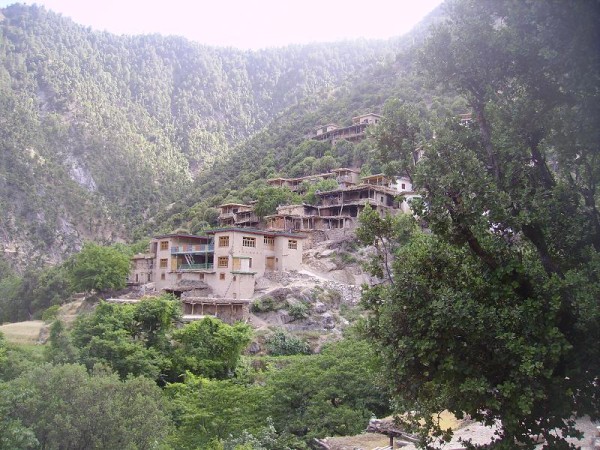
Matthew Hoh: The first place where I really had — where this was codified for me and where I started to understand what we were doing and how we were involved — the Korengal Valley, which I’m sure a lot of your viewers are familiar with. It’s been on the cover of TIME Magazine. The “New York Times” refers to it as the valley of death. Off the top of my head, unfortunately, I can’t remember how many American soldiers we have lost there, but it’s probably 30 or 40.

This is a valley, I don’t know, 15, 20 kilometers long. There’s only 10,000 people in it. They speak their own language. They speak Korengali. In the year 2009 we have a valley with people who speak their own language. Their only trade is the timber trade. And when they move their timber, they don’t even leave their valley. Most of the time, I believe, they just take it to the Mazar Valley, and a middleman picks it up and brings it to Pakistan for them.

We show up. We enter their valley. We occupy the richest man’s timber mill. And then we bring in Afghan army and Afghan police, who aren’t from there.

And then what do we do? Then we have the Afghan police and Afghan army. They say to the Korengalis, they say, “These mountains here that your families have been cutting trees down, sustaining yourselves for hundreds of years, you don’t own them. The central government does. And you have to pay tax on that.”

I’m not sure how many people anywhere else in the world wouldn’t take up arms against something like that.

And so, and for every Korengal we’re in, like I said before, there’s a hundred we’re not. And there’s like — and that would happen in those other valleys, the same thing, too, in the south. [Interview transcript]
Editor’s Comment — The “valleyism” that Hoh describes contains a crucial message for Americans considering the war in Afghanistan: this is a quagmire far more complex than Vietnam since America and its allies have sparked a thousand wars.

But perhaps more important than this military observation is the way the concept of valleyism should transform the value judgments outsiders make about Afghans and the land they inhabit.

What foreign armies and policymakers are up against is an incomparable level of adaptation where the non-transferable governing force is local knowledge — the means through which Afghans have made their homes in a land that others find utterly inhospitable.

In an analysis for the New York Times, David Sanger talks about Hamid Karzai as a flawed vessel in which the West had invested its hopes that Afghanistan could be saved and that Karzai could be re-legitimized through an election:

The question was whether that vote would demonstrate that a desolate nation that has always been at the mercy of larger powers would show it could find its own way.

In this image of a “desolate nation” that has yet to “find its own way,” there isn’t even an inkling that in many ways Afghanistan, as a patchwork of local communities, has found its own way admirably. Its greatest problem is that this is a way that few outsiders appreciate — especially those coming from a nation where human worth is so often measured by the size of someone’s bank balance.

As Rory Stewart says: “In every case, Afghans are more competent, more canny, more capable than we acknowledge, and we are less so.”

With Karzai, U.S. faces weak partner in time of war

With the White House’s reluctant embrace on Sunday of Hamid Karzai as the winner of Afghanistan’s suddenly moot presidential runoff, President Obama now faces a new complication: enabling a badly tarnished partner to regain enough legitimacy to help the United States find the way out of an eight-year-old war.

It will not be easy. As the evidence mounted in late summer that Mr. Karzai’s forces had sought to win re-election through widespread fraud to defeat his main challenger, Abdullah Abdullah, administration officials made no secret of their disgust. How do you consider sending tens of thousands of additional American troops, they asked in meetings in the White House, to prop up an Afghan government regarded as illegitimate by many of its own people?

The answer was supposed to be a runoff election. Now, administration officials argue that Mr. Karzai will have to regain that legitimacy by changing the way he governs, at a moment when he is politically weaker than at any time since 2001.

“We’re going to know in the next three to six months whether he’s doing anything differently — whether he can seriously address the corruption, whether he can raise an army that ultimately can take over from us and that doesn’t lose troops as fast as we train them,” one of Mr. Obama’s senior aides said. He insisted on anonymity because of the confidentiality surrounding the Obama administration’s own debate on a new strategy, and the request by Gen. Stanley A. McChrystal, the American military commander in Afghanistan, for upward of 44,000 more troops.

“Needless to say,” the senior aide added, “this is not where we wanted to be after nine months.”

That is a huge understatement. [continued…]

Why all the president’s Afghan options are bad ones

In the worst of times, my father always used to say, “A good gambler cuts his losses.” It’s a formulation imprinted on my brain forever. That no-nonsense piece of advice still seems reasonable to me, but it doesn’t apply to American war policy. Our leaders evidently never saw a war to which the word “more” didn’t apply. Hence the Afghan War, where impending disaster is just an invitation to fuel the flames of an already roaring fire.

Here’s a partial rundown of news from that devolving conflict: In the last week, Nuristan, a province on the Pakistani border, essentially fell to the Taliban after the U.S. withdrew its forces from four key bases. Similarly in Khost, another eastern province bordering Pakistan where U.S. forces once registered much-publicized gains (and which Richard Holbrooke, now President Obama’s special envoy to the region, termed “an American success story”), the Taliban is largely in control. It is, according to Yochi Dreazen and Anand Gopal of the Wall Street Journal, now “one of the most dangerous provinces” in the country. Similarly, the Taliban insurgency, once largely restricted to the Pashtun south, has recently spread fiercely to the west and north. At the same time, neighboring Pakistan is an increasingly destabilized country amid war in its tribal borderlands, a terror campaign spreading throughout the country, escalating American drone attacks, and increasingly testy relations between American officials and the Pakistani government and military. [continued…]


Facebooktwittermail

Clinton: Israel’s settlement offer falls short of U.S. wishes

Clinton: Israel’s settlement offer falls short of U.S. wishes

Israel’s offer to restrain settlement expansion is an unprecedented and positive step but still falls short of Washington’s wishes, U.S. Secretary of State Hillary Clinton said on Monday.

“The Israelis have responded to the call of the U.S., the Palestinians and the Arab world to stop settlement activity by expressing a willingness to restrain settlement activity,” she told reporters in the Moroccan city of Marrakesh.

“This offer falls far short of what our preference would be but if it is acted upon it will be an unprecedented restriction on settlements and would have a significant and meaningful effect on restraining their growth.” [continued…]

Editor’s Comment — Now as always, the substance of US-Israeli relations is a process through which agreements can be found on language.

Israel seeks and promotes the “right” language and it vigorous fights against the “wrong” language.

Meanwhile Israel will do whatever it chooses. It’s only concern with its American friends is that they have the good manners to talk about Israel’s actions in a favorable way. Thousands of housings units will continue to be built on occupied Palestinian territory but even as this is happening, Israel will be lauded for its “restraint.”

Benjamin Netanyahu is no doubt now glowing with satisfaction as his erstwhile harsh teacher, an administration that only a few months ago admonished the Israeli leader for not doing his “homework” on halting settlement growth, has now become an obedient and loving student.

Israel’s pathological view of peacemaking

Like Israel’s government, Israel’s public never tires of proclaiming to pollsters its aspiration for peace and its support of a two-state solution. What the polls do not report is that this support depends on Israel defining the terms of that peace, its territorial dimensions, and the constraints to be placed on the sovereignty of a Palestinian state.

An American president who addresses the Arab world and promises a fair and evenhanded approach to peacemaking is immediately seen by Israelis as anti-Israel. The head of one of America’s leading Jewish organizations objected to the appointment of Senator Mitchell as President Obama’s peace envoy because, he said, his objectivity and evenhandedness disqualified him for this assignment.

The Israeli reaction to serious peacemaking efforts is nothing less than pathological — the consequence of an inability to adjust to the Jewish people’s reentry into history with a state of their own following 2,000 years of powerlessness and victimhood.

Former Prime Minister Yitzhak Rabin, whose assassination by a Jewish right-wing extremist is being remembered this week in Israel, told Israelis at his inauguration in 1992 that their country is militarily powerful, and neither friendless nor at risk. They should therefore stop thinking and acting like victims.

Prime Minister Benjamin Netanyahu’s message that the whole world is against Israel and that Israelis are at risk of another Holocaust — a fear he invoked repeatedly during his address in September at the United Nations General Assembly in order to discredit Judge Richard Goldstone’s Gaza fact-finding report — is unfortunately still a more comforting message for too many Israelis. [continued…]

Palestinians say new U.S. approach imperils peace

Palestinian officials on Sunday criticized the United States for what one called “backpedaling” on demands that Israel stop settlement construction in the occupied West Bank, saying the Obama administration’s change of approach on the issue damaged the likelihood of a peace agreement.

“If America cannot get Israel to implement a settlement freeze, what chance do the Palestinians have of reaching agreement” on the even more complex set of issues involved in final peace talks, chief Palestinian negotiator Saeb Erekat said in a written statement.

“We are at a critical moment,” Erekat said. “The way forward, however, is not to drop the demand for Israel to comply with its obligations.” [continued…]

Editor’s Comment — This is how the narrative has been twisted:

Although Israeli Prime Minister Binyamin Netanyahu rebuffed the initial U.S. demand, he also offered alternatives that, while short of what the Palestinians wanted, were still characterized by Secretary of State Hillary Rodham Clinton over the weekend as “unprecedented” concessions made in hopes of helping direct talks resume.

Netanyahu has shown flexibility and the Palestinians are being intransigent. No suggestion that the Palestinians’ mistake was simply to believe that President Obama was a man of his word.

‘Barghouti to run for presidency if Abbas resigns’

Marwan Barghouti instead of Mahmoud Abbas? The associates of the senior Fatah leader jailed in Israel are examining the possibility that he will announce his candidacy for president should elections be held as planned and should the current president surprisingly decide not to run again for the post.

Recently, following the dead end reached in the peace talks, officials close to Palestinian President Mahmoud Abbas reported that the Abbas is exhausted. However, Abbas has not threatened to resign, though his associates say that the option cannot be ruled out that he will not run in the upcoming presidential elections.

“True the president is exhausted; true he is not satisfied with the situation; and true he prefers not to contend, but, as of now, and I say this with confirmed information, the president will be the Fatah candidate in the elections. The question is whether the elections will be held,” said a senior Fatah source to Ynet. [continued…]

Jordan and Egypt accuse Israel of ‘derailing’ peace efforts

Leaders of Jordan and Egypt on Sunday warned that Israel’s unilateral actions in East Jerusalem and other Arab areas were “derailing” efforts aimed at resuming peace negotiations with the Palestinians, and would thereby have a “catastrophic” effect on the region.

The remarks came in a joint communique issued at the end of a whirlwind visit to Cairo by Jordan’s King Abdullah II where he held talks with Egyptian President Hosni Mubarak, according to Jordan’s official Petra news agency.

The two leaders discussed the “catastrophic consequences on the region’s stability and security resulting from the failure to seize the current opportunity for making peace,” the statement said.] [continued…]

Facebooktwittermail

Opposition in Iran urges continuing challenge

Opposition in Iran urges continuing challenge

As Iran prepares for a major commemorative rally on Wednesday, the leaders of the opposition movement called over the weekend for a renewed challenge to the government, setting the stage for a possible showdown between protesters and the police.

Although the opposition leaders, Mir Hussein Moussavi and Mohammad Khatami, did not openly call for street protests, their remarks were widely seen as a call to arms on a day of considerable symbolic importance.

The occasion is the 30th anniversary of the takeover of the United States Embassy in Tehran by hard-line students on Nov. 4, 1979. The day is marked every year with anti-American rallies. [continued…]

Neocon smear on “Iran’s man in DC?”

Did Michael Goldfarb, a former John McCain staffer and now an editor of the neoconservative Weekly Standard, defame Trita Parsi, the founder and president of the National Iranian American Council, by suggesting that Parsi is working for the Iranian government?

Last week, Goldfarb described Parsi as “the Iranian regime’s man in Washington.” Goldfarb didn’t present any evidence to support this. He stated it as fact and moved on. When I emailed Goldfarb asking if he meant to say literally that Parsi is working for the Iranian government, he doubled down, replying, “If it walks like an ayatollah and quacks like an ayatollah…. Maybe you should do your due dilligence [sic] on Trita Parsi.” [continued…]

Diehl disappointed that Iranian dissidents failing to follow Western playbook

In an op-ed that reveals far more about him than about Iran’s Green Movement, Jackson Diehl expresses disappointment that Iran’s dissidents apparently aren’t all Western-style democrats. Diehl kicks things off with a bit of the dusty old Orientalism:

The enduring nature of Iran is to frustrate outsiders who work by the usual rules of political logic or who seek unambiguous commitments. The West relearned that truth last week as the government of Mahmoud Ahmadinejad dragged a straightforward plan to swap its enriched uranium for fuel rods into a swamp of double talk and counterproposals.

Those crafty Iranians — they’re so crafty! Unlike we Westerners, who always do things that make perfect rational sense. In point of fact, the P5+1’s uranium swap plan was itself a response to Iran’s original idea “to refuel the Tehran research reactor through purchasing fuel assemblies from international providers, including the United States.” Iran has apparently refused the uranium swap plan, and that’s bad news, but it shouldn’t be too much to expect the Deputy Editorial Page Editor of The Washington Post to be able to analyze this without resorting to tired cultural stereotypes. [continued…]

Facebooktwittermail

Military refines a ‘constant stare against our enemy’

Military refines a ‘constant stare against our enemy’

The Pentagon plans to dramatically increase the surveillance capabilities of its most advanced unmanned aircraft next year, adding so many video feeds that a drone which now stares down at a single house or vehicle could keep constant watch on nearly everything that moves within an area of 1.5 square miles.

The year after that, the capability will double to 3 square miles.

Military officials predict that the impact on counter-terrorism operations in Afghanistan will be impressive.

“Predators and other unmanned aircraft have just revolutionized our ability to provide a constant stare against our enemy,” said a senior military official. “The next sensors, mark my words, are going to be equally revolutionary.”

Unmanned MQ-9 Reaper aircraft now produce a single video feed as they fly continuously over surveillance routes, and the area they can cover largely depends on altitude. The new technology initially will increase the number of video feeds to 12 and eventually to 65.

Like the Reaper and its earlier counterpart, the Predator, the newest technology program has been given a fearsome name: the Gorgon Stare, named for the mythological creature whose gaze turns victims to stone.

Unmanned aircraft, used both for surveillance and for offensive strikes, are considered the most significant advance in military technology in a generation. [continued…]

Editor’s Comment — This “advance” promotes and rests upon the core delusion of the modern era: that what can be seen is more real and more significant than what cannot be seen.

Yet consider how much inevitably eludes the “constant stare” of a drone: names, relationships, intentions, history — everything that transforms the gray shapes of human figures appearing on a drone controller’s monitor, into living breathing human beings. And here’s a prediction: one advance that’s unlikely to be made will be that these images are improved from black and white to color. In color, operatives would have to deal with the sight of blood.

And this leads to the other key dimension of high-tech killing: “The technology allows us to project power without vulnerability,” said a senior Defense official.

In other words, America’s most highly evolved warriors are able to kill without the slightest risk of being killed.

Callousness will soon be worth more to the Pentagon than courage.

Facebooktwittermail