Daily Archives: December 6, 2009

Obama wanted a surge, he’s getting a surge, and it feels good
Obama wanted a surge, he’s getting a surge, and it feels good

Mine might not be a headline the New York Times would choose, but that’s the story they tell under their flatly descriptive: “How Obama Came to Plan for ‘Surge’ in Afghanistan.”

The narrative reads like a script for NBC’s “West Wing” as it dramatises Obama’s deliberative process and that seems to have been the object of the exercise for this stellar team of reporters: paint a picture of presidential solemnity that will inspire confidence in how Obama makes decisions and thereby drum up a bit of good old-fashioned blind-faith in the presidency.

If there is no inescapable logic to the idea that a faster surge will enable a swifter withdrawal, then — the Times would have its readers believe — we shouldn’t worry our little heads about that because our fabulously diligent president has performed an operation of executive intelligence that renders all further consideration superfluous.

In a similar vein I’ll spare readers here the tedium of wading through a 4,660-word article and pick out some of the highlights. Actually, to my eye there is really only one point of substance:

Mr. Obama and his advisers … considered options for stepping up the pursuit of extremists in Pakistan’s border areas. He eventually approved a C.I.A. request to expand the areas where remotely piloted aircraft could strike, and other covert action. The trick would be getting Pakistani consent, which still has not been granted.

For “expand the areas” read: Baluchistan.

If getting Pakistani consent to open a new front in the war simply comes down to diplomatic finesse, then yes, you could call it a “trick” managing to get those instransigent Pakistanis to do the right thing.

In reality, it is merely the imperatives of fluent story-telling that compels the Times to glide over this important detail in the much larger and grimmer story of the war. Understanding why Baluchistan represents a red line that Pakistan refuses to abandon is something that Washington might grasp only when it’s too late.

The matter of most importance both for this administration and for the New York Times has less to do with people, places, history and geography, than it does with high-value words. Words like “surge”.

Obama wants to push in hard so he can pull out fast.

A three-month strategic review thus produced a choreographic solution:

The plan, called Option 2A, was presented to the president on Nov. 11. Mr. Obama complained that the bell curve would take 18 months to get all the troops in place.

He turned to General Petraeus and asked him how long it took to get the so-called surge troops he commanded in Iraq in 2007. That was six months.

“What I’m looking for is a surge,” Mr. Obama said. “This has to be a surge.”

That represented a contrast from when Mr. Obama, as a presidential candidate, staunchly opposed President Bush’s buildup in Iraq. But unlike Mr. Bush, Mr. Obama wanted from the start to speed up a withdrawal as well. The military was told to come up with a plan to send troops quickly and then begin bringing them home quickly.

On November 29, after winning the approval of all his immediate advisers, the president moved into action:

Mr. Obama then went to the Situation Room to call General McChrystal and Ambassador Eikenberry. The president made it clear that in the next assessment in December 2010 he would not contemplate more troops. “It will only be about the flexibility in how we draw down, not if we draw down,” he said.

Two days later, Mr. Obama flew to West Point to give his speech. After three months of agonizing review, he seemed surprisingly serene. “He was,” said one adviser, “totally at peace.”

Obama wanted a surge, he’s getting a surge, and it feels good — at least for now.

Facebooktwittermail

Separatists, Islamists and Islamabad struggle for control of Pakistani Balochistan

Separatists, Islamists and Islamabad struggle for control of Pakistani Balochistan

To say that the U.S.-led invasion and occupation of Afghanistan in October 2001 shook Pakistan to its core would be an understatement. Since then, the war in Afghanistan has spilled over into Pakistan on multiple levels. The escalating cycle of violence between Pakistani security forces and a patchwork of tribal militants, particularly the Tehrik-e-Taliban Pakistan (TTP) and foreign fighters aligned with the Taliban and al-Qaeda in the Federally Administered Tribal Areas (FATA) and the North-West Frontier Province (NWFP) is a case in point. Many observers of Pakistani affairs have used the deteriorating situation in the tribal agencies along the Afghanistan-Pakistan frontier as a bellwether of future trends in Pakistan. In this context, it is no surprise that events in Pakistan’s tribal areas seem to draw the most attention. Yet Pakistan’s Balochistan province is also beginning to draw interest as a center of Taliban and al-Qaeda activity.

Reports that the U.S. is seeking Pakistan’s approval for expanding its controversial drone campaign against targets in Balochistan – a clear red line for Pakistan – have raised serious concerns in Islamabad about Washington’s ultimate intentions (The News, [Islamabad], September 29). As the Obama administration escalates its military campaign in Afghanistan, Pakistani leaders have expressed deep concerns about the potential destabilization of Balochistan resulting from the intensified fighting expected in Afghanistan in the coming months (The Nation [Lahore], November 27). As if these concerns were not enough, Balochistan remains a hotbed of ethno-nationalist militancy, drug smuggling, and organized crime. Balochistan is also in the throes of a refugee crisis that has been largely ignored. The confluence of these trends – which indirectly or directly reinforce each other – is making an already dangerous situation worse with severe implications for Pakistan and the wider region. [continued…]

Facebooktwittermail

Jones: Bin Laden still spends time in Afghanistan

Jones: Bin Laden still spends time in Afghanistan

National security adviser James Jones said Sunday that al-Qaida leader Osama bin Laden still spends some time inside Afghanistan. Most recent U.S. estimates have placed bin Laden inside Pakistan. But Jones, a retired general, said the best estimate is that bin Laden “is somewhere in North Waziristan, sometimes on the Pakistani side of the border, sometimes on the Afghan side of the border.”

Jones described it as “very, very rough, mountainous area. Generally ungoverned and we’re going to have to get after that to make sure that this very, very important symbol of what al-Qaida stands for is either, once again, on the run or captured or killed.”

Earlier, Defense Secretary Robert Gates said the U.S. hasn’t had any good intelligence for years on bin Laden’s whereabouts. He said he couldn’t confirm reports that bin Laden had been seen recently in Afghanistan. [continued…]

Editor’s Comment — Even if logic dictates that the absence of evidence is not evidence of absence, no intelligence, no sightings, no videos certainly points in one direction: bin Laden’s dead. Why by this time should he be presumed alive?

Facebooktwittermail

Obama’s ideal partner: Turkey

Obama’s ideal partner: Turkey

U.S. President Barack Obama laid out his new Afghanistan strategy on Tuesday night by ordering an additional 30,000 US forces to the country.

While the majority of the analysis and discussion in Washington has centered on the levels of US forces or the president’s reasoning for it, the president emphasized that the “burden [in Afghanistan] is not ours alone to bear.” Declaring that not only is NATO’s credibility on the line, but that the security of the US and all of its allies are at stake, the president invoked the international consensus on Afghanistan that led to a 43-nation coalition that has operated in the country since the attacks on Sept. 11, 2001, to sell his new strategy. Yet the reality is that this international coalition is waning, not surging, and is in desperate need of a regional champion that can serve as a model partner for the US in Afghanistan. Obama’s ideal partner is Turkey.

Consider the facts: Turkey boasts the second largest military in NATO after only the US and the largest in Europe. Turkey has been a close American bilateral and NATO ally for more than 60 years. In addition to being a member of almost every European organization, Turkey is a UN Security Council member, a member of the G-20, has successfully pushed Ekmeleddin İhsanoğlu as the secretary-general of the Organization of the Islamic Conference (OIC) and is one of the few examples of a fully functioning Muslim-majority democracy in the Middle East. On top of all of this, Ankara has close historic ties with Afghanistan that date back to the 1920s when the founder of the modern republic, Atatürk, served as a model for modernization that collapsed only after great power interference in Kabul carved up the country. Often referred to as Afghanistan’s “closest neighbor without borders,” Turkey also shares considerable cultural, ethnic and linguistic links that make it an ideal partner for the US to work with. [continued…]

Facebooktwittermail

Iran will not quit treaty, its nuclear chief asserts

Iran will not quit treaty, its nuclear chief asserts

Urging moderation after a week of harsh rhetoric over Iran’s nuclear program, the head of the country’s nuclear agency emphasized Saturday that Iran would not seek to pull out of the international Nuclear Nonproliferation Treaty, Iran’s state-run Press TV reported.

The comments by Ali Akbar Salehi, the head of Iran’s Atomic Energy Organization, came just a day after the government ratcheted up tensions with the West by saying that it would keep the details of 10 planned uranium enrichment sites secret until six months before they would become operational.

The announcement on Nov. 29 that Iran would seek to build the new sites was taken as defiance of a resolution by the United Nations’ nuclear agency pushing Iran to halt all uranium enrichment activity immediately. Several hard-line members of the Iranian Parliament went even further, demanding that Iran pull out of the nonproliferation treaty and stop complying with international inspections under the agreement.

On Saturday, Mr. Salehi sought to assure that Iran had no interest in pulling out of the treaty, and he implied that any other suggestion was an attempt by Western countries to force Iran into a corner. “I think the West is trying to force us out of the N.P.T.,” he was quoted as saying on the Press TV Web site. [continued…]

Facebooktwittermail

Barghouti’s release a wild card in Mideast

Barghouti’s release a wild card in Mideast

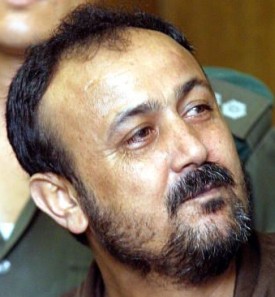
Amid swirling speculation about an imminent Israel-Hamas prisoner swap, the possible release of Fatah leader Marwan Barghouti could change the political dynamic in stalled Israeli-Palestinian peace efforts.

More than any other of the hundreds of Palestinians that are expected to be freed by Israel in return for Sgt. Gilad Shalit after three years of captivity in Gaza, the possibility of a Barghouti release carries political repercussions beyond the actual swap.

A proponent of the militarization of the Palestinian uprising that broke out in late 2000, Barghouti was convicted and sentenced to life in prison in 2004 on five counts of murder, including a shooting attack on a Tel Aviv restaurant.

But Barghouti also supports a two-state compromise with Israel and is a Hebrew-speaking, charismatic warrior-statesman with public opinion ratings among Palestinians that rival Palestinian Authority President Mahmoud Abbas and Hamas leader Ismail Haniyeh. Some say Barghouti could succeed Mr. Abbas, unify the Palestinians and provide Israel with the powerful partner it has lacked since the death of Yasser Arafat in 2004. [continued…]

Facebooktwittermail