
To beat al Qaeda, look to the east
Al Qaeda’s main focus is harming the United States and Europe, but there hasn’t been a successful attack in these places directly commanded by Osama bin Laden and company since 9/11. The American invasion of Afghanistan devastated Al Qaeda’s core of top personnel and its training camps. In a recent briefing to the Senate Foreign Relations Committee, Marc Sageman, a former C.I.A. case officer, said that recent history “refutes claims by some heads of the intelligence community that all Islamist plots in the West can be traced back to the Afghan-Pakistani border.” The real threat is homegrown youths who gain inspiration from Osama bin Laden but little else beyond an occasional self-financed spell at a degraded Qaeda-linked training facility.
The 2003 invasion of Iraq encouraged many of these local plots, including the train bombings in Madrid in 2004 and London in 2005. In their aftermaths, European law and security forces stopped plots from coming to fruition by stepping up coordination and tracking links among local extremists, their friends and friends of friends, while also improving relations with young Muslim immigrants through community outreach. Morocco, Saudi Arabia and Turkey have taken similar steps.
Now we need to bring this perspective to Afghanistan and Pakistan — one that is smart about cultures, customs and connections. The present policy of focusing on troop strength and drones, and trying to win over people by improving their lives with Western-style aid programs, only continues a long history of foreign involvement and failure. Reading a thousand years of Arab and Muslim history would show little in the way of patterns that would have helped to predict 9/11, but our predicament in Afghanistan rhymes with the past like a limerick.
A key factor helping the Taliban is the moral outrage of the Pashtun tribes against those who deny them autonomy, including a right to bear arms to defend their tribal code, known as Pashtunwali. Its sacred tenets include protecting women’s purity (namus), the right to personal revenge (badal), the sanctity of the guest (melmastia) and sanctuary (nanawateh). Among all Pashtun tribes, inheritance, wealth, social prestige and political status accrue through the father’s line.
This social structure means that there can be no suspicion that the male pedigree (often traceable in lineages spanning centuries) is “corrupted” by doubtful paternity. Thus, revenge for sexual misbehavior (rape, adultery, abduction) warrants killing seven members of the offending group and often the “offending” woman. Yet hospitality trumps vengeance: if a group accepts a guest, all must honor him, even if prior grounds justify revenge. That’s one reason American offers of millions for betraying Osama bin Laden fail.
Afghan hill societies have withstood centuries of would-be conquests by keeping order with Pashtunwali in the absence of central authority. When seemingly intractable conflicts arise, rival parties convene councils, or jirgas, of elders and third parties to seek solutions through consensus.
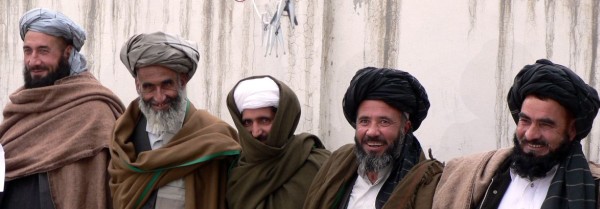
After 9/11, the Taliban leader, Mullah Omar, assembled a council of clerics to judge his claim that Mr. bin Laden was the country’s guest and could not be surrendered. The clerics countered that because a guest should not cause his host problems, Mr. bin Laden should leave. But instead of keeping pressure on the Taliban to resolve the issue in ways they could live with, the United States ridiculed their deliberation and bombed them into a closer alliance with Al Qaeda. Pakistani Pashtuns then offered to help out their Afghan brethren.
American-sponsored “reconciliation” efforts between the Afghan government and the Taliban may be fatally flawed if they include demands that Pashtun hill tribes give up their arms and support a Constitution that values Western-inspired rights and judicial institutions over traditions that have sustained the tribes against all enemies.
The secretary of state, Hillary Clinton, and the special envoy to the region, Richard Holbrooke, suggest that victory in Afghanistan is possible if the Taliban who pursue self-interest rather than ideology can be co-opted with material incentives. But as the veteran war reporter Jason Burke of The Observer of London told me: “Today, the logical thing for the Pashtun conservatives is to stop fighting and get rich through narcotics or Western aid, the latter being much lower risk. But many won’t sell out.”
Why? In part because outsiders who ignore local group dynamics tend to ride roughshod over values they don’t grasp. My research with colleagues on group conflict in India, Indonesia, Iran, Morocco, Pakistan and the Palestinian territories found that helping to improve lives materially does little to reduce support for violence, and can even increase it if people feel such help compromises their most cherished values.
The original alliance between the Taliban and Al Qaeda was largely one of convenience between a poverty-stricken national movement and a transnational cause that brought it material help. American pressure on Pakistan to attack the Taliban and Al Qaeda in their sanctuary gave birth to the Pakistani Taliban, who forged their own ties to Al Qaeda to fight the Pakistani state.
While some Taliban groups use the rhetoric of global jihad to inspire ranks or enlist foreign fighters, the Pakistani Taliban show no inclination to go after Western interests abroad. Their attacks, which have included at least three assaults near nuclear facilities, warrant concerted action — but in Pakistan, not in Afghanistan. As Mr. Sageman, the former C.I.A. officer, puts it: “There’s no Qaeda in Afghanistan and no Afghans in Qaeda.”
Pakistan has long preferred a policy of “respect for the independence and sentiment of the tribes” that was advised in 1908 by Lord Curzon, the British viceroy of India who established the North-West Frontier Province as a buffer zone to “conciliate and contain” the Pashtun hill tribes. In 1948, Pakistan’s founder, Muhammad Ali Jinnah, removed all troops from brigade level up in Waziristan and other tribal areas in a plan aptly called Operation Curzon.
The problem today is that Al Qaeda is prodding the Pakistani Taliban to hit state institutions in the hopes of provoking a full-scale invasion of the tribal areas by the Pakistani Army; the idea is that such an assault would rally the tribes to Al Qaeda’s cause and threaten the state. The United States has been pushing for exactly that sort of potentially disastrous action by Islamabad. [continued…]
Stretching out an ugly struggle
Many decades ago as a fledgling C.I.A. officer in the field, I was naïvely convinced that if the facts were reported back to Washington correctly, everything else would take care of itself in policymaking. The first loss of innocence comes with the harsh recognition that “all politics are local” and that overseas realities bear only a partial relationship to foreign-policy formulation back home.
So in looking at President Obama’s new policy directions for Afghanistan, what goes down in Washington politics far outweighs analyses of local conditions.
I had hoped that Obama would level with the American people that the war in Afghanistan is not being won, indeed is not winnable within any practicable framework. But such an admission — however accurate — would sign the political death warrant of a president to be portrayed as having snatched defeat out of the jaws of “victory.”
The “objective” situation in Afghanistan remains a mess. Senior commanders acknowledge that we are not now winning hearts and minds in Afghanistan; indeed, we never can, and certainly not at gunpoint. Most Pashtuns will never accept a U.S. plan for Afghanistan’s future. The non-Pashtuns — Tajiks, Uzbeks, Hazaras, etc. — naturally welcome any outside support in what is a virtual civil war.
America has inadvertently ended up choosing sides in this war. U.S. forces are perceived by large numbers of Afghans as an occupying army inflicting large civilian casualties. The struggle has now metastasized into Pakistan — with even higher stakes. [continued…]



 ven among Israel’s tough security chiefs, Meir Dagan has always been known for his raw nerve. As a military trainee he would wander around the base during his off hours flinging a knife at trees and telephone poles like a circus entertainer, one fellow soldier recalls. He earned one of his first decorations as a young commando in Gaza, for snatching a live grenade from the hands of an enemy fighter. Long-haired and confident, Dagan would sometimes bring his pet Doberman, Paco, along on raids. His propensity for solving problems by force continued even after he retired from the military. He was leading a task force on terrorist financing in 2001 when his men told him they had discovered a European bank being used to channel money from Iran to Hamas. “We have the address, no?” Dagan asked his intel officers, according to a participant in the meeting, who asked not to be named for fear of angering Dagan. “Burn it down!” The horrified intelligence officers stalked out of the room in protest. (Dagan declined any comment for this story.)
