Author Archives: News Sources

In Syria and Iraq, ISIS is in retreat on multiple fronts

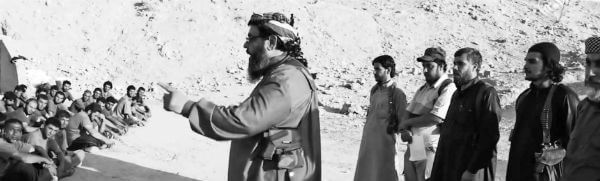
The Washington Post reports: As European governments scramble to contain the expanding terrorist threat posed by the Islamic State, on the battlefield in Iraq and Syria the group is a rapidly diminishing force.

In the latest setbacks for the militants on Thursday, Syrian government troops entered the outskirts of the historic town of Palmyra after a weeks-old offensive aided by Russian airstrikes, and U.S. airstrikes helped Iraqi forces overrun a string of Islamic State villages in northern Iraq that had been threatening a U.S. base nearby.

These are just two of the many fronts in both countries where the militants are being squeezed, stretched and pushed back. ­Nowhere are they on the attack. They have not embarked on a successful offensive in nearly nine months. Their leaders are dying in U.S. strikes at the rate of one every three days, inhibiting their ability to launch attacks, according to U.S. military officials.

Front-line commanders no longer speak of a scarily formidable foe but of Islamic State defenses that crumble within days and fighters who flee at the first sign they are under attack. [Continue reading…]

Facebooktwittermail

The surprising ways fear has shaped Syria’s war

Wendy Pearlman writes: As negotiations continue in Geneva, international observers and analysts struggle to comprehend the violence of the Syrian conflict. But how do Syrians themselves make sense of the horrors that have befallen their country? Since 2012, I have carried out open-ended interviews with more than 250 Syrians in Jordan, Lebanon, Turkey and the United Arab Emirates. The people I meet vary by age, class and region, but the large majority oppose the regime of President Bashar al-Assad.

Despite their differences, I find that their individual stories coalesce into a clear collective narrative. This narrative highlights many themes, from hope to resilience to crushing disappointment with a world that has abandoned them. One of the most central themes, I argue in a new article for Perspectives on Politics, is the overwhelming role of fear in shaping the lived experience of politics. I identify four different types of fear, each of which has different sources and functions.

Syrians’ stories about life before 2011 call attention to a silencing fear that served as a pillar of the authoritarian regimes of Hafez al-Assad and then Bashar al-Assad. People consistently describe a political system in which those who had authority could abuse it limitlessly and those without power found no law to protect them. As one man explained: “We don’t have a government. We have a mafia. And if you speak out against this, it’s off with you to bayt khaltu — ‘your aunt’s house.’ That’s an expression that means to take someone to prison. It means, forget about this person. He’ll be tortured, disappeared. You’ll never hear from him again.” [Continue reading…]

Facebooktwittermail

A top ISIS leader killed in airstrike, Pentagon says

The New York Times reports: The United States this week killed a top Islamic State commander in Syria as part of a spate of military actions targeting the terrorist group’s leadership and explosives caches, Defense Secretary Ashton B. Carter said on Friday.

The killing of a top commander, Abd al-Rahman Mustafa al-Qaduli, who is also known by other names, comes as the United States is having increased success targeting the Islamic State’s leadership. Last week, Defense Department officials concluded that American strikes had killed the group’s minister of war, Omar al-Shishani.

“We are systematically eliminating ISIL’s cabinet,” Mr. Carter said at a news conference, using an acronym for the group.

But he made clear that the challenge was not that simple.

“Striking leadership is necessary,” he said, “but as you know it’s far from sufficient. As you know leaders can be replaced. These leaders have been around for a long time — they are senior and experienced and eliminating them is an important objective and result. They will be replaced and we will continue to go after their leadership.”

Defense Department officials have declined to elaborate on why they are having more accuracy striking the group’s top commanders. Earlier this year, a special unit of American commandos tasked with identifying, capturing and killing the Islamic State’s leaders arrived in Iraq and began working closely with local forces there. [Continue reading…]

Facebooktwittermail

Pope washes feet of Muslim refugees, says ‘we are brothers’

The Washington Post reports: Pope Francis washed and kissed the feet of Muslim, Christian and Hindu refugees Thursday and declared them all children of the same God, as he performed a gesture of welcome and brotherhood at a time of increased anti-Muslim sentiment following the Brussels attacks.

Francis denounced the carnage as a “gesture of war” carried out by blood-thirsty people beholden to the weapons industry during an Easter Week Mass with asylum-seekers at a shelter in Castelnuovo di Porto, outside Rome.

The Holy Thursday rite re-enacts the foot-washing ritual Jesus performed on his apostles before being crucified, and is meant as a gesture of service. Francis contrasted that gesture with the “gesture of destruction” carried out by the Brussels attackers, saying they wanted to destroy the brotherhood of humanity represented by the migrants.

“We have different cultures and religions, but we are brothers and we want to live in peace,” Francis said in his homily, delivered off-the-cuff in the windy courtyard of the center.

Several of the migrants then wept as Francis knelt before them, poured holy water from a brass pitcher over their feet, wiped them clean and kissed them. [Continue reading…]

Facebooktwittermail

More terror arrests in Belgium as government concedes missteps before attacks

The Wall Street Journal reports: Belgian police rounded up six more people they said were connected to this week’s terror attacks, as the government on Thursday acknowledged high-level counterterrorism failings.

The justice and interior ministers both offered to resign a day after Turkey disclosed it had warned Belgium last summer that it suspected Ibrahim el-Bakraoui, one of two suicide bombers at the Brussels Airport, had ties to Islamic State—to no avail.

Mr. Bakraoui and his younger brother, Khalid, both from Brussels, were known to Western intelligence and were on at least one U.S. watch list, said a U.S. official. It couldn’t be immediately learned how they were classified on the list.

While U.S. often shares names on its various watch lists, it isn’t known whether they did in this case. The Belgian government has so many people to surveil, it is difficult for them to prioritize who might be the most urgent.

Separately, the Belgian federal prosecutor’s office said that an investigating judge on Dec. 11 had issued international and European arrest warrants for Khalid, the subway bomber. The judge specializes in terrorism and is in charge of the Paris attack investigation in Belgium.

On Wednesday, the same prosecutor said neither brother had criminal records linked to terrorism. The office didn’t offer further details Thursday.

Prime Minister Charles Michel refused to accept the resignations of his ministers. Jan Jambon, the interior minister, told a Belgian broadcaster that Mr. Michel cited the “situation of war.”

The most urgent question for investigators is how many more members of the terror network remain at large. U.S. officials said Islamic State’s strategy in Europe includes having fighters trained in Syria tap into networks of radicalized, disgruntled youth.

The Belgian federal prosecutor’s office said late Thursday that it had arrested six people and conducted searches in various Brussels neighborhoods including Schaerbeek, where at least one of the attackers lived.

In France, police also carried out counterterror raids in a Paris suburb on Thursday and detained a man who was in the “advanced stage” of planning a terrorist attack, French Interior Minister Bernard Cazeneuve said.

No link was immediately established with the recent attacks in Brussels or in Paris on Nov. 13, he said. [Continue reading…]

Facebooktwittermail

The war on terror has turned the whole world into a battlefield

destruction11

Arun Kundnani writes: When opinion polls find that most Muslims think Westerners are selfish, immoral and violent, we have no idea of the real causes. And so we assume such opinions must be an expression of their culture rather than our politics.

Donald Trump and Ted Cruz have exploited these reactions with their appeals to Islamophobia. But most liberals also assume that religious extremism is the root cause of terrorism. President Obama, for example, has spoken of “a violent, radical, fanatical, nihilistic interpretation of Islam by a faction — a tiny faction — within the Muslim community that is our enemy, and that has to be defeated.”

Based on this assumption, think-tanks, intelligence agencies and academic departments linked to the national security apparatus have spent millions of dollars since 9/11 conducting research on radicalization. They hoped to find a correlation between having extremist religious ideas, however defined, and involvement in terrorism.

In fact, no such correlation exists, as empirical evidence demonstrates — witness the European Islamic State volunteers who arrive in Syria with copies of “Islam for Dummies” or the alleged leader of the November 2015 Paris attacks, Abdelhamid Abaaoud, who was reported to have drunk whisky and smoked cannabis. But this has not stopped national security agencies, such as the FBI, from using radicalization models that assume devout religious beliefs are an indicator of potential terrorism.

The process of radicalization is easily understood if we imagine how we would respond to a foreign government dropping 22,000 bombs on us. Large numbers of patriots would be volunteering to fight the perpetrators. And nationalist and religious ideologies would compete with each other to lead that movement and give its adherents a sense of purpose.

Similarly, the Islamic State does not primarily recruit through theological arguments but through a militarized identity politics. It says there is a global war between the West and Islam, a heroic struggle, with truth and justice on one side and lies, depravity and corruption on the other. It shows images of innocents victimized and battles gloriously waged. In other words, it recruits in the same way that any other armed group recruits, including the U.S. military.

That means that when we also deploy our own militarized identity politics to narrate our response to terrorism, we inadvertently reinforce the Islamic State’s message to its potential recruits. When British Prime Minister David Cameron talks about a “generational struggle” between Western values and Islamic extremism, he is assisting the militants’ own propaganda. When French President François Hollande talks of “a war which will be pitiless,” he is doing the same.

What is distinctive about the Islamic State’s message is that it also offers a utopian and apocalyptic vision of an alternative society in the making. The reality of that alternative is, of course, oppression of women, enslavement of minorities and hatred of freedom.

But the message works, to some extent, because it claims to be an answer to real problems of poverty, authoritarian regimes and Western aggression. Significantly, it thrives in environments where other radical alternatives to a discredited status quo have been suppressed by government repression. What’s corrupting the Islamic State’s volunteers is not ideology but by the end of ideology: they have grown up in an era with no alternatives to capitalist globalization. The organization has gained support, in part, because the Arab revolutions of 2011 were defeated, in many cases by regimes allied with and funded by the U.S.

After 14 years of the “war on terror,” we are no closer to achieving peace. The fault does not lie with any one administration but with the assumption that war can defeat terrorism. The lesson of the Islamic State is that war creates terrorism. [Continue reading…]

Facebooktwittermail

ISIS wants to sow division and make us afraid of one another

decay14bw

Nicolas Hénin writes: Few would have given them a second look: three men wheeling luggage trolleys through the heart of an airport in the heart of Europe. I immediately recognised Ibrahim el-Bakraoui, the stocky one in the middle. I tweeted that it was him two hours before his identity as one of the suspected suicide bombers at Brussels airport was confirmed by the authorities. El-Bakraoui’s name and picture had come up in intelligence briefings. His brother, we later discovered, killed more in his own martyrdom atrocity on the Brussels metro.

In the CCTV image they exude no obvious menace. Even the fact that two are each wearing one black glove – to hide the triggers for their detonators, investigators believe – might not have raised an alarm.

Our perception of Isis is drawn from its images: the black flag; the orange suits it condemns the condemned to wear; the executioner, face masked, knife brandished. These symbols have transferred themselves from the front pages of our newspapers and seared themselves into the minds of millions. But the jihadis, who held me hostage in Syria for 10 long months, will draw just as much satisfaction from the banal images of its three operatives in the moments before they launched yesterday’s murderous attack on Zaventem airport.

The terrorists are casually dressed, one almost drawing attention to himself in a white jacket and a dark beach hat, worn at an angle. But to study this picture is chilling, knowing the three are intending to kill and maim dozens of people – and themselves – and yet they are not stressed or anxious. That is because, for them, this is all about death. But the picture sends a message: that the enemy looks ordinary and walks among you. It is one of the goals of Isis to sow division and make us afraid of one another. That was one of the things I learned during my captivity. [Continue reading…]

Facebooktwittermail

Poland refuses to accept refugees after Brussels attack

Al Jazeera reports: Poland’s prime minister says his country is no longer prepared to take the 7,000 refugees it agreed to accept in negotiations with the European Union because of the deadly Brussels attacks.

Beata Szydlo said on Wednesday that she does “not see any possibility for the refugees to come to Poland” after explosions rocked the Belgian capital a day earlier, according to Polish broadcaster Superstacja.

Poland had planned to admit an initial 400 refugees this year, and the rest would be allowed in over the next three years.

Last year, thousands of Poles took to the streets and social media to promote participation in anti-refugee marches across the country, organised by far-right nationalist movements such as the National Radical Camp.

In October, President Andrzej Duda said the government should take steps to protect its citizens from refugees bringing in “possible epidemics.” [Continue reading…]

Facebooktwittermail

Please do not disturb Europe’s most wanted man

The Washington Post reports: According to Belgian Justice Minister Koen Geens, just two days after the Paris attacks [Salah] Abdeslam [Europe’s “most wanted man”] was “likely in a flat in Molenbeek.” But because of the country’s penal code, which prohibits raids between 9 p.m. and 5 a.m. unless a crime is in progress or in case of fire, police were ordered to wait until dawn to pursue him. By then, Abdeslam was nowhere to be seen. [Abdeslam was captured last Friday.]

Despite warnings that Belgium could be a target of terrorist attacks, security at the Brussels airport was inadequate. In the beginning of this year, a Belgian union expressed alarm at findings of tests run at the airport to detect bombs in carry-on luggage. In one round of tests, half the bombs were not detected, according to Christina Schori ­Liang, a senior fellow at the Geneva Center for Security Policy.

The inspectors also revealed that fences around the airport had holes that were not repaired for months, Liang said. The ­security-clearance process was found to so be lax, she added, that employees could begin working without waiting for the process to conclude. It can take up to three months.

On Wednesday, Turkish President Recep Tayyip Erdogan, whose country has been a transit point for young Europeans drawn to the Islamic State, said one of Tuesday’s attackers — he did not say which — was arrested in his country last summer and deported back to Europe.

The Turkish official said the president was referring to Ibrahim el-Bakraoui, who was stopped at the Syrian border. Asked whether Belgian officials were notified, the official said, “Yes, they knew.”

On Wednesday, Geens, the justice minister, confirmed that officials were aware that Ibrahim el-Bakraoui, who had a record of violent crime, had been expelled by the Turks to the Netherlands after trying to enter Syria. Speaking to a local radio station, he declined to say whether officials knew he had reentered Belgium. But he seemed to suggest that the attempt to enter Syria did not indicate a special threat.

“At that moment, he was not known for terrorism, but as a criminal,” Geens said.

Analysts say Belgium’s terrorism problem goes beyond security issues and includes social divides related not only to linguistic barriers but also to incorporating waves of Muslim immigrants in recent decades. Immigrants and their children maintain that they are ostracized and find it more difficult to get jobs.

Belgian youth born outside the European Union had an unemployment rate of 43.6 percent in 2014, compared with a rate of 23.2 percent for Belgian-born youth. [Continue reading…]

Facebooktwittermail

How Saudi extremism found a foothold in Belgium

Ishaan Tharoor writes: A lot of ink has already been spilled on the complexity of the jihadist networks operating in Belgium, as well as the social factors — discrimination and alienation — luring some Belgian youths toward groups such as the Islamic State. It’s also worth considering, though, an older history.

Analysts point to the inroads made in Belgium by the more conservative, orthodox brand of Islam espoused by the kingdom of Saudi Arabia. This is the consequence of actual policy. In 1978, the Saudi-backed Great Mosque of Brussels opened its doors; the elegant building and land where it sat had been a gift by Belgium’s then-king to his Saudi counterpart a decade prior.

It became the seat of Islamic activity in Belgium. A 2007 leaked U.S. diplomatic cable, published by the anti-secrecy site WikiLeaks, detailed how the Saudi Embassy in Brussels has continued to provide Korans to myriad mosques in the country and help pay for the upkeep of the structures. Saudi Arabia also invested in training the imams who would preach to a growing Muslim diaspora in European countries, including in Belgium.

Observers say the Salafist dogma of the Saudi-funded clerics active in many mosques in Belgium stood in contrast to the traditional beliefs of the mostly working-class Moroccan and Turkish immigrants who first arrived in the country in the 1960s and 1970s.

“The Moroccan community comes from mountainous regions and rift valleys, not the desert. They come from the Maliki school of Islam, and are a lot more tolerant and open than the Muslims from other regions like Saudi Arabia,” George Dallemagne, a Belgian politician, told the Independent last year. “However, many of them were re-Islamified by the Salafist clerics and teachers from the Great Mosque. Some Moroccans were even given scholarships to study in Medina, in Saudi Arabia.”

The majority of the Belgian nationals who have gone to fight in Syria and Iraq are thought to be of Moroccan descent.

A separate WikiLeaks disclosure — this time of classified Saudi documents — found that in April 2012 the Belgian government quietly forced Saudi authorities to remove the main director of the Great Mosque, Khalid Alabri, a Saudi Embassy employee suspected of propagating the intolerant Sunni radicalism that is shared by the extremists of the Islamic State. [Continue reading…]

Facebooktwittermail

ISIS trains 400 fighters to attack Europe in wave of bloodshed

ISIS-instructor-bw

The Associated Press reports: The Islamic State group has trained at least 400 fighters to target Europe in deadly waves of attacks, deploying interlocking terror cells like the ones that struck Brussels and Paris with orders to choose the time, place and method for maximum chaos, officials have told The Associated Press.

The network of agile and semiautonomous cells shows the reach of the extremist group in Europe even as it loses ground in Syria and Iraq.

The officials, including European and Iraqi intelligence officials and a French lawmaker who follows the jihadi networks, described camps in Syria, Iraq and possibly the former Soviet bloc where attackers are trained to target the West. Before being killed in a police raid, the ringleader of the Nov. 13 Paris attacks claimed he had entered Europe in a multinational group of 90 fighters, who scattered “more or less everywhere.” [Continue reading…]

Facebooktwittermail

Could super recognisers be the latest weapon in the war on terror?

By David James Robertson, University of York

In the wake of the terror attacks on Brussels, Belgian police rapidly identified two of the suicide bombers that carried out the attacks: brothers Khalid and Brahim el-Bakraoui, both Belgian nationals. The identification came after the police released CCTV images showing three men at the airport in Zaventem in the hope that people might recognise them and come forward with information.

The search for the third man wearing the white jacket and hat in the CCTV image has become the immediate focus for the massive police operation. He was thought to be carrying the most powerful bomb which failed to go off, prompting him to flee. The unexploded bomb was later safely deactivated by experts.

It is clear the release of images plays a massive role in the manhunt – a taxi driver is said to have come forwards after recognising CCTV images of the three men he earlier dropped off at the airport. But looking at the grainy CCTV footage, it is hard to make out the blurred features of the suspects. So how easy is it to actually identify someone from a CCTV image?

Continue reading

Facebooktwittermail

Quantity of explosive found in Belgium surprises officials

The New York Times reports: Unlike ammonium nitrate, TATP is typically seen in small quantities, not in the tens of pounds. One American official who had reviewed the intelligence related to the bombs in France and the newer intelligence from Belgium said the recovery of more than 30 pounds indicated an increased capacity since the Paris attacks. And that figure did not include any explosive actually used in the bombs that killed 31 people on Tuesday.

The Belgian authorities also said they had recovered nearly 40 gallons of acetone and eight gallons of hydrogen peroxide, materials used in producing TATP. They made no mention of the acids needed as catalysts or chemicals often used to rinse TATP crystals and remove impurities.

The quantities of explosives and precursors, the American official said, raised questions about how the terrorists were able to elude detection, especially during a manhunt for Salah Abdeslam, the suspect in the Paris attacks who was arrested last week.

Making TATP typically requires meticulous, time-consuming work, adding the catalyst, drop by drop, to a mixture that must be stirred and kept cool, often with a large quantity of ice.

Without specialized equipment, little can be rushed. Adding the catalyst too quickly can lead to aggressive bubbling and rising temperatures. If the reaction gets too hot, it can cause inadvertent explosions. [Continue reading…]

Facebooktwittermail

Lawmakers warn of ‘radical’ move by NSA to share information

nyc2bw (1)

The Hill reports: A bipartisan pair of lawmakers is expressing alarm at reported changes at the National Security Agency that would allow the intelligence service’s information to be used for policing efforts in the United States.

“If media accounts are true, this radical policy shift by the NSA would be unconstitutional, and dangerous,” Reps. Ted Lieu (D-Calif.) and Blake Farenthold (R-Texas) wrote in a letter to the spy agency this week. “The proposed shift in the relationship between our intelligence agencies and the American people should not be done in secret.

“NSA’s mission has never been, and should never be, domestic policing or domestic spying.” [Continue reading…]

Facebooktwittermail

How Israel assisted Russia’s military intervention in Syria

The Daily Beast reports: Russia’s sort-of-but-not-really withdrawal from Syria passed without the world noticing that it featured aerial technology from a surprising source —Israel, which provided the high-tech surveillance drones that apparently help the Russian warplanes find and strike their targets on the ground.

The Russian air force acquired a number of 20-foot-long Searcher drones from Israel Aerospace Industries, one of the world’s leading manufacturers of unmanned aerial vehicles, starting in 2010.

Russia also acquired from IAI, which is wholly owned by the Israeli government, a license to make its own copies of the propeller-driven Searcher, a rough equivalent of the U.S. military’s own Predator drone. [Continue reading…]

Facebooktwittermail

Iraq says it’s launched offensive to recapture ISIS-held Mosul

The Associated Press reports: The Iraqi military backed by U.S.-led coalition aircraft on Thursday launched a long-awaited operation to recapture the northern city of Mosul from Islamic State militants, a military spokesman said.

In the push, Iraqi forces retook several villages on the outskirts of the town of Makhmour, east of Mosul, early in the morning on Thursday and hoisted the Iraqi flag there, according to the spokesman for the Joint Military Command, Brig. Gen. Yahya Rasool.

It was not immediately clear how long such a complex and taxing offensive would take. Only recently, Iraqi and U.S. officials refrained to give a specific time on when the Mosul operation could begin, saying it would take many months to prepare Iraq’s still struggling military for the long-anticipated task of retaking the key city. [Continue reading…]

Facebooktwittermail

Scientists warn of perilous climate shift within decades, not centuries

pattern4

The New York Times reports: The nations of the world agreed years ago to try to limit global warming to a level they hoped would prove somewhat tolerable. But leading climate scientists warned on Tuesday that permitting a warming of that magnitude would actually be quite dangerous.

The likely consequences would include killer storms stronger than any in modern times, the disintegration of large parts of the polar ice sheets and a rise of the sea sufficient to begin drowning the world’s coastal cities before the end of this century, the scientists declared.

“We’re in danger of handing young people a situation that’s out of their control,” said James E. Hansen, the retired NASA climate scientist who led the new research. The findings were released Tuesday morning by a European science journal, Atmospheric Chemistry and Physics.

A draft version of the paper was released last year, and it provoked a roiling debate among climate scientists. The main conclusions have not changed, and that debate seems likely to be replayed in the coming weeks.

The basic claim of the paper is that by burning fossil fuels at a prodigious pace and pouring heat-trapping gases into the atmosphere, humanity is about to provoke an abrupt climate shift.

Specifically, the authors believe that fresh water pouring into the oceans from melting land ice will set off a feedback loop that will cause parts of the great ice sheets in Greenland and Antarctica to disintegrate rapidly. [Continue reading…]

Facebooktwittermail