Author Archives: News Sources

Carbon emissions highest they have been in 66 million years

Scientific American reports: The rate of carbon emissions is higher than at any time in fossil records stretching back 66 million years to the age of the dinosaurs, according to a study on Monday that sounds an alarm about risks to nature from man-made global warming.

Scientists wrote that the pace of emissions even eclipses the onset of the biggest-known natural surge in fossil records, 56 million years ago, that was perhaps driven by a release of frozen stores of greenhouse gases beneath the seabed.

That ancient release, which drove temperatures up by an estimated 5 degrees Celsius (9 Fahrenheit) and damaged marine life by making the oceans acidic, is often seen as a parallel to the risks from the current build-up of carbon in the atmosphere from burning fossil fuels.

“Given currently available records, the present anthropogenic carbon release rate is unprecedented during the past 66 million years,” the scientists wrote in the journal Nature Geoscience. [Continue reading…]

Facebooktwittermail

Why terrorism doesn’t help Donald Trump

Jamelle Bouie writes: Americans who read outlets like the New York Times woke up to detailed and largely accurate information about Tuesday’s attacks in Brussels, which killed and wounded dozens. Americans who watched cable news, on the other hand, woke up to Donald Trump, who presented these attacks—like the ones in Paris—as a boon for his campaign. “This is a subject that is very dear and near to my heart, because I’ve been talking about it much more than anybody else,” he said. “And it’s probably why I’m No. 1 in the polls. Because of the fact that I say we have to have strong borders. We have to be very vigilant and careful who we allow into our country.”

Meanwhile, some journalists were frustrated with the networks’ choice to give attention to Trump and essentially let him campaign on the destruction in Brussels before the bodies had even been counted. “ ‘Terrorist attacks help Trump’ isn’t a thing that just happens. It happens because after attacks, voters see his face on every TV network,” wrote Jill Filipovic, a columnist for the Guardian. “America may be one major terrorist attack from Donald Trump as president,” said Blake Hounshell, editorial director at Politico.

Both Trump and his critics are operating from the belief that terrorism, even abroad, helps the most reactionary and illiberal candidates in an election. Trump was the chief GOP beneficiary of the Paris attacks, which helped him build a larger lead over his rivals. In an apparently anti-establishment year, with many Americans driven variously by economic anxiety, racism, and deep fears of external threat, it’s easy to believe that Trump could ride the Brussels attack to more votes and a shorter path to the White House.

At the same time, there’s reason to think this just isn’t true. Americans do become more conservative in the face of physical threat. Fears over terrorism, for example, helped George W. Bush win a second term. But Bush was a sitting president who led the national response after the attacks on Sept. 11, 2001. For millions of Americans, he was a credible voice on the subject.

The same is not true of Donald Trump. As evidenced by his almost absurdist dialogue with the editorial board of the Washington Post, Trump doesn’t know anything about terrorism or national security. [Continue reading…]

Facebooktwittermail

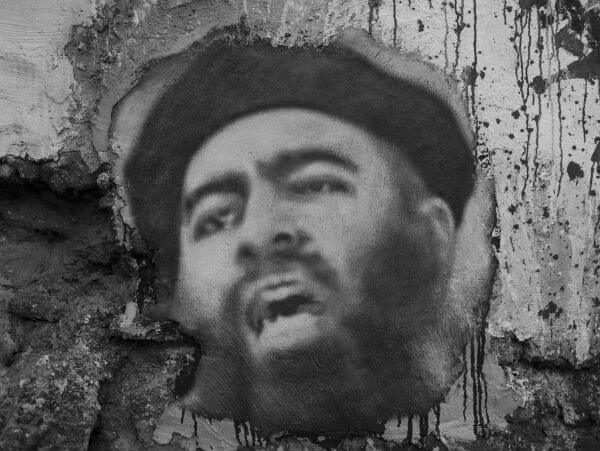
Defeats in Mideast raise ISIS threat to the West

Baghdadi-bw

The Wall Street Journal reports: When European Islamists started streaming into Syria and Iraq a few years ago, some European counterterrorism officials viewed it as a blessing in disguise. Better to have them pulverized on a Middle Eastern battlefield, they argued, than dispersed and plotting mischief at home.

Today, that battlefield has become more dangerous than ever for Islamic State, which is reeling under U.S.-backed military campaigns in both Syria and Iraq. One consequence of this progress is that trained and battle-hardened foreign fighters from Europe are more likely to head back to home ground.

That is the alarming paradox of the U.S.-led campaign against the radical group: In the months and even years ahead, an Islamic State defeated in a conventional war may pose a far greater danger to the West than when it was focused on conquering villages in the Euphrates river valley or the hill country of Aleppo.

“It’s going to get worse before it gets better,” warned Bruno Tertrais, senior fellow at the Foundation for Strategic Research in Paris and former policy adviser at the French Defense Ministry.

“If you manage to deflate Islamic State’s narrative of inevitable expansion, this would eventually reduce its attractiveness, at least for some recruits. But in the short term, as it finds itself in difficulty on one field it will try attacking another,” Mr. Tertrais said.

In the long run, of course, protecting Europe and the U.S. from the kinds of attacks witnessed in Brussels and Paris would be impossible without strangling Islamic State in its cradle.

“The frequency and magnitude of these operations is increasing as refugees are flooding Europe and elsewhere, and as [Islamic State] recruits and brainwashes people already in Europe,” said Ayad Allawi, the former Iraqi prime minister who heads a major parliamentary bloc. “This will have to be dealt with at source, and the source is here in the greater Middle East.”

In the region, there is no doubt that Islamic State’s mantra of “persisting and advancing,” which fueled its aura of invincibility just a year ago, no longer reflects reality on the ground. [Continue reading…]

Facebooktwittermail

The slaughter of the innocent in Brussels

Hamid Dabashi writes: Murderous criminals commit acts of systemic violence targeting innocent people, and their kindred souls among the proto-Nazi Islamophobes pick up where their brethren have left off to perpetuate a cycle of violence.

Innocent people from Brussels to Beirut, from Paris to Istanbul, from Baghdad to San Bernardino, and around the world are then caught in between this vicious circle.

What is needed is a conceptual puncture and a categorical breakage to this vicious cycle. The slaughter of innocent people in Brussels is the extension of the slaughter of the innocent in the Islamic world, not in response to or revenge for it.

When the criminal thugs gather around ISIL’s banner and commit atrocities around the world, they present it as acts of revenge against “Western aggression”. These are not acts of revenge and retaliation. These are identical acts of murderous violence targeting identically innocent people in different sites.

The murderous outfit that calls itself ISIL is the crooked product, the diabolic extension and the ugly shadow of precisely what it is they say they are fighting. [Continue reading…]

Facebooktwittermail

Coordinated attacks on Brussels may signal the start of ISIS-led guerrilla warfare in the West

Christopher Dickey writes: As explosions rocked the airport and the metro in Brussels this morning, fears grew that the threat of terrorism is morphing into the threat of guerrilla war in Europe.

The attacks, which killed more than 20 people, came four days after the arrest in Brussels of Salah Abdeslam, a member of the terrorist cell that attacked Paris cafés, a sports stadium, and a concert hall in November, slaughtering 130 people. On Sunday, the Belgian foreign minister warned that Abdeslam was planning a new attack.

Some reports suggest that this attack, clearly coordinated in the style of the Paris carnage, was what was in the works, and went ahead without Abdeslam. It was known that at least two of his associates were still on the run. ISIS claimed responsibility for the attacks.

French Prime Minister Manuel Valls said it was clear Europe was no longer simply the victim of a series of isolated terror attacks. “We have been subjected for the last few months in Europe to acts of war,” he said. “We are at war.”

As French scholar Gilles Kepel has pointed out, the self-proclaimed Islamic State, or ISIS, which carried out the Paris attacks and which presumably was involved in today’s bombings, is following a playbook written more than a decade ago: The Call for an International Islamic Resistance by Abu Musab al Suri, a Syrian jihadi.

Suri knew Europe well. He had lived for a while in Britain, in the community of Arab and Muslim exiles there. His core idea was that Muslims in the West, though increasingly numerous, felt themselves isolated and under pressure, and this could be exploited to create a breakdown of society, develop insurgency, and launch a civil war where the forces of Islam eventually would be victorious. [Continue reading…]

Facebooktwittermail

The Brussels attacks hint at a worrying ‘iceberg’ theory about terror networks in Europe

Business Insider reports: At least 30 people were reported killed and dozens more wounded after explosions ripped through Zaventem Airport and a metro station in Brussels on Tuesday morning.

The attacks came days after Saleh Abdeslam, a suspect in last year’s Paris attacks, was arrested in the Belgian capital, which is also the de facto capital of the European Union.

Clint Watts, a senior fellow at the George Washington University Center for Cyber and Homeland Security, said on Tuesday that the Brussels attacks were in line with an “iceberg” theory of terrorist plots.

That theory purports that, just as for every iceberg seen above water, the underlying mass of a terror network and its plots are not immediately visible — or, “for every attacker, there are usually three to four additional people who helped facilitate the plot.”

“That the eight attackers in Paris used more explosive belts than ever before seen in the West suggests a sizeable European terrorist facilitation network,” Watts wrote for War on the Rocks in November.

He added: “The iceberg theory of terrorist plots suggests we should look for two, three, or possibly four dozen extremist facilitators and supporters between Syria and France. This same network is likely already supporting other attacks in the planning phase.” [Continue reading…]

Facebooktwittermail

Two Brussels attackers, the brothers Khalid and Ibrahim el-Bakraoui, were known to the authorities

The New York Times reports: The attacks in Brussels on Tuesday were carried out by two brothers who detonated suicide bombs, Belgian officials said on Wednesday, as the police continued an intense hunt for at least one other participant in the attacks. The toll from the assaults stood at 31 dead and 270 injured.

The brothers — Ibrahim el-Bakraoui, 29, and Khalid el-Bakraoui, 27 — were Belgian and had criminal records, officials said. But the pair had no known links to terrorism until the authorities conducted a raid on March 15 on an apartment in the Forest district of Brussels, as part of the investigation into the Nov. 13 attacks in Paris.

Ibrahim el-Bakraoui and another man blew themselves up at the airport at 7:58 a.m. — in two explosions, nine seconds apart — and then Khalid el-Bakraoui carried out a suicide attack at the Maelbeek subway station around an hour later, Frédéric Van Leeuw, the Belgian federal prosecutor, said at a news conference. It was not immediately clear whether Khalid el-Bakraoui also participated in the airport attacks.

The search continued for a man who was recorded by a security camera alongside Ibrahim el-Bakraoui at the airport, who was believed to have fled.

After the attacks, a taxi driver approached the police and led them to a house on Rue Max Roos, in the Schaerbeek section of Brussels, where he had picked up three men, according to Mr. Van Leeuw. There, the authorities found about 33 pounds of the explosive material TATP — a large amount. By comparison, officials say the suicide belts used by the Paris attackers each contained less than a pound of TATP. [Continue reading…]

Facebooktwittermail

How Saudi Arabia captured Washington

yemen-bombing

Max Fisher reports: There was a moment almost exactly one year ago, in March 2015, that revealed some uncomfortable truths about America’s relationship with Saudi Arabia.

That month, as Saudi Arabia prepared to launch what would become its disastrous war against Shia rebels in neighboring Yemen, the Saudi ambassador in Washington, Adel al-Jubeir, brought a list of “high-value targets” to CIA Director John Brennan. The Saudis were asking for American support in the war; the list was meant as a show of cooperation.

But when US intelligence agencies checked the list against their own information, they found that many of the targets had little or no military value, according to a report at the time by the Wall Street Journal’s Maria Abi-Habib and Adam Entous. Many were civilian structures in or near population centers.

The US warned Saudi Arabia off the targets, and Saudi officials said they complied. But when the air war began, Saudi bombs fell heavily on “hospitals, schools, a refugee camp, and neighborhoods,” according to the Journal.

The US initially held back from the war. But soon, in an apparent effort to purchase Saudi acquiescence to the nuclear deal with Iran, the US substantially increased support for the Saudi-led campaign, providing midair refueling, weapons and supplies, targeting information, and 45 dedicated intelligence analysts.

A year after the war began, it is now a disaster, as detailed in a New York Times account. Half of the 6,000 casualties are thought to be civilians; al-Qaeda’s hold in Yemen has strengthened; Saudi Arabia has failed in its objective to force the war’s end, instead only exacerbating the ongoing violence. The US has helped Saudi Arabia to accelerate the implosion of another Mideast state, with unknown but surely far-reaching implications.

You would think that Washington’s foreign policy community — a close-knit network of think tanks, academic outfits, and other institutions that heavily influence the media and whose members frequently rotate into and out of government positions — would be outraged. That community is overwhelmingly focused on the Middle East, prides itself on high-minded humanitarian ideals and far-thinking strategy, and is often critical of President Obama’s foreign policy.

But aside from a few dissident voices, the Washington foreign policy community has been relatively quiet on America’s involvement backing Saudi Arabia’s war in Yemen. Instead, this week, much of that community expressed outrage over a very different story about the US relationship with Saudi Arabia: Obama, in an interview, had seemed to deride the Saudi leadership and its influence in Washington. [Continue reading…]

Facebooktwittermail

The Syrian refugees of Gaza

Creede Newton reports: On a bustling Gaza street lined with restaurants, juice vendors and shawarma stands, one facade immediately catches the eye: A large, modernist black cube sits atop the entrance to Syriana – Arabic for ‘our Syria’.

“The rest should be here soon,” says Wareef Kaseem Hamdeo, the visibly tired chef and proprietor of the restaurant, as he sits down for his first break of the day. It is early afternoon and he has been here since early morning.

The 35-year-old Syrian left Aleppo in 2012 when the bombs of President Bashar al-Assad’s forces began falling onto the city in an attempt to stamp out the then-nascent armed resistance to his rule.

He travelled to Turkey and then to Egypt, enduring a 44-hour voyage across the Mediterranean Sea. As a seasoned chef with his own restaurant in Aleppo and a degree in mechanical engineering, Hamdeo felt confident that he would find work in Egypt.

He did. It was mostly informal employment – cooking and decorating hotels. But after two months, a Syrian who had eaten in his restaurant back in Aleppo offered him work as a chef in Cairo. A second opportunity came along to open a restaurant in Poland. Both options were tempting, but as he pondered over each one, a third emerged: a job in Gaza.

He immediately and resolutely refused. But when a Palestinian acquaintance urged him to visit, he tentatively obliged. Hamdeo fell in love with the seaside enclave. “It reminded me of Syria,” he says.

Now, three years after he first travelled through the dark, damp tunnels connecting Egypt and Gaza, which are constantly at risk of collapse or flooding by the Egyptian military, his life has changed considerably: He has survived Israel’s 2014 attack on the Gaza Strip, found love with a Palestinian journalist who had interviewed him shortly after his arrival, and successfully opened his own restaurant.

In spite of this, Hamdeo feels he has to leave, and it is now or never. He reads the news and hears that relations between Hamas, which governs the Gaza Strip, and Egypt are deteriorating; he sees growing tensions with Israel and believes further trouble is looming. He is, simply, tired of war. [Continue reading…]

Facebooktwittermail

FBI adds two Syrian hackers to its most-wanted list for cybercriminals

The Atlantic reports: In late April 2013, a tweet from the Associated Press claimed that a pair of explosions at the White House had injured President Barack Obama. Markets reacted nearly instantly, sending stocks plunging. But when, a short time later, Press Secretary Jay Carney told reporters there was no explosion, the market quickly righted itself.

The news organization’s Twitter account was hacked, it turned out. A group calling itself the Syrian Electronic Army claimed credit. In only a few minutes, their rogue tweet demonstrated the market-moving power of 140 characters sent from a credible source.

The Syrian Electronic Army has also defaced websites belonging to the U.S. Marines, Harvard University, and Human Rights Watch, as well as websites and Twitter feeds of other major news organizations like the BBC, CNN, and The Washington Post. The group’s members remained anonymous, going by pseudonyms like “The Shadow” and “The Pro.”

But on Tuesday, the Justice Department revealed the identity of three members of the group, charging them with computer hacking and placing two of them on the FBI’s “Cyber’s Most Wanted” list. The FBI is offering a $100,000 bounty for information leading to their arrest. [Continue reading…]

Facebooktwittermail

Russian jets destroying Palmyra, say activists

NOW reports: An activist group has accused Russian airstrikes of causing widespread damage in Palmyra amid a regime offensive that has seen the Syrian army and allied militias advance to the entrance of the UNESCO World Heritage Site.

“Russia’s systematic bombing and destruction of the ancient city of Palmyra has continued for twenty consecutive days,” the Palmyra Revolution Coordination alleged in a statement issued Tuesday.

The pro-revolution activist group accused Russia of arbitrarily shelling the ISIS-held city “without differentiation between humans and stones.”

“More than 900 raids targeted the city in the past two weeks, more than half of them [using] [internationally-proscribed] cluster bombs.”

The Palmyra Revolution Coordination group also claimed that Russian raids have destroyed more than half of the town’s neighborhoods, levelling “schools, hospitals and mosques.”

“Russia is destroying our city and our civilization.”

An activist who escaped from the town last week echoed these claims in an interview with the Syria Direct news website, saying that the regime has been using a “scorched earth policy” on the city. [Continue reading…]

Facebooktwittermail

Is the Kurdish plan foolhardy or first-rate?

Hassan Hassan writes: The Syrian Kurdish Democratic Union Party, or PYD, made history last week when it announced a federal system in northern Syria. The declaration is both symbolic and catalytic, and there are reasons to believe it is not as foolhardy as many think. Although Syrian and Iraqi Kurds differ on many issues, the move has linked the adjoining territories controlled by Kurds, who prevail over a combined territory the size of Sri Lanka.

In Syria, the PYD controls approximately 10,000 square miles, roughly two-thirds of the territory ruled by Iraqi Kurds. In October, the party seized more territory after gains against ISIL in northern Syria. Since then, the group’s military wing, the YPG, drove out ISIL from southern Hasaka. This has galvanised Kurdish activists who dream of statehood for “the world’s largest stateless nation”.

On the other hand, the news agitated almost everyone else involved in the conflict in Syria, including putative Kurdish allies such as Haitham Mannaa, a Syrian opposition figure who has distanced himself from mainstream rebels. The US too stated it would not recognise the federacy. Turkey, unsurprisingly, rejected it.

Local populations in northeastern Syria also fear the YPG’s nationalist project, particularly after incidents, documented by Amnesty International, of home demolition and forced displacement by the Kurdish militia against Arab families.

From the outside, the project appears to be a fool’s errand. In Iraq, Kurds carved out a semi-autonomous region after the US-led coalition forces declared a safe haven inside Iraq in 1991. In Syria, the Kurds are outnumbered and surrounded by hostile Arab demographics and armed groups, not to mention Turkey. Kurdish-majority areas are also scattered throughout northern Syria. [Continue reading…]

Shiar Neyo writes: I do support the right of Kurds and other minorities in Syria to self-determination, and I do believe that federalism is better than a centralist state. However, federalism by definition requires all concerned units or parts to agree to this system of governance because they believe it is better for all of them.

Not only were other parts of Syria and other Syrian political and military forces not consulted and not involved, even people and political parties within the so-called self-administration areas were not involved in the process.

There should have been a long process of consultation and negotiation followed by a general referendum, which are clearly not possible at the moment, rather than a hasty two-day conference clearly dominated by the PYD to ‘discuss’ and agree an equally badly written and quite confused founding document deciding important issues that affect all Syrians. It was clearly a politically motivated move.

The declaration came soon after the PYD forces attacked Syrian opposition factions and took over some areas in north Syria with the support of Russian air strikes and Iranian-led ground assaults. It is indeed telling that the founding document dedicates a whole section to the “historical development of the societal problems in the Middle East and Syria and the current situation,” tracing them back to Mesopotamia. (!) Yet it does not even mention the ongoing Syrian revolution. It only talks about war and Islamist forces backed by regional powers. [Continue reading…]

Facebooktwittermail

Following Brussels attacks, Ted Cruz says the U.S. should ‘patrol and secure’ its Muslim neighborhoods

Quartz reports: Apparently trying to one-up Donald Trump in aggressive rhetoric after attacks in Brussels today, March 22, that left at least 31 dead, Ted Cruz issued a statement calling for the US to “patrol and secure its Muslim neighborhoods.”

“For years, the West has tried to deny this enemy exists, out of a combination of political correctness and fear. We can no longer afford either. Our European allies are now seeing what comes of a toxic mix of migrants who have been infiltrated by terrorists and isolated, radical Muslim neighborhoods,” said the would-be Republican presidential nominee.

Cruz’s statement came after another one this morning, in which he simply vowed to fight “radical Islamic terrorism.” It also comes after his main rival Donald Trump went on a media blitz calling for the US to close its borders to Muslim immigration, describing Brussels as a “disaster city” and Belgium a “horror show.” “This all happened because frankly there’s no assimilation. They are not assimilating for whatever reason. They don’t want laws that we have, they want Sharia law, and you say to yourself, at what point, how much of this do you take?” Trump said. [Continue reading…]

Facebooktwittermail

Brussels attacks: A throwback to pre-9/11 terrorism

By Steve Hewitt, University of Birmingham

The terrible scenes in Brussels following a terrorist attack now claimed by Islamic State are a reminder of just how vulnerable airports can be.

In the years since the September 11 attacks in the US in 2001, a clear priority of western security agencies has been to protect airlines from bombings and hijackings. And, of course, this threat is real and has been persistent.

This attack in Belgium is something of a throwback to the pre-9/11 era. The fact that it occurred in the unsecured section of a major airport is significant and will raise difficult questions for the authorities.

Continue reading

Facebooktwittermail

Brussels attacks: Were they revenge for Abdeslam’s arrest?

Jason Burke writes: Revenge strike? Evidence of a tragic combination of a new cell and incompetent security services? A last effort by the battered network of Salah Abdeslam, the logistician for last year’s Paris attacks who was arrested in Brussels on Friday? Or – given that we still have very few details of Tuesday morning’s events – none of the above?

The explosions in Brussels underline various basic and important points.

The first is that, clearly, any threat from Islamic militants to Europe may rise and fall, but does not disappear when a single figure is arrested, however much he was sought. The “major blow” struck on Friday, as senior policymakers called it, now looks less major.

The second is that both terrorists and those trying to stop them seek to keep the initiative. This has a practical and a psychological aspect. For counter-terrorist agencies, the aim is to get information fast enough to mount raids and sweep up suspects before they even have time to work out who among them has been detained and who might have talked, let alone plan a new strike. Networks quickly fall apart under such relentless pressure, as was shown in Iraq in the middle of the last decade.

For the terrorists, the aim is to show they can still terrorise, mobilise and polarise with violence. This is not so much about revenge, but simply demonstrating a continued capability. They may be down but, they are saying, they are not out. [Continue reading…]

Facebooktwittermail

Ted Cruz, not Donald Trump, is the scariest candidate standing

By Randall Stephens, Northumbria University, Newcastle

The 2016 Republican primary is now essentially a two-man race. Donald Trump has tallied an astonishing 678 delegates, while Ted Cruz, the dogmatic, far-right Texas Republican, who apparently gets along with no one in his own party, has garnered 423. Even though John Kasich, former governor and the last great hope for moderates, won his home state of Ohio, his candidacy is mathematically dead in the water; his only hope is to pull some remarkable trick at a contested convention.

For Cruz as well, it’s still an uphill battle. But depending on the outcomes of subsequent primaries, other Republican leaders may yet rally to his side. As CBS News put it: “Cruz may be the only candidate who can beat Trump in the delegate count before the convention.”

This is the mainstream party’s worst nightmare. Comedy Central’s Daily Show compared the choice between Trump and Cruz to picking between getting a blood clot or bone cancer, and to listen to the party’s establishment, the clot has so far been getting the most attention. As a Los Angeles Times headline put it, “Cruz is Scary, Trump Is Dangerous”. Jeb Bush memorably called Trump the “chaos candidate”. George W. Bush’s former press secretary, Ari Fleischer, describes Trump as a “wrecking ball”.

South Carolina senator and former GOP candidate Lindsey Graham has decided to back Cruz in a desperate effort to stop the chaos candidate, but even he once compared the decision to choosing between being poisoned or shot by a firing squad. The cyanide capsule seems to have cracked between Graham’s teeth.

Continue reading

Facebooktwittermail

In speech to AIPAC, Donald Trump affirms support for Israel

The Wall Street Journal reports: Despite threats of protests, the crowd appeared largely receptive to Mr. Trump, save for a few moments. He received several rounds of cheers, with some standing to applaud him, when he said Israel would no longer be treated like a “second-class citizen” and when he criticized the Iran deal.

But he drew some titters when he said that no one had studied the Iran deal more than him — “believe me.”

Having drawn fire last year for giving an ambiguous response on a key litmus-test issue, Mr. Trump also told the audience: “We will move the American Embassy to the eternal capital of the Jewish people, Jerusalem.”

Mr. Trump’s prior insults to women and minorities had prompted protests from rabbis and other critics who threatened to walk out or boycott the address. Some attendees, wearing stickers that read “Come together against hate” — a play-off of Aipac’s theme, “Come Together” — planned to walk out before he began speaking, while protesters gathered outside.

Daniel Burg, a rabbi from Baltimore who was attending Aipac this week for the ninth year in a row, was among the attendees who walked out. “People are exercising their rights to not simply abide the presence of Mr. Trump and pretend that this election cycle is business as usual,” he said. He called the real-estate billionaire’s rhetoric “so hateful, so misogynistic, so racist” and said it had “undermined the democracy that we believe in.”

Rick Jacobs, a rabbi from New York City and president of the Union for Reform Judaism, helped author a letter to Mr. Trump requesting a meeting to discuss the community’s concerns with the front-runner, citing his comments about Mexican immigrants, women, Muslims, and other groups.

Mr. Jacobs said the campaign has said it is considering setting up a meeting later this week. “It’s not that we won’t engage with this candidate,” he said. “We want to have a chance not just to listen—we want to have a chance to speak.”

Mr. Jacobs walked out ahead of Mr. Trump’s speech and gathered with about 70 others outside the auditorium while Mr. Trump speaking. He said he saw hundreds leaving the stadium before Mr. Trump took the stage. [Continue reading…]

Politico reports: The leaders of the largest American pro-Israel lobby distanced themselves on Tuesday morning from Donald Trump’s attacks on President Barack Obama at their policy conference.

Trump addressed the annual Washington gathering of the American Israel Public Affairs Committee on Monday night, and some of his biggest applause lines were his characteristically blunt critiques of Obama, who he said “may be the worst thing to ever happen to Israel, believe me, believe me.”

AIPAC president Lillian Pinkus read a statement from the stage on Tuesday to disavow Trump’s remarks.

“We say unequivocally that we do not countenance ad hominem attacks, and we take great offense to those that are levied against the United States of America from our stage,” Pinkus said. “While we may have policy differences, we deeply respect the office of the president of the United States and our president, Barack Obama.”

She also castigated attendees who responded positively to Trump’s comments. [Continue reading…]

Facebooktwittermail