Business Insider reports: Former US defense secretary Robert Gates isn’t optimistic that the landmark July 2015 nuclear deal with Iran will lead the country to halt any of its disruptive policies in the Middle East or its support for terrorist groups.
In an interview with Business Insider, Gates, who spent nearly 27 years in the CIA and was the only cabinet secretary to have served under Barack Obama and George W. Bush, said that he didn’t believe the nuclear deal would have a moderating impact on Iranian behavior or lead Tehran to become a more responsible international actor.
“The notion that betting that this regime is going to temper its behavior in the region because of this nuclear deal I think is mistaken,” Gates told Business Insider. “I think that will not happen.” [Continue reading…]
Author Archives: News Sources
How the other 1% lives: Wealth gap not the only way in which global elite is taking advantage
By Anna Childs, The Open University
Oxfam’s latest report, focused on an increasingly obscene wealth inequality and the stranglehold exerted by a global elite, had one central message: The era of tax havens that have made this possible must be brought to an end.
The report – An Economy for the 1% – was timed as a call to action for influential delegates to the annual meeting of the World Economic Forum taking place in Davos, Switzerland.
The headline numbers showed that the top 1% own as much wealth as the other 99% and – even more startling – that the richest 62 individuals own more wealth than the poorest half of the world’s population (compared to 388 individuals in 2010). To put this into stark perspective, this group of 62 people own as much as the 3.6 billion people on the bottom of the heap.
Oxfam makes it clear that this distribution of wealth is not some incidental byproduct of rising worldwide prosperity. Since 2000, the poorest half of the world’s population has received just 1% of the total increase in global wealth, while 50% of that has gone to the 1% of people on the top of the pile – about 74m people. While the richest have been getting richer, the combined wealth of the poorest half of the planet has fallen by US$1 trillion (41%) in the past five years alone.
Oceans may contain more plastic debris than fish by 2050
The Washington Post reports: There is a lot of plastic in the world’s oceans.
It coagulates into great floating “garbage patches” that cover large swaths of the Pacific. It washes up on urban beaches and remote islands, tossed about in the waves and transported across incredible distances before arriving, unwanted, back on land. It has wound up in the stomachs of more than half the world’s sea turtles and nearly all of its marine birds, studies say. And if it was bagged up and arranged across all of the world’s shorelines, we could build a veritable plastic barricade between ourselves and the sea.
But that quantity pales in comparison with the amount that the World Economic Forum expects will be floating into the oceans by the middle of the century.
If we keep producing (and failing to properly dispose of) plastics at predicted rates, plastics in the ocean will outweigh fish pound for pound in 2050, the nonprofit foundation said in a report Tuesday.
According to the report, worldwide use of plastic has increased 20-fold in the past 50 years, and it is expected to double again in the next 20 years. By 2050, we’ll be making more than three times as much plastic stuff as we did in 2014. [Continue reading…]
UN reports nearly 19,000 Iraqi civilian deaths in 22 months
The New York Times reports: Nearly 19,000 Iraqi civilians have died and more than three million have fled their homes over a 22-month period marked by a “staggering” level of violence, the United Nations said on Tuesday, in a report that starkly demonstrated why huge numbers of Iraqis were seeking refuge in Europe.
Fighting between the Islamic State, Iraqi security forces and pro-government militias from the start of 2014 to the end of October 2015 left at least 18,802 civilians dead, the United Nations mission in Iraq said in a report compiled jointly with the organization’s human rights office in Geneva.
Nearly double that number of civilians has been wounded in the fighting, the report said, adding that officials had emphasized that the casualty estimates were a minimum.
“Even the obscene casualty figures fail to accurately reflect exactly how terribly civilians are suffering in Iraq,” the United Nations human rights chief, Zeid Ra’ad al-Hussein, said in a statement, which noted that “countless others” had died from the lack of access to food, water and medical care. [Continue reading…]
The opening up of Iran will mean a return to barbarity as usual
Paul Mason writes: “This is a good day,” said Barack Obama, announcing the end of nuclear sanctions against Iran, “because, once again, we’re seeing what’s possible with strong American diplomacy.” The deal, accompanied by a prisoner swap and the release of frozen Iranian funds, signals the end of Iran’s nuclear ambitions.
But it is not a triumph of “strong American diplomacy”. It is testimony to America’s weakness and incoherence, in the very region where it has concentrated its military and diplomatic force for decades. As for Iran, with the nuclear programme gone, and its iconic American prisoners released, normal levels of barbarity can now be resumed.
First, there is the ordinary repression: convicts – two-thirds of them drug dealers or drug users according to the UN – were being executed at the rate of three per day last year, the highest per-capita execution rate in the world. Then there’s the suppression of trade unions. Iran arrested 233 labour activists in the year to May 2015. All strikes and labour agitation are treated as threats to national security by the Revolutionary Guards, the hardline military force that enforces Islamic discipline at home while spearheading military operations abroad. Finally, there is the outright political repression that has left two presidential candidates from the “green” protests of 2009 – Mehdi Karroubi and Mir Hossein Mousavi – under house arrest, and hundreds of other human rights activists, lawyers, journalists and scientists detained.
As western businesses rub their hands at the prospect of renewed access to this market of 78 million consumers, it’s worth remembering what the purpose of all this repression is. Industry is militarised: huge swathes of the economy are owned by the Revolutionary Guards themselves. With their front companies de-listed and given new access to the international bank clearing system, many of the Guards’ leaders will now get very rich. The workforce, deprived of all basic rights to organise, their jobs totally precarious, and with 70% earning less than the official poverty level, will get the chance to be exploited by global capital, not just the Guards, the mullahs and their cronies.
You could lament all of the repression, yet still celebrate the Iran deal as a diplomatic achievement and de-escalation of conflict, if Washington was demonstrating any sign of a coherent regional policy. But it is not.
On the same day Obama lifted nuclear sanctions, he imposed a whole new set of sanctions on Iran for testing a long-range missile. At the same moment, Iran’s Lebanese proxy, Hezbollah, was fighting alongside its ally President Assad in Syria – against both Islamic State and the moderate opposition backed by America. Soldiers from Iran’s Quds force continue to prop up the Shia dominated government in Iraq. And the west’s regional ally, Saudi Arabia, continues to escalate its standoff with Iran after failing to scupper the nuclear deal by executing a Shia cleric.
If your brain is struggling to impose coherence on this picture of half-alliances, provocations and incessant death, that is no accident. Even those with intricate knowledge of the region cannot fathom what the Obama administration is trying to achieve. [Continue reading…]
What binds Trump supporters together?
Matthew MacWilliams writes: If I asked you what most defines Donald Trump supporters, what would you say? They’re white? They’re poor? They’re uneducated?
You’d be wrong.
In fact, I’ve found a single statistically significant variable predicts whether a voter supports Trump — and it’s not race, income or education levels: It’s authoritarianism.
That’s right, Trump’s electoral strength—and his staying power—have been buoyed, above all, by Americans with authoritarian inclinations. And because of the prevalence of authoritarians in the American electorate, among Democrats as well as Republicans, it’s very possible that Trump’s fan base will continue to grow.
My finding is the result of a national poll I conducted in the last five days of December under the auspices of the University of Massachusetts, Amherst, sampling 1,800 registered voters across the country and the political spectrum. Running a standard statistical analysis, I found that education, income, gender, age, ideology and religiosity had no significant bearing on a Republican voter’s preferred candidate. Only two of the variables I looked at were statistically significant: authoritarianism, followed by fear of terrorism, though the former was far more significant than the latter. [Continue reading…]
The New York Times reports: A New York Times/CBS News poll last week showed Mr. Trump, a Presbyterian, dominating the field with 42 percent of evangelical voters; Mr. Cruz was second with 25 percent.
In dozens of interviews with evangelical voters in 16 states, from every region of the country outside the Northeast, those supporting Mr. Trump sounded a familiar refrain: that his heart was in the right place, that his intentions for the country were pure, that he alone was capable of delivering to a troubled country salvation in the here and now.
“He is the only one who can pull us back from the abyss,” said John Juvenal, 67, a lifelong Republican and retired police officer from Oklahoma City. [Continue reading…]
The color of surveillance
Alvaro Bedoya writes: Every day, we hear about the power and promise of pervasive surveillance. We are losing sight of its victims. Instead, an NSA debate that could have surfaced a long line of black, Latino, Asian, and Muslim victims of surveillance was cast as an argument between the U.S. military and Snowden — national security versus the hackers.
This narrow focus may have blinded Congress to a little known but especially troubling aspect of the NSA scandal. In June 2013, the headlines were that the NSA was logging everyone’s phone calls. We now know that the NSA’s call records program — the single largest domestic spying program in our nation’s history — was effectively beta-tested for almost a decade on American immigrants.
In 1992, the Drug Enforcement Administration began a call records program that’s considered the blueprint for the NSA’s program, which began after Sept. 11 and received court approval in 2006. The DEA program logged virtually all calls made from the United States to a list of countries, regardless of who made them or why. Over time, 116 countries were added to that list — including Mexico and most of Central and South America. This means that for almost a decade before the NSA call records program, countless immigrants’ calls were tracked by the DEA when they called home. This is particularly true for Hispanic immigrants, who make up a large part of what is now the largest minority group in the country. We do not know what transpired in Congress’ closed-door discussions about the NSA or DEA call records programs, but public debates largely ignored these facts.
The next NSA debate will peak at the end of 2017. That’s the expiration date of another surveillance law that allows the government to read — without a warrant — certain messages stored on companies’ U.S. servers where at least one party to the communication was a foreigner living abroad. Will Congress probe the likely disparate impact of this law? If not, when will Congress reckon with the color of surveillance? [Continue reading…]
Migrant communities think more like non-migrants after just one generation, study suggests
By Alex Mesoudi, University of Exeter and Kesson Magid, Durham University
A common fear among the general public in many Western countries is that immigrants have ways of thinking or social values that are fundamentally different to them, and that these differences prevent them from integrating into Western societies.
Our new research, published in PLOS ONE, suggests such fears are misplaced.
We found that British Bangladeshi migrants in East London shifted towards the thinking styles of the wider non-migrant population in just a single generation. Our study also provides insights into how and why people from different parts of the world think and reason differently.
We were motivated by recent findings in the field of “cultural psychology” that show striking variations between cultures in what had long been assumed to be universal ways of thinking and reasoning.
Here’s an example. In the 1990s, Nick Leeson infamously made unauthorised speculative trades that eventually brought down Barings Bank, Britain’s oldest merchant bank. How would you explain Leeson’s actions? Cultural psychologists have found variations between cultures in how people answer this question.
People from the West, it is suggested, would typically say that Leeson was greedy or dishonest. Psychologists call these “dispositional” explanations, which involve intrinsic aspects of people’s personality or character.
But people from East Asia might explain Leeson’s actions as resulting from a corrosive banking system that lacks proper checks, and which values profits above all else. These are typical “situational explanations”, which refer to the external situation or context.
In 2010, the psychologists Joseph Henrich, Steven Heine and Ara Norenzayan collected many examples of cultural variation like this, including variation in whether people punish cheats, what people consider to be moral and immoral, reactions to aggression, and susceptibility to perceptual illusions.
They coined the acronym WEIRD to describe people from Western, Educated, Industrialised, Rich, Democratic countries. While the vast majority of psychology experiments are conducted on WEIRD people, they are far from representative of our species as a whole.
UN knew for months that Syrians were starving in Madaya under Hezbollah siege
Roy Gutman writes: Until the beginning of this month, Madaya was an obscure town in southwestern Syria, overshadowed by nearby Zabadani, where opposition rebels had fought a fierce battle against President Bashar al-Assad’s regime and more recently Hezbollah. But today, as international relief convoys arrive with food and medicine to lift a starvation siege, Madaya has become the focal point of Syrian aid workers’ anger at the United Nations, who accuse the international body of giving higher priority to its relationship with Damascus than to the fate of Madaya’s beleaguered residents.
Madaya was the worst off of all the besieged towns in Syria, relief workers say. As early as October, locals in the town had been raising alarms about the dire humanitarian situation there. At least six children and 17 adults starved to death in December, and hundreds more risked starvation.
U.N. officials knew this — but until shocking images of starving infants started circulating and news media sounded the alarm, it remained silent, reserving alarm for an unpublished internal memo.
The “Flash Update” issued on Jan. 6 by the U.N. Office for the Coordination of Humanitarian Affairs (OCHA), which negotiates aid deliveries, spoke of “desperate conditions,” including “severe malnutrition reported across the community,” and said there was an “urgent need” for humanitarian assistance. In October, community leaders reported some 1,000 cases of malnutrition in children under the age of 1, it said.
But the general public could not have known this, because OCHA classified the bulletin as “Internal, Not for Quotation.” OCHA had no immediate comment on why the update, leaked to Foreign Policy, wasn’t published.
The U.N.’s months-long silence on the starvation in Madaya is one of the reasons for the disquiet roiling the community of international and Syrian relief officials. Another is its oft-repeated claim that no one siege is that important but that all should be lifted, a goal that appears beyond reach. When Yacoub el-Hillo, the U.N.’s humanitarian coordinator for Syria, addressed reporters on Jan. 12, a day after leading the first convoy into the town, he described Madaya residents as “a people that are desperate; a people that are cold; a people that are hungry; a people that have almost lost hope” — but he blamed no one in particular for this state of affairs and made no mention of the Lebanese paramilitary group Hezbollah, which in fact is maintaining the siege against Syrian civilians in Madaya.
Instead, he swung into a familiar U.N. litany: The siege of rebel-held Madaya was just like the sieges mounted by the Islamic State or Syrian rebels against government-held regions. [Continue reading…]
ISIS cuts fighters’ salaries in half as group suffers crippling blows
Vocativ reports: ISIS fighters aren’t getting any year-end pay raises this January. In fact, in response to mounting military and economic pressure across Syria and Iraq, the terror group is slashing salaries, newly leaked ISIS documents show.
The administrative records reveal that ISIS leaders in Raqqa, the group’s de-facto capital in Syria, reduced the monthly salaries of all fighters by half sometime around November or December of last year, just as the U.S. began to dramatically increase its airstrikes against ISIS-held oil fields and other financial targets.
“On account of the exceptional circumstances the Islamic State is facing, it has been decided to reduce the salaries that are paid to all mujahideen by half,” reads the official notice, which was translated and first published by Aymenn Jawad al-Tamimi, an ISIS expert and fellow at the Middle East Forum. “It is not allowed for anyone to be exempted from this decision, whatever his position.” [Continue reading…]
ISIS is leading Turkey’s AK Party into a trap
While reviewing a recent ISIS propaganda video, “Turkey and the Fire of Racism,” Hilmi Demir writes: [ISIS] presents itself as a force for correcting nationalism and returning humanity to the natural flow of its history. In this sense, it is not unlike Communism, which advertised a humane post-capitalist utopia. In the video, scenes displaying nationalism, such as Hitler’s Germany, Nasser’s Egypt and Atatürk’s Turkey have an industrial feel to them, often from old newsreels or deliberately distorted images. In contrast, ISIL militants talking into the camera invariably sit against a background of greenery — trees or shrubbery. Before the militants speak, the camera shows cuts of children playing, and birds gliding over a pristine pond. The underlying message is that ISIL is the only polity in the world in sync with God’s creation.
A part of the video features a militant speaking in Kurdish (with Turkish and Arabic subtitles), in an appeal to “Muslim Kurds, especially those living in Turkey.” ISIL here is seeking to establish its credentials as a post-racial society. Addressing the Marxist-Leninist Kurdish Workers’ Party (PKK), the militant asks, “Do you believe that your salvation will come from the hands of atheists [the PKK and its backers]?” He continues, “Under the shadow of Sharia, the only thing separating Arab and non-Arab alike is their piety,” he says. In its own way, ISIL is making a progressive claim. Unlike Turkey, which it sees as being dominated by a single “tribe,” everyone in ISIL territory is equal under its law.
International observers who accuse the ruling Justice and Development Party (AK Party) of aiding ISIL might be surprised that the video takes the longtime Islamist government into its crosshairs. The AK Party, according to the video, clothes itself in Islamist rhetoric while acting as the “Crusaders’ hand of tyranny in the region.” Turkish President Recep Tayyip Erdogan is specifically labeled an apostate who perpetuates the secular agenda of Turkey’s foundation. [Continue reading…]
Jailed Turkish editor slams EU deal with Erdoğan’s ‘fascist government’
The Guardian reports: The editor of Turkey’s most influential dissident newspaper has said in an interview from his prison cell that the country’s ongoing crackdown on journalists is the worst in its history and that he was imprisoned for doing his job.
Can Dündar, the editor-in-chief of Cumhuriyet, also said the EU was betraying its democratic values by seeking a rapprochement with the Turkish president, Recep Tayyip Erdoğan, in the hope that he would stem the flow of refugees into Europe while ignoring human rights violations.
“We always looked at the European Union as an anchor, a model to raise the standard of democracy in Turkey to universal levels, not as leverage to dictatorships,” he said. “Now, if the EU, in order to stop the influx of refugees by turning our lands into a big concentration camp, agrees to turn a blind eye while Erdoğan spurns democracy, human rights, freedom of press and rule of law, it means that the EU is discarding its founding principles in order to protect its short-term interests.” [Continue reading…]
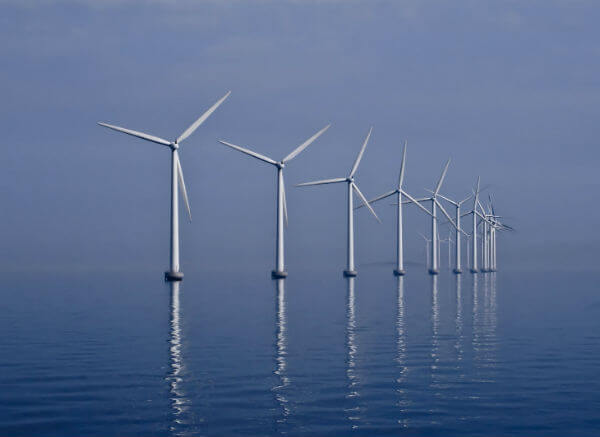
Denmark just broke a world record for wind power — again

Climate Progress reports: One European country can’t seem to stop breaking records when it comes to wind power.
In 2015, Denmark produced almost half of its electricity from wind power, breaking a world record for the most wind production ever recorded — a world record set last year, by Denmark.
The record 42 percent electricity generated from wind represents a three percent increase from the 39 percent it generated in 2014, which at the time broke the world record for the most electricity from wind production by a single country. According to the Danish national grid operator Energinet, this year’s number represents both the highest figure ever and the highest proportion of electricity from wind for any country.
Moreover, for 16 percent of the year, two Western regions in Denmark produced more electricity than the region’s residents consumed, leading to an electricity surplus. While it’s not unusual for wind power production to exceed consumption some of the time, the fact that it happened for such a significant period of time means that Denmark can sell surplus energy to consumers in Norway, Sweden, and Germany. Denmark also imports some hydroelectric power from Norway and solar energy from Germany. [Continue reading…]
Most threats to humans come from science and technology, warns Hawking

The Guardian reports: The human race faces one its most dangerous centuries yet as progress in science and technology becomes an ever greater threat to our existence, Stephen Hawking warns.
The chances of disaster on planet Earth will rise to a near certainty in the next one to ten thousand years, the eminent cosmologist said, but it will take more than a century to set up colonies in space where human beings could live on among the stars.
“We will not establish self-sustaining colonies in space for at least the next hundred years, so we have to be very careful in this period,” Hawking said. His comments echo those of Lord Rees, the astronomer royal, who raised his own concerns about the risks of self-annihilation in his 2003 book Our Final Century.
Speaking to the Radio Times ahead of the BBC Reith Lecture, in which he will explain the science of black holes, Hawking said most of the threats humans now face come from advances in science and technology, such as nuclear weapons and genetically engineered viruses. [Continue reading…]
Overfishing causing global catches to fall three times faster than estimated
The Guardian reports: Global fish catches are falling three times faster than official UN figures suggest, according to a landmark new study, with overfishing to blame.
Seafood is the critical source of protein for more than 2.5 billion people, but over-exploitation is cutting the catch by more than 1m tonnes a year.
The official catch data, provided by nations to the UN’s Food and Agriculture Organisation (FAO), rarely includes small-scale, sport or illegal fishing and does not count fish discarded at sea. To provide a better estimate, more than 400 researchers around the world spent a decade finding other data to fill in the gaps.
The results, published in the journal Nature Communications, show the annual catches between 1950 and 2010 were much bigger than thought, but that the decline after the peak year of 1996 was much faster than official figures. [Continue reading…]
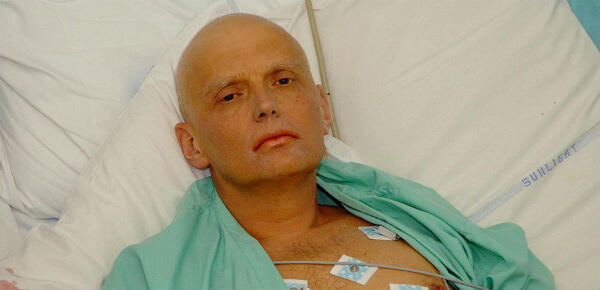
Alexander Litvinenko: The man who solved his own murder

Luke Harding writes: The Millennium hotel is an unusual spot for a murder. It overlooks Grosvenor Square, and is practically next door to the heavily guarded US embassy, where, it is rumoured, the CIA has its station on the fourth floor. A statue of Franklin D Roosevelt – wearing a large cape and holding a stick – dominates the north side of the square. In 2011 another statue would appear: that of the late US president Ronald Reagan. An inscription hails Reagan’s contribution to world history and his “determined intervention to end the cold war”. A friendly tribute from Mikhail Gorbachev reads: “With President Reagan, we travelled the world from confrontation to cooperation.”
The quotes would seem mordantly ironic in the light of events that took place just around the corner, and amid Vladimir Putin’s apparent attempt to turn the clock back to 1982, when the former KGB boss Yuri Andropov – the secret policeman’s secret policeman – was in charge of a doomed empire known as the Soviet Union. Next to the inscriptions is a sandy-coloured chunk of masonry. It is a piece of the Berlin Wall, retrieved from the east side. Reagan, the monument says, defeated communism. This was an enduring triumph for the west, democratic values, and for free societies everywhere.
Five hundred metres away is Grosvenor Street. It was here, in mid-October 2006, that two Russian assassins had tried to murder someone, unsuccessfully. The hitmen were Andrei Lugovoi and Dmitry Kovtun. Their target was Alexander Litvinenko, a former officer in Russia’s FSB spy agency. Litvinenko had fled Moscow in 2000. In exile in Britain he had become Putin’s most ebullient and needling critic. He was a writer and journalist. And – from 2003 onwards – a British agent, employed by MI6 as an expert on Russian organised crime. [Continue reading…]
Palestine must stand in solidarity with the Syrian people
Mariam Barghouti writes: When Syrians were chanting “revolution, revolution, Syria! Revolution of dignity and freedom” in the streets of Damascus in 2011, they undoubtedly expected suppression from the regime of Bashar al-Assad. What they probably did not foresee, however, is complacency from the international community, including from Palestinians.
But, that is what they received. The Syrian conflict has uncovered disturbing shortcomings and contradictions among those who fight in the name of Palestine.
When Palestinians are being assaulted by Israeli forces, we often cry out “Where are the Arabs! Where are you, oh Arabs?” Yet, now that it is our turn to extend solidarity, we have become as faceless as our revered Handala.
Renowned Palestinian writer and thinker Ghassan Kanafani once wrote, “[i]f we were failing in defending the cause; then we ought to change the fighters and not the cause.” By failing to stand with our Arab brethren fighting in Syria, we have betrayed Palestine and tainted the principles that gave birth to the Palestinian cause, namely dignity and justice.
As we enter the Syrian civil war’s fifth year, I say to my fellow Palestinians: it is time – albeit very late – to stand in solidarity with the Syrian people. [Continue reading…]
Madaya: A huge concentration camp where Hezbollah starves people to death

Azzam Tamimi writes: Lebanon’s Hezbollah was, until a few years ago, an inspiration to millions of people in the Middle East and around the world. It was a symbol of heroic resistance putting up a long fight to liberate the occupied territories of south Lebanon and continuing to stand up to Israeli aggression post-liberation.
There was a time when Hassan Nasrallah, Hezbollah’s leader, was hailed as “master of the resistance”. His pictures were posted all over Palestinian refugee camps in Lebanon and were treasured by households across the Arab world. When he gave one of his usually long speeches, people were glued to TV sets and his Almanar satellite TV channel was no less popular than Al Jazeera itself. Many Palestinians truly believed Nasrallah was such a great resistance leader and they wished they had someone like him to lead their own resistance.
Yet today Hezbollah has lost much of the popular support and sympathy it once enjoyed and its leader Nasrallah is ridiculed and condemned by many of those who previously adored him. It is fighting a completely different type of war. Acting upon instructions from its sponsors in Tehran, where a reactionary clerical regime reigns, it is fighting a war in defence of a corrupt despotic regime that reigns in Damascus.
Unlike Hezbollah, Hamas, the Palestinian Islamic Resistance Movement – which saw itself as a partner of Hezbollah in the struggle against Zionism, refused to bow to pressure from the Iranians. Although Syria was, according to Hamas leader Khaled Meshaal, the best haven Hamas ever had outside Palestine, the movement opted to sacrifice all the privileges it had there so as to avoid taking any part in oppressing the Syrian people.
Since leaving Damascus four years ago, Meshaal turned down several invitations from the Iranians to visit Tehran, whose rulers made his visit a precondition for the resumption of any financial aid. Undoubtedly, the Syrian crisis drove deep a wedge between Hamas on the one hand and Hezbollah and Iran on the other. [Continue reading…]