Author Archives: News Sources

Iran parliament candidates: 99% of reformists rejected

AFP reports: Around 60 percent of would-be candidates for Iran’s parliamentary vote in February including many reformists have been rejected by the authorities, official media reported Monday.

“Out of more than 12,000 registered candidates, 4,700 — or about 40 percent — were approved,” Siamak Rah-Peyk, a spokesman for the Central Elections Supervising Committee was quoted as saying by state television.

The committee is dependent on the Guardian Council, a panel of conservative clerics and jurists, to vet registered candidates and overseeing the elections.

Reformist parties have protested against the rejections.

“Out of over 3,000 reformist candidates across the country, only 30 have been approved — only one percent,” Hossein Marashi, an official from the reformist camp, was quoted as saying in the Shaugh daily. [Continue reading…]

Facebooktwittermail

U.S. prisoner swap may help Iran arm Assad

Josh Rogin writes: In exchange for the release of four American prisoners, the Barack Obama administration agreed to free seven Iranians in U.S. custody and stop trying to arrest 14 others, two of whom the U.S. government had accused of funneling weapons to the Bashar al-Assad regime and Hezbollah in Syria.

For years, Iran’s privately-owned Mahan Air has been using its planes to bring soldiers and arms directly to the Syrian military and the Lebanese terrorist group Hezbollah by flying them from Tehran to Damascus, according to the U.S. Treasury Department. In 2013, Treasury sanctioned Mahan’s managing director, Hamid Arabnejad, for overseeing the company’s efforts to evade U.S. and international sanctions and aiding the Iranian Revolutionary Guards Corps’ elite Quds Force.

“Arabnejad has a close working relationship with IRGC-QF personnel and coordinates Mahan Air’s support and services to the paramilitary group,” the Treasury Department said. “He has also been instrumental in facilitating the shipment of illicit cargo to Syria on Mahan Air aircraft.” [Continue reading…]

Facebooktwittermail

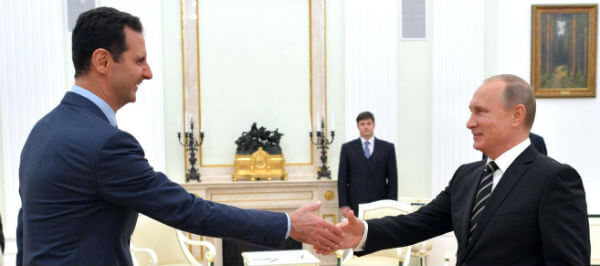
The secret pact between Russia and Syria that gives Moscow carte blanche

assad-putin

The Washington Post reports: When you are a major nuclear power and you want to make a secretive deployment to a faraway ally, what is the first thing you do? Draw up the terms, apparently, and sign a contract.

That’s what the Kremlin did with Syria in August, according to an unusual document posted this week on a Russian government website that details the terms of its aerial support for Syrian President Bashar al-Assad.

Among other revelations in the seven-page contract dated Aug. 26, 2015, the Kremlin has made an open-ended time commitment to its military deployment in Syria, and either side can terminate it with a year’s notice.

Russian military personnel and shipments can pass in and out of Syria at will and aren’t subject to controls by Syrian authorities, the document says. Syrians can’t enter Russian bases without Russia’s permission. And Russia disclaims any responsibility for damage caused by its activities inside Syria. Since Russia’s bombing campaign started at the end of September, Assad’s forces have been able to recapture some territory from rebels, and much of the humanitarian aid to the country has come to a halt. A war that already looked intractable now seems more so. [Continue reading…]

Jadaliyya has an English translation of the contract.

Facebooktwittermail

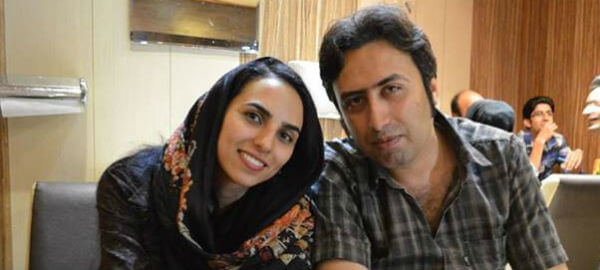
Two Iranian poets, facing lashings and prison, escape country

Fatemeh-Ekhtesari-Mehdi-Mousavi

The Associated Press reports: Two Iranian poets who face lashings and prison sentences have fled Iran, one of the writers said Monday, a rare escape for local artists and activists ensnared in an ongoing crackdown on expression in the country.

Fatemeh Ekhtesari and Mehdi Mousavi’s freedom came as world powers lifted sanctions on Iran over its contested nuclear program and as the country separately freed four Iranian-Americans in exchange for seven Iranians held in the U.S.

The poets’ escape is a reminder that despite the growing detente with the West, hard-liners still exert control over much of life in the Islamic Republic.

Ekhtesari told The Associated Press on Monday that both she and Mousavi escaped from Iran in recent days and made it to another country. She declined to elaborate out of continuing concerns about their safety.

Ekhtesari faced an 11½-year prison sentence, while Mousavi faced nine years on charges ranging from propaganda against the state to “insulting sanctities.” Each was sentenced to 99 lashings. They likely were targeted because their work is known abroad. Both are self-described “postmodern Ghazal” poets who seek to revive the traditional Persian love sonnet by applying it to contemporary political and social issues. [Continue reading…]

Facebooktwittermail

Why are we looking on helplessly as markets crash all over the world?

Will Hutton writes: There has always been a tension at the heart of capitalism. Although it is the best wealth-creating mechanism we’ve made, it can’t be left to its own devices. Its self-regulating properties, contrary to the efforts of generations of economists trying to prove otherwise, are weak.

It needs embedded countervailing power – effective trade unions, law and public action – to keep it honest and sustain the demand off which it feeds. Above all, it needs an ordered international framework of law, finance and trade in which it can do deals and business. It certainly can’t invent one itself. The mayhem in the financial markets over the last fortnight is the result of confronting this tension. The oil price collapse should be good news. It makes everything cheaper. It puts purchasing power in the hands of business and consumers elsewhere in the world who have a greater propensity to spend than most oil-producing countries. A low oil price historically presages economic good times. Instead, the markets are panicking.

They are panicking because what is driving the lower oil price is global disorder, which capitalism is powerless to correct. Indeed, it is capitalism running amok that is one of the reasons for the disorder. Profits as a share of national income in Britain and the US touch all-time highs; wages touch an all-time low as the power of organised labour diminishes and the gig economy of short-term contracts takes hold. The excesses of the rich, digging underground basements to house swimming pools, cinemas and lavish gyms, sit alongside the travails of the new middle-class poor. These are no longer able to secure themselves decent pensions and their gig-economy children defer starting families because of the financial pressures. [Continue reading…]

Facebooktwittermail

U.S. investigating Moscow’s divide and rule strategy in Europe

The Telegraph reports: American intelligence agencies are to conduct a major investigation into how the Kremlin is infiltrating political parties in Europe, it can be revealed.

James Clapper, the US Director of National Intelligence, has been instructed by the US Congress to conduct a major review into Russian clandestine funding of European parties over the last decade.

The review reflects mounting concerns in Washington over Moscow’s determination to exploit European disunity in order to undermine Nato, block US missile defence programmes and revoke the punitive economic sanctions regime imposed after the annexation of Crimea.

The US move came as senior British government officials told The Telegraph of growing fears that “a new cold war” was now unfolding in Europe, with Russian meddling taking on a breadth, range and depth far greater than previously thought.

“It really is a new Cold War out there,” the source said, “Right across the EU we are seeing alarming evidence of Russian efforts to unpick the fabric of European unity on a whole range of vital strategic issues.”

A dossier of “Russian influence activity” seen by The Sunday Telegraph identified Russian influence operations running in France, the Netherlands, Hungary as well as Austria and the Czech Republic, which has been identified by Russian agents as an entry-point into the Schengen free movement zone.

The US intelligence review will examine whether Russian security services are funding parties and charities with the intent of “undermining political cohesion”, fostering agitation against the Nato missile defence programme and undermining attempts to find alternatives to Russian energy.

Officials declined to say which parties could come into the probe but it is thought likely to include far-right groups including Jobbik in Hungary, Golden Dawn in Greece, the Northern League in Italy and France’s Front National which received a 9m euro (£6.9m) loan from a Russian bank in 2014. [Continue reading…]

Facebooktwittermail

ISIS in Gaza

Sarah Helm writes: In a house in Rafah, at the southern edge of Gaza, I met Sheikh Omar Hams, fifty-one years old, a slender figure dressed in a simple white robe and seated on a mattress on the floor. Hams is director of the Ibn Baz Islamic Institute, based in Rafah, where it also runs a bakery and charity outlets. His mission, he says, is to spread the word of the Prophet Muhammad and to give bread and other aid to the homeless and the poor.

Hams is a Salafist sheikh. “A Salaf means an original ancestor—one of those who lived close to the Prophet and observed his actions intimately, followed his ways and his words literally,” he explains. The sheikh teaches his students how to return to those ways, and they in turn spread the word. Unlike many Salafis, who abhor any rational argument about the literal meaning of the Koran, Hams is open to at least some debate. And though sometimes willing to support violent jihad, he accepts that violence is often not justified, preferring instead to secure a return to original Islam through the use of prayer, study, and preaching.

Pulling his legs underneath him, the sheikh prepares for questions on how the Prophet might have viewed the methods of Daesh (ISIS) — also Salafists — and on the battle to contain its influence across the world, most particularly here in Gaza.

Since 2007 Hamas has been the de facto government of Gaza, albeit under Israeli rule — a rule implemented nowadays by means of a military and naval blockade by air, land, and sea, which is described by the United Nations Secretary General, Ban Ki Moon, as “a collective penalty against the people of Gaza.” Hamas is itself an Islamist resistance movement, with a resistance “army” called al-Qassam, but Hamas members are seen as infidels by ISIS since they place the nationalist battle for a Palestinian state before the campaign for a caliphate. Hamas’s willingness to negotiate with Israel and to agree to a cease-fire last summer was seen by ISIS as the latest demonstration of its collaboration. ISIS supporters inside Gaza have shown their opposition and tried to break the cease-fire by firing rockets into Israel, thereby angering Hamas and risking heavy Israeli retaliation. [Continue reading…]

Facebooktwittermail

Genocide in Diyala: Iraqi officials warn of sectarian cleansing

The New Arab reports: Iraqi officials have raised the alarm of a “genocide” against Sunni Muslims in the eastern province of Diyala, where Shia militia groups wield huge influence.

The warnings come after the Islamic state group [IS] carried out twin bombings at a cafe frequented by government-allied militiamen in the Diyala town of Miqdadiyah on Monday, killing at least 24 people and wounding 52.

Angry mobs responded to the Miqdadiyah bombings by blowing up several Sunni mosques, completely destroying two of them, killing an imam, and burning Sunni-owned houses and shops. [Continue reading…]

Facebooktwittermail

The Burkina Faso attack shows how al-Qaeda is exploiting weak governments in West Africa

Omar Mohammed reports: The attacks in Burkina Faso that left 28 people dead and 55 injured point to an increasing security challenge in West Africa, where, analysts say, militant groups affiliated to Al-Qaeda and Islamic State are taking advantage of fragile and weak states to hit western targets.

This is the second time in a couple of months that militants launched an assaulted directed at an establishment popular with foreigners. In neighboring Mali last November, in a similar fashion to what happened at the Splendid Hotel in Ouagadougou, gunmen stormed the Radisson Hotel in Bamako and took 170 people hostage and ultimately killing 21 people many of whom westerners.

In both of these cases, the militant group Al-Qaeda in the Islamic Maghreb (AQIM) claimed responsibility.

AQIM, which traces its roots to the Algerian civil conflict in the 1990s and became an al-Qaeda affiliate in mid-2000s, has increasingly focused their strategies on targets located in countries that are either weak or unstable. In west Africa, it has targeted Algeria, Niger, Mali killing people and carrying out kidnappings for ransom, all done with the objective of ridding the region of what they perceive to be the corrupting influence of the West. [Continue reading…]

Facebooktwittermail

This is where 90 percent of global warming is going

The Washington Post reports: Scientists have known for some time that when global warming occurs, the oceans will be the site of the most profound response.

The reason is simply that they are able to retain vastly more heat than the atmosphere. “Ninety, perhaps 95 percent of the accumulated heat is in the oceans,” said Peter Gleckler, an oceanographer at the Lawrence Livermore National Laboratory. The physical reason is that water has a far greater heat “capacity” than air, requiring more energy to raise its temperature — something that is apparent to anyone who has ever tried to boil it on a stove.

Gleckler is the lead author of a new study in the journal Nature Climate Change finding that, in the past two decades, ocean heat content has been rising rapidly and that, much more than before, heat is also mixing into the deeper layers of the ocean, rather than remaining near the surface. [Continue reading…]

Facebooktwittermail

Mini-republics: A Syrian village seeks to survive amid carnage

Christoph Reuter reports: The St. Lucie cherry trees were in bloom when the calamity began. It was not unexpected. Indeed, the men of Korin and surrounding villages had done their part to bring it about. Since winter, after two years of an almost static front line, they quickly overran several of the Syrian army’s last outposts in the Idlib Province. And soon after regime troops fled the eponymously named provincial capital at the end of March, the bombs arrived. It is a pattern that has often been seen in Syria: Soon after rebels take an army base, an airport or a city, the air force arrives to pound them from above.

For weeks, regime helicopters circled at an altitude beyond the range of rebel weapons and repeatedly dropped half-ton barrel bombs on Korin. On at least one occasion, a cylinder full of chlorine gas outfitted with detonators was dropped on the village, which is located some 40 kilometers (25 miles) south of the Turkish border. Sukhoi jets appeared between the clouds and fired rockets at those buildings that were still intact. Thirty-one people died — a number smaller than it might have been because the residents of Korin, accustomed as they are to fleeing violence, had retreated to the olive groves that surround the village when the first bombs started to fall. For a while, they lived in tiny shacks among the trees — shelters that had been built in more peaceful times.

The air strikes began to wane around the time when the olive trees bloomed. The jets were needed elsewhere; additional villages were in need of punishment. And in Korin, the villagers returned from the olive groves. Soon, around three-quarters of the erstwhile population of 11,000 were again living in the town, collecting stones and organizing cement and tarps to repair their homes. If the war weren’t still going on, one could almost have called it a peaceful summer.

It was the calm between the storms — a fragile calm, not unlike that of a tiny boat on the high seas. After all, Korin and the entire region surrounding it, with hundreds of towns and villages, have been living for almost four years in a state of anarchy.

It is almost as though someone had devised a wicked experiment to see what happens when everything that serves public order is suddenly removed. When police, courts and indeed the entire state simply disappears without a new one replacing it. And when the old state reappears periodically to spread death and destruction. It is a situation reminiscent of End Times science fiction tales in which marauding hordes find themselves in a constant battle for fuel, water and women. But what is it really like? [Continue reading…]

Facebooktwittermail

Iran sanctions: Middle East stock crash wipes £27bn off markets as Tehran enters oil war

oil-industry

The Telegraph reports: Stock markets across the Middle East saw more than £27bn wiped off their value as the lifting of economic sanctions against Iran threatened to unleash a fresh wave of oil onto global markets that are already drowning in excess supply.

All seven stock markets in the Gulf states tumbled as panic gripped traders. London shares are now braced for a second wave of crisis to hit when they open on Monday morning after contagion from China sent the FTSE 100 to its worst start in history last week.

Dubai’s DFM General Index closed down 4.65pc to 2,684.9, while Saudi Arabia’s Tadawul All Share Index, the largest Arab market, collapsed by 7pc intraday, before recovering to end down 5.44pc at 5,520.41, its lowest level in almost five years. [Continue reading…]

Facebooktwittermail

International sanctions against Iran lifted

The Washington Post reports: Iran reentered the global economy Saturday as years of crippling international sanctions ended in exchange for the verified disabling of much of its nuclear infrastructure.

For Iran, implementation of the landmark deal it finalized with six world powers last summer means immediate access to more than $50 billion in long-frozen assets and freedom to sell its oil and purchase goods in the international marketplace. Tehran has hailed the deal as vindication of its power and influence in the world.

“Today marks the start of a safer world,” said Secretary of State John F. Kerry. “We understand this marker alone will not wipe away all the concerns the world has rightly expressed about Iran’s policies in the region. But we also know there isn’t a challenge in the entire region that wouldn’t become much more complicated, much worse, if Iran had a nuclear weapon.” [Continue reading…]

Facebooktwittermail

Prisoner swap: Obama’s secret second channel to Iran

Robin Wright writes: urteen months ago, President Obama authorized a top-secret, second diplomatic channel with Tehran to negotiate freedom for Americans who had disappeared or been imprisoned in Iran. It was a high-risk diplomatic gamble. The initiative grew out of nuclear negotiations, launched in the fall of 2013, between Iran and the world’s six major powers. On the margins of every session, Wendy Sherman, the top American negotiator, pressed her Iranian counterparts about the American cases. The Iranians countered with demands for the release of their citizens imprisoned in the United States for sanctions-busting crimes. More than a year of informal discussions between Sherman and her counterpart, Majid Takht Ravanchi, the Iranian Foreign Ministry official in charge of American and European affairs, led to an agreement, in late 2014, that the issue should be handled separately — but officially — through a second channel. After debate within the Administration, Obama approved the initiative. But it was so tightly held that most of the American team engaged in tortuous negotiations on Iran’s nuclear program were not told about it.

What heightened the risk was the fact that the new Iranian team was headed by a senior intelligence official, a sharp departure from the traditional but still tentative diplomatic channels with the Iranian Foreign Ministry developed in the nuclear talks. The involvement of Iranian intelligence made prospects far more unpredictable — and potentially controversial. Brett McGurk, a senior State Department official, headed the small American team, which also included officials from the Department of Justice, the F.B.I., and the intelligence community. The meetings — facilitated by the Swiss government and often held in Geneva — repeatedly hit snags, complications, legal hurdles, and last-minute demands. The swap — officially referred to as a “humanitarian gesture” — came close to fruition three times over more than a year of secret meetings, only to collapse again and again, an Iranian official said. [Continue reading…]

Facebooktwittermail

Old myths perpetuate poor analysis of Saudi Arabia

Hassan Hassan writes: Economic sanctions on Iran have been lifted. The removal of sanctions, which will release billions of dollars worth of frozen assets and bring Iran in from the cold, comes exactly two weeks after a diplomatic spat with Saudi Arabia brought the region to boiling point.

Both of these events could have profound international implications for Saudi Arabia. After the diplomatic row, the kingdom came under fierce media attack and was generally portrayed as an irresponsible regional player that deliberately provoked Iran by executing the Saudi religious cleric Nimr Al Nimr. Such depictions do not bode well for the kingdom as it prepares for the entry of a regional rival into the international arena.

Broadly speaking, much of the punditry about Saudi Arabia and the Gulf states at large tends to rely on old facts and myths – mostly dating back to the 1990s.

Perpetuating old stereotypes about Saudi Arabia’s foreign policy ignores the progress –and indeed the drastic changes – that have taken place over the past decade. More importantly, they also reduce Iran’s role in the neighbourhood to a geopolitical rivalry with its neighbours, rather than casting this role in its true light, as an aggressive sectarian agenda that claimed the lives of thousands of people and perpetuated conflict and civil strife.

To better understand Iran’s behaviour, consider the policies of the two countries since the eruption of the Arab uprisings five years ago. [Continue reading…]

Facebooktwittermail

Yes, Saddam laid the groundwork for the emergence of ISIS

Kyle Orton writes: About three weeks ago I wrote a piece for The New York Times explaining the evolution of Saddam Hussein’s regime away from the hard-secularism of its Ba’athist origins, and how this had prepared the ground for the Islamic State (IS). I received much positive feedback, but the social media reaction was inevitable: little thought and much anger, particularly from people who view Iraqi history through a political prism and felt I was trying to exculpate George W. Bush. With rare exceptions, the critique could hardly be called thoughtful. So it is nice to finally have such a critique to deal with, from Samuel Helfont and Michael Brill in today’s Foreign Affairs.

To dive right in: the authors contend that their “rigorous study” of the Saddam regime records “has found no evidence that Saddam or his Baathist regime in Iraq displayed any sympathy for Islamism, Salafism, or Wahhabism.” As the authors note, even those who see Saddam’s regime having Islamized note the anti-Wahhabi component to the Faith Campaign. But the authors are unconvinced by the distinction between Salafism and Wahhabism. Saddam was “equally antagonistic toward them,” Helfont and Brill write. Later in the piece, however, the authors note: “Domestically, Saddam also opposed Islamism and those promoting any other version of Islam than his own.” Exactly.

In what I wrote in The Times, I said: “In the Sunni areas … the [Faith] campaign was effective, creating a religious movement I call Baathi-Salafism, under Mr. Hussein’s leadership.” I have previously written of this aspect of the Faith Campaign, dealing with the claim that it was really anti-religious because it involved the infiltration and even assassination of leaders of the religious trend that (I think the evidence shows) Saddam had aligned with. This is about Saddam’s approach to power, not his ideology:

Of course Saddam’s regime infiltrated the Salafi Trend and tried to bring it under control … Saddam still believed that only his movement was the true one, even if others were complementary. In a regime where the intelligence agencies spied on one-another, Saddam’s approach to the Salafi Trend is hardly a surprise. The Salafi Trend largely made its peace with the Islamized Saddam regime but it remained independent of the regime, and therefore a possible threat.

Or, as Amatzia Baram put it, “For Saddam the defining question was whose religious activities were to be targeted. … He was not at all suspicious [of religious activities], provided those activities were his.”

The authors contend,

Saddam had expressed the desire to instrumentalize these Baathist views on Islam as far back as the 1970s, but it was not until the 1990s that his regime developed the institutional capacity to teach its Arab nationalist version of Islam and the security architecture to ensure that doing so did not unintentionally aid hostile religious movements. The maturation of these capabilities rather than ideological shifts was the basis of the Faith Campaign.

This is exactly the wrong way around. When the Ba’ath regime was powerful enough in the early 1970s — after it was stabilized from the 1968 coup — that was when it showed its stern secularism and even what Baram calls “implied atheism”. The construction of a giant statue of the Abbasid poet Abu Nuwas, whose verse consists primarily of homoeroticism and wine, in 1972 cannot have been other than to provoke the traditionalists (see especially the bucket-sized wine glass in the statue’s hand). The Ba’ath was at this time also competing with the Communists for the urban intelligentsia and its high-brow produce, namely the magazine, “The Arab Intellectual,” produced in Baghdad between 1970 and 1975, laid the implied atheism on thickly, with its references to “science” and “progress” and a cosmological design that conspicuously didn’t mention god. It was during the war with Iran, when the Grand Ayatollah Ruhollah Khomeini’s propaganda calling Saddam an “infidel” was finding an audience inside Iraq, not least because Iran was winning on the battlefield, identifying Islam with power as well as right, that Saddam turned to Islam for legitimation. This intensified after the crushing defeat in Kuwait. The Islamization of Saddam’s regime was, among many other things, a profound admission of failure. [Continue reading…]

Facebooktwittermail

Ramadi — another city destroyed in an effort to save it from ISIS

The Associated Press reports: So complete was the destruction of Ramadi that a local reporter who had visited the city many times hardly recognized it.

“Honestly, this is the main street,” Amaj Hamid, a member of Iraq’s elite counterterrorism forces, told the TV crew as they entered from the southwest.

He swerved to avoid the aftermath of months of fighting: rubble, overturned cars and piles of twisted metal. Airstrikes and homemade bombs laid by the Islamic State group had shredded the poured-concrete walls and ceilings of the houses and shops along the road.

Ramadi, once home to about 500,000 people, now largely lies in ruins. A U.N. report released Saturday used satellite imagery to assess the devastation, concluding that more than 3,000 buildings had been damaged and nearly 1,500 destroyed in the city 70 miles (115 kilometers) west of Baghdad.

All told, more than 60 percent of Anbar’s provincial capital has been destroyed by constant air bombardment and the scorched-earth practices of IS fighters in retreat, according to local estimates. [Continue reading…]

Facebooktwittermail

Jakarta, Paris, San Bernardino: The age of ‘marauding terrorist firearms attacks’

Christopher Dickey writes: While America slept, terrorists struck in Jakarta on Thursday, and their multi-pronged attack hit, most dramatically, a symbol of the United States: a Starbucks coffee shop.

Despite bombs going off, a hostage-taking, and an extended gunfight with Indonesian police around Thamrin Street (near several embassies, luxury hotels, and the offices of the United Nations), casualties were fairly low by the standards of modern terrorism. Initial reports say seven people died, including five attackers, which would seem both a credit to the response of the Indonesian authorities and a reflection of the killers’ ineptitude.

A website linked to the so-called Islamic State claimed responsibility in the name of the putative caliphate for the attack, “targeting foreign nationals and the security forces charged with protecting them in the Indonesian capital.”

Back in November, police reportedly picked up ISIS chatter about a “concert” planned for Indonesia, and perhaps 100 Indonesian citizens are believed to have joined ISIS’s ranks in Syria.

But the particular affiliations of the madmen are less important than their method in this case. The siege by squads of terrorists using assault rifles and low-grade explosives to slaughter innocent people at cafés, stadiums, hotels, shopping malls, and such has become standard operating procedure for violent extremists all over the map. [Continue reading…]

Facebooktwittermail