Author Archives: News Sources

French court banned advertisement insulting Christian faith

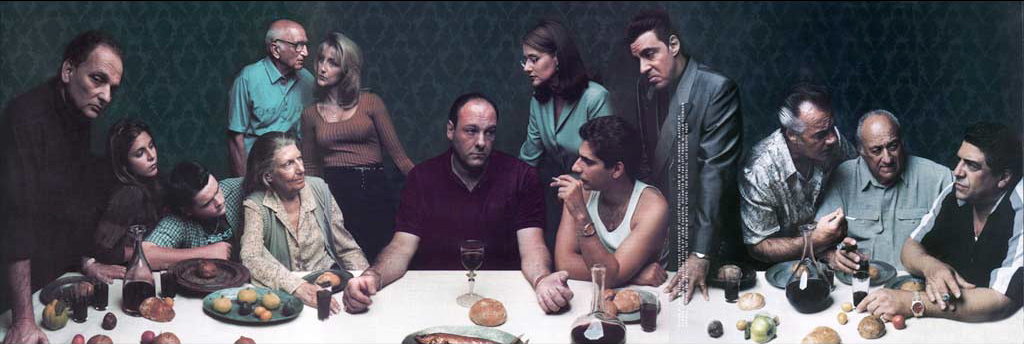
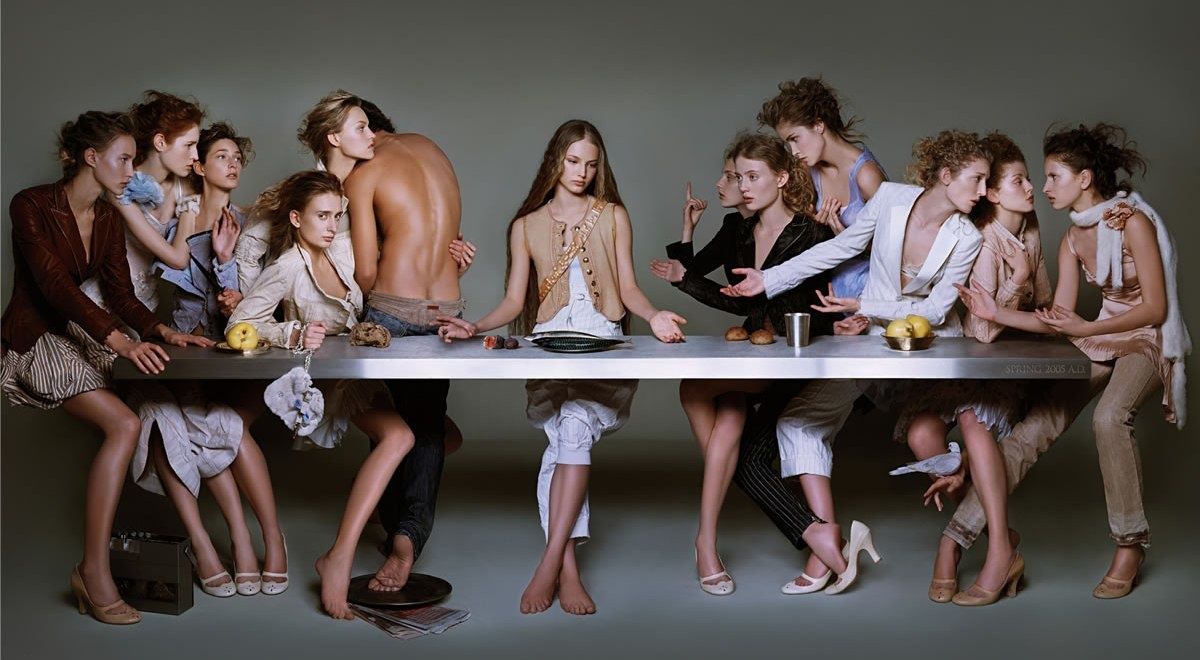
On March 11, 2005, BBC News reported: France’s Catholic Church has won a court injunction to ban a clothing advertisement based on Leonardo da Vinci’s Christ’s Last Supper.

The display was ruled “a gratuitous and aggressive act of intrusion on people’s innermost beliefs”, by a judge.

The church objected to the female version of the fresco, which includes a female Christ, used by clothing designers Marithe et Francois Girbaud.

The authorities in the Italian city of Milan banned the poster last month.

The French judge in the case ordered that all posters on display should be taken down within three days.

The association which represented the church was also awarded costs.

Facebooktwittermail

Rapid deterioration in living conditions of Syrian refugees in Jordan

UNHCR: UN High Commissioner for Refugees António Guterres says large numbers of Syrian refugees are sliding into abject poverty, and at an alarming rate, due to the magnitude of the crisis and insufficient support from the international community.

He made the statement at the launch of a new UNHCR study, Living in the Shadows, which reveals evidence of a deepening humanitarian crisis. High Commissioner Guterres is on a two-day visit to Jordan, where he will meet refugees profiled in the study in Amman and others at the Za’atari refugee camp.

“I am here to express my solidarity with Syrian refugees, as the impact of snowstorm Huda is still tangible and posing an even greater strain on their already dire living conditions.” Guterres is also meeting with Jordanian officials and with donors to coordinate efforts to improve living conditions for Syrian refugees and support the communities hosting them.

Conducted by UNHCR and International Relief and Development (IRD) the study is based on data from home visits with almost 150,000 Syrian refugees living outside of camps in Jordan in 2014.

According to the study, two-thirds of refugees across Jordan are now living below the national poverty line, and one in six Syrian refugee households is in abject poverty, with less than $40 per person per month to make ends meet.

Almost half of the households researchers visited had no heating, a quarter had unreliable electricity, and 20 per cent had no functioning toilet. Rental costs accounted for more than half of household expenditures, and refugee families were increasingly being forced to share accommodations with others to reduce costs.

Facebooktwittermail

Media coverage of Charlie Hebdo and the Baga massacre: a study in contrasts

By Ethan Zuckerman, Massachusetts Institute of Technology

Consider two tragic events that took place last week.

A small cell of Islamic terrorists attacked cartoonists at the satirical magazine Charlie Hebdo and shoppers in a Paris supermarket, killing 17 people and sparking international outcry, solidarity and support.

The hashtag #JeSuisCharlie trended globally, and world leaders took to the streets to march in support of Parisian resilience.

In northern Nigeria, meanwhile, an army of Islamic extremists razed the village of Baga, killing as many as 2,000 people – mostly women and children who were unable to flee the attacks.

Later in the week, the same army – Boko Haram – introduced a horrific new weapon of war in the nearby city of Maiduguri. They strapped explosives to the body of a ten year old girl and sent her into the city’s main poultry market. The girl was stopped by guards and a metal detector at the market’s entrance, but the bomb detonated and killed at least 19.

There has been no global hashtag campaign or march for the victims of these most recent Boko Haram massacres.

Continue reading

Facebooktwittermail

Would Prophet Muhammad say ‘Je Suis Charlie’?

Khaled Diab asks: Would the prophet forgive Charlie Hebdo’s lampooning of him and his religion? If he were alive today, would he tweet his solidarity with the slain cartoonists?

My own reading of Muhammad’s life and history leads me to conclude that although the prophet may not have tweeted “#JeSuisCharlie,” he would have condemned these savage murders and even forgiven French satirists no matter what insult was directed his way.

While some might find my assertion hard to believe, it is backed up by Muhammad’s own actions and convictions. Although the prophet’s contemporary self-appointed defenders take offence on his behalf and believe they are doing his will by protesting perceived insults or punishing those who commit them, their actions could not be further from the truth.

During the vulnerable early years of Islam, the Islamic prophet endured and tolerated mockery and disdain. Even in victory, Muhammad wisely advised to exercise tolerance. Upon his triumphant return to Mecca, he forgave the inhabitants of the city which had been home to his fiercest enemies. He even pardoned a member of his inner circle, Abdullah Ibn Saad, who denounced the prophet as a charlatan.

More importantly, the Islam Muhammad preached recognised the pluralistic nature of society and guaranteed freedom of belief. Surat al-Baqara of the Quran reminds Muslims: “There shall be no compulsion in religion.” [Continue reading…]

Facebooktwittermail

Role of FBI informant in eco-terrorism case probed after documents hint at entrapment

The Guardian reports: On the surface, she blended in very well. With a skull tattooed on her shoulder, a black-and-white keffiyeh around her neck, a shock of bright pink hair and her standard-issue dress of camouflage skirt and heavy boots, the energetic 17-year-old looked every bit the radical eco-activist she worked so hard to imitate.

But “Anna”, as she called herself, was no ordinary eco-protester. Really, she wasn’t one at all. She was an FBI informant under instructions to infiltrate fringe green groups and anti-capitalist networks and report back on their activities to the US government.

Now “Anna”, in her role at the center of a high-profile prosecution of alleged eco-terrorists in 2006-7, has been put under the spotlight following the embarrassing admission by the US Department of Justice that it failed to disclose crucial documents to defence attorneys at trial.

On Thursday, Eric McDavid, a radical green activist aged 37, was allowed to walk free after having served nine years of a 19-year federal prison sentence. Prosecutors had alleged that he was the ringleader in a small cell of eco-terrorists connected to the Earth Liberation Front (ELF) conspiring to bomb the Nimbus Dam in California, cellphone towers, science labs and other targets.

Last week’s dramatic scenes in a courtroom in Sacramento, California, have focused attention on the FBI’s use of undercover informants and prompted claims that the agency lured unsuspecting activists into criminal activity through blatant entrapment. [Continue reading…]

Facebooktwittermail

More reasons to question AQAP’s claims about the Paris attacks

Haaretz reports: The terrorists who perpetrated the attacks in Paris last week got their weapons from an arms dealer in Brussels.

The dealer, a known figure in Brussels’ underworld, turned himself in to local police on Tuesday, according to Belgian media.

Federal police, who searched the suspect’s apartment, found papers linking him to a transaction with Amedy Coulibaly, the jihadist who murdered four Jewish men and held others hostage at the Hyper Cacher kosher supermarket in east Paris on Friday.

According to the local press, the man sold Coulibaly the Skorpion submachine guns he used in the attack, as well as the rocket propelled grenade launcher and the Kalashnikov automatic assault rifles that Said and Cherif Kouachi used to perpetrate the massacre at the offices of Charlie Hebdo. The weapons were purchased near the Midi railway station in downtown Brussels for less than 5,000 euros, according to the reports.

French media reports Wednesday morning said that the funding for the arms purchase was simply a standard loan of 6,000 euros ($7,050) that Coulibaly took out on December 4 from the French financial-services firm Cofidis. He used his real name but falsely stated his monthly income on the loan declaration, a statement the company didn’t bother to check, the reports say. [Continue reading…]

Facebooktwittermail

Al Qaeda claims French attack, derides Paris rally

Reuters reports: Al Qaeda in Yemen claimed responsibility for the attack on French satirical newspaper Charlie Hebdo, saying it was ordered by the Islamist militant group’s leadership for insulting the Prophet Mohammad, according to a video posted on YouTube.

Gunmen killed a total of 17 people in three days of violence that began when they opened fire at Charlie Hebdo last week in revenge for publication of satirical images of the Prophet.

This was the first time that a group officially claimed responsibility for the attack, led by two brothers who had visited the poor Arabian peninsula country in 2011.

“As for the blessed Battle of Paris, we … claim responsibility for this operation as vengeance for the Messenger of God,” said Nasser bin Ali al-Ansi, a leader of the Yemeni branch of al Qaeda (AQAP) in the recording.

Ansi, an AQAP ideologue, said the “one who chose the target, laid the plan and financed the operation is the leadership of the organisation”, without naming an individual.

He added without elaborating that the strike was carried out in “implementation” of the order of overall al Qaeda leader Ayman al-Zawahri, who has called for strikes by Muslims in the West using any means they can find.

Ansi also gave credit for the operation to slain AQAP propagandist Anwar al-Awlaki, a preacher cited by one of the gunmen in remarks to French media as a financer of the attack.

It was not clear how Awlaki, killed by a U.S. drone in 2011, had a direct link to the Paris assault, but he inspired several militants in the United States and Britain to acts of violence. [Continue reading…]

Facebooktwittermail

The power of any faith comes from within

Mustafa Akyol writes: The only source in Islamic law that all Muslims accept indisputably is the Quran. And, conspicuously, the Quran decrees no earthly punishment for blasphemy — or for apostasy (abandonment or renunciation of the faith), a related concept. Nor, for that matter, does the Quran command stoning, female circumcision or a ban on fine arts. All these doctrinal innovations, as it were, were brought into the literature of Islam as medieval scholars interpreted it, according to the norms of their time and milieu.

Tellingly, severe punishments for blasphemy and apostasy appeared when increasingly despotic Muslim empires needed to find a religious justification to eliminate political opponents.

One of the earliest “blasphemers” in Islam was the pious scholar Ghaylan al-Dimashqi, who was executed in the 8th century by the Umayyad Empire. His main “heresy” was to insist that rulers did not have the right to regard their power as “a gift of God,” and that they had to be aware of their responsibility to the people.

Before all that politically motivated expansion and toughening of Shariah, though, the Quran told early Muslims, who routinely faced the mockery of their faith by pagans: “God has told you in the Book that when you hear God’s revelations disbelieved in and mocked at, do not sit with them until they enter into some other discourse; surely then you would be like them.”

Just “do not sit with them” — that is the response the Quran suggests for mockery. Not violence. Not even censorship. [Continue reading…]

Facebooktwittermail

Turkish court rules to block web pages featuring Charlie Hebdo cover

Today’s Zaman: The Diyarbakır 2nd Criminal Court of Peace blocked access to the web pages of some online news portals for republishing the cover of the magazine’s new issue, which portrays the Prophet Muhammad.

A lawyer from the Diyarbakır Bar Association, Ercan Ezgin, filed a petition on Tuesday with the Diyarbakır 2nd Criminal Court of Peace, requesting a media ban to be issued against the websites that republished the new Charlie Hebdo cover. Considering the petition of the lawyer, the court decided to block access to the web pages.

Facebooktwittermail

Did the Kurdish women of the YPJ simply fall from the sky?

Meral Çiçek, from the Kurdish Women’s Relations Office in Erbil, writes: “These Remarkable Women Are Fighting ISIS. It’s Time You Know Who They Are”

This was the title of an article published in the October issue of the women’s magazine Marie Claire: “There’s a group of 7,500 soldiers who have been fighting an incalculably dangerous war for two years. They fight despite daily threats of injury and death. They fight with weapons that are bigger and heavier than they are against a relentless enemy. And yet they continue to fight. They are the YPJ (pronounced Yuh-Pah-Juh) or the Women’s Protection Unit, an all-women, all-volunteer Kurdish military faction in Syria that formed in 2012 to defend the Kurdish population against the deadly attacks lead by Syrian President, Bashar al-Assad, the al-Nusra Front (an al-Qaeda affiliate), and ISIS.”

Or so it was frequently reported in the world press about the “YPJ: The Kurdish feminists fighting the Islamic State”(The Week). There is hardly an internationally known daily newspaper, a magazine or broadcaster that has not sent their reporters in recent months to Kurdistan to document these ‘Amazons of the 21st century’. And so on the cover page of Der Spiegel there was a picture of a PKK woman fighter with a bazooka, while a YPJ fighter was depicted on the cover of Newsweek with a firm grip on her Kalashnikov.

The phenomenon of armed Kurdish women fighting against the terrorists of the Islamic State (IS), has been uncovered by the world press and the public realm due to the IS-attack on the Southern Kurdish/Northern Iraqi, predominantly Yazidi, town of Sinjar at the beginning of August 2014. Suddenly, Kurdistan became a Mecca for journalists. From everywhere, reporters and camera crews made pilgrimages to the Maxmur refugee camp (which was being shelled by the IS), to the guerrilla fighters of the PKK in the Qandil Mountains, to Sinjar and across the border into Rojava (northern Syria), where in September, the battle for Kobanê had begun.

The international coverage of the fighting against the Islamic State by the YPJ women and YJA-Star (Women’s Army of PKK guerrillas) can be looked at and interpreted from many different perspectives. One might, for example, examine how the fighters are portrayed visually, which of their characteristics come to the foreground, with what words they are described, etc. However, this is not the concern of this article. Rather, what is written here is that which was mostly omitted from the press coverage concerning the YPJ. [Continue reading…]

Facebooktwittermail

Russia warns media: You’ll be blacklisted for publishing Charlie Hebdo cartoons

Mashable: Russia’s notoriously rigid government media watchdog has warned newspapers and news sites around the country: Should you publish Charlie Hebdo cartoons, prepare to be blacklisted.

The warning was issued via letter to the offices of several media outlets, including editorial department of a local Kamchatka editor, who published the text of it on Facebook.

Facebooktwittermail

A Paris photo op for world leaders who threaten press freedom


See storify list for details of the enemies of press freedom shown above.

Facebooktwittermail

‘Welcome to Stalingrad. Welcome to Kobane’: Inside the Syrian town under siege by ISIS

Vice News: “Welcome to Stalingrad. Welcome to Kobane,” said a Kurdish militant, starting his car. A mad dash across the closed Turkish border had just brought us into the majority Kurdish Syrian town, then nearing its 100th day of fighting off a brutal siege by the Islamic State. The jihadists have blitzed it since mid-September from the south, west, and east after taking over all the nearby towns, sending wave after wave of fighters for more than three months.

The Kurdish militia defending the city, the People’s Protection Units (YPG), have made progress in pushing back the Islamic State back in recent weeks, but it was still necessary for the YPG fighter driving to keep the headlights off so as not to draw attention to the vehicle. All across the city, hardened YPG fighters are still on guard, defending against new Islamic State attacks daily and pushing forward, block by block and house by house.

When VICE News arrived in late December, the YPG had effectively pushed the Islamic State outside the city center. One YPG commander said they controlled 75 percent of the city, but that appeared an over-estimation, and a sizeable portion is changing hands regularly. Fierce street battles have mostly given way to mortar and rocket attacks, as well as constant sniper fights.

Facebooktwittermail

Afghan officials: ISIS operating in volatile southern Helmand province

Associated Press: Afghan officials confirmed for the first time Monday that the extremist Islamic State group is active in the south, recruiting fighters, flying black flags and, according to some sources, even battling Taliban militants.

The sources, including an Afghan general and a provincial governor, said a man identified as Mullah Abdul Rauf was actively recruiting fighters for the group, which controls large parts of Syria and Iraq.

Gen. Mahmood Khan, the deputy commander of the army’s 215 Corps, said that within the past week residents of a number of districts in the southern Helmand province have said Rauf’s representatives are fanning out to recruit people.

“A number of tribal leaders, jihadi commanders and some ulema (religious council members) and other people have contacted me to tell me that Mullah Rauf had contacted them and invited them to join him,” Khan said.

Facebooktwittermail

NYT reporter prevails in three-year fight over CIA leak

Bloomberg: New York Times reporter James Risen prevailed over the U.S. government in its three-year effort to force him to testify at trial about a confidential source as part of a CIA leak prosecution.

The request by prosecutors that Risen be dropped as a witness capped a longer battle to avoid revealing his sources. The fight reached the U.S. Supreme Court, focusing attention on the Obama administration’s aggressive pursuit of leaks. U.S. Attorney General Eric Holder reacted to the controversy by issuing guidelines last year restricting the use of subpoenas and search warrants for journalists.

Risen told a judge Jan. 5 he wouldn’t answer questions that could help identify the sources for his report on a bungled Central Intelligence Agency program to give Iran false nuclear weapon development data.

Facebooktwittermail

Did Sierra Leone’s hero doctor have to die?

Joshua Hammer writes: Dr. Sheik Humarr Khan, the head of the Kenema Government Hospital’s Ebola ward, didn’t want his head nurse moved into the main isolation unit. Called Ward A, it consisted of eight small rooms lining a dingy corridor of exposed wiring, peeling paint, and grimy cement floors. It was narrow, stiflingly hot, and crowded with as many as 30 patients. Nurses squeezed between beds, injecting antibiotics, emptying buckets of diarrhea, hosing down vomit with chlorine. Some of the sick were delirious; others catatonic, with a stony-eyed stare that usually signaled that death was imminent. All of them were hooked up to intravenous fluid bags; in a state of disorientation, some would rip the needles out of their arms, spraying their blood in all directions.

So Khan had bent the rules and moved the Ebola-stricken nurse to a private room in the observation wing, which was normally set aside for those awaiting their diagnostic test results. It was more comfortable and dignified — befitting the nurse’s status, Khan thought, as the most beloved figure at the hospital. Khan and Mbalu Fonnie had been each other’s family for much of the past decade. He called her “mom.” She thought of him as her son, and she took maternal pride in his accomplishments. A round-faced man who had been born poor in a village near Freetown, Khan had become a hero in Kenema, a backwater town of 130,000. As the head of the Lassa fever ward, he had treated more cases of hemorrhagic fever than anyone else in the world, helping thousands of patients recover their health. He attended conferences from New Orleans to Nigeria, published studies in major medical journals, and was soon headed to Harvard on sabbatical to work at the cutting edge of tropical disease research — mapping the virus genome. But now Khan was facing the greatest challenge of his life. [Continue reading…]

Facebooktwittermail