Author Archives: Attention to the Unseen

Our universe could be merely one of billions

Newsweek: “What really interests me is whether God had any choice in creating the world.”

That’s how Albert Einstein, in his characteristically poetic way, asked whether our universe is the only possible universe.

The reference to God is easily misread, as Einstein’s question wasn’t theological. Instead, Einstein wanted to know whether the laws of physics necessarily yield a unique universe—ours—filled with galaxies, stars, and planets. Or instead, like each year’s assortment of new cars on the dealer’s lot, could the laws allow for universes with a wide range of different features? And if so, is the majestic reality we’ve come to know—through powerful telescopes and mammoth particle colliders—the product of some random process, a cosmic roll of the dice that selected our features from a menu of possibilities? Or is there a deeper explanation for why things are the way they are?

In Einstein’s day, the possibility that our universe could have turned out differently was a mind-bender that physicists might have bandied about long after the day’s more serious research was done. But recently, the question has shifted from the outskirts of physics to the mainstream. And rather than merely imagining that our universe might have had different properties, proponents of three independent developments now suggest that there are other universes, separate from ours, most made from different kinds of particles and governed by different forces, populating an astoundingly vast cosmos.

The multiverse, as this vast cosmos is called, is one of the most polarizing concepts to have emerged from physics in decades, inspiring heated arguments between those who propose that it is the next phase in our understanding of reality, and those who claim that it is utter nonsense, a travesty born of theoreticians letting their imaginations run wild.

So which is it? And why should we care? Grasping the answer requires that we first come to grips with the big bang. [Continue reading…]

Facebooktwittermail

The listener who made talk radio

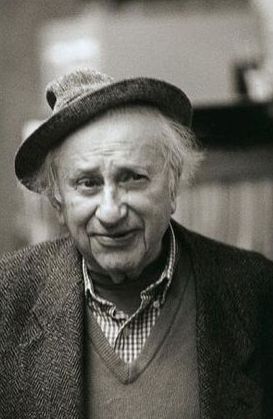
Gideon Haigh writes: Studs Terkel was in a buoyant mood in the spring of 1963 when he welcomed Marlon Brando onto his popular Chicago radio program. He had just won the Prix Italia for his celebrated documentary of nuclear dread, Born to Live; he was shortly to record passengers on board the Freedom Train to Washington for a haunting voice montage, This Train. And notoriously taciturn Brando, promoting his new film The Ugly American, proved at first no more than averagely contrary (“I don’t understand”; “I don’t think that’s true”; “I don’t think it related to that at all”). But as Terkel continued gently to harry him, the interview took an unexpected turn.

“Now I want to ask you a question,” Brando said abruptly. “You sit and ask many questions…You have an obligation to describe some of your feelings and point of view. What is it about a particular kind of work that interests you? Why are you preoccupied with these questions? What is the nature of your furrowing out this information from all manner of people? What kind of contribution does interviewing make to you?”

There was a pause. “This is a reversal,” Terkel responded uneasily. “I don’t know.” He hemmed. He hawed. He was anxious, he said equivocally, not to be voyeuristic; he guessed he was simply curious about an artist’s concept of art. Brando was unconvinced: “When I asked you simply to describe what you feel about your work, you became tense and concerned, perhaps a little confused, unsettled. When you ask me something, I could give you a glib answer, spieling. But if I want to answer the question honestly, I have to search my mind. When asked a simple question, it’s not easy to give a simple answer.”

The moment passed — Brando was too egotistical to pursue the inquiry, Terkel sufficiently adept to deflect it. But it was a rare moment in the storied career of perhaps the most admired chronicler of the last American century, when the spotlight was turned on him, when the biter was bit. On his death in October 2008, Terkel’s fellow Chicagoan Barack Obama exalted him as a “national treasure”; The Independent deemed him “the world’s greatest interviewer”; The Guardian claimed that “to register him as ‘writer and broadcaster’ would be like calling Louis Armstrong a ‘trumpeter’ or the Empire State Building an ‘office block’.” Yet despite his compilation of Working, Hard Times, The Good War, Race and other epics of national memory, Terkel successfully threw a thick cloak over his ‘private domain’ — ironic given how dedicatedly Terkel pursued untold stories and unheard voices. This week, Chicago marks the centenary of the birth of one of its most popular sons with a schedule of celebratory events, from showcasing some of the fruits of Terkel’s 9,000 recorded interviews to rededicating a bridge named for him twenty years ago. So how might he have answered had Brando pressed him? [Continue reading…]

Facebooktwittermail

The amygdala made who do it?

James Atlas writes: Why are we thinking so much about thinking these days? Near the top of best-seller lists around the country, you’ll find Jonah Lehrer’s “Imagine: How Creativity Works,” followed by Charles Duhigg’s book “The Power of Habit: Why We Do What We Do in Life and Business,” and somewhere in the middle, where it’s held its ground for several months, Daniel Kahneman’s “Thinking, Fast and Slow.” Recently arrived is “Subliminal: How Your Unconscious Mind Rules Your Behavior,” by Leonard Mlodinow.

It’s the invasion of the Can’t-Help-Yourself books.

Unlike most pop self-help books, these are about life as we know it — the one you can change, but only a little, and with a ton of work. Professor Kahneman, who won the Nobel Prize in economic science a decade ago, has synthesized a lifetime’s research in neurobiology, economics and psychology. “Thinking, Fast and Slow” goes to the heart of the matter: How aware are we of the invisible forces of brain chemistry, social cues and temperament that determine how we think and act? Has the concept of free will gone out the window?

These books possess a unifying theme: The choices we make in day-to-day life are prompted by impulses lodged deep within the nervous system. Not only are we not masters of our fate; we are captives of biological determinism. Once we enter the portals of the strange neuronal world known as the brain, we discover that — to put the matter plainly — we have no idea what we’re doing. [Continue reading…]

Facebooktwittermail

How dogs helped early modern humans

Pat Shipman writes: We all know the adage that dogs are man’s best friend. And we’ve all heard heartwarming stories about dogs who save their owners—waking them during a fire or summoning help after an accident. Anyone who has ever loved a dog knows the amazing, almost inexpressible warmth of a dog’s companionship and devotion. But it just might be that dogs have done much, much more than that for humankind. They may have saved not only individuals but also our whole species, by “domesticating” us while we domesticated them.

One of the classic conundrums in paleoanthropology is why Neandertals went extinct while modern humans survived in the same habitat at the same time. (The phrase “modern humans,” in this context, refers to humans who were anatomically—if not behaviorally—indistinguishable from ourselves.) The two species overlapped in Europe and the Middle East between 45,000 and 35,000 years ago; at the end of that period, Neandertals were in steep decline and modern humans were thriving. What happened?

A stunning study that illuminates this decisive period was recently published in Science by Paul Mellars and Jennifer French of Cambridge University. They argue, based on a meta-analysis of 164 archaeological sites that date to the period when modern humans and Neandertals overlapped in the Dordogne region of southwest France, that the modern-human population grew so rapidly that it overwhelmed Neandertals with its sheer numbers.

Because not all the archaeological sites in the study contained clearly identifiable remains of modern humans or Neandertals, Mellars and French made a common assumption: that sites containing stone tools of the Mousterian tradition had been created by Neandertals, and those containing more sophisticated and generally later stone tools of the Upper Paleolithic were made by modern humans. This link between tool and toolmaker is well supported by sites that do contain hominin remains, but there is nothing inherent in a stone tool that tells you who made it—not even if you find a skeleton right next to it. Still, stone tools are one of the best available indicators of which species—modern human or Neandertal—inhabited a particular location.

Mellars and French compared the number and sizes of Neandertal and modern-human archaeological sites, as well as the density of tools and the weight per square meter of prey animals, represented by fossils, in those sites. They standardized their results for 1,000-year periods to compensate for the varying amounts of time that the different locations had been occupied. In every respect, modern humans surpassed Neandertals. In fact, the greater success of modern humans was so clear that, according to Mellars and French’s calculations, the human population increased tenfold over the 10,000-year overlap period. Modern humans thrived and Neandertals did not—even though Neandertals had lived in the European habitat for about 250,000 years before modern humans “invaded.” Why weren’t Neandertals better adapted to their environment than the newcomers?

There is no shortage of hypotheses. Some favor climate change, others a modern-human advantage derived from the use of more advanced hunting weapons or greater social cohesion. Now, several important and disparate studies are coming together to suggest another answer, or at least another good hypothesis: The dominance of modern humans could have been in part a consequence of domesticating dogs—possibly combined with a small, but key, change in human anatomy that made people better able to communicate with dogs. [Continue reading…]

Facebooktwittermail

What could become a fatal remedy for climate change

Michael Specter writes: Late in the afternoon on April 2, 1991, Mt. Pinatubo, a volcano on the Philippine island of Luzon, began to rumble with a series of the powerful steam explosions that typically precede an eruption. Pinatubo had been dormant for more than four centuries, and in the volcanological world the mountain had become little more than a footnote. The tremors continued in a steady crescendo for the next two months, until June 15th, when the mountain exploded with enough force to expel molten lava at the speed of six hundred miles an hour. The lava flooded a two-hundred-and-fifty-square-mile area, requiring the evacuation of two hundred thousand people.

Within hours, the plume of gas and ash had penetrated the stratosphere, eventually reaching an altitude of twenty-one miles. Three weeks later, an aerosol cloud had encircled the earth, and it remained for nearly two years. Twenty million metric tons of sulfur dioxide mixed with droplets of water, creating a kind of gaseous mirror, which reflected solar rays back into the sky. Throughout 1992 and 1993, the amount of sunlight that reached the surface of the earth was reduced by more than ten per cent.

The heavy industrial activity of the previous hundred years had caused the earth’s climate to warm by roughly three-quarters of a degree Celsius, helping to make the twentieth century the hottest in at least a thousand years. The eruption of Mt. Pinatubo, however, reduced global temperatures by nearly that much in a single year. It also disrupted patterns of precipitation throughout the planet. It is believed to have influenced events as varied as floods along the Mississippi River in 1993 and, later that year, the drought that devastated the African Sahel. Most people considered the eruption a calamity.

For geophysical scientists, though, Mt. Pinatubo provided the best model in at least a century to help us understand what might happen if humans attempted to ameliorate global warming by deliberately altering the climate of the earth.

For years, even to entertain the possibility of human intervention on such a scale—geoengineering, as the practice is known—has been denounced as hubris. Predicting long-term climatic behavior by using computer models has proved difficult, and the notion of fiddling with the planet’s climate based on the results generated by those models worries even scientists who are fully engaged in the research. “There will be no easy victories, but at some point we are going to have to take the facts seriously,’’ David Keith, a professor of engineering and public policy at Harvard and one of geoengineering’s most thoughtful supporters, told me. “Nonetheless,’’ he added, “it is hyperbolic to say this, but no less true: when you start to reflect light away from the planet, you can easily imagine a chain of events that would extinguish life on earth.”

There is only one reason to consider deploying a scheme with even a tiny chance of causing such a catastrophe: if the risks of not deploying it were clearly higher. No one is yet prepared to make such a calculation, but researchers are moving in that direction. To offer guidance, the Intergovernmental Panel on Climate Change (I.P.C.C.) has developed a series of scenarios on global warming. The cheeriest assessment predicts that by the end of the century the earth’s average temperature will rise between 1.1 and 2.9 degrees Celsius. A more pessimistic projection envisages a rise of between 2.4 and 6.4 degrees—far higher than at any time in recorded history. (There are nearly two degrees Fahrenheit in one degree Celsius. A rise of 2.4 to 6.4 degrees Celsius would equal 4.3 to 11.5 degrees Fahrenheit.) Until recently, climate scientists believed that a six-degree rise, the effects of which would be an undeniable disaster, was unlikely. But new data have changed the minds of many. Late last year, Fatih Birol, the chief economist for the International Energy Agency, said that current levels of consumption “put the world perfectly on track for a six-degree Celsius rise in temperature. . . . Everybody, even schoolchildren, knows this will have catastrophic implications for all of us.” [Continue reading…]

Facebooktwittermail

Biodiversity loss from species extinctions may rival pollution and climate change impacts

Earth Times reports: Species extinction and loss of biodiversity could be as devastating for the earth as climate change and air pollution. That’s the finding of a new study by a group of scientists from nine countries. The research aims for the first time to comprehensively compare the consequences of biodiversity loss with other possible environmental issues caused by humans.

Ecologist and University of Michigan assistant professor, Bradley Cardinale, who helped write the study, says, “Loss of biological diversity due to species extinctions is going to have major impacts on our planet, and we better prepare ourselves to deal with them. These extinctions may well rank as one of the top five drivers of global change.”

The study, which suggests that more moves must be made to strengthen biodiversity at all levels, has just been published online in the Nature journal.

Research conducted over the last 20 years has showed that production increases in ecosystems with the widest biodiversity. This raised worries that today’s high extinction rates from harvesting increases, habitat reduction and other environmental issues, could affect vital issues such as food production, pure water and a stable climate.

But until this study, it had been difficult to separate the effects due to the loss of biodiversity against problems caused by human activity.

Lead author of the research, David Hooper, a Western Washington University biologist, says it had been believed that the effects of biodiversity were minor, but the findings of the new study suggests that future species loss has as big an effect on reducing plant production as global warming and pollution.

Facebooktwittermail

Are we in the midst of a sixth mass extinction?

Richard Pearson writes: Nearly 20,000 species of animals and plants around the globe are considered high risks for extinction in the wild. That’s according to the most authoritative compilation of living things at risk — the so-called Red List maintained by the International Union for Conservation of Nature.

This should keep us awake at night.

By generalizing from the few groups that we know fairly well — amphibians, birds and mammals — a study in the journal Nature last year concluded that if all species listed as threatened on the Red List were lost over the coming century, and that rate of extinction continued, we would be on track to lose three-quarters or more of all species within a few centuries. We know from the fossil record that such rapid loss of so many species has previously occurred only five times in the past 540 million years. The last mass extinction, around 65 million years ago, wiped out the dinosaurs.

The Red List provides just a tiny insight into the true number of species in trouble. The vast majority of living things that share our planet remain undiscovered or have been so poorly studied that we have no idea whether their populations are healthy, or approaching their demise. Less than 4 percent of the roughly 1.7 million species known to exist have been evaluated. And for every known species, there are most likely at least two others — possibly many more — that have not yet been discovered, classified and given a formal name by scientists. Just recently, for instance, a new species of leopard frog was found in ponds and marshes in New York City. So we have no idea how many undiscovered species are poised on the precipice or were already lost.

It is often forgotten how dependent we are on other species. Ecosystems of multiple species that interact with one another and their physical environments are essential for human societies.

These systems provide food, fresh water and the raw materials for construction and fuel; they regulate climate and air quality; buffer against natural hazards like floods and storms; maintain soil fertility; and pollinate crops. The genetic diversity of the planet’s myriad different life forms provides the raw ingredients for new medicines and new commercial crops and livestock, including those that are better suited to conditions under a changed climate.

This is why a proposed effort by the I.U.C.N. to compile a Red List of endangered ecosystems is so important. The list will comprise communities of species that occur at a particular place — say, Long Island’s Pine Barrens or the Cape Flats Sand Fynbos in South Africa. This new Red List for ecosystems will be crucial not only for protecting particular species but also for safeguarding the enormous benefits we receive from whole ecosystems. [Continue reading…]

Facebooktwittermail