Author Archives: Paul Woodward

How Islamist gangs use internet to track, torture and kill Iraqi gays

How Islamist gangs use internet to track, torture and kill Iraqi gays

Sitting on the floor, wearing traditional Islamic clothes and holding an old notebook, Abu Hamizi, 22, spends at least six hours a day searching internet chatrooms linked to gay websites. He is not looking for new friends, but for victims.

“It is the easiest way to find those people who are destroying Islam and who want to dirty the reputation we took centuries to build up,” he said. When he finds them, Hamizi arranges for them to be attacked and sometimes killed.

Hamizi, a computer science graduate, is at the cutting edge of a new wave of violence against gay men in Iraq. Made up of hardline extremists, Hamizi’s group and others like it are believed to be responsible for the deaths of more than 130 gay Iraqi men since the beginning of the year alone.

The deputy leader of the group, which is based in Baghdad, explained its campaign using a stream of homophobic invective. “Animals deserve more pity than the dirty people who practise such sexual depraved acts,” he told the Observer. “We make sure they know why they are being held and give them the chance to ask God’s forgiveness before they are killed.”

The violence against Iraqi gays is a key test of the government’s ability to protect vulnerable minority groups after the Americans have gone.

Dr Toby Dodge, of London University’s Queen Mary College, believes that the violence may be a consequence of the success of the government of Nouri al-Maliki. “Militia groups whose raison d’être was security in their communities are seeing that function now fulfilled by the police. So their focus has shifted to the moral and cultural sphere, reverting to classic Islamist tactics of policing moral boundaries,” Dodge said. [continued…]

Facebooktwittermail

U.S. accepts offer from Tehran for broad talks

U.S. accepts offer from Tehran for broad talks

The United States has decided to ignore Iran’s refusal to discuss its nuclear program and instead accept a vague Iranian plan for talks on security issues as the opening gambit to draw Tehran into real negotiation.

The effort to “test” Iran’s intentions, announced on Friday, came after Russian Prime Minister Vladimir Putin said his country is skeptical of the need for new sanctions on Iran, giving the Americans little choice but to treat seriously Iran’s latest offer.

Iran this week ruled out talks on its program, instead offering a five-page plan that it said would lay the groundwork for peace and stability in the region. The document, first posted Thursday on the Web site of ProPublica news service, made no reference to international demands that Iran suspend its efforts to enrich uranium, but did mention ending proliferation in nuclear weapons as well as a broad offer of dialogue. [continued…]

Why Washington should welcome Iran’s broadening of the agenda

The Iranian proposal is best understood not from the prism of the West’s focus on the nuclear program, but from the vantage point of Iran’s long standing objective to be recognized as a regional power with a permanent seat at the table of regional decision making. Iran believes it suffers from severe role deficit — though it is one of the most powerful countries in the region, its neighbors view it by and large as a disruptive, anti-status quo power and have consequently refrained from giving it access to recognized and institutionalized avenues of influence.

After all, the reigning order in the Middle East is one defined and upheld by the United States, which for the past thirty years has sought Iran’s isolation and exclusion, not its inclusion and rehabilitation. Breaking out of this isolation and forcing Washington and the regional capitols to grant Iran the role it craves have been overarching strategic goals of Iranian foreign policy for several decades now.

Iran believes that the nuclear stand-off provides it with an opportunity to achieve this objective. By broadening the agenda for negotiations, Iran takes the opportunity to discuss with the great powers matters where the views of the Iranian government hardly have been taken into account in the past. The broader aim is to institutionalize the great power’s recognition of Iran’s role and seat at the table.

Perhaps more importantly, the Iranians refuse to permit the P5 plus 1 to single-handedly set the parameters of the talks. By presenting its own proposal, Iran is introducing its own parameters. The Iranians are in essence negotiating about the shape of the table before negotiating matters of substance. This is hardly surprising. During the EU-Iranian negotiations on the nuclear issue, Tehran was immensely frustrated by Europe’s dismissal of several Iranian proposals and its insistence on solely discussing its own set of ideas and demands. By now, Iran seems determined not to let that happen again. [continued…]

Facebooktwittermail

Iran’s Supreme Leader issues new warning

Iran’s Supreme Leader issues new warning

Iran’s supreme leader, Ayatollah Ali Khamenei, warned opposition leaders Friday of a “harsh response” if they continued speaking out against the government, a move that analysts said opened the way for their possible arrest.

Although analysts have warned that arrests seemed imminent before, several of them said Friday that they took this warning more seriously because it was issued at Friday Prayer — an important political platform — and because it followed the forced shutdown of the offices of two of the opposition’s leaders this week, as well as the arrests of their top aides.

Those leaders, Mehdi Karroubi and Mir Hussein Moussavi, have been leading a movement to try to invalidate the results of June’s presidential election, which they say was stolen. Both men ran in the election, and Mr. Moussavi, a former prime minister, was considered the chief rival to President Mahmoud Ahmadinejad, whose re-election was blessed by Ayatollah Khamenei despite massive street protests.

On Friday, a Web site linked to Mr. Moussavi, rahesabz.net, quoted Ali Akbar Hashemi Rafsanjani, an influential politician who sided with the opposition, as saying that Ayatollah Khamenei had already issued an order for Mr. Karroubi’s arrest. A person close to Mr. Rafsanjani, who spoke on condition of anonymity because of the delicacy of the subject, confirmed the report, but said the order was issued at least two weeks ago. [continued…]

Facebooktwittermail

Iran urges disposal of all nuclear arms

Iran urges disposal of all nuclear arms

Iran is not prepared to discuss halting its uranium enrichment program in response to Western demands but is proposing instead a worldwide control system aimed at eliminating nuclear weapons, President Mahmoud Ahmadinejad’s top political aide said in an interview Thursday.

In a set of proposals handed to the permanent members of the U.N. Security Council and Germany on Wednesday, Iran also offered to cooperate on solving problems in Afghanistan and fighting terrorism and to collaborate on oil and gas projects, Mojtaba Samareh Hashemi said. A longtime confidant of the president’s, Samareh Hashemi is reportedly being considered for the key post of first vice president in Ahmadinejad’s new government.

As described by Samareh Hashemi, Iran’s offer is similar to a call by President Obama in April to eliminate the world’s nuclear weapons. Later this month, Obama is scheduled to chair a special session of the U.N. General Assembly’s annual meeting aimed at seeking consensus on preventing the spread of nuclear weapons, rather than targeting individual nations such as Iran and North Korea. Ahmadinejad is also scheduled to attend the U.N. meeting and has said he is ready to debate Obama publicly.

“It’s not really responsive to our greatest concern, which is obviously Iran’s nuclear program,” State Department spokesman P.J. Crowley said of Tehran’s package of proposals. “Iran reiterated its view that as far as it is concerned, its nuclear file is closed. . . . That is certainly not the case. There are many outstanding issues.” [continued…]

Editor’s Comment — As usual, Iran’s position is portrayed as being one of intransigence, yet at the core of the conflict here is a dispute over whether one side can claim the “right” to dictate the parameters of engagement. The US and its allies are in effect saying: we are the ones who get to set the agenda.

Is 2009 a real change from 2008? I’m still waiting to spot the difference.

The specific nuclear clause in Iran’s proposal is this:

Promoting the universality of NPT mobilizing global resolve and putting into action real and fundamental programmes toward complete disarmament and preventing development and proliferation of nuclear, chemical and microbial weapons.

How serious a proposal is this?

In a way it’s clearly simply a rhetorical challenge. It’s a way of calling Obama’s bluff. Was his Prague declaration more than a piece of campaign-style fluff? A way of offering Europeans a feel-good moment that would make his tour Kennedyesque? Or was he serious?

If nuclear disarmament is ever going to reach the negotiating table then the Middle East’s sole nuclear power is first going to have to come out of the closet. And this goes to the heart of the current impasse: Iran’s opponents insist that the nuclear file cannot include discussion about Israel’s nuclear weapons. Iran must curtail its nuclear aspirations (even though we don’t actually know what they are) while Israel is at liberty to conceal its nuclear actualities.

“They’re baaaaack….”

When I started blogging back in January, one of my early posts questioned the belief that Obama’s election had ended talk of military action against Iran. I thought this view was “almost certainly premature,” because I didn’t think a rapid diplomatic breakthrough was likely and I knew that advocates of a more forceful approach would soon come out of the woodwork and start pushing the new administration to get tough with Tehran.

Well, I hate to say I told you so, but … Right on cue, Wednesday’s Wall Street Journal had an op-ed from former Senators Dan Coats and Chuck Robb and retired Air Force general Chuck Wald, recommending that Obama “begin preparations for the use of military options” against Iran’s nuclear facilities. They argue that keeping the threat of force “on the table” is the only way to achieve a diplomatic solution, but they also make it clear that they favor bombing Iran if diplomacy fails. In their words, “making preparations now will enable the president, should all other measures fail to bring Tehran to the negotiating table, to use military force to retard Iran’s nuclear program.” [continued…]

Russia says sanctions against Iran are unlikely

Foreign Minister Sergey V. Lavrov on Thursday all but ruled out imposing new sanctions against Iran over its nuclear program, brushing aside growing Western concerns that Iran had made significant progress in recent months in a bid for nuclear weapons.

Mr. Lavrov said he believed that a new set of proposals that Iran gave to European nations on Wednesday offered a viable basis for negotiations to end the dispute. He said he did not believe that the United Nations Security Council would approve new sanctions against Iran, which could ban Iran from exporting oil or importing gasoline.

“Based on a brief review of the Iranian papers, my impression is there is something there to use,” Mr. Lavrov said at a gathering of experts on Russia. “The most important thing is Iran is ready for a comprehensive discussion of the situation, what positive role it can play in Iraq, Afghanistan and the region.” [continued…]

Facebooktwittermail

To save Afghanistan, look to its past

To save Afghanistan, look to its past

No matter who is ultimately certified as the winner of Afghanistan’s presidential election, the vote was plagued by so much fraud and violence, and had such low turnout, that it is inconceivable the Afghan people will regard the victor as a legitimate leader. And if a majority of Afghans do not consider the president and his government to be legitimate, the military campaign now being waged by the United States and its allies is doomed to fail, regardless of the number of troops deployed.

Current discussions about cobbling together mistrustful factions into a new power-sharing government will produce neither enduring democracy nor short-term peace. The slate must be wiped clean. Afghans need to start again from scratch and choose their leader by a fresh process that restores legitimacy to the national government.

Fortunately, such a process already exists — one that is both highly respected by the Afghan people and recognized in the Afghan Constitution: the convening of an emergency loya jirga, or grand assembly. The loya jirga has been called in times of national crisis in Afghanistan for centuries. In 1747, such an assembly in Kandahar selected Ahmad Shah Durrani as the first king of Afghanistan, uniting a patchwork of contentious tribal entities into the modern Afghan state. The loya jirga, moreover, is not only deeply rooted in Pashtun tradition, but is also consistent with notions of Western representative democracy. [continued…]

Obama faces doubts from Democrats on Afghanistan

The leading Senate Democrat on military matters said Thursday that he was against sending more American combat troops to Afghanistan until the United States speeded up the training and equipping of more Afghan security forces.

The comments by the senator, Carl Levin, a Michigan Democrat who is the chairman of the Armed Services Committee, illustrate the growing skepticism President Obama is facing in his own party as the White House decides whether to commit more deeply to a war that has begun losing public support, even as American commanders acknowledge that the situation on the ground has deteriorated.

Senator Levin’s comments, made in an interview and in the draft of a speech he will deliver Friday, are significant because his stature on military matters gives him the ability to sway fellow lawmakers, and his pivotal committee position provides a platform for vetting Mr. Obama’s major decisions on troops. [continued…]

Pelosi sees support ebbing for Afghan war

House Speaker Nancy Pelosi said she sees little congressional support for boosting troop levels in Afghanistan, putting the Democratic majority in Congress on a possible collision course with the Obama administration over the future conduct of the war there.

The remarks Thursday by Ms. Pelosi (D., Calif.) make her the highest-ranking Democrat to signal opposition to the administration’s handling of the Afghan war, a top national-security priority.

The remarks also underscored the increasingly complex political dynamics confronting President Barack Obama as he considers whether to send additional U.S. forces to Afghanistan. [continued…]

Afghan warlord General Atta Mohammad Nur warning raises fear of election violence

One of Afghanistan’s most powerful warlords has defended the popular right to protest against the presidential election results, raising fears that the country could be engulfed by violence if supporters of the losing candidates reject the poll as being rigged.

General Atta Mohammad Nur, who broke ranks with the Government to support President Karzai’s main election rival, insisted: “It is the right of our people to defend their votes. Demonstrations, gatherings, strikes and protests against fraud being carried out by the current system are the absolute right of the people.”

Speaking on national television, he accused the country’s Interior Minister, Hanif Atmar, of “forcing people to keep silent”. [continued…]

Facebooktwittermail

How 9/11 should be remembered

How 9/11 should be remembered

Eight years ago, 2,600 people lost their lives in Manhattan, and then several million people lost their story. The al-Qaeda attack on the Twin Towers did not defeat New Yorkers. It destroyed the buildings, contaminated the region, killed thousands, and disrupted the global economy, but it most assuredly did not conquer the citizenry. They were only defeated when their resilience was stolen from them by clichés, by the invisibility of what they accomplished that extraordinary morning, and by the very word “terrorism,” which suggests that they, or we, were all terrified. The distortion, even obliteration, of what actually happened was a necessary precursor to launching the obscene response that culminated in a war on Iraq, a war we lost (even if some of us don’t know that yet), and the loss of civil liberties and democratic principles that went with it. [continued…]

Facebooktwittermail

The American leviathan

The American leviathan

News travels fast across the red desert bush of remote Djibouti. Even as US military reservists erect a field hospital around a cluster of tents and blockhouses near a desolate watering hole, dozens of tribespeople are waiting for treatment in orderly rows. They arrive with maladies of every sort: bad teeth, diarrhea, fevers, colds, arthritis. At the triage center, an elderly tribesman has had a thorn removed from his foot, a wound that had been infected for months. At the dental surgery station, Navy Lt. Bill Anderson, an orthodontist from Northfield, New Jersey, will over the next few hours extract a dozen rotting or impacted teeth using instruments that sparkle in the late-morning sun.

The reservists are attached to a Djibouti-based task force of some 1,800 soldiers, marines, sailors and Air Force personnel. Embedded with them is an aid specialist from the Agency for International Development, which provides guidance for the operation. She is reticent and refers questions to the agency’s country leader, Stephanie Funk. The next day, Funk acknowledges that USAID’s solitary representation on the triage mission is symptomatic of a new age in US foreign policy–one in which America, in peacetime as much as in war, is personified abroad more by soldiers than by civilians. “If we had the numbers and the money to do fieldwork, we would, but our budgets have been declining for years,” Funk said in her office on the US Embassy compound in Djibouti City. “The Pentagon has got both numbers and money. For every fifty of them, there’s only one of me.”

Quietly, gradually–and inevitably, given the weight of its colossal budget and imperial writ–the Pentagon has all but eclipsed the State Department at the center of US foreign policy-making. The process began with the dawn of America’s post-World War II global empire and deepened in the mid-1980s, with the expansion of worldwide combatant commands. It matured during the Clinton years, with the military’s migration into humanitarian aid and disaster relief work, and accelerated rapidly with George W. Bush’s declaration of endless conflict in the “global war on terror” and a near-doubling of military spending. [continued…]

Facebooktwittermail

Iran’s supreme leader warns opposition figures

Iran’s supreme leader warns opposition figures

Iran’s top spiritual and political authority urged opposition leaders to act within the rules of the Islamic Republic or face harsh scrutiny, and said his nation would withstand international pressure over its nuclear program.

Supreme leader Ayatollah Ali Khamenei also laid the groundwork for the possible arrest of key opposition leaders if they call for street protests or continue to allege massive vote-rigging in the June 12 reelection of President Mahmoud Ahmadinejad.

“The system will not take action against anyone as long as they perform within the framework of the system, do not resort to violence, do not disturb the calm in society and do not carry out unlawful actions such as spreading lies and rumors,” he said during Friday prayers before a crowd of Islamic Republic luminaries and supporters at Tehran University. [continued…]

IRGC commander acknowledges military involvement in election politics

Islamic Revolution’s Guard Corps (IRGC) Commander Major General Mohammad Ali Jafari’s speech on September 2, delivered in front of early military leaders of the Iran-Iraq War is significant for several reasons. First, it is noteworthy for his public acknowledgment of IRGC’s direct involvement in the elections and the crackdown. This acknowledgment came in reference to a February 2009 statement by former president Mohammad Khatami According to Jafari, Khatami said, “If in this election Ahmadinejad falls, then rahbari [office of the leader Ayatollah Ali Khamenei] will be effectively eliminated…through the defeat of principlists, we must contain the power of rahbari.” [continued…]

Facebooktwittermail

Netanyahu’s secret Moscow visit was part of campaign against missile sales to Iran

Netanyahu’s secret Moscow visit was part of campaign against missile sales to Iran

Prime Minister Benjamin Netanyahu’s trip to Moscow on Monday was part of quiet diplomacy between Russia and Israel over Russia’s plan to supply S-300 anti-aircraft missiles to Iran, Haaretz has learned.

A senior government source in Jerusalem confirmed yesterday that Netanyahu was in Russia for talks on security issues, particularly the sale of Russian weapons to Iran.

The missiles could help Iran protect its nuclear facilities from attack.

The purpose of the prime minister’s trip, disclosed to only a few government officials, was to persuade senior officials in Russia’s government and security establishment not to move ahead on a deal to give Iran the missiles.

The discussion also dealt with Russia’s refusal to back more sanctions against Iran over its nuclear program. Continue reading

Facebooktwittermail

‘Israel link’ in Arctic Sea case

‘Israel link’ in Arctic Sea case

Israel was linked to the interception of the missing cargo ship Arctic Sea last month, a senior figure close to Israeli intelligence has told the BBC.

The source said Israel had told Moscow it knew the ship was secretly carrying a Russian air defence system for Iran.

Russian Foreign Minister Sergei Lavrov has dismissed speculation that S-300 missiles were on board the ship. [continued…]

Facebooktwittermail

US Jewish leaders push Obama to act on Iran

US Jewish leaders push Obama to act on Iran

Several hundred Jewish leaders and activists are planning to arrive here Thursday to urge top Obama administration officials and US congressmen to take action on Iran.

They are pushing for Congress to quickly pass an Iran sanctions bill sponsored by US House Foreign Affairs Committee Chairman Howard Berman and otherwise take serious economic and diplomatic steps to pressure Iran to abandon its pursuit of nuclear capabilities that threaten Israel.

“Congress is back, legislation is on the agenda, and this is September, when at some level decisions are being made in connection with Iran,” Anti-Defamation League Washington Director Jess Hordes said of the planning of the event.

His organization will be joining the United Jewish Communities, the Jewish Council for Public Affairs, the Conference of Presidents of Major American Jewish Organizations, the National Conference of Soviet Jewry and several other groups as part of the effort. [continued…]

U.S. says Iran could expedite nuclear bomb

American intelligence agencies have concluded in recent months that Iran has created enough nuclear fuel to make a rapid, if risky, sprint for a nuclear weapon. But new intelligence reports delivered to the White House say that the country has deliberately stopped short of the critical last steps to make a bomb.

In the first public acknowledgment of the intelligence findings, the American ambassador to the International Atomic Energy Agency declared on Wednesday that Iran now had what he called a “possible breakout capacity” if it decided to enrich its stockpile of uranium, converting it to bomb-grade material.

The statement by the ambassador, Glyn Davies, was intended to put pressure on American allies to move toward far more severe sanctions against Iran this month, perhaps including a cutoff of gasoline to the country, if it failed to take up President Obama’s invitation for serious negotiations. But it could also complicate the administration’s efforts to persuade an increasingly impatient Israeli government to give diplomacy more time to work, and hold off from a military strike against Iran’s facilities. [continued…]

Iran dims hopes for diplomacy

ran rejected any compromise with the West over its nuclear program Wednesday, as blunt comments from the Obama administration over Tehran’s bomb-making capability suggested that the two sides were headed toward a renewed diplomatic crisis.

Iran offered Western officials a long-awaited package of proposals to restart negotiations over its nuclear program. But diplomats who viewed the offer Wednesday said the document of fewer than 10 pages essentially ignored questions over Iran’s production of nuclear fuel and instead focused broadly on other international issues.

It made no mention of Tehran’s willingness to suspend its uranium-enrichment activities or to enter into substantive talks about the future of its nuclear program, they said. [continued…]

Russia ‘delivers SAMs to Syria’

Russia has begun deliveries of Pantsir S1 air-defense missiles to Syria, some of which are expected to be passed on to Iran, Syria’s strategic ally that has largely bankrolled the deal, according to the Interfax-AVN military news agency.

Interfax quoted Yuriy Savenkov, deputy director general of the Instrument Design Bureau, or KBP, as saying that deliveries started several weeks ago. KBP produces the Pantsir and other high-precision weapons.

Meantime, Kommersant quoted Alexei Fedorov, head of Russia’s United Aircraft Corp., as confirming the existence of a 2007 contract with Syria for eight twin-engined MiG-31E interceptors.

This aircraft, NATO codename Foxhound, can fly at three times the speed of sound and engage several targets at a range of up to 110 miles simultaneously. [continued…]

Taking Iran seriously

Given Iran’s shortening nuclear timetable and diplomatic challenges for forging an international consensus on sanctions, we urge Mr. Obama simultaneously to begin preparations for the use of military options. Now is the time for the president to reinforce his commitment to “use all elements of American power to prevent Iran from developing a nuclear weapon,” as he stated in February. We believe only a credible U.S. military threat can make possible a peaceful solution.

By showing that he has not taken the military option off the table, Mr. Obama may also be able to convince Israel to forgo a unilateral military strike while forcing Tehran to recognize the costs of its nuclear defiance. Furthermore, making preparations now will enable the president, should all other measures fail to bring Tehran to the negotiating table, to use military force to retard Iran’s nuclear program. We do not downplay the risks of this option and recognize its complications, but we do believe it to be a feasible option of last resort. [continued…]

Facebooktwittermail

President procrastinator

President procrastinator

Brzezinski has argued that negotiations with Taliban elements, not an increased war effort and grand goals of military victory, may be the key to a more stable Afghanistan. He says: “I would have to be convinced that we were going to be driven out or defeated if we don’t increase forces – but if the increase in forces is designed to achieve some sort of a victory, then I think it is the wrong path … Is becoming more and more deeply engaged in a conflict which involves not just Afghanistan but Pakistan in the long range interests of the US?”

On Iran, Mr Brzezinski worries that the negotiations currently being considered by the US are unlikely to prosper because they are too focused on the Islamic Republic’s nuclear status, to the exclusion of Iran’s concerns.

“If we refuse to discuss other issues that the Iranians wish to discuss, we will encourage the Iranians to refuse to discuss the issues that we want to discuss,” he says. “It’s as simple and basic as that. And we cannot engage the Iranians in serious negotiations if we at the same time publicly discuss more severe sanctions, not to mention that other options [by which he means military force] are on the table.”

As for the administration’s efforts on Middle East peace, Mr Brzezinski’s frustration is all too clear. “So much time has been spent diddling around,” he says, arguing that an “evasive compromise” on settlements will do little to advance a final agreement. “I haven’t given up hope, but hope isn’t everlasting,” he says, mournfully. [continued…]

Facebooktwittermail

Iraqi PM Nouri al-Maliki accused of sinister purge to become dictator

Iraqi PM Nouri al-Maliki accused of sinister purge to become dictator

The Iraqi opposition accused Nouri al-Maliki, the Prime Minister, yesterday of purging the American-trained security apparatus so that he could attain quasi-dictatorial powers.

Mr al-Maliki, who is facing a tough election battle, has dismissed three high-profile members of the Ministry of Interior, which oversees the fight against insurgent groups. He has also forced the resignation of the head of the intelligence service and replaced several police and army commanders in the last few weeks. The moves provoked outrage among political opponents, who worry about the rise of a new police state and accuse the Prime Minister of using the aftermath of last month’s massive bomb attack in Baghdad to make a power grab. The sacked officials are expected to be replaced by al-Maliki loyalists.

Maysoon Al-Damluji, a liberal MP, said: “We mustn’t forget what we went through under Saddam. Power should not be in the hands of a few. What we see now is the preparation once again for something sinister.” Mr al-Maliki says he is trying to improve the security services, but has not explained why he sacked the officials, who include Mohammed Shahwani, the head of Iraqi intelligence for five years, and Major General Abdul-Kareem Khalaf, the operations commander of the interior ministry. [continued…]

Facebooktwittermail

For Iran’s spies, a putsch

For Iran’s spies, a putsch

The political situation in Iran remains murky, to put it mildly, in the aftermath of June’s turbulent election. But some clues can be found in the recent purge of the country’s intelligence service.

The turmoil suggests that President Mahmoud Ahmadinejad is pushing to tighten his control of the regime, even at the cost of alienating some powerful fellow conservatives. But the decisive voice remains the country’s supreme leader, Ayatollah Ali Khamenei. His legitimacy has taken a hit — and he’s riding a tiger in trying to control Ahmadinejad — but he’s still No. 1.

The head of the Ministry of Intelligence and Security, a ferocious cleric named Gholam-Hossein Mohseni-Ejei who is nicknamed “the viper” by some Iranians, was dismissed in late July. Four top deputies in the ministry were also sacked in what one U.S. analyst likened to a Stalinist purge. In the process, Ahmadinejad made some potentially dangerous enemies.

The intelligence putsch showed Ahmadinejad “moving to control” the government, says Mark Fowler, a former CIA officer who now runs the “Persia House” consulting service for Booz Allen Hamilton. He says of the ousted intelligence officers: “These are not wallflowers. These are tough guys. They have buddies who are spread throughout the system. They could cause some problems” for Ahmadinejad. [continued…]

A green day for Iran

International Jerusalem Day (Rooze jahaniye Qods) is observed in Iran on the last Friday of the holy month of Ramadan. This year it falls on 18 September. Jerusalem Day was designated by the late Ayatollah Khomeini as a day of support for Palestinians and opposition against Israel. It is a day when the government issues permits for hundreds of thousands of Iranians to pour on to the streets and demonstrate.

Some attend due to genuine support for Palestinians. Others take part because of government pressure. This is especially true of civil servants. Some fear that failure to attend could damage their job security and prospects. When it comes to the number of demonstrators, there is no limit on how many people can come out to the streets. In fact, as far as the government is concerned, the more the merrier.

This is in direct contrast to demonstrations held by reformists. The Ahmadinejad administration, using violence and intimidation, has done its utmost to limit such protests, if not eradicate them entirely. This has forced many of Iran’s demonstrators to come up with new ways of voicing their opposition, using seemingly legal means. One popular method is going on top of their roofs to shout “Allahu akbar” (God is greatest). This is not against the law. In fact, this is one of the methods of protest used by those who took part in the 1979 revolution. [continued…]

Facebooktwittermail

Afghan reporter recalled as a man of many abilities

Afghan reporter recalled as a man of many abilities

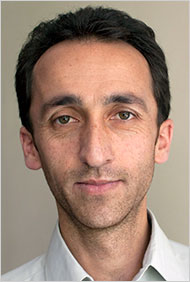
The death of [Sultan M] Munadi illustrated two grim truths of the war in Afghanistan: vastly more Afghans than foreigners have died battling the Taliban, and foreign journalists are only as good as the Afghan reporters who work with them.
Mr. Munadi, 34, the father of two boys, worked as an office manager and reporter in the Kabul bureau. He and other Afghan reporters who work with foreign journalists are vastly more than interpreters.

“The story calls him an ‘interpreter,’ which misleads the reader about what these great people do for us,” Barry Bearak, a Times correspondent who worked with Mr. Munadi in 2001 and 2002, said, referring to an article about Mr. Munadi’s death.

“They serve as our walking history books, political analysts,” he added, “managers of logistics, taking equal the risks without equal the glory or pay.”

Those who worked with him said his country’s turmoil did not dampen his spirit or limit his determination. During Taliban rule, he worked with the International Red Cross in his native Panjshir Valley, a mountainous area north of Kabul that was never ruled by the Taliban, even when they dominated the country from 1996 to 2001. [continued…]

The reporter’s account: 4 days with the Taliban

I lay on the ground, gave my name and newspaper and pointed to where Sultan was lying behind me, telling them I thought he had been shot.

The body was lying motionless in the ditch where I had seen him go down. I hoped he had dropped and was lying still. I knew it wasn’t the case. They told me they had his picture and would look for him, then dragged me away past the house across a rutted field and toward the helicopter landing zone.

It was over. Sultan was dead. He had died trying to help me, right up to the very last seconds of his life. [continued…]

Negotiators shocked by special forces rescue raid on Taleban

Hostage negotiators expressed shock and anger at Gordon Brown’s decision to approve a commando raid to free a kidnapped British journalist, saying that they were within days of securing his release through peaceful means.

Stephen Farrell — who was in Afghanistan for The New York Times — was not harmed in the raid but his Afghan translator, Sultan Munadi, and a British soldier from the Special Forces Support Group were killed. The men were being held at a house in Kharudi in northern Afghanistan. Just after midnight on Tuesday US helicopters dropped British special forces and Afghan troops in the village. Taleban militants fled the house and a fierce battle ensued. At least one civilian and scores of militants were killed. [continued…]

Facebooktwittermail

NATO nations ask U.N. for new Afghan ‘timelines’

NATO nations ask U.N. for new Afghan ‘timelines’

The Spanish defense minister, Carme Chacón, said Wednesday that five years would be a “reasonable” timeframe for NATO forces to withdraw from Afghanistan, just as major European powers officially called on the United Nations to convene an international conference before the end of the year to set new “benchmarks and timelines.”

Mrs. Chacón also said she would request 220 more troops for Spain’s Afghanistan contingent, bringing the permanent deployment there to about 1,000. With the additional troops, Spain’s contribution would still fall behind those of 10 other NATO members, led by the United States, Britain, France and Germany. Spain’s government is expected to approve the request Friday at a cabinet meeting.

Prime Minister José Luis Rodríguez Zapatero had already said in July that troop levels would probably increase. [continued…]

Afghan election watchdog discards tainted votes

The U.N.-funded elections watchdog in Afghanistan has begun to throw out fraudulent ballots from the country’s presidential balloting, a day after a tally including contested votes put President Hamid Karzai over the 50% he needs to avoid a second round.

The Electoral Complaints Commission, a United Nations-sponsored body responsible for investigating allegations of fraud and misconduct, has been looking into more than 600 serious accusations, Commissioner Grant Kippen said. The accusations include instances of ballot stuffing and voter intimidation. In some cases, the commission has disqualified results from entire polling stations. [continued…]

Facebooktwittermail

September 9: The shot that was not heard round the world

September 9: The shot that was not heard round the world

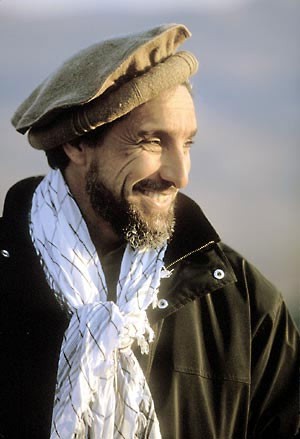
As the war in Afghanistan enters its ninth year, in the minds of most Americans the attacks of September 11, 2001 remain the signal event that shaped everything that has followed. Yet had we been paying more attention, we would have known that September 9, 2001, the day that Ahmed Shah Massoud was assassinated, was no less significant.

On that day, Afghanistan lost a leader of global stature — a man who truly was irreplaceable. Now, as much as ever, as the Taliban is resurgent and American and its allies attempt to prop up a deeply corrupt government in Kabul, the memory of Massoud is a symbol of the Afghan people’s so many shattered hopes.

A year after Massoud’s death, John Burns wrote in the New York Times:

As Americans prepare to mark the Sept. 11 anniversary, with many still struggling to come to terms with the cataclysm of that day, Afghans are passing through their own harrowing remembrance, of an attack that was overshadowed for the rest of the world by what happened two days later in the United States. Only four men died on Sept. 9 — the 49-year-old Mr. Massoud, an aide and the assassins — but there has been little healing of the wounds the killers inflicted on the hearts and the hopes of millions of his countrymen.
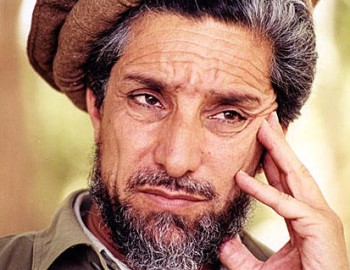
Ask Afghans who knew Mr. Massoud what it was about him that inspires such grief, and they struggle. Like [Fahim] Dashti [who was with Massoud at the time of his assassination], they talk of his skills as the guerrilla commander who astonished Soviet generals he outfought during the occupation of the 1980’s, or of his years holding out against the Taliban, when almost all other guerrilla leaders had joined the Taliban or fled abroad.

They speak of Mr. Massoud’s directness, his lack of pretense or false piety, his modesty, the look of somber intensity that rarely left his face. But usually, they give up, as people do when they try to define charisma. Mr. Dashti, the editor, resorted, in the end, to the simplest words. “We loved him,” he said. “We loved him more than we loved our own mothers and fathers. He embodied everything we loved about Afghanistan.”

In 1998, in a letter to the American people, Massoud wrote:

Let me correct a few fallacies that are propagated by Taliban backers and their lobbies around the world. This situation over the short and long-run, even in case of total control by the Taliban, will not be to anyone’s interest. It will not result in stability, peace and prosperity in the region. The people of Afghanistan will not accept such a repressive regime. Regional countries will never feel secure and safe. Resistance will not end in Afghanistan, but will take on a new national dimension, encompassing all Afghan ethnic and social strata.
The goal is clear. Afghans want to regain their right to self-determination through a democratic or traditional mechanism acceptable to our people. No one group, faction or individual has the right to dictate or impose its will by force or proxy on others. But first, the obstacles have to be overcome, the war has to end, just peace established and a transitional administration set up to move us toward a representative government.

We are willing to move toward this noble goal. We consider this as part of our duty to defend humanity against the scourge of intolerance, violence and fanaticism. But the international community and the democracies of the world should not waste any valuable time, and instead play their critical role to assist in any way possible the valiant people of Afghanistan overcome the obstacles that exist on the path to freedom, peace, stability and prosperity.

Pepe Escobar recounts:

During the 1990s, and especially during the time of the Taliban rule, which began in 1996, Washington never knew exactly how to deal with Massoud. But after the attacks on the US embassies in Kenya and Tanzania in 1998, Central Intelligence Agency (CIA) agents sought a meeting with Massoud in Dushanbe. The CIA wanted information on how to get to bin Laden. Massoud carefully considered all the angles, but ultimately he could not but criticize American shortsightedness. For the Bill Clinton administration, the ultimate aim was to get bin Laden and destroy al-Qaeda. For Massoud, the main point was to destroy the Taliban. He repeatedly stressed at the time that “without the Taliban, Osama can’t do anything”.

Massoud, indeed, had agents and intelligence in the heart of Taliban country. The best example is how his Panjshiris planted a powerful truck bomb just outside Mullah Omar’s compound in central Kandahar, in 1999. The explosion left a huge crater and killed 10 people, including three of Mullah Omar’s bodyguards. Omar escaped, almost by a miracle, but if the Northern Alliance could get close to the Taliban, they could not penetrate al-Qaeda’s ultra-hardcore security to try to find and menace bin Laden. And as much as the Northern Alliance could penetrate the Taliban, security chief Arif – now head of intelligence of Hamid Karzai’s government – says that “Osama was actively trying to recruit spies inside the Panjshir Valley”. But once again, no one investigated the “Moroccans”.

In his interview with Asia Times Online, the second-to-last in his lifetime, Massoud repeatedly portrayed al-Qaeda, the Taliban and Pakistan as a sort of “triangle of evil”. He criticized the US for basically following a Pakistani plan: try to “reform” the Taliban and concentrate on seducing Taliban “moderates” (a contradiction in terms). There were never any moderates within the Taliban. Mullah Omar was totally under the spell of bin Laden. American diplomats with knowledge of Central Asia were warning about the “Arabization” of Afghanistan. But no one in Washington was listening. The US only got the message after September 11 – and after Massoud’s death.

In the first months of 2001, Massoud calculated that he had to involve himself in a complex gamble: change his image from warrior to statesman. He addressed the European parliament in Strasbourg, France, in April 2001. This was his first official trip to the West. He tried hard to attract Western support for the resistance against the Taliban. But still no one was listening. In Strasbourg, Massoud delivered a stunning message that nobody took seriously at the time: “If President Bush doesn’t help us, then these terrorists will damage the United States and Europe very soon – and it will be too late.”

Afghanistan Revealed a documentary broadcast by National Geographic in October 2001, presents a portrait of Massoud and his struggle to save Afghanistan.

Facebooktwittermail

UN: Gaza in worst condition since 1967

UN: Gaza in worst condition since 1967

A UN report published Tuesday says poverty in the Gaza Strip has deteriorated to levels unseen since 1967.

The UN trade and development agency says 90% of Gaza’s residents are currently beneath the poverty line and rates the damages caused by the IDF’s Operation Cast Lead at $4 billion, a sum it claims is three times larger than the Strip’s annual market performance.

The agency claims the operation halted all trade in the Gaza Strip, creating a defecit of around $88 million. This, in addition to material damages and loss of finances due to the siege and trade limitations later imposed on the Strip, make up the final sum.

The agency’s report claims the Strip has not been in such dire straits since 1967, and that the government has become the residents’ main force of employment. [continued…]

Not one penny has reached Gaza

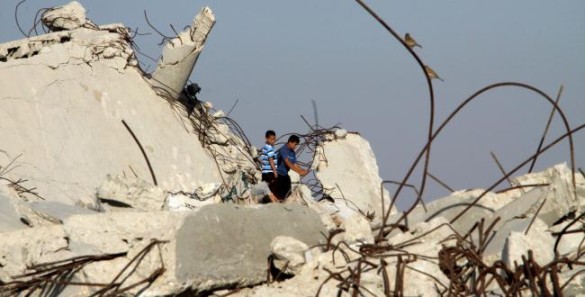
It has been six months since the international community pledged nearly US$5 billion (Dh18bn) in aid to the Palestinian people, chiefly for the reconstruction of the Gaza Strip after Israel’s devastating offensive there this year.

None of this aid has reached Gaza and no reconstruction has started.

Although Israel is slowly easing its restrictions on the flow of basic humanitarian goods to Gaza, including food and medicine, construction materials remain prohibited from entering, institutions and homes still lie in rubble, and critically needed projects to repair and upgrade Gaza’s power plant and tottering sewage network lie dormant. [continued…]

Facebooktwittermail