Category Archives: Analysis

Why is Trump so popular with governments that claim to despise America?

Patrick Hilsman writes: Donald Trump is everything the Russian, Syrian and Iranian governments claim to despise about America. More than any US presidential candidate in modern history, he resembles a Soviet propaganda poster. Trump is a greedy, vain, Islamophobic, sexually amoral capitalist. He received a standing ovation at the pro-Israel lobby group AIPAC, he believes in mass violence against America’s perceived opponents, especially Muslims.

So why is Trump so popular with governments that claim to despise America?

Trump has a proven record of praising or at the very least making excuses for authoritarians, from Russian President Vladimir Putin to deposed Libyan leader Gaddafi and most recently Iraq’s Saddam Hussein. Trump’s wave of authoritarian populism comes at a perfect time for strongmen like Putin, Assad, and Israeli Prime Minister Benjamin Netanyahu, who are circling the wagons, not against invading armies or perceived threats from abroad, but rather against creeping modernity that threatens the closed belief systems their regimes are built on.

Trump has come to embody 21st century authoritarian principals and the rejection of long standing multiculturalism, and the message is resonating with governments and organizations that ostensibly hate one another. [Continue reading…]

Facebooktwittermail

Turkey’s president is destroying the democracy that Turks risked their lives to defend

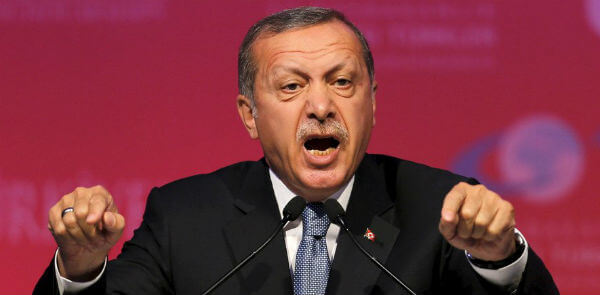
erdogan

The Economist: Much is unknown about the attempted military coup in Turkey on the night of July 15th. Why was it botched so badly? How far up the ranks did the conspiracy reach? Were the putschists old-style secularists, as their initial communiqué suggested; or were they followers of an exiled Islamist cleric, Fethullah Gulen, as the government claims?

But two things are clear. First, the people of Turkey showed great bravery in coming out onto the streets to confront the soldiers; hundreds died (see article here and here). Opposition parties, no matter how much they may despise President Recep Tayyip Erdogan, united to denounce the assault on democracy. Better the flawed, Islamist-tinged strongman than the return of the generals for the fifth time since the 1960s.

The second, more alarming conclusion is that Mr Erdogan is fast destroying the very democracy that the people defended with their lives. He has declared a state of emergency that will last at least three months. About 6,000 soldiers have been arrested; thousands more policemen, prosecutors and judges have been sacked or suspended. So have academics, teachers and civil servants, though there is little sign they had anything to do with the coup. Secularists, Kurds and other minorities feel intimidated by Mr Erdogan’s loyalists on the streets.

The purge is so deep and so wide — affecting at least 60,000 people — that some compare it to America’s disastrous de-Baathification of Iraq. It goes far beyond the need to preserve the security of the state. Mr Erdogan conflates dissent with treachery; he is staging his own coup against Turkish pluralism. Unrestrained, he will lead his country to more conflict and chaos. And that, in turn, poses a serious danger to Turkey’s neighbours, to Europe and to the West.

The failed putsch may well become the third shock to Europe’s post-1989 order. Russia’s annexation of Crimea and invasion of eastern Ukraine in 2014 destroyed the idea that Europe’s borders were fixed and that the cold war was over. The Brexit referendum last month shattered the notion of ineluctable integration in the European Union. Now the coup attempt in Turkey, and the reaction to it, raise troubling questions about the reversibility of democracy within the Western world — which Turkey, though on its fringe, once seemed destined to join. [Continue reading…]

Facebooktwittermail

How Erdogan’s erstwhile allies turned into an existential threat

Mustafa Akyol writes: When Mr. Erdogan and his Islamist Justice and Development Party, or A.K.P., came to power in 2002, they felt threatened by the hard-core secularists who have dominated Turkey’s military since the days of Ataturk, the father of the Turkish republic. Mr. Erdogan viewed the Gulenist cadres in the state as an asset, and an alliance was born. The Erdogan government supported Gulenist police officers, prosecutors and judges as they went after secularists. Starting in 2007, hundreds of secularist officers and their civilian allies were jailed.

This witch hunt was driven by Mr. Erdogan’s political agenda, but the Gulenists were even more aggressive than the A.K.P. More worrying: Some of the evidence turned out to be overblown. Two secular journalists and a police chief who exposed the fake evidence, and blamed the “The Imam’s Army,” were soon themselves imprisoned on bogus charges.

“How can they justify using fake evidence to blame innocent people?” I once asked my disillusioned Gulenist friend. “Since their end goal is so great,” he said, referring to the movement’s global, apocalyptic ambition, “they think all means are justified.”

It eventually became clear why the Gulenists had been so fervent in their persecution of the secularists: They wanted to replace them. Many of the officers who reportedly took part in last week’s coup attempt had been promoted thanks to a major purge of the military in 2009 that supposedly saved Mr. Erdogan from a coup.

By 2012, the old secularist guard had been quelled and the Gulenists and the A.K.P. were left more or less alone to run Turkey. It took less than two years before the two Islamist groups developed distrust and, ultimately, enmity. This tension came to a head in December 2013, when Gulenist police officers and prosecutors arrested dozens of government officials in a corruption investigation, most likely in the hope of toppling Mr. Erdogan, who condemned the inquiry as a “coup attempt.” At the time, this sounded like a self-serving exaggeration.

But the bloody plot of July 15 is far more destructive than anything Turkey has seen in recent years. Notably, the plot came as Mr. Erdogan was supposed to be planning a major purge of suspected Gulenists from the military. [Continue reading…]

Facebooktwittermail

Inside a failed coup and Turkey’s fragmented military

Aaron Stein writes: The recent coup attempt in Turkey revealed profound political cleavages in the Turkish armed forces. The coup pitted a minority — but nevertheless significant — faction of the Turkish military against the majority of the country’s armed forces, which remained loyal to their commander in chief, President Recep Tayyip Erdogan.

The coup nearly succeeded in achieving what, in retrospect, appears to have been its primary objective: the killing or capture of Erdogan, Prime Minister Binali Yildirim, and Hakan Fidan, the chief of the country’s intelligence agency, MIT. The plotters, using a number of well-placed insiders, did manage to take the chief of the general staff, Hulusi Akar, hostage. The clashes resulted in 240 deaths. Turkish government officials allege that the plot was hatched by followers of Fetullah Gulen, a self-exiled Turkish cleric, currently living in Pennsylvania.

The following account remains incomplete and relies on a Whatsapp conversation between some of the coup plotters, open source data, compiled by blogs like The Aviationist, as well as discussions I have had with Turkey based journalists and colleagues, all whom prefer to remain anonymous. I relied on pro-government sources, including state-owned and government aligned media outlets, but sought to compensate for their biases in my analysis. The complete story has yet to be told and all of the details have yet to be released publicly.

The story of the coup suggests a relatively large plot that drew support from numerous parts of the Turkish Armed Forces, spanning various commands around Turkey. The number of senior officers involved, including the commander of Incirlik air force base where U.S. aircraft are now based for the fight against the Islamic State, suggest that the Turkish military is divided. The narrative following the coup is that this was a small, ill-conceived group of plotters who failed to overthrow the elected government, but this narrative is at odds with information coming out about the extent of the plot. This was a larger and far more credible attempt than has thus far been reported.

The fact that this was relatively well planned — if hastily implemented — coup attempt has several implications — namely that the Turkish military’s senior leadership is deeply factionalized, with one sizeable minority of officers willing to use force, even though their decision risked civil war. This suggests that Turkey is unstable and faces serious challenges in the near term in ways that will surely impact American and Western security interests in the Middle East and Europe. [Continue reading…]

Facebooktwittermail

Donald Trump’s threat to NATO

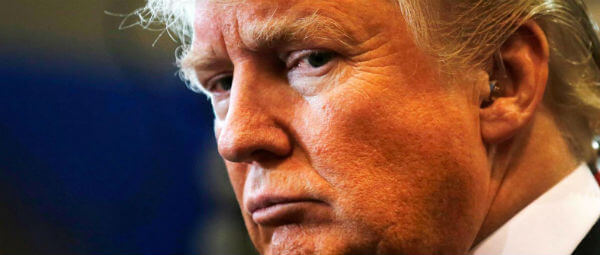
trump-frown

Buzzfeed reports: The head of NATO has called for solidarity and warned that European security is tied to the safety of the United States, following remarks by Donald Trump that he would intervene to help only NATO allies who “fulfilled” their obligations to the US.

“Solidarity among allies is a key value for NATO. This is good for European security and good for US security. We defend one another,” Secretary General‎ Jens Stoltenberg told BuzzFeed News.

The Republican presidential candidate’s comments to the New York Times at the Republican National Convention in Cleveland are also expected to send a chill through Baltic members of NATO, which have witnessed growing Russian aggression on their borders in the past two years.

Asked explicitly whether the US would come to the aid of Baltic nations that are threatened by Russia, Trump responded, “If they fulfill their obligations to us, the answer is yes.”

Article 5 of the NATO treaty states that the 28 members – the US was a founding member in 1949 – agree to come to the aid of any member should they be attacked. [Continue reading…]

The only time Article 5 has been invoked was after Al Qaeda’s attack on Trump’s home town, in response to which America’s NATO allies showed no hesitation in coming to this country’s defense.

NBC News reports: NATO’s treaty states that an attack on one member state constitutes an attack on all, a principle enshrined in Article 5 of the alliance’s treaty.

“If Trump wants to put conditions through Article 5, he would endanger the whole alliance,” said Beyza Unal, a fellow at the London-based Chatham House think tank.

Sarah Lain, a fellow at the Royal United Services Institute, agreed. She said that Article 5 is the “core” of NATO’s defense strategy.

“The suggestion that Trump may consider abandoning a guarantee of protection to fellow NATO countries would in some ways indeed make NATO obsolete,” Lain told NBC News in an email. [Continue reading…]

Facebooktwittermail

Donald Trump’s de facto alliance with Vladimir Putin

Jeffrey Goldberg writes: The Republican nominee for president, Donald J. Trump, has chosen this week to unmask himself as a de facto agent of Russian President Vladimir Putin, a KGB-trained dictator who seeks to rebuild the Soviet empire by undermining the free nations of Europe, marginalizing NATO, and ending America’s reign as the world’s sole superpower.

I am not suggesting that Donald Trump is employed by Putin — though his campaign manager, Paul Manafort, was for many years on the payroll of the Putin-backed former president of Ukraine, Viktor Yanukovych. I am arguing that Trump’s understanding of America’s role in the world aligns with Russia’s geostrategic interests; that his critique of American democracy is in accord with the Kremlin’s critique of American democracy; and that he shares numerous ideological and dispositional proclivities with Putin—for one thing, an obsession with the sort of “strength” often associated with dictators. Trump is making it clear that, as president, he would allow Russia to advance its hegemonic interests across Europe and the Middle East. His election would immediately trigger a wave of global instability — much worse than anything we are seeing today — because America’s allies understand that Trump would likely dismantle the post-World War II U.S.-created international order. Many of these countries, feeling abandoned, would likely pursue nuclear weapons programs on their own, leading to a nightmare of proliferation.

Trump’s sympathy for Putin has not been a secret. Trump said he would “get along very well” with Putin, and he has pleased Putin by expressing a comprehensive lack of interest in the future of Ukraine, the domination of which is a core Putinist principle. The Trump movement also agrees with Putin that U.S. democracy is fatally flawed. A Trump adviser, Carter Page, recently denounced — to a Moscow audience — America’s “often-hypocritical focus on democratization, inequality, corruption and regime change.” Earlier this week, Trump’s operatives watered down the Republican Party’s national-security platform position on Ukraine, removing a promise to help the Ukrainians receive lethal aid in their battle to remain free of Russian control.

Now, in an interview with Maggie Haberman and David Sanger of The New York Times, Trump has gone much further, suggesting that he and Putin share a disdain for NATO. [Continue reading…]

Facebooktwittermail

Why we’re post-fact

decaycol

Peter Pomerantsev writes: As his army blatantly annexed Crimea, Vladimir Putin went on TV and, with a smirk, told the world there were no Russian soldiers in Ukraine. He wasn’t lying so much as saying the truth doesn’t matter. And when Donald Trump makes up facts on a whim, claims that he saw thousands of Muslims in New Jersey cheering the Twin Towers coming down, or that the Mexican government purposefully sends ‘bad’ immigrants to the US, when fact-checking agencies rate 78% of his statements untrue but he still becomes a US Presidential candidate – then it appears that facts no longer matter much in the land of the free. When the Brexit campaign announces ‘Let’s give our NHS the £350 million the EU takes every week’ and, on winning the referendum, the claim is shrugged off as a ‘mistake’ by one Brexit leader while another explains it as ‘an aspiration’, then it’s clear we are living in a ‘post-fact’ or ‘post-truth’ world. Not merely a world where politicians and media lie – they have always lied – but one where they don’t care whether they tell the truth or not.

How did we get here? Is it due to technology? Economic globalisation? The culmination of the history of philosophy? There is some sort of teenage joy in throwing off the weight of facts – those heavy symbols of education and authority, reminders of our place and limitations – but why is this rebellion happening right now?

Many blame technology. Instead of ushering a new era of truth-telling, the information age allows lies to spread in what techies call ‘digital wildfires’. By the time a fact-checker has caught a lie, thousands more have been created, and the sheer volume of ‘disinformation cascades’ make unreality unstoppable. All that matters is that the lie is clickable, and what determines that is how it feeds into people’s existing prejudices. Algorithms developed by companies such as Google and Facebook are based around your previous searches and clicks, so with every search and every click you find your own biases confirmed. Social media, now the primary news source for most Americans, leads us into echo chambers of similar-minded people, feeding us only the things that make us feel better, whether they are true or not.

Technology might have more subtle influences on our relationship with the truth, too. The new media, with its myriad screens and streams, makes reality so fragmented it becomes ungraspable, pushing us towards, or allowing us to flee, into virtual realities and fantasies. Fragmentation, combined with the disorientations of globalization, leaves people yearning for a more secure past, breeding nostalgia. ‘The twenty-first century is not characterized by the search for new-ness’ wrote the late Russian-American philologist Svetlana Boym, ‘but by the proliferation of nostalgias . . . nostalgic nationalists and nostalgic cosmopolitans, nostalgic environmentalists and nostalgic metrophiliacs (city lovers) exchange pixel fire in the blogosphere’. Thus Putin’s internet-troll armies sell dreams of a restored Russian Empire and Soviet Union; Trump tweets to ‘Make America Great Again’; Brexiteers yearn for a lost England on Facebook; while ISIS’s viral snuff movies glorify a mythic Caliphate. ‘Restorative nostalgia’, argued Boym, strives to rebuild the lost homeland with ‘paranoiac determination’, thinks of itself as ‘truth and tradition’, obsesses over grand symbols and ‘relinquish[es] critical thinking for emotional bonding . . . In extreme cases it can create a phantom homeland, for the sake of which one is ready to die or kill. Unreflective nostalgia can breed monsters’.

The flight into techno-fantasies is intertwined with economic and social uncertainty. If all the facts say you have no economic future then why would you want to hear facts? If you live in a world where a small event in China leads to livelihoods lost in Lyon, where your government seems to have no control over what is going on, then trust in the old institutions of authority – politicians, academics, the media – buckles. Which has led to Brexit leader Michael Gove’s claim that British people ‘have had enough of experts’, Trump’s rants at the ‘lamestream’ media and the online flowering of ‘alternative news’ sites. Paradoxically, people who don’t trust ‘the mainstream’ media are, a study from Northeastern University showed, more likely to swallow disinformation. ‘Surprisingly, consumers of alternative news, which are the users trying to avoid the mainstream media “mass-manipulation”, are the most responsive to the injection of false claims.’ Healthy scepticism ends in a search for wild conspiracies. Putin’s Kremlin-controlled television finds US conspiracies behind everything, Trump speculates that 9/11 was an inside job, and parts of the Brexit campaign saw Britain under attack from a Germano-Franco-European plot. [Continue reading…]

Facebooktwittermail

Erdoğan may be divisive, but a coup in Turkey would have been devastating

Fawaz A Gerges writes: Of all the coverage of the attempted military coup against the Erdoğan government, the many “what if” have received hardly any scrutiny. For instance, if the coup had succeeded, the fallout would have been seismic for Turkey, the Middle East and the western security architecture, particularly Nato.

Even die-hard opponents of Recep Tayyip Erdoğan, including secularists and the Kurds, were vehemently opposed to the coup for fear of the unrest and instability it would have undoubtedly caused at home and in the region. The Turkish people do not have fond memories of four military interventions in Turkish politics in 1960, 1971, 1980, and 1997, which exacted a heavy toll on state and society.

If the uprising had succeeded, it would have been likely that the military would have suspended the democratic process in Turkey and brutally persecuted Erdoğan and his allies, plunging the country into civil strife. The deep historical tensions that exist between Turkey’s military, which views its role as the guardian of the secular state, and Erdoğan, whose AKP party has its roots in moderate Islam, would have escalated into all-out war. Entrenched in both Syria and Iraq, Islamic State and al-Qaida would have found a fertile breeding ground in another conflict zone. Political instability in Turkey would have been a godsend to Isis jihadis. [Continue reading…]

Facebooktwittermail

The consequences of Durand’s border blunder continue to shape world politics

Rafia Zakaria writes: By the year 1871, British officials stationed in India had learned to ride elephants. This was in fact exactly what Sir Henry Durand, Lieutenant Governor of Punjab, was doing when he fell to his death. In the sad record of the event, Sir Henry is described riding in a howdah atop an elephant while traveling through the North-West Frontier Province, ‘which was in his charge’. The elephant, which belonged to an Indian chief, was led through a covered gateway that was ‘too low for it to pass through’. As a result, Durand the younger writes: ‘My father, a man of great height, was forced backward and thrown out across a low wall, which so injured his spine that he died the same day.’

The unceremonious death of Durand the elder, the ‘man of great height’, can well be a study of the British in India at the time. They had quashed a mutiny in 1857, and conquered both the fertile province of Punjab and the southern province of Sindh. Yet they remained curiously vulnerable to surprises on the wild edge of the northwestern corner of their empire. Mortimer Durand, then in his 20s, would attempt to tame the frontier which had taken his father. It was Mortimer, and not the elephant-riding Sir Henry, who would be the architect, and namesake, of a border that remains a frontline for battles between superpowers to this day.

Durand the son arrived in India not long after his father’s death. He was searching not simply for accolades as a diplomat and colonial administrator, but also for a connection with his much adored but distant, and now late, father. Durand left his mark on the land, literally carving a border where there was none. [Continue reading…]

Facebooktwittermail

Erdogan’s purge of the Gulenists is like ‘the hunt for Trotskyists under Stalin’

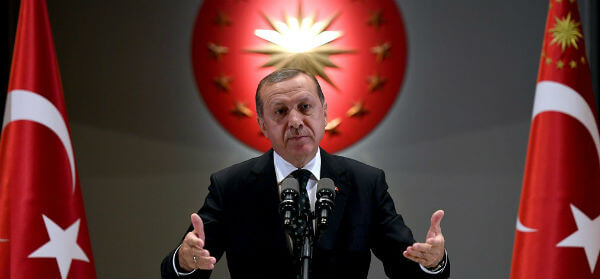
erdogan

David Gardner writes: The size of the cull suggests the putschists precipitated a showdown they knew was coming anyway, above all at the annual meeting of the Supreme Military Council at the beginning of August. President Erdogan was then expected to purge the army of anyone suspected of supporting Fethullah Gulen, a US-based imam who, though once his ally, has become a bitter rival in an intra-Islamist struggle.

The Gulen network, most visible through its international franchise of schools, had spent decades building up invisible clusters of power in Turkey’s police, judiciary, army and security services.

It was invaluable to Mr Erdogan in defanging the military, by fair means or foul, but once the Kemalist generals were out of the picture the former allies turned on each other with a ferocity that buckled Turkey’s institutions. One erstwhile ruling party supporter likens the witch-hunt against the Gulenists to “the hunt for Trotskyists under Stalin”. [Continue reading…]

Facebooktwittermail

How can the U.S. count on a key NATO ally at war with itself?

Michael Weiss writes: Four days after Turkey’s failed coup, which left 300 dead and more than 1,400 injured, new details have emerged to suggest the putsch came closer to a successful overthrow of President Recep Tayyip Erdogan than many observers thought—and the operation could have a major impact on U.S.-Turkish military cooperation in the war against the so-called Islamic State just across Turkey’s borders in Syria and Iraq.

Aaron Stein at the Atlantic Council nails the core problem when he asks, “How can we credibly go to war with a NATO ally in coalition operations when that ally’s army is at war with itself?”

Turkey, remember, has the second biggest army in the North Atlantic Treaty Organization, after the United States. In the Cold War years, its borders with the Soviet Union were vital to Western strategy. In the age of jihad, the fact that its territory abuts not only ISIS-land, but Iran, gives it enormous geopolitical importance.

The putschists, it now appears, relied heavily on a key NATO installation to carry out the aerial component of their daring plot, which was spearheaded by officers in the Turkish air force. And the enormous post-coup dragnet of suspected traitors already has snared high-ranking military officials who had been responsible for securing Turkey’s frontiers and carrying out coalition policy in Syria.

Had the coup not been detected in advance by Turkish intelligence, forcing the conspiracy to be moved up in the calendar, it might well have succeeded.

According to Asli Aydintasbas, a Turkey specialist at the European Council on Foreign Relations, the head of the National Intelligence Organization, or MIT, Hakan Fidan uncovered “‘unusual activity’ within army ranks on Friday afternoon and [visited] the Chief of Staff around 5 p.m. This led to precautions and an inquiry at the senior level, forcing the coup plot to be executed at an earlier time.” CNNTurk corroborated this story.

A Sikorsky attack helicopter and putschist commandos apparently were mobilized to attack MIT headquarters in Ankara and try to kidnap Fidan.

“I think these guys missed decapitating the government by about 30 minutes and we’d have woken up on Saturday with a dead president, a surrounded parliament, and a chief of general staff in custody,” said Stein, my colleague at the Atlantic Council. [Continue reading…]

Facebooktwittermail

U.S. nuclear weapons stored in Turkey aren’t safe anymore

Jeffrey Lewis writes: Among the candidates for most iconic image of this past weekend’s attempted coup in Turkey has to be the many videos of Turkish F-16s, hijacked by the mutineers, flying low over Istanbul and Ankara. Eventually, those planes seem to have bombed the parliament. There were rumors that they considered shooting down the plane of President Recep Tayyip Erdogan.

What’s clear is that mutineers managed to keep the F-16s in the air only because they were able to refuel them mid-flight using at least one tanker aircraft operated out of Incirlik Air Base. Eventually Turkish authorities closed the airspace over Incirlik and cut power to it. The next day, the security forces loyal to the government arrested the Turkish commander at the base. (The images of him being escorted away in handcuffs are in the contest to qualify as the weekend’s most iconic.)

In retrospect, it is understandable why the Turkish government closed the airspace over Incirlik, even if it did temporarily disrupt air operations against the Islamic State in Syria. But that is in retrospect. In the moment, it raised a disquieting thought. There are a few dozen U.S. B61 nuclear gravity bombs stored at Incirlik. Does it seem like a good idea to station American nuclear weapons at an air base commanded by someone who may have just helped bomb his own country’s parliament? [Continue reading…]

Facebooktwittermail

Erdogan’s people and the Syrians

Suzy Hansen writes: In an old part of Istanbul, in a district named Fatih for the Muslim conqueror, tucked inside ancient Byzantine walls in a neighborhood known as Karagumruk, there is a narrow barbershop with pistachio green and glittery countertops called Golden Scissors. When I visited one evening in late June, during Ramadan, every chair was occupied. The religious holiday this year required 17 straight hours of daily abstinence from eating, drinking, smoking or having sex, so just before breaking fast, at the sunset hour, a happy madness set in. Out on the street, women rushed by laden with bags; spaghetti-limbed boys, delirious with hunger and hormones, threw balls against the wall, sometimes at people’s heads. Inside Golden Scissors, men visited for a trim or a cut, given by an excitable man of 40 named Murat, who wore the long, straight beard, full-bodied pants and fez-shaped cap often seen on the devout. He was talking about the events of the previous night when Istanbul’s main airport was bombed.

“We’re very sad,” Murat said. “There’s not much else to feel. The terrorists hit the international terminal. It’s not against us.”

One of the barbershop’s windows, painted with a transliteration of the Quran’s opening words — bismillahirrahmanirrahim, “In the name of God, the most Merciful, the most Compassionate” — looked out on to the neighborhood’s main drag, Professor Naci Sensoy Street. It was like all of Karagumruk’s streets: so narrow and intimate that the pastel-colored apartments, ramshackle buildings and storefronts seemed poised to embrace. Fruit and vegetable stands spilled onto the sidewalk with their piles of strawberries, cucumbers and bananas. Men sat in groups outside on footstools, and everyone walked down the middle of the street, where the weight of a thousand eyes produces a strange feeling of both protection and surveillance. Yet Karagumruk is also known as a rough-and-tumble place of nationalistic attitudes, small-time mafias, jittery drug addicts and gunfire in the night.

Karagumruk lies within the larger district of Fatih, an AK Party stronghold, intensely loyal to its leader and Turkey’s president, Recep Tayyip Erdogan. During the recent coup attempt against Erdogan’s government, after the Ministry of Religious Affairs sent texts to imams to issue a special call to prayer, all of Fatih exploded out onto the wide-laned Vatan Avenue, a couple blocks from Karagumruk. Murat put down his newborn child to join the crowd, which included men of all ages, even little boys. When a helicopter began to hover near the AK Party headquarters in Fatih, 10 minutes from Karagumruk, the protesters rushed it, preventing it from landing. As it pulled away, it fired into the crowd, killing at least one protester and injuring others. When I asked Murat why he and his neighbors took to the streets — for Islam? for Erdogan? — he replied, “Erdogan is Islam, and Islam is Erdogan.” [Continue reading…]

Facebooktwittermail

Iran supports Erdogan in effort to sway Turkey’s approach to Syria

Ali Hashem writes: Within hours after the coup attempt began late July 15, the SNSC [Iran’s Supreme National Security Council] convened to discuss developments in Turkey. Following the meeting, which was chaired by President Hassan Rouhani, Shamkhani publicly condemned the coup attempt, telling local media outlets, “We support Turkey’s legal government and oppose any type of coup — either [initiated] domestically or supported by foreign sides.” Shamkhani said, “What determined the fate of developments in Turkey were the will and presence of the [Turkish] nation and the vigilance of political parties, whose contribution thwarted this coup. Shamkhani concluded, “Our stance is not exclusive to Turkey either. We have pursued the same stance in Syria too. Our position toward all regional countries is that we always prefer people’s votes [to decide governments] rather than tribal, sectarian and hereditary governments, and this means democracy.”

“A coup in Turkey isn’t something Iran can tolerate,” another Iranian politician told Al-Monitor on condition of anonymity. “It’s true that there are differences over Syria, and sometimes in Iraq. Yet the fact is that there is no direct problem between Iran and Turkey; on the contrary, [bilateral] relations are always advancing for the better. Besides, Iran is opposed to any kind of change by force, and especially when the government [in question] is democratically elected.” The Iranian politician added, “The most important thing is that this experience [the coup attempt] might be an opportunity for Mr. Erdogan to understand the situation in neighboring Syria.”

Indeed, multiple Iranian officials, including Ali Akbar Velayati — foreign policy adviser to Iran’s Supreme Leader Ayatollah Ali Khamenei — brought up Syria in their condemnation of the coup attempt in Turkey. While condemning the coup, Velayati — a former foreign minister — said he hopes “the Turkish government will respect the views and votes of the Syrian people and allow them to decide their own government.” It was a clear message from Iran to Turkey regarding Syria and the future of the struggle in the region. For five years now, Iranian officials have on repeated occasions stated that they have been trying to engage the Turks on a path to address the situation in Syria, and while unsuccessful, have never given up on this approach. [Continue reading…]

Facebooktwittermail

Jihad and the French exception

Farhad Khosrokhavar writes: Whether Mohamed Lahouaiej Bouhlel, who killed more than 80 people during Bastille Day celebrations in Nice, was an agent of the Islamic State or an unhinged loner who borrowed the group’s jihadist symbols, the slaughter raises the same fundamental question: Why do so many more attacks of this magnitude occur in France than in other European countries?

Belgium has also been hit recently, but less often. In Britain and Spain no terrorist attack has killed more than 10 people in over a decade. In Germany, there hasn’t been a major attack at all.

Failures in the French security and intelligence services cannot account for the difference, because communication problems afflict such services throughout Europe. The answer lies elsewhere: When it comes to jihad, too, there is a French exception.

France’s distinctiveness arises in part from the ideological strength of the idea the nation has had of itself since the French Revolution, including an assertive form of republicanism and an open distrust of all religions, beginning, historically, with Catholicism. This model has been knocked around over the years, first by decolonization, then by decades of economic hardship, the growing stigmatization of cultural differences, the fervent individualism of new generations and globalization, which has narrowed the state’s room for maneuver.

Above all, France hasn’t been able to solve the problem of economic and social exclusion. Its system, which is too protective of those people who have jobs and not open enough to those who don’t, breeds angst all around. Young people in the banlieues, marginalized and with few prospects, feel like victims. They become prime targets for jihadist propaganda, often after a stint in prison for petty crimes. [Continue reading…]

Facebooktwittermail

These Brexiters will grind our environment into the dust

George Monbiot writes: The more urgent the environmental crisis becomes, the less we hear about it. It exposes the economic policies of all major parties – whether neoliberal or Keynesian – as incompatible with the times in which we live. To remark on what we are doing to the living planet is to fall into cognitive dissonance. It is easier to ignore it.

This is the spirit in which our new prime minister has engaged with our greatest predicament. Climate change clashes with the economic model, so let’s scrub it from the departmental register. Wildlife is collapsing and, at current rates of soil erosion, Britain has just 100 harvests left. So let’s appoint an extreme neoliberal fiercely opposed to constraints on industry as secretary of state for the environment. When the model is wrong, adjust the real world to make it fit.

I do not see the European Union as a lost Avalon. It brought us much that is good, such as directives that enable us to hold our governments to account for their environmental failures. But the good things it has done for the living world are counteracted – perhaps much more than counteracted – by a few astonishing idiocies. They arise from remote, unresponsive authority that is accessible to corporate lobby groups but not to mere mortals. In some respects the Brexit campaigners were right – though generally for the wrong reasons. [Continue reading…]

Facebooktwittermail