The New York Times reports: The men were not hardened militants. One was a pharmacist, another a heating and cooling technician. One was a high school student.
They were six cousins, all living in Saudi Arabia, all with the same secret. They had vowed allegiance to the Islamic State — and they planned to kill another cousin, a sergeant in the kingdom’s counterterrorism force.
And that is what they did. In February, the group abducted Sgt. Bader al-Rashidi, dragged him to the side of a road south of this central Saudi city, and shot and killed him. With video rolling, they condemned the royal family, saying it had forsaken Islam.
Then they fled into the desert. The video spread rapidly across the kingdom, shocking a nation struggling to contain a terrorist movement seen as especially dangerous not just because it promotes violence, but also because it has adopted elements of Saudi Arabia’s conservative version of Islam — a Sunni creed known as Wahhabism — and used them to delegitimize the monarchy.
“Wahhabism is fundamental to the Islamic State’s ideology,” said Cole Bunzel, a scholar of Wahhabi history at Princeton University and the author of a recent paper on Saudi Arabia and the Islamic State. “It informs the character of their religion and is the most on-display feature, in my opinion, of their entire ideology.” [Continue reading…]
Category Archives: ISIS
The gap between jihadism and the prevailing linear narrative of radicalization
Kenan Malik writes: In Britain, the government’s flagship counterterrorism program, Prevent, includes surveillance of schoolchildren and college students. Official guidelines suggest that signs of radicalization include changing one’s “style of dress or personal appearance” or using “derogatory names or labels for another group.” Another sign, according to leaked teacher training materials, is an overt interest in Palestine or Syria. Among nearly 4,000 people identified last year as supposedly exhibiting signs of radicalization was a 4-year-old boy.
In France, mass closures of mosques and organizations suspected of enabling radicalization are underway.
Yet the evidence suggests that the concept is flawed and that such anti-jihadist measures are ineffective, even counterproductive. A secret British government memorandum leaked in 2010 dismissed the idea that there was “a linear ‘conveyor belt’ moving from grievance, through radicalization, to violence.” A 2010 American study sponsored by the Department of Homeland Security similarly noted that radicalization “cannot be understood as an invariable set of steps or ‘stages’ from sympathy to radicalism.”
Many studies show, perhaps counterintuitively, that people are not usually led to jihadist groups by religious faith. In 2008, a leaked briefing from Britain’s domestic security service, MI5, found that far from being religious zealots, many involved in terrorism were not particularly observant.
This view is confirmed by Marc Sageman, a former officer with the Central Intelligence Agency who is now a counterterrorism consultant. “At the time they joined, jihad terrorists were not very religious,” he observed. “They only became religious once they joined the jihad.”
The paradox is that the concept has become central to domestic counterterrorism policy even as government agencies discover it’s wrong. There is a gap between the reality of jihadism and a political desire for a simple narrative of radicalization.
In recent years, the official view of the process has become more nuanced. An F.B.I. website aimed at teenagers acknowledges that “no single reason explains why people become violent extremists.” Updated British strategy also accepts that “there is no single cause of radicalization.”
Yet the idea of a conveyor belt and telltale signatures of radicalization continue to be influential.
For many, though, the first steps toward terror are rarely taken for political or religious reasons. As the French sociologist Olivier Roy, the pre-eminent scholar of European jihadism, puts it, few terrorists “had a previous story of militancy,” either political or religious. Rather, they’re searching for something less definable: identity, meaning, respect. [Continue reading…]
Frenchman plotting ‘imminent’ attack is charged with terrorism
The New York Times reports: A suspected Islamic State operative who was arrested last week had amassed a trove of guns and bomb-making equipment, including the type of explosive used in terrorist attacks in Paris and Brussels, the French authorities announced on Wednesday, reinforcing fears that militants are planning additional assaults on Europe.
The suspect, Reda Kriket, a 34-year-old Frenchman, was arrested on Thursday afternoon in Boulogne-Billancourt, a western suburb of Paris. That evening, the authorities raided a fourth-floor apartment Mr. Kriket had rented under a fake name in Argenteuil, a northwestern suburb that was once a popular weekend getaway and a subject for Impressionist painters.
Inside the apartment, the authorities found “an arsenal of weapons and explosives of an unprecedented size,” which led them to believe Mr. Kriket had been planning an “imminent attack,” the Paris prosecutor, François Molins, said at a news conference on Wednesday evening, describing for the first time the scope of the plot.
The arsenal included explosive materials — among them TATP, which was used in suicide bombs that were set off in Paris on Nov. 13 and in Brussels on March 22 — along with Kalashnikov assault rifles, a submachine gun, pistols, ammunition, four boxes containing thousands of small steel balls, stolen French passports, brand-new cellphones, a tear-gas canister and two computers with instructions to make explosives.
A judge who focuses on terrorism cases charged Mr. Kriket on Wednesday with terrorist conspiracy, possession of weapons and explosives, and falsification of documents, among other offenses, Mr. Molins said.
Mr. Kriket had an extensive criminal record, with multiple convictions for robbery, possession of stolen goods and acts of violence, Mr. Molins added. [Continue reading…]
Do all roads lead through Italy for ISIS?
The Daily Beast reports: Mohamed Lahlaoui was not supposed to be in Europe when he was arrested in Germany last week on terrorism charges. The 28-year-old Moroccan was deported from the northern Italian city of Brescia back in May 2014 after he violated the conditions of his house arrest, which he was serving for attempted murder, concealing an illegal weapon, and garden-variety drug charges.
But he apparently never left Europe. Or, if he did, it wasn’t much of a getaway, because traces of him in Belgium, France, and Germany date back to the summer he was deported. When Lahlaoui was arrested at a train station in Giessen, Germany, last week, his name wasn’t at the top of any terror watch list, but he was identified as persona non grata in Europe because of his Italian criminal record. Acting out of an abundance of vigilance, German police said they checked his cellphone and found a message from Khalid el-Bakraoui, one of the suicide-bomber brothers who blew himself up along with 20 passengers in a Brussels subway on March 22. The message was sent at 9:08 a.m., just three minutes before the bomb went off. It said, simply, “fin” — French for “the end.”
Now authorities are tying to connect the dots between Lahlaoui and a number of other terror suspects who seem to have an Italian connection. [Continue reading…]
French minister accused of Islamophobia over veil comments
Hajer M’tiri reports: “There are women who choose [to wear headscarves], there were also American negroes who were for slavery”. This sentence was said by a French government minister on Wednesday. As shocking and offensive as those words are, for people from around the globe, in particular the Muslim and Black communities in France, some activists say they are not surprised, as those words “are just a continuation of the French government’s hypocritical and openly racist policy”.
Speaking on French radio RMC on Wednesday about fashion houses commercializing accessories such as veils or headscarves, Laurence Rossignol, the French minister of families, children and women’s rights, compared women who choose to wear headscarves to the “American Negroes who were for slavery” and blasted the fashion houses.
It all started on her Twitter account, when Rossignol expressed her unhappiness with British brand Marks & Spencer announcing it would offer full-body “burqini” swimsuits in its online store.
Several international clothing and accessories brands recently launched lines for “Islamic modest wear”: the Swedish giant H&M last year used a Muslim hijabi model as their main face for its advertising campaign, while the Japanese brand Uniqlo earlier this month announced it would begin selling hijabs in its London stores.
Last year Zara, Tommy Hilfiger, Oscar de la Renta, and Mango all launched varyingly “modest” collections for Muslim women.
Luxury fashion brand Dolce & Gabbana last January launched a collection of hijabs and abayas targeting wealthy Muslim women in the Middle East.
Abdallah Zekri, president of the National Observatory against Islamophobia, told Anadolu Agency that Rossignol’s remarks “stigmatize Muslim women” and “violate France’s secularist principles.”
He accused Rossignol of not tackling serious and “real” problems such as unemployment and terrorism, and instead choosing to attack Muslim women.
“Instead of choosing the path of dialogue, she is stigmatizing Muslim women. She seems to be sliding a bit to the methods of Daesh recruiters,” Zekri said.
He continued: “It is as if she’s acting as a recruiting sergeant for Daesh with such remarks. You know, it is with these kinds of statements that Daesh recruiters brainwash their victims, saying, ‘Look, they don’t see you as citizens…’.” [Continue reading…]
I’m from Palmyra, and I can tell you after what I’ve seen that the Assad regime is no better than Isis
Mohamed Alkhateb writes: I was born and raised in Palmyra. I went to university in Homs, but when noises started to be made about a revolutionary movement, I knew I had to return to my home city.
At the beginning of the Revolution, my friends and I established what we called the “Palmyra Coordination” – essentially a group to coordinate and lead peaceful demonstrations calling for freedom. But the situation quickly spiralled out of control. Security forces within the city were unable to control the escalating revolution or withstand the flood of demonstrations. Tens of protesters were killed during their efforts.
After months of protests, the Assad regime sent a huge deployment of about 50 tanks and 3000 soldiers to take control of the city. After Palmyra was stormed by the SAA [Syrian Arab Army], some friends and I knew we had to flee.
After six days, however, we were captured by a group of around 30 SAA soldiers in the surrounding countryside and detained.
Needless to say, we were badly treated by these soldiers. They slapped us and beat us, and then marched us to a security branch in Palmyra to begin our interrogation. Worse was to come. [Continue reading…]
How Russian special forces are shaping the fight in Syria
The Washington Post reports: The troops that recently recaptured Palmyra, Syria, from the Islamic State included Syrian, Iranian and Hezbollah forces. And on Monday, Russian officials said there was another group that contributed to the victory: Russia’s elite special forces, also known as Spetsnaz.
Russian troops are nothing new to the Syrian ground war. Since their arrival in September, the Russians have used naval infantry to secure a key port in Tartus and the perimeter of an airfield in Latakia. But Russian special forces operating on the front — aside from a small number of artillery and tank units — have remained mostly out of the public eye.
With the seizure of Palmyra, though, that is no longer the case. Russian officials announced Monday that Palmyra was “liberated with participation of Spetsnaz and military advisers.” The Islamic State took Palmyra in May and shortly after partially destroyed a number of the city’s historic sites.
Russian special forces have come to the forefront of Russia’s Syria narrative because the battle for Palmyra plays directly into the anti-Islamic State rhetoric that Russia used as a pretense to initially intervene, said Chris Kozak, a research analyst at the Institute of the Study of War.
Involvement of Russian special forces in Palmyra “looks great,” Kozak said. “Whereas their involvement against opposition groups in Aleppo or Latakia doesn’t fit the narrative.”
It is unclear exactly when Russian special forces began operating in Syria, though prior to Russia’s intervention there, Russian troops had long helped advise and train Syrian forces. According to Michael Kofman, an analyst at CNA who focuses on Russian military operations, Russia currently operates several special forces units in Syria, Zaslon, KSO and detachments of reconnaissance teams. [Continue reading…]
In Iraq 21 generals lead 5,000 U.S. troops — about what a colonel usually commands
Nancy Youssef reports: In the war against the self-proclaimed Islamic State, the U.S. military is notably short on soldiers, but apparently not on generals.
There are at least 12 U.S. generals in Iraq, a stunningly high number for a war that, if you believe the White House talking points, doesn’t involve American troops in combat. And that number is, if anything, a conservative estimate, not taking into account the flag officers running the U.S. air war, the admirals helping wage the war from the sea, or their superiors back at the Pentagon.
At U.S. headquarters inside Baghdad’s fortified Green Zone, even majors and colonels frequently find themselves saluting superiors at a pace that outranks the Pentagon and certainly any normal military installation. With about 5,000 troops deployed to Iraq and Syria ISIS war, that means there’s a general for every 416 troops, give or take. To compare, there are some captains in the U.S. Army in charge of that many people.
Moreover, many of those generals come with staffs and bureaucracy that some argue slows decision-making against an agile terror group.
The Obama administration has frequently argued that the U.S. maintains a so-called light footprint in Iraq to reassure the American public that its military is not back in Iraq. Indeed, at times, the United States has not acknowledged where it has deployed troops until one of them died.
But if the U.S. footprint is so small, why does the war demand so many generals? [Continue reading…]
In an editorial, the New York Times says: With the military campaign against the Islamic State making some progress, American officials have begun to sharpen plans to expel the terrorist organization from two major cities it still controls.
Recapturing Raqqa, in northern Syria, and Mosul, in northern Iraq, from the Islamic State is critical. But President Obama has not made the case for expanding America’s role in the fighting, nor has he given a forthright assessment of the resources that would be required.
Since Mr. Obama authorized the first airstrikes in Iraq and Syria in 2014 to curb the rise of the Islamic State, administration officials have been vague and at times disingenuous about the evolution of a military campaign that has escalated sharply. [Continue reading…]
Activating the sleepers: ISIS adopts a new strategy in Europe
Christoph Reuter reports: They chose the perfect moment. Just as Europe was letting out a sigh of relief, having captured one of the Paris terrorists after months of pursuit, the bombers detonated their explosives. The signal sent by the arrest was that Islamic State (IS) is defeatable. But the Brussels attack tells us that isn’t the case. Just when you think you’ve beaten us, we’ll strike you right in the heart.
Investigators and intelligence agencies both agree that preparations for the attacks in Brussels must have begun long ago. The Belgian bombs thus heralded a new approach for Islamic State in Europe — one that does not bode well for those trying to prevent acts of terrorism — because the threat is no longer limited to individuals known to the police or already on wanted lists, but also comes from those in the shadows in the second or third rank. Even jihadists who have not yet been identified by officials are now capable of striking.
This approach reflects the one used in IS’ main battle grounds of Syria and Iraq. For some time there, unsuspected aggressors, who have been discreetly trained, have infiltrated targeted circles and built up long-term sleeper cells. Or men from regions neighboring a target are recruited to wait and attack at the right moment.
This is a modus operandi that has been employed by terrorists against prominent and often well-defended opponents multiple times — it’s how Abu Khalid al Suri, the Syrian emissary for al-Qaida boss Aiman al-Zawahiri, was betrayed by one of his own employees and killed in early 2014 by IS despite all possible protective measures being taken at his top secret hideout.
A rebel commander who had fled after Islamic State had taken over Raqqa was abducted by his own driver in Turkey, who was working under the orders of IS. And the founder of the secret activist network Raqqa Is Being Slaughtered Silently was massacred in his apartment in the Turkish city of Sanliurfa by an IS agent who had infiltrated the opponents months before, posing as a supporter.
The people behind this terror are proving to be surprisingly farsighted, patient planners and not rash actors — and this applies in both Europe and Syria. This is the new and long underestimated side of IS. [Continue reading…]
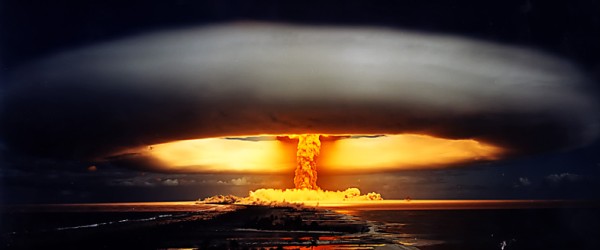
Is Belgium’s nuclear security up to scratch?
By Robert J Downes, King’s College London and Daniel Salisbury, King’s College London
Belgium’s counter-terrorism efforts are once again being called into question following the recent tragedies in Brussels. The attacks were carried out against soft targets – the public check-in area of Brussels Airport and Maelbeek metro station – but a series of unusual and suspicious occurrences were also reported at nuclear facilities in the country.
Occurring a week before a major international summit on nuclear security, these events highlight the very real threat to nuclear facilities. For Belgium, this recent episode is one item on a long list of security concerns.
The US repeatedly has voiced concerns about Belgium’s nuclear security arrangements since 2003. That year, Nizar Trabelsi, a Tunisian national and former professional footballer, planned to bomb the Belgian Kleine-Brogel airbase under the aegis of Al-Qaeda.
The airbase, which holds US nuclear weapons, has seen multiple incursions by anti-nuclear activists who have gained access to the site’s “protected area”, which surrounds hardened weapons storage bunkers.
Yet, Belgium only started using armed guards at its nuclear facilities weeks before the March 2016 attacks.
Washington’s nuclear strategy doesn’t keep Europe safe — it puts everyone at risk of apocalyptic terrorism

Jeffrey Lewis writes: In an earlier job, I ran a project that tried to outline options for what would become the 2009 Nuclear Posture Review. One of the better parts was the travel. I made a lovely visit to Brussels, where my team had a series of very high-level meetings at the European Union and NATO headquarters. There were some steak frites, a little lambic beer, and a lot of talk about nuclear weapons. And at the time, senior U.S. military officers made one thing very clear to us: The security at the bases stunk. One commander noted that the upgrades necessary to meet security requirements would run into the hundreds of millions of dollars. Another said his worst fear was that a group of activists would be able to get inside the shelters where the nuclear weapons are stored and use a cell phone to publish a picture of the vaults.
And then it happened. In January 2010, a group of protesters who call themselves “Bombspotters” entered Kleine Brogel.
Apparently the plan was to hang around on the tarmac of the runway and get arrested. But no one came to arrest them. So they wandered around — for either 40 minutes or an hour, the accounts differ — before walking through an open gate into an area with hardened aircraft shelters for the base’s F-16s. Eventually, as the hippies continued to wander around the shelters, security arrived.
The “security force” was one moderately annoyed-looking Belgian guy with a rifle — an unloaded rifle. The effect would only have been more comedic if he had some powdered sugar on his face and maybe a little bit of waffle stuck to his uniform.
The protestors were briefly detained but not for long. There was no panic. The mood in Belgium seemed to be something like “you crazy kids.” Not to worry, the Belgians assured their American partners, the activists weren’t anywhere near the shelters with nuclear weapons.
So, a few months later, the activists entered the base again. They helpfully sent me a little note. This time, they not only got inside the proper area, but they also got inside one of the shelters.
Security never showed up. Apparently, the base commander found out about the incursion when the rest of us did — when the activists posted a video on YouTube a day or so later. This was literally the scenario the U.S. military officer had warned us about — hippies inside a shelter with a cell phone, security nowhere to be found.
Yet still no panic.
One way to look at this is to say that the multiple and redundant security features worked. Sure, the Belgians should have caught the activists at the fence. And, sure, the hippies got inside the inner perimeter. And, sure, the shelter shouldn’t have been unlocked. But the nuclear weapons inside the shelter were still secure in a vault in the floor. A terrorist would have needed the code or a jackhammer to access the bomb itself. Even if it was only the last, or next to last, line of defense, it still worked. Another day without a nuclear holocaust. Who’s complaining?
The other way to look at it is to see that the security failures were not independent. The base had a lax security culture that makes anything possible. There were no dogs because the Belgians were too cheap to hire a dog-master. Who is to say what other security breaches might be possible? Who is to say the same people who didn’t bother to lock the gates or the shelters wouldn’t also leave a vault open? Or wouldn’t say something indiscreet, allowing a group of armed men to show up as a bomb is being moved for servicing? According to this view, you either take security seriously, or you don’t. If you don’t, you are vulnerable to systematic breakdowns that allow the seemingly impossible to happen. [Continue reading…]

How ISIS built the machinery of terror under Europe’s gaze

The New York Times reports: The day he left Syria with instructions to carry out a terrorist attack in France, Reda Hame, a 29-year-old computer technician from Paris, had been a member of the Islamic State for just over a week.
His French passport and his background in information technology made him an ideal recruit for a rapidly expanding group within ISIS that was dedicated to terrorizing Europe. Over just a few days, he was rushed to a park, shown how to fire an assault rifle, handed a grenade and told to hurl it at a human silhouette. His accelerated course included how to use an encryption program called TrueCrypt, the first step in a process intended to mask communications with his ISIS handler back in Syria.
The handler, code-named Dad, drove Mr. Hame to the Turkish border and sent him off with advice to pick an easy target, shoot as many civilians as possible and hold hostages until the security forces made a martyr of him.
“Be brave,” Dad said, embracing him.
Mr. Hame was sent out by a body inside the Islamic State that was obsessed with striking Europe for at least two years before the deadly assaults in Paris last November and in Brussels this month. In that time, the group dispatched a string of operatives trained in Syria, aiming to carry out small attacks meant to test and stretch Europe’s security apparatus even as the most deadly assaults were in the works, according to court proceedings, interrogation transcripts and records of European wiretaps obtained by The New York Times. [Continue reading…]
Brussels attacks: ‘Fight the Westerners’ text sent to youths in Molenbeek
The Guardian reports: Young men in the Molenbeek district of Brussels were sent messages over the weekend calling on them to “make the right choice” and “fight the westerners”.
The texts were sent on Sunday night from a prepaid account that could not be traced or replied to. It followed a video distributed on Facebook, since removed, apparently showing local youths celebrating the attacks in Brussels last week. The death toll from the bombings has risen to 35, Belgium’s health minister said on Monday.
The short SMS message written in French, which the Guardian has seen, says: “My brother, why not fight the westerners? Make the right choice in your life.”
The rapid use of technology to spread propaganda after the attacks will stoke fears that Islamic State is trying to use the heightened tension to recruit more disaffected youths.
It is not known how the recipients’ phone numbers were obtained, but community activists believe Isis handlers download all contacts from the phone books of new recruits and select young men of north African origin to follow up. [Continue reading…]
Nusra’s ambition to govern faces challenge from Syrian activists
Borzou Daragahi reports: Syria’s al-Qaeda branch is seeking to emulate its jihadi rival, ISIS, by establishing its own government in areas it controls.
Over the past year, the Nusra Front, a powerful and well-organized Syrian rebel army that is the country’s official arm of al-Qaeda, has shifted tactics from being a solely military force to one seeking to tighten its hold over areas under its control by seizing the reins of governance, including law enforcement and municipal affairs, in what its supporters have hinted could become its own emirate in the northwestern Idlib province.
“They switched from just being a military power to taking over services,” said Abu Yahya, nom de guerre of a Syrian activist in the city of Muraat al-Noman, in Idlib province. “Nusra is trying to build institutions and trying to oversee services. They have now developed a love for power.”
The group’s efforts are concentrated on the city of Idlib, which the regime surrendered last year as a coalition of Islamist rebel groups that included Nusra pushed its way into the city. Over the following months, Nusra began to muscle out other rebel groups when it came to running the city. It did the same in other parts of Idlib province, where it has sought to create an institution called the The Liberated Districts Administration (Idaret al Manateq al Muharrarra), in an area that includes the cities of Idlib, Reeha and Jusr al-Shughoor, which would give them direct control of taxation, sanitation, electricity, water and as well as municipal governance. [Continue reading…]
Assad’s success in Palmyra dims prospects for political change in Syria
Charles Lister writes: The capture of Palmyra is an invaluable opportunity for the Assad regime and Russia to now proclaim themselves as capable and willing partners in the fight against ISIS. But we must not forget that the Assad regime purposefully ignored ISIS gains in Syria for nearly 18 months — April 2013 to August 2014 — as they proved an effective counterweight to the mainstream opposition. There is also bountiful evidence of the Assad regime’s deep and decades-long complicity in bolstering ISIS and its predecessor movements, for the purpose of manipulating them into shaping Syria’s domestic and foreign policy agendas. While there can be no doubting that ISIS’ loss of Palmyra represents a substantial strategic blow to their operations in Syria, this is the Assad regime’s first major victory against the group — after its presence on its territory for 3 years.
Events in Palmyra will also affect the viability of the political process in Geneva. Russia’s intervention has fundamentally transformed the balance of power on the ground and for the first time since mid-2013, the Assad regime is sitting comfortably in Damascus. Having recaptured Palmyra in a widely reported military operation conducted with Russian support, there is now no reason at all for Bashar al-Assad to even get close to considering a political transition. The next round of Geneva talks are scheduled to begin on April 11. Not only will this almost certainly be delayed, but the prospects for any progress on the substantive issue of political change look slim to none. [Continue reading…]
Putin and Assad score a major victory against ISIS, after months targeting Syrian rebels opposed to ISIS
Aymenn Al-Tamimi writes: The retaking of the ancient city of Palmyra from the Islamic State (ISIS) by the Syrian regime backed with intense Russian airpower is predictably being hailed as a victory over terrorism. Symbolically, of course, the recapture of Palmyra allows for the regime and Russia to portray themselves as the defenders of civilization over barbarism, as ISIS had destroyed some of the most archaeological sites in the area last year. But what do the events tell us about Russia’s broader approach towards ISIS? What may unfold in the aftermath of Palmyra’s recapture?
Fighting in the vicinity of Palmyra has occurred ever since ISIS took the city in a swift offensive through the Homs desert last year in which regime forces melted away on multiple occasions without much of a fight. This was similar to the losses the regime experienced in Idlib province at the hands of rebel offensives in the same year, pointing to broader problems of manpower shortages facing the regime, which led to a shift in strategy focusing on the defense of perceived vital areas, including setting up of local militia formations such as Coastal Shield in Latakia and Homeland Shield in Suwayda’ designed to recruit locals to fight within their own areas. These calculations changed somewhat with the official commencement of Russian intervention in the fall of 2015 in the form of intense airstrikes, allowing the regime to go on the offensive in multiple areas. [Continue reading…]
Europe’s shattered peace, Europe’s struggling values

Judy Dempsey writes: The terrorist attacks that have killed at least 31 people in Brussels and injured some 270 others on March 22 have changed Europe’s perception about itself. Until now, despite so many calculated murders of many innocent civilians in Madrid, London, Copenhagen, and Paris— among other cities across Europe—since 2004, European leaders have adopted ad hoc measures to counter this new challenge. What makes Brussels different is that there’s now an acceptance by EU leaders that these attacks will continue.
All the measures taken so far have fallen way short of confronting the threat. European leaders didn’t want to admit that the peace that reigned across Europe since the end of World War II had been shattered. As Elmar Brok, the German chairman of the European Parliament’s foreign affairs committee said after the Brussels bombings, “This is a new form of war that Europe has to deal with.”
This is the new and uncomfortable reality that European leaders now have to accept and respond to. It is a reality that is not going to go away as long as the so-called Islamic State, Al-Qaeda, and their battalions of supporters inside and outside Europe continue their mission to attack everything that Europe stands for. It is Europe’s liberal values and open society that the perpetrators of these attacks, many of them born in Europe, are taking advantage of. Those values are now at stake. [Continue reading…]
Reuters reports: Even before the shock of last week’s deadly Brussels bombings, gallows humor had taken hold in the square kilometer around Schuman Roundabout, the heart of the city’s European district.
It’s been a miserable start to the year for the European Union with the unresolved migration crisis poisoning relations among member governments, negotiations to avert a British exit getting trickier, Greece’s debt crisis dragging on, and Islamist militant attacks exposing serial cross-border security lapses.
A succession of emergency summits of the 28 national leaders has fueled an atmosphere of permanent crisis. And political weather forecasters say worse storms may be on the way.
Among staff working for EU institutions, long used to being unloved scapegoats for national politicians, the mood oscillates between despond and defiance.
“The European Union is like the orchestra that played on the Titanic,” Italian Prime Minister Matteo Renzi said in January, urging EU officials to redirect their focus to promoting growth and employment instead of “this mistaken bureaucratic approach”.
Officials have been strictly instructed not to do or say anything that may affect Britain’s knife-edge June 23 referendum on whether to remain in the bloc. [Continue reading…]
Brussels terror attacks: a continent-wide crisis that threatens core European ideals
By Fiona de Londras, University of Birmingham
The attacks of March 22 in Brussels were shocking, but not surprising. They reinforced what many have known for years: Belgium has a serious problem with terrorism.
For a long time, security analysts have expressed anxiety about the depth and extent of radicalisation and fundamentalism in the country. It is thought that Belgium has the highest per capita rate of foreign terrorist fighters of any EU country. A February 2016 “high-end estimate” puts that number at 562 out of a population of just over 11 million.
Last November it was revealed that some of the Paris attackers had Belgian connections and were known to the security forces there, and Brussels was virtually locked down for almost a week.
Over recent years there have been attacks on Belgian museums, supermarkets and trains, raising questions about why the country cannot seem to effectively tackle the challenges of insecurity.
As ever, the answer is not a simple one. Rather, as observed by Tim King, Belgium’s “failures are perhaps one part politics and government; one part police and justice; one part fiscal and economic. In combination they created the vacuum that is being exploited by jihadi terrorists”.