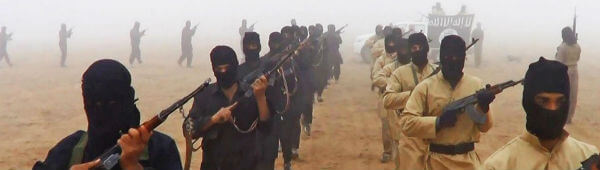
Defense One reports: Lockheed Martin is expanding various munition factories to meet rising demand from the U.S. and its partners fighting the Islamic State — and to start equipping American warplanes for great-power wars at sea.
“We are seeing a lot of international demand for our product set,” Frank St. John, Lockheed’s vice president of tactical missiles, said Tuesday. “That’s causing us to do a lot of work in international partnerships and co-production and we’re very excited about those opportunities.”
In particular, U.S. and allies are burning through their stocks of Lockheed’s Hellfire missile, the signature weapon of Predator and Reaper drones. Helicopters and fixed-wing planes also carry the versatile laser-guided weapon.
“It requires a little bit of investment on our part to expand the factories, but the demand is there and we’re keeping up with it [and] we’re staying ahead of it,” St. John said.
It also requires Pentagon funding. Last June, the U.S. Army gave Lockheed $18 million to boost Hellfire production from 500 to 650 missiles per month. St. John said the company has added tools, test equipment, and floor space to its Hellfire production line.
Lockheed has also “quadrupled our production capacity” at the Archbald, Pennsylvania, factory to meet demand from the U.S. and its allies for Paveway II laser-guided bombs.
With top military officials predicting that the ISIS campaign will run for years, demand for missiles and bombs is expected to remain high. [Continue reading…]
Category Archives: ISIS
How the tribal warfare of our ancestors explains the rise of ISIS

Luke Glowacki writes: Humans are hard-wired to adopt their communities’ norms, and these norms can include rules for how to treat others — including whether to tolerate differences or attack outsiders. When norms provide status, material rewards or membership in a privileged group, they become even more potent.
Cultures are able to hijack this psychology for violent ends by providing status, promises of an afterlife and a sense of meaning. People belonging to communities that advocate violence will adopt norms of violence, whether those communities are tribal societies, neighbors and family, or Facebook friends. Cross-cultural research I’ve conducted shows that the most important predictor of warfare in a society is a cultural system that awards warriors with social benefits.
In East Africa, where groups battle each other for livestock, access to grazing lands and water, conflicts are fought with modern weapons such as AK-47s but occur along tribal borders and resemble the dynamics of ancestral warfare in important ways. Access to resources such as livestock and water can be critical for a group’s survival, and so these cultures award status and livestock to successful warriors. Such warriors are able to marry more wives and have more children than other men. Half a world away, in the Venezuelan Amazon, researchers found that warriors also ended up better off than non-warriors. Over the time scales at which humans and cultures evolve, benefits such as these may have had profound significance in the development of human behavior.
Such incentives help explain how people can be lured into supporting the Islamic State. The group promises its recruits prestige, a sense of community and the possibility of glory — the same types of incentives that cultures across the globe have historically used to motivate youth to take up arms. [Continue reading…]
The painful lessons of Brussels seem hard to learn, so they continue
Rami G Khouri writes: The terror attacks in Brussels this week, beyond their inherent cruelty and criminality, in themselves are not particularly distinctive or noteworthy in the larger picture of Islamic State and other acts of terrorism, which have become common fare in this era of expanding violence across all continents. Terrorism database compilers are working overtime these months trying to take note of every such act — and that may be the real significance of what is going on these days: hundreds of thousands of desperate and dehumanized individuals transform their former local grumblings or security-forced passivity into a growing global network of terrorists and anarchists whose numbers are beyond the capacity of any intelligence system’s ability to monitor, arrest, prevent, or shut down.
The heart of this criminal universe mainly comprises Arabs or emigrants of Arab descent. The terror problem at its deepest core is the consequence of the dysfunction of mostly Arab societies that have been subjected to more than half a century of security-enforced docility and lack of citizen rights. Nearly 400 million human beings today across the Arab world were born with innate natural and human rights to freedom, identity, growth, and societal well-being, but they have not been allowed to manifest these dimensions of their full humanity.
Economic, political, environmental, and social constraints that have grown more severe in recent decades have sparked a terrible cycle of stagnation and de-development in the minds and capabilities of men and women — while shopping malls, water-pipe cafes, reality television, supermarkets, and cell phone shops have proliferated like mad across the Arab world, in a futile attempt to keep people busy and happy with material diversions. [Continue reading…]
Brussels terror suspect was jailed over Ahmad Shah Massoud assassination, just before 9/11
Khamma Press reports: The coordinated terror attacks in Brussels has unveiled new information regarding the assassination of a key jiahdi leader in Afghanistan as a terror suspect who was arrested by police in Brussels after a dramatic stand-off at a tram stop is believed to have previously been jailed for helping to assassinate an Afghan leader just days before 9/11.
The suspect has been identified as Abderaman A who was shot in the leg at the tram stop in Schaerbeek because he was carrying a rucksack police believed contained a bomb.
Massoud was the arch rival of the Taliban group and was holding the last strategic stronghold in northern Panjsher province as he was assassinated in a suicide attack during an interview by militants who had disguised themselves as journalists.
He was killed shortly before the deadly terrorist attack on New York and Washington and shortly after he paid a visit to Brussels where he issued warnings regarding the terror attack plots by al-Qaeda terrorist network.
In his speech in European Pearliament in April 2001 Massoud “warned the US government” about bin Laden as he was on a diplomatic trip to Europe seeking financial support for his cause from the EU and individual countries. [Continue reading…]
The Daily Mail reports: Osama bin Laden is widely believed to have ordered Massoud’s killing as a favour to the Taliban, whose protection would be critical after the 9/11 attacks.
Passports found on Mr Masood’s killers were linked to a Brussels-based militant cell run by Tarek Maaroufi.
Ameroud was handed a sentence of seven years when he went on trial for his part in the assassination at a court in Paris in 2005. [Continue reading…]
Brussels attacks: Molenbeek’s gangster jihadists
Secunder Kermani writes: Most people in Molenbeek are rather sick of journalists – they resent the way they are portrayed in the media as a “jihadist capital of Europe”. But one phrase you often hear when foreign journalists attempt a vox pop is that “terrorism has nothing to do with Islam”.
Certainly, many of those who joined IS from the area did not come from particularly religious backgrounds.
Salah Abdeslam and his elder brother Brahim – who blew himself up in the Paris attacks – used to run a cafe in Molenbeek that sold alcohol and was closed down for drug offences. One friend of the brothers who used to hang out there told me he would regularly see Brahim Abdeslam “watching IS videos, with a joint in one hand, and a beer in another”. He said Brahim would spout off radical statements but that no-one took him seriously.
Another friend showed me a video from a Brussels nightclub of the two Abdeslam brothers on a night out with girls, drinking and dancing – this was February 2015, just months before they started to plan the attacks in Paris. [Continue reading…]
Assad hails Syrian regime’s capture of Palmyra from ISIS
The Guardian reports: The Syrian and Russian governments have hailed their recapture of the ancient oasis city of Palmyra from Islamic State, ending a 10-month ordeal that saw the destruction of some of the historic site’s most famed monuments.
The battle for the city is the latest in a string of defeats for Isis, now in retreat across Syria and Iraq, where it once controlled vast tracts of territory: nearly half of Syria and the desert plains of Nineveh and most of Anbar in Iraq.
Palmyra’s reclamation by Assad’s army, after weeks of intense combat, was aided by some of the heaviest Russian airstrikes since Moscow launched its military intervention last autumn. It is also a significant morale boost for the embattled Syrian strongman as well as the Kremlin. [Continue reading…]
ISIS: Nuclear fears and actual dangers
There are a great many rumors flying around about the nuclear connection to the Brussels attacks, not many facts.
— Cheryl Rofer (@CherylRofer) March 26, 2016
The latest news report ratcheting up fears about ISIS using a dirty bomb is that a security guard at a Belgian nuclear research center was murdered this week and his access badge had been stolen.
Prosecutors now see no connection to a planned terror attack and say his badge was not stolen.
The media is being hasty connecting nuclear dots that turn out not to be connected.
1. Another day, another hysterical "dirty bomb" alarm from @Publici. This kind of thing feeds public hysteria.https://t.co/nHm89ddiZY
— Cheryl Rofer (@CherylRofer) March 25, 2016
The New York Times reports: Experts say the most remote of the potential nuclear-related risks is that Islamic State operatives would be able to obtain highly enriched uranium. Even the danger of a dirty bomb is limited, they said, because much radioactive waste is so toxic it would likely sicken or kill the people trying to steal it.
Cheryl Rofer, a retired nuclear scientist at the Los Alamos National Laboratory and editor of the blog Nuclear Diner, said Belgium’s Tihange nuclear plant has pressurized water reactors, inside a heavy steel vessel, reducing the danger that nuclear fuel could leak or spread. She said that the Brussels bombers’ explosive of choice, TATP, might be able to damage parts of the plant but that the damage would shut down the reactor, limiting the radiation damage.
And if terrorists did manage to shut down the reactor and reach the fuel rods, they would have to remove them with a crane to get the fuel out of them, Ms. Rofer said. And then the fuel would still be “too radioactive to go near — it would kill you quickly.” [Continue reading…]
Why Belgium?
Much has been made of the fact that Belgium has a higher number of jihadists relative to its population than any other European country.
According to recent statements by Interior Minister Jan Jambon, the number of Belgian “foreign fighters” reached around 470 individuals as of January 2016. Flanders and Brussels would each account for roughly 45 percent of the departures, the rest coming from the southern region of Wallonia. (This tends to invalidate the assumption that social-economic grievances and poverty may be driving radicalization, since the economy in the north of the country is significantly stronger.) As my colleague Rik Coolsaet has documented in a new report, among these 470 individuals who have attempted to go to Syria, roughly 60 didn’t manage to reach Syrian territory in the first place; some 80 have presumably been killed; and about 190 are still believed to be operating in Syria or Iraq. While some 130 of them have gone and have now returned to Belgium.
And most of these recruits have joined ISIS? Are they still going?
Approximately 70 percent of those whose affiliation could be established with a reasonable degree of certainty has been fighting under the ISIS banner. Overall, the monthly average of departures seems to have gradually dropped from its peak of some fifteen per month (in 2012-2013) to an average of five per month during the year 2015.
In view of this week’s attacks, are the 130 jihadists who have returned to Belgium increasingly viewed as a threat? Are they ticking time bombs?
No one can answer this question with specific data. It’s not measurable. We know that about a third of those who have returned have been arrested and jailed. I’m inclined to say that most of the remaining individuals don’t pose a threat. The problem is, even if most of them pose no threat at all and only regret this dark episode of their life, a small minority could still cause a lot of damage as we witnessed on March 22. So we must remain vigilant, in spite of the difficulty of trying to monitor all these people. Having at one’s disposal an Excel spreadsheet with roughly one thousand names is one thing, but the next one is to know how to manage this database.
What do we know about the thousand people on the watch list?
Apart from the 470 known foreign fighters, there are individuals in various stages of radicalization: some of them have shown obvious symptoms of being radicalized, some have only expressed a wish to go to Syria or Iraq. Among those who have left Belgian territory, some are only assumed to be fighting for IS, Jabhat al-Nusra or other Jihadi groups. Others are known to have reached Syria or Iraq for that specific purpose. Also, some others have left Syria or Iraq but have not been identified as back in Belgium yet.
We cannot say that Belgian jihadists fit a general profile. There are men and women, individuals and groups (sometimes couples or whole families), older and very young people. Abdelhamid Abaaoud’s younger brother Younes was thirteen when he went to Syria—and I think was then considered the youngest case in 2013. That being said, the age range of foreign fighters from Belgium is typically twenty to twenty-four. The education level is often below that of the average population. Foreign fighters with college degrees exist, but they constitute a small minority, as far as Belgium is concerned. Most were known to police and intelligence before their departure. Belgians with Moroccan family background are significantly overrepresented on the list (more than 80 percent), while converts to Islam would represent less than 10 percent. [Continue reading…]

Attacks cast light on Belgium’s state crisis
Der Spiegel reports: Bart De Wever doesn’t have much faith in his country. In fact, you can hardly call it a country, this artificial construct created sometime in the 19th century as the result of an accident of history, a power struggle among major powers. The centralized Belgian state is “slow, complicated and inefficient,” says De Wever, one of the most powerful men in Belgian politics.
He represents a party that went into the last election campaigning for an end to this centralized state, and for an independent Flanders, which it argued would be more viable than Belgium, a broken construct.
De Wever heads the strongest party, the conservative right-wing New Flemish Alliance (N-VA). He is not part of the government, but rather the mayor of Antwerp, and yet he knows that people in Belgium pay very close attention to what he says. He’s sitting under chandeliers in the Gothic city hall, in a room with dark wooden wall panels. It’s a sunny Tuesday in February, four weeks before the Brussels attacks. Salah Abdeslam is still on the run, and police haven’t tracked him down in Brussels’ Molenbeek neighborhood yet. The government is still searching for the sole surviving Paris attacker but have been unsuccessful so far. The government is trying, but it hasn’t turned up much yet. Belgium is receiving poor grades, but so is Europe.De Wever calls German Chancellor Angela Merkel’s refugee policy an “epochal mistake,” and he complains that integration in Belgium already isn’t working today. “This is our problem,” he says. “We were unable to offer them a Flemish version of the American dream.” His message is that Antwerp is still better off than Brussels, which could be called a cesspool.
De Wever likens the way politics is done in Brussels to the manner in which workers renovate the city’s crumbling art nouveau buildings: some new wiring here, something patched up there. “Politicians in Belgium often work like craftsmen in old houses: they putter away without any sort of blueprint.” De Wever, sitting in his office on a spring day in Antwerp, has little faith in this country. He doesn’t know yet that his lack of confidence will later be confirmed in the worst of ways. [Continue reading…]
Khalid Zerkani, Brussels’ jihadist preacher who ‘perverted a generation’
France 24 reports: Thursday’s arrest near Paris of a man alleged to have been in the “advanced stages” of plotting a terrorist attack has cast the spotlight back on a Brussels-based jihadist recruitment network that Belgian authorities cracked but failed to neutralise.
Reda Kriket, whom French police arrested in the Paris suburb of Argenteuil on Thursday, had been convicted in absentia by Belgian authorities for his role in the so-called “Zerkani network” – which radicalised Muslim youths and pushed them to wage jihad in Syria.
The network’s leader, radical preacher Khalid Zerkani, has been described by Belgian investigators as the country’s “biggest recruiter” of jihadist fighters.
The Moroccan-born Belgian national operated from underground mosques in the now notorious Brussels suburb of Molenbeek, which has been linked to a string of terrorist attacks ranging from the 2001 killing of Afghan hero Ahmad Shah Massoud to the recent attacks in Paris and Brussels.
Zerkani, 42, ran a network of petty criminals and used the proceeds to send jihadists to Syria. His long beard and habit of allowing thieves to keep part of the spoils earned him the nickname “Father Christmas”. [Continue reading…]
Turkish officials: Europe wanted to export extremists to Syria
The Guardian reports: Turkish officials have accused European governments of attempting to export their Islamic extremist problem to Syria, saying the EU has failed to secure its own borders or abide by pledges to share intelligence and cooperate in fighting the jihadist threat.
The failures were outlined by Turkish officials to the Guardian through several documented instances of foreign fighters leaving Europe while travelling on passports registered on Interpol watchlists, arriving from European airports with luggage containing weapons and ammunition, and being freed after being deported from Turkey despite warnings that they have links to foreign fighter networks.
“We were suspicious that the reason they want these people to come is because they don’t want them in their own countries,” a senior Turkish security official told the Guardian. “I think they were so lazy and so unprepared and they kept postponing looking into this until it became chronic.”
The conversations with Turkish officials took place before the latest Isis-claimed terror attacks in Brussels, but those bombings and the attacks in Paris last November brought into stark relief Europe’s failings in tackling the threat from Europeans intent on travelling to Syria or Iraq to fight with Isis and then returned to carry out atrocities at home. [Continue reading…]
How ISIS laid out its plans to export chaos to Europe
The Guardian reports: Nine days before the Paris attacks, Islamic State leaders gathered in the Syrian town of Tabqah to talk about what was coming next for the terror organisation. Senior officials from across the so-called caliphate had made difficult journeys under constant fear of airstrikes to the small town west of Raqqa.
In what marked a critical phase in the group’s evolution, there was to be a new focus on exporting chaos to Europe, the assembled men were told. And up to 200 militants were in place across the continent ready to receive orders.
Details of the meeting have been relayed to the Guardian by two Isis members who are familiar with what was discussed. Both said the mood in Tabqah that evening in early November was triumphant. Senior leaders said they were turning their focus to European capitals, and had dispatched foreign fighters back to their homelands to prepare attack plans. And wait.
The move marked a decisive shift away from putting all the organisation’s efforts into holding on to lands it had conquered in Syria and Iraq – a cause it acknowledged could not prevail against 14 different air forces and the omniscient eavesdropping powers of its foes.
Instead, the group now had the capacity to take the fight to the heart of its enemy. The means to do so had always been there through Europe’s porous borders, which had often facilitated the original journeys. However, the migrant route that had ferried hundreds of thousands of Syrians and Iraqis fleeing persecution had also allowed a small number of Isis members to blend in, and head back the other way.
In essence, Isis had begun to prioritise controlling populations over geography. While it hadn’t given up its grip on the large swath of Iraq and Syria it had seized at the expense of each sovereign state, the original area it controlled was now less important than the faraway societies it could influence. [Continue reading…]
The mafia runs guns for ISIS in Europe
The Daily Beast reports: By the time Aziz Ehsan, a 46-year-old Iraqi, was arrested near Naples on Tuesday, local anti-mafia police had already been trailing him for days to determine just why he was in the heartland of the Camorra crime syndicate’s territory. He was well known by both the French and Belgian secret services, which list him as a suspected ISIS contact. The Neapolitan cops were also aware of an international arrest warrant for him in Switzerland, where he was wanted in connection with a variety of offenses, including forgery, assault, and possession of illegal weapons.
He was apparently just the type of person Italian authorities thought might provide a valuable clue as they work to piece together the details of the complex relationship between Jihadist fighters and Italy’s various mobs.
But when the attacks took place in Brussels, the authorities decided it was time to move in and get him. He was arrested as he slept in a car with Italian license plates registered to a deceased man on Tuesday and is awaiting extradition to Switzerland, France, or Belgium. [Continue reading…]
The dead-enders on the front lines of ISIS
The Washington Post reports: One perpetrator was an automobile thief before he got religion, and served time in a Belgian prison on a carjacking charge. Another was an armed robber who once shot a police officer while fleeing from a crime scene.
Others had convictions for burglary, drug-dealing, larceny and assault. Nearly to a person, all had been violent men, long before they became foot soldiers for the hyper-violent Islamic State.
As Belgian police delve into the backgrounds of the men behind Tuesday’s attacks in Brussels, they are encountering a pattern familiar to investigators in Paris and other European cities targeted by the Islamic State: The shock troops used in the terrorist group’s signature attacks are largely men already well known to local law enforcement — not as religious radicals, but as criminals.
As it has done for years in the Middle East, the Islamic State appears to be finding a fruitful recruiting ground among Europe’s street gangs and petty criminals, drawing to itself legions of troubled young men and women from predominantly poor Muslim neighborhoods, U.S. and European officials and terrorism experts say. Some recruits have scant knowledge of Islam but, attracted by the group’s violent ideology, they become skilled and eager accomplices in carrying out acts of extraordinary cruelty.
“Some of these guys are just looking for an opportunity to justify their violence and criminality,” said Ali Soufan, a former FBI counterterrorism official and a consultant to government agencies on terrorist threats. “Now, with ISIS, it is justified — because they can say they’re doing it for God.” ISIS is another name for the Islamic State.
Indeed, some European officials say the perpetrators in the most recent attacks appear to be part of a new wave of recruits that are not “radical Islamists” but rather “Islamized radicals” — people from society’s outer margins who feel at home with a terrorist organization noted for beheading hostages and executing unarmed civilians. [Continue reading…]
Belgian police knew where Paris attacker was likely hiding — and did nothing
Time reports: With Belgian officials struggling to explain how they missed crucial information leading up to Tuesday’s devastating Brussels bombings, local police in the northern Belgian city of Mechelen admitted on Friday that as far back as December, they knew where the sole surviving Paris attacker might be hiding in the Belgian capital, but failed to pass the address to the country’s anti-terrorist unit—even though Europe’s biggest manhunt in years was underway.
As details mounted about the gaffes and missteps of Belgian officials that might have averted this week’s bloodshed, U.S. Secretary of State John Kerry arrived in the city for talks with Belgium’s government about how to dismantle ISIS’s terror networks. U.S. officials told reporters that at least two Americans were among the 31 people killed in Tuesday’s suicide bombings, two which occurred in a crowded airport terminal, and a third on an underground train in central Brussels. ISIS has claimed responsibility. “We are all of us going to help,” Kerry told the Belgian Prime Minister Charles Michel at a joint press conference in Brussels. “We will renew our vow to come together against a common enemy to keep our people safe.”
Yet those assurances came amid increasing details about bungled intelligence gathering in the months before Tuesdays attacks, with Belgian officials overlooking crucial information or simply failing to share it within the country’s highly fragmented policing structure. On Friday, the local police chief of Mechelen, a small city 13 miles northeast of Brussels, said his department had received a tip in early December—nearly four months ago—about the possible whereabouts of Salah Abdeslam, the sole surviving attacker from the Paris massacre on November 13, which killed 130 people. Abdeslam, 26, had slipped back into Belgium during the hours after the Paris attacks, then hid in his Brussels neighborhood of Molenbeek, evading street-to-street police raids for months. Last Friday, a SWAT team finally nabbed him — at the exact address that a relative of Abdeslam had given Mechelen police last December. [Continue reading…]
Terror cell probe puts spotlight on nuclear concerns
The Wall Street Journal reports: Evidence unearthed in the investigation into the Islamic State cell behind the Paris and Brussels attacks has raised fresh concerns about terrorists’ efforts to get their hands on radioactive material.
Belgium’s federal prosecutor said last month that police had discovered a 10-hour videotape showing the home of a man who worked in Belgium’s “nuclear world” during a house search linked to the Paris attacks. The recording came from a surveillance camera installed in front of the man’s home, a spokesman for the prosecutor said at the time.
The same terrorist cell has been tied to Tuesday’s bloodshed at Brussels’ international airport and a subway station.
Authorities around the globe have long feared that terrorists could get nuclear material to build a so-called dirty bomb—which combines conventional explosives with radioactive materials—or launch an attack on a nuclear power plant. At the same time, Belgium’s nuclear plants, which provide the majority of the country’s electricity, have been criticized for a patchy safety record.
Just hours after the explosions in Brussels, Belgium’s nuclear safety agency, FANC, pulled nonessential staff out of the country’s two plants. Officials said the move was a standard measure when the country is at its highest threat level and they had no indication of a specific threat.
Staff members were back at work on Wednesday with strict security checks and a strong police and military presence, said Geetha Keyaert, a spokeswoman for Electrabel, a unit of France’s Engie SA, which operates Belgium’s nuclear plants. A FANC spokeswoman wouldn’t comment.
Belgium is especially vulnerable as a target because of its homegrown terror threat and the fact that its seven nuclear reactors are at least 30 years old, said Tom Sauer, a nuclear terrorism specialist at Belgium’s University of Antwerp.
Newer plants are protected against threats such as attacks by airplanes, “but in the older Belgian plants, there are still some vulnerable parts,” he said.
Belgian media reported in 2014 that a man who had left for Syria to become a foreign fighter had previously worked at one of the country’s nuclear power plants, which officials have since confirmed. “So there is visibly something wrong with the security clearances,” Mr. Sauer said.
Ms. Keyaert said that the man had regular access to a plant as a contractor before going to Syria in 2012. But while he was working there “he wasn’t radicalized yet,” she said. Unconfirmed local media reports said the man later died in Syria. [Continue reading…]
In Syria and Iraq, ISIS is in retreat on multiple fronts
The Washington Post reports: As European governments scramble to contain the expanding terrorist threat posed by the Islamic State, on the battlefield in Iraq and Syria the group is a rapidly diminishing force.
In the latest setbacks for the militants on Thursday, Syrian government troops entered the outskirts of the historic town of Palmyra after a weeks-old offensive aided by Russian airstrikes, and U.S. airstrikes helped Iraqi forces overrun a string of Islamic State villages in northern Iraq that had been threatening a U.S. base nearby.
These are just two of the many fronts in both countries where the militants are being squeezed, stretched and pushed back. Nowhere are they on the attack. They have not embarked on a successful offensive in nearly nine months. Their leaders are dying in U.S. strikes at the rate of one every three days, inhibiting their ability to launch attacks, according to U.S. military officials.
Front-line commanders no longer speak of a scarily formidable foe but of Islamic State defenses that crumble within days and fighters who flee at the first sign they are under attack. [Continue reading…]
A top ISIS leader killed in airstrike, Pentagon says
The New York Times reports: The United States this week killed a top Islamic State commander in Syria as part of a spate of military actions targeting the terrorist group’s leadership and explosives caches, Defense Secretary Ashton B. Carter said on Friday.
The killing of a top commander, Abd al-Rahman Mustafa al-Qaduli, who is also known by other names, comes as the United States is having increased success targeting the Islamic State’s leadership. Last week, Defense Department officials concluded that American strikes had killed the group’s minister of war, Omar al-Shishani.
“We are systematically eliminating ISIL’s cabinet,” Mr. Carter said at a news conference, using an acronym for the group.
But he made clear that the challenge was not that simple.
“Striking leadership is necessary,” he said, “but as you know it’s far from sufficient. As you know leaders can be replaced. These leaders have been around for a long time — they are senior and experienced and eliminating them is an important objective and result. They will be replaced and we will continue to go after their leadership.”
Defense Department officials have declined to elaborate on why they are having more accuracy striking the group’s top commanders. Earlier this year, a special unit of American commandos tasked with identifying, capturing and killing the Islamic State’s leaders arrived in Iraq and began working closely with local forces there. [Continue reading…]

The killing of a top commander,