Category Archives: ISIS

Islamic State of Iraq and Syria

The Kingdom and the Caliphate: Duel of the Islamic states

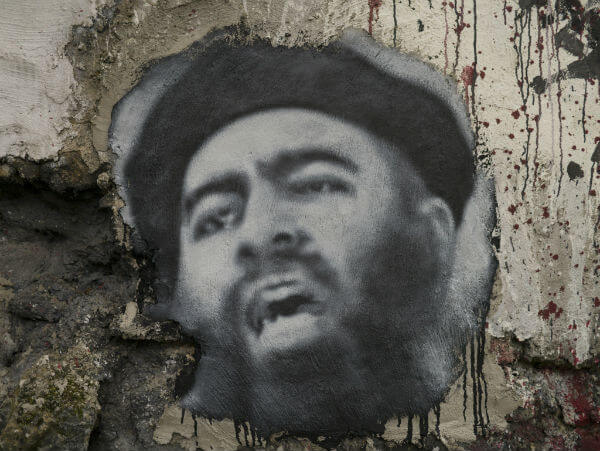
Baghdadi

Cole Bunzel writes: For Osama bin Laden, the United States was the “head of the snake” — the primary target of al-Qaeda’s jihad. “Its many tails,” the authoritarian regimes of the Middle East, were deemed of secondary importance.

For Abu Bakr al-Baghdadi, however, it is the regime in Saudi Arabia that is the “head of the snake,” as he has said in a metaphorical revision worthy of note. This revision by the leader of the Islamic State marks a significant change in the priorities of the global jihadi movement now spearheaded by that group. Notwithstanding the deadly terrorist attacks in Paris in November 2015, this group’s focus is on the Middle East before the West. Its slogan, “remaining and expanding,” is indicative of its foremost aims: entrenching itself in its Syrian and Iraqi territories and conquering new ones. One of those territories increasingly in its sights is Saudi Arabia, home to Islam’s holiest places and one-quarter of the world’s known oil reserves.

The competition between the jihadi statelet and the Gulf monarchy is playing out on two levels, one ideological and one material.

Ideologically, the Islamic State presents itself as the true guardian of the particular version of Islam native to Saudi Arabia — that is, Wahhabism, a variant of Salafism. Over the past two decades the jihadi-Salafi movement, which encompasses both al-Qaeda and the Islamic State, has become more Wahhabi in orientation, its leaders and thinkers rooting their radical ideas in the Wahhabi tradition. Wahhabism has thus emerged as the most prominent feature of the Islamic State’s ideology. It follows that the conflict between Saudi Arabia and the Islamic State can be understood as one between competing models of the same idea, namely, an Islamic state. Both are self-professed Islamic polities claiming to represent Wahhabi Islam.

Materially, the Islamic State has launched a string of attacks on Saudi soil, targeting Shia civilians and Saudi security forces, and has made its presence official with the establishment of three declared provinces. The latter are, of course, provinces in name only. The Islamic State does not administer or oversee territory in Saudi Arabia; it carries out terrorist attacks in the name of an administrative fiction that it hopes one day to make reality. While for the foreseeable future the provinces will remain fictional, the terrorism intended to realize them is likely to continue.

Throughout 2015, several authors offered rather unfavorable comparisons of Saudi Arabia and the Islamic State, some drawing a direct line from one to the other. They pointed out the similar educational curricula used by the two and the shared practice of beheading, among other things. Kamel Daoud, in a November 2015 New York Times op-ed, argued that “Saudi Arabia is a Daesh that has made it,” referring to the group by the Arabic acronym for its former name — a “dressed up” form of the same thing. But for the most part these comparisons are wide of the mark, as Saudi Arabia seeks partnership with the West and does not aspire to global conquest.

The comparison worth noting is the one in the minds of the Islamic State’s jihadi thinkers, the idea that Saudi Arabia is a failed version of the Islamic State. As they see it, Saudi Arabia started out, way back in the mid-eighteenth century, as something much like the Islamic State but gradually lost its way, abandoning its expansionist tendencies and sacrificing the aggressive spirit of early Wahhabism at the altar of modernity. This worldview is the starting point for understanding the contest between the kingdom and the caliphate, two very different versions of Islamic states competing over a shared religious heritage and territory. [Continue reading…]


Facebooktwittermail

A Syria policy that dare not speak its name

Syria5

Michael Ignatieff writes: Once President Barack Obama had let Bashar al-Assad cross his “red line” and use chemical weapons in 2013, America was left with a policy in Syria that dare not speak its name.

The policy is not what the US wants but, in light of the ceasefire plan agreed last week in Munich between Moscow and Washington, it appears to have become what it reluctantly accepts: to allow Mr Assad and Russian president Vladimir Putin to win by focusing attacks on anti-regime rebels in strongholds such as Aleppo — and then, after a decent interval, to join with them to crush the militants of Isis.

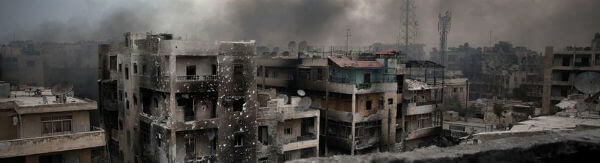
The consequences of this policy are becoming clearer by the day: free Aleppo is dying under continuing Russian bombardment and a civilian uprising that began in 2011 is collapsing for want of help. Mr Assad is re-establishing his tyranny and is certain to take vengeance on surviving insurgents.

This is where risk avoidance has led a conscientious, prudent American president — to a diabolical transaction in which he and his allies regretfully sacrifice the lives of innocent civilians in the name of the mistaken belief that the west’s only overriding strategic interest in Syria is the defeat of Isis.

If this is the actual policy of the US the consequences should be spelt out. Russia and Iran will consolidate control of a rump state in the Middle East but the millions of Syrians who have fled the fighting will never return home and the region will never know peace. [Continue reading…]

Facebooktwittermail

Why ISIS hates the Sufis and blows up their shrines

Nile Green writes:

The soul that denies true love as its motto
Were better unborn; its existence is dishonour.
So be drunk with love, for love is all there is.
Unless you deal with love, the way to God is closed.

These words were among the hundreds of poems written by Rumi, the 13th-century Sufi apostle of love. Such was Rumi’s status in previous centuries that his epic Masnavi was called ‘the Quran in Persian’. For those who have read his verse, it’s hard to understand how anyone could despise the beauty of Sufi Islam. Considering that the Sufis always presented themselves as the loyal heirs of the Prophet Mohammad, it’s even harder to understand why Muslims should despise them. And yet over the past century, wave after wave of Muslim reform and renewal movements have rejected almost every aspect of Sufi Islam. The Islamic State of Iraq and Syria (ISIS) – whose franchises have sentenced Sufis to death in Syria and bulldozed their shrines in Libya – is only the latest of these anti-Sufis.

Why?

Here are a few reasons. [Continue reading…]

Facebooktwittermail

The world’s failure to stop the massacre in Syria is based on a string of lies

Amir Tibon writes: In my conversations with the refugees [at a camp in Serbia] last month, I asked them about some of these lies as if they were well-established truths. Not because I believe them — but rather, because so many people, all over the world, hear and read these lies every day that it’s impossible to ignore them.

It felt dumb, for instance, to ask a family — father, mother, three children aged 12 to 3 — who had just escaped from the burning city of Aleppo, what they thought about “Russia’s bombing campaign against ISIS.” Of course, there is no such thing. Russia isn’t focusing its effort on bombing ISIS, but rather on trying to kill the people I was talking to, who are Syrian civilians. Yet conducting the interview without treating this big lie as if it is simply an alternate explanation of events would be considered “biased reporting.” So, I ask the question and get looks of disbelief, and worse.

Nadia, the mother of this family, told me that “the Russians are the worst thing that happened to us. We survived everything before them, but when they came in to help Bashar, we said — enough. They bomb schools, hospitals, refugee camps, buses carrying people to the border.” What specifically did their involvement mean, I asked her. Her reply: “I would ask myself every morning — how are the Russians going to try to kill my children today?”

Her husband, Yasser, a merchant who owned two stores in the city, disagrees with this analysis — he thinks Shiite militias supported by Iran are an even greater danger than Putin’s air force. “We ran away from the city because we know that after the Russians will finish it, the Iranians will come in. The Iranians are sending people to kill us for Assad.”

These militias, which are entering Syria from neighboring Iraq, have quite a reputation when it comes to killing. “They are just like ISIS, only difference is they are Shi’a and they talk Farsi,” says Yasser. “Tell me — why isn’t anyone bombing them? Why is the entire world only talking about ISIS? The Iranians in Syria burn people alive, burn children and women. Where is the world?” The couple then apologized, explaining they had much more to say, but their youngest daughter started crying, and anyway, they had to leave for the bus. They have six more days on the road ahead of them before reaching Germany.

The biggest lie of them all is that Bashar al-Assad, even more than Vladimir Putin, wants to defeat ISIS. The civil war in Syria, we are told more and more as of late, is actually a choice between Assad and ISIS. Framing the conflict in such terms makes it legitimate and acceptable to cooperate with Assad, a man who is responsible for the deaths of over a quarter of a million people. I tried to ask each and every Syrian I talked to one simple and “neutral” question that has to do with this falsehood. The question was — “Who are you running away from?” The vast majority of people didn’t choose Assad or ISIS — they said they are running away from both.

“The world needs to understand that Assad and ISIS are not enemies — they are partners in destroying our lives,” explained Muhammad, 24, from Aleppo, who stayed in the bombarded city for the last five years because he wanted to complete his university studies before getting out. “It’s like a coin that has two bad sides to it. Doesn’t matter which way you flip it, you’ll end up dead. As long as there is Assad, there will be ISIS. His violence against the Sunni people in Syria is what created ISIS in the first place.”

One man in his 50s, who presented himself in perfect English as a university professor from Aleppo, added: “I’m running away from Da’esh (the Arabic name for ISIS), but there are many different kinds of Da’esh operating in Syria today. There is Da’esh-Da’esh, the people who cut off heads and burn prisoners in cages. There is also Da’esh-Assad, which is actually much worse, and Da’esh-Iran, the Iranian militias who rape and murder women in front of their children’s eyes. They have much more money and capabilities, and they don’t film themselves while doing their atrocities. They are smart enough to hide it from the world. In addition to all these, there is also Da’esh-Putin. I’m coming from Aleppo; I’ve seen the results of his bombings. It’s a massacre. People are killed like cockroaches under a shoe. And then there is Da’esh-the West, which I think is the worst! I mean the civilized world, doing nothing to stop all of this.” [Continue reading…]

Facebooktwittermail

Why ISIS propaganda works

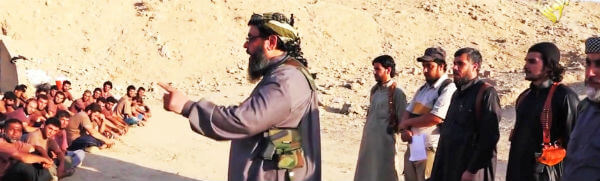
ISIS-instructor

Charlie Winter and Jordan Bach-Lombardo write: As it stands, the international coalition is far from winning the information war against the Islamic State. Its air strikes may be squeezing the group in Iraq and Syria and killing many of its leaders, but that has not halted the self-proclaimed caliphate’s ideological momentum. Indeed, at the end of 2015, it was estimated that the number of foreigners travelling to join militant groups in Iraq and Syria — predominantly the Islamic State — had more than doubled in the course of just 18 months. What’s more, while these figures may be striking, sheer numbers are less important than intent when it comes to the organization’s actual threat to the world. As we have already seen, it takes a very small number of people to unleash great terror, whether in Iraq, Syria, or elsewhere.

Abu Bakr al-Baghdadi’s organization does not enjoy mass appeal, but it is certainly having mass impact. After but 18 months of caliphate-hood, the group’s preeminence is already coming to shape what it is to be a millennial Muslim and inspiring attacks far outside the caliphate. Hence, the strategic communications war—where hearts and minds are won and lost—is just as important in the long-term as any military campaign, if not more so. [Continue reading…]

Facebooktwittermail

Russia facilitates ceasefire deals with safe passage for ISIS and Nusra Front fighters

Reuters reports: Pro-government sources say the Russian role has expanded to include facilitating local ceasefires in rebel-held areas around Damascus, with the aim of creating a secure buffer around the capital. Syrian Minister of National Reconciliation Ali Haidar described the process as purely Syrian even if there had at times been Russian help.

“The truth is that since the presence of the Russians on Syrian land, they can play the role of mediator in some areas,” he said at his offices in Damascus. “The Russians make contact (with militants) when they can, of course – in Douma and other areas,” he said, in reference to an area east of Damascus.” Sometimes it is the militants who request mediation by the Russians,” he said. Those wishing to relocate wanted guarantees of safe passage to rebel strongholds, and those wishing to stay wanted to be sure they wouldn’t be killed later on, he said. According to the non-Syrian sources interviewed by Reuters, Russian advisers orchestrated two deals in which hardline Islamist fighters were evacuated from the south toward areas their groups control in the northern and central provinces.

One of the non-Syrian military sources said the Russians worked “in the shadows” to facilitate the ceasefire deals. In some cases the Russians operated as guarantors for the deals.

Dozens of cars left southern towns of Syria in December carrying fighters from Nusra Front with their families to the northern province of Idlib which is under control of an alliance of rebels including Nusra Front. Weeks later a convoy left Hajar al-Aswad and Yarmouk camp areas near Damascus carrying fighters and families from Islamic State to the group’s stronghold of Raqqa.

A second source who was informed of the deals said the fighters were given safe passage. The aim was to empty these areas of hardline Islamists so clearing the way for the government to strike deals with the remaining rebels.

“The Russians want all the battles to be focused in the north, they want the south and Damascus and the coastal line all neutralized. Ultimately they are working toward achieving a wider political solution,” said the source. [Continue reading…]

Facebooktwittermail

Russia’s scorched earth policy in Syria

Lara Nelson writes: “It’s like Stalingrad. They raze entire areas. Then they send in the militias,” Yamen Ahmad, an FSA commander in Latakia, described. He was in Selma, Latakia province, leading his brigade when the regime took back the area from the opposition in January. “There is no way to resist this scorched earth policy the Russians are deploying with their strikes across Syria.”

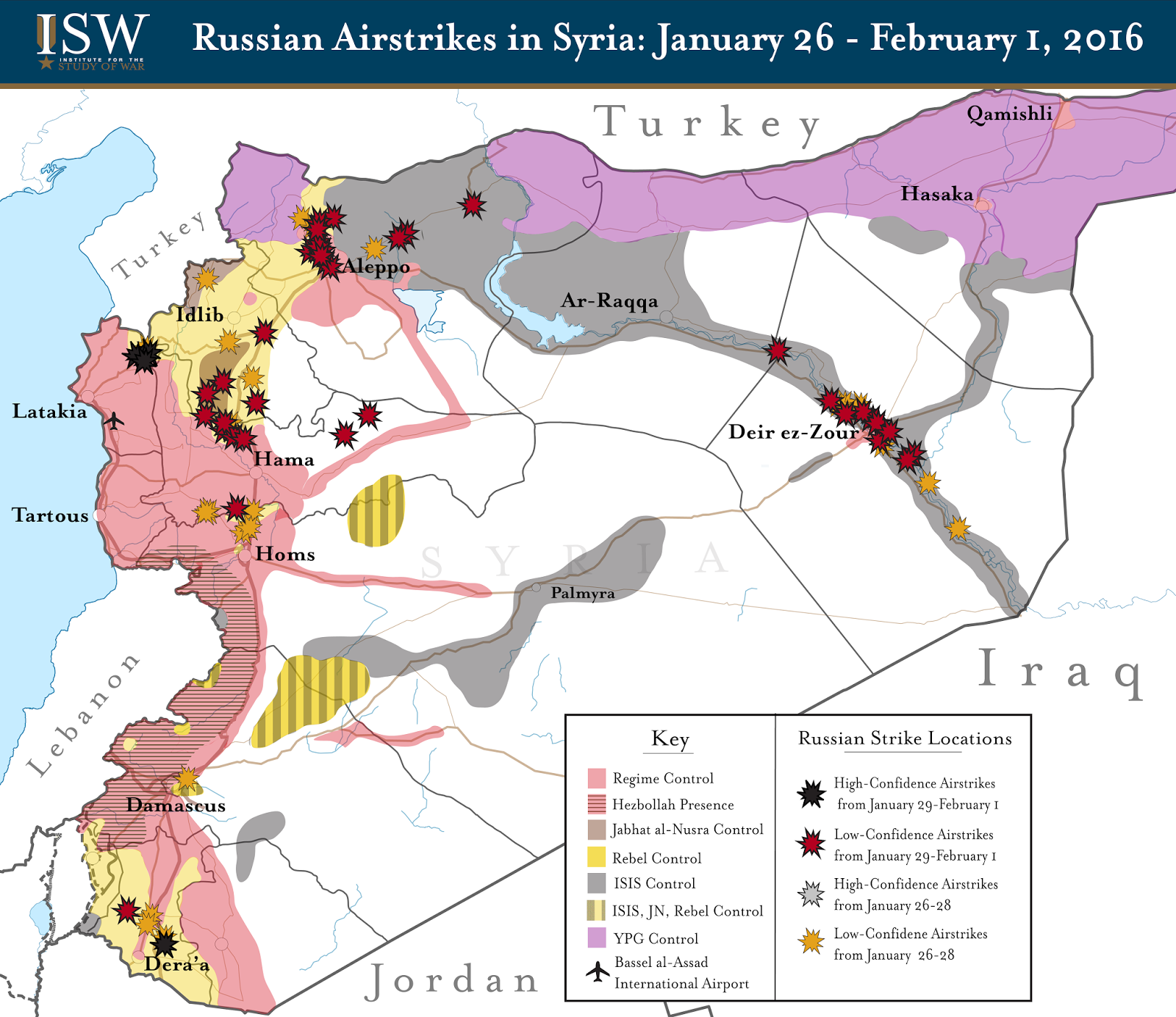
Since Russia began its strikes in Syria on 30 September, the regime has been able to make some gains across the country. Despite declaring that their military goal was strictly to target ISIS in Syria, studies have clearly documented their strikes have the main purpose of supporting the Assad regime’s military operations on the ground against moderate opposition forces, and have done little to seriously combat ISIS.

“Russia is simply acting as the regime’s air force against our moderate forces now,” said spokesman for the FSA’s Southern Front and defected officer Major Issam Al Reis. In Aleppo, the frontline between the regime and ISIS is a de facto safe zone, while they both focus their weaponry on opposition forces. As one media activist on the ground observed in the recent battle for Aleppo: “During the north Aleppo offensive, not a single Russian bomb hit ISIS – not a single ISIS attack hit Assad’s front.” [Continue reading…]

Facebooktwittermail

ISIS has been thwarted militarily. But now it could seize chance to advance

Hassan Hassan writes: In January 2014 newly organised rebel factions in northern Syria declared war on Islamic State (Isis), and this culminated in the expulsion of the group from all of the city of Idlib and most of Aleppo. Rebel forces in Raqqa, Deir ez-Zor and Hasaka similarly rose up to root out the increasingly overbearing foreign organisation.

The anti-Isis offensive reportedly cost the rebels about 7,000 fighters. The group’s presence in Syria was seriously threatened, receding to Raqqa and pockets in Aleppo, Deir ez-Zor and Hasaka, until the summer of that year, when Isis swiftly took over Deir ez-Zor and consolidated its presence in eastern Aleppo, southern Hasaka and Raqqa. It was helped by momentum and the advanced weapons it seized after it took over Mosul in mid-June and the Iraqi army there collapsed.

But the advancing hordes of Isis still failed to reclaim control in Idlib or the rest of Aleppo. That remains true today. Local rebel factions have resisted the group’s incessant attempts to return. The rebels’ resilience in those areas is remarkable, especially considering Isis’s control of al-Bab and Manbij west of Aleppo, two significant strongholds for, respectively, Isis’s economic activities and its manpower.

But what Isis failed to achieve with advanced weapons and momentum could be achieved with the changing military landscape in Aleppo and northern Syria at large. [Continue reading…]

Facebooktwittermail

Sunni resentment dims prospect of reunifying Iraq after ISIS

The New York Times reports: When Iraqi ground forces and American aircraft began assaulting the city of Ramadi more than a month ago, Ghusoon Muhammed and her family fled to the government’s front line, as did many other Sunni Arab families who had been trapped for months. Soldiers sent her and the children one way, and her husband another, to be interrogated in a detention facility.

She has not seen him or heard from him since. She and her children, who will most likely not be able to go home to Ramadi for months given the destruction, have been left to wait in a ramshackle tent camp here in Anbar Province. She is desperate, and adamant: “The innocent people in jail need to be released!” she said.

Standing nearby on Sunday was another woman, Karima Nouri. Her son, an auto mechanic, was also taken away by the authorities, and she has had no word about him for weeks. Ms. Nouri said the government considered civilians who remained in Ramadi to be sympathizers of the Islamic State. “But we had no ability to leave,” she said. “We are very poor.”

The retaking of Ramadi, the provincial capital, has been held out as a vital victory by Iraqi officials and their American allies, and one of the most crucial first steps in the government’s reclaiming of Anbar Province and other Sunni Arab places.

But even as military goals are being met, Sunni families like those of Ms. Muhammed and Ms. Nouri are still voicing their fear and resentment of the Shiite-dominated government in Baghdad, highlighting that the broader goal of political reconciliation is not yet being served. Their grievances today echo those that initially allowed the Islamic State, also known as ISIS or ISIL, to prosper two years ago as it began seizing territory from the Iraqi government. [Continue reading…]

Reuters reports: Powerful Iraqi Shi’ite Muslim cleric Moqtada al-Sadr said on Saturday the country needed a technocratic government, threatening to quit politics if Prime Minister Haider al-Abadi failed to carry out promised reforms.

The remarks by Sadr, whose Al-Ahrar bloc holds 34 seats in parliament and three cabinet posts, were the first high-level reaction to the premier’s call for politically appointed ministers to be replaced with technocrats.

Struggling to show results from reforms he announced six months ago, Abadi said this week he wanted to make the replacements in a cabinet reshuffle, a shake-up that would alter the delicate balance of government in place since the U.S.-led invasion in 2003.

Abadi provided few details of the planned reshuffle but he is expected to move forward with changes this week after returning to Iraq from a European trip.

Sadr called for “forming a technocrat government away from partisanship that should include all.” [Continue reading…]

Facebooktwittermail

Russia agrees to ‘ceasefire’ during which it will continue bombing Syria

Syria Deeply reports: World powers agreed Friday to the “cessation of hostilities” in Syria in one week and to redouble efforts to deliver humanitarian aid to civilians across the country, but failed to secure a nationwide ceasefire or an end to Russian bombing.

U.S. Secretary of State John Kerry announced the deal in Munich shortly after a marathon meeting with top diplomats from more than a dozen countries, including Russia, to push forward a ceasefire deal and to resurrect peace talks that collapsed last week.

“First, we have agreed to accelerate and expand the delivery of humanitarian aid beginning immediately,” Kerry told reporters.

“Second, we have agreed to implement a nationwide cessation of hostilities to begin in a target of one week’s time. That’s ambitious, but everybody is determined to move as rapidly as possible to try to achieve this.”

Kerry was quick to acknowledge that the meeting produced commitments on paper only.

“What we need to see in the next few days are actions on the ground, in the field,” he said, adding that “without a political transition, it is not possible to achieve peace.”

Russian foreign minister Sergei Lavrov said that Moscow would not halt its air raids in Syria, saying the cessation of hostilities did not apply to the Islamic State group (ISIS) and the al-Nusra Front, the al-Qaida affiliate in Syria.

Diplomats from the U.S. and the E.U. have said very few of Russia’s air raids have targeted Islamic extremist groups; instead, they have primarily targeted western-backed rebel groups seeking to oust President Bashar al-Assad. [Continue reading…]

The Washington Post reports: Russian warplanes resumed their bombardment of rebel positions across Syria within hours of the deal, striking areas in the countryside around the northern city of Aleppo in support of a 10-day-old government offensive to lay siege to the city.

In Brussels, Russian Foreign Minister Sergei Lavrov told reporters that Moscow would continue its attacks against groups including the Islamic State.

The Russians have repeatedly said that they consider a number of Islamist groups fighting within the opposition to be “terrorist,” and have used this formulation to justify air attacks that have largely targeted the anti-Assad opposition.

Under the agreement, the United States and Russia will chair a task force to adjudicate questions about where and when bombing is permitted. But it remains unclear how those decisions will be made. [Continue reading…]

U.S. State Department: Statement of the International Syria Support Group

Meeting in Munich on February 11 & 12, 2016, as the International Syria Support Group (ISSG), the Arab League, China, Egypt, the EU, France, Germany, Iran, Iraq, Italy, Jordan, Lebanon, the Organization of Islamic Cooperation, Oman, Qatar, Russia, Saudi Arabia, Turkey, United Arab Emirates, the United Kingdom, the United Nations, and the United States decided that humanitarian access will commence this week to besieged areas, and an ISSG task force will within one week elaborate modalities for a nationwide cessation of hostilities. [Continue reading…]

Facebooktwittermail

Inside the Syrian provincial capital where 200,000 face starvation

The Daily Beast reports: Deir Ezzor, a once relatively prosperous city of more than 300,000 people, is modern-day Syria in a microcosm. When anti-government protests broke out in 2011, the government sent in tanks. When rebels occupied the city, the ideals of those who protested state repression were betrayed by the arbitrary arrests and Islamist repression of al-Qaeda’s Syrian affiliate, Jabhat al-Nusra. Now, half the city is occupied by the Islamic State, which for more than a year has been besieging and starving the other half controlled by the Syrian government led by Bashar al-Assad — with the complicity, current and former residents say, of the government itself.

What’s left today of government-controlled Deir Ezzor is a poor and tired population. Some of those people are stubborn, or proud: having survived nearly five years of a war that has killed more than 250,000 of their fellow Syrians, they refuse to abandon their homes. Most, however — the vast majority — are there not because they choose to be, but because they have no choice. Many are refugees from other areas of Deir Ezzor province or from the city’s other half, taken over by the Islamic State in July 2014, on the other side of the Euphrates River. [Continue reading…]

Facebooktwittermail

Putin is a bigger threat to Europe’s existence than ISIS

George Soros writes: Putin is a gifted tactician, but not a strategic thinker. There is no reason to believe he intervened in Syria in order to aggravate the European refugee crisis. Indeed, his intervention was a strategic blunder because it embroiled him in a conflict with Turkey’s president, Recep Tayyip Erdoğan, which has hurt the interests of both.

But once Putin saw the opportunity to hasten the EU’s disintegration, he seized it. He has obfuscated his actions by talking of cooperating against a common enemy, Isis. He has followed a similar approach in Ukraine, signing the Minsk agreement but failing to carry out its provisions.

It is hard to understand why US and EU leaders take Putin at his word rather than judging him by his behaviour. The only explanation I can find is that democratic politicians seek to reassure their publics by painting a more favourable picture than reality justifies. The fact is that Putin’s Russia and the EU are engaged in a race against time: the question is which one will collapse first.

The Putin regime faces bankruptcy in 2017, when a large part of its foreign debt matures, and political turmoil may erupt sooner than that. The president’s popularity, which remains high, rests on a social compact requiring the government to deliver financial stability and a slowly but steadily rising standard of living. Western sanctions, coupled with the sharp decline in the price of oil, will force the regime to fail on both counts. [Continue reading…]

Facebooktwittermail

Why are Russian engineers working at an ISIS-controlled gas plant in Syria?

Foreign Policy reports: The Syrian government originally awarded the contract to construct the Tuweinan facility [the largest such facility in Syria, located 60 miles southwest of Raqqa] to Stroytransgaz in 2007. The construction utilized a Syrian subcontractor, Hesco, which was owned by Russian-Syrian dual national George Haswani. Last November, the Treasury Department sanctioned Haswani for allegedly brokering oil sales between the Islamic State and the Assad regime, charges he denies.

The partnership between Hesco and Stroytransgaz goes far beyond this one deal. The companies have worked in joint projects in Sudan, Algeria, Iraq, and the UAE since 2000, according to Haswani’s son-in-law, Yusef Arbash, who runs Hesco’s Moscow office.

Construction continued slowly until a coalition of Syrian rebel groups seized the facility in a joint operation with the al Qaeda-affiliated al-Nusra Front in January 2013. Abu Khalid, a member of the Qwais al-Qarani brigade, which was a part of the rebel coalition, said that when they entered the area, Russian engineers and advisors had already fled, leaving Syrian employees behind. “We decided to protect this plant; we thought it is belonging to Syrian people since it was owned by the Syrian state,” he said.

The Islamic State has been in control of the facility since early 2014. A senior Turkish official said that after its seizure, Stroytransgaz, through its subcontractor Hesco, continued the facility’s construction with the Islamic State’s permission. He also claimed that Russian engineers have been working at the facility to complete the project.

Syrian state-run newspaper Tishreen published a report appearing to corroborate this claim. In January 2014, after the facility was captured by the Islamic State, the paper cited Syrian government sources, saying that Stroytransgaz had completed 80 percent of the project and expected to hand over the facility to the regime during the second half of the year. The article didn’t mention that the facility was under the control of the Islamic State. [Continue reading…]

Facebooktwittermail

The offline allure of ISIS

ISIS-instructor

TSG IntelBrief: Two recent announcements highlight the difference between the so-called Islamic State’s reach on social media and its real-world appeal. On February 5, 2016, Twitter announced it had suspended more than 125,000 accounts for supporting terrorism since mid-2015. On the same day, UN Secretary-General Ban Ki-moon announced that 34 militant groups worldwide had pledged allegiance to the Islamic State as of last December, with more likely in 2016. The Islamic State’s social media efforts have always received disproportionate attention. Less attention has been paid to the offline power of the group in terms of radicalization and recruitment. Social networks matter more than social media when it comes to proliferating the ideology of bin-Ladinism espoused by both the Islamic State and al-Qaeda.

From pamphlets to audio cassette tapes—and now videos and mobile messaging apps—terrorists have always sought to broadcast their ideology to motivate and rally people to their cause. But the real propagation of terrorism requires salesmen and saleswomen—people who understand that the principles of persuasion begin with a deep understanding of the prospective customer. Graphic tweets may produce headlines, but persuasive individuals produce recruits, often in clusters.

The eight young men who left the Lisleby district of Fredrikstad, Norway, to join the Islamic State in Syria did not join because of social media, even if it did help spread the group’s message. All were reportedly motivated to join the Islamic State by the example of Abdullah Chaib, a charismatic local soccer player who traveled to Syria in 2012. The small group of friends created a feedback loop of motivation and encouragement that did not depend on Twitter or Facebook. Likewise, the terror recruit cluster in Molenbeek, Belgium thrived on networks built around friendship and familial ties, not Telegram or Kik. This same dynamic of peer-to-peer recruitment and consistent face-to-face interaction produced the cluster in the Minneapolis-Saint Paul region of Minnesota. Long-time foreign fighter hotbeds such as Derna, Libya, and Bizerte and Ben Gardane in Tunisia rely on decidedly offline networks to export extremism. [Continue reading…]

Facebooktwittermail

Obama’s disastrous betrayal of the Syrian rebels

Emile Hokayem writes: What a difference a year makes in Syria. And the introduction of massive Russian airpower.

Last February, President Bashar al-Assad’s regime and its Shiite auxiliaries mounted a large-scale attempt to encircle Aleppo, the northern city divided between regime and rebels since 2012 and battered by the dictator’s barrel bombs. Islamist and non-Islamist mainstream rebels — to the surprise of those who have derided their performance, let alone their existence — repelled the offensive at the time. What followed was a string of rebel advances across the country, which weakened Assad so much that they triggered Moscow’s direct intervention in September, in concert with an Iranian surge of forces, to secure his survival.

Fast-forward a year. After a slow start — and despite wishful Western assessments that Moscow could not sustain a meaningful military effort abroad — the Russian campaign is finally delivering results for the Assad regime. This week, Russian airpower allowed Assad and his allied paramilitary forces to finally cut off the narrow, rebel-held “Azaz corridor” that links the Turkish border to the city of Aleppo. The city’s full encirclement is now a distinct possibility, with regime troops and Shiite fighters moving from the south, the west, and the north. Should the rebel-held parts of the city ultimately fall, it will be a dramatic victory for Assad and the greatest setback to the rebellion since the start of the uprising in 2011.

In parallel, Russia has put Syria’s neighbors on notice of the new rules of the game. Jordan was spooked into downgrading its help for the Southern Front, the main non-Islamist alliance in the south of the country, which has so far prevented extremist presence along its border. Turkey’s shooting down of a Russian military aircraft that crossed its airspace in November backfired: Moscow vengefully directed its firepower on Turkey’s rebel friends across Idlib and Aleppo provinces. Moscow also courted Syria’s Kurds, who found a new partner to play off the United States in their complex relations with Washington. And Russia has agreed to a temporary accommodation of Israel’s interests in southern Syria.

Inside Syria, and despite the polite wishes of Secretary of State John Kerry, the overwhelming majority of Russian strikes have hit non-Islamic State (IS) fighters. Indeed, Moscow and the Syrian regime are content to see the United States bear the lion’s share of the effort against the jihadi monster in the east, instead concentrating on mowing through the mainstream rebellion in western Syria. Their ultimate objective is to force the world to make an unconscionable choice between Assad and IS. [Continue reading…]

Facebooktwittermail

Rebel setbacks in Syria have far reaching consequences

Hassan Hassan writes: Is Syrian president Bashar Al Assad finally winning? One can feel a deep sense of grief running through opposition factions whether inside or outside Syria over how events have unfolded over the past two weeks.

Pro-regime forces have made a series of major gains in northern, central and southern Syria over the past week.

More strikingly, they broke a three-year siege imposed by the rebels around the Shia towns of Nubbol and Zahraa, 20 kilometres from Aleppo city, which represents a major setback for the rebels especially as it could disrupt a game of encirclement and counter-encirclement that sustained the rebels’ control of much of Aleppo since 2012.

Five months after the regime’s forces seemed incapable of halting the string of victories achieved by the rebels in northern Syria, which led to the Russian military intervention to prop up their ally, the regime appears to be on the offensive. The offensive is seen n northern Latakia, the western Ghouta near Damascus, Deraa and in the rural areas of Hama, Idlib and Aleppo. The regime appears to have made an impressive comeback.

It is hard to judge how one side is doing through such tactical gains. The rebels were clearly on the winning side just a year ago, while the regime’s army suffered from a shortage in manpower, as admitted by Mr Al Assad himself during his last speech in August.

The breaking of the siege of Nubbol and Zahraa last week, as well as the siege of Kweiris airbase near Raqqa in November and the takeover of Sheikh Maskeen in Deraa last month, were spearheaded by foreign militias beholden to Iran.

The opposition’s real crisis is much deeper, hence the state of grieving widely felt by the rebels. These setbacks come amid profound internal, regional and international challenges that could tip the balance dramatically in favour of the regime. [Continue reading…]

Facebooktwittermail

ISIS’s dream is Libya’s nightmare — and the world’s too

BuzzFeed reports: A howling wind filled the air with sand, enveloping the small desert outpost. Shivering from the January cold, a skinny, bedraggled man in mismatched desert camouflage fatigues, a scarf wrapped around his face, took a deep breath and stepped forward. He tightened his grip on his AK-47 as the car pulled up to the checkpoint. Without a helmet or bulletproof vest, he warily approached, asking for identification papers, searching for weapons and checking the trunk. This time there was nothing inside, save for some rope and a few empty burlap sacks, likely to be filled with wheat or barley for the drive back. He relaxed, and waited for the next car to arrive.

Just a few years ago, the land around this outpost, 180 miles southeast of the Libyan capital of Tripoli, was a nature reserve where the deposed leader, Muammar al-Qaddafi, and his entourage would come for retreats, hunting for wild game. The spacious villas that housed them are dotted around, now empty, looted for their gaudy fixtures and fittings. Inhabitants of a nearby village have mostly fled. Once a sleepy patch of desert, Abu Grein has now become the front line against the Libyan branch of ISIS, a gathering force now threatening to demolish what’s left of the country.

The men at the checkpoints, ambling back and forth between shipping containers used as makeshift shelters, know that any one of the cars and trucks passing could be loaded to the brim with explosives, or jihadis seeking to kill them.

Mostly the militiamen come from the nearby city-state of Misrata. They knew that if ISIS gets through this front, their families and neighbors back home will be put at risk. From their stronghold in the city of Sirte about 90 minutes up the road, the list of atrocities carried out by ISIS is seemingly endless; they have dispatched suicide bombers, launched attacks on checkpoints, laid booby-trapped bombs, beheaded Christians and others, stormed the most upmarket hotel in the country, hijacked oil tankers and attacked oil facilities, kidnapped civilians, and captured fighters from the collection of dwindling militiamen that guard the front. [Continue reading…]

Facebooktwittermail

Another ISIS jailer who held Western hostages identified as British

BuzzFeed reports: A second member of the notorious ISIS execution cell once headed by “Jihadi John” has been unmasked as a “quiet and humble” football fan from west London, BuzzFeed News and the Washington Post can reveal.

Thirty-two-year-old Alexanda Kotey has been identified by British and American intelligence services as one of four ISIS guards, collectively known as the “Beatles”, who are responsible for beheading 27 hostages. The guards were given their nickname by hostages because of their British accents.

It can be revealed that Kotey travelled to the Middle East alongside three other known extremists on a controversial aid convoy to Gaza organised by the London mayoral candidate George Galloway in 2009 – and friends in west London have not heard from him since.

He is the second member of the cell to be identified, after “Jihadi John” was exposed as west Londoner Mohammed Emwazi, who was killed by US a drone strike in November. The other members of the cell, nicknamed “Ringo”, “George”, and “Paul”, remain among the world’s most wanted men and are being hunted by intelligence and security services on both sides of the Atlantic. [Continue reading…]

Facebooktwittermail