Category Archives: ISIS

Islamic State of Iraq and Syria

Meeting ISIS fighters: Its young men were lost souls coerced or duped into service

Sebastian Meyer writes: As a journalist based in northern Iraq for the past six years, I’ve seen the war with the Islamic State closer than I’d like. In the summer of 2014, my best friend, a man I’d come to love and respect during my time reporting here, was taken prisoner by the militants. We were more like brothers than friends, and I haven’t heard from him since.

I was filming about 180 miles away on the evening he disappeared. I drove through the night to join a group of his friends and family in a rescue effort. While the militants stormed west across Iraq, we worked exhaustively to find him. (I can’t say more about him, because doing so could put him in further danger.) We were driven by rage and desperation.

Months later, Diji Terror, a Kurdish counterterrorism unit based in Sulaymaniyah, granted my request to interview an ISIS fighter I’d heard they had captured. Finally, a small chance to press the Islamic State for answers about its tactics. A chance for some catharsis.

Ali was seized during a nighttime raid caught on film: In the footage officials showed me, Diji troops handcuffed, blindfolded and bundled him off on a helicopter. Ali had beheaded prisoners, they told me; I couldn’t help but think of my friend.

When I met him, Ali wore an orange jumpsuit and plastic sandals. [Continue reading…]

Facebooktwittermail

As long as the linkage between authoritarian regimes and extremism is ignored, ISIS and al Qaeda will never be defeated

Joyce Karam writes: “What are you talking about, 7000…No,no. We killed 38,000”, those were the words of former Syrian General Rifaat Assad in1982 as recounted by Thomas Friedman in his book “From Beirut to Jerusalem”. Rifaat, who is now in exile, was exulting about the number of Syrians his forces killed in Hama 34 years ago, quashing a rebellion against his brother’s dictatorship and setting the stage to what has followed.

The ghosts of Hama today hover all over Syria, cementing the pillars of the Assad doctrine to rule by fear and hold on to power at any cost even if it means surrendering the country to devastation, radicalization and ultimate death. From father to uncle to son, the Assad playbook has not changed, copying the narrative of Hama to Homs, Douma, Ghouta, Idlib, Daraa and Aleppo, and in the process leaving behind more than 250 thousands dead, millions displaced, and a society in shambles.

The 3-week assault on Hama in 1982 has laid the ground for how the Assad regime reacts to any signs of rebellion later. Not coincidentally, the same horror tactics utilized in Hama in 1982 with Assad the father were replicated by the son across Syria following the 2011 uprising.

In a chilling report by Amnesty International in 2012, survivors of the Hama massacre give their account of what happened, describing images of the dead splintered in the streets, left to be eaten by dogs and as a red flag for those whose lives were spared. Snipers were on the roofs, neighborhoods were razed and one survivor recalls the the attack on Mas’oud Mosque, where “some 60 men were killed before the security forces cut off their fingers and placed them along the mosque’s walls.” She tells Amnesty “for around two years after the massacre, no one dared remove the fingers. They were so frightened.” [Continue reading…]

Facebooktwittermail

U.S. confirms involvement in Syria airfield expansion

VOA reports: At the urging of an American contingent, Syrian Kurds are expanding an airbase on farmland in northeast Syria that could be used for military purposes, according to Kurdish and U.S. officials.

Known as Abu Hajar airport, the airbase is located in the Rmelan area of northern Syria, and is controlled by the Kurdish People’s Defense Units and the Syrian Democratic Forces. Neither has an air force.

A team of Americans pitched the idea to Syrian Democratic Forces to extend the runway, a defense official told VOA on the condition of anonymity.

The official Wednesday said the airfield is being extended from 700 meters to 1,300 meters.

The extension would be long enough to allow C-130 transport planes to land on the strip and potentially supply those fighting Islamic State forces in the area. [Continue reading…]

Facebooktwittermail

U.S. struggling to build anti-ISIS strategy in Libya

The Associated Press reports: The Obama administration is struggling to find the right mix of military and diplomatic moves to stop the Islamic State in Libya, where the extremist group has taken advantage of the political chaos in the country to gain a foothold with worrying implications for the U.S. and Europe — particularly Italy, just 300 miles away.

U.S. officials have publicly warned of the risks of Libya becoming the next Syria, where the Islamic State flourished amid civil war and spread into Iraq.

No large-scale U.S. military action is contemplated in Libya, senior administration officials said, but Obama last week directed his national security team to bolster counterterrorism efforts there while also pursuing diplomatic possibilities for solving Libya’s political crisis and forming a government of national unity. While the Islamic State has emerged in other places, including Afghanistan, Libya is seen as its key focus outside of Syria and Iraq. [Continue reading…]

Facebooktwittermail

John Kerry keeps calling ISIS ‘apostates.’ Maybe he should stop

Adam Taylor writes: There may be no more globally divisive question over the past few years than whether the Islamic State is representative of the world’s global Muslim population or not. Speaking in Rome on Tuesday, U.S. Secretary of State John F. Kerry waded into this controversial debate yet again – and took a remarkably strong position for a Western leader.

“Daesh is in fact nothing more than a mixture of killers, of kidnappers, of criminals, of thugs, of adventurers, of smugglers and thieves,” Kerry said. “And they are also above all apostates, people who have hijacked a great religion and lie about its real meaning and lie about its purpose and deceive people in order to fight for their purposes.”

The use of the word “apostates” – a term to describe someone who renounces or abandons their religion – has raised eyebrows among observers. The description has been commonly used by extremist groups: The Islamic State has justified its attacks on Muslims with rhetoric that suggests these Muslims were apostates, which they view as a crime punishable by death.

On Twitter, Nasser Weddady, a popular online activist who grew up in Syria, mocked Kerry for his comment. Wedaddy and others also jokingly suggested that Kerry was a “takfiri,” a word used to describe a Sunni Muslim who accuses others of apostasy. [Continue reading…]

Facebooktwittermail

Pentagon won’t say how many troops are fighting ISIS

The Daily Beast reports: In the war against the self-proclaimed Islamic State, there are two ways to count the number of U.S. boots on the ground. There’s the one that officials admit to. Then there’s the ground truth.

Officially, there are now 3,650 U.S. troops in Iraq, there primarily to help train the Iraqi national army.

But in reality, there are already about 4,450 U.S. troops in Iraq, plus another nearly 7,000 contractors supporting the American government’s operations. That includes almost 1,100 U.S. citizens working as military contractors, according to the latest Defense Department statistics. [Continue reading…]

Facebooktwittermail

Google thinks it can combat terrorism with advertising

The Telegraph reports: Jihadi sympathisers who type extremism-related words into Google will be shown anti-radicalisation links instead, under a pilot scheme announced by the internet giant.

The new technology means people at risk of radicalisation will be presented with internet links which are the exact opposite of what they were searching for.

Dr Anthony House, a senior Google executive, revealed the pilot scheme in evidence to MPs scrutinising the role of internet companies in combating extremism.

“We are working on counter-narratives around the world. This year one of the things we’re looking at is we are running two pilot programmes,” said Dr House.

“One is to make sure these types of views are more discoverable.

“The other is to make sure when people put potentially damaging search terms into our search engine they also find these counter narratives.”

A Google spokeswoman said the pilot project referred to by Dr House would bring up counter-narrative messages in “AdWords” – the sponsored links which are returned at the top of a Google search – and not the search results themselves.

Dr House said later: “We offer Google AdWords Grants to NGOs so that meaningful counter-speech ads can be surfaced in response to search queries like ‘join Isis’.” [Continue reading…]

Let’s disregard the fact that would-be jihadists are just as likely as anyone else to use ad-blocking software. What are we to imagine the click-through rate will be for, let’s say, a Human Rights Watch ad that appears on a search page delivered on a query about the ISIS magazine, Dabiq?

Is Dr House serious? This sounds, more than anything, like a PR exercise for Google — a way of saying: we’re playing out part in combating terrorism.

Clearly, Google, like every other internet company, wants to be seen as being opposed to terrorism; not as a facilitator of terrorism through the creation of communications platforms — even though in reality these have become a vital tools in 21st century terrorism.

Terrorists are often credited with being able to stay one step ahead of their adversaries — as though this is an indication of their cunning. Unfortunately, more often it seems to be an indication that counter-terrorism is another name for easy money.

Anything can get funded on the smallest prospect it might be effective. Those who carry the burden that they must be seen to be doing something, can duly claim they are meeting their responsibilities as they approve almost anything.

Aside from the question of efficacy when it comes to Google’s strategy for presenting counter-narratives, just as importantly, we need to question the search engine’s ability to decipher the motives of its users, i.e it’s ability to accurately identify “dangerous searches.” After all, a query that indicates the malevolent intentions of one user, might from another user be an indication that they are a journalist or an academic. Search terms indicate what is sought but not necessarily why it is being sought.

Beyond that is the broader issue of the political and social manipulation that internet companies are engaged in when the services they provide are designed to modify the behavior of their users.

As Henry David Thoreau wrote, “Men have become the tools of their tools,” but it’s hard to grasp the degree to which, during the intervening 150 years, this has become so much more true.

Google might not have high expectations about its ability to limit the growth of ISIS through the use of adwords, yet it certainly has a huge interest in every branch of research through which it can refine the effectiveness of its primary revenue source by shaping our interests and desires.

Facebooktwittermail

The U.S. is killing more civilians in Iraq and Syria than it acknowledges

Paul Wood and Richard Hall report: Al Gharra is a mud-brick village built on hard, flat Syrian desert and populated by the descendants of Bedouin. It is a desolate place. Everything is dun colored: the bare, single-story houses and the stony desert they stand on. There is not much farming — it is too dry — just a few patches of cotton and tobacco.

Before the war, villagers got a little money from the government to look after the national park on Mount Abdul-Aziz, a barren rock that rises 3,000 feet behind the village and stretches miles into the distance. Mount Abdul-Aziz is named after a lieutenant of the 12th-Century Muslim warrior Saladin, who built a fort to dominate the plain below. There is a military base there today too, which changes hands according to the fortunes of Syria’s civil war. In 2011, the regime of Bashar al-Assad held the base; next it was the rebels of the Free Syrian Army; then the so-called “Islamic State” (IS); and finally the Kurds, who advanced and took the mountain last May under the cover of American warplanes.

Abdul-Aziz al Hassan is from al Gharra, his first name the same as the mountain’s. He left the village while the Islamic State was in charge, but it is because of a bomb from an American plane that he cannot go back. What happened to his family is the story of just one bomb of the 35,000 dropped so far during 10,000 missions flown in the US-led air war against the Islamic State. [Continue reading…]

Facebooktwittermail

From Iraq, general rebukes Ted Cruz’s plan to ‘carpet-bomb’ ISIS

The Washington Post reports: The top U.S. general in Iraq on Monday addressed recent political rhetoric in the presidential campaign that the United States should “carpet-bomb” the Islamic State, saying that the Pentagon is bound by the laws of armed conflict and does nt indiscriminately bomb civilian areas.

“We’re the United States of America, and we have a set of guiding principles and those affect the way we as professional soldiers, airmen, sailors, Marines, conduct ourselves on the battlefield,” MacFarland said. “So indiscriminate bombing, where we don’t care if we’re killing innocents or combatants, is just inconsistent with our values. And it’s what the Russians have been accused of doing in parts of northwest Syria. Right now we have the moral high ground, and I think that’s where we need to stay.”

The comments came in response to a question from CNN’s Barbara Starr during a Pentagon news conference. The general was asked why the military isn’t engaged in “so-called carpet-bombing,” a phrase that has been used often by presidential candidate Sen. Ted Cruz (R.-Tex.). [Continue reading…]

Facebooktwittermail

Fight ISIS with democracy

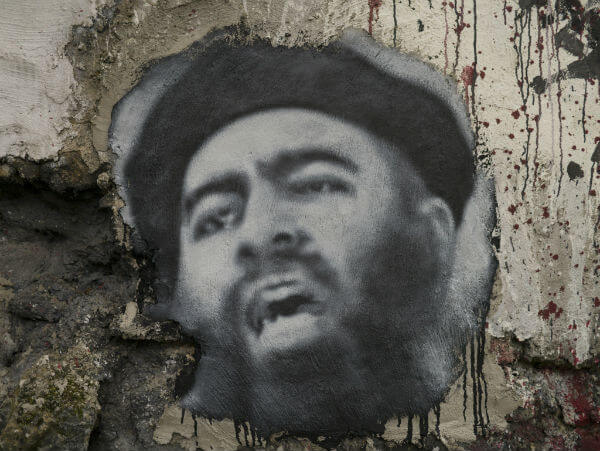
Baghdadi

Rached Ghannouchi, co-founder and president of Tunisia’s Muslim democrats party, Ennahdha, writes: As more countries confront the question of how to counter terrorist groups like ISIS, it is clear that a short-term, reductionist approach focused largely on military force has proven ineffective. Efforts to dislodge the so-called Islamic State through bombing, and to keep it at bay by strengthening and equipping security forces in the places it operates, have so far had limited success despite their enormous financial costs.

This is because, although such efforts are critical, they are not sufficient. The rise of ISIS, and its ability to recruit from a region that just five years ago was swept by democratic hopes and aspirations, requires a global response that is informed by where the group came from. For such a response to work, I believe it must reflect five principles. These are based on Tunisia’s experience as the most successful democratic transition to emerge from the Arab uprisings, as well as my personal intellectual and political work in Tunisia and the Arab world over five decades.

First, there is no universal approach to tackling ISIS. Rather, the group can only be defeated through a variety of locally designed and targeted responses. Extremist groups like ISIS use technology and social networks to cross boundaries and attract recruits globally—but their discourse is linked to local grievances wherever they operate. [Continue reading…]

Facebooktwittermail

Trapped by ISIS, Iraqis in Fallujah say they are going hungry, too

The Washington Post reports: As Iraqi security forces choke off Islamic State fighters in the militant-held city of Fallujah, civilians inside say they are trapped and struggling to survive.

The military siege, which has tightened in the past two months, is preventing food and medical supplies from reaching the city 40 miles west of Baghdad, while the Islamic State won’t let families leave.

The United Nations says it is “deeply worried” about the deteriorating humanitarian situation and unverified reports of deaths from a lack of food and basic medicine.

Between 30,000 and 60,000 people are estimated to remain in the city, which has been under Islamic State control for more than two years. Their worsening plight comes amid an international outcry over starvation in the besieged Syrian town of Madaya — a disaster residents and officials from Fallujah say they fear could also unfold there if civilians aren’t evacuated. [Continue reading…]

Facebooktwittermail

The rise of the paramilitary Popular Mobilization Forces in Iraq

Renad Mansour writes: Many of Iraq’s Shia are taking up arms to fight the self-proclaimed Islamic State. However, rather than enlisting with the Iraqi military via the Ministry of Defense (MOD), they are opting to join paramilitary groups under the umbrella of the Popular Mobilization Forces (PMF or al-Hashd al-Shaabi in Arabic), which has become the single largest ground force combating Islamic State fighters in Iraq. Despite Human Rights Watch’s accusation that some groups under the umbrella, such as the Badr Brigades, League of the Righteous (Asaib ahl al-Haq), and Imam Ali Battalions are carrying out widespread and systematic human rights violations, the PMF has maintained its popularity and legitimacy among the Shia base. A recently published poll showed that 99 percent of Iraqi Shia support the PMF in its fight against the Islamic State.

As a consequence, the number of recruits rushing to enlist with the PMF is substantial. According to various claims from well-informed sources in Baghdad, more than 75 percent of men ages 18 to30 residing in the Shia provinces have signed up. Although most of these recruits are reservists who will not fight, the mere volume is indicative of the PMF’s support in that region.

The sheer extent of such numbers would typically indicate some form of conscription. However, there is no such formal mandatory recruitment in place. The PMF is merely guided by Ayatollah Sistani’s al-wajib al-kifai fatwa, which itself very carefully restricts recruitment to only as many as needed to combat the threat posed by the Islamic State. Yet, a PMF administrator in Najaf told the author that more than enough recruits have joined. They are having no trouble attracting members who come from a diverse set of social classes and geographic regions. According to him, the only distinguishable group that is not joining is university students. [Continue reading…]

Facebooktwittermail

Mali’s irrepressible musical spirit resounds after jihadi-imposed silence

The Guardian reports: n the courtyard of a colonial villa in Bamako, four young men crouch around a tiny camping stove. The Malian tradition of simmering tea for hours is as old as the ancient trade routes crossing the Sahara desert. There is even a saying behind the practice, says Aliou Touré, a singer in the Mali band Songhoy Blues.

“Here in Mali we say that the first cup is bitter like life, the second is sweet like love and the third is soft like the breath of a dying man,” he says.

Songhoy Blues are one of the latest musical acts to emerge from the west African country that has produced artists such as Salif Keita and Toumani Diabaté – both multiple Grammy winners – Tinariwen, Ali Farka Touré, Bassekou Kouyaté, and Rokia Traoré.

The band is one of a dozen acts at this week’s Bamako acoustic festival, the first major music festival in the capital since 2012, when Islamist extremists seized northern Mali and imposed their hardline interpretation of sharia law that, among other things, banned music. [Continue reading…]

Facebooktwittermail

The latest video from ISIS was its most menacing warning to Britain yet

Raqqa2

Shiraz Maher writes: It was the final part of the latest Islamic State video that will have caught the ­attention of the Security Service. After a 15-minute film celebrating the Paris attacks in November, viewers see David Cameron giving a press conference in Downing Street with a message from Islamic State flashing across the screen.

“Whoever stands in the ranks of kufr [the infidels],” it reads, “will be a target for our swords and will fall in humiliation.”

Various London landmarks – Big Ben, Buckingham Palace, Tower Bridge, Trafalgar Square – then appear in rapid succession before the video comes to an abrupt stop. A terrorism analyst sent me a message shortly after the video was released on Sunday. “I would consider it a warning,” he noted. “That wasn’t [there] because they didn’t know how to fill the last segment.” This is not the first time IS has appeared to threaten Britain, but it is the most pointed and menacing warning yet.

I messaged a British member of IS, who is originally from Buckinghamshire, to ask his view. Was it intended to be warning? “Yep,” came the reply. “Do they [the British government] expect us to sit back and do nothing? Idiots.”

The fighter was referring to parliament’s decision to extend British air strikes to IS targets inside Syria, and to those people who counselled against such action his comments may seem to offer vindication. Yet the facts aren’t so straightforward.

Last July I spoke with another British IS fighter, Abu Rahin Aziz, to get his thoughts on the tenth anniversary of the 7/7 London terrorist bombings. He was bullish, warning of more attacks, and then he explained in careful detail some of the philosophical reasons Britain remains a target for the group. [Continue reading…]

Facebooktwittermail

Iraq: Possible war crimes by Shia militia

Human Rights Watch: Members of Shia militias, who the Iraqi government has included among its state forces, abducted and killed scores of Sunni residents in a central Iraq town and demolished Sunni homes, stores, and mosques following January 11, 2016 bombings claimed by the extremist group Islamic State, also known as ISIS. None of those responsible have been brought to justice.

Two consecutive bombings at a café in the town of Muqdadiya, in Diyala province, some 130 kilometers north of Baghdad, on January 11, killed at least 26 people, many of them Sunnis, according to a teacher who lives near the café. ISIS claimed the attacks, saying it had targeted local Shia militias, collectively known as Popular Mobilization Forces, which are formally under the command of the prime minister. Members of two of the dominant militias in Muqdadiya, the Badr Brigades and the League of Righteous forces, responded by attacking Sunnis as well as their homes and mosques, killing at least a dozen people and perhaps many more, according to local residents.

“Again civilians are paying the price for Iraq’s failure to rein in the out-of-control militias,” said Joe Stork, deputy Middle East director at Human Rights Watch. “Countries that support Iraqi security forces and the Popular Mobilization Forces should insist that Baghdad bring an end to this deadly abuse.” [Continue reading…]

Facebooktwittermail

Mayors across the U.S. see Donald Trump as a threat to national security

Politico Magazine’s fourth national Mayors Survey (which had 73 participants) found that: mayors of varying constituencies and political stripes agreed on one key priority: diversity training and outreach, with a focus on tolerance and inclusion. Sixty-two percent of mayors said their police forces had a program to engage the Muslim community, and over a quarter of respondents cited “community relations and distrust of law enforcement” as a key challenge to counter-terrorism efforts.

“It’s prudent for us to establish real and sustainable relationships with immigrant and Muslim communities,” wrote Newark Mayor Ras Baraka. “It is equally important to address those that are marginalized and secluded of all groups, particularly youth, to stabilize communities and lower the opportunities for recruitment and propaganda.”

Wrote one mayor anonymously: “Communities are still very much segregated. And public education needs to be intentional about teaching respect in a diverse society.” One mayor cited as a key accomplishment “strengthening our relationships with the many ethnic groups who live [here]. 1 of 4 residents were not born in the US and 1 of 3 are a person of color.”

National politicians, the mayors charged, are harming counter-terrorism efforts through anti-Muslim rhetoric. “Islamophobia is a huge threat to the well-being of my constituents,” wrote a mayor of a major Midwest city. “The president gets that, congress doesn’t.” Added another: “Some candidates for President and Congressional leaders don’t understand that good relations, tolerant policies, and community outreach is critical to getting tips and leads on terrorist activity and keeping our cities safe.”

Asked which presidential contender would be the worst for security, 51 percent named a certain billionaire real estate mogul.

“Donald Trump will be the worst,” wrote Mayor Marilyn Strickland of Tacoma, Washington, population 203,000. “Peddling hate, fear and xenophobia will not make us more safe.”

“Trump would be a disaster,” concurred Mary Salas, of Chula Vista, California, whose city has a population of about a quarter of a million.“He’d create terrible foreign relations — a dangerous climate.”

Still, some mayors took a contrarian view on where the real terrorist threat is emanating from.

“Austin’s experience with terrorism, whether it’s someone flying his plane into the IRS building or shooting at the police station and the Mexican Consulate, has been exclusively domestic in origin,” said Austin Mayor Steve Adler. Said Kitty Piercy, of Eugene, Oregon: “I think having a national wildlife refuge taken over by out of state militia is pretty frightening. We may need to think of American terrorism in whole new ways.” [Continue reading…]

Facebooktwittermail

How the politics of fear and the crushing of civil society imperil global rights

rivera4 (1)

Kenneth Roth writes: Fear stood behind many of the big human rights developments of the past year. Fear of being killed or tortured in Syria and other zones of conflict and repression drove millions from their homes. Fear of what an influx of asylum seekers could mean for their societies led many governments in Europe and elsewhere to close the gates. Fear of mounting terrorist attacks moved some political leaders to curtail rights and scapegoat refugees or Muslims. And fear of their people holding them to account led various autocrats to pursue an unprecedented global crackdown on the ability of those people to band together and make their voices heard.

In Europe and the United States, a polarizing us-versus-them rhetoric has moved from the political fringe to the mainstream. Blatant Islamophobia and shameless demonizing of refugees have become the currency of an increasingly assertive politics of intolerance.

These trends threatened human rights in two ways, one well known, the other less visible. The high-profile threat is a rollback of rights by many governments in the face of the refugee flow and the parallel decision by the self-declared Islamic State, or ISIS, to spread its attacks beyond the Middle East. The less visible threat is the effort by a growing number of authoritarian governments to restrict civil society, particularly the civic groups that monitor and speak out about those governments’ conduct. [Continue reading…]

Facebooktwittermail

Iraqis freed from ISIS’s rule now threatened by ethnic and sectarian ‘cleansing’

Aida al-Khatib reports: Thanks to the security crisis caused by the extremist group known as the Islamic State, the demographics of the province of Diyala are changing. The extremist group has been driven out of certain parts of the province and some of these are now controlled by Iraq’s sometimes-controversial Shiite Muslim volunteer militias while others are run by the Iraqi Kurdish military.

“Demographic changes have become a reality here,” says Raad al-Dahlaki, a Sunni Muslim MP and head of the Iraqi Parliament’s Committee on Immigration and Displacement. “There are many areas where security is extremely lax and there are violations of the law that should not be tolerated. For example certain areas have been shelled deliberately and it’s causing the mass displacement of [mostly Sunni] families.”

Al-Dahlaki believes the perpetrators of these acts are “militant gangs that pretend to be part of the volunteer militias but who are actually carrying out agendas set by foreigners”. And by this he means neighbouring Iran – many of the Shiite militias are funded or otherwise supported by the Iranian military.

“These gangs want to sow discord and change the demography of the province,” al-Dakhali argues.

Al-Dakhali believes the federal government should be doing more to stop the targeting of civilians by military groups, including the Shiite Muslim volunteers and Iraqi Kurdish troops. [Continue reading…]

Facebooktwittermail