
Category Archives: ISIS

Islamic State of Iraq and Syria

The carve-up of Syria is already happening under Obama’s Plan A

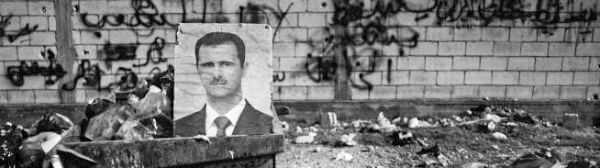
assad-2

Michael Weiss writes: “Syria,” properly speaking, no longer exists. The nation-state cobbled together a hundred years ago by the great powers, albeit with borders periodically rejiggered since, is FUBAR and will henceforward remain a balkanized set of cantons or fiefs ruled by a panoply of antagonistic sectarian insurgencies, proxies, and terrorist organizations — some elements, including the one residing in the presidential palace in Damascus, adequately meeting the definitions for all three categories. And it really doesn’t matter if every last Sukhoi fighter jet, Scud missile, and barrel bomb gets put away on Saturday, when the truce is set to commence.

I say that because the best-case scenario for Kerry’s last-ditch, now-don’t-hold-me-to-this prescription for ending a modern and globally transformative holocaust is that war actually continues, only against the “right” targets, namely al Qaeda and ISIS. These are the two U.N.-designated terrorist organizations not party to or expected to abide by the ceasefire. Their spoiler potential for provoking others to violate the terms of the agreement is enormous, as both militancies collectively boast an order of battle greater than that of the mobilized Syrian Arab Army.

As Andrew Tabler, a Syria specialist at the Washington Institute for Near East Policy, puts it, the central dilemma is gauging what constitutes success for Kerry’s quixotic program: “Is the bar that fewer people are dying or is the bar that more people are fighting terrorism?”

If the latter, then how do you accomplish that when every security agency of the executive branch believes that Russia is not going to stop bombing the anti-Assad opposition so as long as it can claim it is only hitting terrorists, the Kremlin’s abiding lie since September 30, when it started bombing?

Yes, the Russian Air Force does go after Abu Bakr al-Baghdadi’s minions on occasion, whenever they dare to interdict Russian- and Iranian-abetted regime advances against other rebel groups, as they are currently doing in Aleppo. On the whole, however, Putin’s air war, as the US-led coalition now concludes, has allowed ISIS to acquire terrain where the opposition had previously prevented it from doing so. The best the U.S. has done by way of deterrence is a ceasefire the U.S. thinks is a dud. [Continue reading…]


Facebooktwittermail

Crackdowns on free speech rise across a Europe wary of terror

The New York Times reports: A puppet show at an open square in Madrid during Carnival festivities this month featured a policeman who tried to entrap a witch. The puppet officer held up a little sign to falsely accuse her, using a play on words that combined Al Qaeda and ETA, the Basque separatist group.

Angry parents complained, and the real police stepped in. They arrested two puppeteers, who could now face as much as seven years in prison on charges of glorifying terrorism and promoting hatred.

Paradoxically, the puppeteers say in their defense, the police proved their point: that Spain’s antiterrorism laws are being misapplied, used for witch hunts.

Far from an isolated episode, the arrests on Feb. 5 are part of a lengthening string of prosecutions, including two against a rap musician and a poet, that have fueled a debate over whether freedom of protest and speech are under threat in Spain and elsewhere in Europe because of fears of terrorism. [Continue reading…]

Facebooktwittermail

The evolution of al Qaeda and ISIS

Charles Lister writes: While the eruption of the Arab Spring in 2010 challenged al-Qaida’s insistence that only violent jihad can secure political change, the subsequent repression and resulting instability provided an opportunity. What followed was a period of extraordinary strategic review. Beginning with Ansar al-Sharia in Yemen (in 2010 and 2011) and then with al-Qaida in the Islamic Maghreb (AQIM), Ansar al-Din, and the Movement for Unity and Jihad in West Africa (MUJAO) in Mali (2012), al-Qaida began developing a new strategy focused on slowly nurturing unstable and vulnerable societies into hosts for an al-Qaida Islamic state. Although a premature imposition of harsh Shariah norms caused projects in Yemen and Mali to fail, al-Qaida’s activities in Syria and Yemen today look to have perfected the new “long game” approach.

In Syria and Yemen, al-Qaida has taken advantage of weak states suffering from acute socio-political instability in order to embed itself within popular revolutionary movements. Through a consciously managed process of “controlled pragmatism,” al-Qaida has successfully integrated its fighters into broader dynamics that, with additional manipulation, look all but intractable. Through a temporary renunciation of Islamic hudud (fixed punishments in the Quran and Hadith) and an overt insistence on multilateral populist action, al-Qaida has begun socializing entire communities into accepting its role within their revolutionary societies. With durable roots in these operational zones — “safe bases,” as Zawahiri calls them — al-Qaida hopes one day to proclaim durable Islamic emirates as individual components of an eventual caliphate.

The Islamic State (or ISIS), on the other hand, has emerged as al-Qaida’s obstreperous and brutally rebellious younger sibling. Seeking rapid and visible results, ISIS worries little about taking the time to win popular acceptance and instead controls territory through force and psychological intimidation. As a militarily capable and administratively accomplished organization, ISIS has acquired a strong stranglehold over parts of Iraq and Syria — like Raqqa, Deir el-Zour, and Mosul — but its roots are shallow at best elsewhere in both countries. With effective and representative local partners, the U.S.-led coalition can and will eventually take back much of ISIS’s territory, but evidence thus far suggests progress will be slow.

Meanwhile, ISIS has developed invaluable strategic depth elsewhere in the world, through its acquisition of affiliates — or additional “states” for its Caliphate — in Yemen, Libya, Algeria, Egypt, Afghanistan, Pakistan, Nigeria, and Russia. Although it will struggle to expand much beyond its current geographical reach, the growing importance of ISIS in Libya, Egypt, and Afghanistan-Pakistan in particular will allow the movement to survive pressures it faces in Syria and Iraq. [Continue reading…]

Facebooktwittermail

ISIS attacks spike in Syria with help from Russian air cover, report says

The Washington Post reports: The Islamic State has been taking advantage of Russian airstrikes in Syria, using the newfound air cover to maneuver and reposition fighters, according to a report released by IHS Janes’ Terrorism and Insurgency Center on Wednesday.

Despite losing ground in Iraq and being targeted by U.S.-led coalition airstrikes in both Iraq and Syria, the extremist group managed to carry out 935 attacks between Oct. 1 and Dec. 31 2015. Russian warplanes began flying their first sorties in the country during the last week of September. According to the report, the spike in attacks equates to a five percent increase from the prior quarter.

Despite the increase in attacks, the average fatalities per attack–approximately–three remained consistent with the past year. Additionally, the Islamic State’s attacks also “continued to track above the average recorded over the preceding 12 months.” Number of attacks, however, does not equate to the group’s ability to hold territory. The extremist group has lost ground in both northern Syria and Iraq, though it has retained the ability to mount effective counter-attacks and raids in both areas. [Continue reading…]

Facebooktwittermail

ISIS in Iraq: A shadow of its former self

Rudaw reports: A picture of a diminished Islamic State (ISIS) in Iraq is emerging from recent reports and statistics.

As Peshmerga and Iraqi troops prepare for a major offensive to retake Mosul and loosen ISIS’ grip in Iraq, indications are that the terrorist group have all but conceded defeat.

In the last week alone, ISIS has suffered mass desertion and executed dissenters while a captured militant described the group as “weakened.” Experts believe that many of the leadership have relocated to Libya, leaving dwindling numbers in Iraq and Syria.

United States defense statistics released earlier this month indicate that the number of ISIS militants in Iraq and Syria had fallen to between 19,000 and 25,000, down from earlier estimates of up to more than 30,000 fighters.

It is suspected that ISIS, commanders especially, are seeking safety in Libya. [Continue reading…]

Rudaw also reports: Members of the Islamic State (ISIS) have started moving their families out of Mosul in anticipation of an Iraqi, Kurdish and coalition attack on the city, said a local official.

Member of the Nineveh provincial council Khalaf al-Hadidi told Rudaw that the group has begun sending families and children out of Iraq and to other Arab countries in the region.

Al-Hadidi who maintains contacts inside the city said that many ISIS families have gone to Libya and the Egyptian Sinai. [Continue reading…]

Facebooktwittermail

How the changing media is changing terrorism

Jason Burke writes: Mohamed Merah, a 23-year-old petty criminal, spent much of the last 36 hours of his life crouched over a laptop in his small apartment in the south‑western French city of Toulouse. It was March 2012. Outside, armed police and journalists gathered. Merah reheated frozen food in a microwave and checked his weapons. He spoke with negotiators and described how he had travelled to Pakistan a few months earlier to receive some desultory training from a faction linked to al-Qaida. He also explained, incoherently, why he had killed seven people over the previous two weeks in a series of shootings. But most of the time, Merah worked on his computer.

Just a few hours before he was killed by armed police after a sustained firefight, Merah finished editing a 24-minute video clip. It was a compilation of images from the GoPro camera that he had attached to his body armour before each of his killings. GoPro primarily caters to practitioners of extreme sports who wish to obtain point-of-view footage of their adrenalin-charged exploits. Merah had filmed his preparations, the murders themselves and his motorbike getaways. His first three victims were off-duty soldiers, two Muslims and a Catholic. The others, a rabbi and three children, had died when he had attacked a Jewish school. The images showed how Merah had chased and caught one of those children: eight-year-old Miriam Monsonego, who had hesitated for a second when others ran, reluctant to abandon her school bag. Merah grabbed her by the hair, changed his weapon when the first jammed, and then finally shot the girl in the head.

Roughly 24 hours after police located Merah and surrounded his building, he managed to slip through a gap in the security cordon. He did not take the opportunity to escape. Instead, he walked to a postbox, deposited a package containing a USB stick with the video on it, and then returned to his home to await his own death.

The package he dropped into the postbox was addressed to al-Jazeera, the Qatar-based TV network. Merah was confident that al-Jazeera would broadcast the material because, in his words, it constantly showed “massacres and bombs and suchlike”. In fact, al-Jazeera did not show any of the clip because, the network said in a statement, Merah’s images did not “add any information” not already in the public domain and breached its ethical code.

The network’s decision did little to diminish the stream of horrendous violence that has been disseminated by Islamic militant groups and individuals in recent years. Since Merah’s death, the use and broadcast of graphic and violent images has reached an unprecedented level. Much of this is due to the emergence of the Islamic State (Isis), which launched its campaign to carve out an enclave in eastern Syria and western Iraq at around the time Merah was planning his killings. But much is also a result of the capabilities of the new technology that Isis has been able to exploit. [Continue reading…]

Facebooktwittermail

Russia’s indiscriminate bombing campaign is tilting the balance of the war in Assad’s favor

David Axe reports: Russia has ramped up its air war in Syria — big time. And it’s starting to show. Relentless and indiscriminate, Moscow’s bombing runs have devastated military and civilian strongholds and cleared a path for Syrian regime forces to counterattack against ISIS militants and rebels.

Five months after the first Russian warplanes slipped into Syria to reinforce the embattled regime of President Bashar al-Assad, the Kremlin’s air wing near Latakia — on Syria’s Mediterranean coast in the heart of regime territory — has found its rhythm, launching roughly one air strike every 20 minutes targeting Islamic State militants, U.S.-backed rebels and civilians in rebel-controlled areas.

“From Feb. 10 to 16, aircraft of the Russian aviation group in the Syrian Arab Republic have performed 444 combat sorties engaging 1,593 terrorist objects in the provinces of Deir Ez Zor, Daraa, Homs, Hama, Latakia and Aleppo,” the Russian defense ministry claimed in a statement.

That’s double the rate of air strikes that the much larger U.S.-led coalition has managed to sustain in its own, much older campaign against ISIS in Syria and Iraq. Leave out the coalition airstrikes in Iraq, where there are no Russian forces, and the disparity appears even greater. While lately Russia has launched around 60 air raids every day in Syria, the U.S. and its allies have pulled off just seven, on average, since launching their first attacks in Syria in September 2014. [Continue reading…]

Syria Direct reports: Regime forces are battling to reopen their only supply route into Aleppo city and the surrounding countryside, the Ithriya-Khnaser road, after the Islamic State cut if off entirely on Tuesday, local journalists and a rebel commander tell Syria Direct.

The supply road originates in Hama city, runs approximately 100km northeast to Ithriya in the south Aleppo countryside, and continues 110km northwest through Khnaser and into Aleppo city.

As of Tuesday, Islamic State forces control a 35km section of the road between Ithriya and Khnaser, Mujahid Hreitan, a citizen journalist in the southern Aleppo countryside, told Syria Direct Wednesday.

After capturing regime checkpoints along the Khnaser-Ithriya supply route Monday, the Islamic State took full control of Khnaser town on Tuesday, cementing their control over the stretch of road, reported IS’s semi-official news agency Amaq.

IS’s latest campaign is different from previous attempts to cut off the same regime supply route. The Islamic State has now managed to capture the town of Khnaser in its entirety, whereas in the past “IS would take a couple of small areas [along the road] that the regime quickly recaptured,” Ahmed A-Ruwaished, a citizen journalist in the southern Aleppo countryside, told Syria Direct Wednesday. [Continue reading…]

The National reports: The capture of Sheikh Miskeen by president Bashar Al Assad’s forces last month was their most significant victory in years on Syria’s southern front, but for the rebels, the manner of their defeat was more alarming than the loss itself.

Rebel commanders and fighters described a litany of tactical mistakes, logistical confusion and destructive infighting that contributed to the loss of the town in Deraa province. One commander summed up the performance of the rebel alliance as a “major failure”.

The inability of the rebels and their international backers to come up with an answer to Russian air power was a significant factor in the battle, and is likely to prove critical over the coming weeks and months, as the fight for Syria’s south continues. [Continue reading…]

Facebooktwittermail

Highly advanced U.S.-made Javelin anti-tank missile could now be on Syria’s frontlines

The Washington Post reports: A picture of a U.S.-made advanced anti-tank missile, apparently in the hands of a group Kurdish forces fighting near the northern Syrian town of Shaddadi, was posted to social media Tuesday.

If confirmed, it would be one of the first documented uses of a FGM-148 Javelin in the war against the Islamic State and a marked escalation in U.S. material being funneled to local groups. [Continue reading…]

Facebooktwittermail

Refugees and social media in a surveillance state

The New York Times reports: The Department of Homeland Security, at the urging of Congress, is building tools to more aggressively examine the social media accounts of all visa applicants and those seeking asylum or refugee status in the United States for possible ties to terrorist organizations.

Posts on Twitter, Facebook and other social media can reveal a wealth of information that can be used to identify potential terrorists, but experts say the department faces an array of technical, logistical and language barriers in trying to analyze the millions of records generated every day.

After the December mass shooting in San Bernardino, Calif., “we saw that our efforts are not as robust as they need to be,” Francis X. Taylor, under secretary for intelligence and analysis, the top counterterrorism official at the Department of Homeland Security, said at a congressional hearing.

Travel industry officials and immigration rights advocates say the new policy carries the peril of making someone who posts legitimate criticism of American foreign policy or who has friends or followers who express sympathy toward terrorists subject to unwarranted scrutiny.

Their concerns underline the mounting challenge for law enforcement agencies that are trying to keep pace with the speed and scope of technology as terrorists turn to social media as an essential tool.

“We haven’t seen the policy, but it is a concern considering the already lengthy and opaque process that refugees have to go through,” said Melanie Nezer of HIAS, a group that helps resettle refugees in the United States. “It could keep out people who are not a threat.” Several trade organizations in the travel industry said they had similar concerns.

The attackers in San Bernardino, Tashfeen Malik and her husband, Syed Rizwan Farook, had exchanged private online messages discussing their commitment to jihad and martyrdom, law enforcement officials said. But they did not post any public messages about their plans on Facebook or other social media platforms, officials said. [Continue reading…]

Facebooktwittermail

Syrian rebels see flaws in U.S.-Russian truce plan

Reuters reports: The United States and Russia announced plans for a “cessation of hostilities” in Syria that would take effect on Saturday but exclude groups such as Islamic State and al Qaeda’s Nusra Front, a loophole Syrian rebels immediately highlighted as a problem.

Monday’s agreement, described by a U.N. spokesman as “a first step towards a more durable ceasefire,” is the fruit of intensive diplomacy between Washington and Moscow, which back opposing sides in the 5-year-old civil war that has killed more than 250,000 people.

Presidents Barack Obama and Vladimir Putin discussed the accord by phone, and the Kremlin leader said it could “radically transform the crisis situation in Syria.” The White House said it could help advance talks on bringing about political change in Syria.

To succeed, the deal will require both countries to persuade their allies on the ground to comply. Fighting and air strikes continued on Monday, according to a British-based monitoring group.

The plan allows the Syrian army and allied forces, as well as Syrian opposition fighters, to respond with “proportionate use of force” in self-defense. It leaves a significant loophole by allowing further attacks, including air strikes, against Islamic State, Nusra and other militant groups.

Bashar al-Zoubi, head of the political office of the Yarmouk Army, part of the rebel Free Syrian Army, said that would provide cover for Syrian President Bashar al-Assad and his Russian allies to keep attacking opposition-held territory where rebel and militant factions are tightly packed.

“Russia and the regime will target the areas of the revolutionaries on the pretext of the Nusra Front’s presence, and you know how mixed those areas are, and if this happens, the truce will collapse,” he said. [Continue reading…]

Facebooktwittermail

U.S. scrambles to contain growing ISIS threat in Libya

The New York Times reports: The Islamic State’s branch in Libya is deepening its reach across a wide area of Africa, attracting new recruits from countries like Senegal that had been largely immune to the jihadist propaganda — and forcing the African authorities and their Western allies to increase efforts to combat the fast-moving threat.

The American airstrikes in northwestern Libya on Friday, which demolished an Islamic State training camp and were aimed at a top Tunisian operative, underscore the problem, Western officials said. The more than three dozen suspected Islamic State fighters killed in the bombing were recruited from Tunisia and other African countries, officials said, and were believed to be rehearsing an attack against Western targets.

Even as American intelligence agencies say the number of Islamic State fighters in Iraq and Syria has dropped to about 25,000 from a high of about 31,500, partly because of the United States-led air campaign there, the group’s ranks in Libya have roughly doubled in the same period, to about 6,500 fighters. More than a dozen American and allied officials spoke of their growing concern about the militant organization’s expanding reach from Libya and across Africa on rules of anonymity because the discussions involved intelligence and military planning. [Continue reading…]

Facebooktwittermail

Azaz: The border town that is ground zero in Syria’s civil war

Martin Chulov reports: For nearly five years of war, the Syrian border town of Azaz had been little more than a staging point. Opposition fighters used it to receive supplies from the main crossing three miles north, and casualties of the brutal conflict were sent the other way to hospitals inside Turkey.

Nothing changed when Islamic State made Azaz one of its main hubs for six months from mid-2013. The supplies kept coming and the wounded continued to leave, even as the struggle for the north slowly changed hue from homegrown insurrection to a conflict fuelled by many international agendas. The gateway remained just that – until a fortnight ago, when the Kurds of northern Syria moved towards it.

Since then, Azaz has been transformed into ground zero of the war for the north of Syria. Its fate has implications far beyond, with Turkey, especially, now more heavily invested – and exposed – to the region’s shifting dynamics than at any point since its leaders swung behind the Syrian opposition in the summer of 2011.

What becomes of Syria could well be determined in the border areas around Azaz, where a Game of Thrones-like cast of players is vying for supremacy over lands that stretch south to the ancient city of Aleppo, and north beyond the Turkish frontier, over which Ankara now has less control than at any point since the modern state of Turkey was formed. [Continue reading…]

Facebooktwittermail

Sudden retreats don’t mean that ISIS is defeated

Hassan Hassan writes: On Friday, Hasaka became the second Syrian province to be fully liberated from ISIL in two years, after Idlib around this time in 2014. According to local reports, the group’s withdrawal from its last stronghold in Hasaka was “swift and surprising”. This sudden defeat, which follows similar ones in recent months, raises questions about the group’s current capabilities.

ISIL’s loss of Shaddadi, its last outpost in Hasaka, is significant and symbolic. This was the town from where, in 2014, the group planned much of its effort to take or secure its control of Syrian territory. Jabhat Al Nusra, Al Qaeda’s affiliate in Syria, crumbled there after most of its fighters switched sides when Abu Bakr Al Baghdadi announced the formation of ISIL. The city was the planning centre for ISIL, and there were rumours that Mr Al Baghdadi had visited it a few times.

The defeat is also operationally remarkable. The group has now lost control over oilfields – about 200 small oil wells and major oilfields such as Jibisa and Kabibah – and critical areas that could potentially weaken its defences in Deir Ezzor, Raqqa and even Mosul. [Continue reading…]

Facebooktwittermail

In Syria ‘the Americans are like a policeman that passes by the scene of a crime and closes his eyes’

The Telegraph reports: If anywhere can show the consequences of American foreign policy under President Barack Obama, it may be the small town of Marea, north of Aleppo.

In the course of the last five years, it has seen Assad regime tanks roll through from the south, firing shells through its houses.

It has been repeatedly attacked from the east by Islamic State of Iraq and the Levant (Isil). On occasion it has been bombed from the air by the regime and shelled from the ground by Isil on the same day.

Now its rebel defenders are fighting Isil, the regime, Russian bombers, and a new enemy, the Syrian Kurdish militia the YPG, all at once.

America is calling for a ceasefire. But it is not clear whether even if one were declared, it would stop any of those enemies from attacking Marea. [Continue reading…]

Facebooktwittermail

Sunni tribesman rise up against ISIS rulers in Fallujah

The Wall Street Journal reports: Islamic State reasserted its authority over the Iraqi city of Fallujah on Sunday following clashes with local Sunni tribesman that showed the first signs of serious resistance to the extremist group’s two-year rule over the city.

The militants detained up to 180 men after the fighting ended late on Saturday, local officials said, leading to fears among the city’s exiled leadership that the insurgency will severely punish anyone suspected of participating in the brief show of defiance.

“Daesh is going through a shaky situation and are full of worries because of the revolution against it,” said Col. Mahmood Al Jumaili, the commander of the local force of the Popular Mobilization Forces, using the Arabic acronym for Islamic State. “This might lead Daesh to commit a new crime of executing the detained people.“

Officials from the Sunni-majority city have pleaded for military intervention from the Shiite dominated central government.

“We are aware of what will happen if the government and the security forces won’t support us,” said Majeed al-Juraisi, a tribal leader from Fallujah. “We will be slaughtered silently.”

Lightly armed local tribesmen on Friday and Saturday fought the militants in three neighborhoods in the city that had long been a center of Sunni extremist insurgency in Iraq.

The revolt signaled that residents of the city have become frustrated with Islamic State governance, the city’s exiled mayor Saadoun al-Shaalan said.

“Tribal fighters need the support of the security forces,“ said Mr. Shaalan, who is based in Baghdad but in frequent contact with tribal leaders. [Continue reading…]

Facebooktwittermail

Why Boko Haram is the world’s deadliest terror group

By Vincent Hiribarren, King’s College London

On Christmas Eve 2015 the Nigerian president, Muhammadu Buhari, was publicly confident that his country had “technically won the war” against the Islamist group Boko Haram. Less than two months into 2016, and the group is still wreaking havoc across northern Nigeria and beyond.

Since the beginning of the year, the group has killed more than 100 people and continued to drive many more from their homes as they flee for their safety. Its most recent atrocity was the February 10 suicide attack on a refugee camp near Maiduguri that killed 58 people.

From any reasonable angle, the situation hardly looks resolved. According to UN assistant secretary general and regional humanitarian co-ordinator for the Sahel, Toby Lanzer, Boko Haram has become the deadliest terrorist group in the world. As of the beginning of 2016, 2.8m people living in the Lake Chad region have been displaced, including more than a million children; a million children are out of school, and hundreds of thousands are at risk of starving to death.

Continue reading

Facebooktwittermail

Video found in Belgium of nuclear official may point to bigger plot

The New York Times reports: A suspect linked to the Nov. 13 Paris attackers was found with surveillance footage of a high-ranking Belgian nuclear official, the Belgian authorities acknowledged on Thursday, raising fears that the Islamic State is trying to obtain radioactive material for a terrorist attack.

The existence of the footage, which the police in Belgium seized on Nov. 30, was confirmed by Thierry Werts, a spokesman for Belgium’s federal prosecutor, after being reported in the Belgian daily newspaper La Dernière Heure.

The news set off an immediate outcry among Belgian lawmakers, who charged that they and the country had been misled about the extent of the potential threats to the country’s nuclear facilities, as well as about the ambitions of the terrorist network linked to the Islamic State that used Belgium to plot the Paris attacks, which killed 130 people.

The International Atomic Energy Agency and the State Department also confirmed on Thursday a report by Reuters that radioactive material had disappeared since November in Iraq, where the Islamic State controls broad areas of territory, adding to fears that the group may be able to acquire material for an attack with newly disconcerting dimensions. [Continue reading…]

Facebooktwittermail

U.S. strikes ISIS in Libya, more than 40 dead

Reuters reports: U.S. warplanes carried out air strikes against Islamic State-linked militants in western Libya on Friday, killing as many as 40 people in an operation targeting a suspect linked to two deadly attacks last year in neighbouring Tunisia.

It was the second U.S. air strike in three months against Islamic State in Libya, where the hardline Islamist militants have exploited years of chaos following Muammar Gaddafi’s 2011 overthrow to build up a presence on the southern shores of the Mediterranean Sea.

The mayor of the Libyan city of Sabratha, Hussein al-Thwadi, told Reuters the planes struck at 3:30 a.m. (0130 GMT), hitting a building in the city’s Qasr Talil district, home to many foreign workers.

He said 41 people had been killed and six wounded. The death toll could not immediately be confirmed with other officials. [Continue reading…]

Facebooktwittermail