Category Archives: ISIS

Islamic State of Iraq and Syria

The Middle East is now suffering from neoconservative sins of commission and realist sins of omission

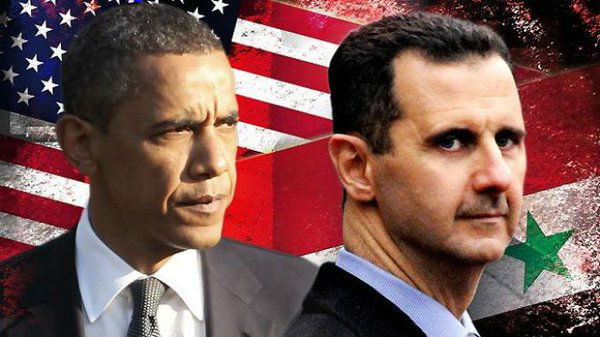
obama-assad

Muhammad Idrees Ahmad writes:  By now it is clear that US policy in Iraq and Syria is a disaster. In neither country has the situation been improved by the US military presence. In Iraq it empowers the same sectarian militias that forced alienated Sunnis into the arms of ISIS. In Syria it ignores, even accommodates, the regime whose brutality spawned the jihadi menace in the first place. In both its actions address symptoms rather than causes and alienate people without providing any commensurate security gains.

But would the situation improve if the United States were to withdraw? Ask the Yazidis of Iraq, whose tragedy would have been much larger had it not been for the timely US intervention; ask the Kurds of Syria, who would have been routed in Kobani had it not been for the sustained airstrikes that helped them repel an ISIS offensive. The Sunnis of Iraq might well ask who would protect them from the revanchist fury of the newly empowered sectarian militias, absent a US presence.

The issue then is not so much the fact of US military involvement as the nature of this involvement.

The United States bears responsibility for much of the current turmoil in the Levant. Had it not been for George W. Bush’s war and the fracturing of the Iraqi society, the region wouldn’t have turned into an incubator for jihadism. Had it not been for Barack Obama’s betrayal of the Syrian revolution — by making lofty promises and offering meager support; by following brave words with conspicuous inaction; and by demanding that Syrians submit their political aspirations to US security concerns — a quarter-million people would not have lost their lives, millions would not have been displaced, and thousands would not have drowned. The region suffers today from neoconservative sins of commission and realist sins of omission.

The United States could exit the Middle East and, in Sarah Palin’s immortal words, “let Allah sort it out.” But it would have condemned the region to perpetual war. Isolationism in the face of serious geopolitical challenges is not only an abdication of responsibility, but also a recipe for disaster. [Continue reading…]


Facebooktwittermail

Middle East reality: An inconvenient truth for Obama

Joyce Karam writes: Characterizing events from Yemen to Syria to Libya as a “transformation that will play out for a generation, rooted in conflicts that date back millennia” is not only a reality distortion by U.S. President Barack Obama, but also a dangerous fantasy that resigns American diplomacy to dismissiveness in the Middle East.

Shrugging off the Middle East’s largest upheaval in decades as a theological rift, and shying away from major diplomatic initiatives, is a slap in the face for U.S. role and stature, restricted today to responding and containing conflicts.

Blaming the chaos of the Middle East on centuries’ old battles is a perfect cop-out strategy for Obama, avoiding his legacy from being tarnished by the fragmentation of four states, two of which were bombed by the United States (Iraq and Libya).

Except, religious scriptures from a different era are not driving the current regional rivalry, or spurring ISIS. It’s oppression, civil wars, ISIS territorial gains, and unchecked regional bickering that is fueling the hellfire.

Obama’s narrative, however, is largely aimed at absolving his administration of any wrong doing in the Middle East, and attributing current infernos to a “transformation” across a whole generation that Washington apparently has little influence over. This claim self destructs in every conflict zone in the Middle East, three of them started on Obama’s watch four years ago. [Continue reading…]

Facebooktwittermail

Obama ridiculed for saying conflicts in the Middle East ‘date back millennia’

The Washington Post reports: In his seventh and final State of the Union address, President Obama played up the state of the economy, played down the threat of the Islamic State, and introduced a new effort to beat cancer. He also found time for several not-so-subtle swipes at the Republican front-runner Donald Trump.

But for those versed in international relations, there was one line in particular that jumped out from his hour-long speech.

“The Middle East is going through a transformation that will play out for a generation, rooted in conflicts that date back millennia,” Obama said.

Thousands of years? Many of the conflicts in the Middle East don’t even date back a decade.

The Twitterati spotted the gaffe, and pounced. Obama was accused of peddling convenient falsehoods while others said he was espousing concepts unworthy of an undergraduate university student. Many said that Obama was not only excusing the conflicts, but in effect was making them seem normal and intractable. [Continue reading…]

Facebooktwittermail

ISIS claims deadly Indonesia attacks

The Wall Street Journal reports: Multiple blasts and gunfire jolted the Indonesian capital Thursday in what officials said were coordinated Islamic State-linked terror attacks, killing seven and shattering a relatively peaceful period.

The dead comprised two civilians — a Canadian national and an Indonesian — and five terrorists, Indonesian police said.

The extremist group claimed responsibility for the attacks in an official Arabic-language statement distributed to its social media accounts, according to the SITE Intelligence Group, which monitors global jihadist activity.

“In a unique security operation, a group of Islamic State soldiers targeted a group of Crusader citizens who are fighting the Islamic State in Jakarta,” the statement said. “May the civilians of the Crusader alliance and those who protect them know that there is no safety for them in the lands of Muslims after today, God willing.”

The gun-and-bomb assaults struck in the heart of Jakarta’s downtown, popular with shoppers and tourists, when a suicide bomber entered a Starbucks and detonated a bomb, killing himself but no one else, police said.

Two more suicide bombers detonated blasts as motorists left their cars and joined hundreds fleeing the area. A Canadian citizen was shot near the Starbucks and an Indonesian was killed by shrapnel, police said.

Police shot and killed two other militants, leaving all five attackers dead, and said they found six small bombs after sweeping the area. Twenty civilians were injured, including a Dutch national and a German, officials said. [Continue reading…]

Facebooktwittermail

Q&A: Why did terror hit Jakarta’s streets – and what happens next?

By Noor Huda Ismail, Monash University

Explosions and gunfire on Thursday left seven people dead in Jakarta. The blasts and gunfight between Indonesian police and the suspected attackers took place near the busy Sarinah shopping mall in central Jakarta. Indonesian President Joko Widodo spoke of “acts of terror”.

Five suspected attackers are reportedly among those killed. What affiliation if any they had to a terrorist group is currently unknown.

Since 2000, Islamic hardliners in Indonesia have carried out several high-profile bombing attacks. Notably, the Bali bombings in 2002 killed 202 people, including 88 Australians.

The Conversation spoke to Noor Huda Ismail, a counter-terrorism analyst from Monash University, on the landscape of Indonesia’s terror groups and the threat the country faces.

Continue reading

Facebooktwittermail

What ISIS speaking in an English accent tells us about the group’s strategy

By Alan Greene, Durham University

A new year brings with it the feeling of hope that can only come with starting afresh. It did not take long, however, for us to be abruptly reminded of the most unpleasant aspects of 2015.

The release of a new Islamic State execution video became almost common place last year, so IS obviously feels the need to ratchet up the shock factor.

The latest video, released on January 4, did just that. It showed a young child with an English accent threatening to kill all non-believers in the UK. The video is also notable for the appearance of a so-called “new Jihadi John” following the death of Mohammed Emwazi, the previous owner of that moniker, in a US drone-strike in November.

A key suspect in the scramble to identify this new IS executioner is Siddhartha Dhar, a British Muslim convert from east London who skipped bail and travelled to Syria to join IS in 2014. Dhar was awaiting trial for being a member of the prescribed organisation Al-Muhajiroun. He is also known as Abu Rumaysah.

Continue reading

Facebooktwittermail

ISIS suicide bomber targets foreign tourists in Istanbul

Hurriyet Daily News reports: An Islamic State of Iraq and the Levant (ISIL) militant killed at least 10 foreign nationals, most of them Germans, and wounded 15 other people after blowing himself up at a tourist spot in Istanbul’s old city on Jan. 12.

Nabil Fadli, a 28-year-old ISIL militant of Syrian origin who was born in Saudi Arabia in 1988, blew himself up after blending into a tourist group of 33 German citizens on a visit to the Obelisk of Theodosius in Sultanahmet Square near the Blue Mosque in the morning hours of Jan. 12 when the popular square was relatively less crowded compared to the rest of the day.

Tourist sites including the Hagia Sophia and the nearby Basilica Cistern were closed by the Istanbul Governor’s Office following the attack.

Turkish Prime Minister Ahmet Davutoğlu said all victims killed in the Sultanahmet suicide attack were foreigners while the suicide bomber was an ISIL militant. [Continue reading…]

Facebooktwittermail

ISIS has been driven out of Ramadi, but does Iraq have a future?

Emma Sky talked to Jaber al-Jaberi, a former member of the Iraqi parliament for Anbar province, about how ISIS gained control of his native city, Ramadi. She writes: I peppered Jaber with questions: How had everything gone so badly wrong in Ramadi? How had Daesh been able to take over? Who were these people?

Looming large is the question of how to break the corrosive cycle of revenge and retribution.
Jaber described a subculture in Ramadi of uneducated men in their twenties and thirties. Some were thieves and petty criminals. Others had developed fundamentalist thinking. And when al-Qaeda in Iraq came into existence after the fall of the former regime, it was within that organization that they found a sense of power and identity.

However, when the Sahwa, the Anbar Awakening, turned against al-Qaeda, and aligned with US forces during the Surge in 2007, many of these same young men were drawn away from the insurgency and swapped sides, turning themselves into local police. And that was why the violence in Anbar had dramatically declined from 2007 onwards and stability had returned to the province.

The agreement that my former boss, Gen. Raymond Odierno, the then-commander of U.S. forces in Iraq had negotiated with former Prime Minister Nuri al-Maliki was that 20 percent of the Sahwa would be integrated into the security forces and 80 percent into civilian jobs. But the deal was never implemented.

Rather, as U.S. forces withdrew, Maliki reneged on his promises to the Sahwa and arrested its leaders. He accused Sunni politicians of terrorism, driving them out of the political process. In response, Sunnis set up protest camps. But Maliki refused to meet their demands and sent in security forces to violently crush the demonstrations.

With the citizens of Ramadi so at odds with the central government once again, it had been easy for Daesh to rise up out of the ashes of al-Qaeda in Iraq and proclaim itself as the defender of the Sunnis. Daesh had taken over Anbar university and converted it into a prison.

Jaber explained that the tribes in Anbar had lost trust in the government and refused to fight Daesh. They remembered only too clearly how the Sahwa had been betrayed. “We could not convince them that the experience would be different from before.”

Finally, 9,000 tribesmen were persuaded to join the tribal al-Hashd, the popular mobilization force, and received training from U.S. troops in bases at Taqqadum and al-Asad. And it was these tribesman who had supported the counter-terrorism forces in their efforts to liberate Ramadi from Daesh at the end of 2015.

Governor al-Rawi has been nominated as the head of the Crisis Committee, which includes representatives of ministries, and is tasked with cleaning up the city, removing explosives, and restoring basic services to make Ramadi inhabitable once more so that its displaced citizens will return.

But difficult times remain ahead. There are huge challenges to rebuilding Ramadi, particularly with scarce resources available from the government due to the steep drop in oil prices to under $35 a barrel.

And looming large is the question of how to break the corrosive cycle of revenge and retribution that has led to so many deaths and displacement.

Jaber was recently appointed to the new Higher Committee for National Reconciliation established under the auspices of Iraq’s prime minister, the president, and the speaker of parliament, and with the mandate to promote “historic national reconciliation.”

Reconciliation has been talked about continually in Iraq over the last decade—but little has been done to address the structural challenges facing the country, to agree on a workable system of government and to reinvent an inclusive national identity to which Iraqi’s diverse peoples can relate.

Many observers believe that Iraq is finished: the Kurds are moving increasingly towards independence; Shia militias dominate the Iraqi government; Iranian influence is pervasive; and Sunni leadership is weak and fragmented. [Continue reading…]

Facebooktwittermail

If Iraqi dam fails, 500,000 people could be killed

The New York Times reports: More than 16 months after Iraqi and Kurdish forces reclaimed Mosul Dam from Islamic State fighters, the structure faces a new threat: the danger that it may collapse because of insufficient maintenance, overwhelming major communities downstream with floodwaters.

In the worst-case scenario, according to State Department officials, an estimated 500,000 people could be killed while more than a million could be rendered homeless if the dam, Iraq’s largest, were to collapse in the spring, when the Tigris is swollen by rain and melting snow. The casualty toll and damage would be much less if Iraqi citizens received adequate warning, if the dam collapsed only partially or if it were breached in the summer or fall, when the water level is lower.

Mosul Dam, which was completed in 1984 by a German and Italian consortium and is 30 miles upstream from the city of Mosul, has long been a maintenance nightmare. Before fighters from the Islamic State, also known as ISIL or ISIS, swept across northern Iraq in 2014, approximately 600 Iraqis worked at the dam.

Because the water was eating away at the gypsum base under the dam, Iraqi teams drilled holes in that foundation and filled them with a cement grout mixture. That work was carried out three times a day, six days a week.

The Islamic State controlled the dam for a little more than a week in August 2014, but its fighters did not damage the structure. After it was retaken later that month, however, many of the Iraqi workers never returned and the Iraqi government did not resume regular maintenance. The Iraqis also lost their usual source of grouting material, which was produced by a factory in Mosul, now under the control of the Islamic State. [Continue reading…]

Facebooktwittermail

Murder in Istanbul: The latest in a series of audacious killings of enemies of the Russian state

The Guardian reports: Abdulvakhid Edelgireyev survived for years hiding in the Chechen mountains, launching attacks on Russian security forces and evading capture. He survived the battlefields of Syria, and those of east Ukraine. But in November his life came to an abrupt end in a flurry of bullets: he was shot dead in broad daylight in Istanbul as he embarked on a shopping trip with his three-year-old niece.

Edelgireyev and his niece walked out of their apartment block in Kayasehir, a far-flung suburb of nondescript new towers, shortly before 2pm on 1 November. The 32-year-old Chechen sat the girl in the passenger seat of his car, and was about to start the engine when a white car rammed into them from behind, closing him in. Pushing his niece on to the floor under the seat, Edelgireyev scrambled out and started running. One of the assassins gave chase, firing at him, and he crumpled to the ground. When paramedics arrived a few minutes later he was already dead, in a pool of blood. He had been shot five times.

The dead man’s biography, as set out by family and associates, paints a picture of a key figure in the Caucasus Emirate, the umbrella group of Chechen and other fighters in Russia’s North Caucasus that has resorted to terrorist methods, including suicide attacks on Moscow’s metro and Domodedovo airport. Edelgireyev’s experiences during his year in Syria also revealed how the Chechen resistance fight has slowly grown links to Islamic State , and the infighting and turmoil among the foreign fighters in Syria. [Continue reading…]

Facebooktwittermail

Britain smites ISIS with Brimstone

The Guardian reports: The Royal Air Force has used Brimstone missiles against Isis in Syria for the first time, Downing Street has confirmed.

Four Brimstone missiles were deployed on two missions on Sunday. One missile was used against enemy positions near Raqqa, including targeting an Isis vehicle. Three Brimstone missiles were also used in an attack on the Omar oilfield on the same day. There were also three other RAF missions in Syria on Sunday that did not use Brimstone missiles, including striking enemy tunnels near Raqqa.

The prime minister’s spokeswoman declined to say whether the strikes had resulted in casualties, saying: “These will all have been focused on either targeting Daesh [Isis]’s resources or targeting Daesh terrorists who are seeking to destabilise Iraq, Syria and threatening other countries.” [Continue reading…]

Facebooktwittermail

What is David Bowie’s Blackstar really about?

Spencer Kornhaber wrote last week: The title track of David Bowie’s new album, Blackstar, is about ISIS. Maybe. Bowie reportedly mentioned the Islamic State to the saxophonist and band leader Donny McCaslin when talking about the song, though the drummer Mark Guiliana and the producer Tony Visconti told Rolling Stone they had no idea the haunted and haunting 10-minute opener had anything to do with terrorism. Most anyone who listens to the thing would probably say the same. For starters, its first line mentions the Norse village of Ormen, which is not currently in the caliphate.

But that ISIS comment, relayed second-hand, is about all anyone’s got for now about the intentions and meaning of Blackstar from its author: Bowie doesn’t give interviews anymore. Which you might call frustrating—except for the fact that Blackstar could lose some of its considerable magic were it ever fully explained by its creator. Attempting to interpret its mystery, on your own, is part of the appeal. [Continue reading…]

Facebooktwittermail

How to lose the propaganda war with ISIS

decay11

The New York Times reports: The Obama administration on Friday announced an overhaul of its efforts to respond to online propaganda from the Islamic State after months of acknowledgments that it had largely failed in its attempts to counter extremist recruitment and exhortations to violence on social media.

The administration has emphasized that it needs the assistance of some of the nation’s biggest technology companies, and a group of top White House and national security officials flew to California on Friday to plead their case with executives.

“Given the way the technology works these days, there surely are ways that we can disrupt paths to radicalization, to identify recruitment patterns and to provide metrics that allow us to measure the success of our counter-radicalization efforts,” Josh Earnest, the White House press secretary, said before the meeting began in California.

A task force will be created in the Department of Homeland Security and the Justice Department to coordinate the government’s new effort. The State Department announced the creation of a center to respond to disinformation from extremist groups by highlighting their misdeeds and creating positive images of the West. [Continue reading…]

If one was to picture America as a complex filtration system with Washington DC at its core, the way this operates guarantees that by the time someone passes through the system’s many layers and reaches a position as an influential decision-maker, their psyche has been stripped of every last trace of imagination.

Picture the many meetings that must have taken place over recent months in which policymakers repeatedly said: in order to stop ISIS we need to improve the image of the West.

This proposition should have been met with howls of scorn and yet instead, multiple teams of straight-faced bureaucrats from multiple agencies nodded their heads in agreement.

At the same time, I greatly doubt anyone believes this kind of PR exercise will have any value whatsoever and yet the consensus of support derives from one fact: no one has come up with a better idea.

Better to do something worthless than to do nothing at all — so the thinking goes.

The term radicalization has been pathologized, thereby divorcing it from its psychological meaning. It’s viewed as a disease, with the implication that if the right steps are taken, the contagion can be controlled.

But to be radicalized is to rebel and anyone who has taken up such a position of defiance has, in the case of ISIS, already reached a conclusion about the West. Indeed, they have most likely reflected more deeply on the West than the majority of their generational counterparts who, being less likely to engage in cultural critiques of any kind, don’t have a particularly coherent view of the West — good or bad.

The problem here is not one if inadequate availability of positive images of the West.

Although it’s often said that this is an ideological struggle, ideology is I suspect of less significance than a core value: the willingness to die in the name of ones cause.

This isn’t a value that governments anywhere want to challenge because every state wants to be able to recruit citizens who are willing to die in defense of their country.

Most states don’t overtly recruit would-be martyrs and yet all states promote the idea that anyone who dies for their country has died in the name of a noble cause.

At the same time, this has become an increasingly ambiguous value as professionalized military forces promote their ability to minimize their own loses. They want their soldiers to remain willing to die and yet decreasingly fearful that they might face such a risk.

The religious zealot who is willing to die for what he believes in, will inevitably have a sense of superiority over the non-religious soldier who has submitted to the commands of the state rather than the command of God.

If Washington thinks it can steer ISIS recruits in a different direction, it’s because it sees this as a contest between the might of the United States and the wrong-headed ambitions of a cadre of hapless youth. But the contest inside the minds of these young people is between divine authority and human design. They inevitably side with God.

Facebooktwittermail

The Islamization of radicalism

ISIS-instructor-bw

Olivier Roy writes: France is at war! Perhaps. But against whom or what?

Last November, when the Islamic State staged the shootings that killed 130 in Paris, it did not send Syrians. A year ago, when al Qaeda in the Arabian Peninsula purportedly ordered the deadly attack on the office of Charlie Hebdo, it did not send gunmen from Yemen. Rather, both groups drew from a reservoir of radicalized French youth who, no matter what happens in the Middle East, are already disaffected and are seeking a cause, a label, a grand narrative to which they can add the bloody signature of their personal revolt.

The rallying cry of these youth is opportunistic: Today it is the Islamic State; yesterday, they were with al Qaeda; before that, in 1995, they were subcontractors for the Algerian Armed Islamic Group, or they practiced the nomadism of personal jihad, from Bosnia to Afghanistan, by way of Chechnya. Tomorrow they will fight under another banner, so long as combat death, age, or disillusion do not empty their ranks.

There is no third, fourth, or nth generation of jihadis. Since 1996, we have been confronted with a very stable phenomenon: the radicalization of two categories of French youth — second-generation Muslims and native converts. The essential problem for France, therefore, is not the caliphate in the Syrian desert, which will disappear sooner or later, like an old mirage that has become a nightmare. The problem is the revolt of these youth. And the real challenge is to understand what these youth represent: whether they are the vanguard of an approaching war or, on the contrary, are just a rumbling of history.

* * *

Two readings of the situation dominate at the moment and are shaping the debates on television and in the opinion pages of newspapers: These are, basically, the cultural explanation and the Third World explanation.

The first puts forth that recurring and nagging “war of civilizations” theory: The revolt of young Muslims demonstrates the extent to which Islam cannot be integrated into the West, at least not so long as theological reform has not struck the call of jihad from the Quran. The second interpretation evokes post-colonial suffering, the identification of these youth with the Palestinian cause, their rejection of Western intervention in the Middle East, and their exclusion from a French society that is racist and Islamophobic. In short, the old song: So long as we haven’t resolved the Israel-Palestine conflict, there will be a revolt.

But the two explanations run up against the same problem: If the causes of radicalization are structural, then why do they affect only a tiny fraction of those in France who call themselves Muslims? Only a few thousand, among several million.

But these young radicals have been identified! All the terrorists who have actually taken action were, notoriously, in the “S File” — that is, on the government’s watch list. I don’t wish to get into a discussion here of prevention — I simply note that the information about them is there, and it is accessible. So let us look at who they are and try to draw some conclusions.

Nearly all the French jihadis belong to two very precise categories: They are either “second-generation” French — that is, born or raised from a very young age in France — or they are “native” French converts (whose numbers have increased with time, but who already constituted 25 percent of radicals at the end of the 1990s). This means that, among the radicals, there are practically no “first-generation” jihadis (including recent arrivals), but especially no “third-generation” jihadis.

The third-generation category in France is growing: The Moroccan immigrants of the 1970s are now grandparents. But one does not find their grandchildren among the terrorists. And why do converts, who never suffered from racism, wish to brutally avenge the humiliation experienced by Muslims? Especially since many of these converts — like Maxime Hauchard, the Normandy-born man who appeared in the Islamic State’s beheading videos — come from rural France and have little reason to identify with a Muslim community that for them exists only in theory. In short, this is not a “revolt of Islam” or one of Muslims, but a specific problem concerning two categories of youth, the majority of whom are of immigrant origin. This is not, then, the radicalization of Islam, but the Islamization of radicalism.

What is the common ground between the second generation and the converts? It is, first of all, a question of a generational revolt: Both have ruptured with their parents or, more precisely, with what their parents represent in terms of culture and religion. [Continue reading…]

Facebooktwittermail

Iraq faces take-over by Iran-backed militias if ISIS is defeated, coalition commanders fear

The Telegraph reports: Coalition commanders in Iraq fear that Iran-backed Shia militias may stage an armed takeover of the country if Isil is defeated, a new report has warned.

Senior figures in the US-led mission believe there is a high likelihood of a “war after the war” because of the Iraqi government’s reliance on Shia militias in its fight against Isil.

The move has hugely boosted the strength of such militias, to the point where they are now in a position to challenge the elected government for control of the country.

The warnings are revealed in research compiled by one Britain’s foremost experts on Iraq, Professor Toby Dodge, who served as an adviser to General David Petraeus, America’s former top commander in Baghdad.

Prof Dodge’s findings are based on meetings with high-level coalition commanders and Iraqi politicians conducted during a recent study trip to Iraq for the Middle East Centre at the London School of Economics.

They told him that recent defeats against Isil in Ramadi and Sinjar had shifted “the balance of power” to the Shia militias, who lead around 70 per cent of all military operations.

“Against a background of positive military news, there was near unanimity amongst the senior Iraqi political figures and the military commanders of the American-led, multilateral coalition that that the military defeat of (Isil) in Iraq would trigger another military conflict, which would in effect, mark the country’s return to civil war,” said the report. [Continue reading…]

Facebooktwittermail

French proposal to strip citizenship over terrorism sets off alarms

The New York Times reports: The French police have carried out thousands of heavy-handed searches since the Nov. 13 Paris attacks, and a raft of new laws is poised to permanently concentrate even more power in the hands of the Interior Ministry.

Yet among civil libertarians, no government proposal has raised as much alarm as a recent one to strip citizenship from French-born dual nationals convicted of terrorism.

The idea, promoted by Prime Minister Manuel Valls, a Socialist with a conservative twitch, has struck at the core of France’s ideals of the rights of citizens, while underscoring the quandary the government faces as it confronts a widening threat from terrorists born and raised in France.

While the proposal to strip them of citizenship — known here as “déchéance,” or “forfeiture” — is backed by the right and much of the public, it has provoked furious debate and outraged the left, including many of Mr. Valls’s colleagues in the Socialist Party.

Mr. Valls has described the measure as “highly symbolic.” But critics fear that it would deepen fissures in French society by creating two classes of citizens.

Socialists are usually extremely reluctant to distinguish between French citizens, said Patrick Weil, the country’s leading historian on immigration. “The principle of equality is one of the pillars of French identity,” he said. “That he wants to distinguish between French citizens is creating a tsunami. It’s a terrible break with the fundamental principles of the French republic.”

At the same time, opponents of the plan point out that such a change in the law would hardly deter would-be terrorists. No one has been able to envision a situation in which a binational French suicide bomber might not press the button for fear of losing citizenship. [Continue reading…]

Facebooktwittermail

‘I went to join ISIS in Syria, taking my four-year-old. It was a journey into hell’

The Observer reports: Sophie Kasiki stared at the photograph of a young English-speaking boy in a camouflage uniform and black bandana covered in Arabic calling for unbelievers to be killed in the latest Islamic State propaganda.

Her eyes welled and she swallowed hard. “That could have been my son,” she said, her firm voice wavering. “That’s hard for me to say and makes me want to cry. I would have killed us both rather than let him become a killer, rather than let him fall into the claws of those monsters.”

The “monsters” she is referring to are Islamic State, and Kasiki weighs her words; she knows her four-year-old son was only ever at risk of falling into the jihadis’ lair because she had taken him there.

Kasiki is one of the few western women who have been to the capital of the Isis-declared caliphate at Raqqa in Syria and returned to recount the tale. It was, she said in her first interview with a British newspaper, like a journey into a hell from which there seemed no return. [Continue reading…]

Facebooktwittermail