Jeffrey Goldberg writes: It is not a new practice for critics of President Obama to question his commitment to the fight against Islamist terrorism, but Donald Trump, the presumptive Republican presidential nominee, has cast doubt on Obama’s commitment to this struggle in uniquely florid and bizarre ways. On Tuesday, he claimed that Obama “prioritizes” America’s enemies over the American people; on Monday, he insinuated that Obama is sympathetic to the Islamic State terror group. (Read the previous sentence again and ask yourself: How has it come to this?)
Trump’s recent statements about Obama grow from a neurotic belief in the president’s malevolent otherness: On ISIS, Trump said, Obama “doesn’t get it, or he gets it better than anybody understands.” Barack Obama, to Donald Trump, is, and will forever be, the Manchurian President — Manchuria, by way of Kenya, with a detour in Raqqa.
It is true that Trump’s critique of Obama’s handling of terrorism is, among other things, analysis-free and comprehensively unserious, but it is also true is that there are non-hysterical critiques to be made, and not only critiques that concern Obama’s reluctance to describe the threat as one posed by “radical Islam” (a reluctance the president addressed on Tuesday). Critics to Obama’s right fault him for prematurely withdrawing American troops from Iraq, and for not doing enough to prevent Syria from becoming a safe haven for ISIS. His reluctance to involve the U.S. more systematically in the Syrian civil war, the argument goes, has allowed jihadists to fill the vacuum created by the absence of the world’s sole superpower. Some critics on the right also argue that Obama blanches when confronted by the ugly truth about Muslim dysfunction and extremism; political correctness, in this view, hamstrings the president, and makes him obtuse. Critics to Obama’s left, on the other hand, argue that he is killing too many people, particularly through the use of drone strikes, and that his policies are distressingly of a piece with those of his Republican predecessor. The over-militarization of the so-called war on terror, that argument goes, exacerbates a problem that has already been hyped by “Islamophobic” fearmongers. [Continue reading…]
Category Archives: Obama administration
After Orlando, gay rights moves off diplomatic back burner
The New York Times reports: For years, diplomats were more comfortable talking about nuclear warheads than sexual orientation.
Sexual orientation was one of those subjects burdened with too many cultural sensitivities. American officials, even if they wanted to advance it on the diplomatic agenda, were wary of offending their allies, not least in the Islamic world.
The attack on a gay nightclub in Orlando, Fla., moved the needle.
In its aftermath, the United States corralled an unlikely group of countries to support a United Nations Security Council statement that condemned the attack for “targeting persons as a result of their sexual orientation.” Even Egypt and Russia — not known for embracing their gay and lesbian citizens — signed on, after what diplomats called intense consultations.
Earlier in the day, the United States delivered a pointed rebuke to countries that block gay rights at the United Nations, urging them to “contribute more than condolences and condemnations” after the Orlando attack.
And American embassies in several countries, including India, which still has an anti-sodomy law on the books, draped themselves in the colors of the rainbow flag that signifies gay pride.
The Security Council statement, which was drafted by the United States and issued Monday, carries no legal weight. But it is the first time that the powerful institution, with the capacity to authorize wars, weighed in on sexual orientation.
Homosexuality is still a crime in 73 of the world’s 193 countries, according to the International Lesbian, Gay, Bisexual, Trans and Intersex Association; in 13, the death penalty can be applied. In some countries, like Egypt, laws against “debauchery” are used to target gays. Russian law prohibits what it calls “propaganda on nontraditional sexual relationships,” which critics call a thinly veiled measure to harass gay men and lesbians.
“We’re hopefully moving into an era when gross acts of violence are condemned by global leaders rather than when violence motivated by sexual orientation or gender identity” is “dismissed as irrelevant or unworthy,” said Jessica Stern, the executive director of OutRight Action International, an advocacy group.
Still, she said, the United States will be able to sway others only if it can protect its own citizens. “The more we demonstrate respect for Muslim Americans and the more violence we prevent domestically by passing meaningful gun control, the more credible we are likely to be as a global leader,” she said. [Continue reading…]
Obama challenges GOP talking points and explains why ‘radical Islam’ is not a useful term
The media called this statement by President Obama a ‘tirade’ — I’d call it a disquisition, with a hint of frustration born from the fact that the people who need to digest this information are mostly idiots.
Huffington Post reports: President Barack Obama said Wednesday that he refuses to describe the Islamic State and al Qaeda as groups fueled by “radical Islam” because the term grants them a religious legitimacy they don’t deserve.
“They are not religious leaders; they are terrorists,” Obama said during remarks at a White House event on countering violent extremism. “We are not at war with Islam. We are at war with people who have perverted Islam.”
Obama said the Islamic State in Syria and Iraq, also known as ISIS or ISIL, is “desperate” to portray itself as a group of holy warriors defending Islam. It counts on that legitimacy, he said, to propagate the idea that Western countries are at war with Islam, which is how it recruits and radicalizes young people. [Continue reading…]
The soft bigotry of the American Left when it comes to the Middle East
Evan Barrett writes: It has been rightly observed that the Republican Party’s long tolerance of racist attitudes set the stage for Donald Trump’s rise. But Democrats, too, are using expedient prejudice to drive their political agenda this cycle. Consider how the Obama White House has embraced talk about the “backward” Middle East to account for their own staggering foreign-policy failures there.
The first full embrace of this rhetoric by President Obama himself appeared in Jeffrey Goldberg’s remarkable Atlantic profile, wherein he explicitly cited the notion that conflict and the Middle East are inherently linked. Describing the political fallout of his intervention in Libya, Obama bemoaned “the degree of tribal division” amongst the Libyan people, suggesting that a sort of Libyan sophistication deficiency was responsible for the “chaos” that followed the NATO intervention. Through the article, the President contrasts the people of the Middle East with those in Asian and African societies “filled with striving, ambitious, energetic people who are every single day scratching and clawing to build businesses and get education and find jobs and build infrastructure.” The contrast is, Obama declares, “pretty stark” — leaving the implicit question: What can you do with these people?
This attitude was also reflected in the President’s final State of the Union, when he declared that “The Middle East is going through a transformation that will play out for a generation, rooted in conflicts that date back millennia.” This age-old canard about the “eternal” Sunni-Shia conflict was not only historically inaccurate, but a total departure from the Obama of 2009, the man who made the historic and ill-fated Cairo speech. An intellectual of his sort, and a student of history, surely knows this ugly old lie for what it is, but managed to pronounce it nonetheless in the service of anti-war spin. [Continue reading…]
A desperate woman’s email from Iraq reveals the high toll of Obama’s low-cost wars
The Washington Post reports: On small video screens inside their cockpits, the U.S. pilots spotted their target, an Islamic State checkpoint just south of the Iraqi city of Mosul.
In grainy black and white, they could see the enemy manning the barricades and a guard shack. As they prepared to launch their attack, the pilots noticed a potential complication: Two cars approached the checkpoint and stopped. The drivers appeared to be talking with Islamic State fighters.
Other cars moved through the checkpoint, but these two vehicles remained on the side of the road. Five minutes passed. Then 10. Nearly 40 minutes had gone by and the two vehicles still had not moved.
Running low on fuel and time, the pilots concluded that the people in the cars were allied with the militants and asked for permission to strike. After a brief discussion with their headquarters in Qatar, they got their reply: “You’re cleared to execute.”
This was one version of what war had become in the last years of the Obama administration: The pilots made two strafing runs over the checkpoint, their machine guns cutting through the two cars. Then they unleashed a 500-pound satellite-guided bomb that engulfed the area in dust, fire and deadly shrapnel.
As they returned to their base, the pilots offered an in-flight assessment of their mission: guard shack flattened, two vehicles destroyed and four enemy fighters dead. “There are no apparent civilian or other collateral concerns,” their report concluded.
The first sign that they had made a horrible mistake came in the form of an email, sent two weeks after the March 2015 airstrike, to an Iraqi citizen working at the U.S. Embassy in Baghdad.
“I am Raja’a Zidan al-Ekabee . . . ” the email began. [Continue reading…]
Russia is recruiting the U.S.’s rebel allies in Syria
Mike Giglio reports: The rebel commander was nervous. He had changed phone numbers and been difficult to reach before finally agreeing to meet in Antakya, a city near the border with war-torn Syria that has long swarmed with rebels, refugees, and spies. On the road to an out-of-the-way hotel, he told the driver to avoid the main route through town. “It’s better not to drive among all the people,” he said.
It was an open secret that the commander had once received cash and weapons from the CIA, part of a covert U.S. program that backs rebel groups against both ISIS and the Syrian government of Bashar al-Assad.
When his battalion was eventually driven from Syria by its jihadi rivals, like a number of U.S.-backed groups, he pleaded with his U.S. handlers for better support, but it wasn’t enough. So he was, he said, “out of the game.”
Now, he said, sitting at a quiet table at the hotel, he had received an offer that could bring him back in — and potentially make him even stronger than before.
He was being recruited, he said, to work for the U.S.’s rival in Syria: Russia.
“They told me, ‘We will support you forever. We won’t leave you on your own like your old friends did,’” he said. “Honestly, I’m still thinking about it.”
The commander said that five years into a war that has killed some 400,000 people and created nearly 5 million refugees, Russia is recruiting current and former U.S. allies to its side. His revelation was confirmed by four people who said they, too, had been approached with offers from Russia and by two Syrian middlemen who said they delivered them.
The moves come as Russia ratchets up its involvement in Syria with troops and airstrikes. Russia says its military campaign is designed to target ISIS — in reality it has targeted all rebels, including some who are still backed by the U.S., while also wreaking havoc on civilians.
The secret outreach shows that as it works to muscle the U.S. out of Syria, Russia isn’t just bombing the U.S.’s current and former rebel allies — it’s also working to co-opt them, launching a shadowy campaign that seeks to highlight U.S. weakness in Syria. Ultimately, Russia could be hoping to help Assad win the war by dividing the opposition, driving a wedge between rebel groups and their traditional backers, and getting them to turn their guns on his enemies. [Continue reading…]
Bashar Assad’s defiance points to a Syrian peace effort in tatters

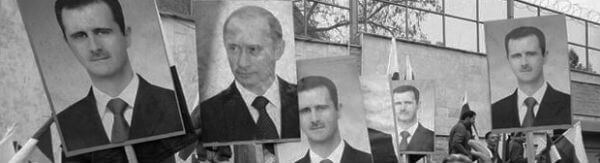
Michele Kelemen reports: Syrian President Bashar Assad is sounding rather confident these days. In his first major address in the past two months, he promised that his troops will reclaim “every inch” of Syrian territory.
“We have no other choice but to be victorious,” Assad told Syria’s parliament on Tuesday. He also lashed out at rebels, blaming them for the failure of peace talks backed by the United Nations.
Assad’s speech is calling into question international diplomacy on Syria. One Syria-watcher at the Atlantic Council in Washington, Faysal Itani, says it’s time to go back to the drawing board.
“It is safe to say [the peace effort] has failed,” Itani tells NPR, saying he never thought the prospects for diplomacy were good.
The diplomatic plan relied on Russia and Iran using their influence with Assad to encourage him to agree on a transitional government and make peace with more moderate rebels.
U.S. Secretary of State John Kerry, one of the key architects of this approach, was “trying to pull a rabbit out of his hat,” according to Itani. While Kerry was seeking concessions from Assad, the military balance of power was turning in favor of the Syrian regime.
“The Russians are quite committed to ensuring it stays that way. No one has any incentive to give John Kerry what he’s asking for,” Itani says. [Continue reading…]
Can victories against ISIS last without support of Sunnis?
Yaroslav Trofimov writes: Two years after Islamic State launched its blitzkrieg on Iraq, exploiting Sunni Arab grievances there and in neighboring Syria, the militant group is steadily losing ground in both countries.
But, instead of local Sunnis reclaiming their lands, forces dominated by other communities — Iraq’s Shiite militias, Syrian and Iraqi Kurds, and the Alawite-run Syrian regime — are inflicting these defeats.
On the only occasion where Sunni Arab rebels attempted a major offensive against Islamic State in recent months, in Syria’s northern Aleppo countryside along Turkey’s border, it ended in a rout and a further loss of territory — partially reversed this week — to the self-proclaimed caliphate.
All of this raises a question: How meaningful are the recent victories if the root cause behind the emergence of Islamic State remains, and as more Sunni towns such as Fallujah become devastated by the fighting?
Fallujah seemed largely pacified following the campaign against al Qaeda in Iraq a decade ago — only to succumb to Sunni Islamist extremists again as the Shiite-dominated government of Nouri al-Maliki in Baghdad turned to sectarian repression.
“We could be looking at a Groundhog Day scenario,” warns Brian Katulis, senior fellow at the Center for American Progress, a Washington think tank close to the Democrats. “The campaign seems to be going well militarily, but it may have extreme costs in the long run. The biggest risk is the re-emergence of radicalism in a few short months, or year or two.”
So far, the few areas repopulated by Sunni Arabs, such as the city of Tikrit, have remained largely peaceful — in part because they are still garrisoned by Shiite militias, with relatives of suspected Islamic State members banned from returning. As more towns become liberated in Iraq and Syria, however, exercising that kind of control will be harder.
A backlash in those areas against victorious Shiites or Kurds would allow Islamic State to keep recruiting new fighters and bombers for a renewed insurgency, warns Robert Ford, a scholar at the Middle East Institute who served as U.S. ambassador in Syria and deputy envoy in Iraq.
“If that happens, the fight against Islamic State doesn’t end, it just morphs into a different kind of battle — and the terrorist threat to the West doesn’t go away,” he says. [Continue reading…]
Defiant Bashar al-Assad vows to retake ‘every inch’ of Syria
The New York Times reports: Syria’s president promised to retake “every inch” of the country from his foes on Tuesday in a defiant speech that appeared to reject the humanitarian relief effort and peaceful transition of power that the United States, Russia and more than a dozen other nations have pressed for since last fall.
The speech by President Bashar al-Assad was his first major address since the effort to mediate an end to the civil war broke down in Geneva in April. It reflected his sense that Russian intervention in the war has bolstered his position — and his ability to remain in power for the foreseeable future — as the war enters its sixth year.
Mr. Assad’s defiance was notable partly because of efforts in recent months by Secretary of State John Kerry and other leaders of a 17-nation collaboration, known as the International Syria Support Group, to set a series of deadlines and limits that Syria could not violate.
Every one of the directives has been broken. A cease-fire devised in Munich in February collapsed. Mr. Kerry’s demand at that time — that humanitarian access had to begin within weeks — was briefly observed in a few towns before access was again largely blocked. [Continue reading…]
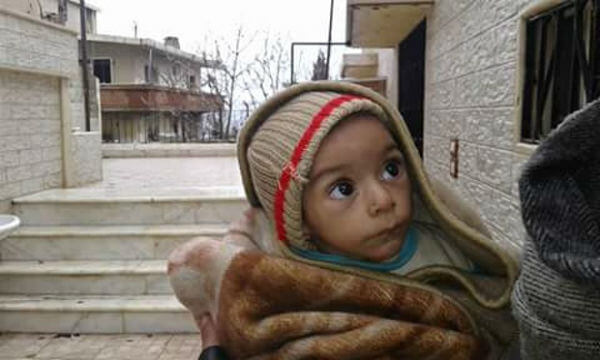
Empty stomachs, empty words: Syria’s children starve as America looks on

In an editorial, the Washington Post says: It’s been nearly six months since the U.N. Security Council passed a resolution demanding an end to the bombing and shelling of civilian areas in Syria and calling for immediate humanitarian access to besieged areas. It’s been four months since Secretary of State John F. Kerry described the sieges as a “castastrophe” of a dimension unseen since World War II and said that “all parties to the conflict have a duty to facilitate humanitarian access to Syrians in desperate need.”
Three weeks ago, a diplomatic conference on Syria joined by Mr. Kerry issued a statement saying it “insisted on concrete steps to enable the provision of urgent humanitarian deliveries,” and warning that if none were taken, it would support airdrops to besieged towns beginning on June 1.
By Monday, there still had been no food deliveries to Darayya in the Damascus suburbs, the al-Waer district of Homs or several other of the 19 besieged areas, with a population of more than 500,000, identified by the United Nations. Nor had there been airdrops. None have been organized, and U.N. officials say none are likely in the coming days. Another deadline has been blown, another red line crossed — and children in the besieged towns are still starving. [Continue reading…]
Rebecca Gordon: Justice for torturers?
If you happen to be a potential American war criminal, you’ve had a few banner weeks. On May 9th, Defense Secretary Ashton Carter presented former Secretary of State and National Security Adviser Henry Kissinger with the Department of Defense Distinguished Public Service Award, that institution’s “highest honorary award for private citizens.” In bestowing it on the 92-year-old who is evidently still consulting for the Pentagon, he offered this praise: “While his contributions are far from complete, we are now beginning to appreciate what his service has provided our country, how it has changed the way we think about strategy, and how he has helped provide greater security for our citizens and people around the world.”
Certainly people “around the world” will remember the “greater security” offered by the man who, relaying an order from President Richard Nixon for a “massive” secret bombing campaign in Cambodia, used a line that may almost be the definition of a war crime: “Anything that flies on anything that moves.” The result: half a million tons of bombs dropped on that country between 1969 and 1973 and at least 100,000 dead civilians. And that’s just to start down the well-cratered road to the millions of dead he undoubtedly has some responsibility for. Public service indeed.
Meanwhile, speaking of American crimes in the Vietnam era, former Nebraska Senator Bob Kerrey, who ran for president of the U.S. and then became the president of the New School in New York City, was just appointed to “lead” Fulbright University Vietnam, the first private American-backed school there. Its opening was announced by President Obama on his recent visit to that country. Only one small problem: we already know of some children who won’t be able to apply for admission. I’m thinking of the progeny-who-never-were of the 13 children killed by a team of U.S. SEALs under Kerrey’s command and on his orders in South Vietnam in 1969 (along with a pregnant woman, and an elderly couple whose three grandchildren were stabbed to death by the raiders) — all of whom were reported at the time as dead Vietcong guerillas.
It seems that if you are a distinguished citizen of the most exceptional country on the planet, even war crimes have their rewards. Consider, for instance, the millions of dollars that were paid for memoirs by top Bush administration officials responsible for creating an American offshore torture regime at CIA “black sites” around the world. Must-reads all! With that in mind, turn to TomDispatch regular Rebecca Gordon, author most recently of American Nuremberg: The U.S. Officials Who Should Stand Trial for Post-9/11 War Crimes, to consider what “justice” for such figures might look like in a different and better world. Tom Engelhardt
Crimes of the War on Terror
Should George Bush, Dick Cheney, and others be jailed?
By Rebecca Gordon“The cold was terrible but the screams were worse,” Sara Mendez told the BBC. “The screams of those who were being tortured were the first thing you heard and they made you shiver. That’s why there was a radio blasting day and night.”
In the 1970s, Mendez was a young Uruguayan teacher with leftist leanings. In 1973, when the military seized power in her country (a few months before General Augusto Pinochet’s more famous coup in Chile), Mendez fled to Argentina. She lived there in safety until that country suffered its own coup in 1976. That July, a joint Uruguayan-Argentine military commando group kidnapped her in Buenos Aires and deposited her at Automotores Orletti, a former auto repair shop that would become infamous as a torture site and paramilitary command center. There she was indeed tortured, and there, too, her torturers stole her 20-day-old baby, Simón, giving him to a policeman’s family to raise.
FBI wants access to Internet browser history without a warrant in terrorism and spy cases
The Washington Post reports: The Obama administration is seeking to amend surveillance law to give the FBI explicit authority to access a person’s Internet browser history and other electronic data without a warrant in terrorism and spy cases.
The administration made a similar effort six years ago but dropped it after concerns were raised by privacy advocates and the tech industry.
FBI Director James B. Comey has characterized the legislation as a fix to “a typo” in the Electronic Communications Privacy Act, which he says has led some tech firms to refuse to provide data that Congress intended them to provide.
But tech firms and privacy advocates say the bureau is seeking an expansion of surveillance powers that infringes on Americans’ privacy. [Continue reading…]
Iraq on the path to disintegration
Michael Weiss writes: A fortnight before the battle got underway in Iraq to retake the city of Fallujah from the so-called Islamic State, I sat down with a native son of that restive town, Sheikh Khamis al-Khanjar. He was once a central power broker in Iraq’s political system and is now an exile with, it would seem, many millions of dollars at his disposal to try and buy his way back in.
As we talked in the lounge of the Radisson Blu Hotel in Tallinn, Estonia, where we were both attending the annual Lennart Meri Conference, Khanjar touched on the core problem bedeviling Iraq, of which ISIS is only one manifestation. The United States, he believes, is almost autistically focused on the issue of Sunni jihadism at the expense of broader social cohesion and geopolitics, particularly Tehran’s meddling in the affairs of its next-door neighbor. The very integrity of the modern nation-state a Western superpower tried hubristically to reinvent in Mesopotamia 13 long years ago is now in mortal jeopardy.
“Instead of saying, ‘We need to keep Iraq united,” Khanjar said, echoing a favored American talking point, “we must admit that Iraq is no longer united and ask what can we do to bring it back together. Iraq is on the path to disintegration.”
“Again today, we are repeating the mistake of betting completely on one person: Abadi,” Khanjar said. He was referring to Iraq’s prime minister, a Haider al-Abadi, a U.S. ally who has faced popular revolt against his dysfunctional government and seems ever less in control over Iraq’s security apparatus. [Continue reading…]
U.S. gives Egypt free armored vehicles while Egyptian military sees U.S. as its enemy
Jackson Diehl writes: This month, the United States delivered the first batch of 762 Mine Resistant Ambush Protected (MRAP) vehicles to Egypt free of charge. That’s on top of the $1.3 billion in military aid the Obama administration has allocated to the regime of Abdel Fatah al-Sissi this year. The White House refuses to condition these gifts on an improvement in Egypt’s horrendous human rights record. So herewith a more modest proposal: Obama should ask Sissi to publicly explain how the MRAPs fit into the “fourth-generation war.”
Most people are unfamiliar with that esoteric term — unless they have been following the rhetoric of Egypt’s military leaders since the coup of 2013. Fourth-generation warfare, Sissi once explained to cadets at Egypt’s military academy, occurs when “modern communication channels, psychology and the media are . . . deployed to create divisions and harm Egypt from within,” according to the website Mada Masr.
Who is the enemy in this war? According to the Egyptian military, that would be the United States — the same country providing the army with those free armored vehicles and billions in aid. In March, the Defense Ministry’s Nasser Military Academy briefed the parliament about fourth-generation warfare. According to the outline, reported by Mada Masr, the subjects included “Egypt’s defense strategy and Western plans to divide the Middle East.” [Continue reading…]
ISIS at real risk of losing much of the territory it holds
The Guardian reports: For the first time in the two years since the leader of Islamic State, Abu Bakr al-Baghdadi, proclaimed the existence of an “Islamic caliphate” straddling Syria and Iraq, the jihadi group is at real risk of losing much of the territory it holds.
Four Isis strongholds – two in Syria and two in Iraq – are now under concerted attack, and in all cases the militants defending them are struggling to contain well-organised and resourced assaults planned over many months.
The attacks are heavily backed by the US, which since April has stepped up its campaign to “destroy and degrade” the terrorist organisation in its self-declared heartland of eastern Syria and western Iraq. A two-year project that had been derided by allies and proxies alike as being too limited and cautious now has military momentum. [Continue reading…]
Aid delivered in Syria may be too little, too late
The Washington Post reports: The government siege of a Damascus suburb was broken Wednesday with delivery of medical supplies and a small amount of baby food, after Syria agreed to allow an international aid convoy to enter the area for the first time since 2012.
Arrival of United Nations and Red Cross vehicles in the rebel-held, government-surrounded city of Darayya came just hours into a June 1 deadline, after which the United States and Russia had pledged to organize airdrops for food and medicine to reach starving civilians.
Although U.S. officials said they would continue to prepare for international food delivery by air, in case the access ends, the convoys to Darayya, and to the similarly besieged city of Moadamiya, appear to have averted the latest potential escalation in Syria’s years-long civil war.
But they accomplished little to change a situation in which maintaining the status quo now seems the most optimistic outcome in the near term, and perhaps for the remainder of Barack Obama’s presidency.
What seemed the chance of a political solution in Syria barely three months ago now appears an ever fainter possibility. At the same time, those within the administration who have long advocated a more robust U.S. commitment to the Syrian opposition have largely given up. [Continue reading…]
Nuclear plants, despite safety concerns, gaining support among environmentalists
The New York Times reports: Just a few years ago, the United States seemed poised to say farewell to nuclear energy. No company had completed a new plant in decades, and the disaster in Fukushima, Japan, in 2011 intensified public disenchantment with the technology, both here and abroad.
But as the Paris agreement on climate change has put pressure on the United States to reduce greenhouse gas emissions, some state and federal officials have deemed nuclear energy part of the solution. They are now scrambling to save existing plants that can no longer compete economically in a market flooded with cheap natural gas.
“We’re supposed to be adding zero-carbon sources, not subtracting,” Ernest Moniz, the energy secretary, said recently at a symposium that the department convened to explore ways to improve the industry’s prospects.
As a result, there are efforts across the country to bail out nuclear plants at risk of closing, with important test cases in Illinois, Ohio and New York, as well as proposed legislation in Congress.
Exelon, one of the country’s largest nuclear operators, for example, is deciding whether to close two of its struggling plants in Illinois after efforts to push a bailout through its Legislature fell apart.
Nuclear power remains mired in longstanding questions over waste disposal, its safety record after the catastrophes at places like Fukushima and Chernobyl, and the potential for its plants to be converted into weapon-making factories. In spite of the lingering issues, policy makers, analysts and executives, along with a growing number of environmentalists, say that at stake is the future of the country’s largest source of clean energy.
“Nothing else comes close,” Mr. Moniz, a nuclear physicist, said at the symposium. [Continue reading…]
U.S. struggles with goal of admitting 10,000 Syrians

The New York Times reports: President Obama invited a Syrian refugee to this year’s State of the Union address, and he has spoken passionately about embracing refugees as a core American value.
But nearly eight months into an effort to resettle 10,000 Syrian refugees in the United States, Mr. Obama’s administration has admitted just over 2,500. And as his administration prepares for a new round of deportations of Central Americans, including many women and children pleading for humanitarian protection, the president is facing intense criticism from allies in Congress and advocacy groups about his administration’s treatment of migrants.
They say Mr. Obama’s lofty message about the need to welcome those who come to the United States seeking protection has not been matched by action. And they warn that the president, who will host a summit meeting on refugees in September during the United Nations General Assembly session, risks undercutting his influence on the issue at a time when American leadership is needed to counteract a backlash against refugees. [Continue reading…]