Category Archives: US government

NEWS, ANALYSIS, OPINION & EDITOR’S COMMENT: Looking for Iran in Iraq

Iraq: Call an air strike

“… the literature on counter-insurgency is so enormous that, had it been put aboard the Titanic, it would have sunk that ship without any help from the iceberg. However, the outstanding fact is that almost all of it has been written by the losers.”
– Martin van Creveld, in The Changing Face Of War, 2006

Amid the George W Bush administration’s relentless campaign to “change the subject” from Iraq to Iran, how to “win” the war against the Iraqi resistance, Sunni or Shi’ite, now means – according to counter-insurgency messiah General David Petraeus – calling an air strike.

On a parallel level, the Pentagon has practically finished a base in southern Iraq less than 10 kilometers from the border with Iran called Combat Outpost Shocker. The Pentagon maintains this is for the US to prevent Iranian weapons from being smuggled into Iraq. Rather, it’s to control a rash of US covert, sabotage operations across the border targeting Iran’s Khuzestan province.

With the looming Turkish threat of invading Iraqi Kurdistan and President General President Musharraf’s new “let’s jail all the lawyers” coup within a coup in Pakistan, the bloody war in the plains of Mesopotamia is lower down in the news cycle – not to mention the interminable 2008 US presidential soap opera. Rosy spinning, though, still rules unchecked.

The Pentagon – via Major General Joseph Fil, commander of US forces in Baghdad – is relentlessly spinning there’s now less violence in the capital, a “sustainable” trend. This is rubbish. [complete article]

Iraqi fighters ‘grilled for evidence on Iran’

US military officials are putting huge pressure on interrogators who question Iraqi insurgents to find incriminating evidence pointing to Iran, it was claimed last night.

Micah Brose, a privately contracted interrogator working for American forces in Iraq, near the Iranian border, told The Observer that information on Iran is ‘gold’. The claim comes after Washington imposed sanctions on Iran last month, citing both its nuclear ambitions and its Revolutionary Guards’ alleged support of Shia insurgents in Iraq. Last week the US military freed nine Iranians held in Iraq, including two it had accused of links to the Revolutionary Guards’ Qods Force.

Brose, 30, who extracts information from detainees in Iraq, said: ‘They push a lot for us to establish a link with Iran. They have pre-categories for us to go through, and by the sheer volume of categories there’s clearly a lot more for Iran than there is for other stuff. Of all the recent requests I’ve had, I’d say 60 to 70 per cent are about Iran. [complete article]

Broken supply channel sent weapons for Iraq astray

As the insurgency in Iraq escalated in the spring of 2004, American officials entrusted an Iraqi businessman with issuing weapons to Iraqi police cadets training to help quell the violence.

By all accounts, the businessman, Kassim al-Saffar, a veteran of the Iran-Iraq war, did well at distributing the Pentagon-supplied weapons from the Baghdad Police Academy armory he managed for a military contractor. But, co-workers say, he also turned the armory into his own private arms bazaar with the seeming approval of some American officials and executives, selling AK-47 assault rifles, Glock pistols and heavy machine guns to anyone with cash in hand — Iraqi militias, South African security guards and even American contractors. [complete article]

Editor’s Comment — The path travelled by one of those Glocks is revealed in a report in The Guardian. The reporter describes interviewing a Sunni insurgent — one of America’s newly recruited fighters. “He pulled his pistol out and showed it to me. It was a Glock, supplied by the US to Iraqi security forces. ‘This belonged to the commander of al-Qaida here,’ he said. ‘They called him the White Lion. I killed him and got his gun.'”

Americans said to have proposed a six-month truce to the resistance groups

Al-Hayat says this morning that it has learned from “sources in the government and sources close to the armed groups” about a plan including a followup reconciliation meeting, to be arranged by the Iraqi Reconciliation Agency, but to be held under American and international auspices, along with a proposal for a six-month truce between the armed resistance groups and the American/Iraqi forces. [complete article]

Forced Iraq postings ‘may be necessary’

Four days before a deadline for Foreign Service officers to volunteer to go to Iraq or face the prospect of being ordered there, the State Department notified employees yesterday that “about half” of 48 open assignments there for next year have been filled.

“This reduces but does not eliminate the possibility that directed assignments may be necessary,” Deputy Secretary of State John D. Negroponte wrote in an e-mailed update. Filling the remaining jobs is still “the Department’s priority,” he said, adding that he is optimistic that more will volunteer. [complete article]

Editor’s Comment — The email had to come from Negroponte and not the Sectretary of State herself because madame secretary declines to use email. That’s right! “Rice does not use e-mail.”


Facebooktwittermail

NEWS: Was N. Korea falsely accused?

N. Korea offers evidence to rebut uranium claims

North Korea is providing evidence to the United States aimed at proving that it never intended to produce highly enriched uranium for nuclear weapons, undermining a key U.S. intelligence finding, South Korean and U.S. officials said this week.

In closely held talks, the North Korean government has granted U.S. experts access to equipment and documents to make its case, in preparation for declaring the extent of its nuclear activities before the end of the year. North Korean officials hope the United States will simultaneously lift sanctions against Pyongyang as the declaration is made.

If North Korea successfully demonstrates that U.S. accusations about the uranium-enrichment program are wrong, it will be a blow to U.S. intelligence and the Bush administration’s credibility.

The U.S. charges of a large-scale uranium program led to the collapse of a Clinton-era agreement that had frozen a North Korean reactor that produced a different nuclear substance — plutonium. That development freed North Korea to use the plutonium route toward gathering the material needed for a nuclear weapon. Pyongyang conducted its first nuclear test last year, detonating a plutonium-based device, and has built a plutonium stockpile that experts estimate could yield eight to 10 nuclear weapons. [complete article]

Facebooktwittermail

NEWS & EDITOR’S COMMENT: Cheney meets resistance on Iran

Washington tells EU firms: quit Iran now

Multinational companies are coming under increasing pressure from the US to stop doing business with Iran because of its nuclear programme. European operators are facing threats from Washington that they could jeopardise their US interests by continuing to deal with Tehran, with increasing evidence that European governments, mainly France, Germany and Britain, are supporting the US campaign.

It emerged last night that Siemens, one of the world’s largest engineering groups and based in Germany, has pulled out of all new business dealings with Iran after pressure from the US and German governments. This follows the decision by Germany’s three biggest banks, Deutsche, Commerzbank, and Dresdner, to quit Iran after a warning from US vice-president Dick Cheney that if firms remain in Tehran, they are going to have problems doing business in the US. [complete article]

Iraqi sees thaw in U.S.-Iranian ties

An Iraqi official said Friday that he expected another round of talks this month including his government and those of Washington and Tehran, after the U.S. military freed nine Iranians it had detained in Iraq.

Two of the Iranians released early Friday by the U.S. were among five men detained in January in an American raid in the northern Iraqi city of Irbil. The U.S. had said they were members of Iran’s elite Quds Force, which Washington suspects of aiding Shiite Muslim militias in Iraq and smuggling armor-piercing bombs into the country. Tehran has said the five men are diplomatic staff at its Irbil consulate. [complete article]

Editor’s Comment — It’s often said that the complexity of Iran’s power structure makes it difficult for foreign governments to decipher Iran’s intentions. Tehran may well view Washington in the same way. While President Bush warns about the risk of World War III and Cheney is pushing forward on the economic war path, Defense Department officials are interested in reducing US-Iranian tensions. Not only have Iranian hostages been released, but the Navy has quietly returned to a one-carrier presence in the Gulf. At the same time, the intelligence community has been unwilling to arm Cheney with a National Intelligence Estimate on Iran — already held up for more than a year because in its current form it is “unsatisfactory” as support for Cheney’s military objectives.

Facebooktwittermail

NEWS: Adoption of nuclear first-strike posture

U.S. plan envisioned nuking Iran, Syria, Libya

Despite years of denials, a secret planning document issued by the U.S. military’s nuclear-weapons command in 2003 ordered preparations for nuclear strikes on countries seeking to acquire weapons of mass destruction, including Iran, Saddam Hussein-era Iraq, Libya and Syria.

A briefing (pdf) on the document obtained by the Federation of American Scientists, showed that the document itself was created to flesh out a 2001 Bush administration revision of long-standing nuclear-weapons policy, known as the Nuclear Posture Review. That review was a Defense Department-led attempt to wean nuclear policy off a Cold-War focus on Russia and China, but the shift raised questions about what purpose nuclear forces would serve apart from deterring an attack. In March 2002, leaks indicated that the review would recommend preparations for nuclear attacks against WMD-aspirant states. Arms Control Today pointed out at the time that planning to attack non-nuclear states that were signatories to the nuclear Non-Proliferation Treaty reversed decades of U.S. nuclear policy. [complete article]

See also, Nuke planning against DPRK, Libya & friends (Arms Control Wonk).

Facebooktwittermail

OPINION: The crime of waterboarding

Waterboarding used to be a crime

As a JAG in the Nevada National Guard, I used to lecture the soldiers of the 72nd Military Police Company every year about their legal obligations when they guarded prisoners. I’d always conclude by saying, “I know you won’t remember everything I told you today, but just remember what your mom told you: Do unto others as you would have others do unto you.” That’s a pretty good standard for life and for the law, and even though I left the unit in 1995, I like to think that some of my teaching had carried over when the 72nd refused to participate in misconduct at Iraq’s Abu Ghraib prison.

Sometimes, though, the questions we face about detainees and interrogation get more specific. One such set of questions relates to “waterboarding.”

That term is used to describe several interrogation techniques. The victim may be immersed in water, have water forced into the nose and mouth, or have water poured onto material placed over the face so that the liquid is inhaled or swallowed. The media usually characterize the practice as “simulated drowning.” That’s incorrect. To be effective, waterboarding is usually real drowning that simulates death. That is, the victim experiences the sensations of drowning: struggle, panic, breath-holding, swallowing, vomiting, taking water into the lungs and, eventually, the same feeling of not being able to breathe that one experiences after being punched in the gut. The main difference is that the drowning process is halted. According to those who have studied waterboarding’s effects, it can cause severe psychological trauma, such as panic attacks, for years. [complete article]

See also, Retired JAGs send letter to Leahy: “Waterboarding is inhumane, it is torture, and it is illegal.” (Crooks and Liars).

Facebooktwittermail

ANALYSIS: The torture trail

CIA rendition: The smoking gun cable

A Feb. 5 cable records that al Libi was told by a “foreign government service” (Egypt) that: “the next topic was al-Qa’ida’s connections with Iraq…This was a subject about which he said he knew nothing and had difficulty even coming up with a story.”

Al Libi indicated that his interrogators did not like his responses and then “placed him in a small box approximately 50cm X 50cm [20 inches x 20 inches].” He claimed he was held in the box for approximately 17 hours. When he was let out of the box, al Libi claims that he was given a last opportunity to “tell the truth.” When al Libi did not satisfy the interrogator, al Libi claimed that “he was knocked over with an arm thrust across his chest and he fell on his back.” Al Libi told CIA debriefers that he then “was punched for 15 minutes.”

Here was a cable then that informed Washington that one of the key pieces of evidence for the Iraq war — the al Qaeda/Iraq link — was not only false but extracted by effectively burying a prisoner alive.

Although there have been claims about torture inflicted on those rendered by the CIA to countries like Egypt, Syria, Morocco and Uzbekistan, this is the first clear example of such torture detailed in an official government document.

The information came almost one year before the president and other administration members first began to confirm the existence of the CIA rendition program, assuring the nation that “torture is never acceptable, nor do we hand over people to countries that do torture.”

Last September, these red-hot CIA cables were declassified and published by the Senate Intelligence Committee, but in, a welter of other news, one of the most important documents in the history of rendition had passed almost without notice by the media. As far as I can tell, not a single newspaper reported details of the cable. [complete article]

See also, The agonizing truth about CIA renditions (Stephen Grey).

Facebooktwittermail

EDITORIAL: The real world of torture

Jack Bauer vs. Abdallah Higazy — Fiction vs. Reality

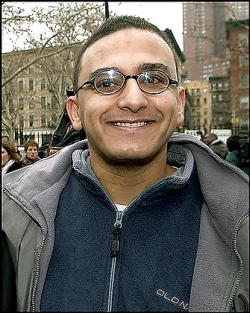
jackbauer.jpgabdallah-higazy.jpg

According to a new CNN poll, 69 percent of Americans believe that waterboarding is a form of torture. Even so, a staggering 40 percent of Americans polled believe that the US government should be allowed to use this form of torture to get information from suspected terrorists.

Commentators on this issue have expressed moral outrage — “waterboarding is killing America’s soul,” proclaims the Philadelphia Daily News‘ “Attytood.” Some see this as an afront to American pride — Keith Olbermann challenges President Bush by saying, “[We don’t condone torture] because we’re Americans, sir, and we’re better than that. We’re better than you.” While there are those who express indifference — the Wall Street Journal regards this as “mostly a political sideshow.”

Yet for those 40 percent of Americans who favor the use of torture, their view has in all likelihood been clearly expressed by Democratic Senator, Charles Schumer, who in a 2004 Senate hearing said:

I think there are probably very few people in this room or in America who would say that torture should never ever be used, particularly if thousands of lives are at stake. . . . It is easy to sit back in the armchair and say that torture can never be used, but when you are in the foxhole it is a very different deal. And I respect, I think we all respect the fact that the President is in the foxhole every day.

This then is how the issue is being framed: on one side are those who see themselves adopting the moral high ground — though their critics perceive them as being holier-than-thou, starry-eyed idealists; and on the other side are those who believe in the necessity of making tough choices in extreme circumstances — though their opponents see them as having lost their moral bearings.

At the center of this debate is an argument of perceived necessity. And the narrative that animates this argument, borrowed from Israel and used there in an earlier debate on the legitimacy of torture, is the “ticking bomb” scenario.

The scenario itself is fanciful. We are all familiar with the suspense movie in which the reality of what is feared is confirmed by making the audience privilege to the whereabouts of a bomb and the time left before it will explode. In post-9/11 America the impact of such dramas has been heightened by the likes of Fox TV’s fictional counter-terrorism agent, Jack Bauer. Let’s face it, for a population that forms most of its understanding of the world through television, such imagery has a visceral impact. But in Israel itself, where the danger of terrorism is more tangible and ubiquitous, the ticking bomb scenario is itself no less a product of fiction and has served no less as a political tool. As Stephen Langfur wrote in 1996:

Israel wants to present itself as an enlightened democracy on the Western model, but it has locked itself into the role of Occupier, with the result that toward part of the population under its control it must behave like a police-state. The “ticking bomb scenario” offers an exceptional, border-line situation, in which everyone can understand that even an enlightened democracy might have to use torture. What Israel does, therefore, is to extend the fantasy of the bomb in the crowded building to include analogous situations—even remotely analogous. Israel can then allow its security apparatus to approach interrogations as if they were all “ticking bombs.” Thus it can keep wearing the mask of an enlightened democracy, while functioning like a police-state. The “ticking bomb scenario,” for which torture is useless, “koshers” other situations where torture can be useful.

Indeed, Langfur points out that Israeli General Security Service officials used the ticking bomb argument to intimidate judges. After all, who would be willing to curtail an interrogation and thereafter be accused of having failed to prevent carnage? Yet in practice, so-called ticking bombs turned out to be prisoners who had been held in detention for weeks — plenty of time for plots to be revised and for the seeming inevitability of any attack to evaporate.

If an interrogation method’s “necessity” was to be based on the magnitude of a risk averted, then any technique applied to bring about the desired result would surely be justifiable. On what basis could one say that it was acceptable to use waterboarding to make the prisoner fear that he was about to drown, yet bleach could not be poured in his eyes, if in both cases the justification for the brutality was the necessity of saving innocent Israeli or American lives? If brutality can be graded on a scale, then on what basis can we say that in one instance the end justify the means while in another it does not, when necessity is determined by the end and not the means?

The issue here cannot be addressed or resolved by considering fictional scenarios. Instead we need to focus on reality and fortunately there is already one case that provides the perfect litmus test: the case of Abdallah Higazy.

On December 17, 2001, Higazy was detained and questioned by the FBI and then held as a material witness, suspected of being an accomplice in the 9/11 attacks on the World Trade Center in New York. He had been staying in a nearby hotel and was thought to have been in possession of an air-band transceiver capable of air-to-air and air-to-ground communication that could have been used as a beacon to direct the hijacked aircraft into their targets, the Twin Towers. As a terrorist suspect Higazy was as hot as they get.

Under interrogation he kept on changing his story. He had to be lying. FBI agents said they gave Higazy a “polygraph” yet the United States Court of Appeals opinion [PDF] quotes the suspect as saying that the test produced “intense pain.” The court opinion states that “Higazy asked whether anybody else had ever suffered physical pain during the polygraph, to which [FBI Special Agent Michael] Templeton replied: “[i]t never happened to anyone who told the truth.” Was Higazy being given a polygraph or was he being electrocuted?

The court opinion continues:

Higazy alleges that during the polygraph, Templeton told him that he should cooperate, and explained that if Higazy did not cooperate, the FBI would make his brother “live in scrutiny” and would “make sure that Egyptian security gives [his] family hell.” Templeton later admitted that he knew how the Egyptian security forces operated: “that they had a security service, that their laws are different than ours, that they are probably allowed to do things in that country where they don’t advise people of their rights, they don’t – yeah, probably about torture, sure.”

If so-called harsh interrogation methods can be justified, Abdallah Higazy was surely the perfect candidate to be given the third degree. He was suspected of having played an instrumental role in the worst terrorist attack the world has ever seen. This must have been — as Vice President Cheney would say — a no-brainer. Or not?

Anyone familiar with the name, Abdallah Higazy, will of course know that he was completely innocent. The FBI quickly realized as much when a few weeks after Higazy’s detention an airline pilot showed up looking for the radio transceiver he had left behind when he had been evacuated from his hotel on September 11.

When FBI Special Agent Templeton was interrogating his suspect, were Cheney’s words from September 16, 2001, still fresh in his mind?

We also have to work, though, sort of the dark side, if you will. We’ve got to spend time in the shadows in the intelligence world. A lot of what needs to be done here will have to be done quietly, without any discussion, using sources and methods that are available to our intelligence agencies, if we’re going to be successful. That’s the world these folks operate in, and so it’s going to be vital for us to use any means at our disposal, basically, to achieve our objective.

Templeton certainly went to the dark side, but the terrorist he was after wasn’t there. The question that needs to be addressed now and that needs to be the concern of the next attorney general is not what methods of interrogation can be applied in a ticking bomb scenario; it is this: how should the law have protected Abdallah Higazy?

Interrogation is a means of inquiry, not a method of punishment. In the war on terrorism, the presumption of innocence should not be treated as a legal luxury — it is a recognition that suspects are not always (contrary to what the administration would have us believe) the worst of the worst, but on the contrary that with unfortunate frequency they have included the innocent.

Forget about ticking time bombs and remember Abdallah Higazy. After all, those who now want to justify torture do so in the name of protecting the innocent.

Facebooktwittermail

NEWS: Africa doesn’t want AFRICOM

Skepticism, distrust greet America’s new military command in Africa

Just a few years ago, the U.S. military was all but absent from the oil-rich waters of West Africa’s Gulf of Guinea.

This year, it plans to be there every day.

Africa’s strategic importance is on the rise, as the U.S. acknowledged last month with the creation of a new unified U.S. military command for the continent called Africom. Monday brings the first military mission to Africa since Africom’s founding, a U.S. Navy cruiser on a half-year training exercise through the Gulf of Guinea that stops first in Senegal’s capital, Dakar.

For American commanders, Africom means consolidating responsibility for a continent previously split among three other regional commands, each of which saw Africa as a secondary interest.

However, Africom’s creation has provoked so much skepticism on the continent that one of the most basic questions — where it will be located — remains unresolved. [complete article]

Facebooktwittermail

NEWS: The torture test

Bush administration blocked waterboarding critic

A senior Justice Department official, charged with reworking the administration’s legal position on torture in 2004 became so concerned about the controversial interrogation technique of waterboarding that he decided to experience it firsthand, sources told ABC News.

Daniel Levin, then acting assistant attorney general, went to a military base near Washington and underwent the procedure to inform his analysis of different interrogation techniques.

After the experience, Levin told White House officials that even though he knew he wouldn’t die, he found the experience terrifying and thought that it clearly simulated drowning. [complete article]

Editor’s Comment — Does Cheney have as much guts as an acting assistant attorney general? Or does he think waterboarding guidelines should include a clause that exempts anyone with a pacemaker?

Mukasey all but a shoo-in for approval

Michael B. Mukasey appeared on Friday to be all but assured of becoming the nation’s 81st attorney general when two Senate Democrats broke ranks and said they would support the retired federal judge to head the Justice Department.

While acknowledging serious concerns about his views on interrogation techniques, Sens. Dianne Feinstein of California and Charles E. Schumer of New York said they would vote to confirm Mukasey when the Senate Judiciary Committee takes up his nomination to succeed Alberto R. Gonzales on Tuesday. [complete article]

See also, John Dean on Mukasey (TPM) and The torture litmus test (Scott Horton).

Facebooktwittermail

ANALYSIS & EDITOR’S COMMENT: Drafting diplomatic cannon fodder

Why diplomats won’t go to Iraq

At a State department “town hall” meeting on Wednesday, one participant, veteran diplomat Jack Croddy, pointed out the risks of injury and death faced by American diplomats [in Iraq]. But he hit closer to the heart of the matter when he told the director general of the Foreign Service, who was leading the meeting, “It’s one thing if someone believes in what’s going on over there and volunteers, but it’s another thing to send someone over there on a forced assignment.” On Friday, Secretary of State Condoleezza Rice, who was traveling, issued a statement saying, “We must go forward with the identification of officers to serve, should it prove necessary to direct assignments. Should others step forward, as some already have, we will fill these new jobs as we have before —with volunteers. However, regardless of how the jobs may be filled, they must be filled.” [complete article]

Editor’s Comment — The core issue here is that there is an inherent tension between loyalty and intelligence. The willingness to follow orders requires, in part, a willingness to suspend the use of ones own powers of discrimination, analysis, and judgment. Diplomats who are good are doing what they are told and probably not as good at conducting diplomacy.

Facebooktwittermail

NEWS: Mukasey: Bush and Cheney’s defense attorney

Nominee’s stand may avoid tangle of torture cases

In adamantly refusing to declare waterboarding illegal, Michael B. Mukasey, the nominee for attorney general, is steering clear of a potential legal quagmire for the Bush administration: criminal prosecution or lawsuits against Central Intelligence Agency officers who used the harsh interrogation practice and those who authorized it, legal experts said Wednesday.

On Wednesday, Senator Patrick J. Leahy, Democrat of Vermont, the chairman of the Senate Judiciary Committee, scheduled a confirmation vote for Tuesday amid deep uncertainty about the outcome at the committee level. If Mr. Mukasey’s nomination reaches the Senate floor, moderate Democrats appear likely to join Republicans to produce a majority for confirmation. But a party-line vote in the Judiciary Committee, which seemed a possibility, could block the nomination from reaching the floor.

The biggest problem for Mr. Mukasey remains his refusal to take a clear legal position on the interrogation technique. Fear of opening the door to criminal or civil liability for torture or abuse, whether in an American court or in courts overseas, appeared to loom large in Mr. Mukasey’s calculations as he parried questions from the committee this week. Some legal experts suggested that liability could go all the way to President Bush if he explicitly authorized waterboarding. [complete article]

Facebooktwittermail

OPINION: American courts are fully capable of trying suspected terrorists

How to try a terrorist

In 2001, I presided over the trial of Ahmed Ressam, the confessed Algerian terrorist, for his role in a plot to bomb Los Angeles International Airport. That experience only strengthened my conviction that American courts, guided by the principles of our Constitution, are fully capable of trying suspected terrorists.

As evidence of “the inadequacy of the current approach to terrorism prosecutions,” Judge Mukasey noted that there have been only about three dozen convictions in spite of Al Qaeda’s growing threat. Open prosecutions, he argued, potentially disclose to our enemies methods and sources of intelligence-gathering. Our Constitution does not adequately protect society from “people who have cosmic goals that they are intent on achieving by cataclysmic means,” he wrote.

It is regrettable that so often when our courts are evaluated for their ability to handle terrorism cases, the Constitution is conceived as mere solicitude for criminals. Implicit in this misguided notion is that society’s somehow charitable view toward “ordinary” crimes of murder or rape ought not to extend to terrorists. In fact, the criminal procedure required under our Constitution reflects the reality that law enforcement is not perfect, and that questions of guilt necessarily precede questions of mercy.

Consider the fact that of the 598 people initially detained at Guantánamo Bay in 2002, 267 have been released. It is likely that for a number of the former detainees, there was simply no basis for detention. The American ideal of a just legal system is inconsistent with holding “suspects” for years without trial. [complete article]

Facebooktwittermail

NEWS: Rumsfeld’s “snowflakes”

From the desk of Donald Rumsfeld . . .

In a series of internal musings and memos to his staff, then-Defense Secretary Donald H. Rumsfeld argued that Muslims avoid “physical labor” and wrote of the need to “keep elevating the threat,” “link Iraq to Iran” and develop “bumper sticker statements” to rally public support for an increasingly unpopular war.

The memos, often referred to as “snowflakes,” shed light on Rumsfeld’s brusque management style and on his efforts to address key challenges during his tenure as Pentagon chief. Spanning from 2002 to shortly after his resignation following the 2006 congressional elections, a sampling of his trademark missives obtained yesterday reveals a defense secretary disdainful of media criticism and driven to reshape public opinion of the Iraq war.

Rumsfeld, whose sometimes abrasive approach often alienated other Cabinet members and White House staff members, produced 20 to 60 snowflakes a day and regularly poured out his thoughts in writing as the basis for developing policy, aides said. The memos are not classified but are marked “for official use only.” [complete article]

Facebooktwittermail

NEWS: Rice says Karen Hughes “has done just a remarkable job”

Hughes, loyal Bush adviser, leaving State Dept.

Karen P. Hughes, one of the few remaining members of President Bush’s circle of longtime Texas advisers, said today that she will return to private life, stepping down as the head of public diplomacy at the State Department sometime in December.

Ms. Hughes is credited with injecting new energy into the administration’s efforts to improve America’s image around the world, more actively spreading good news about the United States while more aggressively addressing bad news.

But Ms. Hughes herself has said that hers was “the work of generations,” an imposing challenge at a time when the United States was fighting wars in two Muslim countries and when terms like waterboarding and names like Abu Ghraib have entered the world’s vocabulary.

Opinion polls indicate that the image of the United States in Muslim countries — the chief target of Ms. Hughes’s labors — has not improved, and in some cases has deteriorated, since she took office two years ago. [complete article]

Facebooktwittermail

NEWS, ANALYSIS & EDITOR’S COMMENT: Why America uses torture

U.S. accused of torture

The United States’s willingness to resort to harsh interrogation techniques in its so-called war on terror undermined human rights and the international ban on torture, a United Nations spokesman says.

Manfred Nowak, UN Special Rapporteur on torture, said the US’s standing and importance meant it was a model to other countries which queried why they were subject to scrutiny when the US resorted to measures witnessed at Guantanamo Bay and Abu Ghraib prison.

Mr Nowak was speaking after releasing his finding that the use of torture was routine and widespread in Sri Lanka ,despite laws against it.

“I am very concerned about the undermining of the absolute prohibition of torture by interrogation methods themselves in Abu Grahib, in Guantanamo Bay and others, but also by rendition and the whole CIA secret places of detention. All that is really undermining the international rule of law in general and human rights but also the prohibition of torture,” said Mr Nowak. [complete article]

Editor’s Comment — The renewed debate on torture that has been provoked by statements made by AG-nominee Judge Mukasey on the legitimacy of waterboarding, has resulted in numerous assertions that torture is un-American. As Senate Judiciary Committee Chairman Patrick Leahy said today, “I remain very concerned that Judge Mukasey finds himself unable to state unequivocally that waterboarding is illegal and below the standards and values of the United States.”

To my mind, this is a rather weak moral argument. To say that we don’t torture because we’re American, is to imply that the majority of humanity, not being endowed with American virtue, might find the use of torture more acceptable than their high-minded stateside counterparts. But on the contrary, it is this notion that there is some intrinsic moral foundation to Americanness that is itself the great enabling force beneath a national trait that most of us would rather ignore: American hypocracy. The self-agrandizing virtue that this nation so often wants to celebrate is a mask that conceals a plethora of contradictions: that a nation that identifies itself as religious is so profoundly materialistic; that a nation that predominently identifies itself as Christian has such a strong preference for pre-Christian values; that a nation that sees itself as a moral beacon to the world has with such frequency chosen military engagement as its point of contact with the rest of the world. Americans can and do engage in torture not in spite of this being un-American, but because as Americans they find it all too easy to sustain an image of themselves that is a glaring contradiction with their actions.

If the Senate wants to assert that America will no longer condone torture, then first we need to acknowledge that the climate of fear engendered by the war on terrorism has in fact led many Americans to regard torture as an acceptable tool of national defense. And secondly, that if America wants to now change course and unequivocally renounce the use of torture, it will not be reclaiming moral high ground; it will be returning to an internationally recognized set of moral standards that for most of this decade it has chosen to ignore.

Waterboarding is torture… period

1. Waterboarding is a torture technique. Period. There is no way to gloss over it or sugarcoat it. It has no justification outside of its limited role as a training demonstrator. Our service members have to learn that the will to survive requires them accept and understand that they may be subjected to torture, but that America is better than its enemies and it is one’s duty to trust in your nation and God, endure the hardships and return home with honor.

2. Waterboarding is not a simulation. Unless you have been strapped down to the board, have endured the agonizing feeling of the water overpowering your gag reflex, and then feel your throat open and allow pint after pint of water to involuntarily fill your lungs, you will not know the meaning of the word.

Waterboarding is a controlled drowning that, in the American model, occurs under the watch of a doctor, a psychologist, an interrogator and a trained strap-in/strap-out team. It does not simulate drowning, as the lungs are actually filling with water. There is no way to simulate that. The victim is drowning. How much the victim is to drown depends on the desired result (in the form of answers to questions shouted into the victim’s face) and the obstinacy of the subject. A team doctor watches the quantity of water that is ingested and for the physiological signs which show when the drowning effect goes from painful psychological experience, to horrific suffocating punishment to the final death spiral.

Waterboarding is slow motion suffocation with enough time to contemplate the inevitability of black out and expiration –usually the person goes into hysterics on the board. For the uninitiated, it is horrifying to watch and if it goes wrong, it can lead straight to terminal hypoxia. When done right it is controlled death. Its lack of physical scarring allows the victim to recover and be threaten with its use again and again. [complete article]

On torture, 2 messages and a high political cost

Six years after the Bush administration embraced harsh physical tactics for interrogating terrorism suspects, and two years after it reportedly dropped the most extreme of those techniques, the taint of torture clings to American counterterrorism efforts.

The administration has a standard answer to queries about its interrogation practices: 1) We do not torture, and 2) we will not say what we do, for fear of tipping off future prisoners. In effect, officials want Al Qaeda to believe that the United States does torture, while convincing the rest of the world that it does not.

But that contradictory catechism is not holding up well under the battering that American interrogation policies have received from human rights organizations, European allies and increasingly skeptical members of Congress. [complete article]

Squeezing Mukasey on torture

George W. Bush has always wielded moral clarity as a weapon, beating Democrats by declaring his high purpose and principled resolve. But in recent months, as critics have shined new light on domestic spying and harsh interrogation techniques in the morally ambiguous world of counter-terrorism, Bush has had to retreat to gray-area defenses, using tailored definitions and legalisms to dodge questioners. And now, as Democrats raise the pressure on embattled Attorney General nominee Michael Mukasey to state his opinion on whether or not waterboarding constitutes torture, it is the President’s opponents who are using moral clarity against him.

Mukasey’s (and the White House’s) problems began during his Oct. 18 Judiciary Committee confirmation hearing to replace Alberto Gonzales as Attorney General. At the hearing veteran Illinois Senator Dick Durbin asked Mukasey a deceptively simple question: Is waterboarding torture? Waterboarding simulates drowning, and involves constraining a person, restricting their breathing and pouring water on all or part of their face. Some version of it is widely reported to have been used by U.S. interrogators in an attempt to extract information from high-level terrorism suspects in the wake of 9/11. [complete article]

See also, Dozens of ‘ghost prisoners’ not publicly accounted for (WP) and Judgment day for the CIA? (Christopher Dickey).

Facebooktwittermail

NEWS: Iraqi Cabinet votes to repeal immunity for American mercenaries

Iraqi Cabinet votes to repeal immunity for U.S. guards

The Iraqi Cabinet today approved and sent on to parliament a proposed law repealing the immunity from prosecution in Iraqi courts that has been extended to foreign security contractors operating in the country.

A government statement said foreign security companies, their employees and contractors would be subject to Iraqi laws and the judicial system, and “all immunities they have are canceled.” It also said the law would require them to cooperate with Iraqi rules governing visas, weapons possession, vehicle licensing and taxation.

“The reason this law is being passed is basically to stop these security companies and American contractors from thinking that Iraqi blood is cheap and that they couldn’t be prosecuted,” said Adil Barwari, a member of parliament from the Kurdistan Democratic Party who sits on the security and defense committee, which will now review the legislation. “It’s something to make them think before they act.” [complete article]

See also, Immunity jeopardizes Iraq probe (WP) and Officials: Blackwater guards offered limited immunity (CNN).

Facebooktwittermail

FEATURE: The mega-bunker of Baghdad

The mega-bunker of Baghdad

When the new American Embassy in Baghdad entered the planning stage, more than three years ago, U.S. officials inside the Green Zone were still insisting that great progress was being made in the construction of a new Iraq. I remember a surreal press conference in which a U.S. spokesman named Dan Senor, full of governmental conceits, described the marvelous developments he personally had observed during a recent sortie (under heavy escort) into the city. His idea now was to set the press straight on realities outside the Green Zone gates. Senor was well groomed and precocious, fresh into the world, and he had acquired a taste for appearing on TV. The assembled reporters were by contrast a disheveled and unwashed lot, but they included serious people of deep experience, many of whom lived fully exposed to Iraq, and knew that society there was unraveling fast. Some realized already that the war had been lost, though such were the attitudes of the citizenry back home that they could not yet even imply this in print.

Now they listened to Senor as they increasingly did, setting aside their professional skepticism for attitudes closer to fascination and wonder. Senor’s view of Baghdad was so disconnected from the streets that, at least in front of this audience, it would have made for impossibly poor propaganda. Rather, he seemed truly convinced of what he said, which in turn could be explained only as the product of extreme isolation. Progress in the construction of a new Iraq? Industry had stalled, electricity and water were failing, sewage was flooding the streets, the universities were shuttered, the insurgency was expanding, sectarianism was on the rise, and gunfire and explosions now marked the days as well as the nights. Month by month, Baghdad was crumbling back into the earth. Senor apparently had taken heart that shops remained open, selling vegetables, fruits, and household goods. Had he ventured out at night he would have seen that some sidewalk cafés remained crowded as well. But almost the only construction evident in the city was of the Green Zone defenses themselves—erected in a quest for safety at the cost of official interactions with Iraq. Senor went home, married a Washington insider, and became a commentator on Fox News. Eventually he set himself up in the business of “crisis communications,” as if even he finally realized that Iraq had gone horribly wrong. [complete article]

Facebooktwittermail

NEWS: War profiteer hauled off in handcuffs

One down: Obscenely decadent war profiteer hauled off in handcuffs

America’s most ostentatious war profiteer is no longer a free man. In a long-anticipated move, FBI agents arrested bulletproof vest maker David H. Brooks in his Manhattan apartment at dawn on Thursday. In the tradition of Al Capone, Brooks was nabbed on allegations of financial shenanigans, despite strong suspicions that the defense contractor has much more serious crimes on his hands.

Brooks emerged as the poster boy for shameless war profiteering in November of 2005 when he blew some $10 million in profits from military contracts on a celebrity-studded party for his daughter. Leaked details of the bash drew national attention, including a description of Brooks’ pink suede suit and photos of his daughter on stage with the rapper 50 Cent. A New York Times editorial compared Brooks to the ill-fated Marie Antoinette.

And indeed, while Brooks won’t face a guillotine for his greed, he could spend up to 70 years in prison if convicted of all charges. The 71-page indictment alleges that while Brooks was chief executive of DHB Industries, a leading provider of military body armor, he pocketed more than $185 million from insider trading, fraud and tax evasion. He is also charged with using millions of dollars in DHB funds for personal expenses. [complete article]

Facebooktwittermail