The Guardian reports: Forces opposed to the UN-backed Libyan government in Tripoli appear to be making a clean sweep through the country’s “oil crescent”, seizing control of oil terminal headquarters and gaining a stranglehold over the export of Libya’s economic lifeblood.
The capture of the oil terminals through the weekend and Monday changes the balance of political forces inside Libya and makes the survival of the UN-backed, Tripoli-based government of national accord (GNA) less likely.
The oil ports were seized by forces under the control of General Khalifa Haftar, who opposes the GNA and supports the rival government in the east of the country. The victory for Haftar is likely to increase his prestige and his negotiating power in the event of Libya being carved up.
The clashes also mean that the possibility of an economic revival driven by oil production and export is further away than ever. Six western nations had issued a joint appeal in August urging that oil facilities be freed from the civil war.
The Libyan national oil corporation, one of the few technocratic bodies left in Libya, had produced a clear plan to revive oil production and exports this year.
Oil production, pipelines and terminals have been at the centre of the civil war since the collapse of the government of Muammar Gaddafi in 2011. Oil production has collapsed from a potential of more than 1.5 million barrels a day to just 200,000. [Continue reading…]
Category Archives: Issues
Sugar industry funded research as early as 1960s to coverup health hazards, report says
The Associated Press reports: The sugar industry began funding research that cast doubt on sugar’s role in heart disease — in part by pointing the finger at fat — as early as the 1960s, according to an analysis of newly uncovered documents.
The analysis published Monday in the journal JAMA Internal Medicine is based on correspondence between a sugar trade group and researchers at Harvard University, and is the latest example showing how food and beverage makers attempt to shape public understanding of nutrition.
In 1964, the group now known as the Sugar Assn. internally discussed a campaign to address “negative attitudes toward sugar” after studies began emerging linking sugar with heart disease, according to documents dug up from public archives. The following year the group approved “Project 226,” which entailed paying Harvard researchers today’s equivalent of $48,900 for an article reviewing the scientific literature, supplying materials they wanted reviewed, and receiving drafts of the article.
The resulting article published in 1967 concluded there was “no doubt” that reducing cholesterol and saturated fat was the only dietary intervention needed to prevent heart disease. The researchers overstated the consistency of the literature on fat and cholesterol while downplaying studies on sugar, according to the analysis. [Continue reading…]
How our leaders, and would-be leaders, became accomplices in terrorism
Christopher Dickey writes: When President Barack Obama says there will be no more 9/11s, he almost certainly is right, although what’s left of the core al Qaeda leadership still longs for an atrocity worthy of disaster-film director Roland Emmerich.
The bad news: in the Age of Anxiety, as my colleague Michael Weiss calls it, the jihadists have learned they get almost as much social, political and economic impact out of minor events, and even failure, as they do out of “successful” atrocities.
And that’s not so much because of the bad guys as it is because of us.
The terror perpetrated by the few has become a tool used by demagogues — our demagogues — to frighten and sometimes to stampede the masses. (Am I thinking of Donald Trump? Marine Le Pen? Geert Wilders? Boris Johnson in Brexit mode? Yes.)
What we have lost in the 15 years since the horrors of September 11, 2001, is a sense of perspective about the scale of the threat we face. [Continue reading…]
The threat from terrorism is asymmetrical in obvious ways, but fearmongers — with the help of the media — obscure the most significant asymmetry that is evident in the immediate aftermath of every atrocity: the inhumanity of the perpetrators is dwarfed by the humanity evident in the responses of the survivors. In the face of terror, the people who reach out to help each other, vastly outnumber the terrorists. Those whose fears are most susceptible to being purposefully amplified are those who get terrorized at a distance.
Giuliani defends Trump idea to take Middle East oil: ‘Anything is legal’ in war
The Guardian reports: The former New York mayor Rudy Giuliani has argued that “anything is legal” in war, defending Donald Trump’s call to “take the oil” of Iraq, one of the Republican nominee’s proposals that appears to violate international law.
Giuliani has become one of Trump’s closest advisers and steadiest allies in a campaign shaken by controversy, turnover and the nominee’s own unpredictability. In an interview broadcast on Sunday he tried to explain how Trump’s call to “take the oil” of Iraq fit with the nominee’s past demands to “declare victory and leave” and reduce American intervention abroad.
“Leave a force back there, and take it, and make sure it’s distributed in a proper way,” Giuliani told ABC This Week host George Stephanopoulos.
“That’s not legal, is it?” the host asked.
“Of course it’s legal – it’s war,” Giuliani answered, laughing. “Until the war is over, anything is legal.” [Continue reading…]
Obama & Palestine: The last chance
Nathan Thrall writes: Barack Obama entered the White House more deeply informed about and sympathetic to the Palestinian cause than any incoming president before him. He had attended and spoken at numerous events organized by the Arab-American and Palestinian-American communities, in which he had numerous contacts, and he had repeatedly criticized American policy, calling for a more even-handed approach toward Israel. Yet if there has been a distinguishing feature of Obama’s record on Israel-Palestine, it is that, unlike his recent predecessors, he has not a single achievement to his name. In the view of some top advisers, Obama’s final months in power are a unique opportunity to correct the record, and, more important, score an achievement that his successors could scarcely undo.
When he came to office, Palestinians looked to Obama as a potentially historic figure capable of ending their occupation. In a 2003 toast to Rashid Khalidi, the Palestinian-American historian of the University of Chicago and later Columbia University, Obama reminisced about meals prepared by Khalidi’s wife, Mona, and the many talks that had been “consistent reminders to me of my own blind spots and my own biases.” He had met, dined with, and attended the lectures of such figures as Edward Said, the most famous and eloquent Palestinian critic of the Oslo accords, and he had offered words of encouragement to Ali Abunimah, the Palestinian activist, writer, co-founder of the Electronic Intifada, and leading advocate of a one-state solution. Unlike other presidents, Obama was able to relate personally to the Palestinian experience. He could draw parallels with Britain’s colonization of Kenya, where his Muslim father was born, and the African-American struggle for civil rights that had culminated in his presidency.
In his first days on the job, Obama did not disappoint. Within hours of taking office he made his first phone call to a foreign leader, Palestinian President Mahmoud Abbas. “We were not expecting such a quick call from President Obama,” a pleased Abbas adviser said, “but we knew how serious he is about the Palestinian problem.” On his second day, Obama appointed a Special Envoy for Middle East Peace, Senator George Mitchell, author of a 2001 fact-finding report that called for a freeze in Israeli settlement construction. Four months later, ahead of a White House visit by Abbas, the administration publicly confronted Israel with a call for a complete freeze in settlement building in the West Bank, including East Jerusalem. [Continue reading…]
An accidental nuclear detonation ‘will happen’
In a review of Command and Control, which starts showing in theaters on September 14, Michael Mechanic writes: The film—which opens on a scene in September 1980, as young maintenance guys suit up to work on a Titan 2 missile in Damascus, Arkansas—features great archival footage and reenactments shot in a decommissioned silo complex. Command and Control dutifully follows the book’s basic outline. The central narrative thread involves a technician’s mistake at a Titan 2 silo that ended with the explosion of a missile whose warhead was more powerful than all the bombs America dropped in WWII combined, the nukes included. (The warhead didn’t detonate, obviously, but at the time nobody knew that it wouldn’t.)
This part of the story is related onscreen by the same former airmen, commanders, journalists, and politicos who appear in the book—largely men who were there or otherwise involved. Among them is then-Senior Airman David Powell, who was a teenager on an Air Force maintenance team when he dropped a nine-pound socket head down the silo shaft, puncturing the missile’s fuel tank. (To get a taste, read the scene as it appears in Schlosser’s book.) What comes after serves as a potent illustration of the breakdown of the military’s command-and-control structure, designed to prevent such accidents and deal with them effectively should they happen. Spoiler alert: Bad decisions are made by know-nothings up the chain of command, and bad things result. [Continue reading…]
How Costa Rica has become a world leader in renewable energy
Bill Moyers: Money and power in America
Hope: it’s in short supply in America this year. I was reminded of that recently when I spoke at a kick-off event for the school year hosted by the Dole Institute of Politics at the University of Kansas. The Institute’s namesake is, of course, Bob Dole, the war hero turned Republican congressman, senator, minority and then majority leader, and finally presidential nominee in 1996. On a beautiful summer evening, on the front lawn of the Institute, my host, a KU senior named Cody, and I discussed — what else is there to talk about this year? — The Donald, Hillary, and Bernie. Then we plunged into the perilous topic of the media and its curious future and the life of a journalist (me) covering the gravity-defying spectacle commonly known as election 2016. More than 100 students showed up — nothing to do, I’m sure, with the free burgers and soda — and when it came time for the Q-and-A portion of the event, I couldn’t help but be struck by the acuity and thoughtfulness of their questions.
Afterward, I met a smaller group of them at a nearby basement bar. During my five years as an undergraduate, I can’t recall having a conversation as substantive as that evening’s. Kansas’s state government, led by its governor, Sam Brownback, has plunged into a radical experiment in “conservative” governing, and it was on their minds. We talked about a variety of depressing topics, including the devastating effects of the legislature’s repeated budget cuts to higher education and another grim signature legislative issue: the open carry of guns on campus. “No gun” signs were ubiquitous there, but everyone wondered: For how long? The students spoke eloquently and knowledgeably. More than that, they spoke with passion and in detail about how such problems might be dealt with and even fixed, and they did so with the Dole Institute’s bipartisan ethos in mind. Some of it may have been the youthful idealism of the undergraduate but, believe me, it was refreshing.
I say all this because, as a journalist in this crazy year of our lord 2016, on a good day the temptation is to tilt toward cynicism. It’s our job to rake the muck and expose the trolls, to cast light on the wrongdoing and the failings in our society, but it’s up to others to set them right. Today, at this site, Bill Moyers writes about the greatest failing, the true disaster, of our time: the scourge of growing inequality, economic and political. He describes it as “a despicable blot on American politics,” as the very wealthy convert their financial might into political power to guard that wealth while exacerbating inequality further. The statistics Moyers deploys are chilling. Consume enough of them and you’re liable to feel a bit gloomy. But like those undergraduates, Moyers (very distinctly a post-graduate of our difficult political world) holds onto the hope, as today’s piece suggests, that Americans can still fix our world, make it a better place.
Those students I met gave me hope and Moyers does the same — hope for a more equitable future brought on by the hard work of Americans, whether as journalists, legislators, or activists, as lawyers, doctors, engineers, or teachers. These are strange, often grim, times, and such bursts of hope are what keep us going. Andy Kroll
We, the Plutocrats vs. We, the People
Saving the soul of democracy
By Bill MoyersSixty-six years ago this summer, on my 16th birthday, I went to work for the daily newspaper in the small East Texas town of Marshall where I grew up. It was a good place to be a cub reporter — small enough to navigate but big enough to keep me busy and learning something every day. I soon had a stroke of luck. Some of the paper’s old hands were on vacation or out sick and I was assigned to help cover what came to be known across the country as “the housewives’ rebellion.”
Fifteen women in my hometown decided not to pay the social security withholding tax for their domestic workers. Those housewives were white, their housekeepers black. Almost half of all employed black women in the country then were in domestic service. Because they tended to earn lower wages, accumulate less savings, and be stuck in those jobs all their lives, social security was their only insurance against poverty in old age. Yet their plight did not move their employers.
The housewives argued that social security was unconstitutional and imposing it was taxation without representation. They even equated it with slavery. They also claimed that “requiring us to collect [the tax] is no different from requiring us to collect the garbage.” So they hired a high-powered lawyer — a notorious former congressman from Texas who had once chaired the House Un-American Activities Committee — and took their case to court. They lost, and eventually wound up holding their noses and paying the tax, but not before their rebellion had become national news.
The stories I helped report for the local paper were picked up and carried across the country by the Associated Press. One day, the managing editor called me over and pointed to the AP Teletype machine beside his desk. Moving across the wire was a notice citing our paper and its reporters for our coverage of the housewives’ rebellion.
I was hooked, and in one way or another I’ve continued to engage the issues of money and power, equality and democracy over a lifetime spent at the intersection between politics and journalism. It took me awhile to put the housewives’ rebellion into perspective. Race played a role, of course. Marshall was a segregated, antebellum town of 20,000, half of whom were white, the other half black. White ruled, but more than race was at work. Those 15 housewives were respectable townsfolk, good neighbors, regulars at church (some of them at my church). Their children were my friends; many of them were active in community affairs; and their husbands were pillars of the town’s business and professional class.
Right to repair: The fight against manufacturers who make unfixable products
NBC News reports: With electronics becoming ever harder to fix because of design and legal restrictions, a loose coalition of repair professionals and environmentalists is putting the screws to manufacturers that they claim are fattening their bottom lines by deliberately engineering disposability into their products.
Loosely known as the “right to repair” movement, its advocates say the ability to tinker with products you own is a basic property right and necessary to create a healthy sustainable market. Many efforts by manufacturers to block repairs, they maintain, are intended to force consumers to buy new products or expensive warranties — not protect their intellectual property.
“We’ve been getting picked at little by little over 20 years,” Gay Gordon-Byrne, the founder and director of the Repair Association, said of the erosion of repairability in a host of consumer products, especially electronics.
The Repair Association — a coalition of service, security and environmental organizations founded in 2013 — is fighting restrictive repair policies and legal protections that prevent non-authorized repairs on many products that contain software — a quickly growing class of objects known as the “Internet of Things” if they also connect to the web. [Continue reading…]
Clinton’s perceived statistical error in characterizing Trump supporters
Ta-Nehisis Coates writes: [On Friday], Hillary Clinton claimed that roughly “half of Trump’s supporters” could be characterized as either “racist, sexist, homophobic, xenophobic, Islamaphobic — you name it.” Clinton hedged by saying she was being “grossly generalistic” but given that no one appreciates being labeled a bigot, that statement still feels harsh –– or if you prefer, “politically incorrect.”
Clinton later said that she was “wrong” to say “half,” but reiterated that “it’s deplorable that Donald Trump has built his campaign largely on prejudice and paranoia.”
One way of reporting on Clinton’s statement is to weigh its political cost, ask what it means for her campaign, or attempt to predict how it might affect her performance among certain groups. This path is in line with the current imperatives of political reporting and, at least for the moment, seems to be the direction of coverage. But there is another line of reporting that could be pursued — Was Hillary Clinton being truthful or not? [Continue reading…]
Clinton added, “Now, some of those folks — they are irredeemable, but thankfully they are not America.” Her implication seems to be that however irredeemable a proportion of Trump supporters might be, they are insufficient in number or influence to affect how we define America.
America can supposedly accommodate an indeterminate number of people who are racist, sexist, homophobic, xenophobic, or Islamaphobic, and somehow retain its exalted character.
American elections and the way the media covers them, focus so much on the individual personalities of would-be political representatives, that it’s easy to avoid seeing in these democratic processes an opportunity for assessing the condition of American culture.
While Donald Trump can be criticized for having empowered one of the dark sides of America, there’s little reason to believe that the ugly face he has revealed has grown in size due to his candidacy. It has certainly grown in strength because Trump has created a permissive environment for expressions of bigotry. And that environment is certainly dangerous in terms of what it already has unleashed. But had he not run and had an alternative Republican nominee not tapped into the same currents, the fact that they might now not be so visible would be no reason to treat them as less representative of America.
Although Trump supporters like him because they regard his lack of political correctness as a form of candor, one of the many ironies of this election is that he and they are generally just as obedient as anyone else in compliance with many forms of political correctness.
Hillary Clinton’s offense in labeling half of Trump’s supporters as racists of one kind or another derives from the fact that virtually no one disputes that these are derogatory terms. Racism in America is almost universally disavowed. But the fact that nowadays so few people will tolerate being called racist seems to have not as much diminished racism than it has driven it underground. Even overt white supremacists practice their own form of political correctness by characterizing their cause as involving the conservation of what they regard as their endangered “heritage.”
An argument about how a political constituency is getting labeled serves mostly as a distraction from the core issue here: is American society capable of becoming more inclusive? Or is this a society already fractured by so many embattled and conflicting identities that its capacity to come together is severely impaired by a lack of durable social glue?
What does it mean to be an American? should not be a question asked so that politicians can compete in making cliched declarations about America’s greatness. Instead, it should be treated as the first step in arriving at a sound diagnosis of this nation both in terms of its actual strengths and weaknesses.
Command under attack: What we’ve learned since 9/11 about managing crises
By Herman B. “Dutch” Leonard, Harvard University; Arnold M. Howitt, Harvard University; Christine Cole, Harvard University, and Joseph W. Pfeifer, Harvard University
The attack on the World Trade Center and the Pentagon on Sept. 11, 2001 was the largest coordinated, multi-site international act of terror ever carried out on U.S. soil. Almost 3,000 people died, many others were injured and property damage ran into tens of billions of dollars.
Many people acted heroically at both attack sites. In New York, firefighters climbed staircases inside the World Trade Center towers even as damage from fires on upper floors threatened the integrity of the buildings and eventually caused them to collapse. At the Pentagon, military personnel, civilian employees and first responders entered the still-burning impact area to help people who had been injured.
Unfortunately, these efforts were not as coordinated or effective as they could have been.
At the Harvard Kennedy School’s Program on Crisis Leadership, we work to help societies prepare for and respond to catastrophes, from accidents and natural disasters to terrorist attacks. Since 9/11, government agencies have developed new tools for organizing collaborative responses to novel large-scale emergencies. We believe that these new techniques are making a difference, and that many more agencies – especially at the state and local levels – should be using them.
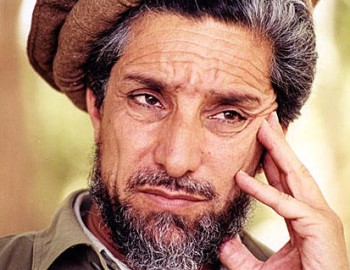
What defined Ahmad Shah Massoud
Frud Bezhan writes: Resistance fighter and anti-Taliban leader Ahmad Shah Masud was killed by Al-Qaeda assassins on September 9, 2001, ushering in a chain of events that would place Afghanistan at the center of the global war on terrorism.
Two days after his death, Al-Qaeda operatives would carry out the 9/11 terrorist attacks on U.S. soil. Within a month, the United States military was leading a bombing campaign and invasion of Afghanistan with the intention of overthrowing the Taliban and capturing Al-Qaeda leader and 9/11 orchestrator Osama Bin Laden.
In life and as in death, the military strategist who had made his name as a commander of anti-Taliban forces would have a significant impact on life in Afghanistan. Here are some stories behind the man whose battlefield exploits earned him the moniker “The Lion of Panjshir.” [Continue reading…]
Sorry folks, veterans are not necessarily experts on foreign policy
Rosa Brooks writes: Politicians have always sought to associate themselves with military glory, with mixed results. (Think Michael Dukakis and the tank, or George W. Bush’s flight suit and “Mission accomplished.”) Barack Obama’s no exception: Virtually all his major national security speeches have been made in military settings, from West Point to the National Defense University. The military is, far and away, the most trusted public institution in the United States, so it’s no surprise that politicians like to associate themselves with it. If political candidates could wear live service members as lapel pins, I’m sure they’d do so.
But the “Commander in Chief Forum” brought the ickiness to a new level. Sponsored by NBC and the Iraq and Afghanistan Veterans of America, the event invited each presidential candidate to make the case that she or he is “better qualified to serve as America’s next commander in chief” before an audience of veterans and military personnel. The tenor of the publicity made it sound like an audition: “Vets size up Clinton, Trump,” proclaimed NBC.
Why even hold an election? Why not just let NBC’s specially selected audience of veterans pick the next president?
Trump clearly saw the event as something between an audition and a popularity contest. “Eighty-eight generals and admirals endorsed me today,” he proudly informed NBC host Matt Lauer, several times, even going so far as to take the list out of his suit-jacket pocket. Clinton’s campaign quickly counterattacked, proffering its own list of 95 generals endorsing the Democratic candidate.
As my FP colleagues Kori Schake and Peter Feaver have written recently, such partisan endorsements by former military officials are growing more frequent and risk turning the military into even more of a political football than it already is. “Such political endorsements contribute to toxic civil-military relations,” writes Feaver. They “damage … the norm of a nonpartisan military that has served our country well.”
But I find it hard to blame veterans and retired military leaders for becoming more partisan. To my mind, the problem isn’t that former military personnel sometimes take very public and very partisan positions (they are still citizens, after all, and entitled to speak and vote their conscience) — the problem is that the media and the public actively encourage this partisanship by treating military personnel as political sages. They’re not. [Continue reading…]
North Korea will have the skills to make a nuclear warhead by 2020, experts say
The New York Times reports: North Korea’s fifth nuclear test is ominous not only because the country is slowly mastering atomic weaponry, but because it is making headway in developing missiles that could hurl nuclear warheads halfway around the globe, threatening Washington and New York City.
The reclusive, hostile nation has been rushing to perfect missiles that are small, fast, light and surprisingly advanced, according to analysts and military officials. This spring and summer, Pyongyang successfully tested some of these missiles, while earlier efforts had fizzled or failed.
“They’ve greatly increased the tempo of their testing — in a way, showing off their capabilities, showing us images of ground tests they could have kept hidden,” John Schilling, an aerospace engineer and expert on North Korea’s missile program, said in an interview on Friday. “This isn’t something that can be ignored anymore. It’s going to be a high priority for the next president.”
Military experts say that by 2020, Pyongyang will most likely have the skills to make a reliable intercontinental ballistic missile topped by a nuclear warhead. They also expect that by then North Korea may have accumulated enough nuclear material to build up to 100 warheads. [Continue reading…]
Aleppo, Syria, and the U.S. presidential election
“What would you do — if elected — about Aleppo?” asked Mike Barnicle, when questioning Libertarian presidential candidate, Gary Johnson, on Morning Joe yesterday.
“What is Aleppo?” Johnson responded. He later explained that he thought he was being asked about an acronym with which he was unfamiliar.
Johnson has been mocked for his guileless response — what’s that? — but what’s much worse than not knowing something one should know is to feign knowledge so as to conceal ones ignorance. Politicians do it all the time and most people do it more often than they’re likely to admit.
When called on to comment on Johnson’s gaffe, Christopher Hill, former U.S. ambassador to Iraq who is currently Dean of the Josef Korbel School of International Studies at the University of Denver, thought it was “mind-blowing” that Johnson would have drawn a blank on the Aleppo question. Hill’s authority on the subject instantly evaporated, however, when he referred to the Syrian city as the ISIS capital. Likewise, the New York Times, reporting on Johnson, made the same mistake as Hill and compounded it by also referring to Aleppo as Syria’s capital city.
A presidential candidate, or a president, who can ask honest questions is much more desirable than one who concocts fake answers.
At the same time, the task of asking politicians questions generally falls on journalists who typically take on this responsibility with insufficient imagination, determination, or courage.
What would you do about Aleppo? is a case in point.
To circumscribe the war in Syria by giving it an epicenter (Aleppo) reinforces a narrative in which an administration that claims to be doing as much as it can — pushing diplomatic initiatives that have mostly gone nowhere — is contrasted with a yet-to-be formed administration that might do something — though as yet, no one’s really clear about what that something might be. The fact is, no one actually knows what the situation in Aleppo and more widely in Syria will be four months from now, when the next U.S. president takes office. The one thing that appears close to a certainty is that President Obama is committed to watching the clock on this issue until he leaves the White House.
Barnicle’s question could be construed as reasonable and appropriate if treated less literally as an effort to tease out a credible prescription for the immediate crisis in Aleppo, but instead viewed as a method for gauging the strategic sensibilities of the candidate.
Political discourse on Syria has been hamstrung for five years by a false debate between interventionism and anti-interventionism. The conventional wisdom drawn from the experience of the war in Iraq is that nothing is more important than avoiding another such war.
The rationale for fighting that war (after the WMD rationale evaporated) was that we need to fight them over there so we don’t end up fighting them here — them being the terrorists.
Ironically, even though the proponents of that argument mostly knew at the time that they were engaging in cynical fearmongering, it turned out that there was a kernel of truth to the interconnected world they were describing.
What Syria has demonstrated, not through predictions but by demonstrable, quantifiable facts, is that what happens in Syria doesn’t stay in Syria.
The Obama administration has treated the war in Syria as an exercise in containment. Its early nominal demands that Assad must go were never actually part of a policy of regime change. They were merely the expression of hopes and expectations that the U.S. could, in advance, place itself on the right side of history.
Ultimately, Obama’s approach to Syria has been shaped primarily by a domestic political calculus: that Americans are more concerned about ISIS than Syria.
Obama’s cynical choice has been to seek the short-term higher political dividends from battlefield successes against ISIS, than to become more deeply involved in a war that would risk becoming seen as his biggest foreign affairs legacy and failure.
But as Obama leaves office he will not actually leave Syria behind. Indeed, whoever becomes the next U.S. president will be inheriting a foreign policy headache shaped in large part by American inaction.
The war in Syria is the epicenter of regional conflict, widening instability, and a refugee crisis leading to the corrosion of democracy across the West, thus setting the course of the twenty-first century.
Like climate change, the situation in Syria has mostly grown worse because so many people thought it could safely be ignored.
An American president who imagines that what happens in the Middle East matters as little as the average American thinks it does, merely suffers from the same pathology that has always diseased the American mind: an outlook in which this nation and the world somehow magically stand apart.
Call me a globalist — I don’t mind — but there is only one world and through a lack of collective ownership over its affairs we are letting it fall apart.

Americans are more worried about terrorism than they were after 9/11
The Atlantic reports: In 2002, with the footage of collapsing World Trade Centers still fresh in American minds, the pollsters at Pew Research posed a question. “Do you think the ability of terrorists to launch another major attack on the U.S.,” they asked, “is greater, the same, or less than it was at the time of the September 11th terrorist attacks?”
A slim plurality of respondents, 39 percent, said nothing had changed in the past year. A third allowed that things had gotten better. The rest — 22 percent — said America was actually less safe, despite the billions spent on a military incursion into Afghanistan and the creation of an entire new cabinet-level department devoted to homeland security.
It turns out 2002 was a relatively optimistic year. According to Pew’s latest figures, 40 percent of Americans now believe the country is more vulnerable to terrorism than it was in 2001, the highest ever. Republicans lead that charge: More than half think terrorists have grown stronger, while only a third of Democrats agree. And if the GOP is scared, Donald Trump is there to help — or rile things up. “If we don’t get tough, and if we don’t get smart, and fast, we’re not going to have our country anymore,” he said in June, following the mass shooting at a nightclub in Orlando. “There will be nothing — absolutely nothing –left.” [Continue reading…]
Why Kim Jong Un tested a nuclear warhead now
Gordon G Change writes: North Korea is hailing a “successful” fifth nuclear test, which it carried out Friday morning local time.
The device tested, which created a 5.3-magnitude tremor at its Punggye-ri test site, was reportedly in the 20- to 30-kiloton range, much more powerful than the North’s previous detonations. The last test, in January, yielded only about seven to nine kilotons.
The North Koreans have been ready to test this device since May. So why did they wait until now? Some are suggesting the detonation celebrated North Korea’s Foundation Day, marking the 68th anniversary of the establishment of the Democratic People’s Republic of Korea. But from all indications, the Kim regime tested at this time because it realized China would not impose costs for the detonation.
The test took place three days after Pyongyang’s nuclear envoy traveled to Beijing. Choe Son Hui, deputy director general of the Foreign Ministry’s U.S. affairs bureau, arrived in the Chinese capital on Tuesday.
We don’t know what Choe — who was deputy chief envoy to the six-party denuclearization talks, which have been dormant since 2008 — and her interlocutors said this week. Nonetheless, it was evident that the North Koreans were confident of the Chinese reaction.
At the moment, Beijing is far more upset with Seoul than Pyongyang.
In July, South Korea and the United States announced they would deploy the American-made Terminal High Altitude Area Defense system on South Korean soil. Beijing is worried that THAAD’s high-powered radars will reach into China and could help the U.S. shoot down Chinese missiles. Washington denies that is the case and has been willing to share technical information, but Beijing has not been mollified. [Continue reading…]
Fear of a female president
Peter Beinart writes: Except for her gender, Hillary Clinton is a highly conventional presidential candidate. She’s been in public life for decades. Her rhetoric is carefully calibrated. She tailors her views to reflect the mainstream within her party.
The reaction to her candidacy, however, has been unconventional. The percentage of Americans who hold a “strongly unfavorable” view of her substantially exceeds the percentage for any other Democratic nominee since 1980, when pollsters began asking the question. Antipathy to her among white men is even more unprecedented. According to the Public Religion Research Institute, 52 percent of white men hold a “very unfavorable” view of Clinton. That’s a whopping 20 points higher than the percentage who viewed Barack Obama very unfavorably in 2012, 32 points higher than the percentage who viewed Obama very unfavorably in 2008, and 28 points higher than the percentage who viewed John Kerry very unfavorably in 2004.
At the Republican National Convention, this fervent hostility was hard to miss. Inside the hall, delegates repeatedly broke into chants of “Lock her up.” Outside the hall, vendors sold campaign paraphernalia. As I walked around, I recorded the merchandise on display. Here’s a sampling:
Black pin reading DON’T BE A PUSSY. VOTE FOR TRUMP. Black-and-red pin reading TRUMP 2016: FINALLY SOMEONE WITH BALLS. White T-shirt reading TRUMP THAT BITCH. White T‑shirt reading HILLARY SUCKS BUT NOT LIKE MONICA. Red pin reading LIFE’S A BITCH. DON’T VOTE FOR ONE. White pin depicting a boy urinating on the word HILLARY. Black T-shirt depicting Trump as a biker and Clinton falling off the motorcycle’s back alongside the words IF YOU CAN READ THIS, THE BITCH FELL OFF. Black T-shirt depicting Trump as a boxer having just knocked Clinton to the floor of the ring, where she lies faceup in a clingy tank top. White pin advertising KFC HILLARY SPECIAL. 2 FAT THIGHS. 2 SMALL BREASTS … LEFT WING.
Standard commentary about Clinton’s candidacy — which focuses on her email server, the Benghazi attack, her oratorical deficiencies, her struggles with “authenticity” — doesn’t explain the intensity of this opposition. But the academic literature about how men respond to women who assume traditionally male roles does. And it is highly disturbing. [Continue reading…]