Category Archives: Issues

Putin’s people are not happy with The Interpreter

James Miller writes: The last two years have been rather tough for the Russian government’s main English-language propaganda outlet, RT.

Following Russia’s illegal and nearly-universally-condemned annexation of the Crimean peninsula, RT anchor Liz Wahl, then anchor and correspondent Sara Firth, quit in protest of what they called “propaganda” which they were forced to spread in order to cover up the Kremlin’s foreign policy activity.

Many of the personalities who remained on the network had their reputations damaged by their own words. The Interpreter alone documented an RT editor who knew information on their website was fake but kept the content up for weeks; a German “expert” and frequent guest who is really a major neo-Nazi leader and publicist; another frequent RT guest who is a 9/11 truther and avowed racist; an RT host who believes that some of the victims of 9/11 knew about the attack beforehand and tried to capitalize on it; a “whistle-blower” and financial expert for RT who thinks that the World Bank and the Vatican are run by a species of non-human coneheads (which is why the pope wears a big hat); yet another RT host who thinks North Korea would be a nice place to live; an anchor who interviewed an entertainer (named by RT as a journalist) who thinks HIV does not cause AIDS; an (already discredited) RT field correspondent who made up a story about being shot at in Ukraine and filmed evidence that proves he was lying; a “human rights expert” who, despite being a holocaust denier who is friends with convicted hate criminals, is a frequent guest on RT; and an RT columnist who is an associate of a now-deported Russian agent and who threatened to sue us just for asking basic questions about his resume. Our work on RT had an effect — basic Google searches of some of RT’s favorite guests and personalities netted our articles exposing these people as cranks. And this, of course, does not even mention our near-daily debunking of Kremlin propaganda, spread by RT, concerning Russia’s foreign and domestic policy, and our special reports tearing apart RT’s coverage of the Russian invasion of Ukraine and the shooting down of civilian airliner MH17. [Continue reading…]

Facebooktwittermail

Israel spraying toxins over Palestinian crops in Gaza

Al Jazeera reports: On January 7, a low-flying agricultural aircraft sprayed herbicides on to Palestinian farmlands along the eastern border, eradicating or damaging up to 162 hectares of crops and farmland along the Israeli border fence.

“Herbicides are sprayed in high concentrations. Thus, they remain embedded in the soil, and then find their way to the water basin. This constitutes a real hazard for the population,” said Anwar Abu Assi, manager of the chemical laboratory at the Ministry of Agriculture.

The sprayed areas belong to Israel’s unilaterally imposed and poorly delineated “buffer” or “no-go zone”.

The zone, which amounts to an estimated 17 percent of the entire territory of the Gaza Strip and a third of its agricultural lands, erodes into the Strip’s most vital and fertile soils. [Continue reading…]

Facebooktwittermail

2015 was the hottest year on record, by a stunning margin

shadow16

Bloomberg reports: To say that 2015 was hot is an understatement. The average recorded temperature across the surface of the planet was so far above normal that it set a record for setting records.

The year was more than a quarter of a degree Fahrenheit warmer than the last global heat record—set all the way back in 2014—according to National Oceanic and Atmospheric Administration figures released on Wednesday. A quarter of a degree may not sound like much, but on a planetary scale it’s a huge leap. Most previous records were measured by hundredths of a degree.

A powerful El Niño is largely responsible for the year’s extremes, but make no mistake: This is what global warming looks like. Temperatures are rising 10 times faster than during the bounce back from the last ice age. Fifteen of the hottest 16 years on record have come in the 21st century. [Continue reading…]

Facebooktwittermail

California said to target Exxon in climate inquiry

The New York Times reports: California’s attorney general is investigating Exxon Mobil on whether the company lied to the public and shareholders about the risks of climate change, and whether the company’s statements over the years constitute violations of securities laws and other statutes.

The investigation is similar to one started in November by the New York attorney general, Eric T. Schneiderman, for which the company has already produced thousands of documents.

Mr. Schneiderman, calling climate change “the defining issue of our time,” applauded the action taken by Kamala D. Harris, the attorney general.

“Just like any other publicly traded company, these energy giants have an obligation to ensure that their disclosures to investors of known and reasonably likely risks are truthful and not misleading, and to disclose to the public the risks associated with their products,” he said.

The California investigation was first reported by The Los Angeles Times, and was confirmed by people with knowledge of details of the inquiry. [Continue reading…]

Facebooktwittermail

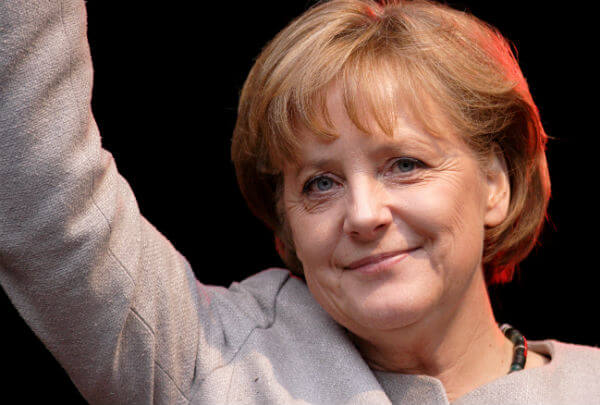
Can Angela Merkel save Europe?

Angela_Merkel

An interview of George Soros by Gregor Peter Schmitz of the German magazine WirtschaftsWoche: Gregor Peter Schmitz: When Time put German Chancellor Angela Merkel on its cover, it called her the “Chancellor of the Free World.” Do you think that is justified?

George Soros: Yes. As you know, I have been critical of the chancellor in the past and I remain very critical of her austerity policy. But after Russian President Vladimir Putin attacked Ukraine, she became the leader of the European Union and therefore, indirectly, of the Free World. Until then, she was a gifted politician who could read the mood of the public and cater to it. But in resisting Russian aggression, she became a leader who stuck her neck out in opposition to prevailing opinion.

She was perhaps even more farsighted when she recognized that the migration crisis had the potential to destroy the European Union, first by causing a breakdown of the Schengen system of open borders and, eventually, by undermining the common market. She took a bold initiative to change the attitude of the public. Unfortunately, the plan was not properly prepared. The crisis is far from resolved and her leadership position—not only in Europe but also in Germany and even in her own party—is under attack.

Schmitz: Merkel used to be very cautious and deliberate. People could trust her. But in the migration crisis, she acted impulsively and took a big risk. Her leadership style has changed and that makes people nervous.

Soros: That’s true, but I welcome the change. There is plenty to be nervous about. As she correctly predicted, the EU is on the verge of collapse. The Greek crisis taught the European authorities the art of muddling through one crisis after another. This practice is popularly known as kicking the can down the road, although it would be more accurate to describe it as kicking a ball uphill so that it keeps rolling back down. The EU now is confronted with not one but five or six crises at the same time.

Schmitz: To be specific, are you referring to Greece, Russia, Ukraine, the coming British referendum, and the migration crisis?

Soros: Yes. And you haven’t even mentioned the root cause of the migration crisis: the conflict in Syria. Nor have you mentioned the unfortunate effect that the terrorist attacks in Paris and elsewhere have had on European public opinion.

Merkel correctly foresaw the potential of the migration crisis to destroy the European Union. What was a prediction has become the reality. The European Union badly needs fixing. This is a fact but it is not irreversible. And the people who can stop Merkel’s dire prediction from coming true are actually the German people. I think the Germans, under the leadership of Merkel, have achieved a position of hegemony. But they achieved it very cheaply. Normally hegemons have to look out not only for their own interests, but also for the interests of those who are under their protection. Now it’s time for Germans to decide: Do they want to accept the responsibilities and the liabilities involved in being the dominant power in Europe?

Schmitz: Would you say that Merkel’s leadership in the refugee crisis is different from her leadership in the euro crisis? Do you think she’s more willing to become a benevolent hegemon?

Soros: That would be asking too much. I have no reason to change my critical views on her leadership in the euro crisis. Europe could have used the kind of leadership she is showing now much earlier. It is unfortunate that when Lehman Brothers went bankrupt in 2008, she was not willing to allow the rescue of the European banking system to be guaranteed on a Europe-wide basis because she felt that the prevailing German public opinion would be opposed to it. If she had tried to change public opinion instead of following it, the tragedy of the European Union could have been avoided.

Schmitz: But she wouldn’t have remained chancellor of Germany for ten years.

Soros: You are right. She was very good at satisfying the requirements and aspirations of a broad range of the German public. She had the support of both those who wanted to be good Europeans and those who wanted her to protect German national interest. That was no mean feat. She was reelected with an increased majority. But in the case of the migration issue, she did act on principle, and she was willing to risk her leadership position. She deserves the support of those who share her principles.

I take this very personally. I am a strong supporter of the values and principles of an open society because of my personal history, surviving the Holocaust as a Jew under the Nazi occupation of Hungary. And I believe that she shares those values because of her personal history, growing up under Communist rule in East Germany under the influence of her father, who was a pastor. That makes me her supporter although we disagree on a number of important issues. [Continue reading…]

Facebooktwittermail

Behind disputed views of Jewish identity looms a much larger question about the future of inclusive societies

The Guardian reports: The US State Department has moved to back America’s ambassador to Israel in a febrile and escalating row over his remarks on Monday that Israel applied law in the occupied West Bank differently to Palestinians and Israelis.

Ambassador Daniel Shapiro’s unusually critical comments drew harsh criticism from ministers in Israel’s rightwing government – including from the Israeli prime minister, Binyamin Netanyahu.

Shapiro was also publicly lambasted on Israeli television on Tuesday by a former aide to Netanyahu who used the deeply offensive Hebrew word “yehudon” – which translates as “little Jew boy” – to disparage the ambassador. The term is used by rightwing Israelis against other Jews – particularly those in the diaspora – whom they regard as not being sufficiently Jewish or pro-Israel. [Continue reading…]

The remarks by Aviv Bushinsky, who served as Netanyahu’s chief of staff when he was finance minister in Ariel Sharon’s governmen, are reminiscent of an incident reported by the Washington Post in 1997.

U.S. Ambassador Martin Indyk, still seething at a two-week-old slur, ran into his accuser Thursday and fixed him with a glare. According to Ephraim Sneh, a Labor Party member of Israel’s legislature, this is what happened next:

“The last time someone called me a Jew boy,” Indyk said, harking back to school days in Australia, “I was 15 years old and he got a punch in the face.”

A right-wing legislator, Rehavam Zeevi, had indeed called Indyk a yehudon — Hebrew invective translated variously as “Jew boy,” “yid,” or “kike” — at a parliamentary caucus late last month. He looked up from his seat at a memorial service for the late Yitzhak Rabin and glared back at Indyk. “Try me,” Zeevi replied. Then, taunting Indyk, he added distinctly: “yehudon, yehudon.”

Zeevi, a retired general who is chief of the ultranationalist Moledet (Homeland) party, apparently meant to say that Indyk, the first Jewish U.S. ambassador here, betrayed his coreligionists by pressuring the Israeli government for concessions in peace talks with the Palestinian Authority. Zeevi’s political platform, the most extreme of any party in the parliament, calls for expulsion of Arabs from the West Bank to make room for Jews.

A.B. Yehoshua, one of Israel’s most famous novelists, has for many years been among the most vocal in promoting this view that Jews who remain living outside Israel are only, as he says, “partial Jews.”

But instead of being preoccupied with where Jews plant their bodies, he and those who share his views, might consider where the Jewish conscience may better thrive.

In 2003, Avraham Burg, former member of the Knesset, a chairman of the Jewish Agency for Israel and a Speaker of the Knesset, who was born in Jerusalem, wrote:

It turns out that the 2,000-year struggle for Jewish survival comes down to a state of settlements, run by an amoral clique of corrupt lawbreakers who are deaf both to their citizens and to their enemies. A state lacking justice cannot survive. More and more Israelis are coming to understand this as they ask their children where they expect to live in 25 years. Children who are honest admit, to their parents’ shock, that they do not know. The countdown to the end of Israeli society has begun.

It is very comfortable to be a Zionist in West Bank settlements such as Beit El and Ofra. The biblical landscape is charming. From the window you can gaze through the geraniums and bougainvilleas and not see the occupation. Traveling on the fast highway that takes you from Ramot on Jerusalem’s northern edge to Gilo on the southern edge, a 12-minute trip that skirts barely a half-mile west of the Palestinian roadblocks, it’s hard to comprehend the humiliating experience of the despised Arab who must creep for hours along the pocked, blockaded roads assigned to him. One road for the occupier, one road for the occupied.

This cannot work. Even if the Arabs lower their heads and swallow their shame and anger forever, it won’t work. A structure built on human callousness will inevitably collapse in on itself. Note this moment well: Zionism’s superstructure is already collapsing like a cheap Jerusalem wedding hall. Only madmen continue dancing on the top floor while the pillars below are collapsing.

As much as all of this might sound purely like a struggle over Jewish identity, it mirrors an affliction in which people across the globe withdraw into their various ethnic, religious, or ideological ghettos of identification and their cherished definitions of my people.

The testing ground for challenging this trend is now Europe.

Last year, Burg wrote:

In a generation in which we Israelis have forgotten how to be sensitive and empathetic to minorities, to those who are different, to the persecuted, and many American Jews are swallowed up in their comfort zones of white society and are abandoning their partnership with the “others,” in America, the “United States of Europe” is presenting a new model of identity – a union between those who are different, and the “other.” It’s a model no different from the American one which seeks to assimilate all into a monochromatic American democracy.

Further, Europe is the current meeting point between Islam and the West. Some of that encounter involves clashes, and some involves learning. The Christian continent is learning to make space for other, rich and varied identities. My friends, Ziya from Bangladesh, Shaida whose family is from Turkey and Rob from Jamaica, are impressive Europeans, and Europe is better off with them. Just like Shaul from Venice, Yoop from Amsterdam and Brian from London – there is no dissonance between their Jewish heritage and their European identity. The discourse between white, Christian Europe and those who are different is fascinating. More important is the dialogue between Western Europe and the Muslim forces in its midst.

The Muslim world and some of its members are embarking on a long journey toward the Western values of freedom, equality and brotherhood. The institutionalization of Western Islam in the heart of Europe – that which is absorbing values of democracy while remaining true to Muslim tradition – is where the strategic potential exists for bridging the gaps peacefully in the generations to come. It’s not happening in the Middle East or North America, but only in Europe. That is where the vanguard of humanity and humaneness is to be found.

Since Burg wrote this, the vision of Europe has become profoundly challenged by an expanding refugee crisis, acts of terrorism, growing nationalism, cultural protectionism, and the drumbeats of xenophobia and Islamophobia.

Both in Europe and the U.S., it often seems like the political momentum favors those who promote retreat in its various forms — through strengthening borders, heightened national security, and disengagement from foreign affairs.

At the same time, the inexorable global trends point in the opposite direction as populations expand and people choose or are compelled to cross borders.

In such a world, the task of building more inclusive societies is not an idealistic goal; it has become an urgent necessity.

Facebooktwittermail

Canadians learning Arabic to welcome Syrian refugees

CBC News reports: Many Syrian refugees have already arrived and more are coming to the Waterloo Region [in Southern Ontario], leading some to wonder about what we can do to make these people feel at home in a new country.

In Waterloo Region, a crash course in conversational Arabic is available to residents and several have leaped at the opportunity to learn new language while becoming more useful to those arriving. ​The workshop is meant to teach private refugee sponsors and volunteers.

An organization known as Bring Back Hope, which was founded by Iman Arab, is working in association with Muslim Social Services to put together the four-hour course. The sessions are facilitated by Dr. Amir Al-Azraki, who teaches Arabic at the University of Waterloo and is also a lecturer and playwright.

Leanne Brown works with Carizon Family and Community Services as a school mental health co-ordinator and told CBC’s Melanie Ferrier that the opportunity to help others makes her feel really good.

“I’m here to learn Arabic because of the new refugees coming into our city and just to know how to make them feel welcome,” Brown said. “It’s pretty easy, actually. And I guess for me, learning a new language is very exciting.” [Continue reading…]

Facebooktwittermail

How British do British Muslims feel?

By Saffron Karlsen, University of Bristol

The prime minister, David Cameron, has launched a number of measures aimed at improving integration among Muslims – in particular, Muslim women – in the UK. Polls show that around 70% of people don’t think Muslims are well integrated into British society and concern that Muslim people living in Britain do not feel British has long been part of broader discussions around extremism.

So, now seems like a good time to take a closer look at how British Muslims actually feel about their place in society and to explore the link between segregation and extremism in greater depth. Along with Professor James Nazroo, I conducted research into these issues using nationally representative data, collected in 2008/09 from almost 5,000 people with different ethnic and religious backgrounds, as a part of the Home Office Citizenship Survey. We found that these ideas about British Muslims are not backed up by evidence.

Continue reading

Facebooktwittermail

Rebuilding Kobane

Tom Anderson and Eliza Egret write: “We have cleared 1.5 million tonnes of rubble,” Abdo Rrahman Hemo (known as Heval Dostar), head of the Kobanê Reconstruction Board, tells us humbly as we sit in his office in Kobanê city in November 2015. But as we walk through the bombed streets, with collapsed buildings all around us and dust filling our lungs, it’s hard to believe that Kobanê could have been any worse. “We have estimated that 3.5 billion dollars of damage has been caused,” he continues.

It’s been one year since the US bombing of Kobanê – then partly occupied by Daesh – and most of the buildings are still in tatters. Kobanê is in Rojava (meaning ‘west’ in Kurdish), a Kurdish majority region in the north of Syria that declared autonomy from the Assad regime in 2012.

When Daesh approached, the majority of those who were not involved in defending the city left, most to neighbouring Turkey. The People’s Protection Units of the YPG and YPJ remained to defend the city, and were eventually given air support by the US. Most of the refugees have now returned, only to find a city almost entirely destroyed and littered with mines and booby traps, planted by Daesh before they were defeated. As we walk around, a family waves at us from the wreckage of their home, which no longer has three of its walls. Washing lines are hung up and clothes are dried amongst the wrecked houses as people continue their daily lives.

So why is Kobanê still in ruins one year on? Unsurprisingly, the US – whose bombs caused the majority of destruction in Kobanê – has not provided any support for the reconstruction. This is a mixed blessing, as US reconstruction efforts are aimed at creating markets for US companies and generating allies for US foreign policy. But it leaves a vacuum that grassroots solidarity movements need to fill. [Continue reading…]

Facebooktwittermail

Northern Iraq: Satellite images back up evidence of deliberate mass destruction in Peshmerga-controlled Arab villages

Amnesty International reports: Peshmerga forces from the Kurdistan Regional Government (KRG) and Kurdish militias in northern Iraq have bulldozed, blown up and burned down thousands of homes in an apparent effort to uproot Arab communities in revenge for their perceived support for the so-called Islamic State (IS), said Amnesty International in a new report published today.

The report, Banished and dispossessed: Forced displacement and deliberate destruction in northern Iraq, is based on field investigation in 13 villages and towns and testimony gathered from more than 100 eyewitnesses and victims of forced displacement. It is corroborated by satellite imagery revealing evidence of widespread destruction carried out by Peshmerga forces, or in some cases Yezidi militias and Kurdish armed groups from Syria and Turkey operating in coordination with the Peshmerga.

“KRG forces appear to be spearheading a concerted campaign to forcibly displace Arab communities by destroying entire villages in areas they have recaptured from IS in northern Iraq. The forced displacement of civilians and the deliberate destruction of homes and property without military justification, may amount to war crimes,” said Donatella Rovera, Amnesty International’s Senior Crisis Response Advisor, who carried out the field research in northern Iraq. [Continue reading…]

Facebooktwittermail

The ugly truth: Defeating ISIS will take decades

David Ignatius writes: Allies and adversaries see U.S. forces living in secure compounds, eating fancy chow and minimizing their exposure to potential terrorist assaults. The United States may say it’s fighting alongside its allies, but on the ground, it often looks different. Actually living and fighting alongside our partners in Iraq and Syria will be much more dangerous, but it may be the only way to build a solid alliance that can someday eradicate the extremists.

Contrast these stern admonitions from the commanders who have lived through the Iraq and Afghanistan conflicts with the upbeat talk from political leaders. President Obama pledged that “priority number one is protecting the American people and going after terrorist networks” and then said a few moments later that these networks “do not threaten our national existence.” That sends a mixed message — one that Hillary Clinton has echoed in her campaign.

Republican rants about the Islamic State are even worse, in that they promise total victory without suggesting the level of commitment and sacrifice involved. The GOP responses sound tough, from Donald Trump’s “bomb the hell out of [the Islamic State]” to Sen. Marco Rubio’s (Fla.) assurance in last week’s debate that “the most powerful military in the world is going to destroy them.”

The next president is going to inherit an expanding war against a global terrorist adversary. The debate about how best to fight this enemy hasn’t even begun. [Continue reading…]

Facebooktwittermail

Iran’s elite Guards to gain regional, economic power in post-sanctions era

Reuters reports: Iran’s Revolutionary Guards did well under international sanctions, and the elite military force is destined to become still richer now they’ve been lifted.

Iran’s clerical rulers have supported economic growth of the Guards, rewarding the group for sanctions-busting as well as suppressing dissent at home and helping Tehran’s allies abroad – notably Syrian President Bashar al-Assad.

Now the country is expecting an economic boom in the post-sanctions era and the Iranian Revolutionary Guards Corps (IRGC), will be a beneficiary. Likewise, the leadership will ensure it is well funded to continue the effort in the regional crisis, including the Syrian civil war.

The Guards aren’t entirely off the hook, even though the United States, European Union and United Nations lifted most sanctions on Saturday under a deal with world powers where Tehran agreed to curbs on its nuclear program. [Continue reading…]

Facebooktwittermail

Gates: Don’t expect the nuclear agreement to lead to a more moderate Iran

Business Insider reports: Former US defense secretary Robert Gates isn’t optimistic that the landmark July 2015 nuclear deal with Iran will lead the country to halt any of its disruptive policies in the Middle East or its support for terrorist groups.

In an interview with Business Insider, Gates, who spent nearly 27 years in the CIA and was the only cabinet secretary to have served under Barack Obama and George W. Bush, said that he didn’t believe the nuclear deal would have a moderating impact on Iranian behavior or lead Tehran to become a more responsible international actor.

“The notion that betting that this regime is going to temper its behavior in the region because of this nuclear deal I think is mistaken,” Gates told Business Insider. “I think that will not happen.” [Continue reading…]

Facebooktwittermail

How the other 1% lives: Wealth gap not the only way in which global elite is taking advantage

By Anna Childs, The Open University

Oxfam’s latest report, focused on an increasingly obscene wealth inequality and the stranglehold exerted by a global elite, had one central message: The era of tax havens that have made this possible must be brought to an end.

The report – An Economy for the 1% – was timed as a call to action for influential delegates to the annual meeting of the World Economic Forum taking place in Davos, Switzerland.

The headline numbers showed that the top 1% own as much wealth as the other 99% and – even more startling – that the richest 62 individuals own more wealth than the poorest half of the world’s population (compared to 388 individuals in 2010). To put this into stark perspective, this group of 62 people own as much as the 3.6 billion people on the bottom of the heap.

Oxfam makes it clear that this distribution of wealth is not some incidental byproduct of rising worldwide prosperity. Since 2000, the poorest half of the world’s population has received just 1% of the total increase in global wealth, while 50% of that has gone to the 1% of people on the top of the pile – about 74m people. While the richest have been getting richer, the combined wealth of the poorest half of the planet has fallen by US$1 trillion (41%) in the past five years alone.

Continue reading

Facebooktwittermail

The opening up of Iran will mean a return to barbarity as usual

Paul Mason writes: “This is a good day,” said Barack Obama, announcing the end of nuclear sanctions against Iran, “because, once again, we’re seeing what’s possible with strong American diplomacy.” The deal, accompanied by a prisoner swap and the release of frozen Iranian funds, signals the end of Iran’s nuclear ambitions.

But it is not a triumph of “strong American diplomacy”. It is testimony to America’s weakness and incoherence, in the very region where it has concentrated its military and diplomatic force for decades. As for Iran, with the nuclear programme gone, and its iconic American prisoners released, normal levels of barbarity can now be resumed.

First, there is the ordinary repression: convicts – two-thirds of them drug dealers or drug users according to the UN – were being executed at the rate of three per day last year, the highest per-capita execution rate in the world. Then there’s the suppression of trade unions. Iran arrested 233 labour activists in the year to May 2015. All strikes and labour agitation are treated as threats to national security by the Revolutionary Guards, the hardline military force that enforces Islamic discipline at home while spearheading military operations abroad. Finally, there is the outright political repression that has left two presidential candidates from the “green” protests of 2009 – Mehdi Karroubi and Mir Hossein Mousavi – under house arrest, and hundreds of other human rights activists, lawyers, journalists and scientists detained.

As western businesses rub their hands at the prospect of renewed access to this market of 78 million consumers, it’s worth remembering what the purpose of all this repression is. Industry is militarised: huge swathes of the economy are owned by the Revolutionary Guards themselves. With their front companies de-listed and given new access to the international bank clearing system, many of the Guards’ leaders will now get very rich. The workforce, deprived of all basic rights to organise, their jobs totally precarious, and with 70% earning less than the official poverty level, will get the chance to be exploited by global capital, not just the Guards, the mullahs and their cronies.

You could lament all of the repression, yet still celebrate the Iran deal as a diplomatic achievement and de-escalation of conflict, if Washington was demonstrating any sign of a coherent regional policy. But it is not.

On the same day Obama lifted nuclear sanctions, he imposed a whole new set of sanctions on Iran for testing a long-range missile. At the same moment, Iran’s Lebanese proxy, Hezbollah, was fighting alongside its ally President Assad in Syria – against both Islamic State and the moderate opposition backed by America. Soldiers from Iran’s Quds force continue to prop up the Shia dominated government in Iraq. And the west’s regional ally, Saudi Arabia, continues to escalate its standoff with Iran after failing to scupper the nuclear deal by executing a Shia cleric.

If your brain is struggling to impose coherence on this picture of half-alliances, provocations and incessant death, that is no accident. Even those with intricate knowledge of the region cannot fathom what the Obama administration is trying to achieve. [Continue reading…]

Facebooktwittermail

What binds Trump supporters together?

Matthew MacWilliams writes: If I asked you what most defines Donald Trump supporters, what would you say? They’re white? They’re poor? They’re uneducated?

You’d be wrong.

In fact, I’ve found a single statistically significant variable predicts whether a voter supports Trump — and it’s not race, income or education levels: It’s authoritarianism.

That’s right, Trump’s electoral strength—and his staying power—have been buoyed, above all, by Americans with authoritarian inclinations. And because of the prevalence of authoritarians in the American electorate, among Democrats as well as Republicans, it’s very possible that Trump’s fan base will continue to grow.

My finding is the result of a national poll I conducted in the last five days of December under the auspices of the University of Massachusetts, Amherst, sampling 1,800 registered voters across the country and the political spectrum. Running a standard statistical analysis, I found that education, income, gender, age, ideology and religiosity had no significant bearing on a Republican voter’s preferred candidate. Only two of the variables I looked at were statistically significant: authoritarianism, followed by fear of terrorism, though the former was far more significant than the latter. [Continue reading…]

The New York Times reports: A New York Times/CBS News poll last week showed Mr. Trump, a Presbyterian, dominating the field with 42 percent of evangelical voters; Mr. Cruz was second with 25 percent.

In dozens of interviews with evangelical voters in 16 states, from every region of the country outside the Northeast, those supporting Mr. Trump sounded a familiar refrain: that his heart was in the right place, that his intentions for the country were pure, that he alone was capable of delivering to a troubled country salvation in the here and now.

“He is the only one who can pull us back from the abyss,” said John Juvenal, 67, a lifelong Republican and retired police officer from Oklahoma City. [Continue reading…]

Facebooktwittermail

The color of surveillance

Alvaro Bedoya writes: Every day, we hear about the power and promise of pervasive surveillance. We are losing sight of its victims. Instead, an NSA debate that could have surfaced a long line of black, Latino, Asian, and Muslim victims of surveillance was cast as an argument between the U.S. military and Snowden — national security versus the hackers.

This narrow focus may have blinded Congress to a little known but especially troubling aspect of the NSA scandal. In June 2013, the headlines were that the NSA was logging everyone’s phone calls. We now know that the NSA’s call records program — the single largest domestic spying program in our nation’s history — was effectively beta-tested for almost a decade on American immigrants.

In 1992, the Drug Enforcement Administration began a call records program that’s considered the blueprint for the NSA’s program, which began after Sept. 11 and received court approval in 2006. The DEA program logged virtually all calls made from the United States to a list of countries, regardless of who made them or why. Over time, 116 countries were added to that list — including Mexico and most of Central and South America. This means that for almost a decade before the NSA call records program, countless immigrants’ calls were tracked by the DEA when they called home. This is particularly true for Hispanic immigrants, who make up a large part of what is now the largest minority group in the country. We do not know what transpired in Congress’ closed-door discussions about the NSA or DEA call records programs, but public debates largely ignored these facts.

The next NSA debate will peak at the end of 2017. That’s the expiration date of another surveillance law that allows the government to read — without a warrant — certain messages stored on companies’ U.S. servers where at least one party to the communication was a foreigner living abroad. Will Congress probe the likely disparate impact of this law? If not, when will Congress reckon with the color of surveillance? [Continue reading…]

Facebooktwittermail