Category Archives: Issues

Migrant communities think more like non-migrants after just one generation, study suggests

By Alex Mesoudi, University of Exeter and Kesson Magid, Durham University

A common fear among the general public in many Western countries is that immigrants have ways of thinking or social values that are fundamentally different to them, and that these differences prevent them from integrating into Western societies.

Our new research, published in PLOS ONE, suggests such fears are misplaced.

We found that British Bangladeshi migrants in East London shifted towards the thinking styles of the wider non-migrant population in just a single generation. Our study also provides insights into how and why people from different parts of the world think and reason differently.

We were motivated by recent findings in the field of “cultural psychology” that show striking variations between cultures in what had long been assumed to be universal ways of thinking and reasoning.

Here’s an example. In the 1990s, Nick Leeson infamously made unauthorised speculative trades that eventually brought down Barings Bank, Britain’s oldest merchant bank. How would you explain Leeson’s actions? Cultural psychologists have found variations between cultures in how people answer this question.

People from the West, it is suggested, would typically say that Leeson was greedy or dishonest. Psychologists call these “dispositional” explanations, which involve intrinsic aspects of people’s personality or character.

But people from East Asia might explain Leeson’s actions as resulting from a corrosive banking system that lacks proper checks, and which values profits above all else. These are typical “situational explanations”, which refer to the external situation or context.

In 2010, the psychologists Joseph Henrich, Steven Heine and Ara Norenzayan collected many examples of cultural variation like this, including variation in whether people punish cheats, what people consider to be moral and immoral, reactions to aggression, and susceptibility to perceptual illusions.

They coined the acronym WEIRD to describe people from Western, Educated, Industrialised, Rich, Democratic countries. While the vast majority of psychology experiments are conducted on WEIRD people, they are far from representative of our species as a whole.

Continue reading

Facebooktwittermail

Jailed Turkish editor slams EU deal with Erdoğan’s ‘fascist government’

The Guardian reports: The editor of Turkey’s most influential dissident newspaper has said in an interview from his prison cell that the country’s ongoing crackdown on journalists is the worst in its history and that he was imprisoned for doing his job.

Can Dündar, the editor-in-chief of Cumhuriyet, also said the EU was betraying its democratic values by seeking a rapprochement with the Turkish president, Recep Tayyip Erdoğan, in the hope that he would stem the flow of refugees into Europe while ignoring human rights violations.

“We always looked at the European Union as an anchor, a model to raise the standard of democracy in Turkey to universal levels, not as leverage to dictatorships,” he said. “Now, if the EU, in order to stop the influx of refugees by turning our lands into a big concentration camp, agrees to turn a blind eye while Erdoğan spurns democracy, human rights, freedom of press and rule of law, it means that the EU is discarding its founding principles in order to protect its short-term interests.” [Continue reading…]

Facebooktwittermail

Bill McKibben: The real zombie apocalypse

Here we are just a couple of weeks into 2016 and we already know that last year was the second-warmest on record in the continental United States (the winner so far being 2012); the month of December was a U.S. record-breaker for heat and also precipitation; and it’s assumed that, when the final figures come in later this month, 2015 will prove to be the hottest year on record globally. Even before this news is confirmed, we know that 14 of the 15 warmest years on record have occurred in the twenty-first century which, at least to me, looks ominously like a pattern. And early expectations are that this year will top last, with the help of a continuing monster El Niño event in the overheating waters of the Pacific that has only added to the impact of global warming and to fierce weather around the world. Everywhere it seems increasingly possible to see the signs of climate change: the melting Arctic; the destabilizing ice sheets in both the Antarctic and Greenland; the already rising sea levels that are someday destined to submerge major coastal cities; the disappearing glaciers (and so, in some regions, endangered water supplies); monster typhoons; severe droughts; and the burning that goes with a globally expanding fire season; the — in a word — extremity of it all.

With 2015 in the history books, it’s easy enough to think of our changing weather as part of that history, but that would be a mistake. Climate change, if allowed to come to full fruition, will be something else altogether — not history, but the possible end of it. History, after all, is something we’re generally familiar with. It has its surprises, but the rise and fall of nations, of empires, even of civilizations, the coming of democracy or dictators, the rising of peoples, the failure of revolutions, and yet more autocrats, all of that is the normal course of human events. All of it is part of the ongoing record. Climate change is something else entirely. Certainly, it emerges from history, since through our industrial processes — the burning of coal and oil — we created it, however inadvertently (at first). But let’s face it: global warming is the potential deal-breaker for history. It threatens not just to submerge global cities, but to sink civilization itself.

Don’t think of it as a tragedy for the planet. Give Earth a few million years and it’ll do fine. If climate change does its worst, life, in some fashion, possibly even human life, will undoubtedly survive and someday once again flourish, but the environment in which our civilizations have been built and our modest history recorded, the welcoming planet we’ve known will cease to exist in any time span that is meaningful to us. That is the future reality we face in the grim zombie world of the giant energy companies and energy states that Bill McKibben describes today. It’s why organizations like the one he founded, 350.org, are so important to our future and to the literal preservation of history. Unless we ensure that the human future is powered by alternative energy, and do so relatively quickly, while keeping the preponderance of fossil fuels in the ground, we will indeed find ourselves out of history and in the midst of a climate-change version of a zombie apocalypse. Tom Engelhardt

Night of the living dead, climate change-style
How to stop the fossil fuel industry from wrecking our world
By Bill McKibben

When I was a kid, I was creepily fascinated by the wrongheaded idea, current in my grade school, that your hair and your fingernails kept growing after you died. The lesson seemed to be that it was hard to kill something off — if it wanted to keep going.

Something similar is happening right now with the fossil fuel industry. Even as the global warming crisis makes it clear that coal, natural gas, and oil are yesterday’s energy, the momentum of two centuries of fossil fuel development means new projects keep emerging in a zombie-like fashion.

Continue reading

Facebooktwittermail

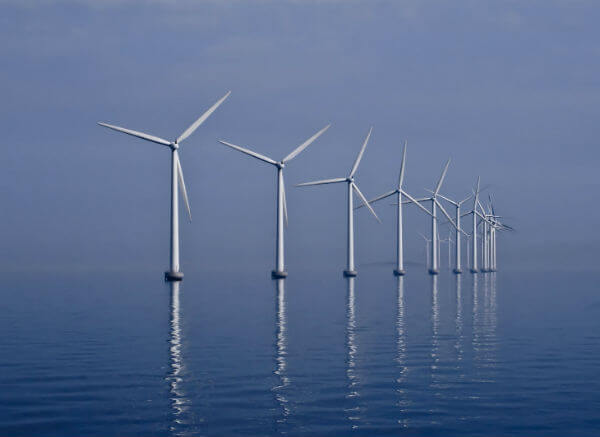
Denmark just broke a world record for wind power — again

denmark-wind-power

Climate Progress reports: One European country can’t seem to stop breaking records when it comes to wind power.

In 2015, Denmark produced almost half of its electricity from wind power, breaking a world record for the most wind production ever recorded — a world record set last year, by Denmark.

The record 42 percent electricity generated from wind represents a three percent increase from the 39 percent it generated in 2014, which at the time broke the world record for the most electricity from wind production by a single country. According to the Danish national grid operator Energinet, this year’s number represents both the highest figure ever and the highest proportion of electricity from wind for any country.

Moreover, for 16 percent of the year, two Western regions in Denmark produced more electricity than the region’s residents consumed, leading to an electricity surplus. While it’s not unusual for wind power production to exceed consumption some of the time, the fact that it happened for such a significant period of time means that Denmark can sell surplus energy to consumers in Norway, Sweden, and Germany. Denmark also imports some hydroelectric power from Norway and solar energy from Germany. [Continue reading…]

Facebooktwittermail

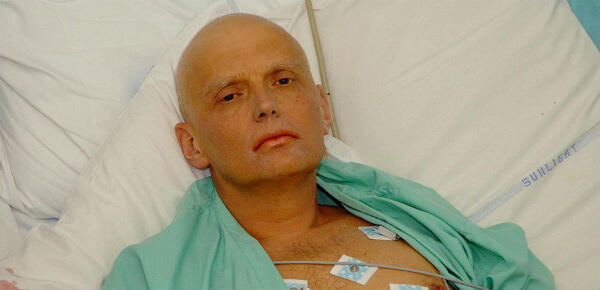
Alexander Litvinenko: The man who solved his own murder

Alexander-Litvinenko

Luke Harding writes: The Millennium hotel is an unusual spot for a murder. It overlooks Grosvenor Square, and is practically next door to the heavily guarded US embassy, where, it is rumoured, the CIA has its station on the fourth floor. A statue of Franklin D Roosevelt – wearing a large cape and holding a stick – dominates the north side of the square. In 2011 another statue would appear: that of the late US president Ronald Reagan. An inscription hails Reagan’s contribution to world history and his “determined intervention to end the cold war”. A friendly tribute from Mikhail Gorbachev reads: “With President Reagan, we travelled the world from confrontation to cooperation.”

The quotes would seem mordantly ironic in the light of events that took place just around the corner, and amid Vladimir Putin’s apparent attempt to turn the clock back to 1982, when the former KGB boss Yuri Andropov – the secret policeman’s secret policeman – was in charge of a doomed empire known as the Soviet Union. Next to the inscriptions is a sandy-coloured chunk of masonry. It is a piece of the Berlin Wall, retrieved from the east side. Reagan, the monument says, defeated communism. This was an enduring triumph for the west, democratic values, and for free societies everywhere.

Five hundred metres away is Grosvenor Street. It was here, in mid-October 2006, that two Russian assassins had tried to murder someone, unsuccessfully. The hitmen were Andrei Lugovoi and Dmitry Kovtun. Their target was Alexander Litvinenko, a former officer in Russia’s FSB spy agency. Litvinenko had fled Moscow in 2000. In exile in Britain he had become Putin’s most ebullient and needling critic. He was a writer and journalist. And – from 2003 onwards – a British agent, employed by MI6 as an expert on Russian organised crime. [Continue reading…]

Facebooktwittermail

Palestine must stand in solidarity with the Syrian people

Mariam Barghouti writes: When Syrians were chanting “revolution, revolution, Syria! Revolution of dignity and freedom” in the streets of Damascus in 2011, they undoubtedly expected suppression from the regime of Bashar al-Assad. What they probably did not foresee, however, is complacency from the international community, including from Palestinians.

But, that is what they received. The Syrian conflict has uncovered disturbing shortcomings and contradictions among those who fight in the name of Palestine.

When Palestinians are being assaulted by Israeli forces, we often cry out “Where are the Arabs! Where are you, oh Arabs?” Yet, now that it is our turn to extend solidarity, we have become as faceless as our revered Handala.

Renowned Palestinian writer and thinker Ghassan Kanafani once wrote, “[i]f we were failing in defending the cause; then we ought to change the fighters and not the cause.” By failing to stand with our Arab brethren fighting in Syria, we have betrayed Palestine and tainted the principles that gave birth to the Palestinian cause, namely dignity and justice.

As we enter the Syrian civil war’s fifth year, I say to my fellow Palestinians: it is time – albeit very late – to stand in solidarity with the Syrian people. [Continue reading…]

Facebooktwittermail

U.S. prisoner swap may help Iran arm Assad

Josh Rogin writes: In exchange for the release of four American prisoners, the Barack Obama administration agreed to free seven Iranians in U.S. custody and stop trying to arrest 14 others, two of whom the U.S. government had accused of funneling weapons to the Bashar al-Assad regime and Hezbollah in Syria.

For years, Iran’s privately-owned Mahan Air has been using its planes to bring soldiers and arms directly to the Syrian military and the Lebanese terrorist group Hezbollah by flying them from Tehran to Damascus, according to the U.S. Treasury Department. In 2013, Treasury sanctioned Mahan’s managing director, Hamid Arabnejad, for overseeing the company’s efforts to evade U.S. and international sanctions and aiding the Iranian Revolutionary Guards Corps’ elite Quds Force.

“Arabnejad has a close working relationship with IRGC-QF personnel and coordinates Mahan Air’s support and services to the paramilitary group,” the Treasury Department said. “He has also been instrumental in facilitating the shipment of illicit cargo to Syria on Mahan Air aircraft.” [Continue reading…]

Facebooktwittermail

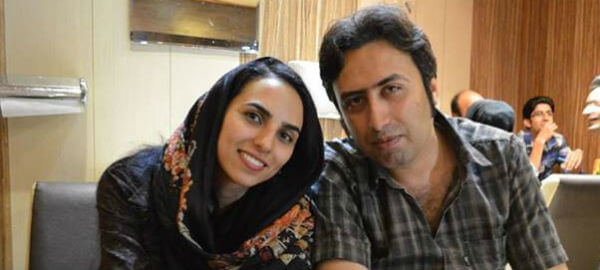
Two Iranian poets, facing lashings and prison, escape country

Fatemeh-Ekhtesari-Mehdi-Mousavi

The Associated Press reports: Two Iranian poets who face lashings and prison sentences have fled Iran, one of the writers said Monday, a rare escape for local artists and activists ensnared in an ongoing crackdown on expression in the country.

Fatemeh Ekhtesari and Mehdi Mousavi’s freedom came as world powers lifted sanctions on Iran over its contested nuclear program and as the country separately freed four Iranian-Americans in exchange for seven Iranians held in the U.S.

The poets’ escape is a reminder that despite the growing detente with the West, hard-liners still exert control over much of life in the Islamic Republic.

Ekhtesari told The Associated Press on Monday that both she and Mousavi escaped from Iran in recent days and made it to another country. She declined to elaborate out of continuing concerns about their safety.

Ekhtesari faced an 11½-year prison sentence, while Mousavi faced nine years on charges ranging from propaganda against the state to “insulting sanctities.” Each was sentenced to 99 lashings. They likely were targeted because their work is known abroad. Both are self-described “postmodern Ghazal” poets who seek to revive the traditional Persian love sonnet by applying it to contemporary political and social issues. [Continue reading…]

Facebooktwittermail

Why are we looking on helplessly as markets crash all over the world?

Will Hutton writes: There has always been a tension at the heart of capitalism. Although it is the best wealth-creating mechanism we’ve made, it can’t be left to its own devices. Its self-regulating properties, contrary to the efforts of generations of economists trying to prove otherwise, are weak.

It needs embedded countervailing power – effective trade unions, law and public action – to keep it honest and sustain the demand off which it feeds. Above all, it needs an ordered international framework of law, finance and trade in which it can do deals and business. It certainly can’t invent one itself. The mayhem in the financial markets over the last fortnight is the result of confronting this tension. The oil price collapse should be good news. It makes everything cheaper. It puts purchasing power in the hands of business and consumers elsewhere in the world who have a greater propensity to spend than most oil-producing countries. A low oil price historically presages economic good times. Instead, the markets are panicking.

They are panicking because what is driving the lower oil price is global disorder, which capitalism is powerless to correct. Indeed, it is capitalism running amok that is one of the reasons for the disorder. Profits as a share of national income in Britain and the US touch all-time highs; wages touch an all-time low as the power of organised labour diminishes and the gig economy of short-term contracts takes hold. The excesses of the rich, digging underground basements to house swimming pools, cinemas and lavish gyms, sit alongside the travails of the new middle-class poor. These are no longer able to secure themselves decent pensions and their gig-economy children defer starting families because of the financial pressures. [Continue reading…]

Facebooktwittermail

This is where 90 percent of global warming is going

The Washington Post reports: Scientists have known for some time that when global warming occurs, the oceans will be the site of the most profound response.

The reason is simply that they are able to retain vastly more heat than the atmosphere. “Ninety, perhaps 95 percent of the accumulated heat is in the oceans,” said Peter Gleckler, an oceanographer at the Lawrence Livermore National Laboratory. The physical reason is that water has a far greater heat “capacity” than air, requiring more energy to raise its temperature — something that is apparent to anyone who has ever tried to boil it on a stove.

Gleckler is the lead author of a new study in the journal Nature Climate Change finding that, in the past two decades, ocean heat content has been rising rapidly and that, much more than before, heat is also mixing into the deeper layers of the ocean, rather than remaining near the surface. [Continue reading…]

Facebooktwittermail

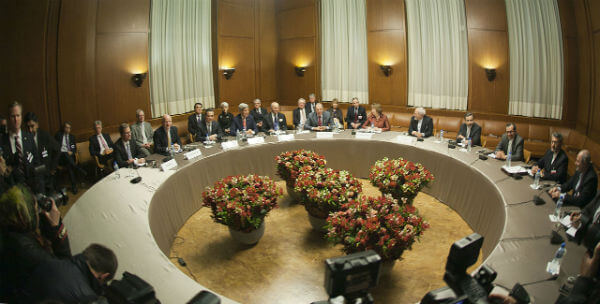
Was the Iran deal worth it?

iran-deal

Last July, after the Joint Comprehensive Plan of Action agreement on Iran’s nuclear program had been reached in Vienna, Shadi Hamid wrote: It was clear from the start of the uprising [in Syria] that Obama did, in fact, have a clear objective – minimizing U.S. involvement as much as possible. But there are other places, such as Iraq, where the Obama administration was pulled back in despite (or, more likely, because of) its best efforts. The unwillingness to rethink Syria strategy in any serious way has been reinforced by the momentum of the Iran negotiations. Why rock the boat and potentially provoke a major international incident, when progress was being made on Iran’s nuclear program? Why even take the chance with so much at stake? “Linkage,” moreover, was been built in to the policy process. As the journalist Josh Rogin noted: “All Syria proposals at State must go through the office of the undersecretary for political affairs, Wendy Sherman, who is also the administration’s lead negotiator over a nuclear deal with Iran.”

On the specifics of a deal, I tend to think, like many, that the U.S. made too many concessions, without getting enough in return. According to the New York Times, in the final days of talks, a television anchor on a hardline Iranian channel said: “The fact is, Obama needs this deal much more than we do.” She went on: “The American president needs a victory, and only a deal with Iran can give him that. They have retreated on several issues and compromised on their own red lines.” Whether or not this perception is fair, it’s a perception nonetheless, and perceptions drive behavior.

Others have noted that Iran, due to its deteriorating economy, needed a deal more than the U.S. did. This is almost certainly true. But while Iran may have needed it more, the U.S. wanted it more – or, at the very least, seemed like it did. Some of this, to be fair, was outside the U.S.’s control. The perception had already solidified throughout the region, drawing on 6 years of observing the Obama administration’s handling of various crises, most notably the backing down from stated “red lines” in Syria. Allies, such as Egypt, and enemies, such as Syria, have grown confident that we’ll blink first in a staring contest, in part because we usually do. This was why I was skeptical that any final deal could ever be the best possible deal. The administration has had tendency to misuse and/or underestimate its leverage in some of our most important bilateral relationships. As the negotiations wrapped to a close, there was no obvious way to address this. It was too late. We couldn’t change how Iran viewed the Obama administration.

There was a related asymmetry during the negotiations. As Pollack writes, “I don’t think that Iran values a nuclear deal as much as it does its positions in these various countries.” With us, it was the reverse: we cared less about Iran’s positions in various countries and more about its nuclear program. This, too, was built in to the talks.

Some are troubled that most people had strong opinions about the deal before reading the actual text of the agreement. One certainly hopes that legislators will eventually read at least some of it. But the specifics of the deal aren’t, ultimately, as important as the broader issues and implications, and those aren’t anywhere to be found in the text. Here, I tend to agree with my colleague Jeremy Shapiro who argued in April that that the devil wasn’t in the details. The details “really don’t matter.” He goes on: “At heart, this is a fight over what to do about Iran’s challenge to U.S. leadership in the Middle East and the threat that Iranian geopolitical ambitions pose to U.S. allies.”

In other words, your position on the Iran deal is likely to depend on how you view the Middle East and America’s role in it more broadly. If you see the Syrian civil war as a, or even the, core regional conflict, then you’re probably worried about the $100 billion in potential sanctions relief. Iran, even we assume it chooses butter over guns as American officials hope and uses, say, only 3 percent of that total, will have $3 billion more to prop up the Syrian regime and other regional allies and proxies. It also depends on your starting assumptions about the nature of the Iranian regime. Are Iranian leaders “rational,” and do you think it matters whether “moderates,” such as President Rouhani and Foreign Minister Zarif, are empowered over their “hardline” counterparts?

For me, at least one other issue comes into play, and it’s a factor which has pushed me to be more supportive of the Iran deal than I expected to be. It’s striking how little discussion there has been about what Iranians think and want. As small-d democrats, Americans should always at least take into account public opinion in other countries. Presumably, Iranians know their country better than American politicians do. According to opinion polls, a majority of Iranians favor a deal. We all saw the pictures of ordinary Iranians celebrating the framework agreement in April. This time around, the regime has been more careful, closing off public spaces, with hardliners warning of the dangers of Iran Deal-induced “happiness.” Importantly, as Nader Hashemi notes, “some of the most vociferous defenders of a nuclear deal with the West are Iranian civil society and human rights activists.” It makes little sense for us to say that an Iran deal will make progress on human rights less likely, when Iran’s own human rights activists seem to think the opposite. In a survey of 22 leading human rights activists, support for ongoing negotiations was “unanimous,” while over half believed that a deal would lead to a significant improvement in human rights in Iran. Of course, they could be wrong, but we shouldn’t bet on that.

To be sure, the link between a deal and the empowerment of Iranian reformers, as intuitive as it might seem, is far from guaranteed. As many have noted, conservatives may be just as likely to gain from a deal for any number of reasons. What seems inescapable, however, is that the failure of negotiations would have been a major, perhaps even decisive loss for Iran’s reformist trend. President Hassan Rouhani, who buoyed expectations with his come-from-behind election victory two years ago, has been losing popularity and goodwill. On human rights, he pledged to expand personal freedoms and broaden space for civil society. As for the economy, it can sputter along, as it has, but without sanctions relief, Rouhani’s hands are tied. His raison d’etre, then, depends on a successful deal. Without one, we would have likely had more of the same: conservatives in control and dominating the country’s politics. Now at the least there is a glimmer of possibility, even if the road toward substantive reforms remains a difficult one.

Taking these various, and very different, factors into account, the deal is, on balance, a mixed bag. I don’t think an Iran nuclear deal deserved the near-obsessive focus it received from this administration. Too much was subsumed and compromised due to the desire for a deal, an administration priority which took precedence over nearly everything else. Now that a deal has been concluded, U.S. officials may have more room to maneuver. Of course, the implementation of a deal will still require constant attention, to say nothing of the domestic fight which is still to come. But perhaps, at some point, the U.S. will be able to act and think beyond Iran’s nuclear program and re-focus attention on the broader issues and conflicts in which Iran plays a major role. The U.S. will now come under pressure to “compensate” (or overcompensate depending on your perspective). It will need to reassure skeptical Gulf allies that it will do more to counter Iran’s regional designs. I agree with Ken Pollack that the best place to do this is probably in Syria. As he writes: “In the aftermath of an Iranian nuclear deal, finally executing the Administration’s proclaimed strategy for Syria, may be the best and only way to regain control over the dangerous confrontation escalating between Iran and America’s Arab allies.”

Now that President Obama’s legacy, however controversial, is secure (both on domestic and foreign policy), he can afford to do the very things he wasn’t willing to do when Iran negotiations were the overwhelming focus. That doesn’t mean he will do them, but that’s where, I hope, the debate over a post-Iran deal Middle East can now turn.

Even after the deal was signed, Obama may have felt his hands remained tied on at least two counts: it remained to be seen whether Iran would follow through in implementing the requirements for sanctions to be lifted, and as we have now just learned, secret negotiations were still under way to secure the release of five Americans imprisoned in Iran. They have now been released and sanctions have been lifted.

One thing that no one was anticipating last July was the impact of Russia’s unforeseen intervention in Syria.

Iran’s president today tweeted:


But stock markets across the Middle East just saw “£27bn wiped off their value” in anticipation of the new wave of Iranian oil flowing into an already flooded market.

Al Jazeera reports:

With the sanctions now removed, Iran is ready to increase its crude oil exports by 500,000 barrels a day, Deputy Oil Minister Amir Hossein Zamaninia was quoted as saying by the Shana news agency on Sunday.

Iran’s return to an already glutted oil market is one of the factors contributing to a global rout in oil prices, which fell below $30 a barrel last week for the first time in 12 years. Iran is the world’s fourth largest oil producer.

The administration sold the Iran deal by claiming that no deal would make another major war inevitable. The ongoing war in Syria was left out of the equation.

The question now is whether that war is any closer to ending or whether, on the contrary, its conclusion is even further away.

I’m inclined to believe that Shadi Hamid’s assessment last July — that Obama’s objective has always been to minimize U.S. involvement in Syria as much as possible — is just as accurate today as it was then.

If Obama is preoccupied with his legacy, he should be asking himself whether his presidency will be remembered more for what he accomplished through negotiations with Iran or more for what he failed to do as the rest of the region unraveled.

Facebooktwittermail

Iran sanctions: Middle East stock crash wipes £27bn off markets as Tehran enters oil war

oil-industry

The Telegraph reports: Stock markets across the Middle East saw more than £27bn wiped off their value as the lifting of economic sanctions against Iran threatened to unleash a fresh wave of oil onto global markets that are already drowning in excess supply.

All seven stock markets in the Gulf states tumbled as panic gripped traders. London shares are now braced for a second wave of crisis to hit when they open on Monday morning after contagion from China sent the FTSE 100 to its worst start in history last week.

Dubai’s DFM General Index closed down 4.65pc to 2,684.9, while Saudi Arabia’s Tadawul All Share Index, the largest Arab market, collapsed by 7pc intraday, before recovering to end down 5.44pc at 5,520.41, its lowest level in almost five years. [Continue reading…]

Facebooktwittermail

International sanctions against Iran lifted

The Washington Post reports: Iran reentered the global economy Saturday as years of crippling international sanctions ended in exchange for the verified disabling of much of its nuclear infrastructure.

For Iran, implementation of the landmark deal it finalized with six world powers last summer means immediate access to more than $50 billion in long-frozen assets and freedom to sell its oil and purchase goods in the international marketplace. Tehran has hailed the deal as vindication of its power and influence in the world.

“Today marks the start of a safer world,” said Secretary of State John F. Kerry. “We understand this marker alone will not wipe away all the concerns the world has rightly expressed about Iran’s policies in the region. But we also know there isn’t a challenge in the entire region that wouldn’t become much more complicated, much worse, if Iran had a nuclear weapon.” [Continue reading…]

Facebooktwittermail

Prisoner swap: Obama’s secret second channel to Iran

Robin Wright writes: urteen months ago, President Obama authorized a top-secret, second diplomatic channel with Tehran to negotiate freedom for Americans who had disappeared or been imprisoned in Iran. It was a high-risk diplomatic gamble. The initiative grew out of nuclear negotiations, launched in the fall of 2013, between Iran and the world’s six major powers. On the margins of every session, Wendy Sherman, the top American negotiator, pressed her Iranian counterparts about the American cases. The Iranians countered with demands for the release of their citizens imprisoned in the United States for sanctions-busting crimes. More than a year of informal discussions between Sherman and her counterpart, Majid Takht Ravanchi, the Iranian Foreign Ministry official in charge of American and European affairs, led to an agreement, in late 2014, that the issue should be handled separately — but officially — through a second channel. After debate within the Administration, Obama approved the initiative. But it was so tightly held that most of the American team engaged in tortuous negotiations on Iran’s nuclear program were not told about it.

What heightened the risk was the fact that the new Iranian team was headed by a senior intelligence official, a sharp departure from the traditional but still tentative diplomatic channels with the Iranian Foreign Ministry developed in the nuclear talks. The involvement of Iranian intelligence made prospects far more unpredictable — and potentially controversial. Brett McGurk, a senior State Department official, headed the small American team, which also included officials from the Department of Justice, the F.B.I., and the intelligence community. The meetings — facilitated by the Swiss government and often held in Geneva — repeatedly hit snags, complications, legal hurdles, and last-minute demands. The swap — officially referred to as a “humanitarian gesture” — came close to fruition three times over more than a year of secret meetings, only to collapse again and again, an Iranian official said. [Continue reading…]

Facebooktwittermail

American victim of Cologne sex attacks recounts how she was rescued by Syrian refugees

At the core of Christianity is the commandment to “love your neighbor as you love yourself,” so you’d think that in a country with so many loudly professing Christians, there really wouldn’t be any debate about whether America should welcome refugees.

Indeed, when it came to clarifying who should be described as a neighbor, Jesus chose to illustrate this teaching through a parable that cast a Samaritan — considered by most Jews at that time as an enemy — as the exemplar of the principle of universal love.

The teaching doesn’t go: love your neighbors after they’ve been vetted by the FBI, so long as you’re sure they’re Christian, and so long as you own a gun to protect yourself.

After the mass sex attacks in Cologne helped fuel a new round of anti-refugee hysteria, a Good Samaritan story has emerged in which a 27-year-old American woman recounts how she was saved that night by the intervention of strangers — a group of men who turned out to be Syrian refugees.

The New York Times reports: Caught up in a melee of drunken revelers outside the Cologne train station on New Year’s Eve, Caitlin Duncan, a neuroscience student from Seattle, was terrified. She had somehow gotten separated from her German boyfriend, who had both their cellphones and her wallet. Ms. Duncan, 27, said that she was quickly surrounded and groped by several young men: One snatched her hat from her head, another tried to kiss her face and neck.

Like many of the hundreds of women who later said they had been assaulted in the crowd, Ms. Duncan sought help from the police, but said the officers were too busy trying to clear the square. But unlike other victims, whose complaints of attacks by foreigners of North African and Arab descent have ignited new debate about Germany’s ability to absorb migrants, Ms. Duncan said she was rescued by a group of Syrian asylum seekers.

Amid the swirl of criminal chaos, it seems, there were also acts of chivalry.

As the crowd swelled and grew more unruly, Ms. Duncan said, a stranger came up and asked if she needed help. Both of them spoke broken German, so the stranger summoned a friend who spoke English. He was Hesham Ahmad Mohammad, from Aleppo, Syria, who had met up in Cologne for the holiday with six or seven other Syrian refugees scattered around Germany.

The men offered Ms. Duncan money for a taxi to her boyfriend’s parents’ home: “the only address I knew,” she said. They would happily have called her boyfriend, Sebastian Samer, but Ms. Duncan had relied on speed-dial and could not remember the number. “I know there’s a lot of 7s,” she thought, “but that’s not helping me right now.”

She persuaded the men to form a kind of cordon around her so they could move through the crowd. She described her boyfriend to them, and they eventually found him inside the station. She cried. “I was just so relieved,” she recalled later.

Mr. Ahmad Mohammad, a former primary-school teacher, said he had left Aleppo, a scene of tremendous fighting in the Syrian civil war, in 2014 for Turkey, and had arrived in Germany via the Balkans and Austria in September. He said he had left his wife and two sons in a village near the Syrian-Turkish border and was living in a small town near Cologne with two other Syrians, studying German as he awaited asylum.

He said in a telephone interview on Friday that he and his friends had also felt unsafe on New Year’s, and blamed “bad boys” who were “drinking, and I think taking marijuana or something. They lost their minds.” Now, they worry that Germans and other Europeans are drawing conclusions that will make it harder for new arrivals. [Continue reading…]

Facebooktwittermail

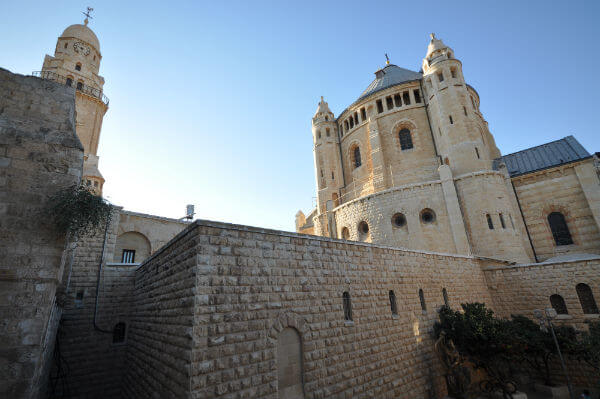
‘Death to Christians, enemies of Israel’ — Hebrew graffiti defacing Jerusalem monastery

Dormition_Abbey

Reuters reports: Israel ordered a high-priority police investigation on Sunday into anti-Christian messages scrawled in Hebrew on the walls and doors of a Jerusalem monastery, saying they marked an assault on religious harmony.

“Idols will be extirpated” – a line lifted from the Jewish prayer service – and “Christians Go to Hell” were among graffiti left outside the Dormition Abbey with felt-tip pens. The varying handwriting suggested several vandals had been involved.

The Benedictine monastery, on Mount Zion in the Old City, is near a site where many Christians believe Jesus held the Last Supper as well as a tomb revered as the last resting place of the biblical King David and which draws many Jewish worshippers.

“We will not let anyone undermine religious coexistence in Israel,” Internal Security Minister Gilad Erdan said in a statement, adding that police would put a high priority on “nabbing those who carried out this despicable act”.

Israel has been struggling with a spate of hate crimes by suspected Jewish ultra-nationalists targeting Christian sites as well as Palestinians and Israeli human rights activists. [Continue reading…]

The Times of Israel: “Despite promises by the government, these incidents continue to happen,” Wadia Abu Nasser, the executive director of the Assembly of Catholic Bishops in the Holy Land, railed Sunday morning. “If we were to actually count all of these incidents, they’d be in the hundreds.

“We have limited resources at our disposal. It’s the state’s responsibility to not only apprehend these perpetrators, but to make the necessary changes in the education system to educate against this sort of thing,” he told Army Radio. [Continue reading…]

Ynet adds: “The inscriptions are not only against Jesus the Messiah, but also call to slaughter the Christians and send them to hell! How long will these acts of vandalism continue?” the church said.

“This is the area of our convent, which until today is not monitored by police cameras, although this has been promised to us in the summer of 2013 by the Israeli security authorities after the cars of the monastery were badly damaged and several hate graffiti were discovered.”

The Domition Abbey further complained of “aggressive gathering with loud music and chanting by Jewish right-wing radicals in our immediate neighborhood in the area of the Tomb of David” almost every weekend for the past three years. [Continue reading…]

In 2011, I posted a collection of articles under the headline, “Being spat at remains part of life for Christians in Jerusalem.” This included reports from Haaretz, the Jerusalem Post, and The Forward. Attacks on Christians were described by Eric J Greenberg in 2004 as what has been “Jerusalem’s dirty little secret for decades.”

Last month I received a message from a reader claiming that these incidents are being used “as a stick to beat all Jews,” to which I responded:

In none of the reports cited — all reports made by Jewish journalists — is the behavior of “young Jewish bigots” in Jerusalem portrayed as representative of Jews as a whole. At the same time, this phenomenon doesn’t sound like something that deserves being ignored — especially if the Jerusalem Post reports that the attacks on Christians are not rare but are in fact “habitual.”

Israel’s Minister of Public Security, Gilad Erdan, says:

“We will show zero tolerance to whomever harms the democratic foundations of Israel and its freedom of religion and we will apprehend those who carried out this heinous act.”

How can anyone take seriously this claim that the Israeli government has “zero tolerance” for these types of attacks on religious freedom when it has been clearly documented that they have been going on for decades?

This isn’t just a domestic political issue for Israel, or reason for Israeli leaders and business owners to be concerned about the impact on tourism.

If a blind eye has been turned towards these hate crimes, it most likely also includes that of American Christian Zionists who are more closely aligned with right-wing Israelis than they are with fellow Christians in the Holy Land.

Prime Minister Benjamin Netanyahu considers Christians United for Israel “to be a vital part of Israel’s national security.”

I guess for CUFI and Netanyahu, the latest anti-Christian incident in Jerusalem will be a cause for little more than mild and fleeting embarrassment.

Facebooktwittermail

Yes, Saddam laid the groundwork for the emergence of ISIS

Kyle Orton writes: About three weeks ago I wrote a piece for The New York Times explaining the evolution of Saddam Hussein’s regime away from the hard-secularism of its Ba’athist origins, and how this had prepared the ground for the Islamic State (IS). I received much positive feedback, but the social media reaction was inevitable: little thought and much anger, particularly from people who view Iraqi history through a political prism and felt I was trying to exculpate George W. Bush. With rare exceptions, the critique could hardly be called thoughtful. So it is nice to finally have such a critique to deal with, from Samuel Helfont and Michael Brill in today’s Foreign Affairs.

To dive right in: the authors contend that their “rigorous study” of the Saddam regime records “has found no evidence that Saddam or his Baathist regime in Iraq displayed any sympathy for Islamism, Salafism, or Wahhabism.” As the authors note, even those who see Saddam’s regime having Islamized note the anti-Wahhabi component to the Faith Campaign. But the authors are unconvinced by the distinction between Salafism and Wahhabism. Saddam was “equally antagonistic toward them,” Helfont and Brill write. Later in the piece, however, the authors note: “Domestically, Saddam also opposed Islamism and those promoting any other version of Islam than his own.” Exactly.

In what I wrote in The Times, I said: “In the Sunni areas … the [Faith] campaign was effective, creating a religious movement I call Baathi-Salafism, under Mr. Hussein’s leadership.” I have previously written of this aspect of the Faith Campaign, dealing with the claim that it was really anti-religious because it involved the infiltration and even assassination of leaders of the religious trend that (I think the evidence shows) Saddam had aligned with. This is about Saddam’s approach to power, not his ideology:

Of course Saddam’s regime infiltrated the Salafi Trend and tried to bring it under control … Saddam still believed that only his movement was the true one, even if others were complementary. In a regime where the intelligence agencies spied on one-another, Saddam’s approach to the Salafi Trend is hardly a surprise. The Salafi Trend largely made its peace with the Islamized Saddam regime but it remained independent of the regime, and therefore a possible threat.

Or, as Amatzia Baram put it, “For Saddam the defining question was whose religious activities were to be targeted. … He was not at all suspicious [of religious activities], provided those activities were his.”

The authors contend,

Saddam had expressed the desire to instrumentalize these Baathist views on Islam as far back as the 1970s, but it was not until the 1990s that his regime developed the institutional capacity to teach its Arab nationalist version of Islam and the security architecture to ensure that doing so did not unintentionally aid hostile religious movements. The maturation of these capabilities rather than ideological shifts was the basis of the Faith Campaign.

This is exactly the wrong way around. When the Ba’ath regime was powerful enough in the early 1970s — after it was stabilized from the 1968 coup — that was when it showed its stern secularism and even what Baram calls “implied atheism”. The construction of a giant statue of the Abbasid poet Abu Nuwas, whose verse consists primarily of homoeroticism and wine, in 1972 cannot have been other than to provoke the traditionalists (see especially the bucket-sized wine glass in the statue’s hand). The Ba’ath was at this time also competing with the Communists for the urban intelligentsia and its high-brow produce, namely the magazine, “The Arab Intellectual,” produced in Baghdad between 1970 and 1975, laid the implied atheism on thickly, with its references to “science” and “progress” and a cosmological design that conspicuously didn’t mention god. It was during the war with Iran, when the Grand Ayatollah Ruhollah Khomeini’s propaganda calling Saddam an “infidel” was finding an audience inside Iraq, not least because Iran was winning on the battlefield, identifying Islam with power as well as right, that Saddam turned to Islam for legitimation. This intensified after the crushing defeat in Kuwait. The Islamization of Saddam’s regime was, among many other things, a profound admission of failure. [Continue reading…]

Facebooktwittermail

Jakarta, Paris, San Bernardino: The age of ‘marauding terrorist firearms attacks’

Christopher Dickey writes: While America slept, terrorists struck in Jakarta on Thursday, and their multi-pronged attack hit, most dramatically, a symbol of the United States: a Starbucks coffee shop.

Despite bombs going off, a hostage-taking, and an extended gunfight with Indonesian police around Thamrin Street (near several embassies, luxury hotels, and the offices of the United Nations), casualties were fairly low by the standards of modern terrorism. Initial reports say seven people died, including five attackers, which would seem both a credit to the response of the Indonesian authorities and a reflection of the killers’ ineptitude.

A website linked to the so-called Islamic State claimed responsibility in the name of the putative caliphate for the attack, “targeting foreign nationals and the security forces charged with protecting them in the Indonesian capital.”

Back in November, police reportedly picked up ISIS chatter about a “concert” planned for Indonesia, and perhaps 100 Indonesian citizens are believed to have joined ISIS’s ranks in Syria.

But the particular affiliations of the madmen are less important than their method in this case. The siege by squads of terrorists using assault rifles and low-grade explosives to slaughter innocent people at cafés, stadiums, hotels, shopping malls, and such has become standard operating procedure for violent extremists all over the map. [Continue reading…]

Facebooktwittermail