Category Archives: Issues

Israel ‘turning blind eye’ to West Bank settlers’ attacks on Palestinians

The Guardian reports: Jewish settlers in the West Bank are conducting a systematic and expanding campaign of violence against Palestinian farmers, families and children with the Israeli authorities turning a blind eye, according to confidential reports from senior European Union officials.

In two reports to Brussels from EU heads of mission in Jerusalem and Ramallah, obtained by the Guardian, the officials found that settler violence against Palestinians has more than tripled in three years to total hundreds of incidents.

“Acts of settler violence are becoming a serious concern for the Israeli state which has so far failed to effectively protect the Palestinian population,” says the report sent to EU ambassadors in Brussels last month.

The report notes 411 attacks by settlers last year resulting in Palestinian casualties and damage to property, against 132 attacks in 2009.

The campaign of intimidation is especially targeted at Palestinian farmers and their livelihood, the reports found, noting that settlers damaged or destroyed Palestinian olive groves en masse.

Around 10,000 trees were destroyed last year. But last autumn’s olive harvest season was quieter than previous years.

The Israeli authorities are accused of structuring their security operations to minimise the cost to the settlers of the campaign of harassment, intimidation and violence.

Facebooktwittermail

Loner, loser, killer

Olivier Roy writes: The murderous attack on a Jewish school, and before that on French soldiers, has brought a strong emotional reaction in France. Once again, the specter of disenfranchised and radicalized young French Muslims hovers over the destitute neighborhoods of France’s cities. Fifty years after the end of the war in Algeria, a new kind of civil war seems to be raging.

A closer look, however, shows that the picture is rather different.

First, the 23-year-old perpetrator of these acts of terror, Mohammed Merah, was a loner and a loser. Far from embodying a growing radicalization among the youth, he stood at the margins not only of French society but also of the Muslim community.

Merah was not known for his piety: He did not belong to any religious congregation; he did not belong to any radical group or even to a local Islamic movement. A petty delinquent, psychologically fragile, he tried to enlist in the French Foreign Legion and then left for Afghanistan and Pakistan.

Merah found in Al Qaeda a narrative of solitary heroism and a way, after months of watching videos on the Internet, to achieve short-term notoriety and find a place in the real world. In this sense, he was far closer to Anders Behring Breivik, who went on a killing spree in Norway last July in the name of a hatred of Muslims. People like these are difficult to spot precisely because they do not belong to a network of militant cells.

Yet the crimes of such men are often misconstrued as symbolizing different problems. Whereas non-Muslim lone terrorists like Breivik tend to be called mentally ill, Muslim lone terrorists like Merah are seen as embodying “Muslim wrath.” This is to miss an essential point.

Consider Merah’s attack on the French soldiers. If his killings at the Jewish school in Toulouse were a terrible reflection of the kind of anti-Semitism typically promoted by Al Qaeda, his attack on French soldiers — specifically Muslim ones — was novel and revealing of something else. He saw the soldiers as traitors: French Muslims fighting the Taliban in Afghanistan. The gap he perceived between himself and them reveals the gap between the few Muslims who become so marginalized as to murder and the many more who find ways to integrate. [Continue reading…]

Facebooktwittermail

Sgt. Bales burned one child alive, father says

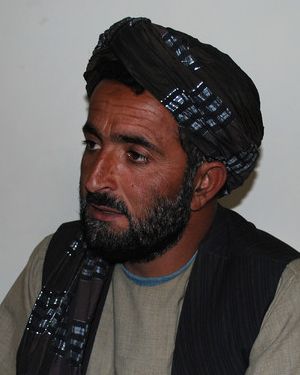
Mohammed Wazir

The Wall Street Journal reports: Mohammed Wazir says he was having breakfast with his brother in the town of Spin Boldak when he received the phone call from his village three hours away. “All your family members are martyred,” a neighbor told him.

When Mr. Wazir, a 33-year-old farmer with a sun-creased face and graying beard, reached his small mud home in the Panjway district of Kandahar province, he says he discovered that 11 relatives had been killed and set on fire, victims of a predawn rampage allegedly perpetrated by U.S. Army Staff Sgt. Robert Bales.

Mr. Wazir and other villagers shared with The Wall Street Journal in Kandahar their accounts of the March 11 tragedy that has inflamed anti-American sentiment here and poisoned U.S.-Afghan relations, possibly affecting the course of the war.

Panjway and the neighboring districts have been a battlefield between the Taliban and U.S.-led coalition forces for years. Many houses in the area remain in ruins and explosion craters dot the fields.

The U.S. special-operations forces base where Sgt. Bales served was set up under a strategy to protect the local population. Instead, the arrival of U.S. troops provoked Taliban attacks—and prompted more villagers to flee the already sparsely populated area.

“The only people who have remained are those who couldn’t afford the expense of moving their families to the city,” says Mullah Baran, a 38-year-old whose brother, Mohammad Dawood, was the first victim of the March 11 rampage, according to witnesses to the shooting, and other villagers. “The Americans said they came here to bring peace and security, but the opposite happened. Now, this village is a nest of ghosts.”

Mr. Baran, who says he had to scrape his brother’s brain and pieces of skull from the floor of their home, lost only one relative. His brother’s wife started screaming at the intruder, he says, and the gunman spared her and her six children.

In the Wazirs’ mud compound a few hundred yards away—a dwelling so poor that a piece of cloth served as a front door—no one was spared.

Mr. Wazir—judging by bloodstains, the layout of his home, and his knowledge of where his family sleeps—says his 60-year-old mother, Shah Tarina, was shot first as she greeted the intruder. In his bare bedroom, his wife Bibi Zohra was shot together with their daughters, 4-year-old Nabiya, 6-year-old Farida and 9-year-old Masooma.

In another room, Mr. Wazir’s sons Faizullah, 12, and Ismatullah, 13, were shot dead in their beds. Then, in a third room, Mr. Wazir’s brother, Akhtar Mohammed, 20, his brother’s new bride, 18-year-old Bibi Nazia, and a nephew, Essa Mohammed, 15, were killed.

All of the bodies were found afterward, after being dragged into the front room, blankets and clothes piled on top, and then torched, Mr. Wazir and other witnesses say.

Mr. Wazir says the corpse of his 2-year-old daughter Palwasha was amid the charred bodies. He believes she was burned alive. “I checked her body, and there were no bullet marks.”

The intruder faced no resistance because the locals were used to U.S. night raids. There was one in the same cluster of houses just five days earlier, Mr. Wazir says, after a roadside bomb hit a U.S. armored vehicle nearby.

He says U.S. troops threatened village elders after the bombing, warning them the village will pay a price if such attacks occur again.

A U.S.-led coalition spokesman in Kabul, U.S. Army Col. Gary Kolb, said the military “won’t speak to any specifics of what some of the villagers are saying.” He said he had no information about the bombing described by Mr. Wazir because not every such incident is reported to Kabul.

Like other villagers — and Afghan President Hamid Karzai — Messrs. Wazir and Baran say they believe more than one shooter was involved, if only because of the effort needed to move and burn 11 bodies. U.S. officials say they believe there was a single assailant.

Mr. Wazir says he is haunted by guilt. “It hurts me a lot when I remember occasions when I shouted at my sons because I asked them to do something and they ignored it,” he says. “I feel so very sorry now.” [Continue reading…]

CNN spoke to Bales’ lawyer, John Henry Browne: Browne predicted the case — whenever it comes to trial — is going to be “extremely difficult” for the prosecution.

“They have no murder scene, no forensics,” the lawyer said Thursday night from outside his Seattle office. “I’m going to make them prove every claim.”

U.S. officials have alleged that Bales carried out the killings alone in two neighboring villages in the Panjwai district of Kandahar province, in southern Afghanistan. Bales was flown out of Afghanistan last week and is being held at Fort Leavenworth, Kansas.

Afghans are insisting that the suspect be returned to Afghanistan to face trial, with villagers and lawmakers questioning the U.S. military’s account of what happened. But a military official said in Afghanistan on Sunday that Bales will be tried in the United States.

The rampage has strained already tense U.S.-Afghan relations and intensified a debate about whether to pull American troops ahead of their planned 2014 withdrawal. Afghan President Hamid Karzai has demanded that troops withdraw from villages in his nation and return to their bases, saying relations between the two countries were “at the end of their rope.”

On Wednesday, Afghanistan’s foreign minister called for a “swift and transparent investigation” into the killings of 16 men, women and children. But CNN legal contributor and defense attorney Paul Callan told CNN’s “Erin Burnett OutFront” that the case against the lone suspect in their deaths, Bales, may be largely circumstantial.

“There were admissions allegedly made by Sgt. Bales to some of his fellow soldiers, in which he claimed at least that he wasn’t shooting women and children, (and rather) was shooting men of military age,” Callan said. “Now, that would be an admission by him that would link him to the crime scene. If they then link his gun to the specific victims, then they easily make a connection and they can prove their case.”

Callan said he believed prosecutors would seek the death penalty against Bales,”because this is one of the biggest alleged massacres in memory.”

“You have the diplomatic and political problems that are being caused by this crime,” Callan said. “Afghan citizens will be looking, saying, ‘Is the U.S. seeking justice in this case?’ “

Facebooktwittermail

Syria’s refugees remind us of the price of revolution

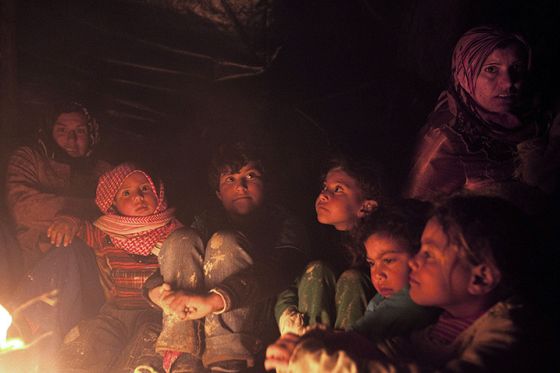
A Syrian refugee family wait for rebels to help them across the Turkish border. Photograph: Giorgos Moutafis/AFP/Getty Images

Jonathan Jones writes: Here is the truth about revolution, war, dictatorship and resistance. It is a simple truth and it is crushing: people suffer. In this powerful picture by Greek photojournalist Giorgos Moutafis a refugee family in Janoudia in north-western Syria wait for rebels to help them across the border into Turkey. In the bold rhetoric of our time, this might be described as a picture of defeat, an indictment of Bashar al-Assad’s crackdown on opposition to his rule, a call to arms for western democracies that are so much less eager to help in Syria now than they were in Libya a year ago. Perhaps it is all those things, and anything else politics wants it to be. But first, it is a human document.

Five children sit in a pool of light amid the dark, their faces patient and resilient, their confusion and fear obvious. Each has a different expression but none are smiling. One child gazes downward while the youngest-looking boy stares at the camera. The adults in the picture, knowing more, look back at the photographer as they gather close to the children. Everyone’s eyes seem to be searching, puzzling. The glow that warms their faces reveals a moment of contemplation before the next arduous stage of a journey.

Painters have known for centuries how to use nocturnal light to intensify our recognition of vulnerability. In his painting The Nativity at Night, which dates from about 1490, Geertgen tot Sint Jans shows the Madonna and child by candlelight against the dark. In this photograph, the shiny wall of the tent or canopy behind them creates a starless black night. Against this eeriness, Moutafis is able to give this family a profound dignity as the human instinct for light in the shadowed hours heightens their meditative companionship.

Facebooktwittermail

Occupy and the Arab spring will continue to revitalise political protest

Simon Critchley writes: The Arab spring, notably in Egypt and Syria, seems to be running out of steam. The vivacious drive of the Occupy movement has faltered and it is not clear what new life will appear. Can popular protest regain its energy and inspiration, or is that it?

Rather than retreating into the comfort of despair or cynicism, perhaps this is a moment in which we can try and gain a broader view of matters.

Power is the ability to get things done. Politics is the means to get those things done. Democracy is the name for regimes that believe that power and politics coincide and that power lies with the people. The problem, as Zygmunt Bauman has reminded us, is that power and politics have become divorced. What we call democracy has become a sham. Power has evaporated into the supra-national spaces of finance, trade and information platforms, but also the spaces of drug trafficking, human trafficking and immigration – the many boats that cross the Mediterranean and other seas.

But the space of politics has remained the same as it has for centuries, localised in the nation state with its prosaic variations of representative, liberal democracy. Politics still feels local – we might feel British or Greek or whatever – but it isn’t. Normal state politics simply serves the interests of supra-national power. Sovereignty has been outsourced.

The premise of western representative democracy is the following: citizens exercise political power through voting; representatives are elected; governments are formed and these governments have power to get things done, a power identical to the will of the people.

The belief that many of us had (or perhaps still have) is that if we work for a certain party, then we can win an election, form a government, and have the power to change things. But every day this is proven to be wrong. [Continue reading…]

Facebooktwittermail

Toulouse killings: making political capital out of Mohammed Merah

Nabila Ramdani writes: When young children are murdered by point-blank shots to the head, it is very difficult to draw conclusions about anything, let alone religion. The crimes Mohammed Merah has apparently confessed to are unimaginably wicked. French president, Nicolas Sarkozy, summed them up with the blunt relish of a newspaper headline writer, describing the 23-year-old killer as a “monster” who represented nothing and nobody.

However, such interpretations of what has happened in the Toulouse area over the past 10 days won’t last long. Far-right politicians have already seized on the image of the lethal young Muslim from an Algerian immigrant background. The National Front leader Marine Le Pen, who is on course to win up to 20% of the popular vote in the presidential elections beginning next month, said it was time to “launch a war” against a “fundamentalist risk which has been underestimated in our country”.

Le Pen has highlighted the fact that Merah had a French passport and was born and brought up at the expense of the republic. Even after he escaped from an Afghan prison where he was held for planting Taliban bombs, he was able to return to a council flat in Toulouse. “Homegrown” Islamic terrorists are the ultimate bogeymen for rabble-rousing politicians, and there is absolutely no doubt that the National Front’s share of the vote will increase because of this outrage.

Facebooktwittermail

Woman warned French police after violent attack by Toulouse gunman in 2010

Haaretz reports: A local French newspaper published on Thursday an in-depth testimony of a woman claiming that she had warned authorities multiple times that the suspect in the Toulouse killings, Mohamed Merah, was a danger to the public.

The woman, who did not provide her real name, told Le Télégramme that upon discovering the suspect’s identity, she felt as though her “legs were cut off.” According to her, the fact that it was necessary for the deaths to occur in order to finally arrest Merah was a “huge misstep.” She further claimed that she had filed two complaints against the suspect, and returned and warned authorities several times to no avail.

The woman, who lives in the same neighborhood as Merah in Toulouse, told Le Télégramme that in the summer of 2010, the suspect attempted to recruit her son to jihad. The son, who at the time was 15 years old, was taken to the suspect’s car where he listened to a disc of preaching for holy war. He then drove her son to his apartment, where he presented him with a Koran and a large sword, and forced him to watch gruesome Al-Qaida videos in which women were shot and hostages in Afghanistan were beheaded.

“My son called me and we were finally able to get him out of there. He was there from 5 P.M. until midnight,” the woman said.

The mother filed a complaint with the police, which according to her caused Merah to become upset. “He came to the front of our home, threatened me and hit me. He said that I was an atheist and that I must pay like all the rest of France’s citizens,” she said.

She further stated that Merah claimed he would “wipe out all those who kill Muslims.” She stated that two days after the incident, Merah struck her son and daughter in the presence of eyewitnesses. However, no one intervened. The mother still has a copy of the complaint that was filed, as well as her daughter’s medical documents.

The woman also stated that the “true mind” behind the suspect was his brother Abdelkader, who is currently in police custody. “It is he who brainwashed [Merah] and often flew out of France,” she said.

Facebooktwittermail

In Obama’s Iran policy, diplomacy has not been allowed to run its course

Julian Borger writes: In May 2003, when the Bush administration’s might was at its zenith, a Swiss diplomat called Tim Guldimann arrived in Washington carrying an extraordinary message.

As Switzerland’s ambassador in Tehran, Guldimann’s job was to represent the interests of the United States, which had no embassy, and that was he thought he was doing. The letter he was carrying was an offer of comprehensive negotiations from the Iranian government. In return for a lifting of US sanctions and the handing over of members of a US-designated Iranian terrorist group, Tehran was willing to place its nuclear programme under an intrusive monitoring and inspection regime, end armed support for Hamas and Hizbullah, and accept a Saudi plan for Israeli-Palestinian peace.

In short, Iran was ticking just about every box on the American diplomatic wish-list. So what happened? Dick Cheney and Donald Rumsfeld rejected the offer out of hand. “We don’t speak to evil,” was the official line. Not only was Guldimann sent packing, the Bush administration actually reprimanded the Swiss for over-stepping their diplomatic mandate.

The depressing fiasco is the opening scene of a perfectly-timed new book, A Single Roll of the Dice, by Trita Parsi, a carefully balanced and thoroughly researched account of the tortured US-Iranian relationship in recent years.

Facebooktwittermail

“Liberal Zionism”: A contradiction in terms

Yousef Munayyer writes: Peter Beinart’s New York Times op-ed, “To Save Israel, Boycott the Settlements,” is an example of the increased volume voices described as ‘Liberal Zionists’ have garnered in the discourse on Israel/Palestine. But liberal Zionism is a contradiction is terms.

Peter’s piece expemplifies the “Liberal Zionist” narrative; “Liberal Zionists” cling to three central illusions to avoid confronting the reality that they are walking contradictions.

First, “Liberal Zionists” construct an artificial dichotomy between the state and the settlements; they pretend that the Israeli State and its settlements are somehow separate or separable. Beinart typifies this when he suggests renaming the West Bank ‘undemocratic Israel’ to distinguish from 1948 Israel. In reality, one cannot, in any serious way, separate Israel from its settlement enterprise.

The settlements were developed, continue to exist and grow precisely because of Israeli state policies. These policies are formulated by the government of Israel (all of it, not just the settlements). The settlement enterprise is not directed from the hilltops of the West Bank which it dominates, but rather from the central corridors of Israeli power which allocates resources to them, builds settlement infrastructure (and destroys Palestinian infrastructure) in and around them, supports the usurpation of Palestinian land and natural resources for them, and deploys Israeli military for support in this effort. This is why there is a strategic imperative for BDS to target the state, not just the settlements.

Further, as part of this self-inflicted deception, “Liberal Zionists” often attempt to mitigate the problem presented by settlers and settlements by dishonestly diminishing their numbers. Beinart excludes the residents of occupied Jerusalem (which the Israeli government has annexed), and cites 300,000 settlers in the West Bank. But as even the Israeli Prime Minister told Congress, 650,000 Israelis live beyond the green line.

Second, “Liberal Zionists” talk about an always-approaching-yet-non-existent deadline for two states. Beinart writes that Israel is “erasing” the green line; he worries what will happen “if Israel makes the occupation permanent…” and says that “we are closer to that day” than many may admit. But that day never seems to come for “Liberal Zionists,” it is always somewhere off in the undefined distance, although, we are told, it is approaching.

But by never defining a deadline, by never demarcating a point of no return, that day never has to come and “Liberal Zionists” never have to confront the contradiction inherent in their views. Rather, by failing to draw a line (which in reality we have probably long passed) and by failing to make a serious effort against the Israeli state for its colonialist policies, what “Liberal Zionists” are effectively saying is that there is no Palestinian minimum (or Zionist maximum) they would not accept – there is nothing “liberal” about that! [Continue reading…]

Facebooktwittermail

Thanks to Netanyahu’s babble, an attack on Iran will inflame global anti-Semitism

Akiva Eldar writes: The murderer who shot students in a Jewish school in Toulouse yesterday, like the one who shot black-skinned French paratroopers a few days earlier, required no motive other than hatred of foreigners and those who are different. Chronic sufferers from anti-Semitism and xenophobia need no special pretexts for their racism.

Nevertheless, an Israeli attack on Iran that sent gas prices soaring would be seized by by right-wing extremists like those who support Marine Le Pen. Thanks to Prime Minister Benjamin Netanyahu’s babble in Washington, even if the United States is the one that ultimately attacks Iran’s nuclear reactors, the bill will (also) be submitted to Jewish communities abroad. The State of Israel, which was established as a haven for Jews from those who hate it, may instead wind up becoming a threat to Jews.

What do you do when the polls show that a solid majority of Israelis refuse to risk being among the 500 casualties of retaliatory Iranian missile strikes on which Defense Minister Ehud Barak is prepared to gamble? The Prime Minister’s Office takes comfort in polls showing increasing American support for military action against Iran. Netanyahu’s spokesmen managed to sell this dramatic headline to several important media outlets as a personal accomplishment by their boss.

Indeed, a Wall Street Journal/CNN poll published the day after Netanyahu’s address to the pro-Israel lobby AIPAC showed that 52 percent of Americans favored a military strike on Iran if the only other option were standing idly by. But when the respondents were presented with a larger range of options, a completely different picture emerged.

Facebooktwittermail

Lawyer: Afghanistan shooting suspect has sketchy memory of night of massacre

The Associated Press reports: The lawyer for the Army staff sergeant accused of slaughtering 16 Afghan civilians in a nighttime shooting rampage met his client for the first time Monday and said the solider has a sketchy memory of the massacre.

Lawyer John Henry Browne said Robert Bales remembers some details from before and after the killings, but very little during the time the military believes on a killing spree through two Afghan villages.

“He has some memory of some things that happened that night. He has some memories of before the incident and he has some memories of after the incident. In between, very little,” Browne told The Associated Press by telephone from Fort Leavenworth, where Bales is being held.

Pressed on whether Bales can remember anything at all about the shooting, Browne said, “I haven’t gotten that far with him yet.”

The Washington Post reports: The attacks of Sept. 11, 2001, figure prominently in the still-evolving portrait of Robert Bales, the Army staff sergeant being held in a massacre of 16 villagers in southern Afghanistan. Like many others, Bales enlisted out of a sense of civic responsibility, his friends and attorney have said.

But Bales’s decision to join the Army also came at a pivotal point in his pre-military career — a career as a stock trader that appears to have ended months after he was accused of engaging in financial fraud while handling the retirement account of an elderly client in Ohio, according to financial records.

An arbitrator later ordered Bales and the owner of the firm that employed him to pay $1.4 million — about half for compensation and half in punitive damages — for taking part in “fraud” and “unauthorized trading,” according to a ruling from the Financial Industry Regulatory Authority, the independent disciplinary board for brokers and brokerage houses.

A review of the investor’s account statements, obtained by The Washington Post, shows that valuable stocks were sold off in favor of penny stocks as part of what the arbitrator called “churning” by Bales to pump up commissions.

The client, Gary Liebschner, a 74-year-old retired engineer for AT&T, said Sunday that he “never got paid a penny” of the award.

Facebooktwittermail

The great legal paradox of our time: How civil libertarians strengthened the national security state

Jack Goldsmith writes: When Michael Ratner argued in a February 2002 lawsuit that British citizen Shafiq Rasul had a legal right to challenge his detention at Guantanamo Bay, there was little reason to believe he and his colleagues at the Center for Constitutional Rights (CCR) would play any role in shaping America’s national security landscape. The country was still seething with anger over the attacks of 9/11, and longing for revenge. The few legal precedents that existed were not very encouraging. (“Never in American history had the [Supreme] Court tried in any way to interfere with a war in progress,” noted Arthur Schlesinger Jr. in The Imperial Presidency.) And the Ratner-led CCR was a far-left legal advocacy organization—the group had previously represented the Attica rioters, the Chicago Eight, Nicaraguan contras, and assorted other “violent radicals, Communist front-groups, cop-killers, and sworn enemies of the United States,” in the words of conservative critic Marc Thiessen—that had few friends in the Washington, D.C. establishment.

And yet, a decade later, it’s now clear that Ratner and progressive activists like him have had an outsized impact on national security policy—though not exactly the one they would have wished. CCR would win landmark Supreme Court cases that challenged executive authority. But those achievements came at an unexpected price: They ultimately helped cement the political and legal consensus in support of the counterterrorism policies that emerged at the end of the George W. Bush administration, and they enabled Barack Obama to continue those policies. By successfully challenging the government’s authority, Ratner and his friends mostly ended up strengthening it. In that irony lies the most important constitutional lesson of the last decade.

By June, 2004, Ratner’s hail-mary lawsuit had produced a famous Supreme Court victory. That month the Court set off on a new course in American history by holding that Rasul and every other detainee at GTMO could challenge in court “the legality of the Executive’s potentially indefinite detention.” The Rasul litigation led the Bush administration to tighten its detention standards and contributed to the discharge of 308 detainees from GTMO. More broadly, as Justice Antonin Scalia predicted in his dissent, the decision precipitated the projection of “the cumbersome machinery of our domestic courts into military affairs.”

It was a high-profile win, and the antiestablishment activists at CCR were soon bombarded by pro bono offers from hundreds of attorneys, including many from America’s most elite law firms. These lawyers—who came to be known as “the GTMO Bar”—quickly flooded federal courts with habeas corpus petitions from detainees seeking release. That initiated a series of convoluted legal and political battles that ultimately seemed to affirm their efforts. Congress enacted laws in 2005 and 2006 that extinguished habeas corpus rights and replaced them with a system of military and judicial review. But the Supreme Court, in the summer of 2008 in a case called Boumediene, declared that habeas corpus must apply to GTMO as a matter of constitutional law. It was the first time that the Court had invalidated a wartime measure that had the support of Congress and the President.

In the heady days after Boumediene, Ratner and his colleagues, the momentum on their side, assumed that the GTMO detentions would not survive judicial review. They grew more confident when former constitutional law professor Barack Obama—who as a candidate had campaigned against George W. Bush’s counterterrorism policies, and who had received an endorsement from 70 members of the GTMO Bar—was elected president. Some at CCR predicted that the Guantanamo Bay facility would be closed within the year. “Rule of law, baby!” they shouted on Obama’s inauguration night.

We now know that things would not turn out as the GTMO Bar hoped. Ratner and his colleagues overestimated the civil libertarian commitments of Barack Obama and misunderstood how the burdens of the presidency would affect his judgment. They also underestimated the breadth and depth of the legal consensus in favor of executive authority.

Facebooktwittermail

The threat of war may cripple economic recovery

Nouriel Roubini writes: Today’s fragile global economy faces many risks: the risk of another flare-up of the eurozone crisis; the risk of a worse-than-expected slowdown in China; and the risk that economic recovery in the United States will fizzle. But no risk is more serious than that posed by a further spike in oil prices.

The price of a barrel of Brent crude, which was well below $100 in 2011, recently peaked at $125 (U.S.). Gasoline prices in the U.S. are approaching $4 a gallon, a damaging threshold for consumer confidence, and will increase further during the high-demand summer season.

The reason is fear. Not only are oil supplies plentiful, but demand in the U.S. and Europe has been lower, owing to decreasing car use in the last few years and weak or negative GDP growth in the U.S. and the eurozone. Simply put, increasing worry about a military conflict between Israel and Iran has created a “fear premium.”

The last three global recessions (prior to 2008) were each caused by a geopolitical shock in the Middle East that led to a sharp spike in oil prices. The 1973 Yom Kippur War between Israel and the Arab states led to global stagflation (recession and inflation) in 1974-1975. The Iranian revolution in 1979 led to global stagflation in 1980-1982. And Iraq’s invasion of Kuwait in the summer of 1990 led to the global recession of 1990-1991.

Facebooktwittermail