Category Archives: war in Afghanistan

Obama’s secret prisons

Obama’s secret prisons

One quiet, wintry night last year in the eastern Afghan town of Khost, a young government employee named Ismatullah simply vanished. He had last been seen in the town’s bazaar with a group of friends. Family members scoured Khost’s dust-doused streets for days. Village elders contacted Taliban commanders in the area who were wont to kidnap government workers, but they had never heard of the young man. Even the governor got involved, ordering his police to round up nettlesome criminal gangs that sometimes preyed on young bazaar-goers for ransom.

But the hunt turned up nothing. Spring and summer came and went with no sign of Ismatullah. Then one day, long after the police and village elders had abandoned their search, a courier delivered a neat, handwritten note on Red Cross stationary to the family. In it, Ismatullah informed them that he was in Bagram, an American prison more than 200 miles away. U.S. forces had picked him up while he was on his way home from the bazaar, the terse letter stated, and he didn’t know when he would be freed.

Sometime in the last few years, Pashtun villagers in Afghanistan’s rugged heartland began to lose faith in the American project. Many of them can point to the precise moment of this transformation, and it usually took place in the dead of the night, when most of the country was fast asleep. In the secretive U.S. detentions process, suspects are usually nabbed in the darkness and then sent to one of a number of detention areas on military bases, often on the slightest suspicion and without the knowledge of their families.

This process has become even more feared and hated in Afghanistan than coalition airstrikes. The night raids and detentions, little known or understood outside of these Pashtun villages, are slowly turning Afghans against the very forces they greeted as liberators just a few years ago. [continued…]

Facebooktwittermail

The meaning of the Eikenberry cables

The meaning of the Eikenberry cables

It was apparent as early as the summer of 2009 that Obama had no political choice but to throw in his lot with Petraeus and McChrystal and the “full-up” commitment of troops. Only a more far-sighted regard for prudence could have drawn him the other way.

And, in fact, Obama went in even faster than the generals asked him to; and he did so, we now can see, in open disregard of the practical wisdom of the Eikenberry cables. He did it on the supposition that the sooner he went in big, the sooner he could get out big. In a flattering article by Peter Baker on the “process” of the troop decision, President Obama was quoted as saying, of a left-to-right time chart of contemplated troop deployments: “I want this pushed to the left.” That is, move them in faster. Make the whole thing fast so we can have a credible ending by 2011. But Ambassador Eikenberry had already told him why “pushing” the graph in this way was a fantasy — a case of wishful thinking to the point of irresponsibility.

It is inconceivable that a president acting on a candid estimate of the commitment he was requiring of his country, would, in response to the Eikenberry cables, finally have bowed to the generals. No one could have done so whose guiding light was prudence and the direction of a wise policy. What drove this decision, instead, was Barack Obama’s desire for an appearance of conventional solidity. He had said so many times that Afghanistan was the right war. How could he unsay it? [continued…]

Facebooktwittermail

The return of the neocons

The return of the neocons

Technically, there is nothing “neo” about conservatives like Robert Kagan, the historian and another Washington Post columnist, or John Podhoretz, the editor of Commentary; each is a son of one of neoconservatism’s founding fathers. Indeed, no strain in American politics is so dynastic. It is akin to the right-wing Likud Party in Israel, whose religion and politics, world view, and succession rituals the neocons often share. The definitions, and analogy, are inexact, but both groups have recent ties to Europe and are haunted by the Holocaust, which has left them feeling wounded, suspicious, and sometimes bellicose, determined never again to be naive or to trust the world’s good intentions. Both spent decades in the po-litical wilderness before miraculously acquiring power; both begat “princes” who defied the normal generational tensions and allied themselves with their kingly fathers. When Bill Kristol rose to praise Irving that morning, he was really picking up his scepter.

Had you Googled “neoconservative” and “death” that day, four days after the 89-year-old Kristol expired, you’d have found lots on their long-rumored—and for some, much-anticipated and -savored—demise. On both the left and right, neoconservatism was deemed a spent force. Its ideas, Foreign Policy magazine had pronounced, “lie buried in the sands of Iraq.”

But obituaries can be premature. At the moment, in fact, the neocons seem resurrected. One of their own, Frederick Kagan of AEI (Robert’s younger brother), helped turn around the war in Iraq by devising and pushing for the surge there. More recent-ly, President Obama—whose foreign–policy pronouncements (nuanced, multi-lateral, interdependent) and style (low-key, self-critical, conciliatory, collegial) were a repudiation of neoconservative assertiveness—has swung their way, or so they believe. First, he’s sending an additional 30,000 troops to Afghanistan, nearly as many as leading neocons had sought. Then came his Nobel Prize acceptance speech, which, with its acknowledgment of the need for force, its nod to dissidents in Iran and elsewhere, and its talk about good and evil, was surprisingly congenial.

As if on cue, a Nigerian man with explosives in his crotch nearly brought down an American airliner over Detroit on Christmas Day, leaving the neocons feeling further vindicated and energized. Obama, who’d ratcheted up his rhetoric after an initial response that Bill Kristol and other neocons considered too tepid, had been “mugged by reality,” Kristol declared. It was an obvious homage to his father, who’d long ago defined “neocon” as a liberal to whom just that had happened. “Whether they praise or denounce Obama, the neocons are winning,” says Jacob Heilbrunn, a senior editor at The National Interest and author of They Knew They Were Right: The Rise of the Neocons (2008). “They’ve got him embracing the surge in Afghanistan and on the run for being ‘soft on terrorists.’ Either way, he ends up catering to them.” With Obama further weakened by an electoral repudiation in Massachusetts, that process might only intensify. [continued…]

Obama quietly continues to defend Bush’s terror policies

Although the FBI has acknowledged it improperly obtained thousands of Americans’ phone records for years, the Obama administration continues to assert that the bureau can obtain them without any formal legal process or court oversight.

The FBI revealed this stance in a newly released report, troubling critics who’d hoped the bureau had been chastened enough by its own abuses to drop such a position.

In further support of the legal authority, however, the Justice Department’s Office of Legal Counsel backed the FBI in a written opinion issued this month.

The opinion by the OLC — the section that wrote the memos that justified enhanced interrogation techniques during the last administration — appears to be yet another sign that the Obama administration can be just as assertive as Bush’s in claiming sweeping and controversial anti-terrorism powers. [continued…]

CIA deaths prompt surge in U.S. drone strikes

… officials deny that vengeance is driving the increased attacks, though one called the drone strikes “the purest form of self-defense.”

Officials point to other factors. For one, Pakistan recently dropped restrictions on the drone program it had requested last fall to accompany a ground offensive against militants in South Waziristan. And tips on the whereabouts of extremists ebb and flow unpredictably.

A C.I.A. spokesman, Paul Gimigliano, declined to comment on the drone strikes. But he said, “The agency’s counterterrorism operations — lawful, aggressive, precise and effective — continue without pause.”

The strikes, carried out from a secret base in Pakistan and controlled by satellite link from C.I.A. headquarters in Virginia, have been expanded by President Obama and praised by both parties in Congress as a potent weapon against terrorism that puts no American lives at risk. That calculation must be revised in light of the Khost bombing, which revealed the critical presence of C.I.A. officers in dangerous territory to direct the strikes. [continued…]

Editor’s Comment — The question that the New York Times‘ Washington-based reporters (true to form) fail to address is this: If the Khost bombing killed CIA officers who were critical in choosing the targets for drone attacks, how have subsequent targets been chosen? Are we supposed to believe that right in the aftermath of this huge blow to the CIA’s drone operation, a flood of valuable intelligence swept in?

How convenient… and improbable.

Facebooktwittermail

Afghan president Hamid Karzai urges West to buy off the Taliban

Afghan president Hamid Karzai urges West to buy off the Taliban

After giving up on winning victory in Afghanistan by military means, the international community is resorting to the centuries-old method of buying its way out.

In London this week, Hamid Karzai, the Afghan president, will launch a British and American-backed plan for “reintegration” of the Taliban and call for international funding to offer jobs and bribes to bring insurgents in from the cold.

The conference, which starts on Thursday, will be the first big international gathering on Afghanistan since President Barack Obama announced his military strategy last month, including a surge of 30,000 American troops.

The aim was to accompany the surge with a new political strategy and ways for the Afghans to provide their own security by setting up local militias, which could include former Taliban. [continued…]

Facebooktwittermail

Gates says Taliban must take legitimate Afghan role

Gates says Taliban must take legitimate Afghan role

The United States recognizes that the Taliban are now part of the political fabric of Afghanistan, Defense Secretary Robert M. Gates said here on Friday, but the group must be prepared to play a legitimate role before it can reconcile with the Afghan government.

That means, Mr. Gates said, that the Taliban must participate in elections, not oppose education and not assassinate local officials. [continued…]

Afghan insurgent outlines peace plan

One of the three main leaders of the Afghan insurgency, mercurial warlord Gulbuddin Hekmatyar, has a long history of switching sides, and once fought against his current Taliban allies.

Now, he has held out the possibility of negotiating with Afghan President Hamid Karzai and outlined a roadmap for political reconciliation, opening what could be the most promising avenue for Mr. Karzai’s effort to peacefully resolve the conflict.

It is far from certain that any talks with Mr. Hekmatyar will begin, let alone succeed. But in contrast to Taliban leader Mullah Omar and allied insurgent chief Sirajuddin Haqqani, who refuse any talks with Kabul as long as foreign troops remain in the country, Mr. Hekmatyar took a much more conciliatory line in a recent video.

“We have no agreement with the Taliban—not for fighting the war, and not for the peace,” said Mr. Hekmatyar, who commands the loyalty of thousands of insurgents. “The only thing that unites the Taliban and [us] is the war against the foreigners.” [continued…]

U.S. ambassador puts brakes on plan to utilize Afghan militias against Taliban

The U.S. ambassador to Afghanistan and senior Afghan officials have resisted moving forward with a bold and potentially risky initiative to support local militias in Afghanistan that are willing to defend their villages against insurgents, according to U.S. officials.

Their concerns have slowed the implementation of a key effort to provide security in places where there are relatively few NATO forces or Afghan police and Army units. U.S. military officials had wanted to get the initiative — developed under the leadership of Gen. Stanley A. McChrystal, the top commander in Afghanistan — off to a quick start this year.

The plan was to take advantage of the emergence of informal village security forces that were taking up arms against outside insurgents. The hope was that the new program could yield thousands of new security forces relatively fast, bridging the gap until more army and police forces could be trained. But before the initiative can be implemented on a broader scale, Ambassador Karl W. Eikenberry must approve the release of more money for it. [continued…]

Facebooktwittermail

Taliban overhaul image to win allies

Taliban overhaul image to win allies

The Taliban have embarked on a sophisticated information war, using modern media tools as well as some old-fashioned ones, to soften their image and win favor with local Afghans as they try to counter the Americans’ new campaign to win Afghan hearts and minds.

The Taliban’s spiritual leader, Mullah Muhammad Omar, issued a lengthy directive late last spring outlining a new code of conduct for the Taliban. The dictates include bans on suicide bombings against civilians, burning down schools, or cutting off ears, lips and tongues.

The code, which has been spottily enforced, does not necessarily mean a gentler insurgency. Although the Taliban warned some civilians away before the assault on the heart of Kabul on Monday, they were still responsible for three-quarters of civilian casualties last year, according to the United Nations.

Now, as the Taliban deepen their presence in more of Afghanistan, they are in greater need of popular support and are recasting themselves increasingly as a local liberation movement, independent of Al Qaeda, capitalizing on the mounting frustration of Afghans with their own government and the presence of foreign troops. The effect has been to make them a more potent insurgency, some NATO officials said. [continued…]

Report slams U.S. for building power plant Afghans can’t run

A $300 million power plant in Afghanistan paid for with U.S. tax dollars was an ill-conceived and mismanaged project that the Afghan government can’t afford to switch on now that it’s almost finished, a watchdog agency has found.

The project in Kabul has ballooned $40 million over budget and is a year behind schedule because of missteps by the American contractors and the U.S. government, according to an audit released Wednesday by the Office of the Special Inspector General for Afghanistan Reconstruction.

If the plant ever runs to full capacity, it could provide tens of thousands of Afghans in the Kabul region with electricity, which would be an achievement in a country in which only 10 percent of the population has it.

Even when the plant is completed in March, however, the Afghan government is unlikely to be able to pay the millions of dollars for diesel fuel that’s needed to power the plant and maintain it, the auditors concluded. The U.S. Agency for International Development has agreed to pay for the fuel temporarily. [continued…]

Facebooktwittermail

New wave of warlords bedevils U.S.

New wave of warlords bedevils U.S.

In his teen years, Sirajuddin Haqqani was known among friends as a dandy. He cared more about the look of his thick black hair than the battles his father, a mujahideen warlord in the 1980s, was waging with Russia for control of Afghanistan.

The younger Mr. Haqqani is still a stylish sort, say those who know him. But now, approaching middle age and ensconced as the battlefield leader of his father’s militant army, he has become ruthless in his own pursuit of an Afghanistan free from foreign influence. This time the enemy is the U.S. and its allies.

From outposts along the border between Pakistan and Afghanistan, his Haqqani network is waging a campaign that has made the Afghan insurgency deadlier. He has widened the use of suicide attacks, which became a Taliban mainstay only in the past few years. U.S. officials believe his forces carried out the dramatic Monday gun, grenade and suicide-bomb attack in Kabul on Afghan government ministries and a luxury hotel. The assault claimed five victims plus seven attackers. [continued…]

Afghanistan’s holy violence

The Taliban’s spectacular attacks in Kabul yesterday took place just as the new cabinet members were taking their oath of office. In a report posted online on the Taliban website, their spokesman Zabiullah Mujahid listed the ministries under attack: the ministry of mining, the ministry of justice, and the ministry of finance. The Taliban’s message was clear: even though the ministers were taking charge of Hamid Karzai’s cabinet, the power in control of Kabul was not Karzai but the Taliban.

The ministers might not be used to the idea of dual governments, but outside Kabul Afghans have long learned to live under two parallel regimes, a daytime government run by President Karzai and a nighttime one run by the Taliban and other local strongmen. Ministers living in Kabul had been spared this unsettling reality until now, hiding as they do in bullet-proof cars, on blocked roads and behind the protective walls of Kabul’s green zone. But the reality outside the capital is otherwise and ordinary Afghans have learned to negotiate their daily routine around avoiding random violence by the Taliban and other troublemakers. Monday’s attacks might have given the ministers a taste of what life is like for a majority of Afghans, especially those who live in restive regions. [continued…]

After attack, Afghans question motives or see conspiracies

Twenty-four hours after seven insurgents stormed a shopping center in downtown Kabul and immobilized the city, the shoemakers who ply their trade in front of the mall were back in business on Tuesday.

Nearby, shopkeepers returned to hawk tapes of Madonna alongside recordings of Afghan and Bollywood stars, and a crowd of men joked with a man wearing a large shawl, because that was the same outfit the attackers wore on Monday to hide their guns.

Stoic about the assault, convinced that it would happen again and lacking faith in the government’s ability to stop such attacks, those who work near the sites that were attacked were most interested in the question of why the insurgents had not killed more civilians. [continued…]

Corruption widespread in Afghanistan, UNODC survey says

overty and violence are usually portrayed as the biggest challenges confronting Afghanistan. But ask the Afghans themselves, and you get a different answer: corruption is their biggest worry. A new UNODC survey reveals that an overwhelming 59 per cent of Afghans view public dishonesty as a bigger concern than insecurity (54 per cent) and unemployment (52 per cent).

Corruption in Afghanistan: Bribery as Reported by Victims [PDF] is based on interviews with 7,600 people in 12 provincial capitals and more than 1,600 villages around Afghanistan. It records the real experiences (rather than just perceptions) of urban as well as rural residents, men and women, between autumn 2008 and autumn 2009. [continued…]

Facebooktwittermail

Kabul attack shows resilience of Afghan militants

Kabul attack shows resilience of Afghan militants

A team of militants launched a spectacular assault at the heart of the Afghan government on Monday, with two men detonating suicide bombs and the rest fighting to the death only 50 yards from the gates of the presidential palace.

The attack paralyzed the city for hours, as hundreds of Afghan commandos converged and opened fire. The battle unfolded in the middle of Pashtunistan Square, a traffic circle where the palace of President Hamid Karzai, the Ministry of Justice and the Central Bank, the target of the attack, are located.

As the gun battle raged, another suicide bomber, this one driving an ambulance, struck a traffic circle a half-mile away, sending a second mass of bystanders fleeing in terror. Afghan officials said that three soldiers and two civilians — including a child — were killed, and at least 71 people were wounded.

The assault was the latest in a series of audacious operations by insurgents meant to shatter the calm of the Afghan capital. The Taliban are a mostly rural phenomenon in a mostly rural country; the overwhelming majority of United States troops are deployed in small outposts in the countryside. On most days, the war does not reach the urban centers.

But increasingly the Taliban are bringing the fight into the cities, further demoralizing Afghans and lending to the impression that virtually no part of the country is safe from the group’s penetration. [continued…]

Taliban leaders unlikely to accept offer, Gates says

Defense Secretary Robert M. Gates said Monday that there could be a surge of Taliban followers willing to reintegrate with the Afghan government of President Hamid Karzai, but that for now an Afghan government reconciliation with the Taliban leadership was unlikely.

Mr. Gates, who made his comments on his plane en route to India, was reacting to the announcement on Sunday of a major new Afghan initiative to offer jobs, security, education and other social benefits to Taliban followers who defect. The plan is in the final stages of preparation and has qualified support from American officials, who see luring large numbers of Taliban supporters to change sides as critical to success in Afghanistan.

But Mr. Gates, like other American officials, effectively ruled out reconciliation with the Taliban leader, Mullah Muhammad Omar. Mr. Karzai has offered repeatedly to talk directly with Mullah Omar, with little result, but Afghan officials are now considering removing his name from the United Nations list of terrorists. Those placed on the list are barred from international travel and their bank accounts can be frozen. [continued…]

Facebooktwittermail

Taliban launch bold attack in central Kabul

Taliban launch bold attack in central Kabul

A team of militants launched a spectacular assault at the heart of the Afghan government Monday, with two men detonating suicide bombs and the rest fighting to the death only 50 yards from the gates of the presidential palace.

The attacks, the latest in a series targeting the Afghan capital, paralyzed the city for hours, as hundreds of Afghan commandos converged and opened fire. The battle unfolded in the middle of Pashtunistan Square, a traffic circle that holds the palace of President Hamid Karzai, the Ministry of Justice and the Central Bank, the target of the attack.

As the gun battle raged, another suicide bomber — this one driving an ambulance — struck a traffic circle a half-mile away, sending a second mass of bystanders fleeing in terror.

Five hours after the attack began, gunfire was still echoing through the downtown, as commandos searched for holdouts in a nearby office building. Afghan officials said that three soldiers and two civilians — including one child — were killed, and at least 71 people were wounded. The Faroshga market, one of the city’s most popular shopping malls, lay in ruins, shattered and burning and belching black smoke. [continued…]

Karzai closing in on Taliban reconciliation plan

The Afghan government will soon unveil a major new plan offering jobs, security, education and other social benefits to Taliban followers who defect, according to the spokesman for President Hamid Karzai.

The plan, in the final stages of preparation, will go beyond the government’s previous offers to the Taliban, Waheed Omer, the spokesman, said at a news conference on Sunday. “The mistakes we have committed before have been considered in developing this new plan,” he said. “We have not done enough.”

The reconciliation and reintegration plan is aimed at luring large numbers of the Taliban’s followers, estimated by NATO officials at 25,000 to 30,000 active fighters, to change sides, and has qualified support from American officials. Afghan officials are hoping to finance the plan through pledges from the international community to be made at a London conference on Afghanistan planned for Jan. 28.

Even if such a plan wins international support, serious questions remain about Afghanistan’s ability to carry it out, especially without a functioning national government, a prospect that remained distant on Sunday. [continued…]

Facebooktwittermail

Suicide attack reveals threat to Obama’s Afghanistan plan

Suicide attack reveals threat to Obama’s Afghanistan plan

The bombing has focused new attention on the Haqqani network, an Afghan insurgent group that U.S. intelligence officials said is based in North Waziristan, has ties to members of the Pakistani military’s Inter-Services Intelligence agency and probably played a key role in the suicide bombing.

The relative sophistication of the attack, especially in contrast to the attempted Christmas Day bombing of a Northwest Airlines jet, suggests that the militants who been planned and ran it may have received some training or advice from rogue ISI officers, the officials said.

For example, they said, the bomber, 32-year-old Jordanian Humam Khalil Abu Mulal al Balawi, spent most of 2009 in Pakistan and traveled to Khost from Pakistan, and he managed to evade the counter-intelligence tools that customarily are used to assess whether a potential agent is reliable, they said.

“Pakistan has to decide whether Haqqani is an asset or a liability. At the moment, I think they’re veering towards liability, but it’s not clear,” said a Western official in Afghanistan, who couldn’t be named because he isn’t authorized to discuss the subject publicly. [continued…]

Facebooktwittermail

War’s fury no longer pauses for Afghan winter

War’s fury no longer pauses for Afghan winter

Afghanistan’s high mountains and harsh weather once meant that winter was a respite from much of the war’s violence, but as the deaths of six Western soldiers in three separate attacks on Monday show, this winter is proving to be different.

American military leaders and Taliban commanders are vowing to carry the fight to each other and skip the traditional winter vacation, and there is every sign that they are doing just that.

Though the trend has been building, in past years, the Taliban generally slipped off to sanctuaries in Pakistan, or just stayed home, while NATO forces enjoyed a drop in attacks and a steep decline in the body count from December through March.

A combination of factors has changed that. American troop levels nearly doubled in 2009, meaning more missions against the Taliban — and more potential targets for them. Military crackdowns by Pakistan along the border have in some places made it harder for insurgents to flee there. [continued…]

An insurgent’s paradise

It’s an odd object to come across in this part of Pakistan, on the edge of Peshawar, the capital of the North-West Frontier Province bordering the Tribal Areas. In the madness of Karkhano, one of Pakistan’s best-known smuggler bazaars, among a jumble of domestic products for sale outside a nondescript storefront, is a black plastic trunk emblazoned with the name Lt. Stoddard, 2611, 62nd ECB(H). Inside are personal items belonging to the U.S. soldier: T-shirts and sweatshirts, socks and gloves, even a few pairs of underwear. An identical trunk next to it, its lid similarly flung open, is teeming with books and DVDs, all in English, all well-worn, all incongruous here.

That’s only the beginning; digging deeper, things start to take a turn for the surreal. Hidden behind a torn and faded copy of All Quiet on the Western Front is a stack of letters from a woman in the U.S. to her lesbian lover deployed with the U.S. Corps of Engineers in Afghanistan. “We’ll make greatness out of what shall be once we overcome the obstacles standing in our way,” one letter says. Beneath pirated copies of Rambo: First Blood and Full Metal Jacket is a notebook belonging to a budding U.S. military rap artist: “To carry out the mission, complete the objective,” he writes in acrid verse. “u move I shoot, f–k being selective.” And then another letter, this time from a woman to her soldier son, dated July 3, 2008, revealing in intimate detail the regrets of a mother about the soldier’s sister: “I feel like I have missed out raising B—- in some way I can’t explain,” she confesses. “Maybe because E—- was drinkin’ and I was the shield to save my kids from abuse by his actions and I’m sure that hurt her growing up.”

How did such things, windows into American lives, get here?

The answer lies on the Grand Trunk Road, which runs by Karkhano. It once carried hippies from Afghanistan through Pakistan to the land of enlightenment in India during the 1960s. It now ferries Afghan refugees brave enough to go back to Kabul across the historic Khyber Pass. Vans and gaudily painted buses stuffed to overflowing ooze black exhaust fumes as they inch over the remaining hundred metres to the last police checkpoint in the “settled areas” of Peshawar. Beyond that, past the sign reading “Entry of Foreigners Prohibited,” is tribal country, with its gun shops, its hashish dispensaries, and its anarchy. Past that is Afghanistan. [continued…]

Facebooktwittermail

How the US military is betraying its own wounded

How the US military is betraying its own wounded

In 2007, a high-ranking Navy doctor sent a sobering warning to colleagues: The service may be discharging soldiers for misconduct when in fact they are merely displaying symptoms of post-traumatic stress disorder.

By doing so, the anonymous doctor noted in a memo to other medical administrators, the service may be denying those troops their rights to Veterans Affairs benefits — including treatment for medical conditions they incurred while serving on the battlefield.

In the future, any military personnel facing dismissal for misconduct after a deployment should be screened first for PTSD, the memo said. The recommendation was never implemented. [continued…]

Facebooktwittermail

Making sense of the new CIA battlefield in Afghanistan

Making sense of the new CIA battlefield in Afghanistan

It was a Christmas and New Year’s from hell for American intelligence, that $75 billion labyrinth of at least 16 major agencies and a handful of minor ones. As the old year was preparing to be rung out, so were our intelligence agencies, which managed not to connect every obvious clue to a (literally) seat-of-the-pants al-Qaeda operation. It hardly mattered that the underwear bomber’s case — except for the placement of the bomb material — almost exactly, even outrageously, replicated the infamous, and equally inept, “shoe bomber” plot of eight years ago.

That would have been bad enough, but the New Year brought worse. Army Major General Michael Flynn, U.S. and NATO forces deputy chief of staff for intelligence in Afghanistan, released a report in which he labeled military intelligence in the war zone — but by implication U.S. intelligence operatives generally — “clueless.” They were, he wrote, “ignorant of local economics and landowners, hazy about who the powerbrokers are and how they might be influenced… and disengaged from people in the best position to find answers… Eight years into the war in Afghanistan, the U.S. intelligence community is only marginally relevant to the overall strategy.”

As if to prove the general’s point, Humam Khalil Abu-Mulal al-Balawi, a Jordanian doctor with a penchant for writing inspirational essays on jihadi websites and an “unproven asset” for the CIA, somehow entered a key Agency forward operating base in Afghanistan unsearched, supposedly with information on al-Qaeda’s leadership so crucial that a high-level CIA team was assembled to hear it and Washington was alerted. He proved to be either a double or a triple agent and killed seven CIA operatives, one of whom was the base chief, by detonating a suicide vest bomb, while wounding yet more, including the Agency’s number-two operative in the country. The first suicide bomber to penetrate a U.S. base in Afghanistan, he blew a hole in the CIA’s relatively small cadre of agents knowledgeable on al-Qaeda and the Taliban. [continued…]

Facebooktwittermail

How this suicide bomber opened a new front in Al-Qaeda’s war

How this suicide bomber opened a new front in Al-Qaeda’s war

According to the guard, Balawi had been to the base before. He claimed that before the doctor reached the first gate, the Afghan security guards in charge of the perimeter security were instructed by US soldiers to go into their rooms.

“They did not want any Afghans to see Balawi,” he said. A US army vehicle then led the car through the next two gates, reaching the inside of the base before stopping outside a block of buildings used by the CIA and military intelligence to debrief their sources.

As Balawi stepped out of the car, seven CIA officers and a handful of soldiers gathered around. According to the guard, it was then that Balawi detonated his bomb, killing eight and injuring six.

Arghawan, still sitting in the driver’s seat, survived the initial blast but a US soldier shot him in the head with his pistol, assuming that he was part of the bomb plot.

“There were lots of body parts,” said the guard. “The suicide bomber’s legs were all that was left of him. He had hidden the bomb beneath his pattu.”

According to one US intelligence official, the explosive was so powerful that it killed agency operatives who were as far as 50ft away. [continued…]

Editor’s Comment — Arghawan, the Afghan army commander who drove Balawi into the base, “clearly knew” Balawi, Arghawan’s driver told The Sunday Times. So, given that as the Washington Post says, “Virtually everyone within sight of the suicide blast died,” Arghawan would have been the crucial witness who could describe what happened — were it not for the fact that he got executed by an American soldier.

Pakistan’s volatile tribal areas draw foreign militants

As Pakistan’s army pushes ever deeper into the country’s mountainous tribal regions in a bid to flush out extremists, they are making a startling discovery – the majority of fighters are foreigners, and not just from Afghanistan.

Uzbeks, Europeans, Afghans, Russians and even a few Caucasian Americans all have been arrested along the rugged border with Afghanistan as the military presses its operation in North and South Waziristan.

Col Nadeem Mirza, the military commander, told The National on an exclusive trip to the region: “Our intelligence had informed us that al Qa’eda followers were hiding in the tribal agencies but no one was expecting to find so many foreigners and al Qa’eda members here. It seemed like these areas had become a fortress for al Qa’eda.” [continued…]

The terrorist mind: an update

Despite the lack of a single terrorist profile, researchers have largely agreed on the risk factors for involvement. They include what Jerrold M. Post, a professor of psychiatry, political psychology and international affairs at George Washington University, calls “generational transmission” of extremist beliefs, which begins early in life; a strong sense of victimization and alienation; the belief that moral violations by the enemy justify violence in pursuit of a “higher moral condition;” the belief that the terrorists’ ethnic, religious or nationalist group is special and in danger of extinction, and that they lack the political power to effect change without violence. [continued…]

Facebooktwittermail

Bomber who attacked CIA workers calls it revenge

Bomber who attacked CIA workers calls it revenge

The Jordanian doctor who killed seven CIA employees in a suicide attack in Afghanistan said in a video broadcast posthumously today that all jihadists must attack U.S. targets to avenge the death of Pakistani Taliban chief Baitullah Mehsud.

The video showed Humam Khalil Abu-Mulal Balawi — whom the CIA had cultivated as an asset against Al Qaeda — sitting with Mehsud’s successor in an undisclosed location. It essentially confirmed the Pakistani Taliban’s claim of responsibility for one of the worst attacks in CIA history, though analysts said Al Qaeda and Afghan militants likely played roles, too.

Speaking in Arabic in the video shown on Al Jazeera, the Arabic network, and Aaj, a Pakistani channel, Balawi noted that the Pakistani Taliban had given shelter to “emigrants” — Muslim fighters from abroad.

Mehsud, the group’s longtime leader, was killed in August by a CIA missile strike. [continued…]

Editor’s Comment — As the CIA’s director, Leon Panetta no doubt sees it as his duty to try and lift morale in the agency, yet in an op-ed for tomorrow’s Washington Post he says this:

This was not a question of trusting a potential intelligence asset, even one who had provided information that we could verify independently. It is never that simple, and no one ignored the hazards. The individual was about to be searched by our security officers — a distance away from other intelligence personnel — when he set off his explosives.

Say what? What’s “a distance away from other intelligence personnel” supposed to mean? Outside the doorway of a conference room? What’s the point of trying to search someone after they’ve already reached a location where they can cause carnage? Panetta’s goal appears to be to snuff out the notion that the CIA is getting sloppy with its security procedures. He accomplishes the opposite.

Facebooktwittermail

White House aides said to chafe at slow pace of Afghan surge

White House aides said to chafe at slow pace of Afghan surge

Senior White House advisers are frustrated by what they say is the Pentagon’s slow pace in deploying 30,000 additional troops to Afghanistan and its inability to live up to an initial promise to have all of the forces in the country by next summer, senior administration officials said Friday.

Tensions over the deployment schedule have been growing in recent weeks between senior White House officials — among them Vice President Joseph R. Biden Jr., Gen. James L. Jones, the national security adviser, and Rahm Emanuel, the White House chief of staff — and top commanders, including Gen. Stanley A. McChrystal, the senior commander in Afghanistan.

A rapid deployment is central to President Obama’s strategy, to have a jolt of American forces pound the Taliban enough for Afghan security forces to take over the fight. Administration officials said that part of the White House frustration stemmed from the view that the longer the American military presence in Afghanistan continued, the more of a political liability it would become for Mr. Obama. But beyond the politics, the speeded up deployment — which Mr. Obama paired with a promise to begin troop withdrawals by July 2011 — is part of Mr. Obama’s so-called “bell curve” Afghanistan strategy, whereby American troops would increase their force in Afghanistan and step up attacks meant to quickly take out insurgents.

One administration official said that the White House believed that top Pentagon and military officials misled them by promising to deploy the 30,000 additional troops by the summer. General McChrystal and some of his top aides have privately expressed anger at that accusation, saying that they are being held responsible for a pace of deployments they never thought was realistic, the official said. [continued…]

Facebooktwittermail

Al Qaeda’s strategic advantage

The bomber’s wife

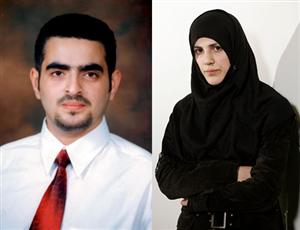
Soft-spoken and composed, but unmistakably angry, the wife of the suicide bomber who killed himself and seven employees of the CIA in Afghanistan on Dec. 30 says flatly, “My husband was anti-American; so am I.” About that, there are no regrets. In an exclusive interview Thursday, Defne Bayrak, 31, spent more than an hour at the offices of Newsweek Türkiye in Istanbul talking about her husband, Dr. Humam Khalil Abu-Mulal al-Balawi; his beliefs; what he may have been offered by the CIA to work as a double agent on the trail of Al Qaeda’s top leadership; and what she heard from those apostles of jihad who ultimately inspired him to kill and die.

Al-Balawi’s case is a study in the radicalization of someone who is well-educated, economically well-off, devout, and disciplined. Such people may not fit into the public’s stereotypical idea of a terrorist, but the profile is increasingly familiar to police and intelligence officers involved with counterterrorism. Many of Al Qaeda’s most successful attacks, from 9/11 to the London transit-system bombings in 2005, were directed and executed by such intelligent, articulate, religious, and suicidally violent men. [continued…]

Editor’s Comment — Reuel Marc Gerecht, a former CIA officer and prominent neoconservative, writes in the Wall Street Journal:

Professionally, one has to admire the skill of suicide bomber Humam Khalil Abu-Mulal al-Balawi’s handlers. This operation could well have been months — if not longer — in the making, and neither the Jordanian intelligence service (GID), which supplied the double agent to the CIA, nor Langley apparently had any serious suspicion that al-Balawi still had the soul and will of a jihadist.

That is an impressive feat. The Hashemite monarchy imprisons lots of Islamic militants, and the GID has the responsibility to interrogate them. The dead Jordanian official, Sharif Ali bin Zeid, reportedly a member of the royal family, may not have been a down-and-dirty case officer with considerable hands-on contact with militants, but al-Balawi surely passed through some kind of intensive screening process with the GID. Yet the GID and the CIA got played, and al Qaeda has revealed that it is capable of running sophisticated clandestine operations with sustained deception.

When asked if she could confirm what other sources had told Newsweek — that Balawi was offered as much as $500,000 by the CIA and $100,000 by the Jordanians to track down al Qaeda’s leadership — Balawi’s wife said only, “It might be true.”

In both these instances — Gerecht’s admiration of al Qaeda’s tradecraft and the likelihood that the CIA believed Balawi could be turned for the right price — the crucial asymmetry between the CIA and its adversary is left unstated: the disparity in the strength of each side’s convictions. On one side are individuals who have transcended their own fear of death, and on the other side individuals whose concerns are unfocused and defuse – a swirl of patriotism, egotism, and ambition.

A former senior CIA officer while explaining what might have drawn so many operatives into Balawi’s trap, told the New York Times: “Everyone would have wanted to be on the team that caught Zawahri. That’s the kind of thing that makes careers.”

Setting aside questions about whose outlook might be more delusional and whether either has a moral footing, the jihadist’s fearlessness and conviction is a force that neither soldier nor spy can truly match.

US drone attacks ‘undermine support for war’: Zardari

Pakistan warned US senators Thursday that American drone attacks against militants on its territory undermined “the national consensus” that supported the war against militancy.

President Asif Ali Zardari made the warning to a US delegation led by former US presidential candidate and Republican Senator John McCain one day after US missile attacks killed at least 13 militants on the Afghan border.

McCain said Thursday in Kabul, the capital of neighbouring Afghanistan, that the use of such drone strikes against suspected Islamist militants in Pakistan was an effective part of US strategy and should continue. [continued…]

Facebooktwittermail