Category Archives: War on Terrorism

NEWS: After Guantanamo, ‘reintegration’ for Saudis

After Guantanamo, ‘reintegration’ for Saudis

For five years, Jumah al-Dossari sat in a tiny cell at the U.S. prison at Guantanamo Bay, Cuba, watched day and night by military captors who considered him one of the most dangerous terrorist suspects on the planet.

In July, he was suddenly released to his native Saudi Arabia, which held a very different view. Dossari was immediately reunited with his family and treated like a VIP. He was given a monthly stipend and a job, housed and fed, even promised help in finding a wife. Today, he is a free man living on the Persian Gulf coast.

The treatment is part of a Saudi “reintegration program” designed to help Dossari, 34, and other former Guantanamo prisoners adjust to modern society and learn the meanings of Islam. About 40 of the more than 100 Guantanamo detainees from Saudi Arabia who have been transferred to Riyadh since last year have been released after participating in the program, and the rest are scheduled to be let go in coming months. [complete article]

Facebooktwittermail

NEWS & OPINION: CIA torture cover-up

The scapegoat

scapegoat.gif
As the story concerning the CIA’s decision to destroy vital evidence of its program of detainee abuse unfolds, the Bush Administration’s posture on the matter is shifting decisively. This is called “damage control.” The Administration’s initial posture was to have CIA Director Hayden put the best face on the situation and argue that everything that was done was perfectly legal and correct.

So now we come to phase two: the fall-back position. In phase two, we learn that the president and other senior figures in the Administration know nothing about it. Instead, this was all a rogue operation by a second tier leadership figure at the CIA. And indeed, by midday yesterday, White House off-the-record explainers were extremely busy pointing fingers at one man, the designated scapegoat. [complete article]

Inquiry begins into tapes’ destruction

The Justice Department and the Central Intelligence Agency’s internal watchdog on Saturday began a joint preliminary inquiry into the spy agency’s destruction of hundreds of hours of videotapes showing interrogations of top operatives of Al Qaeda.

The announcement comes amid new questions about which officials inside the C.I.A. were involved in the decision to destroy the videotapes, which showed severe interrogation methods used on two Qaeda suspects, Abu Zubaydah and Abd al-Rahim al-Nashiri.

The agency operative who ordered the destruction of the tapes in November 2005 was Jose A. Rodriguez Jr., then the chief of the C.I.A.’s national clandestine service, known as the Directorate of Operations until 2005. On Saturday, a government official who had spoken recently with Mr. Rodriguez on the matter said that Mr. Rodriguez told him that he had received approval from lawyers inside the clandestine service to destroy the tapes. [complete article]

Hill briefed on waterboarding in 2002

In September 2002, four members of Congress met in secret for a first look at a unique CIA program designed to wring vital information from reticent terrorism suspects in U.S. custody. For more than an hour, the bipartisan group, which included current House Speaker Nancy Pelosi (D-Calif.), was given a virtual tour of the CIA’s overseas detention sites and the harsh techniques interrogators had devised to try to make their prisoners talk.

Among the techniques described, said two officials present, was waterboarding, a practice that years later would be condemned as torture by Democrats and some Republicans on Capitol Hill. But on that day, no objections were raised. Instead, at least two lawmakers in the room asked the CIA to push harder, two U.S. officials said.

“The briefer was specifically asked if the methods were tough enough,” said a U.S. official who witnessed the exchange. [complete article]

Man held by CIA says he was tortured

The first of the so-called high-value Guantánamo detainees to have seen a lawyer claims he was subjected to “state-sanctioned torture” while in secret C.I.A. prisons, and he has asked for a court order barring the government from destroying evidence of his treatment.

The request, in a filing by his lawyers, was made on Nov. 29, before officials from the Central Intelligence Agency acknowledged that the agency had destroyed videotapes of interrogations of two operatives of Al Qaeda that current and former officials said included the use of harsh techniques.

Lawyers for the detainee, Majid Khan, a former Baltimore resident, released documents in his case on Friday. They claim he “was subjected to an aggressive C.I.A. detention and interrogation program notable for its elaborate planning and ruthless application of torture” to numerous detainees. [complete article]

Facebooktwittermail

NEWS & ANALYSIS: Destroying evidence of war crimes

CIA destroyed 2 tapes showing interrogations

The Central Intelligence Agency in 2005 destroyed at least two videotapes documenting the interrogation of two Qaeda operatives in the agency’s custody, a step it took in the midst of Congressional and legal scrutiny about its secret detention program, according to current and former government officials.

The videotapes showed agency operatives in 2002 subjecting terrorism suspects — including Abu Zubaydah, the first detainee in C.I.A. custody — to severe interrogation techniques. The tapes were destroyed in part because officers were concerned that video showing harsh interrogation methods could expose agency officials to legal risks, several officials said. [complete article]

Obstruction of justice at the CIA

Let’s first focus on this question: Why is this evidence being destroyed? The answer is painfully acknowledged. The CIA leadership and other senior administration officials are fully cognizant of the fact that the use of a number of specific practices which these tapes almost certainly document, to-wit: waterboarding, long-time standing, hypothermia, psychotropic drugs and sleep deprivation in excess of two days, are serious crimes under American law and the law of almost all nations. Consequently, those who have used them and those who have authorized their use will almost certainly ultimately face criminal prosecution at some point in the future. The Administration’s attempts to immunize the perpetrators have failed. Any purported grant of a pardon by President Bush will be legally ineffective, because Bush himself is a collaborator in the scheme. And there is no statute of limitations. Therefore the prospect of prosecution is hardly far-fetched. It is a virtual certainty. So the evidence is being destroyed precisely because it would be used as evidence of criminal acts in a prosecution of administration figures and those acting under their direction. Therefore, this is a conscious, calculated obstruction of justice. [complete article]

See also, CIA destroyed videos showing interrogations (WP), Marty Lederman – includes Hayden’s message to CIA employees (Balkinization), and This is a banana republic (Andrew Sullivan).

Facebooktwittermail

NEWS, OPINION & EDITOR’S COMMENT: America has abandoned the rule of law

Jordan’s spy agency: holding cell for the CIA

Over the past seven years, an imposing building on the outskirts of this city has served as a secret holding cell for the CIA.

The building is the headquarters of the General Intelligence Department, Jordan’s powerful spy and security agency. Since 2000, at the CIA’s behest, at least 12 non-Jordanian terrorism suspects have been detained and interrogated here, according to documents and former prisoners, human rights advocates, defense lawyers and former U.S. officials.
[…]
Bush administration officials have said they do not hand over terrorism suspects to countries that are likely to abuse them. For several years, however, the State Department has cited widespread allegations of torture by Jordan’s security agencies in its annual report cards on human rights.

Independent monitors have become increasingly critical of Jordan’s record. Since 2006, the United Nations, Amnesty International and Human Rights Watch have issued reports on abuses in Jordan, often singling out the General Intelligence Department.

Former prisoners have reported that their captors were expert in two practices in particular: falaqa, or beating suspects on the soles of their feet with a truncheon and then, often, forcing them to walk barefoot and bloodied across a salt-covered floor; and farruj, or the “grilled chicken,” in which prisoners are handcuffed behind their legs, hung upside down by a rod placed behind their knees, and beaten. [complete article]

Editor’s Comment — The White House has a page on its web site devoted to “Tales of Saddam’s Brutality.” There it refers to falaqa as Uday Hussein’s “favourite punishment.”

U.S. says it has right to kidnap British citizens

America has told Britain that it can “kidnap” British citizens if they are wanted for crimes in the United States.

A senior lawyer for the American government has told the Court of Appeal in London that kidnapping foreign citizens is permissible under American law because the US Supreme Court has sanctioned it.

The admission will alarm the British business community after the case of the so-called NatWest Three, bankers who were extradited to America on fraud charges. More than a dozen other British executives, including senior managers at British Airways and BAE Systems, are under investigation by the US authorities and could face criminal charges in America. [complete article]

The torture compromise of 2007

A friend at a dinner party on the East coast found herself in an argument in which she was the only person opposed to torture. The other invitees, all graduates of favored preparatory schools and Ivy League colleges, worked in the law, investment banking, urban planning and the arts. They agreed that President Bush was incompetent and untrustworthy; but his fundamental mistake about torture had been to go after the law. Torture, they said, cannot be a policy, and a law that permits torture cannot be on the books. What is wanted is a leader who will break the law selectively, in a way we can trust. Torture should be allowable, but only by the right people and for the right reason. To a man and woman, the guests who held this view were supporters of Hillary Clinton. [complete article]

The Violent Radicalization and Homegrown Terrorism Prevention Act

There has been a long tradition of fear-mongering legislation in the United States directed against groups and individuals believed to threaten the established order. The first such measures were the Alien and Sedition Acts passed by Congress in 1798 during the administration of the second president of the United States John Adams. The Acts, consisting of four separate laws, made it more difficult to become a citizen, sought to control real or imagined foreign agents operating in the United States, and also gave the government broad powers to control “sedition.” Sedition was defined as “resisting any law of the United States or any act of the President” punishable by a prison sentence of up to two years. It also made illegal “false, scandalous or malicious writing” directed against either the government or government officials. The next President, Thomas Jefferson declared that three out of the four laws were unconstitutional and pardoned everyone who had been convicted under them. [complete article]

Witness names to be withheld from detainee

Defense lawyers preparing for the war crimes trial of a 21-year-old Guantánamo detainee have been ordered by a military judge not to tell their client — or anyone else — the identity of witnesses against him, newly released documents show.

The case of the detainee, Omar Ahmed Khadr, is being closely watched because it may be the first Guantánamo prosecution to go to trial, perhaps as soon as May.

Defense lawyers say military prosecutors have sought similar orders to keep the names of witnesses secret in other military commission cases, which have been a centerpiece of the Bush administration’s policies for detainees at Guantánamo Bay, Cuba.

Some legal experts and defense lawyers said the judge’s order, issued on Oct. 15 without public disclosure, underscored the gap between military commission procedures and traditional American rules that the accused has a right to a public trial and to confront the witnesses against him. [complete article]

Facebooktwittermail

NEWS: Federal judge doesn’t trust government

Moussaoui judge questions government

A federal judge expressed frustration Tuesday that the government provided incorrect information about evidence in the prosecution of Sept. 11 conspirator Zacarias Moussaoui and raised the possibility of ordering a new trial in another high-profile terrorism case.

At a post-trial hearing Tuesday for Ali al-Timimi, a Muslim cleric from Virginia sentenced to life in prison in 2004 for soliciting treason, U.S. District Judge Leonie Brinkema said she can no longer trust the CIA and other government agencies on how they represent classified evidence in terror cases. [complete article]

Facebooktwittermail

NEWS: New threats to civil liberties

Cellphone tracking powers on request

Federal officials are routinely asking courts to order cellphone companies to furnish real-time tracking data so they can pinpoint the whereabouts of drug traffickers, fugitives and other criminal suspects, according to judges and industry lawyers.

In some cases, judges have granted the requests without requiring the government to demonstrate that there is probable cause to believe that a crime is taking place or that the inquiry will yield evidence of a crime. Privacy advocates fear such a practice may expose average Americans to a new level of government scrutiny of their daily lives.

Such requests run counter to the Justice Department’s internal recommendation that federal prosecutors seek warrants based on probable cause to obtain precise location data in private areas. The requests and orders are sealed at the government’s request, so it is difficult to know how often the orders are issued or denied. [complete article]

UK ‘terrorist’ fights science-course ban

A British resident who is under surveillance for suspected terrorist activities is being prohibited from taking secondary-school-level [high school] science courses by the government, Nature has learned.

The man, referred to as A.E., is contesting the decision in court, in what is believed to be the first case of its kind. The preliminary hearing over whether A.E. should be allowed to take AS-level courses in human biology and chemistry took place on 16 November at London’s High Court. The UK Home Office, which has an order restricting A.E.’s actions and affiliations, argues that such coursework could be turned towards terrorism. His solicitors counter that the knowledge is public, and that the furthering of A.E.’s education poses no threat.

At the heart of the case is a simple question: should basic courses in science be treated as potential tools for terror when in the wrong hands? [complete article]

Facebooktwittermail

OPINION: The price of freedom is freedom?

Here come the thought police

With overwhelming bipartisan support, Rep. Jane Harman’s “Violent Radicalization and Homegrown Terrorism Prevention Act” passed the House 404-6 late last month and now rests in Sen. Joe Lieberman’s Homeland Security Committee. Swift Senate passage appears certain.

Not since the “Patriot Act” of 2001 has any bill so threatened our constitutionally guaranteed rights.

The historian Henry Steele Commager, denouncing President John Adams’ suppression of free speech in the 1790s, argued that the Bill of Rights was not written to protect government from dissenters but to provide a legal means for citizens to oppose a government they didn’t trust. Thomas Jefferson’s Declaration of Independence not only proclaimed the right to dissent but declared it a people’s duty, under certain conditions, to alter or abolish their government.

In that vein, diverse groups vigorously oppose Ms. Harman’s effort to stifle dissent. Unfortunately, the mainstream press and leading presidential candidates remain silent. [complete article]

Facebooktwittermail

OPINION & REVIEW: Imaginary imperialism

Too parochial for empire

The immense (but declining) global power of the United States notwithstanding, the conceptual baggage required to engage in truly imperial ambitions has simply not been a part of the Bush administration’s mindset. This remains so despite its assembly-line-style production of countless “national security” reports on a vast range of global security matters — committee-written, unreadable documents marked by a total lack of intellectual coherence or clear direction. These can, if anything, be seen as a collective “cover-up” for the administration’s obvious lack of thought beyond the here-and-now.

To be sure, no imperial plan is ever perfectly framed or implemented (as Theodore Roosevelt himself realized), but the Bush administration’s version of such now appears to have been remarkably without rhyme or reason — on, in fact, an automatic pilot, driven by a self-aggrandizing Pentagon budgetary process and “priorities” strikingly determined by shifting domestic politics (what Congressional district or crony corporation had put in the best, or most influential, bid for a base, military-style activity, or war-production plant). True, our generals remain engaged in the fearsome-sounding “Global War on Terror” by order of the White House — but this has proven a helter-skelter example of global confusion, regularly renamed by an administration clueless about what its “war” really is. [complete article]

American empire, going, going …

Pax-Americana advocates may be eager to invade all kinds of vastly smaller nations, but the last thing they want is to extend U.S. citizenship to Iraqis or Iranians or North Koreans or Venezuelans. Inviting the best students from those countries here to study might have been acceptable in the flush years after World War II, but something tells me that wouldn’t go over big right now.

Instead, our decrepit colossus lumbers around the world feeling unloved, bearing freedom’s cup in one hand and an M16 rifle in the other. But the cup is made of plastic and came free with a BK Double. The American promise of a blend of democracy and capitalism that could make the whole world America-like is hardly taken seriously by anyone anymore, and it’s only Americans, cosseted by a soft ‘n’ squishy mountain of consumer debt and buffeted by wall-to-wall media coverage of Britney’s latest indiscretion, who don’t know it.

Do we seriously believe the world hasn’t noticed that American democracy has been eaten out from within, like a cotton boll infested with weevils, and that American consumer capitalism, cruel as it can be, bears almost no resemblance to the “free markets” inflicted on the developing world? [complete article]

Facebooktwittermail

REVIEW & OPINION: The torture presidency

The man behind the torture

Perhaps the most powerful lawyer in the Bush administration is also the most reclusive. David Addington, who was Vice President Dick Cheney’s counsel from 2001 to 2005, and since then his chief of staff, does not talk to the press. His voice, however, has been enormously influential behind closed doors, where, with Cheney’s backing, he has helped shape the administration’s strategy in the war on terror, and in particular its aggressively expansive conception of executive power. Sometimes called “Cheney’s Cheney,” Addington has twenty years of experience in national security matters—he has been a lawyer for the CIA, the secretary of defense, and two congressional committees concerned with intelligence and foreign affairs. He is a prodigious worker, and by all accounts a brilliant inside political player. Richard Shiffrin, deputy general counsel for intelligence at the Defense Department until 2003, called him “an unopposable force.” Yet most of the American public has never heard him speak.

Addington’s combination of public silence and private power makes him an apt symbol for the Bush administration’s general approach to national security. Many of the administration’s most controversial policies have been adopted in secret, under Addington’s direction, often without much input from other parts of the executive branch, much less other branches of government, and without public accountability. Among the measures we know about are disappearances of detainees into secret CIA prisons, the use of torture to gather evidence, rendition of suspects to countries known for torture, and warrantless wiretapping of Americans. [complete article]

The missing IG report on Maher Arar

Of all the Bush Administration’s many perversions of the justice system, there is something particularly distressing about the case of Maher Arar. A Canadian software engineer, he was changing planes in JFK on his way home to Canada after a Mediterranean vacation when American law enforcement snatched him up. Arar had been fingered as a terrorism suspect by Canadian authorities. Within a brief period of time, he was interrogated, locked-up and then bundled off to Jordan with directions for transshipment to Syria, a nation known to use torture. Indeed, it was plain from the outset that he was shipped to Syria for purposes of being tortured, with a list of questions to be put to him passed along. Never mind that Syria is constantly reviled as a brutal dictatorship by some Bush Administration figures who openly dream of bombing or invading it… the Syrians, it seems, have a redeeming feature—their willingness to torture the occasional Canadian engineer as a gesture of friendship to the Americans. [complete article]

Facebooktwittermail

NEWS & ANALYSIS: Busharraf

Pakistanis growing frustrated with U.S.

Inside call centers and in high school social studies classes, at vegetable markets and in book bazaars, Pakistanis from different walks of life here say that ever since President Pervez Musharraf imposed emergency rule two weeks ago, he’s been the most unpopular figure in the country. But running a close second, many say, is his ally: President Bush.

“We used to love America. Give me Tom Cruise and a vacation in Florida any day,” said Parveen Aslam, 30, who like many Pakistanis has relatives in the United States. “But why isn’t the U.S. standing up for Pakistan when we need it most? Is America even listening to us? We are calling them Busharraf now. They are the same man.”

While many Pakistanis lament that the Bush administration is involved in their country’s politics, they also see the United States as the only force strong enough to do what they say is necessary to temper the crisis: pressure the military-led government to restore the constitution, release thousands of political prisoners and lift restrictions on the news media. [complete article]

Militants gain despite decree by Musharraf

Gen. Pervez Musharraf, the Pakistani president, says he instituted emergency rule for the extra powers it would give him to push back the militants who have carved out a mini-state in Pakistan’s tribal areas.

But in the last several days, the militants have extended their reach, capturing more territory in Pakistan’s settled areas and chasing away frightened policemen, local government officials said.

As inconspicuous as it might be in a nation of 160 million people, the takeover of the small Alpuri district headquarters this week was considered a particular embarrassment for General Musharraf. It showed how the militants could still thumb their noses at the Pakistani Army.

In fact, local officials and Western diplomats said, there is little evidence that the 12-day-old emergency decree has increased the government’s leverage in fighting the militants, or that General Musharraf has used the decree to take any extraordinary steps to combat them. [complete article]

Benazir vs. Musharraf is Punch vs. Judy

Musharraf didn’t declare emergency rule because he feared Bhutto’s challenge; he declared emergency rule because the Supreme Court was about to rule that he was not, in fact, legitimately the president of Pakistan, because he violated the constitution by standing for the presidency while in command of the military. And the reason Bhutto appeared to hesitate when it happened was obvious: She has as much to fear from the independent judiciary in Pakistan as Musharraf does. The same judges threatening to strip Musharraf of the presidency had also warned that the amnesty extended by him to Bhutto — absolving her of numerous corruption charges — was also illegal. (And, for good measure, the same judges had also ruled that Nawaz Sharif’s expulsion was illegal.) The last thing Bhutto needs is the rule of law and an independent judiciary in Pakistan, for that would pull the rug out from her deal with Musharraf, put her back in court, and bring her fiercest political rival back into the picture at a moment when she is increasingly vulnerable, politically, by virtue of her alliance with the U.S.

House arrest, if anything, gives Benazir political cover for avoiding the streets. Better for Bhutto to sit out whatever turmoil will come in the weeks ahead, cultivating an image of martyrdom ahead of the elections that Musharraf promises for January (although a Musharraf promise and a dollar will buy you a cup of chai at Pak Punjab on Houston Street). Remember, Bhutto’s party may be the largest single party in Pakistan, but its ceiling is about 30% of the vote. If the Washington-brokered deal is to work, Musharraf, too, needs Bhutto’s popularity to be boosted.

Proxies always have independent agendas; if they didn’t, well, they wouldn’t be proxies. So, the U.S. struggles to get Musharraf to do its bidding — because he has a far keener sense of the requirements of his own survival in a dangerous part of the world, and also of Pakistan’s strategic interests, than do his U.S. interlocutors. And Musharraf struggles to control the Taliban in the same way. The Taliban, remember, was literally created by Pakistan’s Inter Service Intelligence in the early 1990s, as a proxy force to take charge in Afghanistan and end the chaos there by establishing a monopoly of force in the hands of a Pakistan ally. This was a continuation of the U.S.-Saudi-Pakistan policy in the 1980s of using Pakistan as a sanctuary from which to train and recruit jihadis to fight the Soviets in Afghanistan, and also of Pakistan’s pursuit of its own interest to counter the power in Afghanistan of warlords allied with its key regional rivals, India and Iran — i.e. the forces grouped in the Northern Alliance. [complete article]

Students hand Khan to police

Iran Khan, one of the last remaining independent political voices at liberty in Pakistan, was attacked by hardline Islamic students yesterday and handed over to police.

With the former prime minister Benazir Bhutto under house arrest and thousands of activists and lawyers in prison, the only political force left free in the country is the religious Right. General Pervez Musharraf’s regime has not moved concertedly against the mullahs, who have always been close to the army.

Mr Khan made his first public appearance yesterday since going into hiding when the emergency was declared on 3 November. Police had sealed off all entrances to Punjab University in Lahore, where he had announced that he would address students.

Somehow he made it through the cordon, appearing suddenly just after midday, where hundreds of students had gathered, chanting slogans against the regime. He was immediately hoisted on to people’s shoulders, raising his fist in the air, amid scenes of jubilation.

But events turned nasty very quickly as the “beards” – students belonging to the feared Islami Jamiat Talba – moved in. The crowd was pushed towards a nearby building. Mr Khan was bundled inside and the gates were locked. Some claimed that he was punched repeatedly. The entrance was guarded by Jamiat students. [complete article]

See also, Imran Khan’s kin, party workers arrested (Zee News) and Musharraf swears in caretaker government (AP).

Facebooktwittermail

NEWS, ANALYSIS & OPINION: The road from Washington to Karachi to nuclear anarchy

Are you with us… or against us?

The journey to the martial law just imposed on Pakistan by its self-appointed president, the dictator Pervez Musharraf, began in Washington on September 11, 2001. On that day, it so happened, Pakistan’s intelligence chief, Lt. General Mahmood Ahmed, was in town. He was summoned forthwith to meet with Deputy Secretary of State Richard Armitage, who gave him perhaps the earliest preview of the global Bush doctrine then in its formative stages, telling him, “You are either one hundred percent with us or one hundred percent against us.”

The next day, the administration, dictating to the dictator, presented seven demands that a Pakistan that wished to be “with us” must meet. These concentrated on gaining its cooperation in assailing Afghanistan’s Taliban regime, which had long been nurtured by the Pakistani intelligence services in Afghanistan and had, of course, harbored Osama Bin Laden and his al-Qaeda training camps. Conspicuously missing was any requirement to rein in the activities of Mr. A.Q. Khan, the “father” of Pakistan’s nuclear arms, who, with the knowledge of Washington, had been clandestinely hawking the country’s nuclear-bomb technology around the Middle East and North Asia for some years. [complete article]

U.S. is looking past Musharraf in case he falls

Almost two weeks into Pakistan’s political crisis, Bush administration officials are losing faith that the Pakistani president, Gen. Pervez Musharraf, can survive in office and have begun discussing what might come next, according to senior administration officials.

In meetings on Wednesday, officials at the White House, State Department and the Pentagon huddled to decide what message Deputy Secretary of State John D. Negroponte would deliver to General Musharraf — and perhaps more important, to Pakistan’s generals — when he arrives in Islamabad on Friday.

Administration officials say they still hope that Mr. Negroponte can salvage the fractured arranged marriage between General Musharraf and former Prime Minister Benazir Bhutto. But in Pakistan, foreign diplomats and aides to both leaders said the chances of a deal between the leaders were evaporating 11 days after General Musharraf declared de facto martial law. [complete article]

Musharraf foe is detained in Pakistan

The opposition politician Imran Khan emerged from hiding today to the cheers of hundreds of students at a protest demonstration against Pakistan’s president, Gen. Pervez Musharraf, at a university here and was quickly seized by hard-line students and turned over to the police, witnesses said.

In another development, Benazir Bhutto has started to rally opposition parties into a coordinated movement against General Musharraf, her party spokeswoman, Sherry Rehman, said in an interview today.

Ms. Bhutto, a former prime minister who has been placed under house arrest in Lahore, has contacted the main opposition parties and has received a favorable response, Ms. Rehman said. ”She wants a one-point agenda — the restoration of democracy,” Ms. Rehman said. [complete article]

For Musharraf, quitting army may end support

On any given day during the last eight years, President Pervez Musharraf was most likely to be found not at the ornate presidential compound in the capital, but here in this garrison city: at his desk at army headquarters, clad in familiar camouflage fatigues, greeted everywhere with the crisp salutes and studied deference accorded a four-star general.

Now, a farewell to arms appears inevitable, if not imminent.

Under a timetable he pledged to before he put his country under de facto martial law, the general was supposed to have stepped down as military chief today, before being sworn in for a new presidential term. Despite enormous domestic and international pressure, Musharraf will almost certainly not do so. [complete article]

Facebooktwittermail

NEWS: CIA taped interrogations

CIA admits to recording interrogations of top al Qaida captives

The CIA has three video and audio recordings of interrogations of senior al Qaida captives but misled federal judges about the evidence during the case against terrorist Zacarias Moussaoui, federal prosecutors revealed in a Nov. 9 court filing that was made public Tuesday.

The disclosure is unlikely to undo Moussaoui’s conviction because the agency said the material on the tapes doesn’t pertain to his case.

However, the disclosure that the government taped some interrogations of high-value detainees could invite fresh scrutiny of the CIA’s treatment of so-called “enemy combatants” who were held at secret prisons or U.S. bases overseas.

John Radsan, a former CIA assistant general counsel who teaches at the William Mitchell College of Law in St. Paul, Minn., called the revelation of the tapes “huge” news.

“So far, there has been great mystery about what was actually done to the high-value detainees,” he said. “A videotape is worth a thousand words.” [complete article]

Facebooktwittermail

NEWS: Fight against terrorism threatens “fundamental principles of a democratic society”

Panel decries terrorism blacklist process

The methods used by the United Nations and the European Union for blacklisting terrorism suspects are “totally arbitrary” and “violate the fundamental principles of human rights and rule of law,” a European human rights panel said Monday.

The Council of Europe’s legal committee urged an overhaul of international regulations so that individuals and groups being blacklisted — which imposes a freeze on assets and a ban on traveling — would have access to evidence against them, rights to a fair trial or impartial review within a reasonable time and compensation for wrongful designation as a terrorist. [complete article]

Facebooktwittermail

FEATURE: Power is never relinquished without a struggle

Washington hails Musharraf as an ally in the war on terror, but critics make a case that Pakistani leader is a terrorist

In Pervez Musharraf, the West has got the leader it has unreservedly championed for the last nine years, someone it fears it cannot do without, a weakness that Musharraf has manipulated since he signed up to the war on terror in the days after 9/11. It is an increasingly cantankerous and one-way pact that has enabled the growth in power of the most destabilizing factor behind Pakistan’s implosion – the one Musharraf never referred to: the Pakistan military itself.

Musharraf likes to be seen as a firefighter, and has portrayed himself as a bridgehead between the West and the badlands of Islamic South Asia, where our own spooks and soldiers are rarely able to tread. He has worked hard to finesse his special relationship with Washington, familiarly known inside Pakistan as “Mush and Bush,” and it has paid off with Pakistan receiving billions of dollars in U.S. aid.

Underpinning this deal are Musharraf’s published credentials. He has always given the impression that he and his troops are Western-leaning moderates. However, the real Musharraf is far more complicated, and a good deal of the time we have paid the general to stand by us, he has been cosseting the forces that are bent on undermining the West, as part of a policy of defiance that stretches back two decades.

Musharraf’s career took off in the mid-1980s, when he was dispatched to train fighters aiding the mujahedeen in Afghanistan – all part of a U.S. proxy war to eject the Soviet army that had invaded there in 1979. The conflict brought a secular Pakistan army into close proximity with jihadis, serving to radicalize ordinary soldiers, as well as sharpening their intelligence skills and battle craft.

Musharraf won his first real plaudits in 1988 when he was ordered to cool a political uprising by Pakistani Shiites living in Gilgit, in the north. Using out-of-work mujahedeen fighters, Musharraf’s men killed hundreds, crushing the revolt, and he was rewarded with a job at army headquarters.

Born a Sunni, he had never identified with political Islamism but from then on he understood the power of manipulating faith. By the mid-1990s, as director general of military operations, he was serving Benazir Bhutto, who was in her second term as prime minister. He lobbied her to revive a flagging insurgency that Pakistan had lit in the Indian-administered sector of the divided state of Kashmir in 1989. “He told me he wanted to ‘unleash the forces of fundamentalism’ to ramp up the war,” Bhutto recalled.

Musharraf claimed he could gather as many as 10,000 fighters to send over the border, and he reached out to four extremist Sunni organizations, including one founded in 1987 by three followers of Osama bin Laden. Uncaring or oblivious to the consequences, Musharraf’s Kashmir plan sparked one of the bitterest episodes in Indo-Pakistan relations, giving birth to a vast army of battle-hardened Sunnis who would move on from Kashmir to fight the world over.

In 1996, Musharraf did it again, making contact with the Taliban, then an army of refugees and students. No one could have known in 1996, when the Taliban took control of Kabul, Afghanistan, where it would all lead. But Musharraf could not plead ignorance when he secretly rekindled the alliance long after 9/11. [complete article]

Facebooktwittermail

EDITORIAL: Nuclear risks and nuclear realities

Nuclear risks and nuclear realities

General Musharraf today tossed a bone to his lapdogs in Washington — a promise of elections — and the White House wagged its tail and quickly applauded what it sees as “a good thing” — even while Pakistan’s dictator continued to bludgeon his political opponents. Three Pakistani politicians and a union leader were charged with treason today for making anti-government speeches and now face possible death sentences and in an attempt to thwart a protest rally, 500 members of Benazir Bhutto’s opposition party were arrested.

Having been a steady recipient of US aid — his military receives $100 million monthly in direct cash transfers which Musharraf can use however he pleases — the general is unlikely to be moved by threats that he might not be rewarded with any more F-16s.

Musharraf’s power and the White House’s impotence was further reinforced by the image of Deputy Secretary of State John Negroponte appearing on Capitol Hill in defense of Bush’s “indispensable” ally. “No country has done more in inflicting damage on the Taliban,” Negroponte said, yet in a little noticed development, it seems possible that even while Musharraf was instituting martial law in Pakistan and releasing Taliban prisoners, in Afghanistan Pakistan’s intelligence services might have had a role in the assassination of one of the Taliban’s most serious opponents. “The killing of Sayed Mustafa Kazimi, the 45-year-old Hazara Shi’ite leader from Parwan province of Afghanistan, to the northwest of Kabul, bears all the hallmark of a political assassination,” writes M K Bhadrakumar in Asia Times. He continues:

Evidently, those who plotted his assassination had a grand design. The Taliban lack the political sophistication to work with such foresight and planning. Of course, the Taliban have an old feud with the Hazara Shi’ites dating to the murder of Mazari in March 1995, when the Taliban, already approaching Kabul, entrapped him after inviting him for peace talks. He was tortured and murdered before his body was thrown out of a helicopter somewhere near Ghazni.

Observers of the Afghan scene may have forgotten the incident, but what comes readily to mind is that the suspicion still lingers that Mazari’s murder was the handiwork of Pakistan’s Inter-Services Intelligence (ISI).

The finger of suspicion must once again turn to the ISI over Kazimi’s killing, which raises the issue of what would be gained by removing him from the political landscape.

First, he comes from a region of Afghanistan which is very sensitive. Those who know the Afghan chessboard would acknowledge the supreme importance of controlling the provinces of Baghlan and Parwan. They form the gateway to the northern Amu Darya region, the Panjshir Valley to the east and the central Hazarajat region respectively.

Control of the mountain passes to the west of Baghlan was bitterly contested between the Taliban and the Northern Alliance. The hub was extremely important strategically. In political terms, it is possible to say that without exercising control of the hub, there can be no effective unity between the non-Pashtun ethnic groups of Tajiks and Hazaras (and even the Uzbekis).

Baghlan connects the predominantly Tajik areas with the Hazarajat region and is also on the main communication line between Kabul and Mazar-i-Sharif in the Amu Darya region. Baghlan itself is a mosaic where Pushtuns, Tajiks and Hazaras have traditionally vied for influence and control.

Kazimi hailed from Parwan and did much of his political work in his early years in Baghlan province, where he was quite popular. There is no better way of creating volatility, if not mayhem, in that sensitive region than through a political assassination. The ISI has used targeted political assassinations with devastating effect in Afghanistan many a time at critical junctures on the battlefield.

As everyone knows, Washington can only focus its attention on one thing at a time and with all eyes now on Pakistan, opportunities for reckless maneuvers present themselves elsewhere. Yet there are compelling reasons why Pakistan now looks like the most dangerous country in the world. Washington’s confidence in the security of Pakistan’s nuclear arsenal is largely invested in its confidence in one man: Lt. Gen. Khalid Kidwai, head of the special branch of the military known as the Strategic Plans Division in charge of operations and security. Kidwai represents what one former State Department official describes a the only “safe box within Pakistan’s army.” Irrespective of Kidwai’s close ties to U.S. military officials, the inherent vulnerability of Pakistan’s nuclear weapons has long been understood.

In October 2001, nuclear weapons expert, David Albright wrote:

Several observers have suggested that if Pakistan suffers a coup by forces hostile to the United States, the US military should be ready to provide security over the nuclear weapons (or even to take the weapons out of Pakistan entirely) without the permission of the Pakistani authorities.13 Others have raised the possibility of asking President Musharraf to allow the United States or China to take possession of Pakistan’s nuclear weapons during a coup.

Although such responses appear possible in theory, their implementation could be extremely difficult and dangerous. A U.S. military action to seize or cripple Pakistan’s strategic nuclear assets may encourage India to take similar action, in essence to finish the job. Even if India does nothing, a new Pakistani government may launch any remaining nuclear weapons at U.S. forces or against India.

In addition, removing the nuclear weapons would not be enough. The new government would inherit the facilities to make nuclear weapons. Extensive bombing would thus be required at several nuclear sites, including the relatively large Khushab reactor and New Labs reprocessing plant. These types of attacks risk the release of a large amount of radiation if they are to ensure that the facility is not relatively quickly restored to operation.

No wonder Washington is now in a state of paralysis. The administration’s fears will only be reinforced as critics such as Senator Biden compares Pakistan to Iran when in 1979 it shook off its own US-backed dictator.

As for present-day Iran, President Ahmadinejad’s announcement that Iran has 3,000 working uranium-enriching centrifuges is leading to renewed fears that Israel might respond by bombing the country’s nuclear facilities. In a familiar pattern, this warning was reported in The Times and then echoed around the Israeli press. Israel’s Transportation Minister Shaul Mofaz, who is also a former defense minister and IDF chief of General Staff, told the Conference of Presidents of Major American Jewish organizations in New York, “Iran’s nuclear program is proceeding like an express train. The diplomatic efforts to thwart Iran are like a slow train. If we cannot derail the Iranian train from the tracks, we are on the verge of a nuclear era that will totally alter the regional reality.” Yet the longer the crisis in Pakistan continues, the more widely it will be recognized that, as Ariel Sharon might have put, the nuclear realities on the ground are more significant than those that lie beyond the horizon.

Indeed, as one observer astutely notes:

An Iranian-instigated chemical or biological attack against Israel or the United States has been within the capability of the Iranian regime for at least a decade, and yet they have not launched one. Nor have the Iranians committed 9/11-style terrorist spectaculars against the U.S. homeland despite the relative ease and low cost of such attacks.

All this suggests that Iran understands, and respects, the limits of its aggression. Despite the end times rhetoric issuing forth from its demagogic president, the country has assiduously avoided acts that would invite a massive military retaliation. This is not indicative of a nation longing for a nuclear conflagration.

If Washington is to develop a new way of approaching Iran, the substance of one such means of engagement was outlined in Congress yesterday by Flynt Leverett. Testifying to the House Subcommittee on National Security and Foreign Affairs, Leverett said:

…when one asks Iranian diplomats, academics and officials what is required from the United States to condition a fundamental improvement in U.S.-Iranian relations, these Iranian interlocutors routinely talk about American acceptance of the Islamic Republic and recognition of a legitimate Iranian role in the region—and it is precisely American acceptance of the Islamic Republic and recognition of legitimate Iranian interests that is the core of what I describe as a “security guarantee”.

If in the eyes of President Bush, Pakistan’s military dictator can appear “indispensable,” is Iran’s desire for recognition of its own legitimacy really such a tall order? For this or any future administration to undergo such a shift in its alignments it needs to put aside the prism through which only strategic threats and assets can be seen and recognize that it is dealing with people and with nations. America’s interests can ultimately only be served by respecting the interests of others.

Facebooktwittermail

OPINION & EDITOR’S COMMENT: A tyranical fear of terrorism

Pakistan’s general anarchy

For those who have never had to live under [Musharraf’s] regime, the general/president can come across as a rakish, daredevil figure. His résumé is impressive: here’s a man who can manage the frontline of the Western world’s war on terrorism, get rid of prime ministers at will, force his political opponents into exile and still find the time to write an autobiography. But ask the lawyers, judges, arts teachers and students behind bars about him, and one will find out he is your garden-variety dictator who, after having spent eight years in power, is asking why can’t he continue for another eight.

General Musharraf’s bond with his troops is not just ideological. Under his command Pakistan’s armed forces have become a hugely profitable empire. It’s the nation’s pre-eminent real estate dealer, it dominates the breakfast-cereal market, it runs banks and bakeries. Only last month Pakistan’s Navy, in an audacious move, set up a barbecue business on the banks of the Indus River about 400 miles away from the Arabian Sea it’s supposed to protect.

It’s a happy marriage between God and greed.

For now, the general’s weekend gamble seems to have paid off. From Washington and the European Union he heard regrets but no condemnation with teeth — exactly what he counted on.

General Musharraf has always tried to cultivate an impression in the West that he is the only one holding the country together, that after him we can only expect anarchy. But in a country where arts teachers and lawyers are behind bars and suicide bombers are allowed to go free, we definitely need to redefine anarchy. [complete article]

Editor’s Comment — What Musharraf has done is to expose the lie embedded in the war on terrorism. The terror threat is so large, so ubiquitous, and so diabolical that it is supposedly worse than tyranny. In the 21st century, oppression has become a tolerable part of the landscape. Curious indeed it is that those among Musharraf’s allies who so frequently declare that terrorism is the greatest threat to our freedom, appear so blithely indifferent when they witness freedom being taken away. If they show some discomfort it is because they know that their own hypocrisy is now on full display.

In the heart of Pakistan, a deep sense of anxiety

Three days after President Pervez Musharraf declared emergency rule, a deep sense of anxiety prevails among Pakistan’s students, rights activists and intellectuals, who say the mass arrests being carried out by the government mark an unprecedented assault on civil society.

When Musharraf suspended the constitution Saturday, he said he had been forced to act by rising extremism and judicial interference in his efforts to protect the country. But in Lahore, an ancient city that has long served as the cultural and intellectual heart of Pakistan, many government critics see a smoke screen being used to quash opposition.

Over the weekend, they note, an estimated 70 community leaders were arrested here during a cookies-and-tea meeting of the Human Rights Commission of Pakistan. Those detained included a college dean, a well-known poet, an economics professor and a board member of the International Crisis Group. [complete article]

See also In Pakistan, echoes of Iran (David Ignatius).

Facebooktwittermail

EDITORIAL: The real world of torture

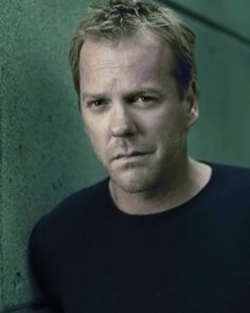
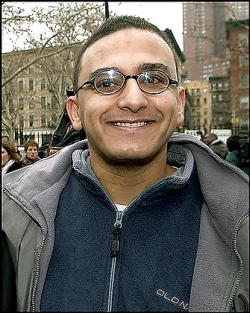
Jack Bauer vs. Abdallah Higazy — Fiction vs. Reality

jackbauer.jpgabdallah-higazy.jpg

According to a new CNN poll, 69 percent of Americans believe that waterboarding is a form of torture. Even so, a staggering 40 percent of Americans polled believe that the US government should be allowed to use this form of torture to get information from suspected terrorists.

Commentators on this issue have expressed moral outrage — “waterboarding is killing America’s soul,” proclaims the Philadelphia Daily News‘ “Attytood.” Some see this as an afront to American pride — Keith Olbermann challenges President Bush by saying, “[We don’t condone torture] because we’re Americans, sir, and we’re better than that. We’re better than you.” While there are those who express indifference — the Wall Street Journal regards this as “mostly a political sideshow.”

Yet for those 40 percent of Americans who favor the use of torture, their view has in all likelihood been clearly expressed by Democratic Senator, Charles Schumer, who in a 2004 Senate hearing said:

I think there are probably very few people in this room or in America who would say that torture should never ever be used, particularly if thousands of lives are at stake. . . . It is easy to sit back in the armchair and say that torture can never be used, but when you are in the foxhole it is a very different deal. And I respect, I think we all respect the fact that the President is in the foxhole every day.

This then is how the issue is being framed: on one side are those who see themselves adopting the moral high ground — though their critics perceive them as being holier-than-thou, starry-eyed idealists; and on the other side are those who believe in the necessity of making tough choices in extreme circumstances — though their opponents see them as having lost their moral bearings.

At the center of this debate is an argument of perceived necessity. And the narrative that animates this argument, borrowed from Israel and used there in an earlier debate on the legitimacy of torture, is the “ticking bomb” scenario.

The scenario itself is fanciful. We are all familiar with the suspense movie in which the reality of what is feared is confirmed by making the audience privilege to the whereabouts of a bomb and the time left before it will explode. In post-9/11 America the impact of such dramas has been heightened by the likes of Fox TV’s fictional counter-terrorism agent, Jack Bauer. Let’s face it, for a population that forms most of its understanding of the world through television, such imagery has a visceral impact. But in Israel itself, where the danger of terrorism is more tangible and ubiquitous, the ticking bomb scenario is itself no less a product of fiction and has served no less as a political tool. As Stephen Langfur wrote in 1996:

Israel wants to present itself as an enlightened democracy on the Western model, but it has locked itself into the role of Occupier, with the result that toward part of the population under its control it must behave like a police-state. The “ticking bomb scenario” offers an exceptional, border-line situation, in which everyone can understand that even an enlightened democracy might have to use torture. What Israel does, therefore, is to extend the fantasy of the bomb in the crowded building to include analogous situations—even remotely analogous. Israel can then allow its security apparatus to approach interrogations as if they were all “ticking bombs.” Thus it can keep wearing the mask of an enlightened democracy, while functioning like a police-state. The “ticking bomb scenario,” for which torture is useless, “koshers” other situations where torture can be useful.

Indeed, Langfur points out that Israeli General Security Service officials used the ticking bomb argument to intimidate judges. After all, who would be willing to curtail an interrogation and thereafter be accused of having failed to prevent carnage? Yet in practice, so-called ticking bombs turned out to be prisoners who had been held in detention for weeks — plenty of time for plots to be revised and for the seeming inevitability of any attack to evaporate.

If an interrogation method’s “necessity” was to be based on the magnitude of a risk averted, then any technique applied to bring about the desired result would surely be justifiable. On what basis could one say that it was acceptable to use waterboarding to make the prisoner fear that he was about to drown, yet bleach could not be poured in his eyes, if in both cases the justification for the brutality was the necessity of saving innocent Israeli or American lives? If brutality can be graded on a scale, then on what basis can we say that in one instance the end justify the means while in another it does not, when necessity is determined by the end and not the means?

The issue here cannot be addressed or resolved by considering fictional scenarios. Instead we need to focus on reality and fortunately there is already one case that provides the perfect litmus test: the case of Abdallah Higazy.

On December 17, 2001, Higazy was detained and questioned by the FBI and then held as a material witness, suspected of being an accomplice in the 9/11 attacks on the World Trade Center in New York. He had been staying in a nearby hotel and was thought to have been in possession of an air-band transceiver capable of air-to-air and air-to-ground communication that could have been used as a beacon to direct the hijacked aircraft into their targets, the Twin Towers. As a terrorist suspect Higazy was as hot as they get.

Under interrogation he kept on changing his story. He had to be lying. FBI agents said they gave Higazy a “polygraph” yet the United States Court of Appeals opinion [PDF] quotes the suspect as saying that the test produced “intense pain.” The court opinion states that “Higazy asked whether anybody else had ever suffered physical pain during the polygraph, to which [FBI Special Agent Michael] Templeton replied: “[i]t never happened to anyone who told the truth.” Was Higazy being given a polygraph or was he being electrocuted?

The court opinion continues:

Higazy alleges that during the polygraph, Templeton told him that he should cooperate, and explained that if Higazy did not cooperate, the FBI would make his brother “live in scrutiny” and would “make sure that Egyptian security gives [his] family hell.” Templeton later admitted that he knew how the Egyptian security forces operated: “that they had a security service, that their laws are different than ours, that they are probably allowed to do things in that country where they don’t advise people of their rights, they don’t – yeah, probably about torture, sure.”

If so-called harsh interrogation methods can be justified, Abdallah Higazy was surely the perfect candidate to be given the third degree. He was suspected of having played an instrumental role in the worst terrorist attack the world has ever seen. This must have been — as Vice President Cheney would say — a no-brainer. Or not?

Anyone familiar with the name, Abdallah Higazy, will of course know that he was completely innocent. The FBI quickly realized as much when a few weeks after Higazy’s detention an airline pilot showed up looking for the radio transceiver he had left behind when he had been evacuated from his hotel on September 11.

When FBI Special Agent Templeton was interrogating his suspect, were Cheney’s words from September 16, 2001, still fresh in his mind?

We also have to work, though, sort of the dark side, if you will. We’ve got to spend time in the shadows in the intelligence world. A lot of what needs to be done here will have to be done quietly, without any discussion, using sources and methods that are available to our intelligence agencies, if we’re going to be successful. That’s the world these folks operate in, and so it’s going to be vital for us to use any means at our disposal, basically, to achieve our objective.

Templeton certainly went to the dark side, but the terrorist he was after wasn’t there. The question that needs to be addressed now and that needs to be the concern of the next attorney general is not what methods of interrogation can be applied in a ticking bomb scenario; it is this: how should the law have protected Abdallah Higazy?

Interrogation is a means of inquiry, not a method of punishment. In the war on terrorism, the presumption of innocence should not be treated as a legal luxury — it is a recognition that suspects are not always (contrary to what the administration would have us believe) the worst of the worst, but on the contrary that with unfortunate frequency they have included the innocent.

Forget about ticking time bombs and remember Abdallah Higazy. After all, those who now want to justify torture do so in the name of protecting the innocent.

Facebooktwittermail

OPINION: Rethinking the war on terror

Rethinking the war on terror

In the last four years a great number of works have appeared which attempt to come to grips with the Bush Administration’s war on terror. Many of them are polemical, and few seem to me to be of lasting value. However, David Cole and Jules Lobel have crafted in Less Safe, Less Free one of the most important critiques to be put forward so far from the civil libertarians. They offer unsparing criticism, muster their arguments with skill and artistry, and most importantly they offer constructive criticism of the current Bush Administration model. On January 20, 2009, a new president will occupy the White House. The electoral process for Bush’s successor has already begun—the earliest such election contest in history—and polls show that Americans are uncharacteristically engaged and eager to see a turnover.

The key issue in this process will certainly be the war on terror and the paradigms that drive it. But it is distressing that this debate can only occur in the context of the election cycle. The most depressing fact about the Bush Administration is not the abject failure of its counter-terrorism policies; it is the Administration’s refusal to recognize the areas where those policies have fallen short and take some steps to correct them. Unlike any of its predecessors, this Administration has withdrawn from a public discussion of its own policies. [complete article]

Facebooktwittermail