Category Archives: Iran

Saudi execution: Call for West to condemn killing of Shia cleric

Martin Chulov reports: Shia Islamic leaders on Sunday stepped up their condemnation of the Saudi execution of the prominent Shia cleric Sheikh Nimr al-Nimr, urging a robust response from Riyadh’s western backers, who are yet to fully address the issue.

David Gauke, financial secretary to the Treasury, became the most senior UK figure to react to the execution, which has led to clashes in Tehran, and prompted widespread denunciation elsewhere. He said al-Nimr’s death was a “worrying development”. The US State Department had said earlier that the move risked “exacerbating sectarian tensions at a time when they urgently need to be reduced”.

Anger remained palpable on the streets of the Lebanese capital, and in Bahrain and Baghdad, hours after the Saudi embassy in Tehran was torched by protesters angered by the execution of a senior cleric who had been championed by Iranian leaders.

However, in what appeared to be a move to calm tensions, the Iranian president, Hassan Rouhani, said the attack on the embassy was unjustifiable, and urged that the perpetrators be dealt with.

“I have no doubt that the Saudi government has damaged its image, more than before, among the countries in the world – in particular (among) Islamic countries – by this un-Islamic act,” Rouhani said.

Taking a cautionary tone, he added: “We will not allow rogue elements” to use the incident and “carry out illegal actions that damage the dignity of the Islamic republic establishment”.

“I call on the interior minister to identify the perpetrators of this attack with firm determination and introduce them to the judiciary … so that there will be an end to such appalling actions once and for all.”

Iran’s supreme leader, Ayatollah Ali Khamenei, called on Saudi Arabia’s western backers to directly condemn the execution, which came three years after al-Nimr was arrested following his vocal support for anti-government protests in Bahrain and Riyadh.

“This oppressed cleric did not encourage people to join an armed movement, nor did he engage in secret plotting, and he only voiced public criticism … based on religious fervour,” said Khamenei, who criticised “the silence of the supposed backers of freedom, democracy and human rights” over the execution. [Continue reading…]

The New York Times reports: Sheikh Nimr, said to be in his mid-50s, was from Awamiyah, a poor town surrounded by palm groves in eastern Saudi Arabia and known for opposition to the monarchy.

He studied in Iran and Syria, but rose to prominence for fiery sermons after his return in which he criticized the ruling family and called for Shiite empowerment, even suggesting that Shiites could secede from the kingdom.

This gained him a following mostly among young Shiites who felt discriminated against by Persian Gulf governments. When these young people joined Arab Spring protests in Bahrain and eastern Saudi Arabia in 2011, Sheikh Nimr became a leading figure.

During a sermon in 2012, Sheikh Nimr mocked Prince Nayef bin Abdulaziz, who had been the Saudi interior minister and had recently died.

“He will be eaten by worms and suffer the torments of hell in the grave,” Sheikh Nimr said. “The man who made us live in fear and terror; shouldn’t we rejoice at his death?”

Prince Nayef’s son, Mohammed bin Nayef, is now the crown prince and runs the Interior Ministry, which carries out death sentences. [Continue reading…]

Facebooktwittermail

Saudi execution of Shia cleric poses a direct challenge to Iran

Simon Tisdall writes: The consequences of Saudi Arabia’s mass execution of 47 people will be felt far beyond its Eastern Province, which was home to Nimr al-Nimr, the leading Shia Muslim cleric who was the most prominent figure among those to die.

Unlike many of the Sunni Muslims executed for alleged complicity in al-Qaida terrorism, Nimr was an advocate of non-violent resistance to the unelected Saudi regime. He was arrested in 2012 for criticising the royal family.

His plight reflected the trials and tribulations of Saudi Arabia’s Shia minority, which accounts for 15% of the country’s 29 million people and has suffered, historically, from institutionalised discrimination and periodic security crackdowns.

The al-Qatif governorate of Eastern Province, bordering the Gulf, has been the setting for anti-regime agitation since at least 1979, when Saudi Shias demonstrated in support of Ayatollah Ruhollah Khomeini, whose Islamic revolution in Iran that year toppled the shah. Trouble erupted again in 2011-13, triggered by the Arab Spring uprising of the Shia majority in nearby Bahrain and its subsequent brutal, Saudi-assisted suppression. [Continue reading…]

Mark Townsend adds: In October 2014, Saudi Arabia’s specialised criminal court sentenced Nimr to death for seeking ‘foreign meddling’ in the kingdom along with ‘disobeying’ its rulers and taking up arms against the security forces”. His brother, Mohammad al-Nimr, tweeted information about the death sentence and was promptly arrested on the same day.

As news of the sentence travelled, the head of Iran’s armed forces warned Saudi Arabia that it would “pay dearly” if it dared execute the cleric. Powerful and prominent in life, it is the nature of Nimr’s death that could shape his legacy. [Continue reading…]

Facebooktwittermail

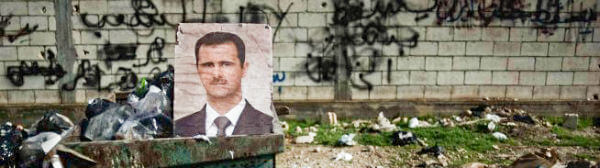
Iran’s plan for Syria without Assad

assad-dumped

Joyce Karam writes: On February 25, 1987, late Syrian President Hafez al-Assad sent his troops to the Fathallah barracks in West Beirut, where they killed twenty-seven members of Hezbollah in a move designed to show Syria’s upper hand over Iran in Lebanon. Almost three decades later, this modus operandi is completely reversed under Assad the son, as Syria sinks into a war of attrition and Tehran gains the upper hand in Damascus.

For Iran, Bashar al-Assad has been a valuable ally but not an indispensable one. His coming to power in 2000, followed by the Iraq war in 2003 and Syria’s withdrawal from Lebanon in 2005, freed Iran’s hand in the Levant. Hezbollah under Bashar al-Assad has received weaponry and political backing unthinkable in his father’s time, including long-range Scud missiles and a 2010 Damascus visit by the party’s chief Hassan Nasrallah. But while Tehran has worked since the beginning of the Syrian war in 2011 to prolong Assad’s hold on power, it has also planned from the very early stages of the conflict for the day after, should its ally fall or should the regime lose Damascus.

Even as Iran sits at the negotiating table in Vienna, its strategy overlooks the political debate and the successive failed processes. It is instead rooted in creating new realities and proxies on the ground in Syria, looking beyond Assad and preserving its core interests. These interests are defined today by three goals: (1) Ensuring arms shipments continue to Hezbollah; (2) Gaining a strategic foothold in Levant and against Israel; (3) Preventing a stable government opposed to Iran from fully ruling over Syria. [Continue reading…]

Facebooktwittermail

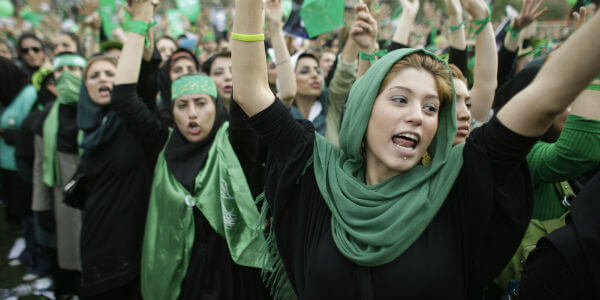
Will Green Movement haunt Iran’s upcoming elections?

green-movement

Arash Karami reports: The registration process for the February 2016 parliamentary and Assembly of Experts elections has come to end with a record number of candidates: Nearly 12,000 individuals registered to compete for a seat in the 290-member parliament. It will be the job of the conservative Guardian Council to determine which candidates pass through their filters and ultimately will be allowed to run. While the council is not obligated to specify publicly why the candidates are qualified or disqualified, it seems the 2009 presidential elections will be a central factor in their decision-making process.

Guardian Council spokesman Nejatollah Ebrahimian told Tasnim News Agency on Dec. 27 that the council will review all the comments and actions of the candidates during 2009 postelection protests. He said that the behavior of the candidates should not have been such that it could be construed that they participated in the illegal activities during 2009, adding they should have “clear and specific lines drawn with the sedition of 2009.”

The contested 2009 presidential elections, which hard-liners refer to as the “2009 sedition,” was a turning point in Iranian elections. The incumbent, controversial hard-liner Mahmoud Ahmadinejad, was announced the victor. The Reformist candidates, Mir Hossein Mousavi and Mehdi Karroubi, challenged the results and encouraged their supporters to hold street protests — the largest since the 1979 Islamic Revolution. Despite hundreds of arrests, dozens of deaths and the house arrest of the so-called Green Movement leaders, Iranian officials responsible for the crackdown continue to raise the issue of the 2009 elections as a sort of dividing line between those who should be allowed to be part of the political process and those who should not. [Continue reading…]

Facebooktwittermail

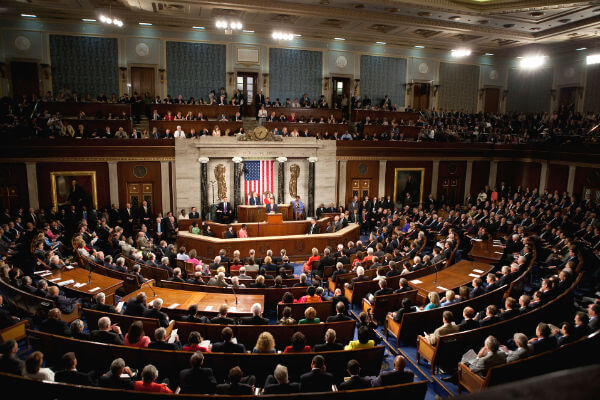
Is U.S. Congress empowering Iranian hard-liners?

congress

Mahmoud Pargoo writes: [In 2013] Hassan Rouhani, who sternly criticized Ahmadinejad’s nuclear policies, won the election and appointed Mohammad Javad Zarif as foreign minister. Consequently, and as a result of the softening of the rhetoric and engagement in talks with the United States, the Joint Comprehensive Plan of Action (JCPOA) was signed between Iran and six world powers in July. The agreement was seen as evidence that if Iran engages in serious talks with the United States, issues can be gradually solved. Even Supreme Leader Ayatollah Ali Khamenei pointed to the likelihood of extending negotiations to other non-nuclear issues if the United States proves to be trustworthy.

This line of thinking, however, is changing with the recent series of US measures — including the recent congressional vote to restrict visa-free travel to the United States for those who have visited Iran in the past five years. Indeed, many in Iran are coming to the conclusion that no matter what rhetoric or action the Islamic Republic may assume, the United States will continue its enmity with Iran. Thus, a new consensus is being formed — but this time, against the United States. People from almost all political orientations have interpreted the new Visa Waiver Program (VWP) changes as running counter to the JCPOA. Ali Larijani, the parliament speaker and a powerful conservative supporter of the nuclear negotiations, has criticized the law, while many Reformist politicians have also condemned it as being against Iranian goodwill in engaging with the United States. Zarif, the foreign minister and chief nuclear negotiator, has additionally said that the new law breaches the JCPOA.

When seen in the light of historical parallels, the recent developments could be an alarming sign that certain elements in the US foreign policy establishment are seeking to paralyze any effort to normalize relations with Iran. [Continue reading…]

Facebooktwittermail

Iran vows to respond to any new U.S. sanctions

The Wall Street Journal reports: Iranian President Hassan Rouhani ordered his defense minister to expedite Iran’s ballistic-missile program following newly planned U.S. sanctions, he said Thursday, casting fresh doubt on the implementation of a landmark nuclear accord reached in July.

Mr. Rouhani made the announcement on his official Twitter account, without elaborating on what steps he had ordered Defense Minister Hossein Dehghan to take.

“If [the] U.S. continues its illegitimate interference [with] Iran’s right to defend itself a new program will be devised to enhance missile capabilities,” Mr. Rouhani tweeted.

“We have never negotiated regarding our defense capabilities, including our missile program & will not accept any restrictions in this regard,” he said.

An Iranian Foreign Ministry spokesman said earlier Thursday that Iran considered any new U.S. sanctions on its ballistic-missile program illegal and would respond accordingly.

“Such actions are unilateral, arbitrary and illegal and the Islamic Republic of Iran has warned the U.S. in this respect,” said spokesman Hossein Jaber Ansari, according to the official Islamic Republic News Agency.

The Obama administration is planning new sanctions on Iran, targeting almost a dozen companies and individuals in Iran, Hong Kong and the United Arab Emirates, U.S. officials told The Wall Street Journal on Wednesday. The planned action by the Treasury Department is targeted at businesses and individuals for their alleged role in developing Iran’s ballistic-missile program and would represent the first new sanctions on Iran since six world powers, including the U.S., reached the nuclear deal with Tehran. [Continue reading…]

Facebooktwittermail

What would Clausewitz recommend we do about ISIS?

destruction11

Mark Perry recently posed this theoretical question to a number of military strategists and found a broad consensus: Oddly, those most familiar with Clausewitz’s thinking issue nearly identical responses to this question. “Clausewitz would start by asking us what it is that we want to accomplish,” the Rand Corporation’s David Johnson, a retired U.S. Army Colonel says. Johnson, who has read On War “from cover to cover numerous times” notes that, for Clausewitz, finding answers to fundamental questions is the key to shaping a military strategy. “You have to understand the war you’re in, and I would bet that, with ISIS, Clausewitz would say that we haven’t done that. We’re too enthralled with trying to figure out who ISIS is  — instead of focusing on what they do. In truth, I don’t think it’s much of a mystery. If you go to Istanbul and look south the Caliphate is right there. You can point to it. It’s a state that views us as an enemy. What’s the mystery?”

[Historian and Clausewitz scholar Christopher] Bassford agrees. “I think the first thing ‘Chuck’ Clausewitz would do is wonder why the U.S. government, and the West in general, is reluctant to acknowledge ISIS as a ‘state,’” he wrote to me in an email. “ISIS controls territory, has a capital city in Raqaa, and for the most part practices a fundamentally conventional, though particularly vicious, kind of warfare. It uses terrorism, but it’s not just a terrorist group. And I also think Clausewitz would wonder why the French say they’re surprised to find themselves ‘at war’ after the Paris attack. They have been bombing ISIS for months.” While Clausewitz’s ideas are not restricted to state-on-state warfare, Bassford argues that we should accept that, for practical purposes, ISIS is a state. Indeed, in a strategy he calls “Let-the-Wookiee-Win,” we should do what we can to make ISIS more state-like. “After all, we know how to destroy states  —  we’re very good at it,” he argues.

One of the things that [U.S. Naval War College professor Donald] Stoker, Bassford, Johnson and many in the military find compelling about Clausewitz is that he views war as a subject that can be studied, understood and that, like engineering (say) or architecture, or any other discipline, improved on. It is possible to get good at killing, and if you’re better at it than your enemy  — if you break your enemy’s will to resist (as he would say)  —  you’ll win. On War provides a slew of these undiluted but axiomatic understandings. Though Clausewitz was a civilized man who recognized war’s horrors, he issued these axioms with a stern warning: “Kind-hearted people might think there was some ingenious way to disarm or defeat an enemy without too much bloodshed,” he writes, “and might imagine this is the true goal of the art of war. Pleasant as it sounds, it is a fallacy that must be exposed: war is such a most dangerous business that the mistakes which come from kindness are the very worst . . . This is how the matter must be seen. It would be futile  —  even wrong  —  to try and shut one’s eyes to what war really is from sheer distress at its brutality.”

It is this unblinking ability to call war what it is that has given Clausewitz such a dedicated following that large numbers of military officers have worked to grasp his thinking, and vocabulary. “Clausewitz says that the purpose of war is to achieve a particular political end,” Stoker says. “He argues that the best route to doing this is to attack the enemy’s center of gravity, the center of his strength. That might seem obvious now, but many of the most important parts of our current military thinking were first identified by him.”

Of course much of what Clausewitz tapped into in On War was a reflection of what professional soldiers already knew, and know. Thus, Union General William Tecumseh Sherman issued his famously Clausewitzian statement on war without, apparently, ever having read him. “War is cruelty. There is no use trying to reform it,” he said. “The crueler it is, the sooner it will be over.” Sherman’s unflinching calculus (that true humanity consists in waging war unrelentingly, so as to end it sooner) is, in many ways, a perfect distillation of the U.S. military’s traditional mistrust of the narrative propounded by counterinsurgency advocates that the “center of gravity in a counterinsurgency is the protection of the population that hosts it.” That might have been true in western Iraq, but few would argue that it’s the case with ISIS  —  particularly after the attacks in Paris. “The Germans and Japanese were held in a vice grip by their leaders in World War Two,” Christopher Bassford says, “but that didn’t stop us from burning down their cities. If it’s safer to be with ISIS than against it, ISIS will retain its hold on the population it now controls.”

In fact, Bassford’s views reflect a growing consensus inside the U.S. military’s upper echelons that a cruel war against ISIS now, no matter how distasteful, will save the lives of many decent people  —  including many Americans  — later. [Continue reading…]

“I think in Syria the primary focus now must be destroying ISIS,” says Bernie Sanders.

Donald Trump promises that if he becomes president, he will “bomb the hell out of ISIS.”

There’s no shortage of tough talk among those who want to become commander-in-chief.

But how would these words be translated into action when it comes to the major population centers under ISIS’s control?

Does destroying ISIS in Mosul, for instance, mean destroying a city in which more than a million Iraqi civilians still live?

Clearly, if the remedy for dealing with ISIS ends up being more destructive than ISIS itself, it is no remedy at all.

Moreover, as much as it is true that ISIS needs to be recognized as a state, it is also more than a state. It has a physical base in the territory under its control, but its ideological base is globally dispersed.

For ISIS followers, already convinced that the world stands in violent opposition to Islam, the destruction of their embryonic state is less likely to represent defeat than have the opposite effect by empowering a death-defying passion for revenge.

The flaws in what is physically manifest can easily be forgotten if through its destruction, ISIS as a state is then reinvigorated as an inspiring legend.

Bombs can destroy buildings and kill people, but they don’t destroy ideas.

As American presidential candidates currently vie with each other in a contest over who can make the most compelling expression of their desire to crush ISIS, they are, as much as anything else, articulating a view of America’s rightful dominance in the world. In the eyes of ISIS fighters and their supporters, they themselves are thus made the underdog in a contest between right and might.

In reality, it is ISIS which is the oppressive force which must be toppled from below rather than above.

ISIS can only be destroyed by those who will directly benefit from its elimination.

If liberation from ISIS only brings renewed subjugation from Damascus and Baghdad, then those who might take up this fight are being told what they must fight against without being offered any real reward.

Clausewitz’s answer to the question, what do we do about ISIS?, might be less blunt than the military analysts are assuming. Indeed, he may well have said it’s the wrong question.

Without changing the basic conditions that facilitated ISIS’s emergence, it’s destruction is likely to be impossible.

ISIS is the beneficiary of the status quo which is sustained above all by the Assad regime, Iran, Hezbollah, and Russia — a coalition of armies, air forces, and militias that in spite of their declared opposition to ISIS, have actually done little to inhibit its growth.

Facebooktwittermail

Who killed Hezbollah’s Samir Qantar?

According to Hezbollah’s Al-Manar, Samir Qantar, a Lebanese commander who had become a high-profile figure in the group, was killed by an Israeli airstrike in Damascus on Saturday.

Israeli officials welcomed the news but did not confirm responsibility for the attack.

While Hezbollah had no hesitation in accusing Israel, as Raed Omari notes, Syrian officials have been more circumspect:

Remarkably enough, the Syrian account of the incident resembled to a greater degree that of Israel – no confirmation and no refuting.

‏But the Syrian statements on Qantar’s killing were worded with a heavy Russian military presence in the background and they were inseparable from new political developments on Syria and the new international coalitions in the making.

It can’t be that the Israelis launched an airstrike on Syria now without coordination with their Russian allies who now control Syria’s airspace. And if the Syrians confirmed that Israeli jets killed Qantar, then they would appear as either having prior knowledge of the plan or have no sovereignty over their country.

Who actually killed the 54-year-old Qantar? In my opinion, Israel is a likely perpetrator but the question is how its jets flew over Syria now without being spotted by the Russian satellites and space power. The Russian silence on the incident is also worth-noting.

Meanwhile, a Syrian rebel group has released a statement claiming that they were responsible for Qantar’s death.

The New York Times quotes a Druze militia group that said the building which was targeted had been hit by “four long-range missiles.”

An Israeli columnist quotes “Western sources” claiming that Qantar was a “ticking bomb.”

The sources said Kuntar had recently not been working on behalf of Hezbollah, but rather acting with increasing independence alongside pro-Assad militias in Syria.

The attack in Damascus comes at a moment when, according to Israeli sources, “Iran has withdrawn most of the Revolutionary Guards fighters it deployed to Syria three months ago.”

Assuming that this was indeed an Israeli airstrike, it appears to have not only been aimed at an individual, but also intended to send some additional messages: that Israel is not unduly constrained by Russia’s air operations in Syria and that the Hezbollah fighters propping up the Assad regime are more expendable than their Iranian counterparts.

Creede Newton writes:

Regardless of who fired the missile, Sayed Hassan Nasrallah, the secretary-general of Hezbollah, has already made his decision: this was Israel. Now, the question is, how will Nasrallah respond to another high-level assassination?

Some think Hezbollah’s falling popularity with the Sunni majority in the Middle East due to its meddling in the Syrian conflict could use a boost, and a conflict with Israel would help.

Others say Hezbollah is stretched, and a war with the powerful Israeli military is the last thing the Shia group needs.

Nicholas Blanford writes:

The current situation mirrors the immediate aftermath of an Israeli pilotless drone strike on 18 January in the Golan that killed Jihad Mughniyeh — son of former Hezbollah military commander Imad Mughniyeh — an Iranian general and five other Hezbollah fighters. Hezbollah struck back 10 days later with an anti-tank missile ambush against an Israeli army convoy at the foot of the Shebaa Farms hills, killing an officer and a soldier.

Following the ambush, Hezbollah Secretary General Hassan Nasrallah said in a speech that the rules of engagement that had defined the tit-for-tat conflict between Hezbollah and Israel were over.

“From now on, if any Hezbollah resistance cadre or youth is killed in a treacherous manner, we will hold Israel responsible and it will then be our right to respond at any place and at any time and in the manner we deem appropriate,” he said.

Nasrallah is due to speak Monday night and will probably reaffirm that commitment, which will ensure a state of tension along Israel’s northern border in the coming days.

The concept of reciprocity is a cornerstone of Hezbollah’s defense strategy against Israel, which may offer a clue as to the party’s response to Kuntar’s assassination. In the years following the 2006 War, Nasrallah has articulated on several occasions Hezbollah’s strategy of retaliating in kind for Israeli actions against Lebanon in a future conflict — if Israel bombs Beirut, Hezbollah bombs Tel Aviv; if Israel blockades Lebanese ports, Hezbollah will blockade Israeli ports with its long-range anti-ship missiles; if Israel invades Lebanon, Hezbollah will invade Galilee.

Even on a tactical level, Hezbollah has sought to achieve reciprocity against Israel. In October 2014, Hezbollah mounted a roadside bomb ambush in the Shebaa Farms that wounded two Israeli soldiers in response to the death a month earlier of a party military technician who died when a booby-trapped Israeli wire-tapping device exploded.

The January anti-tank missile attack against the Israeli convoy in the Shebaa Farms also sought to echo Israel’s deadly drone missile strike in the Golan 10 days earlier.

“They killed us in broad daylight, we killed them in broad daylight… They hit two of our vehicles, we hit two of their vehicles,” Nasrallah said at the time.

Facebooktwittermail

Ex-ambassador: Syria negotiations going to go ‘nowhere’

The Hill reports: A respected former career diplomat who served under the Obama administration doubts the U.S. can achieve a political resolution of the war in Syria without taking more dramatic measures — particularly imposing no-fly zones.

Retired Amb. Ryan Crocker, who President Obama picked as ambassador to Afghanistan in 2011, predicts the negotiations will go “nowhere” as long as Syrian President Bashar Assad, who is backed by Russia, believes he will prevail in the five-year civil war.

“I have the highest regard for Secretary Kerry, but this effort at a political negotiation is going to go nowhere because the Russians, the Iranians and Bashar Al-Assad think they’re on a roll — why should they negotiate?” Crocker said earlier this week at a breakfast in Washington.
The Obama administration has long insisted that Assad must leave in order for there to be peace in Syria, but the president seemed to soften his tone Friday during his last press conference of the year.

In contrast to his 2011 declaration that “Assad must go,” the president said Friday that “I think that Assad is going to have to leave.” [Continue reading…]

Facebooktwittermail

Optimism on Syria is misplaced. Here’s why

Assad-3

Hassan Hassan writes: One of the common sentences repeatedly said by Syrians from the two main warring sides is that the solution to the conflict is attainable when the “big guys” decide to end it. Those big guys – at the UN Security Council – passed a unanimous decision on Friday calling for peace negotiations and a ceasefire to steer the country towards a political settlement.

“This council is sending a clear message to all concerned that the time is now to stop the killing in Syria and lay the groundwork for a government that the long-suffering people of that battered land can support,” the US secretary of state, John Kerry, proclaimed after the successful vote.

Both inside and outside Syria, the resolution has raised hopes that this may indeed mark the start of a serious process to find a solution. And much can be achieved, at least in preventing the conflict from spiralling further out of control.

But the optimism seems to be misplaced, mostly because it is not based on any progress or attainable objectives in the foreseeable future. Instead of the usual focus on the difficulty of rallying the opposition around one vision to end the conflict, one aspect related to the regime can help illuminate the intractability of the process: the fate of Bashar Al Assad. [Continue reading…]

Facebooktwittermail

The West in the Arab world and the flight from complexity

Peter Harling and Alex Simon write: To outsiders, the Middle East usually is an intellectual object — a place on a map onto which they project their fears, fantasies and interests. But to many it is a home to live and despair in, to flee and to cling to, to loath and to love. When writing for the truly concerned, commentary has become futile: what is there to say that they do not already know? The ideals and hopes we could once believe in have disintegrated as a bewildering array of players wrought destruction, seemingly teaming up in the region’s devastation rather than fighting each other as they claim—let alone seeking solutions.

With suffering and complexity relentlessly on the uptick, even well-intentioned observers are tempted to simplify what we cannot fully understand, focusing excessively on the distraction of daily news and drifting toward some convenient intellectual extreme. It is a constant struggle to rebalance one’s positions, resume analysis of meaningful, underlying trends, and attempt to contribute responsibly. At the heart of this ambition is a need for honesty and humility rather than partisan hackery and hubris — acknowledging our failures and our limitations and our inability to fully comprehend, let alone effectively correct, the course of events in the Middle East. From there we may step back and appraise how best to play a positive rather than destructive role in shaping the region’s trajectory.

The dominant trend, however, has been in the opposite direction. Most conversations are self-centered and reductive. This reality is starkest in the debate about the Islamic State (hereafter “Daesh”) and the Iran nuclear deal, but the tendency is pervasive: the Russian intervention in Syria, a mushrooming refugee crisis, pulverizing wars in Libya and Yemen, only enter the discussion inasmuch as they disturb our “national interests” as we narrowly and shortsightedly define them. In Washington, the brutal execution of one American journalist has approximately the same galvanizing potential as the large-scale persecution and enslavement of Iraq’s Yazidi minority. Both are more compelling than the arrival of several hundred thousand refugees on the shores of Europe, who are in turn of far greater concern than the millions more stranded in their own countries and those throughout the region who are routinely bombed into nothingness.

More than well-defined interests, the Western response to a given Middle Eastern tragedy is often dictated by knee-jerk, emotional factors — cultural affinities (or lack thereof) with the victims, an enduring obsession with “terrorism”, and sheer visual potency (whether Daesh’s horror-movie barbarism or the occasional heart-wrenching image of a drowned child) are but a few. While understandable, these are not a basis for strategy.

The United States, of course, is not the lone culprit. Key players across the board are acting less on the basis of interest than obsession, pursuing ad hoc and reactive means in support of amorphous and ill-defined ends. While Washington proposes to destroy the mind-bogglingly complex socio-economic-political-military entity that is Daesh through airstrikes (and a dash of social media evangelism and tepid support to whomever appears willing to pitch in), Moscow seeks to restore its prestige and cut Obama down to size by pummeling what remains of Syria’s non-jihadist opposition; Tehran works its way to regional leadership by pumping more weapons, money and hubris into whichever proxy is most expedient at a given moment in a given country; Riyadh clambers to head off presumed Persian scheming by whatever means necessary, while Cairo does the same toward the Muslim Brotherhood bogeyman. And so on and so forth.

Behind of all this posturing are incoherent binaries of good versus evil—typically euphemized in the language of “stability versus terrorism” — whereby states attempt to reduce the pandemonium to one or two irreconcilable enemies, one or two overarching goals and however many direct or proxy wars appear necessary to suppress the former and achieve the latter. In other words, keep it simple: pick your mania, ignore all else, and it will finally make sense. [Continue reading…]

Facebooktwittermail

Saudi Arabia’s ‘coalition’ is a brazen challenge to Syria, Iran, and the U.S.

By Scott Lucas, University of Birmingham

Deputy crown prince and minister of defense of Saudi Arabia Mohammed bin Salman’s announcement of a new Saudi-led counter-terrorism coalition surprised allies like the US, adversaries such as Iran, and other interested parties including Russia.

Prince Mohammed said the Saudis had formed a 34-nation “Islamic military coalition” to fight Islamic State (IS) and other terrorist groups. A headquarters in Riyadh will provide military, intelligence, logistics, and other support to members as needed.

This was so surprising that countries in the new coalition said they were unaware they were founding members. Pakistan’s foreign secretary Aizaz Chaudhry said he had only learned of the initiative when he read the prince’s statement, and that he had asked Pakistan’s ambassador in Riyadh to get a clarification from Saudi officials.

The Indonesian Foreign Ministry was only slightly more diplomatic, saying that “the government is still observing and waiting to see the modalities of the military coalition”. Malaysian defence minister Hishammuddin Hussein, while supporting the coalition, ruled out “any military commitment”.

So this was hardly the unveiling of a grand military initiative. Instead, it was a political message – not just to Russia and Iran, but to Riyadh’s nominal allies in Washington.

Continue reading

Facebooktwittermail

Iran’s pivotal elections could be decided next week — two months before anyone votes

Bobby Ghosh writes: With barely more than two months to go before what may be the Islamic Republic’s most important elections in a generation, there are no visible signs of campaigning in the streets of Tehran. One reason: the Iranian political cycle is, perhaps mercifully, much shorter than the American one. But another reason emerges in my conversations with politicians, clerics, and businessmen. There’s no electioneering, at least not the kind you see in most democracies, because nobody can be entirely certain who is running.

Registration of candidates opens tomorrow, Dec 17. But the fate of many aspirants will be decided within a week — long before the voting begins — by a small group of clerics and jurists, known as the Guardian Council, who are constitutionally tasked to ensure that the Islamic Republic remains true to its religious ideals.

Under the Iranian system, candidates for any election must first be vetted by this 12-member body, which has, since the founding of the Islamic Republic, been controlled by the country’s Supreme Leader—first ayatollah Ruhollah Khomeini, and now ayatollah Ali Khamenei. The Guardians also have veto power over any legislation enacted by parliament, and most of the decisions of the country’s president.

This makes the Council a powerful instrument by which the Supreme Leader can head off political and social reforms at the pass, by preventing reformists from standing for elections, or perform an end-run around any attempted reforms by the legislative or executive branches.

Iran’s February elections are for two powerful institutions: the 290-member Majlis, or parliament, and the highly influential, 86-member Assembly of Experts. The latter is especially important this time around because its mandate is to select, supervise, and, at least in theory, remove the Supreme Leader. It has an eight-year term, twice the duration of parliament, so this particular Assembly will likely play the pivotal role of deciding who gets to succeed Khamenei. [Continue reading…]

Facebooktwittermail

Iran’s October missile test violated UN ban

Reuters reports: Iran violated a U.N. Security Council resolution in October by test-firing a missile capable of delivering a nuclear warhead, a team of sanctions monitors said, leading to calls in the U.S. Congress on Tuesday for more sanctions on Tehran.

The White House said it would not rule out additional steps against Iran over the test of the medium-range Emad rocket.

The Security Council’s Panel of Experts on Iran said in a confidential report, first reported by Reuters, that the launch showed the rocket met its requirements for considering that a missile could deliver a nuclear weapon.

“On the basis of its analysis and findings the Panel concludes that Emad launch is a violation by Iran of paragraph 9 of Security Council resolution 1929,” the panel said.

Diplomats said the rocket test on Oct. 10 was not technically a violation of the July nuclear deal between Iran and six world powers, but the U.N. report could put U.S. President Barack Obama’s administration in an awkward position. [Continue reading…]

Facebooktwittermail

Obama’s dispassion and Kerry’s wishful thinking on Syria

Frederic C. Hof writes: President Obama recently told reporters in Manila that he cannot “foresee a situation in which we can end the civil war in Syria while Assad remains in power.” But according to the president, “it may take some months for the Russians and the Iranians and frankly some members of the Syrian government and ruling elites within the regime to recognize the truths that I just articulated.” Syrian President Bashar al- Assad himself told Italian state television that the diplomatic process supposedly launched in Vienna to transition away from him is nonsense. According to Syria’s barrel-bomber in chief, “nothing can start before defeating the terrorists who occupy parts of Syria.” “Terrorist,” according to Assad, is anyone opposing him.

So much of Washington’s Syria policy has rested on wishing and hoping that others would recognize objective truths and act accordingly. The list goes back to 2011: Assad should choose to be part of the solution rather than the problem; Assad should step aside for the good of Syria; Assad should not use chemical weapons on his own people lest he cross a bright red line; Assad should read the words of the 2012 Geneva Final Communique and prepare to pack; Moscow should realize its military intervention in Syria will alienate it from the Sunni Muslim world; Iran should grasp the chance to become a normal state and a force for regional stability; everyone should recognize the incompatibility of uniting Syrians against the Islamic State with a continuing political role for Assad.

No doubt Syrians, Russians and Iranians would be much better off, and the world a safer place, if the president’s “truths” were taken to heart by their political leaders. Alas, these truths are not regarded by his adversaries — and, yes, they are his adversaries — as true. And even if they are objectively true, they are not self-actualizing. Yet this administration sometimes sees the alpha and omega of foreign policy as delivering the lecture and hoping the students get it. [Continue reading…]

Facebooktwittermail

Torture by Iraqi militias: The report Washington did not want you to see

Reuters reports: It was one of the most shocking events in one of the most brutal periods in Iraq’s history. In late 2005, two years after the U.S.-led invasion toppled Saddam Hussein, U.S. soldiers raided a police building in Baghdad and found 168 prisoners in horrific conditions.

Many were malnourished. Some had been beaten.

The discovery of the secret prison exposed a world of kidnappings and assassinations. Behind these operations was an unofficial Interior Ministry organisation called the Special Investigations Directorate, according to U.S. and Iraqi security officials at the time.

The body was run by militia commanders from the Badr Organisation, a pro-Iran, Shi’ite political movement that today plays a major role in Baghdad’s war against Islamic State, the Sunni militant group.

Washington pressured the Iraqi government to investigate the prison. But the findings of Baghdad’s investigation – a probe derided by some of its own committee members at the time as a whitewash – were never released.

The U.S. military conducted its own investigation. But rather than publish its findings, it chose to lobby Iraqi officials in quiet for fear of damaging Iraq’s fragile political setup, according to several current and former U.S. military officials and diplomats.

Both reports remain unpublished. Reuters has reviewed them, as well as other U.S. documents from the past decade.

The documents show how Washington, seeking to defeat Sunni jihadists and stabilise Iraq, has consistently overlooked excesses by Shi’ite militias sponsored by the Iraqi government. The administrations of George W. Bush and Barack Obama have both worked with Badr and its powerful leader, Hadi al-Amiri, whom many Sunnis continue to accuse of human rights abuses.

Washington’s policy of expediency has achieved some of its short-term aims. But in allowing the Shi’ite militias to run amok against their Sunni foes, Washington has fueled the Shia-Sunni sectarian divide that is tearing Iraq apart.

The decade-old U.S. investigation of the secret prison implicates officials and political groups in a wave of sectarian killings that helped ignite a civil war. It also draws worrying parallels to the U.S. government’s muted response today to alleged abuses committed in the name of fighting Islamic State.

Those accused of running the secret prison or of helping cover up its existence include the current head of the Iraqi judiciary, Midhat Mahmoud, Transport Minister, Bayan Jabr, and a long revered Badr commander popularly referred to as Engineer Ahmed. [Continue reading…]

Facebooktwittermail

Rouhani allies embrace censored reformers ahead of Iranian polls

Bloomberg reports: Allies of Iranian President Hassan Rouhani are challenging restrictions on top reformist politicians as wrangling with conservative rivals heats up ahead of elections next year.

The state-run Ettelaat newspaper ran a front-page editorial last week criticizing as unlawful a ban on publishing the name and picture of former President Mohammad Khatami. A day earlier, Rouhani’s brother Hossein Fereydoun had visited opposition leader Mehdi Karrubi, who’s under house arrest and accused of sedition by hardliners.

Buoyed by Rouhani’s success in striking July’s nuclear deal with world powers in the face of domestic resistance, a reformist camp largely silenced since 2009 is showing signs of renewed ambition. Elections for parliament and the assembly that will choose Supreme Leader Ali Khamenei’s successor could embolden Rouhani, who’s seeking to control a majority in the legislature.

Infighting “is reaching the highest and most sensitive” level since Rouhani won a four-year term in 2013, said Alex Vatanka, a senior fellow at the Washington DC-based Middle East Institute. “How Rouhani chooses to respond to the hardline pushback against his agenda, and the degree to which he is successful, will be a major indicator of political life in Iran for the remainder of his presidency.” [Continue reading…]

Reuters adds: An Iranian committee is examining potential candidates to be the next Supreme Leader, former president Akbar Hashemi Rafsanjani said on Sunday, breaking a taboo of talking publicly about succession in the Islamic Republic. [Continue reading…]

Earlier, the New York Times reported: Iran’s conservative judicial authorities indicted the managing editor of a prominent daily newspaper on Tuesday, saying that he had violated prohibitions on the coverage of Mohammad Khatami, a reformist-minded former president they now describe as a seditionist.

Rights activists said the indictment was a sign not only of the escalating repression of the news media in Iran, but also of heightening tensions between hard-line factions and the administration of the current president, Hassan Rouhani, with parliamentary elections due in February.

“It is absurd that Khatami, president for eight years, has been declared essentially nonexistent to such an extent that disseminating his picture and voice is considered a crime,” said Hadi Ghaemi, executive director of the International Campaign for Human Rights in Iran, an advocacy group based in New York. [Continue reading…]

Absurd indeed.

It is likewise absurd to view the factions that would try to enforce this kind of political repression as belonging to an “Axis of Resistance.”

Let’s hope that as Iran’s reformists once again grow in confidence, they don’t end up facing the same kind of ruthless oppression that strangled the Green Movement in 2009.

That was an uprising that deserved global support and only the regime’s most rigid loyalists could have viewed it otherwise.

Facebooktwittermail