Category Archives: Iran

Iran’s Sunni militants carve secretive path

Iran’s Sunni militants carve secretive path

Seven years ago, a little-known group called Jundallah emerged in Iran with claims to fight for the rights of minority Sunnis in the unruly tribal areas near the border with Pakistan.

But just last week, Iranian leaders say, this shadowy group with reported connections to countries as diverse as the U.S., Pakistan and Saudi Arabia delivered a devastating attack on Iran’s elite Revolutionary Guard. The Oct. 18 suicide bombing in an Iranian border village killed at least 42 people, including top Revolutionary Guard commanders.

The bombing suggests that ambitions by Jundallah — the Soldiers of God — have risen, and that the group is moving toward a wider uprising. Jundallah’s attack on a Shiite mosque in May and recent use of suicide bombers could point to the growing influence of militant Islamic groups seeking a Sunni revolt against Shiite control in Iran, experts say. [continued…]

Facebooktwittermail

Why Iran will push back on the West’s nuclear offer

Why Iran will push back on the West’s nuclear offer

As the world has waited for Iran’s response to the latest nuclear deal offered by the West, conventional wisdom has held that Tehran has been playing for time, testing the limits of international political resolve, and hamstrung by internal political divisions. There’s a measure of truth to all three claims, as official sources in Tehran have begun to indicate that Iran will accept the framework of the deal, but demand important changes. But the root of the problem may be that while the agreement is envisaged as a first step, the two sides don’t share a common destination.

The draft agreement discussed at talks in Vienna last week would have Iran ship 2,645 pounds of its low-enriched uranium (some three quarters of the stockpile enriched at its Natanz facility) to Russia by the end of this year. There it would be enriched to a higher grade and converted into fuel plates in France, after which it would be shipped back to Iran to power the Tehran medical research reactor. Western governments, which fear that Iran has already stockpiled enough enriched uranium to be reprocessed it into a single bomb, like that the deal would remove most of Tehran’s stockpile, and return it in a state difficult for Iran to weaponize. Though there are no signs that Iran is currently working on a turning its uranium into an actual bomb, the West wants the material moved out of Iran in a single shipment, and by the end of this year. That way, they say, it will take Tehran another year to replenish its stockpile to current levels, setting back the supposed “ticking clock” of a potential Iranian bomb, and allowing more time to negotiate an end to Iran’s enrichment program.

Iran, needless to say, sees things very differently. It has no intention of relinquishing its uranium-enrichment program, which it insists is for the peaceful purposes of a civilian energy program and is its right as a signatory to the Non-Proliferation Treaty (NPT). And what it likes most about the Vienna deal is that it can be read as tacit acceptance of Iranian enrichment; the stockpile at the heart of the deal, after all, was enriched in violation of U.N. Security Council resolutions. But Iran doesn’t trust the intentions of some of its interlocutors, particularly France, which has adopted the most hawkish position among the Western powers against any Iranian enrichment. In other words, the very thing that Western powers like about the proposal — that it separates Iran from its uranium stockpile — is precisely what the Iranians fear as a prelude to moves to end all of its enrichment. [continued…]

Iran hints at uranium plan changes

A high-ranking Iranian official said Tuesday that even if the country agreed to a United Nations-sponsored plan to ship its enriched uranium abroad for further processing, it would not ship it all at once, Iranian news media reported.

That position, if maintained, could undermine the entire plan. The French government, a party to the deal, has made it clear that the uranium must be shipped all at once before the end of the year.

Iran has said it will formally respond on Friday to the proposal, which is intended to delay the country’s ability to produce a nuclear weapon for about a year and buy time for a broader diplomatic solution to the nuclear standoff. [continued…]

Weapons of mass distraction

If Iranian negotiators haven’t read Avner Cohen’s book Israel and the Bomb, they should. They’d find out that Oct. 30 is the 41st anniversary of the beginning of the series of negotiations that culminated in American recognition of Israel’s “nuclear ambiguity.” They might learn some useful lessons.

As the worldwide media weighs and critiques Iran’s dilatory response (or lack of satisfactory response) to western pressures over its nuclear program, Israeli diplomats and pundits are reiterating that, no matter what Iran says, it is nonetheless trying to exploit the pretext of a peaceful nuclear program to develop a nuclear weapons program.

After all, Israelis know how the game is played. They wrote the rules.

On Oct. 30, 1968, US Assistant Defense Secretary Paul Warnke began a series of negotiations with then-Israeli Ambassador Yitzchak Rabin, who would become Israel’s fifth Prime Minister in 1974. [Awarded the 1994 Nobel Peace Prize for shaking hands with Yassir Arafat, Rabin was assassinated by a right wing Jewish fanatic at a Jerusalem peace rally a year later.] Although Warnke had not been provided with the CIA’s assessment of Israel’s nuclear weapons program, he nevertheless suspected that Israel had the capability of producing a nuclear bomb and quite possibly had already done so. He proposed a Memorandum of Understanding (MOU) that linked Israel’s signature on the NPT not only to the sale of the Phantom jets Israel wanted from the U.S. but to the transformation of the U.S. into Israel’s main arms supplier, a role that had, until the 1967 “Six Day” war, been filled by France.

As reconstructed and recounted by Avner Cohen in his 1998 book (pp. 307-318), based on once-classified documents, Warnke met with Rabin on Nov. 12, and attempted to clarify the assertion, “Israel will not be the first to introduce nuclear weapons into the area.” Rabin replied that it meant, “We would not be the first to introduce nuclear weapons.” [continued…]

Iranian-American dual loyalty?

The campaign against J Street has contained a fairly amount of anti-Arab and anti-Muslim bigotry, epitomized by former AIPAC staffer Lenny Ben-David’s attack on any J Street donors unfortunate enough to have Arab names. Now comes a new and equally unseemly line of attack, centering on an Iran panel at the recent J Street conference that featured National Iranian American Council (NIAC) president Trita Parsi. Parsi, Michael Goldfarb of the Weekly Standard claims, is “the Iranian regime’s man in Washington.” Jeffrey Goldberg of the Atlantic similarly accuses Parsi of “doing a lot of leg-work for the Iranian regime.”

To begin with, it’s worth noting the inaccuracy of the charge. NIAC was harshly critical of the Iranian government’s crackdown on protesters following the disputed elections in June, issuing a June 20 statement “strongly condemn[ing] the government of Iran’s escalating violence against demonstrators” and calling for new elections. A later statement urged the Obama administration not to neglect human rights issues in the course of its diplomacy with Iran. Anyone who followed the post-election crisis closely — no matter where they came from on the ideological spectrum — soon came to rely on NIAC’s blog as an indispensabe source of news and analysis about the protests. And Parsi (who has in the past written for IPS) became the most prominent proponent of engagement to change his stance in the wake of the elections, calling for a “tactical pause” in U.S. diplomacy while the political situation within Iran developed. [continued…]

Pragmatists in Tehran

Direct U.S.-Iranian negotiations in Geneva and Vienna this month over Iran’s nuclear program demonstrate something very positive about the prospects for U.S. diplomacy with Iran: When given the chance to engage directly with the United States, Iran will take that chance and pursue negotiations in an active and constructive way.

This does not mean that Iran will automatically give the United States what it wants. But it does mean that Iran will approach negotiations with the United States in a rational manner grounded in Iranian national security interests. This should not come as a surprise: It is how Iran has approached previous episodes of engagement with the United States — including two years of extremely constructive official talks between the U.S. and Iran over Afghanistan and al Qaeda, following the 9/11 attacks (talks in which I directly participated).

Now that Tehran has asked for an extension of the deadline for its response to a proposal to ship most of Iran’s low enriched uranium out of the country for fabrication into fuel rods, it is important to remember Tehran’s history of pragmatic cooperation and avoid distorting events or overreacting. [continued…]

House panel approves bill to punish Iran

A House committee, seeking to pressure Iran to abandon its nuclear ambitions, approved a bill Wednesday aimed at punishing Tehran by cutting off its access to gasoline and other refined petroleum products.

The measure, which would give the president powers to take action against foreign companies that sell refined petroleum to Iran, is popular on Capitol Hill, and three-quarters of House members have cosponsored the legislation.

But the measure could undermine Obama administration efforts to negotiate with Iran over its nuclear development program. If talks fail and further sanctions become necessary, administration officials prefer to enact measures supported by many countries, rather than just one. [continued…]

Facebooktwittermail

‘Iran is our friend,’ says Turkish PM Recep Tayyip Erdogan

‘Iran is our friend,’ says Turkish PM Recep Tayyip Erdogan

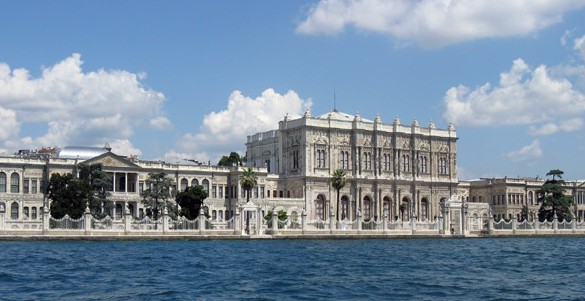
With its stunning vistas and former Ottoman palaces, the banks of the Bosphorus – the strategic waterway that cuts Istanbul in half and divides Europe from Asia – may be the perfect place to distinguish friend from foe and establish where your country’s interests lie.

And sitting in his grandiose headquarters beside the strait, long the symbol of Turkey’s supposed role as bridge between east and west, Recep Tayyip Erdogan had little doubt about who was a friend and who wasn’t.
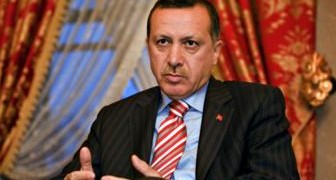
Mahmoud Ahmadinejad, Iran’s radical president whose fiery rhetoric has made him a bête noire of the west? “There is no doubt he is our friend,” said Erdogan, Turkey’s prime minister for the last six years. “As a friend so far we have very good relations and have had no difficulty at all.”

What about Nicolas Sarkozy, president of France, who has led European opposition to Turkey’s bid to join the EU and, coincidentally, adopted a belligerent tone towards Iran’s nuclear programme? Not a friend?

“Among leaders in Europe there are those who have prejudices against Turkey, like France and Germany. Previously under Mr Chirac, we had excellent relations [with France] and he was very positive towards Turkey. But during the time of Mr Sarkozy, this is not the case. It is an unfair attitude. The European Union is violating its own rules.

“Being in the European Union we would be building bridges between the 1.5bn people of Muslim world to the non-Muslim world. They have to see this. If they ignore it, it brings weakness to the EU.” [continued…]

Editor’s Comment — When President Obama addressed the Turkish parliament on April 6, he said: “Turkey’s greatness lies in your ability to be at the center of things. This is not where East and West divide – this is where they come together.”

Turkey has since been making great strides with its “zero problems with neighbors” policy as Foreign Minister Ahmet Davutuoğlu engages erstwhile adversaries emphasising “a common history, a common fate and a common future.”

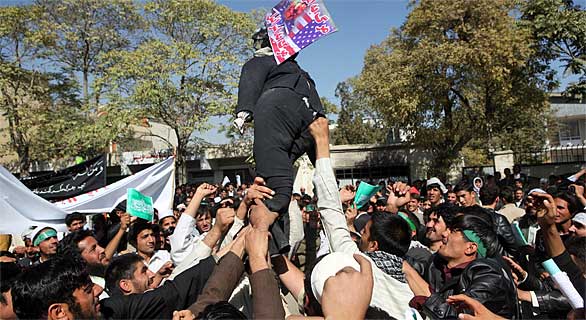
Meanwhile, at the hub of America’s active and violent engagement with the Muslim world, in Kabul, American flags and effigies of Obama are being burned in protest.

The White House should be asking: how come the Turks are having so much more success in practicing what we preach?

In the aftermath of the war on Gaza, Turkey has been uncompromising and principled in its criticisms of Israel. When asked whether he fears that this might risk harming Turkish-US relations, Erdogan dismisses the suggestion, saying: “I don’t think there is any possibility of that. America’s policy in this region is not dictated by Israel.”

Is that wishful thinking, or is it a polite and indirect way of telling Obama that it’s time to stiffen his backbone?

Facebooktwittermail

Iran and America: Obama and the “velvet coup”

Iran and America: Obama and the “velvet coup”

Iran’s supreme leader Ayatollah Ali Khamenei and his army commanders have, in their response to the street-protests that erupted across the country after the controversial presidential election of 12 June 2009, employed a routine accusation against the United States: that it had initiated a “velvet revolution” in the country.

All the evidence suggests that the popular demonstrations were a spontaneous reaction to what was widely perceived to be a fraudulent result. Indeed, it is more plausible that the United States unwillingly helped to achieve the reverse of what Ayatollah Khamenei (and other hardline leaders) charged it with: namely, facilitating the regime’s effort to steal the elections and launch a “velvet coup d’état”.

The primary responsibility for what has happened in Iran since the election lies with the hardline core of the Iranian regime. But the ability of the Islamic Republic’s rulers to consolidate their power has – it is clear in retrospect – been aided by the sense of safety it had acquired from possible attack by the US. [continued…]

News of Iran’s detained ‘blogfather’

Human Rights Activists has received reports which suggest that the blogger, Hossein Derakhshan, who was arrested on Nov. 2, 2008, has spent the first eight months of his detention in solitary confinement and different wards of the Evin prison upon his return to Iran. During that time he has been subjected to various physical and psychological pressure tactics and multiple transfers.

He has been beaten repeatedly and has been forced to do squats in cold showers. His interrogators have threatened to arrest his father and his sister unless he confessed to espionage charges. With the start of the massive arrests after the presidential election, and as result of cell shortages in Evin prison, Derakhshan was transferred to Ward 2A of the IRGC prison, where he shared his cell with newly arrested people. [continued…]

Facebooktwittermail

Top Iran official says West’s nuclear plan a coverup for theft

Top Iran official says West’s nuclear plan a coverup for theft

The powerful speaker of Iran’s parliament Saturday derided a Western-backed proposal to transfer the bulk of the country’s enriched-uranium stockpile abroad as a trick meant to rob Iran of its nuclear fuel.

“My guess is that the Americans have made a secret deal with certain countries to take [low-]enriched uranium away from us under the pretext of providing nuclear fuel,” Ali Larijani, who is close to supreme leader Ayatollah Ali Khamenei, told the Iranian Students News Agency. “We hope Iranian officials will pay due attention to this issue.”

Larijani, who once served as Iran’s chief nuclear negotiator, is the highest-ranking official to explicitly question the plan, which would push Iran’s enriched-uranium stockpile below the threshold necessary to make a single nuclear bomb. [continued…]

Facebooktwittermail

‘Turkey-Israel ties could head for breakup’

‘Turkey-Israel ties could head for breakup’

The crisis in Israeli-Turkish relationship could deteriorate to the point of a breakup, former US ambassador to Israel Martin Indyk said on Wednesday.

In an interview with The Jerusalem Post, Indyk, currently the Brookings Institute’s vice president for foreign policy, said that the “three brakes” that had prevented Turkey under the Islamic-rooted AK party from drifting toward the Arab world and away from Israel were the Turkish military, its business class, and the “peace process.”

Each of these brakes has been loosened over the last two years – the military has been pushed back into the barracks and no longer has influence over government policy as it once did; the business class is feeling considerable heat from the government and is in no position to stand up and say that ties with Israel are economically important; and the peace process – both with Syria and the Palestinians – is nonexistent, he said.

“I think that it is serious because it is like a car with an accelerator and no brake,” said Indyk, who participated this week in President Shimon Peres’s Israeli Presidential Conference in Jerusalem, arriving directly from meetings in Istanbul.

“I think it is a serious deterioration in the relationship, and it could lead to a breakup. It’s not like it hasn’t happened before. Israel lost a relationship with the whole of Africa, and had to rebuild it. It could happen,” he said. [continued…]

Turkey confirms Iran gas deal

Turkey plans to carry out its $3.5 billion natural gas development plans in Iran, Turkish Energy Minister Taner Yildiz said on Wednesday.

“The issue would be discussed during Prime Minister Tayyip Recep Erdogan’s upcoming trip to Tehran,” Reuters reported.

The Turkish and Iranian governments agreed in July 2007 that Turkish Petroleum Corporation (TPAO) would produce 20.4 billion cubic meters (bcm) of natural gas annually from three development phases of Iran’s South Pars gas field, but the deal has been delayed. [continued…]

Facebooktwittermail

Iran delays reply on nuclear plan

Iran delays reply on nuclear plan

Iran will respond to a proposed deal on its controversial nuclear programme by the middle of next week, it has told the UN’s atomic energy agency.

Agency chief Mohammed ElBaradei said he hoped the answer would be “positive”.

The UN watchdog had suggested exporting most of Iran’s enriched uranium to Russia and France for further refining. [continued…]

Facebooktwittermail

A lone cleric is loudly defying Iran’s leaders

A lone cleric is loudly defying Iran’s leaders

A short midlevel cleric, with a neat white beard and a clergyman’s calm bearing, Mehdi Karroubi has watched from his home in Tehran in recent months as his aides have been arrested, his offices raided, his newspaper shut down. He himself has been threatened with arrest and, indirectly, the death penalty.

His response: bring it on.

Once a second-tier opposition figure operating in the shadow of Mir Hussein Moussavi, his fellow challenger in Iran’s discredited presidential election in June, Mr. Karroubi has emerged in recent months as the last and most defiant opponent of the country’s leadership.

The authorities have dismissed as fabrications his accusations of official corruption, voting fraud and the torture and rape of detained protesters. A former confidant of Ayatollah Ruhollah Khomeini and a longtime conservative politician, he has lately been accused by the government of fomenting unrest and aiding Iran’s foreign enemies. [continued…]

Facebooktwittermail

Iran ramps up pressure on Pakistan over Guards bombing

Iran ramps up pressure on Pakistan over Guards bombing

Iran turned up the heat on Pakistan on Tuesday, saying the group accused of carrying out a suicide bombing that killed top commanders of the elite Revolutionary Guards is based on its territory.

Islamabad strongly denied the allegations, saying the attack was an attempt to “spoil ties” with Iran.

Foreign Minister Manouchehr Mottaki said members of the group accused of mounting Sunday’s attack in southeastern Sistan-Baluchestan province regularly criss-cross the frontier with Pakistan. [continued…]

Iran’s nuclear talks also hit

According to a Tehran University political science author who wishes to remain anonymous, the Pishin attackers had multiple objectives. “First, they wanted to prevent a crucial unity meeting between Shi’ites and Sunnis in Sistan-Balochistan. Second, they wanted to exacerbate tension between the central government and the Balochi minority. Third, they wanted to cause new tensions between Iran and Pakistan, whose government is backed by the US and Saudi Arabia. Fourth, they timed their attacks with the critical nuclear meeting in Vienna to thwart any agreement on Iran’s proposal for nuclear fuel for the reactor in Tehran.”

There is a widespread belief in Tehran that the Pishin attack, especially as it claimed the lives of five IRGC commanders, could not possibly have taken place without the knowledge, and perhaps complicity, of Western and/or Israeli intelligence.

This sentiment is apparently shared by Russia, in light of the quick response by Russian President Dmitry Medvedev, who sent his condolences together with a firm message that Russia was prepared to cooperate with Iran against terrorism. This was in sharp contrast to the silence of US President Barack Obama.

“Iran is now baited into security tensions with nuclear-armed Pakistan and that simply strengthens the hands of the hardliners in Iran who believe that Iran needs a nuclear shield,” the same Tehran professor told the author. [continued…]

Jundallah versus the mullahtariat

Approximately 2,000 strong, Jundallah claims to represent the Sunni Balochi struggle against the centralizing power of Tehran. Nonsense: pan-Balochi aspirations actually are better represented by other Balochi nationalist groups, such as the Balochistan Liberation Army (BLA) in Pakistan. Jundallah for its part does not threaten Islamabad; it is an ultra-sectarian, anti-Shi’ite outfit immersed in the intolerant Deobandi interpretation of Islam.

Jundallah has its headquarters in Karachi and bases in both Balochistans. It does have a firm connection to the South Waziristan tribal areas; it has been connected to the hardcore Sunni and viscerally anti-Shi’ite Lashkar-e-Jhangvi; and is definitely tactically connected to al-Qaeda, “talking” if not to the historic leadership ensconced, in theory, in South Waziristan, at least to the “new generation” al-Qaeda.

It was Jundallah that, last December, perpetrated the first suicide bombing ever in Iran, after spending a few years basically practicing sabotage, kidnapping officials and killing border guards. In May, only three weeks before the Iranian presidential election, Jundallah raised the stakes with an attack on the top mosque in Zahedan, the largest city in the southern part of Sistan-Balochistan.

Islamabad – as always when it comes to anything regarding Balochistan – is perplexed. It never knew how to deal with Balochi separatist movements in the first place – apart from iron-clad repression. But as far as Jundallah is concerned, Islamabad did try, it handed over Rigi’s brother, Abdul Hamid, to Tehran, branding Jundallah as a “terrorist organization”, and always protesting its innocence of the outfit’s designs. [continued…]

Facebooktwittermail

US cuts funding to Iran opposition

US cuts funding to Iran opposition

In an apparent shift from the Bush administration’s efforts to foster regime change in Iran by financing opposition groups, the Obama White House has all but dismantled the Iran Democracy Fund.

While the move has been criticised by neo-conservatives in the US, it has been welcomed by Iranian human rights and pro-democracy activists.

The controversial program was initiated by the Bush administration in an effort to topple the clerical regime in Tehran by financing Iranian NGOs.

While heralded by some in Washington, reactions in Iran to the program were overwhelmingly negative. [continued…]

Scholar who was held after disputed Iranian election is given at least 12 years

An Iranian-American scholar who was jailed during the protests following Iran’s disputed presidential election has been sentenced to at least 12 years on charges of acting against national security, Iranian state media reported Tuesday.

Kian Tajbaksh, a sociologist and urban planner with a doctorate from Columbia, was arrested July 9 and testified during a mass trial of opposition supporters in August.

American officials have repeatedly called on Tehran to release Mr. Tajbaksh, who was the only American citizen included in the mass show trials that followed Iran’s postelection unrest. He spent four months in prison in 2007 on charges of endangering national security. [continued…]

Facebooktwittermail

Saudi-Iranian hostility hits boiling point

Saudi-Iranian hostility hits boiling point

Saudi Arabia has two great worries over Iran. First, that Obama is pressing ahead with the normalization process with Tehran – a “thaw” was visible at the Geneva talks on October 1- and Tehran has begun responding to US overtures. The worst Saudi nightmare is coming true.

King Abdullah, who had refused to visit Damascus, landed there two weeks ago on a three-day visit in a desperate attempt to bring Syria into the Arab fold and to “isolate” Iran. Riyadh is worried that Iran’s status as a regional power will get a massive boost if the normalization process with the US advances, and that can only be at the cost of Saudi Arabia’s pre-eminence in the region. Riyadh helplessly watches a beeline of other Persian Gulf states reaching out to Tehran for accommodation.

In other words, Riyadh has a vested interest, which is no less than Israel’s, to disrupt the US-Iran nuclear talks. [continued…]

Facebooktwittermail

Iran says U.S., Britain behind attack

Iran says U.S., Britain behind attack

Iranian officials claimed Monday that they had evidence of American and British involvement in the country’s worst suicide bombing attacks in years, raising tensions as Iran meets with Western nations for another round of delicate talks on its nuclear program.

At least five commanders of Iran’s elite Islamic Revolutionary Guards Corps were killed and dozens of other people were left dead and wounded on Sunday in two bombings in the restive southeast along Iran’s frontier with Pakistan, according to Iranian state news agencies.

The coordinated strike, one of the largest against the Guards in the region, appeared to mark an escalation in hostilities between Iran’s leadership and the Baluchi ethnic minority. Iranian officials accused foreign enemies of supporting the insurgents, singling out the intelligence agencies of United States, Britain and Pakistan. [continued…]

Iran accuses Pakistan over attack

Iran’s president has accused Pakistani agents of involvement in a suicide bombing in south-east of the country targeting a group of the elite Revolutionary Guards force.

Mahmoud Ahmadinejad called on Pakistan to arrest the attackers, who he said had entered Iran from Pakistan. [continued…]

Volatile Sistan-Baluchistan Region Is Base for Insurgents

Sunni insurgency in Sistan-Baluchistan has presented Tehran with one of its most vexing domestic security problems. The region, which is located in Iran’s southeast corner, borders Afghanistan and Pakistan and is one of the largest and poorest of Iran’s 30 provinces.

Sistan-Baluchistan is home to a large concentration of Sunni Muslims. Ethnic Baluchi tribes are prevalent in the region, which straddles all three countries. The province’s border areas are considered key smuggling routes for products including opium.

Increasingly, Tehran has grown worried about the influence of the Taliban and al Qaeda in Pakistan and Afghanistan on criminal and militant groups operating on the Iranian side of the border. [continued…]

Facebooktwittermail

Iran ‘doubts’ over nuclear deal

Iran ‘doubts’ over nuclear deal

Iran appears to be backing away from a proposed deal to resolve the crisis over its nuclear programme, Iranian media reports suggest.

A state TV channel said Iran wanted to import fuel for its research reactor, without sending its own enriched uranium out of the country. [continued…]

Russia worries about the price of oil, not a nuclear Iran

Last Wednesday in Moscow, the remaining illusions the Obama administration held for cooperation with Russia on the Iranian nuclear program were thrown in Secretary of State Hillary Clinton’s face. Stronger sanctions against Iran would be “counterproductive,” said Russian Foreign Minister Sergei Lavrov, just days after President Dmitry Medvedev said sanctions were likely inevitable. This apparent inconsistency should remind us that Mr. Medvedev is little more than a well-placed spectator, and that Prime Minister Vladimir Putin, who discounted sanctions in a statement from Beijing, is still the voice that matters.

This slap comes after repeated concessions—canceling the deployment of missile defenses in Eastern Europe, muted criticism of Russia’s sham regional elections—from the White House. Washington’s conciliatory steps have given the Kremlin’s rulers confidence they have nothing to fear from Mr. Obama on anything that matters.

And nothing matters more to Mr. Putin and his oligarchs than the price of oil. Even with oil at $70 a barrel, Russia’s economy is in bad straits. Tension in the Middle East, even an outbreak of war, would push energy prices higher. A nuclear-armed Iran would, of course, be harmful to Russian national security, but prolonging the crisis is beneficial to the interests of the ruling elite: making money and staying in power. [continued…]

Iran will up uranium enrichment ‘if Vienna talks fail’

The Iran Atomic Energy Organisation said on Monday it will continue to enrich uranium up to the five percent level or even to the higher 20 percent grade if talks on a third-party enrichment deal fail.

“The Islamic Republic of Iran… will continue its enrichment activities inside Iran up to the five percent level,” the official IRNA news agency quoted the organisation’s spokesman Ali Shirzadian as saying.

“But if the negotiations do not yield the desired results, Iran will start enriching uranium to the 20 percent level for its Tehran reactor. It will never give up this right.” [continued…]

Facebooktwittermail

Talks on Iranian reactor deal show divisions on sanctions

Talks on Iranian reactor deal show divisions on sanctions

A team of Obama administration officials, joined by officials from France and Russia, will begin negotiating in Vienna on Monday with Iranian diplomats over terms of an unusual deal that could remove a significant amount of Tehran’s low-enriched uranium from the country.

The administration views the deal — which would convert the uranium into fuel for a research reactor used for medical purposes — as a test of Iranian intentions in the international impasse over the nation’s nuclear program. The reactor is running short of fuel, according to Iran, and so the administration proposed that 80 percent of Iran’s enriched uranium stockpile be sent to Russia for conversion into reactor fuel. France would then fashion the material into metal plates, composed of a uranium-aluminum alloy, used by this reactor.

U.S. officials argue that if Iran fails to follow through on a tentative agreement on this deal, then it will help strength the case for sanctions. But the negotiations already have highlighted splits between the United States and two of the key players — Russia and China — in the effort to restrain Iran’s nuclear ambitions. [continued…]

A hitch in Iran’s nuclear plans?

Since you’re probably not a regular reader of the trade publication Nucleonics Week, let me summarize an article that appeared in its Oct. 8 issue. It reported that Iran’s supply of low-enriched uranium — the potential feedstock for nuclear bombs — appears to have certain “impurities” that “could cause centrifuges to fail” if the Iranians try to boost it to weapons grade.

Now that’s interesting. The seeming breakthrough in negotiations on Oct. 1 in Geneva — where Iran agreed to send most of its estimated 1,500 kilograms of low-enriched uranium abroad for further enrichment — may not have been exactly what it appeared. Iran may have had no alternative but to seek foreign help in enrichment because its own centrifuges wouldn’t work. [continued…]

Reading Mark Hibbs in Washington

As discussed previously, the Iranians can still enrich to any level they want, but if a certain level of impurities remains in the product, that makes the process more laborious. The product would have to be hauled back to the UCF [Uranium Conversion Facility] for further purification after partial enrichment, then returned for further enrichment, and so on. That really does put a kink in rapid breakout scenarios.

On the other hand, compared to the technical hurdles that the Iranians have already overcome, perfecting purification at the UCF doesn’t seem like a great challenge, and we should expect the AEOI [Atomic Energy Organization of Iran] to solve that one sooner or later, if they haven’t already.

One other point is worth considering, too. If the Iranians were to build a parallel fuel cycle, they’d probably be smart enough to collocate the parallel UCF with the parallel enrichment facility, which would make it a lot easier to do backing-and-forthing if necessary. Certainly, it will be interesting to learn what turns up at Qom during the inspections later this month, although we’re unlikely to learn before the next Board of Governors meeting, scheduled for late November. [continued…]

Five myths about Iran’s nuclear program

Iran’s expanding nuclear program poses one of the Obama administration’s most vexing foreign policy challenges. Fortunately, the conditions for containing Tehran’s efforts may be better today than they have been in years. The recent disclosure of a secret nuclear facility in Iran has led to an apparent agreement to allow in U.N. weapons inspectors and to ship some uranium out of the country, and the United States and Europe seem to be closing ranks on the need for sanctions and engagement.

Of course, the matter is far from resolved; Russia and China are sending mixed signals on their position, while even a weakened Iranian regime remains duplicitous. But the prospects for developing a strategy with a solid chance of success improve if we dispose of five persistent myths about Iran’s nuclear program: [continued…]

Facebooktwittermail

Iran Guard commanders said to be killed in blast

Iran Guard commanders said to be killed in blast

A suicide bomber killed five senior commanders of the powerful Revolutionary Guard and at least 26 others Sunday near the Pakistani border in the heartland of a potentially escalating Sunni insurgency.

The attack — which also left dozens wounded — was the most high-profile strike against security forces in an outlaw region of armed tribal groups, drug smugglers and Sunni rebels known as Jundallah, or Soldiers of God.

President Mahmoud Ahmadinejad promised sharp retaliation. But a sweeping offensive by authorities is unlikely. [continued…]

Maziar Bahari released

Newsweek reporter Maziar Bahari, imprisoned in Tehran since June 21, was released from Evin Prison on bail Saturday. Iranian authorities did not specify the reasons behind the release, but Bahari, 42, is expecting his first child on Oct. 26 and the mother has experienced serious health complications. Humanitarian considerations were presumed to have played a role in the decision. In a statement, the magazine said, “We are relieved that Newsweek journalist Maziar Bahari is home with his family today. We would like to thank all of those who supported Maziar through this long and uncertain period.” [continued…]

Facebooktwittermail

U.S. considers a new assessment of Iran threat

U.S. considers a new assessment of Iran threat

U.S. spy agencies are considering whether to rewrite a controversial 2007 intelligence report that asserted Tehran halted its efforts to build nuclear weapons in 2003, current and former U.S. intelligence officials say.

The intelligence agencies’ rethink comes as pressure is mounting on Capitol Hill, and among U.S. allies, for the Obama administration to redo the 2007 assessment, after a string of recent revelations about Tehran’s nuclear program.

German, French and British intelligence agencies have all disputed the conclusions of the 2007 National Intelligence Estimate, or NIE, in recent months, according to European officials briefed on the exchanges. [continued…]

China’s links to Iran a snag for sanctions

Chinese Premier Wen Jiabao said Thursday that his nation was committed to deepening its ties with Iran, a declaration that underscores the difficulty the United States will face in seeking broad economic sanctions against Tehran in an effort to rein in its nuclear program.

“The Sino-Iranian relationship has witnessed rapid development, as the two countries’ leaders have had frequent exchanges, and cooperation in trade and energy has widened and deepened,” Wen said at a meeting in Beijing with visiting Iranian Vice President Mohammad Reza Rahimi, according to the official New China News Agency.

The U.S. and its allies are counting on China and Russia, veto-wielding members of the U.N. Security Council, for support in pressuring Iran to abandon activities the West fears could lead to the development of nuclear weapons. [continued…]

Facebooktwittermail

Experts say Iran may be ready for a nuclear deal

Experts say Iran may be ready for a nuclear deal

In contentious, high-stakes negotiations, deals are possible when both sides have a chance to declare victory, and that point may have been reached.

“If the Iranian endgame is to keep enrichment, and if the United States’ endgame is to make sure there are no nuclear weapons in Iran, then it can be a win-win,” said Trita Parsi, author of a book on Iran and president of the National Iranian American Council, an independent advocacy group in Washington. “Those who have been criticizing the administration for compromising or giving Iran a concession, they are wrong. It is not a concession to adjust to an unchanging reality.”

For Iran, this is not exactly about compromising — which it has shown little appetite for — as much as cooperating. For the West, it is not about winning concessions but about developing verifiable assurances that Iran is not producing weapons.

“I think the Iranians are simply in no mood to accept any serious limits on the expansion of their program,” said Flynt Leverett, director of the Iran Project at the New America Foundation. “From their point of view, they already suspended enrichment for almost two years, from 2003 to 2005, and from their perspective, they got nothing for that and they’re not going to do that again.”

But Mr. Leverett said Iran sees “that by expanding, they’ve gotten the attention of the international community and they have cards to play.”

And that may have been Iran’s primary goal from the start.

There are many analysts inside and outside Iran who say that Tehran’s objective has been to master — or at least appear to master — the process of preparing nuclear fuel, fashioning a warhead and providing the means to deliver that warhead, but not actually to build a weapon. [continued…]

‘Israel may attack Iran after December’

Israel is making preparations to carry out military attacks in Iran after December, a French magazine reported overnight Wednesday.

According to the report in Le Canard Enchainé quoted by Israel Radio, Jerusalem has already ordered high-quality combat rations from a French food manufacturer for soldiers serving in elite units and has also asked reservists of these units staying abroad to return to Israel.

The magazine further reported that in a recent visit to France, IDF Chief of General Staff Lt.-Gen. Gabi Ashkenazi told his French counterpart Jean-Louis Georgelin that Israel was not planning to bomb Iran, but might send elite troops to conduct activities on the ground there. [continued…]

Editor’s Comment — So, the bombing plans have now been shelved. Instead, Israel is going to send in commandos?

I kind of doubt it. The first problem is getting them in. I suppose the Kurds might oblige. But is Israel willing to risk seeing any of its soldiers taken prisoner and put on trial or used as human shields?

Facebooktwittermail

Russia resists U.S. position on sanctions for Iran

Russia resists U.S. position on sanctions for Iran

Denting President Obama’s hopes for a powerful ally in his campaign to press Iran on its nuclear program, Russia’s foreign minister said Tuesday that threatening Tehran now with harsh new sanctions would be “counterproductive.”

The minister, Sergey V. Lavrov, said after meeting with Secretary of State Hillary Rodham Clinton here that diplomacy should be given a chance to work, particularly after a meeting in Geneva this month in which the Iranian government said it would allow United Nations inspectors to visit its clandestine nuclear enrichment site near the holy city of Qum.

“At the current stage, all forces should be thrown at supporting the negotiating process,” he said. “Threats, sanctions and threats of pressure in the current situation, we are convinced, would be counterproductive.” [continued…]

Iran investigating prominent opposition cleric

Iranian authorities launched a provocative attack on the opposition movement Tuesday by announcing a special investigation of prominent cleric Mehdi Karroubi over his accusations that security forces raped and tortured protesters after the disputed June reelection of President Mahmoud Ahmadinejad.

The move against Karroubi, a revered figure from Iran’s 1979 Islamic Revolution, is an attack on the heart of the opposition. It’s an indication that the government is increasing pressure on top dissenters, even clerics, and it follows death sentences handed to at least two anti-government protesters.

The investigation will test the resolve of the opposition and has the potential to unleash another round of street demonstrations, which recently have been largely thwarted by the Revolutionary Guard and the Basiji militia. At a rally in September, protesters shouted: “If Karroubi is arrested, there will be insurrections across Iran.” [continued…]

Facebooktwittermail