The Iran show By Laura Secor, The New Yorker, August 31, 2009
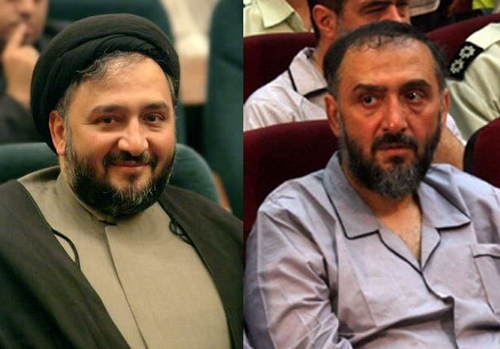
In the grotesque pageant of Iran’s show trials, former high officials—hollow-eyed, dressed in prison pajamas, and flanked by guards in uniform—sit in rows, listening to one another’s self-denunciations. Since the disputed Presidential elections of June 12th, about a hundred reformist politicians, journalists, student activists, and other dissidents have been accused of colluding with Western powers to overthrow the Islamic Republic. This month, a number of the accused have made videotaped confessions. But the spectacle has found a subversive afterlife on the Internet. One image that has gone viral is a split frame showing two photographs of former Vice-President Mohammad Ali Abtahi. Before his arrest, on June 16th, he is a rotund, smiling cleric; in court on August 1st, he is drawn and sweat-soaked, his face a mask of apprehension. The juxtaposition belies the courtroom video, making the point that the only genuine thing about Abtahi’s confession is that it was coerced through torture.
Show trials have been staged before, most notably in Moscow in the nineteen-thirties. Typically, such rituals purge élites and scare the populace. They are the prelude to submission. Iran’s show trials, so far, have failed to accrue this fearsome power. In part, this is because the accused are connected to a mass movement: Iranians whose democratic aspirations have evolved organically within the culture of the Islamic Republic. It is one thing to persuade citizens that a narrow band of apparatchiks are enemies of the state. It is quite another to claim that a political agenda with broad support—for popular sovereignty, human rights, due process, freedom of speech—has been covertly planted by foreigners. [continued…]
As the Barack Obama administration struggles to devise a strategy for dealing with Iran’s intransigence on the uranium-enrichment issue, it appears to be gravitating toward the imposition of an international embargo on gasoline sales to that country.
Such a ban would be enacted if Iranian officials fail to come up with an acceptable negotiating plan by the time the United Nations General Assembly meets in late September – the deadline given by the White House for a constructive Iranian move.
Iran, of course, is a major oil producer, pumping out some 4.3 million barrels per day in 2008. But it is also a major petroleum consumer. Its oil industry has a significant structural weakness: its refinery capacity is too constricted to satisfy the nation’s gasoline requirements. As a result, Iran must import about 40% of the refined products it requires. Government officials are attempting to reduce this dependency through rationing and other measures, but the country remains highly vulnerable to any cutoff in gasoline imports. [continued…]
He may have finished last in Iran’s disputed presidential election, but in the weeks that followed, Mehdi Karroubi has often taken the lead in challenging the Iranian government. After the announcement of the result triggered massive demonstrations in June, Karroubi was one of the first major figures to blame the government for the violence — a brave act considering that the state media was calling the demonstrations riots instigated by foreign powers. And when Basiji militiamen roughed him up on the way to Friday prayers last month, Karroubi spoke out again. “They want to create an atmosphere of threat and terror so that people are kept silent,” he said. And despite the growing atmosphere of official intolerance for challenges to the postelection order, Karroubi has again infuriated supporters of President Mahmoud Ahmadinejad by publicizing the charge that opposition protesters were raped and abused in prison. [continued…]
As Iranians celebrated the first day of the holy month of Ramadan, they were confronted Saturday with new charges of reform movement supporters being tortured in prison and of bodies being secretly buried in a cemetery on the outskirts of Tehran.
The accusations, filed on Web sites affiliated with the reform movement, added to the push and pull between an opposition movement struggling to keep itself from being silenced and a government that has tried to move past the crisis over the country’s disputed presidential elections in June. [continued…]
Was Israel’s secret service behind the mysterious hijacking of a Russian freighter to foil a secret attempt to ship cruise missiles to Iran?
The mystery surrounding the hijacking of a Russian freighter in July has taken a new twist with reports claiming the pirates were acting in league with the Israeli Mossad secret service in order to halt a shipment of modern weapon systems hidden on board and destined for Iran.
While Israeli and Russian officials dismissed the reports, accounts published in the Russian media sounded more like a spy thriller than a commercial hijacking.
“There is something fishy about this whole story, no doubt about it,” Israel’s former Deputy Defense Minister Ephraim Sneh told The Media Line. “But I can’t comment further on this.”
The Russian newspaper Novaya Gazeta reported over the weekend that the vessel Arctic Sea had been carrying x-55 cruise missiles and S300 anti-aircraft rockets hidden in secret compartments among its cargo of timber and sawdust. [continued…]
Editor’s Comment — Mossad has always been the darling of conspiracy theorists, but in this case the disappearance of the Arctic Sea presented a rather difficult question to answer: why would anyone attempt to hijack a cargo of lumber passing through European waters? An operation to intercept missiles being secretly exported to Iran? It actually sounds quite plausible.
Ma bi-shomarim / We are countless
— Slogan of the Green Movement in Iran
Within minutes of the picture of a frail and fragile Mohammad Ali Abtahi appearing on the Internet, the blogosphere was flooded with split images of him before and after his predicament. Having lost some 20 kilos since his incarceration in late June, his handsome, always smiling and endearing, face thinned beyond recognition, disrobed of his clerical habit, his turban lost, and clad in unseemly prison pajamas, the former vice president under President Mohammad Khatami (1997-2005), a leading reformist, and particularly popular with bloggers because of his own weblog, Abtahi’s case was particularly heart- wrenching to his young admirers.
The belligerent custodians of the Islamic Republic had forced him to confess to crimes that would make a dead chicken laugh, as we say in Persian, and as an oppositional figure quickly pointed out. This is a velvet revolution, he was made to say, plotted by the reformists, supported by the “Enemy,” and there was nothing wrong with Ahmadinejad’s landslide victory. Instead of sadness and disappointment, the blogosphere was abuzz with love and admiration for Abtahi. He was instantly declared a national hero. “For the first time,” said one blogger, “I learned to love a cleric — and then I looked again; he had no clerical robe anymore.” Mohsen Makhmalbaf, the leading Iranian filmmaker now active in support of the Green Movement, delivered the most memorable punch line in support of Abtahi and dismissing his forced confessions. “If Khamenei were to be treated like Abtahi in jail, the Supreme Guide would come to national television belly dancing!”
Every state is founded on force, Max Weber believed early in the 20th century. What Weber termed “legitimate violence,” as the defining apparatus of any state, is predicated on what he called “external means” and “inner justification”: the more a state has to resort to external means (use of violence), the less its claim on inner justification (constitutional mandates) on its citizens. The massively orchestrated and naked violence that the Islamic Republic has launched against its own citizens (young and old, men and women, rich and poor) has not only delegitimised its claim to the notion of a “republic”, it has, ipso facto, discredited any claim to “Islam” that it may have while bordering on discrediting Islam itself, which is the reason why so many prominent, high-ranking, Shia clerics are coming out so forcefully and categorically denouncing the violent crackdown of peaceful demonstrations, in both juridical and rational terms. There were many Iranians who doubted the accuracy of the June presidential election results, and there were those who thought they were perfectly accurate. But the vicious, blatantly criminal, activities of people in positions of power in the Islamic Republic have now assumed a reality sui generis, beyond anything that any critic of this election had ever uttered. The Islamic Republic of Iran is self-destructing. [continued…]
My interrogators explained to me that the United States, bogged down in wars in Iraq and Afghanistan, no longer contemplates military action against Iran. Rather, they said, Washington is engaged in a long-term plan for regime change in which a crucial role is assigned to America’s great universities and think tanks, such as the one where I work. These institutions target Iran’s intellectual elites — the same class that led political revolutions in Georgia and Ukraine. They use fellowships, conferences, workshops and speaking invitations to recruit Iranian intellectuals, journalists, academics and political activists, and they turn them into willing or unwitting partners in this conspiracy. The plan feeds upon itself: ideas, recruitment, linkages with politicians, mass protests and then regime overthrow.
I was supposed to be the mastermind or at least a key player in this project. My chief interrogator offered to let me off if I implicated my employer, the Woodrow Wilson International Center for Scholars. At one point I replied to my interrogators that Iran is not a banana republic to be overthrown by 20 scholars sitting around a conference table.
Eventually, I was freed. But in the mass “trials” that began this month, the government prosecutor laid out precisely the same “conspiracy” I was charged with. Using the same mad logic I faced during interrogation, he managed to link together foreign governments, the BBC, other journalists, a French-language teacher, anti-regime monarchists, a former guerrilla organization and prominent leaders of the Islamic Republic. All are supposed to have joined hands to bring about regime change. [continued…]
Iran agreed with United Nations inspectors to grant greater monitoring of Tehran’s uranium-enrichment facility at Natanz as well as a nearly completed heavy-water reactor, according to officials briefed on the talks.
The accord breaks a monthslong impasse between Iran and the U.N.’s International Atomic Energy Agency that has fed into concerns Tehran is moving toward developing atomic weapons. Officials involved in the diplomacy hope Iran’s decision could signal a greater willingness by President Mahmoud Ahmadinejad’s government to cooperate with the West.
President Barack Obama has set a late September deadline for Tehran to respond to an international offer to negotiate on the future of Iran’s nuclear program, or face a new round of economic sanctions.
Tehran, engulfed in a postelection political crisis, has offered conflicting signals in recent weeks about its response. But Iran experts said Tehran’s decision on the monitors is likely a harbinger of the conciliatory stance it will take toward the international community as the deadline looms, even if it doesn’t scale back its nuclear work. [continued…]
Iran’s embattled leader toned down his rhetoric, softened his voice and attempted to directly woo the people in a live prime-time television interview Thursday before what most analysts predict will be a fierce fight with parliament over his proposed Cabinet.
President Mahmoud Ahmadinejad said 11 of his 21 nominees have doctoral degrees, and said it was an advantage that many of them appear to be staunchly loyal to him.
“Some people suggested that such and such person is capable but he does not agree with you,” he said. “I say . . . the Cabinet ministers must be in coordination with the president so that we create synergy.”
As he spoke, the capital erupted with defiant cries of “Allahu Akbar!” and “Death to the dictator!” from rooftops and windows in what has become a nightly ritual of protest against the nation’s June 12 presidential election, which was marred by allegations of massive vote-rigging in Ahmadinejad’s favor. [continued…]
Iranian President Mahmoud Ahmadinejad faces a tough battle to win parliament’s approval for his new cabinet after some deputies signaled they were likely to reject several nominees.
“Those nominated by the president for government posts must have sufficient expertise and experience, otherwise a great deal of the country’s energy would be wasted,” state broadcaster IRIB quoted parliament speaker Ali Larijani as saying on Thursday.
Vice speaker Mohammad Reza Bahonar, a pragmatic conservative who has been critical of the hardline president in the past, suggested up to five members of Ahmadinejad’s 21-strong cabinet risked being voted down by parliament. He did not give names. [continued…]
Built to spill By Will Ward, The National, August 20, 2009
Iran’s Achilles heel, goes the mantra of many Washington hawks, is its dependence on imported petrol – the result of underinvestment in its energy industry during three decades of sanctions. While the country is a net oil exporter, Iran’s domestic refining capacity lags, forcing the Islamic Republic to import roughly a third of its daily petrol needs from abroad and ration consumer fuel purchases.
The US Congress is currently considering a bill, the Iran Refined Petroleum Sanctions Act, which would exploit this weakness by penalising companies and individuals that import petrol into Iran or invest in its domestic oil and gas infrastructure. The rosy logic behind the sanctions bill, which currently enjoys majority support in both houses of Congress, is not new: the hope is that ordinary Iranians, squeezed at the petrol pump, will pressure their recalcitrant leaders to halt uranium enrichment, embrace Israel and stop their unpalatable activities in Iraq, Lebanon and elsewhere in the region. That, or Tehran will lash out frantically in response, which will lead to an international consensus for even tougher sanctions – or worse.
Opponents of the bill have already pointed out many of its flaws: for starters, Iran could seek investments from Russia and China to build new refineries. Beyond that logistical loophole, it is also the case that Iranians generally support the country’s nuclear programme – and even if they didn’t, forcing Iran’s increasingly authoritarian government to reverse course would require months, if not years, of struggle and bloodshed. Sanctions against oil-producing nations often starve business and civil society, while the continuing flow of oil profits to the state leaves the targeted regimes more, rather than less, powerful – Saddam Hussein’s reign in Iraq being the best example. [continued…]
President Mahmoud Ahmadinejad of Iran, facing a persistent opposition movement and rivals in his own conservative camp, submitted a list of proposed cabinet members Wednesday that would shore up his inner circle of loyalists and remove all the ministers who criticized him during a political confrontation last month.
The list of nominees, reported by Iran’s state news agency, must still be approved by Parliament in a vote of confidence later this month. There are signs that some of Mr. Ahmadinejad’s choices will face resistance from lawmakers, who have been warning him for weeks to pick people on the basis of competence and not loyalty.
At the same time, Mr. Ahmadinejad’s ambitions for greater control over Iran’s complex power structure appeared to suffer a setback on Wednesday when the new chief of Iran’s judiciary, Sadeq Larijani, promoted one of the president’s critics to the powerful position of national prosecutor general. Gholam-Hussein Mohseni-Ejei, whom the president dismissed as intelligence minister last month after a bitter dispute, will become the nation’s top prosecutor, Mehr News reported.
Mr. Larijani also replaced other top judiciary officials, including the hard-line Tehran prosecutor Saeed Mortazavi, replacing them with staunch conservatives who are not necessarily Ahmadinejad allies, Mehr reported.
Mr. Ahmadinejad submitted his new cabinet list just before the legal deadline, apparently in an effort to minimize the time legislators would have to review it. But the Parliament speaker, Ali Larijani, one of the president’s most prominent rivals (and a brother of Sadeq Larijani), postponed the Parliament session to vote on the nominees after it became clear that Mr. Ahmadinejad intended to push his announcement to the last moment. [continued…]
His newspaper was shut down Monday, and generals and hard-line clerics have called for him to be put on trial. Yet defeated Iranian presidential candidate Mehdi Karroubi says opposition to the government is growing by the day.
The white-turbaned Shiite cleric, who has held several senior government positions since the 1979 Islamic revolution, said in an interview Tuesday that President Mahmoud Ahmadinejad, along with the clerics and Revolutionary Guard commanders who support him, will be defeated by what he describes as a burgeoning movement of ordinary people, ayatollahs and lawmakers.
“In the streets, in the bazaars, at weddings and in mosques, everywhere you can hear people complaining about what has happened” since Ahmadinejad’s disputed reelection June 12, Karroubi said. “This belief is growing at an extraordinary pace. Yes, people might be more cautious, since the situation in our country is dangerous, but their thoughts, their ideas have not changed.” [continued…]
The opposition leader Mir Hussein Moussavi on Tuesday accused “establishment agents” of raping and torturing prisoners, adding a prominent voice to critics who had made the charge and openly defying hard-liners who had denounced the claims as slander.
“Those who committed the crimes were establishment agents,” Mr. Moussavi said in a statement posted on his Web site.
He said “the use of force and money” could not silence the accusations, but only a “quick, open and precise investigation of complaints by detained protesters and their families.” [continued…]
A senior Iranian official denied on Tuesday he had made any statement saying Tehran was ready for talks with the West on its disputed nuclear program, state television reported.
The same television network earlier said the official — Iran’s envoy to the U.N. nuclear watchdog, Ali Asghar Soltanieh — “announced Iran’s readiness to take part in any negotiations with the West based on mutual respect.”
But it later quoted Soltanieh, Iran’s International Atomic Energy Agency (IAEA) representative, as saying he had not given any interviews or made any comments on the issue, without elaborating where the initial report came from. [continued…]
The brothers Larijani — often referred to as the Kennedys of Iran — are emerging as a powerful counterweight to President Mahmoud Ahmadinejad from within the conservative camp. And unlike other Ahmadinejad rivals, the Larijanis are fully endorsed by Iran’s Supreme Leader, Ayatullah Ali Khamenei.
The Aug. 15 appointment of Sadegh Larijani as head of Iran’s judiciary puts Larijanis in control of two out of the three branches of Iran’s government. Older brother Ali Larijani is speaker of parliament.
Over the past 30 years, the five sons of a senior cleric have been a major force in Iran’s power structure, either serving in or running for positions including the presidency and various diplomatic roles as well as posts in Cabinet ministries, the Council of Guardians, the legislature, the powerful National Security Council, the judiciary, Iran’s top broadcasting authority and even the Revolutionary Guards. Over the past year, they have consolidated their power. [continued…]
In 2001, Sadeq Larijani was the youngest jurist ever to be appointed to the Guardian Council, the twelve-person body responsible for approving all laws passed by the Majlis and for supervising elections. In the course of his Guardian Council activities, he has tried to remain under the radar by avoiding public appearances and media interviews. He has also made every effort to keep his relationships with Khamenei, the intelligence apparatus, and the IRGC under wraps. [continued…]
Three decades ago, Moshen Sazegara quit his studies at the University of Illinois to join Ayatollah Ruhollah Khomeini’s return from exile to lead Iran’s Islamic revolution.
A close aide to Ayatollah Khomeini, Mr. Sazegara was a founder of Iran’s Revolutionary Guard, but an eventual falling-out with the clerical regime sent him back to the United States as an exile.
Today, he has become a global leader for Iranian dissidents who have risen up in opposition to President Mahmoud Ahmadinejad and the clerics who have endorsed his disputed re-election. [continued…]
A group of Iranian clerics has issued an anonymous letter calling Iran’s supreme leader a dictator and demanding his removal, the latest and perhaps strongest rhetorical attack on him yet in the country’s post-election turmoil.
While the impact of the clerics’ letter, posted late Saturday on opposition Web sites, may have been diluted by the withholding of their signatures, two Iranian experts vouched for its authenticity. Its publication followed other unusual verbal attacks on the leader, Ayatollah Ali Khamenei, in recent days.
Last week a group of former lawmakers issued their own letter calling his qualifications into question. A day earlier, a member of the state body empowered to dismiss Ayatollah Khamenei called for an “emergency meeting” to address criticisms. [continued…]
Iran today is doing what all aging revolutionary regimes seem to do—transforming itself into the image of the very regime it displaced. Just as middle-aged men and women look in the mirror and are surprised to see their fathers and mothers looking back at them, revolutionaries are startled to see themselves inexorably turning into the tyrants they thought they had banished forever.
To put it another way, “Revolutions revolve—360 degrees.” This aphorism, invented years ago by Charles Issawi, the late Egyptian-born Middle East historian at Columbia, captures nicely in four words the typical lifecycle of the great revolutions.
So, even in the absence of hard reporting on the ground, we can tease out some useful insights about the situation in Iran by looking at the experiences of the French or Chinese or Russian revolutions. We should not expect a perfect match. Each of those revolutions had its own political, cultural, and temporal context which made it distinct. However, as Mark Twain observed, “The past does not repeat itself, but it rhymes.” So let’s look for rhymes. [continued…]
John Bolton has recently said that he believes that Israel is likely to attack Iran by the end of this year. Is that true?
OREN: I don’t think it’s true. I think that we are far from even contemplating such things right now.
The government of Israel has supported President Obama in his approach to Iran, initially the engagement, the outreach to Iran. The prime minister…
ZAKARIA: You’re just saying this, Michael. You don’t really — it is well known that the government of Israel was deeply uncomfortable and nervous about the idea of an engagement with Iran.
OREN: We were. But we were greatly comforted during the prime minister’s visit here in May, when the president told the prime minister, sure, that there would be a serious reassessment of the engagement policy before the end of the year.
And we are further reassured now that that end-of-the-year deadline has been moved up to September. We actually have a date when it’s going to occur.
We are comforted by the fact that the administration, in the aftermath of recent events in Iran, has exhibited greater willingness to consider formulating a package of serious sanctions against Iran, even now in advance of the reassessment.
ZAKARIA: Isn’t it true that we now know something about Iran that we weren’t quite sure about, which is, there are many moderates in Iran, both on the streets of Tehran and the rest of the country, but also within the government.
OREN: Unquestionably. We know that the Iranian — certainly, the Iranian people, but even the Iranian leadership, is not as monochromatic as we thought, that there are dissenters. Not necessarily moderates in the sense of their relationship with Israel, but moderates certainly in an internal Iranian context.
But what concerns us, at the end of the day, is not so much a change of personalities, but a change of policy. We would like to see an Iranian willingness to desist from supporting terrorist groups, Hezbollah, Hamas. We’ve seen none of that; on the contrary, business as usual.
We would like to see indications of Iranian willingness to suspend the enrichment of uranium. We’d like to see a willingness evinced on the part of the Iranians to stop producing the centrifuges that enrich that uranium. We’ve seen none of that. On the contrary, we see business as usual for the Iranians, even in their rhetoric across the board. [continued…]
The economics of a gasoline embargo simply doesn’t make sense. Iran imports roughly 40 percent of its domestic gasoline consumption at world prices and then sells it along with domestically refined gasoline at a government-subsidized price of about 40 cents per gallon. As a result, domestic gasoline consumption is high. It is also smuggled and sold to neighboring countries.
Over the past 10 years, this policy has cost Iran in the range of 10 to 20 percent of its G.D.P. annually, depending on world prices and the government-mandated pump price. Yes, a whopping 10 to 20 percent of G.D.P. In need of additional revenues, the regime has wanted to eliminate this subsidy, raise the price to world levels and reduce consumption, but has been paralyzed by the specter of a domestic backlash.
Even assuming that a gasoline embargo would be effective, what would be its result? Consumption would decline by 40 percent and government revenues would go up, because no payment would be needed for gasoline imports.
If Tehran allowed the reduced supply of gasoline to be sold at a price that would equate demand to supply, the price would increase to a level that would eliminate the subsidy, meaning no subsidy for imported gasoline and no subsidy for domestically refined gasoline. The government would have more revenue to spend elsewhere. The sanctions would have done what Tehran has wanted to do for years and the government would not be held responsible! [continued…]
The Iranian opposition leader Mir Hussein Moussavi announced the formation of a new social and political movement on his Web site on Saturday, following through on a promise made last month and defying a renewed government campaign of intimidation aimed at him and his supporters.
The movement is not a political party — which would require a government permit — but a “grass-roots and social network” that will promote democracy and adherence to the law, Mr. Moussavi wrote in a statement on his site. It is to be known as the Green Way of Hope, in deference to the signature bright green color of his campaign for the June 12 presidential election, which he maintains was rigged in favor of President Mahmoud Ahmadinejad.
The announcement was Mr. Moussavi’s first major public statement since the Iranian authorities stepped up their pressure on the opposition by opening a mass trial two weeks ago. Prosecutors have accused Mr. Moussavi’s campaign of links to a vast conspiracy to bring down the Iranian government. After he and many others denounced the trial, the chief prosecutor issued a stark warning that anyone questioning the trial’s legitimacy could in turn be prosecuted. [continued…]
Iran’s supreme leader appointed a hard-line cleric as the country’s new judiciary chief at the end of his predecessor’s term, state television reported Saturday.
Sadeq Larijani’s appointment does not appear to be related to the turmoil that has wracked Iran after the disputed June presidential election. But the new judiciary chief will face an early test in determining how to respond to allegations that opposition protesters detained after the election were tortured to death. [continued…]
The shadowy Revolutionary Guards already oversee a 130,000-strong parallel army and run large swatches of Iran’s economy, from dentist clinics to the country’s controversial nuclear program. But signs have emerged in recent weeks that the élite military arm isn’t satisfied: it may just want to run the entire Islamic republic.
The Islamic Revolutionary Guards Corps (IRGC), or Sepah for short in Farsi, is widely believed to have played a large role in orchestrating the crackdown on political dissidents and protesters following the disputed presidential election. Its political influence within the regime has always far exceeded the actual army’s, and it has increased exponentially since President Mahmoud Ahmadinejad was elected to office in 2005. But the speculation among Iranian opposition sources is that, these days, the IRGC’s powerful patron — whose second term officially began last week — has now become its puppet, falling under the influence of a gang of security chiefs (the so-called New Right) that harbor schemes to further radicalize the regime or topple it in a military takeover. [continued…]
Iran on Sunday put on trial 25 more activists and opposition supporters, including a Jewish teenager, for their alleged involvement in the turmoil following the recent presidential election.
Iranian President Mahmoud Ahmadinejad has attempted to paint those who took to the streets after the June election to protest his disputed victory as agents of foreign enemies seeking to topple the country’s Islamic system. [continued…]
Rival camps within Iran’s corridors of power intensified their threats against each other Friday, signaling potentially dangerous clashes within elite circles and the security establishment after the disputed June 12 reelection of President Mahmoud Ahmadinejad.
Hard-line clerics close to Ahmadinejad called for prominent reformist Mehdi Karroubi, a former speaker of parliament and a presidential candidate, to stand trial for making allegations of jailhouse rape and torture in the country’s detention centers.
On the opposing side, a group of former reformist lawmakers issued a letter late Thursday demanding that Iran’s supreme leader, Ayatollah Ali Khamenei, be investigated by the Assembly of Experts, clerics who have the power to replace the supreme leader, in relation to the election’s violent aftermath.
The factional disputes, which are expected to get worse before the naming of the next Cabinet, come as street protests have faded. [continued…]
Iran’s clerical leadership on Friday stepped up a campaign to silence opposition claims that protesters had been raped in prison, with prayer leaders in at least three major cities denouncing the accusations and their chief sponsor.
The accusations of rape — usually a taboo subject in Iran — have multiplied and provoked strong reactions in the days since a reformist cleric and presidential candidate, Mehdi Karroubi, broached the subject last weekend. His allegations added fuel to an already volatile debate about prison abuse in the wake of Iran’s disputed June 12 election.
Also on Friday, a group of reformist former lawmakers issued an extraordinary statement on opposition Web sites in which they denounced the government’s harsh tactics and appealed to a powerful state body to investigate the qualifications of Iran’s supreme leader, Ayatollah Ali Khamenei. Although it was not clear who had endorsed the statement, or even if all of the lawmakers were in the country, it appeared to be the most direct challenge to the supreme leader’s authority yet in the unrest following the election. [continued…]
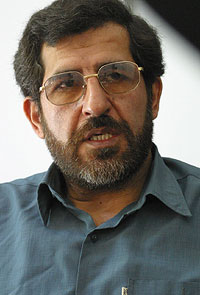
What do you do when your imprisoned friends and political allies admit to plotting against the Islamic Republic of Iran in an elaborate and suspiciously scripted series of televised confessions?
What if you’re worried you’re next?
You could skip town or keep quiet. Or, if you are prominent opposition activist Mohsen Armin, you can try and beat the authorities at their own game by issuing a retraction of any future televised confession in anticipation of your own arrest and possible torture.
Armin, a member of Islamic Revolution Combatants Organization, or the IRCO, posted the renunciation on his website under the glib headline “I look forward to being detained.” [continued…]
Iranian opposition figures living abroad have long insisted that the majority of those living in the country were opposed to the Islamic Republic. They’ve found an unlikely ally in a top aide to President Mahmoud Ahmadinejad, Esfandiar Rahim Mashaei, who made some curious statements to supporters.
According to the hard-line Panjereh weekly, published by the former head of the hard-line Basiji Students Organization, Mashaei said Ahmadinejad received only 4 million votes from his supporters in the June 12 presidential election. In total, Ahmadinejad received about 24 million of the 40 million votes cast in the heavily disputed election.
“The remaining 20 million [who voted for Ahmadinejad] were in fact critical of the regime and they are more serious than the 13 million” who voted for Mousavi, the weekly quoted Mashaei as saying in its Sunday edition, according to an account on the news website Ayanadenews.com.
“These 13 million voters only questioned the four-year performance of Ahmadinejad,” he continued. “But the 20 million were critical of all the years before Ahmadinejad took office.”
His comment suggests that Mashaei believes the vast majority of those who voted for Ahmadinejad rejected the performance of the government from 1981 to 1989, when Iran’s supreme leader, Ayatollah Ali Khamenei, was president, as well as the subsequent 16 years, when Khamenei gave his blessing to the presidencies of Ayatollah Ali Akbar Hashemi Rafsanjani and Mohammad Khatami. [continued…]
In the face of mounting pressure from hawks in Washington and the continued threat of military action from Israel, the Barack Obama Administration has been taking a harder line in its latest pronouncements about Iran.
Recent media reports have suggested that the administration is leaning toward an end-of-September deadline for Tehran to respond to U.S. diplomatic outreach concerning its nuclear programme, at which point it will consider stepping up sanctions against the Iranian energy sector.
This course would cut against the advice of a growing number of Iran analysts, who have cautioned both that the Tehran regime is in no position to negotiate at the moment and that sanctions are likely only to solidify the power of Supreme Leader Ali Khamenei and President Mahmoud Ahmadinejad. [continued…]
Editor’s Comment — Barack Obama has crossed a politically dangerous threshold: from actor to reactor. It’s going to be hard reversing the trend.
In the next few weeks, suppose “the Iranians” — a collective noun that should at this point only appear in quotes since no one actually knows exactly who this refers to — suppose “the Iranians” come back with this as their response to Obama’s offer of talks:
We’re ready, but clearly you aren’t. Push your healthcare plan through Congress by the end of September and then we can talk. We can’t talk to you now — you’re administration is too weighed down by domestic political issues.
How dare “the Iranians” try and dictate American affairs, everyone in Washington would scream. Indeed, the idea that a complex piece of legislation could be advanced under arbitrary external pressure would be seen as absurd.
Meanwhile, Washington appears to have picked up Michael Ledeen’s favorite mantra: “faster, please!”
Israeli media reports that visiting National Security Adviser General Jim Jones and Secretary of Defense Robert Gates have told the government of Prime Minister Benjamin Netanyahu to stop complaining about Iran because the US is preparing to take action “in eight weeks” demonstrate that even when everything changes in Washington, nothing changes. President Barack Obama has claimed that a peaceful settlement of the Palestinian-Israeli conflict is a high priority but the Israelis and their allies in congress and the media have been able to stonewall the issue. Israel has made no concessions on its settlement policy, which is rightly seen as the single biggest obstacle to eventual creation of a Palestinian state, and has instead pushed ahead with new building and confiscations of Arab homes. Obama has protested both Israeli actions but done nothing else, meaning that Israel has determined that the new US president’s policies are toothless, giving it a free hand to deal with the Arabs. Vice President Joe Biden’s comments that Israel is free to attack Iran if it sees fit was a warning that worse might be coming. If the Israeli reports are true, it would appear that the Obama Administration has now bought completely into the Israeli view of Iran and is indicating to Tel Aviv that it will fall into line to bring the Mullahs to their knees. In short, Israel gets what it wants and Washington yet again surrenders. [continued…]
Iran’s legal system came under fresh criticism Wednesday amid allegations of prisoner abuse and controversy over televised courtroom confessions, decried as “show trials” by domestic and international critics.
The country’s leading opposition figurehead and a prominent conservative, both losing candidates in June’s disputed presidential election, denounced the trials and alleged violence against detained protesters. A statement purportedly signed by a group of Tehran judges condemned the treatment of prisoners and the televised confessions of suspects allegedly mistreated and held in solitary confinement for weeks without lawyers.
Authorities hinted that they might release 24-year-old French national Clotilde Reiss on bail into the custody of the French Embassy in Tehran. The researcher was arrested and held for weeks for taking pictures of postelection demonstrations and e-mailing messages about the unrest to her friends. Her confession was aired Saturday, drawing condemnation from the European Union and France. [continued…]
Nearly a month later, she can’t erase images of the dying young man from her mind.
All but two of his upper teeth had been knocked out. His nails had been pulled out. His head had been bashed in. His kidneys had stopped working. But what most disturbed her, she said, were the stitches around his anus — a sign, the nurses told her, that he had been raped.
Iranian reformist websites and activists in recent days had identified 19-year-old Mohammad K. as one of the protesters arrested during Iran’s postelection unrest, locked up in the Kahrizak detention facility and severely beaten.
He died in the late hours of July 16 or the early hours of July 17 at a hospital in Tehran, according to the websites. [continued…]
Observers have for weeks heard various theories that purport to prove that Iran’s June 12 presidential elections were rigged. They have come from Western think tanks, mathematicians and, of course, supporters of opposition figurehead Mir-Hossein Mousavi, who ran and lost against Mahmoud Ahmadinejad.
But the latest tantalizing tidbit, from the camp of Ahmadinejad, comes from the website Rajanews.com, which is run by a strident backer of the president, lawmaker Fatemeh Rajabi.
In paragraphs tucked into the end of an article posted Monday, the website may have inadvertently published information damning to its own president while trying to smear the speaker of parliament, a conservative rival of Ahmadinejad. [continued…]
A bout 200 conservative Iranian lawmakers signed a letter on Monday calling on President Mahmoud Ahmadinejad to consult them about cabinet appointments, the latest sign of a struggle among hard-liners that may limit the president’s political clout as he moves to form a new government in the coming week.
The lawmakers’ demands followed reports that Mr. Ahmadinejad had fired as many as 20 officials in Iran’s Intelligence Ministry. The purge appeared to be aimed at those who disagreed with the handling of the harsh crackdown on opposition protests in the wake of the disputed June 12 presidential election.
The firings have exposed sharp differences among conservatives over how to deal with Iran’s still defiant opposition movement. Last month, Mr. Ahmadinejad fired the intelligence minister, Gholam-Hussein Mohseni-Ejei, provoking furious criticism from many conservative lawmakers and senior clerics. Mr. Mohseni-Ejei had objected to using televised confessions of jailed protesters — widely believed even in Iran to be coerced — and since his removal, those confessions have been used in a mass trial of reformist figures. [continued…]
Secretary of State Hillary Clinton said Sunday that the United States did a lot “behind the scenes” to show support for demonstrators contesting Iran’s disputed presidential election results.
“We did not want to get between the legitimate protests and demonstrations of the Iranian people and the leadership,” Clinton said in an interview with CNN broadcast on Sunday.
“And we knew that if we stepped in too soon, too hard… the leadership would try to use us to unify the country against the protestors.”
“Now, behind the scenes, we were doing a lot,” Clinton said. “We were doing a lot to really empower the protestors without getting in the way. And we’re continuing to speak out and support the opposition.” [continued…]
Editor’s Comment — If the Iranian revolutionary court recently trying protesters in Tehran had been able to subpoena Hillary Clinton to testify on behalf of the prosecution, this is what they would have wanted her to say: “behind the scenes, we were doing a lot.”
This is not what President Obama should want his chief diplomat to be saying. What the hell was she thinking?
There is one thing that movers and shakers (while they’re doing all their moving and shaking) find almost impossible to grasp: there are times when doing nothing is better than doing something.
Tell the Iranian people: we’re with you in spirit and we’re rooting for you, but this is your fight. The best we can do is to do nothing that will empower those who want to oppress you.
Revolutionary Guard generals, top politicians and senior clerics have called for the arrest and punishment of opposition leaders, including defeated presidential candidate Mir Hossein Mousavi, Iranian state media reported Sunday, while the national police chief acknowledged that protesters had been mistreated while in custody.[…]
“In order to end this mayhem, they need to arrest, try and punish these political figures,” Gen. Yadollah Javani, head of the political office of the Revolutionary Guard Corps, advised the judicial system Sunday, according to state news agency IRNA. “These individuals should be prosecuted, punished and tried as traitors.” He singled out Mousavi, fellow defeated candidate Mehdi Karroubi and former president Mohammad Khatami. The Revolutionary Guard is a force that plays a highly influential role in politics.
Mohammad Karami-Rad, a member of the parliament’s National Security and Foreign Policy Commission, told Iran’s Journalists Club on Sunday that the government was pursuing a complaint against Mousavi, but he did not provide details.
Coupled with the trials already underway, charges against Mousavi and other top opposition figures would mark an unprecedented attempt to purge a faction that has been part of the nation’s political fabric since the Islamic revolution 30 years ago. It comes after a decades-long dispute between the faction now represented by Ahmadinejad and the one now led by Mousavi, which erupted into open conflict in the run-up to the elections. [continued…]
Ian’s president has conducted a purge of the nation’s Intelligence Ministry, sweeping aside ranking officials with decades of experience in favor of loyalists, said a lawmaker, several news websites and a former intelligence chief’s son.
The move, chronicled by news outlets Sunday, underscores the deep rifts and disarray within the highest echelons of the country’s security apparatus since President Mahmoud Ahmadinejad’s disputed June 12 reelection. [continued…]
Iran’s defeated presidential candidate Mehdi Karoubi said some of those detained after the country’s disputed June presidential vote had been raped in detention, according to his website on Sunday.
“Some senior officials told me that … really shameful issues … Some young male detainees were raped … also some young female detainees were raped in a way that have caused serious injuries,” the website quoted a letter Karoubi wrote 10 days ago to Akbar Hashemi Rafsanjani, head of a powerful arbitration body, as saying. [continued…]
Iran’s police chief admitted yesterday that protesters who were arrested after June’s disputed presidential election had been tortured while in custody in a prison in south-west Tehran. But he denied that any of the detainees had died as a result.
General Ismail Ahmadi Moghaddam said the head of the Kahrizak detention centre had been dismissed and jailed. “Three policemen who beat detainees have been jailed as well,” the official IRNA news agency quoted Moghaddam as saying.
Human rights groups had previously identified at least three detainees they said had died after torture at Kahrizak, which was closed last month on the orders of Iran’s supreme leader, Ayatollah Ali Khamenei. Moghaddam denied that the abuses were responsible for any fatalities there, claiming that an unspecified “viral illness” had caused the deaths. [continued…]
This website or its third-party tools use cookies, which are necessary to its functioning. By closing this banner, you agree to the use of cookies.





 hat do you do when your imprisoned friends and political allies admit to plotting against the Islamic Republic of Iran in an elaborate and suspiciously scripted series of televised confessions?
 — If the Iranian revolutionary court recently trying protesters in Tehran had been able to subpoena Hillary Clinton to testify on behalf of the prosecution, this is what they would have wanted her to say: “behind the scenes, we were doing a lot.”