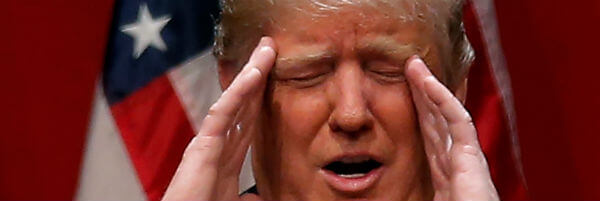
The New York Times reports: When Special Agent Adrian Hawkins of the Federal Bureau of Investigation called the Democratic National Committee in September 2015 to pass along some troubling news about its computer network, he was transferred, naturally, to the help desk.
His message was brief, if alarming. At least one computer system belonging to the D.N.C. had been compromised by hackers federal investigators had named “the Dukes,” a cyberespionage team linked to the Russian government.
The F.B.I. knew it well: The bureau had spent the last few years trying to kick the Dukes out of the unclassified email systems of the White House, the State Department and even the Joint Chiefs of Staff, one of the government’s best-protected networks.
Yared Tamene, the tech-support contractor at the D.N.C. who fielded the call, was no expert in cyberattacks. His first moves were to check Google for “the Dukes” and conduct a cursory search of the D.N.C. computer system logs to look for hints of such a cyberintrusion. By his own account, he did not look too hard even after Special Agent Hawkins called back repeatedly over the next several weeks — in part because he wasn’t certain the caller was a real F.B.I. agent and not an impostor.
“I had no way of differentiating the call I just received from a prank call,” Mr. Tamene wrote in an internal memo, obtained by The New York Times, that detailed his contact with the F.B.I.
It was the cryptic first sign of a cyberespionage and information-warfare campaign devised to disrupt the 2016 presidential election, the first such attempt by a foreign power in American history. What started as an information-gathering operation, intelligence officials believe, ultimately morphed into an effort to harm one candidate, Hillary Clinton, and tip the election to her opponent, Donald J. Trump.
Like another famous American election scandal, it started with a break-in at the D.N.C. The first time, 44 years ago at the committee’s old offices in the Watergate complex, the burglars planted listening devices and jimmied a filing cabinet. This time, the burglary was conducted from afar, directed by the Kremlin, with spear-phishing emails and zeros and ones. [Continue reading…]
Category Archives: Lands
Russia, NATO, Trump: The shadow world
Robert Cottrell writes: NATO and Russia are close to war, according to General Sir Richard Shirreff, recently NATO’s second-in-command. In 2017: War with Russia, he writes that Russia could invade the Baltic states, which are NATO members, while NATO does nothing. When crisis strikes, the British prime minister is at the pub, the Germans are paralyzed by anxiety, and the Greeks and Hungarians are in Russia’s pocket. The Americans are raring to go, but three countries have to fall before they can persuade their European partners to share their sense of urgency.
And one could almost now say that Shirreff’s alarmism has been overtaken by events, which are conspiring to demolish even the outward show of solidarity on which NATO relies for its deterrence. Britain’s vote to leave the European Union and Turkey’s post-coup crackdown call into question the strategic direction of two of NATO’s major military powers. As for Donald Trump’s argument during the presidential campaign that America’s richer allies should pay adequately for their protection, it was a fair point in principle, but a fatal thing to say in public. It made clear that America’s commitment to NATO would not be unconditional under President Trump; and if America’s commitment is not unconditional, then fairly obviously it will not extend to nuclear war. The cat is out of the bag. Seen from Moscow, the West has not been in such inviting disarray since the Suez crisis of 1956. Whatever constraints Putin may now feel upon his land-grabbing instincts, they must be entirely domestic in nature. NATO is no longer one of them.
Shirreff was Deputy Supreme Allied Commander Europe, NATO’s second-ranking military officer, from 2011 to 2014. Before that he was commander of NATO’s Allied Rapid Reaction Corps. He should know of what he speaks. He writes his book in the manner of a popular thriller, full of stock characters and military jargon. But he insists upon its truth to life. He says in his preface: “This is not fiction as such. This is fact-based prediction, very closely modelled on what I know, based on my position as a very senior military insider at the highest and best-informed level.”
2017 begins with a new Russian invasion of Ukraine. [Continue reading…]
Rex Tillerson’s company, Exxon, has billions at stake over sanctions on Russia
The New York Times reports: Now that President-elect Donald J. Trump has chosen Rex W. Tillerson, the chief executive of Exxon Mobil, to be the next secretary of state, the giant oil company stands to make some major gains as well: It has billions of dollars in deals that can go forward only if the United States lifts sanctions against Russia.
As head of America’s largest oil company, Mr. Tillerson has earned a friendship award from Russia and voiced skepticism about American sanctions that have halted some of Exxon Mobil’s biggest projects in the country.
But Mr. Tillerson’s stake in Russia’s energy industry could create a very blurry line between his interests as an oilman and his role as America’s leading diplomat.
“The chances that he will view Russia with Exxon Mobil DNA are close to 100 percent,” said Robert Weissman, the president of Public Citizen, a public interest group based in Washington. [Continue reading…]
Bloomberg reports: Rex Tillerson, the Exxon Mobil Corp. chief who is President-elect Donald Trump’s leading candidate for secretary of state, visited the White House repeatedly as sanctions were imposed on Russia in 2014 to make sure his company’s competitors didn’t gain an edge in the way they were enforced.
Tillerson made at least 20 visits to the White House during President Barack Obama’s two terms, visitor logs show, including five after Obama began authorizing the 2014 sanctions in response to Russian aggression toward Ukraine. [Continue reading…]
Last rebels in Aleppo say Assad forces are burning people alive
The Daily Beast reports: Amid celebratory gunfire and cheers from Assad loyalists, foreign militias under Iranian command and troops loyal to the regime on Monday captured about 90 percent of the opposition-held areas of eastern Aleppo.
The last hope of the besieged rebels, most of whom seem to have withdrawn in the face of certain defeat, had been to receive reinforcements or resupplies from their counterparts in the southern and western suburbs. That option has now been foreclosed upon as these routes are completely interdicted by the regime.
The triumphal takeover of the citadel of the Syrian revolution followed a day of intense bombing of houses and apartment buildings, destroying so many that it was impossible to determine the death toll. The neighborhoods of Bustan al-Qasr, al-Kallasa, al-Farod and al-Salhin in the Old City, as well as Sheikh Saed, in the southern district, are all now under regime control.
The Syrian Civil Defense, or White Helmets, an internationally renowned team of first responders, said more than 90 bodies of people presumed to be still alive are under debris and that its volunteer staff reported they could hear the voices of children trapped in the rubbles of their houses.
A member of the group in Aleppo told al-Arabiya TV on Monday night that men, women, and children were huddling and crying in the streets and at the gates of empty buildings in the few neighborhoods that remained in the hands of the opposition. He described the situation as hopeless, because precision munitions and indiscriminate barrel bombs had destroyed the city’s medical facilities, ambulances, and fuel supply. [Continue reading…]
The Washington Post reports: The United Nations warned Tuesday that dozens of people may have been executed in the Syrian city of Aleppoas pro-government troops seized what remained of the rebels’ most famous stronghold.
Rupert Colville, a spokesman for the U.N. human rights council, said his office received reports that pro-government forces had killed at least 82 civilians, entering homes and killing people “on the spot.”
Others were reportedly shot as they fled. A list of names provided to the U.N. included 11 women and 13 children, he said. [Continue reading…]
"This is extermination by the definition of that word in the founding document of the ICC." @NewYorker's @BenTaub91 on the death of Aleppo pic.twitter.com/CsoL9MtdXM
— Julia Macfarlane (@juliamacfarlane) December 13, 2016
The fall of Aleppo
‘No place now to go’: Syrians post desperate messages from besieged Aleppo
The Washington Post reports: The shaky cellphone video shows Abdulkafi al-Hamdo, a Syrian English teacher, crouching behind a stone wall, the hood of a yellow Adidas sweatshirt pulled over his dark hair. Rain beats down in the background as he speaks into the camera.
Al-Hamdo says he has spent the night in eastern Aleppo fleeing from Syrian government forces, who had all but completed their brutal siege of the city’s last rebel-held neighborhoods on Tuesday.
President Bashar al-Assad’s troops are closing in, al-Hamdo says, fighting back tears, “maybe 300 meters away.”
“No place now to go. It’s the last place,” he says in the video, posted to Twitter just before midnight Monday. “I don’t know really what to say. Words can’t go out now. I hope you can do something to stop the expected massacres.”
He continues: “No one slept this night. I just slept for an hour. My wife, my daughter, all the people who I know, they’re . . .”
The audio cuts out first. Then the video ends.
As Syrian forces stormed the last sliver of the city controlled by the opposition, Syrians such as al-Hamdo posted desperate messages to social media, some of them saying they believed they would be captured or killed by government troops. [Continue reading…]
Trump picks ExxonMobil CEO Rex Tillerson to be secretary of state
The Washington Post reports: President-elect Donald Trump has picked as his secretary of state Rex Tillerson, the chief executive of ExxonMobil, setting up a possible confrontation with members of his own party in the Senate, Trump’s transition team announced Tuesday.
Since Tillerson’s name emerged as a candidate for the post, leading Republicans have expressed reservations about his years of work in Russia and the Middle East on behalf of the multinational petroleum company.
GOP advisers have warned that a growing number of Republican senators may be unwilling to vote to confirm Tillerson because of his ties to Russia. While Senate Democrats cannot filibuster Trump’s Cabinet picks, Republicans have only 52 votes in the Senate, leaving them in potential jeopardy if Democrats unite in opposition to Tillerson. It will take at least 50 votes to confirm a nominee, plus Vice President-elect Mile Pence casting a tiebreaking vote. [Continue reading…]
The Daily Beast reports: Donald Trump’s long-time but informal adviser Roger Stone says the Secretary of State job was dangled in front of Mitt Romney in order to “torture” him for previously opposing the president-elect.
During a Sunday appearance on InfoWars with Alex Jones, a conspiratorial media outlet that has become a mouthpiece of the next president, Stone called Romney a “choker” and said that Trump was simply toying with him.
“Donald Trump was interviewing Mitt Romney for Secretary of State in order to torture him,” Stone claimed on the program. “To toy with him. And given the history, that’s completely understandable. Mitt Romney crossed a line. He didn’t just oppose Trump, which is his democratic right, he called him a phony and a fraud. And a con man. And that’s not the kind of man you want as Secretary of State.” [Continue reading…]
U.S. intelligence officials say Russian hacks ‘prioritized’ Democrats
The Washington Post reports: The CIA assessment that Russia waged a cyber-campaign to help elect Donald Trump is based in part on intelligence suggesting that Moscow’s hacking efforts were disproportionately aimed at targets tied to the Democratic Party and its nominee, Hillary Clinton, U.S. officials said.
U.S. officials said that both parties were repeatedly targeted as part of a months-long cyber-operation linked to Moscow, but that Democratic institutions and operatives came under a more sustained and determined online assault.
U.S. officials said the Republican National Committee’s computer systems were also probed and possibly penetrated by hackers tied to Russian intelligence services, but that it remains unclear how much material — if any — was taken from the RNC.
The lack of a corresponding Republican trove has contributed to the CIA assessment, reported by The Washington Post, that Russia was seeking to elect Trump and not merely to disrupt last month’s presidential election. [Continue reading…]
Fmr. CIA Acting Dir. Michael Morell on Russian interference: ‘This is the political equivalent of 9/11’
Suzanne Kelly interviewed former CIA Acting Director Michael Morell: Tell me about the significance of these allegations if they are true, what’s the overall significance to national security if Russia was successful in doing something like this?
I think the first point is it’s really interesting, and you said this earlier, this is not a new story. We knew back in October that Russia was meddling in the election. In October, the Obama Administration said publicly that Russia was interfering with the election and that the knowledge and direction of that went to the highest levels of the Russian government. This was, in my mind, the first time in American history that our government has accused another government of meddling in our election. This is huge. What was new in The Washington Post story, if its right—we still don’t know whether its right, and whether the rest of the IC agrees or not—but that the CIA believes the intent of the meddling was to help Mr. Trump and hurt Mrs. Clinton’s chances. That meddling went way beyond just stealing the DNC and Podesta information and giving it to WikiLeaks, that’s what’s new.
But what’s important to me is, it’s less important that they had picked the winner and loser, which I thought all along they had done. What’s most important is that they did indeed meddle. I think the implications of that are just absolutely huge, and I think there are three of them:
The first is, we need to see this for what it is. It is an attack on our very democracy. It’s an attack on who we are as a people. A foreign government messing around in our elections is, I think, an existential threat to our way of life. To me, and this is to me not an overstatement, this is the political equivalent of 9/11. It is huge and the fact that it hasn’t gotten more attention from the Obama Administration, Congress, and the mainstream media, is just shocking to me.
The second is that I agree with a whole bunch of people on the Hill, Democrats and Republicans, Sen. John McCain, that we need a bi-partisan commission to look into exactly what the Russians did and what we can do here at home to make sure that no foreign government can ever do this again to us. That’s why that commission is so important. The commission shouldn’t look into what is an unknowable thing – which is: did they affect the outcome or not – we’ll never know that. We’ll never know what the Russians did, whether it affected a single vote or not. But what we can do is figure out exactly what they did and make changes here at home as to how information is handled, how we protect information, and make sure they never do this again.
The third implication is we need to respond to the Russian attack. We need to deter the Russians and anyone else who is watching this—and you can bet your bottom dollar that the Chinese, the North Koreans, the Iranians are all watching. We need to deter all of those folks from even thinking about doing something like this in the future.
I think that our response needs to have two key pieces to it. One is it’s got to be overt. It needs to be seen. A covert response would significantly limit the deterrence effect. If you can’t see it, its not going to deter the Chinese and North Koreans and Iranians and others, so it’s got to be seen.
The second, is that it’s got to be significant from Putin’s perspective. He has to feel some pain, he has to pay a price here or again, there will be no deterrence, and it has to be seen by the rest of the world as being significant to Mr. Putin so that it can be a deterrant. [Continue reading…]
Stay informed. Click below to sign up for daily email updates from War in Context:
McConnell announces Senate probe of suspected Russian election interference
The Washington Post reports: Senate Majority Leader Mitch McConnell (R-Ky.) on Monday strongly condemned any foreign interference with U.S. elections and announced that the Senate intelligence panel will investigate Russia’s suspected election interference.
“The Russians are not our friends,” he told reporters at a scheduled year-end news conference.
McConnell’s announcement came a day after a group of senators called for a thorough, bipartisan investigation of Russian interference. Some have endorsed the idea of a special select committee to lead an inquiry, but McConnell stopped short of endorsing that, saying that any congressional probe would follow “regular order” through the current committee structure.
“This simply cannot be a partisan issue,” he said, before adding that the Intelligence Committee “is more than capable of conducting a complete review of this matter.”
McConnell declined to address his role in a September briefing for lawmakers, where he reportedly dismissed intelligence assessments suggesting that Russia was trying to sway the presidential election in favor of Donald Trump. Instead, he credited Senate Republicans for standing firm against Russia and blamed President Obama for Russian encroachment around the globe. [Continue reading…]
Trump’s ideological affinity with Putin
Peter Beinart writes: Through his public statements and presidential appointments, Donald Trump is remaking Republican foreign policy in two fundamental ways. The first concerns Russia. Previous GOP leaders like Mitt Romney and John McCain described Moscow as an adversary. Trump describes it as a partner. The second concerns Islam. Previous GOP leaders — most notably George W. Bush — insisted that the U.S. had no beef with Islam, or with the vast majority of Muslims worldwide. Trump and his top advisors disagree. They often describe Islam itself as a hostile force, and view ordinary Muslims as guilty of jihadist sympathies until proven innocent.
On the surface, these two shifts seem unrelated. But they’re deeply intertwined. Before Trump, Republican leaders generally described the United States as fighting an ideological struggle against the enemies of freedom. Now, Trump and his advisors describe America as fighting a civilizational struggle against the enemies of the West. Seen through that very different lens, Muslims look more nefarious and Vladimir Putin looks more benign. [Continue reading…]
The Kremlin gloats over Trump’s CIA tantrum
Anna Nemtsova reports: The news that U.S. President-elect Donald Trump called CIA claims about Russia’s involvement in the election process “ridiculous” was cause for celebration in Russia.
“Finally, the U.S. president does not trust CIA!” exclaimed one of Trump’s many Russian fans.
Authorities, who just a few weeks ago were busy training people to hide in bunkers in case the Americans dropped nuclear bombs, now applauded the U.S. president-elect and welcomed his incoming administration’s “a dream team.”
To Moscow officials every step Trump takes, including his harsh criticism of the Central Intelligence Agency, sounds like a victory for President Vladimir Putin.
But wait, was Moscow in fact behind the hackers who attacked the Democratic National Committee and leaked their goodies to Wikileaks, among others (and also attacked the Republican National Committee, but kept that stuff to themselves)?
In Russia, many people are blasé about such charges. This is a country where opposition politicians and journalists are gunned down in the streets. This is a government that has annexed Crimea, and backed rebels in the war in Ukraine. It is also the government, that called the international investigation into the catastrophe of a civilian airliner, MH17, blown out of the sky: “biased.” It’s also the same government that insists it never had ++a state-sponsored doping system for its athletes. Plausible deniability — and even implausible deniability — is its standard operating procedure.
It’s also a country with vast and deep criminal organizations well versed in cyber crimes. [Continue reading…]
Trump risks war by turning the One China question into a bargaining chip
Steven Goldstein writes: President-elect Donald Trump has just said that he considers America’s One China policy a bargaining chip, to be traded off against other things that the United States wants from China. In his description:
I don’t know why we have to be bound by a One China policy unless we make a deal with China having to do with other things, including trade. … I mean, look … we’re being hurt very badly by China with devaluation; with taxing us heavy at the borders when we don’t tax them; with building a massive fortress in the middle of the South China Sea, which they shouldn’t be doing; and, frankly, with not helping us at all with North Korea.
In other words, the One China policy isn’t a big deal — it’s a bargaining issue, like many other issues. So is Trump right?
No. The big deal is this: The relationship between the People’s Republic of China (PRC) and Taiwan is an ambiguous one, where the People’s Republic claims Taiwan as part of its national territory but is prepared for the present to let Taiwan continue in existence, while Taiwan also has an interest in not clarifying its relationship with the People’s Republic too precisely. Both the PRC and the United States adhere to the notion of One China, but they mean very different things by it. Undermining the status quo could lead to full-scale military conflict between the United States and China over an island that both see as vital to their national interests and whose unique status they have managed well up to this point. [Continue reading…]
After ISIS, Iraq at risk of a new battle for disputed territory
The Washington Post reports: When the Kurdish peshmerga commander arrived in this town in northern Iraq last month, he knew he was there to stay.
Col. Nabi Ahmed Mohammed’s force of 300 fighters had been tasked with securing Bashiqa as part of the Iraqi military’s offensive against the Islamic State in the nearby city of Mosul. The town had been home to minority Yazidis who were forced to flee when the militants arrived in 2014.
When Kurdish troops pressed into the town, they faced sniper fire and attacks from militants in underground tunnels. At least eight peshmerga were killed.
Now, Mohammed’s men are making plans for a permanent presence in the bombed-out town, long claimed by both the Kurds as part of their semiautonomous region and by the central government in Baghdad. [Continue reading…]
Russian interference in American democracy
In responding to assertions attributed to CIA analysts who say that Russia interfered in the U.S. presidential election in order to help Donald Trump win, the president-elect is following the standard business practice employed by oil companies and the tobacco industry in order to deflect criticism: first come the categorical denials whose purpose is to trample on the questions and belittle the questioners; then comes the cloud of uncertainty whose purpose is to promote a sense of equality in the face of the unknown.
Whereas other practitioners of this strategy often take years to move from stage one to stage two, Trump makes the leap within a few sentences. Having first dismissed the CIA’s claim as ridiculous, Trump then pleaded ignorance.
In order to foster an all-embracing sense of uncertainty, in his interview aired on Fox News yesterday, Trump said: “there’s great confusion. Nobody really knows…. They’re not sure. They’re fighting among themselves. They’re not sure…. if you read the stories, the various stories, they’re disputing. And certain groups don’t necessarily agree. Personally, it could be Russia. It — I don’t really think it is. But who knows? I don’t know either. They don’t know and I don’t know.”
If Trump has actually read the news reports he’d know that there is a consensus in the intelligence community and the FBI that Russia interfered in the election.
What is in dispute is not the fact of the interference but its purpose.
News reporting is currently reducing this dispute to a binary question about whether Russia was trying to install Trump as president, but for those willing to speculate about Russian objectives the analysis needs to be a bit more subtle.
What should not be in dispute is the claim that Russia had a preference for Trump. As the New York Times reports:
American officials cite broad evidence that Mr. Putin and the Russian government favored Mr. Trump over Mrs. Clinton.
After demonstrators marched through Moscow in 2011 chanting “Putin is a thief” and “Russia without Putin,” Mr. Putin publicly accused Mrs. Clinton, then the secretary of state, of instigating the protests. “She set the tone for some actors in our country and gave them a signal,” he said.
More generally, the Russian government has blamed Mrs. Clinton, along with the C.I.A. and other American officials, for encouraging anti-Russian revolts during the 2003 Rose Revolution in Georgia and the 2004 Orange Revolution in Ukraine. What Americans saw as legitimate democracy promotion, Mr. Putin saw as an unwarranted intrusion into Russia’s geographic sphere of interest, as the United States once saw Soviet meddling in Cuba.
By contrast, Mr. Trump and Mr. Putin have had a very public mutual admiration society. In December 2015, the Russian president called Mr. Trump “very colorful” — using a Russian word that Mr. Trump and some news outlets mistranslated as “brilliant” — as well as “talented” and “absolutely the leader in the presidential race.” Mr. Trump called Mr. Putin “a strong leader” and further pleased him by questioning whether the United States should defend NATO members that did not spend enough on their militaries.
Russian television, which is tightly controlled by the government, has generally portrayed Mr. Trump as a strong, friendly potential partner while often airing scathing assessments of Mrs. Clinton.
And yet, there is skepticism within the American government, particularly at the F.B.I., that this evidence adds up to proof that the Russians had the specific objective of getting Mr. Trump elected.
A senior American law enforcement official said the F.B.I. believed that the Russians probably had a combination of goals, including damaging Mrs. Clinton and undermining American democratic institutions. Whether one of those goals was to install Mr. Trump remains unclear to the F.B.I., he said.
The official played down any disagreement between the F.B.I. and the C.I.A., and suggested that the C.I.A.’s conclusions were probably more nuanced than they were being framed in the news media.
There is little reason to doubt that Russia has always had a strong preference for Trump and yet when the DNC hacking was instigated, everyone — including the Russians — must have seen a Trump victory as a long-shot.
So, discussion about Russian intentions needs to take account of the strong likelihood that its goals evolved. As the Washington Post reported in July, “It may be that the Kremlin wishes to disrupt and discredit the U.S. political process without seeking any particular result.”
And yet through a combination of the effect of multiple factors — leaked emails, relentless attacks on Hillary Clinton’s integrity, the lack of a compelling Democratic Party message, and then a decisive last minute assist from the FBI — Donald Trump won the election.
This is the outcome Russia wanted and helped bring about.
And if there is any remaining doubt that it will be duly rewarded for its efforts, the first serving is about to get dished out this week in the form of Rex Tillerson, chief executive of Exxon Mobil, whose appointment as Secretary of State is already being praised by the Kremlin even before it has been announced.
Stay informed. Click below to sign up for daily email updates from War in Context:
Benjamin Netanyahu welcomes Trump presidency
What Donald Trump chooses to ignore

This is part of what Donald Trump said in an interview broadcast on Fox News today:
CHRIS WALLACE, FOX NEWS ANCHOR: According to The Washington Post, the CIA has concluded that Russia intervened in the election to help you win the presidency. Your reaction?
DONALD TRUMP, R-PRESIDENT-ELECT: I think it’s ridiculous. I think it’s just another excuse. I don’t believe it… No, I don’t believe that at all.
WALLACE: You say you don’t know why. Do you think the CIA is trying to overturn the results of the election —
TRUMP: No, I don’t think —
WALLACE: — somehow to weaken you in office?
TRUMP: Well, if you look at the story and you take a look at what they said, there’s great confusion. Nobody really knows.
[…]
WALLACE: You’ve said repeatedly you don’t believe the intelligence community’s analysis that the Russians were involved.
TRUMP: Take a look. They’re not sure. They’re fighting among themselves. They’re not sure.
WALLACE: But the question is, these are the folks you’re going to have to rely on to know what’s going on in the world?
TRUMP: Of course, we’re going to make changes, you know, at the top. I mean, we’re going to have different people coming in because we have our people, they have their people. And I have great respect for them.
But if you read the stories, the various stories, they’re disputing. And certain groups don’t necessarily agree. Personally, it could be Russia. It — I don’t really think it is. But who knows? I don’t know either. They don’t know and I don’t know.
[…]
WALLACE: President Obama just ordered a full review of Russia’s involvement, hacking in the election. And Democrats are now calling for hearings.
Do you think this is part of an effort to undercut you?
TRUMP: Well, it could be. I think President Obama’s been terrific. He’s been very respectful of the process and everything else. So, I saw that.
But — and I want it too. I think it’s great. I think — I don’t want anyone hacking us. And I’m not only talking about countries. I’m talking about anyone, period.
But if you’re going to do that, I think you should not just say Russia, you should say other countries also, and maybe other individuals.
In summary, Donald Trump thinks that the CIA’s claim that Russia intervened to help him win the election is ridiculous. He doesn’t believe it at all.
But he also thinks Russia could have hacked the election and says “I don’t know.”
Tucked inside this contradictory mix of disbelief and doubt is Trump’s overriding conviction: that if he is ever compelled to publicly acknowledge that Russia played an instrumental role in his victory, a fatal blow will have been struck at the legitimacy of his presidency.
No wonder he chooses to get as few intelligence briefings as possible.
Trump is more concerned about avoiding hearing information he doesn’t want to hear than he desires to be apprised of current threats to the national security of the United States.
In an era during which both politicians and the public have become hyperfocused on overstated threats from terrorism, what is actually now in jeopardy is American democracy itself.
Fortified borders and expanded military forces will provide no protection if opponents of democracy are already exerting their influence at the heart of government.
Trump’s insistence that no one really knows whether Russia intervened is a position that will nevertheless resonate in many quarters both because of widespread skepticism about the reliability of the CIA and because of the simple fact that the agency has thus far refrained from making clear exactly how much (or how little) it knows.
Nevertheless, no one should confuse the non-disclosure of evidence with its non-existence.
President Obama’s order that a report be completed before he leaves office, nevertheless suggests the possibility that President Trump will feel compelled to acknowledge the report’s findings.
If he doesn’t, it’s unlikely the report will show up on Wikileaks.
Even so, the more earnestly Trump buries the report’s conclusions, the more reasonably we can assume they must be explosive.
And the more explosive the facts are, the more likely that sooner or later they will become public knowledge.
* * *
Stay informed. Click below to sign up for daily email updates from War in Context:
Rex Tillerson, from a corporate oil sovereign to the State Department
Steve Coll writes: The news that President-elect Donald Trump is expected to nominate Rex Tillerson, the chairman and chief executive of ExxonMobil, as his Secretary of State is astonishing on many levels. As an exercise of public diplomacy, it will certainly confirm the assumption of many people around the world that American power is best understood as a raw, neocolonial exercise in securing resources.
Tillerson figures prominently in “Private Empire: ExxonMobil and American Power,” a book I wrote about the corporation that came out in 2012. He declined my requests to interview him for that project, but I turned up at several public appearances he made and asked him a few questions from the reporters’ gallery. I also studied his public remarks, reviewed accounts of his activities reported in State Department cables obtained by Freedom of Information Act requests or released by WikiLeaks, and conducted interviews with other ExxonMobil executives, retirees, friends, competitors, civil-society activists and business partners from Asia to Africa to the Middle East.
Tillerson’s life has been shaped to a profound extent by two institutions: ExxonMobil and the Boy Scouts of America. He grew up in Texas, where his father was a modestly compensated administrator for the Scouts. Tillerson became an Eagle Scout. An engineering major at the University of Texas, in Austin, Tillerson joined ExxonMobil in 1975. He has never worked anywhere else. Of all the companies that were born out of the breakup of Standard Oil, Exxon is culturally the most direct descendant of John D. Rockefeller’s monopolistic giant, which was organized on principles of ruthless capitalism and Protestant faith. Exxon today is an unusually cloistered corporation that promotes virtually all of its top executives from within. Former executives I interviewed mentioned that as recently as the nineteen-seventies, it was not unusual to start company meetings with a prayer. When Tillerson finally won a competition for the top job, in 2004, he directed substantial time and charitable activity toward the Boy Scouts. In public appearances, he comes across as sophisticated, yet his life is rooted in environments that are fundamentally nostalgic for imagined midcentury virtues and for the days when burning fossil fuels did not threaten to trigger catastrophic climate change. Tillerson once listed his favorite book as “Atlas Shrugged,” Ayn Rand’s 1957 novel that has become a touchstone for libertarians and promoters of unbridled capitalism. Compared to the records of some of the other people around Trump, Tillerson’s is at least one of professional integrity; Exxon is a ruthless and unusually aggressive corporation, but it is also rule-bound, has built up a relatively strong safety record, and has avoided problems such as prosecutions under the Foreign Corrupt Practices Act, even though it operates in many countries that are rife with corruption. [Continue reading…]