Category Archives: Lands

After Brexit vote, immigrants feel a town turn against them

The New York Times reports: A few days after Britain voted to leave the European Union, Monika Baginski was in a supermarket, chatting with a friend on the phone in her native Polish, when a man followed her down the aisle. “You foreigner,” Ms. Baginski recalled him saying. “You’ll be out soon.”

Ms. Baginski, 32, said she was stunned. Until that moment, she had never been the target of abuse, even in Boston, a port town on the east coast of England where rancor between longtime residents and the fast-growing population of recent immigrants has been simmering for years.

But since Britain’s referendum vote to leave the European Union, latent hostility toward the new arrivals — most of whom came to Boston from Central and Eastern Europe under rules that let European Union citizens live and work anywhere in the bloc — has burst into the open, many immigrants say. Many in the Latvian, Lithuanian, Polish and Romanian communities in the area are anxiously considering whether they should stay in Britain, or whether they even want to.

“Something is broken in this town,” said Paul Gleeson, a Labour Party councilor in Boston, where 76 percent of voters supported leaving the European Union, the highest pro-“Brexit” proportion in the country. “This veneer of propriety has suddenly disappeared.’’

In this new environment, some immigrants say they have stopped speaking their native tongue in public. Nervous mothers say they worry about their children being bullied at school. Young immigrants say they fear discrimination over jobs and university admissions.

Gregory Pacho, who is Polish-Italian, runs a thriving taxi company. For the first time in the 16 years he has lived in Boston, he said, he has given serious thought to moving out, prompted by a leaflet on his car’s windshield that read, “Did you pack your bags yet?” [Continue reading…]


Facebooktwittermail

Is America repeating the mistakes of 1968?

Julian E Zelizer writes: “All of us, as Americans, should be troubled by these shootings, because these are not isolated incidents,” said President Barack Obama following the horrific shootings of Alton Sterling and Philando Castile. “They’re symptomatic of a broader set of racial disparities that exist in our criminal-justice system.” In an American tragedy of the nation’s own making, Obama will end his historic presidency with racial turmoil rocking the nation. The person whose election brought so much hope about the trajectory of race relations in the United States, a country that has perpetually suffered from the original sin of slavery, is spending these days desperately trying to calm the anger over police killings of African Americans and the protests and violence that have ensued.

Today, America has a president who understands the urgent need to address the problems of institutional racism that have been broadcast to the entire world through smartphones and exposés of a racialized criminal-justice system. But this conflict is taking shape right in the middle of a heated election season—one that includes a candidate who has made draconian proposals for national security and who appeals to the “Silent Majority.” Following the events in Dallas, Donald Trump released a statement that read: “We must restore law and order. We must restore the confidence of our people to be safe and secure in their homes and on the street.”

This is not the first time this has happened. When questions over race and policing were front and center in a national debate in 1968, the federal government failed to take the steps necessary to make any changes. The government understood how institutional racism was playing out in the cities and how they exploded into violence, but the electorate instead was seduced by Richard Nixon’s calls for law and order, as well as an urban crackdown, leaving the problems of institutional racism untouched. Rather than deal with the way that racism was inscribed into American institutions, including the criminal-justice system, the government focused on building a massive carceral state, militarizing police forces, criminalizing small offenses, and living through repeated moments of racial conflict exploding into violence. [Continue reading…]

Facebooktwittermail

America remains an intentionally segregated society

Natalie Y Moore writes: After the shooting of Philando Castile in Minnesota last Wednesday, the state’s appalled governor, Mark Dayton, said police wouldn’t have killed Castile if he had been white. Here’s a white politician recognising racism and not swatting it away like a pesky mosquito. But we need to recognise that a rigged, racist system of police brutality is indicative of deep-seated institutionalised racism.

Many of our cities are defined by entrenched residential segregation that created black ghettos and continues to perpetuate inequity. This was not by accident. In the 20th century, the government created housing policies that discriminated against black people and favoured white people in terms of wealth building. Despite the idea of “separate but equal” being struck down by our courts, the ideology still lingers in housing and public education. This isn’t about hokey ideas of harmony, of black and white people smiling and getting along just for the sake of getting along. Instead, if we start to address segregationist policies, we may have some hope of creating fairness.

After racial uprisings in US cities in the 1960s, the Kerner Commission released a report, which asserted that our country was moving towards two societies: one black, one white, separate and unequal. The report said: “Segregation and poverty have created in the racial ghetto a destructive environment totally unknown to white Americans. What white Americans have never fully understood – but the Negro can never forget – is that white society is deeply implicated in the ghetto. White institutions created it, white institutions maintain it and white society condones it.”

These words still ring true today.

Police brutality isn’t isolated from other forms of racism. Segregation is about division, disinvestment and uneven resources based on race. In policing, we often see white officers who grew up in homogenous white places placed in black urban settings. These officers enter without understanding racial and cultural differences. It’s a set-up for failure.

Segregation isn’t about choosing to live among like-minded or racially similar people. American segregation is historic and intentional and must be a part of any conversation on race as the root of many of our problems. [Continue reading…]

Facebooktwittermail

With a hint of regret, Obama describes new kind of endless quasi-war

The Washington Post reports: President Obama, who had pledged to end America’s wars, described the landscape he was leaving to his successor as a state of quasi-war that could extend for years to come.

Obama, who was speaking Saturday to reporters at the NATO summit here, noted with pride that he has cut the size of the U.S. forces in Iraq and Afghanistan from 180,000 troops to fewer than 15,000.

But U.S. drones and fighter jets are striking targets in seven countries on a regular basis, a span of geography that is virtually unprecedented in American history outside of major wars. U.S. Special Operations forces are still conducting dangerous raids in countries such as Iraq, Afghanistan and Syria. [Continue reading…]

Facebooktwittermail

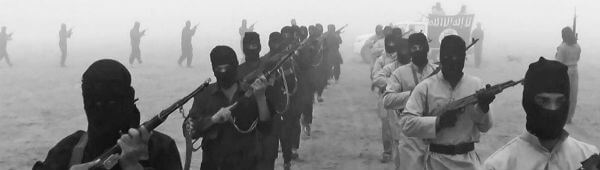
Is the ISIS unstoppable?

ISIS-catwalk-bw

Hassan Hassan writes: Before Fayad Tayih abandoned the Islamic State earlier this month, he detected a striking trend: More people inside the self-declared caliphate were signing up to become suicide bombers. Mr. Tayih had been working in an administrative job for the jihadist group in Deir al-Zour, in eastern Syria, at the time. “Those who were working with me noticed the same thing,” he told me over Wickr, an encrypted messaging app.

Statistics released by the Islamic State confirm his observations. According to monthly updates from Amaq, the group’s official news outlet, the Islamic State was carrying out 50 to 60 suicide attacks per month in Iraq and Syria last November. Today the number of such attacks is 80 to 100 per month, an average of two to three operations a day. The trend peaked in March, with 112 members blowing themselves up in Syria and Iraq.

The Islamic State is shifting tactics, and not just on the battlefields of Syria and Iraq. The group is reverting to insurgency tactics it relied on before June 2014, when it took over Iraq’s second-largest city, Mosul, and declared the formation of a caliphate. This operational change has been on plain display in recent weeks: Hundreds of civilians were killed in a spate of suicide attacks attributed to the Islamic State in Turkey, Iraq, Bangladesh and Saudi Arabia. In Baghdad last week, more than 280 civilians were killed when a car bomb exploded outside a shopping mall.

Some people have suggested that this is a sign of the group’s desperation and weakness. In fact, it demonstrates its strength and long-term survival skills. The Islamic State has known for years that it would suffer setbacks and have to find ways to adapt. In “The Management of Savagery,” a foundational text for the Islamic State’s ideology and strategy published in 2004, the author pointed out that in the 12th century, Muslims defeated the Crusaders with “small bands” and “separate, disparate organizations.” The group has not forgotten that message. [Continue reading…]

Facebooktwittermail

War reporter Marie Colvin was tracked, targeted and killed by Assad’s forces, family says

The Washington Post reports: American war correspondent Marie Colvin was deliberately targeted and killed by artillery fire in 2012 at the direction of senior Syrian military officers seeking to silence her reporting on civilian casualties in the besieged city of Homs, according to a civil lawsuit filed Saturday on behalf of her sister and other heirs.

Based on information from high-level defectors and captured government documents, the 32-page complaint alleges that the military was able to electronically intercept Colvin’s communications from a clandestine media center operating out of an apartment in the densely populated Baba Amr neighborhood in Homs. Syrian officials paired the intercepts with detailed information from a female informant to pinpoint the location of the reporter who worked for the Sunday Times of London.

Then, the suits says, military forces under the direction of President Bashar al-Assad’s brother, Maher, commander of Syrian army’s 4th Armored Division, launched a series of “bracketing” artillery attacks that came progressively closer to the media center, a classic artillery targeting tactic. [Continue reading…]

Facebooktwittermail

A week from hell

Charles Blow writes: This was yet another week that tore at the very fiber of our nation.

After two videos emerged showing the gruesome killings of two black men by police officers, one in Baton Rouge, La., and the other in Falcon Heights, Minn., a black man shot and killed five officers in a cowardly ambush at an otherwise peaceful protest and wounded nine more people. The Dallas police chief, David O. Brown, said, “He was upset about Black Lives Matter” and “about the recent police shootings” and “was upset at white people” and “wanted to kill white people, especially white officers.”

We seem caught in a cycle of escalating atrocities without an easy way out, without enough clear voices of calm, without tools for reduction, without resolutions that will satisfy.

There is so much loss and pain. There are so many families whose hearts hurt for a loved one needlessly taken, never to be embraced again.

There is so much disintegrating trust, so much animosity stirring.

So many — too many — Americans now seem to be living with an ambient terror that someone is somehow targeting them. [Continue reading…]

Facebooktwittermail

Death in black and white

Michael Eric Dyson writes: We, black America, are a nation of nearly 40 million souls inside a nation of more than 320 million people. And I fear now that it is clearer than ever that you, white America, will always struggle to understand us.

Like you, we don’t all think the same, feel the same, love, learn, live or even die the same.

But there’s one thing most of us agree on: We don’t want cops to be executed at a peaceful protest. We also don’t want cops to kill us without fear that they will ever face a jury, much less go to jail, even as the world watches our death on a homemade video recording. This is a difficult point to make as a racial crisis flares around us.

We close a week of violence that witnessed the tragic deaths of two black men — Alton B. Sterling and Philando Castile — at the hands of the police with a terrible attack in Dallas against police officers, whose names we’re just beginning to learn. It feels as though it has been death leading to more death, nothing anyone would ever hope for.

A nonviolent protest was hijacked by violence and so, too, was the debate about the legitimate grievances that black Americans face. The acts of the gunman in Dallas must be condemned. However, he has nothing to do with the difficult truths we must address if we are to make real racial progress, and the reckoning includes being honest about how black grievance has been ignored, dismissed or discounted. [Continue reading…]

Facebooktwittermail

Justice is indivisible

Gary Younge writes: In a country where it’s easier to obtain a semi-automatic gun than to obtain healthcare, a fragile mind can wreak havoc on a fragile political culture. So it was on Thursday night when a sniper opened fire on police at a Black Lives Matter demonstration killing five officers and wounding at least seven others.

Even as events in Dallas unfold there are three key things one can say. The first is that these murders are vile and should be unequivocally condemned. They can in no way be understood or excused as retaliation for the well-publicised recent incidents of police shootings of African Americans. Indeed the effect of such individual acts of violence is not to support the movement against racism but sabotage it. Its enemies will smear it by association; potential allies will be more wary; those within it will be more cautious. Those believed responsible should be found, charged and prosecuted. This is the appropriate response when people cavalierly and wantonly take the life of another. Anything less would lack justice.

Which brings us to the second point. Justice is indivisible. If it is accorded to some and not others it is not justice but privilege. That is why these horrific assassinations should in no way diminish the urgency or importance of the issue of police killings of African Americans or undermine the Black Lives Matter movement. [Continue reading…]


Facebooktwittermail

The bomb Dallas police used to kill alleged shooter

Lily Hay Newman writes: Three suspects have been apprehended after Thursday night’s Dallas shooting, which resulted in the death of five police officers and injured six more, plus one civilian. Following a prolonged standoff and negotiation with police, one suspect was killed by an explosion detonated by a bomb robot.

Robots have been proliferating in local policing over the last few years. The technology was largely developed for military and large-scale disaster response scenarios, but has obvious applications in local policing as well. It is used to diffuse or detonate bombs, scout locations with cameras, work in rubble, and do other jobs that are dangerous for officers. The Dallas shooting appears to be the first time a police robot has been used to kill.

Dallas police chief David Brown explained in a press conference Friday morning:

We cornered one suspect and we tried to negotiate for several hours. Negotiations broke down, we had an exchange of gunfire with the suspect, we saw no other option but to use our bomb robot and place a device on its extension for it to detonate where the suspect was. Other options would have exposed our officers to great danger. The suspect is deceased as a result of detonating the bomb.

The suspect who was killed claimed that he had planted bombs in the area, but the New York Times reports that officials said they swept the area and didn’t find any. The explosive the robot was carrying that killed the suspect was a police explosive. [Continue reading…]

Facebooktwittermail

Trump is wrong about Saddam Hussein

Hayder Al-Shakeri writes: As an Iraqi, I learned about the values on which the United States of America was built during an exchange semester in the US. I admired those values and respected Americans for believing in them. But Donald Trump contradicts some of those very principles. In a speech on Tuesday, I heard him praise the way Saddam killed “terrorists” without reading them rights or even letting them talk. This is not the American system that I was taught – nor these the values I respected.

“Saddam Hussein was a bad guy. Right? He was a bad guy, really bad guy. But you know what he did well? He killed terrorists. He did that so good. They didn’t read them the rights, they didn’t talk, they were a terrorist, it was over,” Donald Trump said in his speech.

It is true that Saddam killed many people. Saddam killed men and women, kids and minorities and many others who stood up to him. Most of them were not terrorists, though. Hundreds of thousands of lives have been wasted under his leadership/dictatorship. Iraq, in his opinion, might have looked better during his time, but Iraqis back then suffered greatly.

Saddam led Iraq into long wars lasting several years, during which Iraqis had to fight for what he believed in. He committed genocides against his people and eventually Iraq had up to 250 mass graves spread around in the country. Saddam went after anyone who opposed him – he didn’t care about violating basic human rights or democracy.

Through such acts, Saddam was able to instill terror in his people, making them afraid to whisper a word. That is how Saddam dealt with terrorism, by terrorizing everyone so no one would be able to speak or stand up to him. In that way, the state looked orderly and people seemed in a better place than right now. [Continue reading…]

Facebooktwittermail

Take it from a whistleblower: Chilcot’s jigsaw puzzle is missing a few pieces

Katharine Gun writes: Following the damning Chilcot report, much will be said about the decision to go to war in Iraq. But one thing will be missing: the information I leaked in the runup to the war. It won’t get an airing because I was never questioned or asked to participate in the Chilcot inquiry.

Back in early 2003, Tony Blair was keen to secure UN backing for a resolution that would authorise the use of force against Iraq. I was a linguist and analyst at GCHQ when, on 31 Jan 2003, I, along with dozens of others in GCHQ, received an email from a senior official at the National Security Agency. It said the agency was “mounting a surge particularly directed at the UN security council (UNSC) members”, and that it wanted “the whole gamut of information that could give US policymakers an edge in obtaining results favourable to US goals or to head off surprises”.

In other words, the US planned to use intercepted communications of the security council delegates. The focus of the “surge” was principally directed at the six swing nations then on the UNSC: Angola, Cameroon, Chile, Bulgaria, Guinea and Pakistan. The Chilcot report has eliminated any doubt that the goal of the war was regime change by military means. But that is what many people already suspected in 2003.

I was furious when I read that email and leaked it. Soon afterwards, when the Observer ran a front-page story: “US dirty tricks to win vote on Iraq war”, I confessed to the leak and was arrested on suspicion of the breach of section 1 of the Official Secrets Act. I pleaded not guilty and, assisted by Liberty and Ben Emmerson QC, offered a defence of necessity – in other words, a breach of the law in order to prevent imminent loss of human life. This defence had not and, to my knowledge, has still not, been tested in a court of law.

I believed that on receiving the email, UK parliamentary members might question the urgency and motives of the war hawks, and demand further deliberations and scrutiny. I thought it might delay or perhaps even halt the march towards a war that would devastate Iraqi lives and infrastructure already crushed by a decade of unrelenting sanctions. A war that would send UK and US service men and women into harm’s way, leaving hundreds of them dead, disfigured and traumatised. Unfortunately, that did not happen. It couldn’t, for now we know via Chilcot that Blair promised George W Bush he would be “with him, whatever”. [Continue reading…]

Facebooktwittermail

Death toll from Sunday Baghdad bombing nears 300

The Wall Street Journal reports: The death toll from the deadliest single car bombing in Baghdad since the U.S.-led invasion of Iraq in 2003 has reached at least 292 people, Iraq’s health ministry said Thursday.

The attack by Islamic State, which also wounded more than 200 others, struck the Iraqi capital’s busiest commercial areas early Sunday as shoppers and diners crowded the streets following the daily dawn-to-dusk fasting that marks the Muslim holy month of Ramadan. On Monday, authorities said 151 people had been killed in the blast.

Islamic State said its attack in the Karrada district targeted Shiite Muslims, whom it regards as apostates. It was the Sunni Muslim extremist group’s first major attack on the city since Iraqi forces ousted it from Fallujah in late June. [Continue reading…]

Facebooktwittermail

‘Brave New World’: Russia’s new anti-terrorism legislation

Anna Borshchevskaya writes: On June 7, Russian president Vladimir Putin signed controversial anti-terrorism legislation known in Russia as the “Yarovaya law,” named after its leading co-author, prominent member of Putin’s United Russia party Irina Yarovaya.

The law is reminiscent of Soviet-era surveillance. It will also likely contribute to crippling the Russian economy. According to Russian and Western sources, it allows for jailing children as young as 14 for a variety of vaguely-worded reasons, and significantly raises the costs of internet and telecommunications. Russia’s human rights activists and opposition politicians described the law as “unconstitutional.” Russia’s Presidential Council on Civil Society and Human Rights urged Putin not to sign the law.

“Hello, brave new world with expensive Internet, with jails for children, with global surveillance and prison terms for non-snitching,” wrote politician Dmitry Gudkov in his Facebook page after Putin signed the law. Gudkov, one of Russia’s few real opposition parliamentarians, was outspoken in June and urged his colleagues to vote against the law last month. The Duma (lower house of parliament) began the discussion of the bill in May of this year and both the upper and lower houses of parliament approved the bill in late June without genuine debate on the issue.

Among other things, reportedly, the law requires Internet and telecom providers to store recordings of all of their customers’ data and communications for six months. In addition, the law requires them to store all metadata for three years. Russia’s Federal Security Services (FSB) would have access to this information and, as Gudkov pointed out in June, it may easily leak into the black market. This requirement, according to Russia’s cellphone providers, for example, will increase costs for consumers at least two- to three-fold.

The law also introduces criminal liability for “failure to report a crime” that someone “has been planning, is perpetrating, or has perpetrated.” Moreover, under the new law, children as young as 14 can face up to a year in prison for such a “failure” and for other reasons related to extremism, terrorism and participation in massive riots (all of which can be virtually anything in Russia, since the law is vague). As Tanya Lokshina, Russia program director Human Rights Watch Russia program director pointed out in June before Putin signed the law, “it’s not clear what ‘planning’ stands for or what level of knowledge needs to be proved to hold a person liable.” Such ambiguity is the hallmark of Russia’s laws in the last several years when Putin began a massive crackdown on Russia’s civil society when he returned to his third presidential term in 2012 amidst the largest protests since the break-up of the Soviet Union. [Continue reading…]

Facebooktwittermail

Brexit isn’t Trumpism

Sam Edwards writes: Donald Trump and the politicians who propelled Britain’s campaign to leave the European Union share many characteristics: a loose attachment to the truth, an ability to speak to those who feel disenfranchised by mainstream politics, and a willingness to row back on promises made just days or hours previously.

But while Trump is keen to paint Brexit as a mirror image of America’s disgust for the establishment, the Leave campaign was different from Trumpsim. The Leave campaign was not a personality cult  —  the fact that Michael Gove is even a contender for leadership is proof alone of that  —  but rather the direct beneficiary of regional and class disparities that have been brewing for decades.

Further, while Brexit was fought and won on immigration, the majority of those who voted to leave the E.U. are a long way from employing the openly racist language of Trump. The Leave camp is a ragtag coalition of libertarians, sovereigntists, and the far right, but it is the traditional Labour voters that swung the vote. Increasingly, they share Trump supporters’ antipathy for the political class, certainly, but the anti-immigrant sentiment of these Leave voters is in a comparatively embryonic stage, still largely a stand-in for the wider, less-tangible anger at decades of unemployment and social decay in parts of Britain that have never recovered from deindustrialization under Margaret Thatcher and have seen little benefit from globalization. The success of the right has been to lay the blame of six years of cuts to public services, wage stagnation, and soaring house prices squarely at the feet of immigrants and the E.U. [Continue reading…]

Facebooktwittermail

The Syria that Trump and Clinton aren’t talking about

Janine di Giovanni writes: Last month, a convoy of aid trucks reached Daraya, a suburb of Damascus, where an estimated 8,000 residents and 1,000 rebel fighters have been slowly starving for four years. Before the Syrian civil war started, Daraya had a population of almost 80,000. But that was before Bashar Assad’s troops encircled the town and his planes began the daily bombardments that have reduced much of the city to rubble and devastated the wheat fields and farmlands that once sustained it. Many who are left in Daraya subsist on grass and grape leaves, whatever they can forage.

The United Nations has been trying to get food through for a while now, but Assad has blocked it every time. On this occasion, for no stated reason, he waved the U.N. through. When the trucks finally reached the center of Daraya, they were swarmed by desperate people, who quickly became angered when they realized the trucks were packed with mostly inedible things like mosquito nets and anti-lice shampoo.

Ten days later, the U.N. sent another convoy. This one, at least, was carrying food, though it wasn’t sufficient to feed everyone. But it was enough for U.N. officials to claim that they had tried. One senior U.N. official, off the record, told me wearily that it was “impossible to get the numbers right of how many people are actually inside.” This fatalist excuse roughly translates as: People are going to starve, but there’s nothing more to do.

As soon as the aid convoy left the town, the barrel bombs started again. Twenty-eight of them, by the count of Ahmad, a 23-year-old former engineering student, whom I spoke to by Skype Messenger. Ahmad works as a volunteer in the “media center” in Daraya. I asked him if he had gotten any of the 480 rations of food.

“No, I have not eaten today,” he told me. “I don’t understand how the world can watch this,” he said. “We’re starving.”

The truth is that the world, at least much of the United States, is not watching.

For Americans, caught up in a circus-like presidential election driven by fear and anger — about lost jobs, about terrorist attacks, about immigrants — Syria is simply part of an indefinite mass of Middle Eastern chaos and danger. Though Syria has endured five years of war, and suffered more than 400,000 dead, it manages to arouse as much suspicion as pity. And when it has been discussed at all by presidential candidates often it has been to argue over the need for an immigration ban on all Muslims to prevent terrorists from hiding among the trickle of Syrians entering the country. No one talks about Daraya, or the 18 other besieged towns across Syria just like it where starvation is being used as a tool of war. [Continue reading…]

Facebooktwittermail

Van Rompuy: UK must accept free movement to stay in single market

The Guardian interviewed the former EU leader Herman Van Rompuy: Negotiations would be very difficult “because we have conflicting interests”, he said. He stressed that this was “nothing to do with punishment or revenge”, but the UK and the 27 other EU member states had different priorities. “The starting point for each of them is their own interests and the interests are at this stage … rather far away.”

Van Rompuy’s stance reflects the position agreed by 27 EU leaders last week, at a historic summit, where the UK had no place at the table. But other European politicians have raised hopes that compromise on free movement of people is in the offing. Alain Juppé, the frontrunner in France’s presidential elections, told the Financial Times that everything was up for negotiation.

Brussels-based insiders read Juppé’s remarks in a different way. “That doesn’t mean we compromise on basic principles,” said one senior national diplomat, adding that it would be “a mistake” for the UK to rely on talks with small groups of countries.

“It would make the position of the 27 more difficult to formulate and could lead to misunderstandings and illusions on the British side, and would prolong negative consequences,” he said.

Contrary to the claims of leave campaigners, Van Rompuy said Britain had more to lose than the EU from the breakup. “Europe is much more important to the British economy than the British economy is important to the 27,” he said.

Around 45% of British exports go to other EU countries, while the UK buys 16% of the EU27’s exported goods. [Continue reading…]

Facebooktwittermail