The Local reports: Italy on Monday warned Egypt it would not allow the fate of Giulio Regeni to be brushed under the carpet as anger mounted over the Cambridge University student’s torture and killing in Cairo.
With the media publishing gruesome details of Regeni’s treatment and pointing the finger at Egyptian security services, Prime Minister Matteo Renzi was under pressure to authorize a state funeral for the slain 28-year-old.
Regeni disappeared on January 25th and was found dead on February 3rd. An Italian autopsy carried out following his corpse’s repatriation at the weekend concluded that he was killed by a violent blow to the base of his skull having already suffered multiple fractures all over his body.
Foreign Minister Paolo Gentiloni said that Egypt appeared to be collaborating with a team of Italian detective and forensic investigators dispatched to Cairo.
But he warned: “We will not settle for alleged truths.”
Gentiloni, in an interview with daily La Repubblica, added: “We want those really responsible identified and punished on the basis of law.”
La Repubblica reported that, as well as being systematically beaten, Regeni had his finger and toe nails pulled out in a pattern of torture which the daily said suggested that his “death squad” killers believed him to be a spy. [Continue reading…]
Category Archives: Lands
Shia village simmers amid Saudi crackdown
Financial Times reports: A month after Saudi Arabia executed firebrand Shia cleric Sheikh Nimr al-Nimr, his home town of Awamiya remains strewn with black flags commemorating his death.
The authorities have dubbed the dilapidated village in the oil-rich eastern province the most dangerous place in the conservative Sunni kingdom, and it bears the scars of confronting the state. Shia slogans are ubiquitous and some buildings are pockmarked with bullet holes. Two armoured personnel carriers stand sentry outside the local security post but the jittery police rarely patrol the streets.
“The people and the government are both waiting, ready to pounce,” said Mohammed al-Nimr, Sheikh Nimr’s brother. “There is only pessimism here now.”
The execution of Sheikh Nimr caused an uproar in Shia Iran and has prompted concerns that unrest within Saudi Arabia’s minority Shia, which claim to be the victim of decades of discrimination by the ruling al-Saud family, could become another front in the worsening regional cold war between Riyadh and Tehran. [Continue reading…]
Anywhere but home: An Afghan child labourer in Iran dreams of life in Sweden
The Guardian reports: Mohammad, 14, is an Afghan immigrant who recently joined the flow of refugees arriving in the holding centre for unaccompanied minors on the Greek island of Lesvos.
Leaving his parents behind in Iran, he crossed the Aegean Sea on an overcrowded rubber dinghy with 38 other passengers. Mohammad describes the nighttime crossing as the scariest moment in his life. But he would not allow himself to cry. Unlike the other children on the boat, his parents were not there to comfort him. He “needed to be brave” and “be a man,” he says. His family’s decision to send their eldest son on an uncertain journey to Europe was a difficult one – but it was the most promising option compared to returning to his homeland or staying in Iran.
Afghans account for the largest proportion of unaccompanied minors arriving in Lesvos. Over one-third of the 2,248 minors that passed through Lesvos last year hail from Afghanistan, according the Greek NGO Metadrasi.
Most Afghans fleeing war and economic strife in their homeland have spent time in Iran, which has hosted the second-largest population of Afghan refugees for over 30 years. But worsening living conditions in Iran are forcing young migrants like Mohammad to leave even their temporary homeland in search of yet another one.
An estimated 2.3-3 million Afghans now live inside Iran, of whom 800,000 are children. The first wave of Afghan refugees arrived in Iran following the 1979 Soviet invasion of Afghanistan and subsequent civil war. They had access to public education and opportunities to work. Some 97% of Afghans lived outside refugee camps, and were integrated into urban communities.
Since the 2001 US invasion of Afghanistan and the fall of the Taliban, Iran began instituting increasingly restrictive laws on Afghans, including bureaucratic hurdles, limitations on movement, deportation of minors and separation of families, and reduced access to education. [Continue reading…]
Turkey’s Erdogan reported to have threatened to flood Europe with migrants
Reuters reports: Turkish President Tayyip Erdogan threatened in November to flood Europe with migrants if European Union leaders did not offer him a better deal to help manage the Middle East refugee crisis, a Greek news website said on Monday.
Publishing what it said were minutes of a tense meeting last November, the euro2day.gr financial news website revealed deep mutual irritation and distrust in talks between Erdogan and the EU’s two top officials, Jean-Claude Juncker and Donald Tusk.
The EU officials were trying to enlist Ankara’s help in stemming an influx of Syrian refugees and migrants into Europe. Over a million arrived last year, most crossing the narrow sea gap between Turkey and islands belonging to EU member Greece.
Tusk’s European Council and Juncker’s European Commission declined to confirm or deny the authenticity of the document, and Erdogan’s office in Ankara had no immediate comment.
The account of the meeting, in English, was produced in facsimile on the website. It does not state when or where the meeting took place, but it appears to have been on Nov. 16 in Antalya, Turkey, where the three met after a G20 summit there. [Continue reading…]
Will Germany give up on European integration?
Ivan Krastev writes: The millions of people storming the borders of the European Union today are right to believe that migration is the best revolution. It is a revolution of the individual, not the masses. The European Union is more attractive than any 20th-century utopia, for the simple reason that it exists. But as it looks today, the migrants’ revolution could easily inspire a counterrevolution in Europe.
The myriad acts of solidarity toward refugees fleeing war and persecution that we saw months ago are today overshadowed by their inverse: a raging anxiety that these same foreigners will compromise Europe’s welfare model and historic culture. Cellphone images of foreign-looking men attacking and abusing German women during New Year’s in Cologne crystallized the fear that liberal governments are too weak and confused to defend Europe, and that the situation with migration is spiraling out of control.
Even before Cologne, a majority of Germans had started to doubt that their country could integrate those hundreds of thousands of Syrians, Afghans and others who have arrived in the last year. Chancellor Angela Merkel, who until recently was the symbol of the European Union’s self-confidence and resilience, is now portrayed as a Gorbachev-like figure, noble but naïve, somebody whose “Wir shaffen es” — “We can do it” — policy has put Europe at risk.
But it is not only the refugees who have arrived, and those on the way, that keep Berlin’s government on the edge of a nervous breakdown. Germany has a second, less discussed but no less disturbing integration problem: European integration itself. [Continue reading…]
U.S. suffering from shortage of immigrants
Financial Times reports: US builders do not suffer from too many Mexican workers, but too few; they stand to gain from immigration reform, not lose. The joke in Texas is that if Mr Trump really wants to put up a wall between the US and Mexico, he will have to open the border first to find enough workers to finish the job.
Across the US, the construction sector — which contributes 4 per cent to US gross domestic product — is suffering from chronic shortages of workers that are pushing up wages and slowing down activity. Of the 1,358 companies surveyed last year by the Associated General Contractors of America, 86 per cent had trouble filling positions, up three percentage points from 2014. More than seven out of 10 contractors reported difficulty finding carpenters, 60 per cent for electricians and 56 per cent for roofers. In 2014, a builder called Camden Property Trust installed security guards at sites in Denver, Colorado, and Austin, Texas, to prevent competitors from poaching workers.
“I could be twice the size in terms of revenue if we had the flow of labour that we could be training,” says Chad Collins, owner of Bone Dry Roofing in Athens, Georgia. “We are handcuffed by the lack of a willing and skilled work force.”
The impact is particularly dramatic in Dallas. Even as US recession fears grow, the city and its suburbs are thriving as companies such as Toyota, Facebook and JPMorgan Chase build facilities. “There is a workforce issue,” says Keith Post, KPost chief executive. “People are stealing and overpaying [workers].” Steve Little, the company’s president, says labour costs have risen 15 per cent in the past two years.
Homebuilder Bruno Pasquinelli, president and founder of CB JENI Homes in Dallas, says delays are mounting. “It’s very difficult to predict when a house is going to get finished,” he says. “Houses that we used to build in 22 weeks are now taking upwards of 30 and bad ones could be 40.”
The labour shortages are counterintuitive. US construction employment fell from 7.7m to 5.4m during the downturn, and it was assumed there would be plenty of workers once business recovered. But some industry veterans retired. Others headed to the oilfields as the shale boom gathered pace. And many went home to Mexico — creating a problem, given the sector’s dependence on immigrants. [Continue reading…]
Putin, Assad, and the nexus of torture and terror

Last October, Patrick Cockburn welcomed the arrival of Russian forces in Syria, suggesting that the “intervention of Russia could be positive in de-escalating the war”. He wrote:
Overall, it is better to have Russia fully involved in Syria than on the sidelines so it has the opportunity to help regain control over a situation that long ago spun out of control. It can keep Assad in power in Damascus, but the power to do so means that it can also modify his behaviour and force movement towards reducing violence, local ceasefires and sharing power regionally.
Posturing as a neutral observer, Cockburn no doubt preferred the language of “de-escalation” rather than military solutions, yet having noted that “Russia is at least a heavy hitter, capable of shaping events by its own actions,” he could hardly have been surprised by the massive onslaught on Aleppo over the last few days.
After Obama’s hollow demands for Assad’s departure, Washington has now moved towards what almost amounts to a quiet alliance with the regime by shutting down what was left of a meager weapons supply to rebel groups.
As Emile Hokayem writes:
Just as Russia escalates politically and militarily, the Obama administration is cynically de-escalating, and asking its allies to do so as well. This is weakening rebel groups that rely on supply networks that the U.S. oversees: In the south, the United States has demanded a decrease in weapons deliveries to the Southern Front, while in the north, the Turkey-based operations room is reportedly dormant.
The result is a widespread and understandable feeling of betrayal in the rebellion, whose U.S.-friendly elements are increasingly losing face within opposition circles. This could have the ironic effect of fragmenting the rebellion — after years of Western governments bemoaning the divisions between these very same groups.
Assad is far from being able to declare he has won the war, but he is close to winning the argument about how it gets framed.
He always claimed that he was fighting terrorism — deploying the rhetorical gift which neoconservatism freely bestowed on authoritarian rulers around the globe after 9/11 — and before long, it looks like this is how the war in Syria will neatly be defined: the regime vs ISIS and al Qaeda. And that’s a fight Assad has no interest in winning.
Nevertheless, it’s worth being reminded why the continuation of Assad’s rule should not be mistaken as a harbinger of peace. If a year or two from now, violence no longer rains down from the sky in the form of barrel bombs and Russian airstrikes, it will most likely continue without restraint in the domain where this regime has always exercised its ruthless power: by imprisoning, torturing, and murdering its opponents.
In “Out of Sight, Out of Mind: Deaths in Detention in the Syrian Arab Republic,” a newly released report for the UN Human Rights Council, we learn:
Interrogators and guards employed gruesome methods of torture to kill detainees. In 2014, a detainee held in a centre under the control of the 4th Division of the Syrian army had his genitals mutilated during torture. Bleeding severely and left without treatment, he died three days later. A detainee of a Military Security branch in Homs witnessed an elderly man being severely beaten, and then hung by his wrists from the ceiling. The guards burned his eyes with a cigarette, and pierced his body with a heated, sharp metal object. After hanging in the same position for three hours, the man died.
Other detainees died as a result of injuries and wounds sustained during torture. Victims received little or no medical care to treat the wounds and developed severe infections that eventually led to their demise. In the Air Force Intelligence Branch in Aleppo, a detainee suffered severely from an infected wound in his leg sustained during torture. Unable to stand up, he was eventually placed in the corridor outside the cell, receiving no medical care. After a few days, fellow detainees observed that he was dead. His family was later able to obtain the body through unofficial channels. Due to marks of torture and the severe emaciation of his corpse, his family could first only recognise him by an identifying tag. A 15-year-old boy detained in 2013 by the 4th Division in a detention facility near Yafour (Rif Damascus) reported seeing several male detainees dying due to torture and inhuman prison conditions and denial of medical assistance.
A large number of deaths were caused by the squalid conditions in which detainees were kept. Prison conditions were similar across detention facilities. They included severely overcrowded cells where prisoners were often forced to stand and sleep in shifts, stripped to their underwear. Lack of clean drinking water, sanitation, lice infestations and other unhygienic conditions caused the spread of disease and infections. Many prisoners were forced to use their toilet as a source of drinking water.
Anyone who believes this is “the lesser of two evils” or the kind of toughness required for “stability,” is delusional.
On the contrary, this type of institutionalized violence has long had an instrumental role in fostering terrorism.

Syria: Putin policy has become Obama policy because the U.S. has offered no serious alternative
Roger Cohen writes: the Obama administration still pays lip service to the notion that Assad is part of the problem and not the solution, and that if the Syrian leader may survive through some political transition period he cannot remain beyond that. But these are words. It is President Vladimir Putin and Russia who are “making the weather” in Syria absent any corresponding commitment or articulable policy from President Obama.
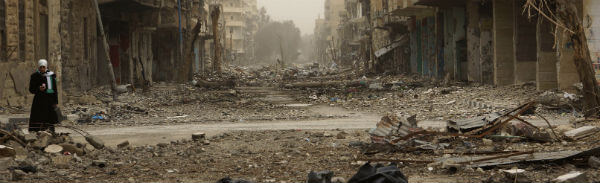
Aleppo, Syria’s largest city, is now virtually encircled by the Syrian Army. A war that has already produced a quarter of a million dead, more than 4.5 million refugees, some 6.5 million internally displaced, and the destabilization of Europe through a massive influx of terrorized people, is about to see further abominations as Aleppo agonizes.
Aleppo may prove to be the Sarajevo of Syria. It is already the Munich.
By which I mean that the city’s plight today, its exposure to Putin’s whims and a revived Assad’s pitiless designs, is a result of the fecklessness and purposelessness over almost five years of the Obama administration. The president and his aides have hidden at various times behind the notions that Syria is marginal to core American national interests; that they have thought through the downsides of intervention better than others; that the diverse actors on the ground are incomprehensible or untrustworthy; that there is no domestic or congressional support for taking action to stop the war or shape its outcome; that there is no legal basis for establishing “safe areas” or taking out Assad’s air power; that Afghanistan and Iraq are lessons in the futility of projecting American power in the 21st century; that Syria will prove Russia’s Afghanistan as it faces the ire of the Sunni world; and that the only imperative, whatever the scale of the suffering or the complete evisceration of American credibility, must be avoidance of another war in the Middle East.
Where such feeble evasions masquerading as strategy lead is to United States policy becoming Putin’s policy in Syria, to awkward acquiescence to Moscow’s end game, and to embarrassed shrugs encapsulating the wish that — perhaps, somehow, with a little luck — Putin may crush ISIS. [Continue reading…]
Kerry ‘blames opposition’ for continued Syria bombing
Middle East Eye reports: US Secretary of State John Kerry told Syrian aid workers, hours after the Geneva peace talks fell apart, that the country should expect another three months of bombing that would “decimate” the opposition.
During a conversation on the sidelines of this week’s Syria donor conference in London, sources say Kerry blamed the Syrian opposition for leaving the talks and paving the way for a joint offensive by the Syrian government and Russia on Aleppo.
“‘He said, ‘Don’t blame me – go and blame your opposition,’” one of the aid workers, who asked to remain anonymous to protect her organisation, told Middle East Eye.
Kerry told reporters on Friday, as tens of thousands fled the Syrian government and Russian bombardment of Aleppo, that both Russia and Iran, another of Syria’s allies, have told him that they are prepared for a ceasefire in Syria.
He said he would know “whether or not these parties are serious” after a meeting of the International Syria Support Group – 17 nations including the US and Russia – scheduled to be held in Munich next week.
But Kerry left the aid workers with the distinct impression that the US is abandoning efforts to support rebel fighters. [Continue reading…]
Financial despair, addiction and the rise of suicide in white America
The Guardian reports: Kevin Lowney lies awake some nights wondering if he should kill himself.
“I am in such pain every night, suicide has on a regular basis crossed my mind just simply to ease the pain. If I did not have responsibilities, especially for my youngest daughter who has problems,” he said.
The 56-year-old former salesman’s struggle with chronic pain is bound up with an array of other issues – medical debts, impoverishment and the prospect of a bleak retirement – contributing to growing numbers of suicides in the US and helping drive a sharp and unusual increase in the mortality rate for middle-aged white Americans in recent years alongside premature deaths from alcohol and drugs.
A study released late last year by two Princeton academics, Anne Case and Angus Deaton, who won the 2014 Nobel prize for economics, revealed that the death rate for white Americans aged 45 to 54 has risen sharply since 1999 after declining for decades. The increase, by 20% over the 14 years to 2013, represents about half a million lives cut short.
The uptick in the mortality rate is unique to that age and racial group. Death rates for African Americans of a similar age remain notably higher but continue to fall.
Neither was the increase seen in other developed countries. In the UK, the mortality rate for middle-aged people dropped by one third over the same period.
“This change reversed decades of progress in mortality and was unique to the United States; no other rich country saw a similar turnaround,” the study said.
Deaths from poisonings by drugs or alcohol have risen dramatically to push lung cancer into second place as the major killer with a sharp increase in suicides now a close third. [Continue reading…]
Trump to Syrian refugee children: ‘You can’t come here’
The Hill reports: Donald Trump said he’d be able to look into the eyes of Syrian refugee children to tell them they cannot come to schools in America in light of concerns about safely vetting refugees.
“We don’t know where their parents come from, they have no documentation whatsoever,” Trump said Monday during a town hall in New Hampshire.
“I’ve talked to the greatest legal people, spoken to the greatest security people. There’s absolutely no way of saying where these people come from. They may be from Syria, they may be ISIS, they may be ISIS related.”
During the event, a man who said he was from Connecticut told Trump about plans to relocate Syrian families into the community and let their children come to schools. When asked whether he’d be able to “look at these children” to tell them they couldn’t go to school, Trump said: “I can look in their faces and say, ‘You can’t come here.’”
The crowd applauded his answer. [Continue reading…]
Russian aggression drives Swedish defense spending
Defense News reports: Sweden’s discomfort over Russia’s long-term political and military ambitions in the Baltic Sea and High North has risen further after a senior military chief stated the Nordic state could find itself under attack “within a few years.”
The warning, made by Swedish Armed Forces’ Maj. Gen. Anders Brännström, came the same week that NATO Secretary General Jens Stoltenberg confirmed, in the organization’s Annual Report, that Russian Tupolev Tu-22M3 bombers accompanied by Sukhoi Su-27 jets conducted a simulated “training” nuclear strike targeting key Swedish defense installations in March 2013.
Brännström stated, in an internal military document forwarded to officers and soldiers attending the armed forces’ Markstrids’ (Land Combat) conference in the sub-Arctic town of Boden, that the changed post-Cold War security landscape will require Sweden to downgrade international missions and prioritize reinforcing national defense readiness and capabilities. [Continue reading…]
Red carpet for President Sisi’s convoy criticised in Egypt

BBC News reports: The use of a red carpet for the motorcade of President Abdul Fattah al-Sisi has provoked criticism in Egypt.
Cars carrying Mr Sisi and other officials drove down the red carpet on Saturday as they were visiting projects in 6 October City, a suburb of Cairo.
Several commentators questioned the apparent extravagance, just as the president was making a speech about the need to cut government subsidies.
The military said the carpet was meant to give joy to the Egyptian people. [Continue reading…]
Under the watchful Western eyes, Syria unravels

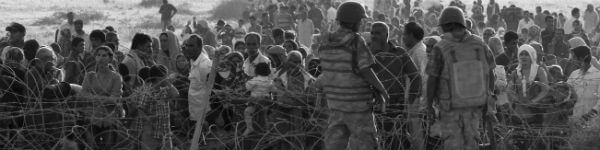
Hisham Melhem writes: Once again tens of thousands of Syrians are being uprooted and forced to flee their ancestral lands around the ancient city of Aleppo by the incessant assaults waged against them by the government that claims to represent them in Damascus. The country roads leading to the Turkish borders are being traversed by haggard people carrying with them remnants of shattered lives, dragging little children shivering in February’s cold, wandering under the last skies of Syria, and wondering if they will ever return.
Syria’s northern skies have been given by the Assad regime to Russia’s prowling bombers which have been spewing deadly fires and cluster bombs indiscriminately against areas controlled by the opposition groups. The ground has been given to marauding fighters from neighboring Lebanon and Iraq and from as far away as Afghanistan and other Central Asian states, in what can only be called a new “Shiite Internationale”, to help a minority regime bereft of the manpower needed to retake and subdue the rebellious country.
Those in the West, particularly in the United States, who may have allowed themselves to entertain the scandalous notion that things could not get worse in Syria, should be forced to see the blank and numb faces of people on the move who are already beyond pain and hope, to realize the folly of their wishful thinking. Syria’s new tragic chapter is unfolding under watchful but impotent Western eyes.
Secretary of State John Kerry, who has a deep and almost mystical belief in the power of diplomacy to settle violent disputes, a belief based on the naïve assumption that his peers are as rational and as well-meaning like him, found himself doing what he does best with Russia; pleading for cooperation, and reminding Russians of their obligation to enforce the U.N. Security Council Resolution 2254 that they co-sponsored to provide a roadmap to a political agreement.
White House press secretary Josh Earnest was truly earnest when he borrowed one of Kerry’s retorts, reminding the Russians that their “military strategy inside of Syria undermines the goals of their political strategy”. If only those obtuse Russians would listen to us explaining to them how best to reconcile their seemingly contradictory goals. The naiveté of this political position is matched only by the immense self-deception the Obama administration shared with many Syria “hands” in academe claiming that there is no ‘military’ solution to the civil war in Syria. [Continue reading…]
Obama’s disastrous betrayal of the Syrian rebels
Emile Hokayem writes: What a difference a year makes in Syria. And the introduction of massive Russian airpower.
Last February, President Bashar al-Assad’s regime and its Shiite auxiliaries mounted a large-scale attempt to encircle Aleppo, the northern city divided between regime and rebels since 2012 and battered by the dictator’s barrel bombs. Islamist and non-Islamist mainstream rebels — to the surprise of those who have derided their performance, let alone their existence — repelled the offensive at the time. What followed was a string of rebel advances across the country, which weakened Assad so much that they triggered Moscow’s direct intervention in September, in concert with an Iranian surge of forces, to secure his survival.
Fast-forward a year. After a slow start — and despite wishful Western assessments that Moscow could not sustain a meaningful military effort abroad — the Russian campaign is finally delivering results for the Assad regime. This week, Russian airpower allowed Assad and his allied paramilitary forces to finally cut off the narrow, rebel-held “Azaz corridor” that links the Turkish border to the city of Aleppo. The city’s full encirclement is now a distinct possibility, with regime troops and Shiite fighters moving from the south, the west, and the north. Should the rebel-held parts of the city ultimately fall, it will be a dramatic victory for Assad and the greatest setback to the rebellion since the start of the uprising in 2011.
In parallel, Russia has put Syria’s neighbors on notice of the new rules of the game. Jordan was spooked into downgrading its help for the Southern Front, the main non-Islamist alliance in the south of the country, which has so far prevented extremist presence along its border. Turkey’s shooting down of a Russian military aircraft that crossed its airspace in November backfired: Moscow vengefully directed its firepower on Turkey’s rebel friends across Idlib and Aleppo provinces. Moscow also courted Syria’s Kurds, who found a new partner to play off the United States in their complex relations with Washington. And Russia has agreed to a temporary accommodation of Israel’s interests in southern Syria.
Inside Syria, and despite the polite wishes of Secretary of State John Kerry, the overwhelming majority of Russian strikes have hit non-Islamic State (IS) fighters. Indeed, Moscow and the Syrian regime are content to see the United States bear the lion’s share of the effort against the jihadi monster in the east, instead concentrating on mowing through the mainstream rebellion in western Syria. Their ultimate objective is to force the world to make an unconscionable choice between Assad and IS. [Continue reading…]
Rebel setbacks in Syria have far reaching consequences
Hassan Hassan writes: Is Syrian president Bashar Al Assad finally winning? One can feel a deep sense of grief running through opposition factions whether inside or outside Syria over how events have unfolded over the past two weeks.
Pro-regime forces have made a series of major gains in northern, central and southern Syria over the past week.
More strikingly, they broke a three-year siege imposed by the rebels around the Shia towns of Nubbol and Zahraa, 20 kilometres from Aleppo city, which represents a major setback for the rebels especially as it could disrupt a game of encirclement and counter-encirclement that sustained the rebels’ control of much of Aleppo since 2012.
Five months after the regime’s forces seemed incapable of halting the string of victories achieved by the rebels in northern Syria, which led to the Russian military intervention to prop up their ally, the regime appears to be on the offensive. The offensive is seen n northern Latakia, the western Ghouta near Damascus, Deraa and in the rural areas of Hama, Idlib and Aleppo. The regime appears to have made an impressive comeback.
It is hard to judge how one side is doing through such tactical gains. The rebels were clearly on the winning side just a year ago, while the regime’s army suffered from a shortage in manpower, as admitted by Mr Al Assad himself during his last speech in August.
The breaking of the siege of Nubbol and Zahraa last week, as well as the siege of Kweiris airbase near Raqqa in November and the takeover of Sheikh Maskeen in Deraa last month, were spearheaded by foreign militias beholden to Iran.
The opposition’s real crisis is much deeper, hence the state of grieving widely felt by the rebels. These setbacks come amid profound internal, regional and international challenges that could tip the balance dramatically in favour of the regime. [Continue reading…]
How popular are Britain First and its Islamophobic ‘Christian patrols’?

The Washington Post reports: It’s a video that depicts just the sort of civilizational clash that extremists everywhere crave: Christians walking down a central shopping street in Britain. Muslim storekeepers and passerby hurling verbal abuse. A push. More abuse from both sides. And finally, police intervening to keep the warring clans apart.
The video, a slick propaganda job by the virulently anti-Muslim group Britain First, became a viral hit when the organization posted it to its Facebook page, racking up millions of views.
But there was more to the story than what the video showed.
The video was filmed on Jan. 23 in the multicultural British town of Luton, 30 miles north of London. The town, a former industrial powerhouse that is today known for its budget-flight-focused airport, has become a magnet for both Islamist and Islamophobic extremists. It’s often the canvas upon which hate groups unfurl their provocative displays.
And so it was when Britain First came to town for the fourth time in two years for what it termed a “Christian Patrol.”
The group — a far-right rival of the homegrown English Defense League — specializes in anti-Muslim street theater, while dressing itself in the garb of a devoutly Christian organization. Members wear dark green paramilitary-style uniforms, and march with oversized crosses through Muslim-majority areas, or even through mosques. [Continue reading…]
The garb of a devoutly Christian organization whose members wear dark green paramilitary-style uniforms?
Would the Washington Post refer to the Ku Klux Klan as bearing the symbols of a devoutly Christian organization because — like Britain First — its members like to march carrying large crosses?
There’s no question that these knuckleheads and self-described defenders of British culture have as little right to speak in the name of Christianity as Anjem Choudary has to present himself as the voice of Islam. But easy as Paul Golding and his rowdy followers might be to dismiss, do they actually stand at the vanguard of a much wider but less visible movement stretching across Britain?
The Washington Post picked up this story because Britain First’s recent Luton video went viral, but how much political significance derives from social media popularity?
Britain’s Labour Party, now under the leadership of Jeremy Corbyn who enjoys more grass root support than he does in parliament, has a Facebook page with 422,000 likes.
Britain First’s Facebook page has 1,289,000 likes!
But what do all these “likes” actually mean?
Paul Golding probably thinks they mean a lot and this might explain why he felt confident enough to run in the upcoming election to become Mayor of London. Moreover, he probably thinks it’s imperative that he, or someone like him, be able to govern the British capital city given that his leading opponent, Sadiq Khan, is a Muslim.
The election will take place on May 5, and the most recent YouGov poll gives Khan a clear lead (45%) over his closest rival, Zac Goldsmith (35%).
Further down the field comes George Galloway (Respect Party), who is just one point ahead of British National Party candidate, David Furness, who is himself, one point ahead of Golding.
That is to say, 1% of London voters say they support the BNP while 0% support Britain First.
Maybe the antics of Golding and his motley crew deserve less attention than does the promise of what would surely be a victory for multiculturalism: the increasingly likely election of London’s first Muslim mayor.
As Syrians flee anew, neighbors’ altruism hardens into resentment

The New York Times reports: When the Syrian refugees first started streaming into this bedraggled border town, Gassim al-Moghrebi was their tireless benefactor, distributing donations of food, money and clothes and sheltering as many as possible in two apartments he owned.
“All of Ramtha was just like me,” Mr. Moghrebi said, describing a good will rooted in family ties that spanned the border, and sympathy for the victims of a pitiless war. “One man had 10 apartments. He gave them to the Syrians for free.”
But now, as Syria witnesses a new escalation of violence, including waves of Russian airstrikes, and as Syrians flee for safety again by the tens of thousands, neighboring countries are increasingly overwhelmed and reluctant to let them in. In many places, that early altruism has hardened into resentment — an ominous turn for those fleeing war.
Desperate Syrians are backed up at the borders of Jordan and Turkey, barred from entering or else just allowed to trickle in. Increasingly, they find escape routes closing. [Continue reading…]