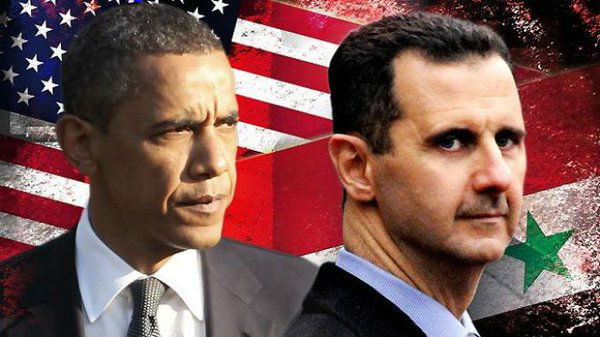
The New York Times reports: For months, the bodies have been piling up in eastern Aleppo as the buildings have come down, pulverized by Syrian and Russian jets, burying residents who could not flee in avalanches of bricks and mortar.
And now it is almost over, not because diplomats reached a deal in Geneva, but because President Bashar al-Assad of Syria and his foreign allies have won the city. Cold, hungry and scarred by the deaths of loved ones, tens of thousands of civilians and fighters are awaiting buses to take them from their homes to uncertain futures.
It is not the first victory that Mr. Assad has secured with overwhelming force in the Syrian conflict. But his subjugation of eastern Aleppo has echoed across the Middle East and beyond, rattling alliances, proving the effectiveness of violence and highlighting the reluctance of many countries, perhaps most notably the United States, to get involved.
President Obama, on Friday at his final news conference of the year, acknowledged that the nearly six-year-old war in Syria had been among the hardest issues he has faced, and that the world was “united in horror” at the butchery in Aleppo. But Mr. Obama — who came into office committed to reducing America’s military entanglements in the Middle East — also defended his decision not to intervene more forcefully.
To do otherwise, he said, would have required the United States to be “all in and willing to take over Syria.”
The message for autocratic leaders in the region and elsewhere is that force works — and brings few consequences, said Maha Yahya, the director of the Carnegie Middle East Center in Beirut.
The lesson for the victims of that force is that they are on their own. [Continue reading…]
"Aleppo is a place where the children have stopped crying." Scenes of sheer terror and grief in the last hospital in the last days of Aleppo pic.twitter.com/sy1NgjD4gY
Zaina Erhaim writes: Bustan al-Qasr is falling into the hands of the regime and its militias.” As I read these words, a multitude of images and thoughts pass through my mind. What has happened to those familiar faces living in that neighbourhood in Aleppo, with whom I shared a smile but also fear? I can only imagine the horror they are feeling, trapped there right now.
Those of us who are in exile, elsewhere in Syria or beyond, haven’t slept for the last four days, since receiving news of the city’s fall. We are scattered all over the world now, glued to our phones for the latest update. A notification can shake your heart with relief: “We are coming out of the siege.” Another can cause you to break down: “The deal is cancelled, we are being attacked again.” And the appearance of a few words on your screen is like being struck by lightning: “Your […] has been killed.” It is the end. Goodbye.
New levels of helplessness have developed over these last few terrible days. But we are the lucky ones. We have got out and have to be strong enough to give hope to our friends who are still there. A good imagination is necessary in these circumstances. For example, while reading that the Russian defence ministry is declaring that the “Syrian national army” will take over the besieged areas within two days, I translate this as: “They are using this as justification to get a better deal in the negotiations.” I reassure friends: “I am in touch with people, you will get out, it’s a matter of time, believe me.”
“I want nothing any more but to see my new daughter. My wife, Rania, is due next month,” my friend Malek told me. “I want to get out and be there for both of them.” Rania is 5km (three miles) away from him, and they haven’t seen each other for five months.
My husband, Mahmoud Rashwani, who is still in Syria, is busy keeping a record of all the wills he has received from his besieged friends and comrades. One common theme is that they would all prefer to be killed than captured by Assad militias. “I would have wanted the same, otherwise I will be wishing for death without getting it,” he tells me, speaking about the torture practised in Assad’s prisons that he knows too well from his own experiences. [Continue reading…]
Leon Wieseltier writes: Contemplating the extermination of Aleppo and its people, I was reminded of a sentence that I read this summer. It appeared in an encomium to Elie Wiesel shortly after his death. It was a sterling sentence. It declared: “We must never be bystanders to injustice or indifferent to suffering.” That was Wiesel’s teaching, exactly. The problem with the sentence is that it was issued by the White House and attributed to President Obama. And so the sentence was not at all sterling. It was outrageously hypocritical.
How dare Obama, and members of his administration, speak this way? After five years and more in which the United States’ inaction in Syria has transformed our country into nothing other than a bystander to the greatest atrocity of our time, they have forfeited the right to this language. Their angry and anguished utterances are merely the manipulation of the rhetoric of conscience on behalf of a policy without a trace of conscience. You cannot be cold-hearted and high-minded at the same time. Historians will record — they will not have to dig deeply or interpret wildly to conclude — that all through the excruciations of Aleppo, and more generally of Syria, the United States watched. As we watched, we made excuses, and occasionally we ornamented our excuses with eloquence. The president is enamored of his eloquence. But eloquence is precisely what the wrenching circumstances do not require of him. In circumstances of moral (and strategic) emergency, his responsibility is not to move us. It is to pick up the phone. “Elie did more than just bear witness,” Obama said in his eulogy, “he acted.” And he added: “Just imagine the peace and justice that would be possible in our world if more people lived a little more like Elie Wiesel.” Just imagine.
If Obama wants credit for not getting us into another war, the credit is his. If he wants credit for not being guilty of “overreach,” the credit is his. If he wants credit for conceiving of every obstacle and impediment to American action in every corner of the globe, the credit is his. But it is a shameful and incontrovertible fact of our history that during the past eight years the values of rescue, assistance, protection, humanitarianism and democracy have been demoted in our foreign policy and in many instances banished altogether. The ruins of the finest traditions of American internationalism, of American leadership in a darkening world, may be found in the ruins of Aleppo. Our ostentatious passivity is a primary cause of that darkening. When they go low, we go home. The Obama legacy in foreign policy is vacuum-creation, which his addled America-First successor will happily ratify. Aleppo was not destroyed by the Syrian army. It was destroyed by a savage coalition led and protected by Russia. While they massacred innocent men, women and children, we anxiously pondered scenarios of “deconfliction.”
We need to be unforgivingly clear. The obligation to act against evil in Aleppo was no different from the obligation to act against the evil in Sarajevo and Srebrenica. (Has anyone ever heard Obama mention Bosnia?) It was no different from the obligation to act against the evil in Rwanda. It was no different from the obligation to act against the evil in Auschwitz. And we scorned the obligation. We learned nothing. We forgot everything. We failed. We did not even try. [Continue reading…]
Lindsey Hilsum writes: Every few hours I check my WhatsApp feed from the doctors in East Aleppo. They post videos of injured children and a combination of eyewitness news and desperate messages: “Iran militia shot the convoy,” “The regime forces are still angry, I may die tens times now,” “Warplane with heavy machine gun attacking right now.”
Injured boys at a field hospital after airstrikes on the rebel held areas of Aleppo, Syria November 18, 2016.
It takes me back to April 1994, when I sat, terrified, in my house in Kigali listening to Rwandan friends who called to tell me about the slaughter in their neighbourhoods. Monica dictated to me her last words to pass onto her husband, Marcel, who was travelling. As it happened, she survived, but their five children, who were staying with their grandparents, were murdered. These are not easy memories.
A few years later, Samantha Power, then Professor of Human Rights Practice at Harvard’s John F. Kennedy School of Governance, published a book called A Problem from Hell; America and the Age of Genocide. Her thesis, simply put, was that in the face of mass slaughter the USA has a moral and legal obligation to intervene. America did nothing when Saddam Hussein gassed the Kurds in Halabja, nor during the genocide in Rwanda nor the massacre of 7,000 men and boys at Srebrenica in Bosnia the following year.
Today, al-Kaabi heads a splinter faction of his original militia. Known as Harakat Hezbollah al-Nujaba, it’s now an official arm of the Iraqi security establishment, but fighting in Syria. And the United Nations has just accused it of taking part this week in the massacre of at least 82 civilians in East Aleppo, including 11 women and 13 children—a slaughter perpetrated alongside other sectarian Shiite proxies of Iran and the Russian-Iran-backed Baathist dictatorship of Bashar al-Assad.
The Syrian army as a fighting force is largely spent. Without Russian air support and the some 6,000 to 8,000 Iranian-run paramilitaries Assad now relies on to wage war for him, Aleppo would never have been recaptured.
Nor are the Iranians masking their pride in the accomplishment.
“Aleppo was liberated thanks to a coalition between Iran, Syria, Russia, and Lebanon’s Hezbollah,” Tehran’s defense minister, Seyed Yahya Rahim-Safavi, proclaimed Wednesday. “Iran is on one side of this coalition which is approaching victory and this has shown our strength. The new American president should take heed of the powers of Iran.”
That last sentence should not be read as a mere perfunctory warning to U.S. President-elect Donald Trump. It’s a statement of fact, and one that neither Trump nor his people have gotten their heads around. Trump has made it clear he wants to join the Russian side in this war, while he is adamantly opposed to the Iranian side. But in the world of real reality they are the same side. [Continue reading…]
Let us be clear. The imminent victory in Syria’s largest city of Bashar al-Assad’s government – and of its essential supporters, Russia, Iran, and Hezbollah – is built on war crimes.
For months, hundreds of thousands of people in opposition-held areas of Syria’s largest city have been besieged and bombed. Thousands have been killed. Men of fighting age seized in recent days by pro-Assad forces face conscription into the Syrian military or detention and torture. Scores of residents reportedly executed in the 24 hours before a ceasefire was announced on December 13.
Rebels and civilians will get some respite, if yesterday’s agreement for their removal from Aleppo to other areas in north-west Syria is implemented. But this is only the end of one chapter: the war goes on, as it has since the uprising against Assad in March 2011.
Opposition forces are still holding out in some areas near Damascus and in southern Syria; more importantly, they control much of Syria’s north-west, including almost all of Idlib Province and parts of Hama, Aleppo, and Homs provinces. A joint Turkish-rebel offensive has captured a significant part of northern Syria. The so-called Islamic State (IS) is far from gone: only days before Aleppo really began to give way, it recaptured large parts of the historic city of Palmyra from the Assad regime. Syria’s Kurds have their own areas, especially in the north-east of the country.
In this multi-sided conflict, will there be more Aleppos? Or will there finally be a period without quite as many war crimes and bloodshed?
Assad doesn’t have the answer, however much he claims control of his “Syrian nation”. The US has little more to contribute, now effectively sidelined after years of indecision and a misguided decision to follow Moscow’s lead. As things stand, much of the future of Syria is at the mercy of Russia and Iran.
The New York Times reports: The latest effort to evacuate Syrian civilians and insurgent fighters from rebel-held neighborhoods of eastern Aleppo was bogged down Thursday morning, after one person was killed and several civilians and humanitarian aid workers were wounded while being transported to Red Cross ambulances, opposition figures said.
The White Helmets, a group of volunteer emergency workers, said on Twitter that one of its members had been struck by a bullet fired by a government sniper.
Bassem Ayoub, an activist in eastern Aleppo, said that gunmen had targeted the ambulances as well as wounded people being taken to them for evacuation, and that at least six people had been shot.
Dozens of green buses were lined up at the Ramouseh crossing between eastern and western Aleppo.
Syrian state television showed Red Cross ambulances waiting to take people away, with damaged buildings in the background. White smoke could be seen rising, apparently after fighters and activists set fire to their headquarters, cars and warehouses before leaving.
Thousands of people had gathered outside a hospital in the Mashhad neighborhood, which is still controlled by rebels, hoping that an evacuation deal announced on Tuesday by Turkey, Russia and Syrian rebels would hold. But the constant threat from snipers, bombs and shelling was unsettling. [Continue reading…]
Thanassis Cambanis writes: As the last rebel neighborhoods in Aleppo fell this week, Samantha Power, America’s ambassador to the United Nations, excoriated Russia, Syria, and Iran for authoring what will prove to be the signal atrocity of our time.
“Are you truly incapable of shame?” Power asked. “Is there no act of barbarism against civilians, no execution of a child that gets under your skin?”
Hundreds of thousands chose to stay in what they proudly called “Free Aleppo,” eschewing safe routes when they still existed and vowing to preserve their alternative to Syrian President Bashar Assad even if it meant death.
This week, that horrific choice materialized. Assad’s regime destroyed rebel Aleppo step by step, using Russian airpower; legions of militiamen from Afghanistan, Iraq, Yemen and Lebanon; and the barrel bomb, another of the war’s sad innovations. Syrian rebels in Aleppo had warned for a year and a half that a siege was inevitable unless their backers, including the United States, provided them at least with air support and a steady supply of bullets and cash.
Western officials decried the unfolding tragedy in Aleppo, but their actions guaranteed this week’s genocidal denouement. The United States withheld basic support to vetted rebels. Turkey diverted its proxies to deal with the Kurdish problem on the border. And the West continued to negotiate after Russia engaged in blatant subterfuge and spectacular war crimes, emboldening the scorched earth campaign in Aleppo.
Ambassador Power is right to ask about shame. Ultimately, a great share of it will belong to her government and the other fair-weather “friends of Syria” who supported the country’s revolution only half-heartedly — enough to prolong it while also sealing its failure. [Continue reading…]
The Guardian reports: Iranian leaders have claimed a military victory in Aleppo, with the Ayatollah Ali Khamenei’s chief military aide boasting that Syrian president Bashar al-Assad’s forces would have been unable to retake the besieged city without support from Tehran.
“Aleppo was liberated thanks to a coalition between Iran, Syria, Russia and Lebanon’s Hizbollah,” said Seyed Yahya Rahim-Safavi. “Iran is on one side of this coalition which is approaching victory and this has shown our strength. The new American president should take heed of the powers of Iran.”
Iran’s defence minister called his Syrian counterpart to congratulate him and Mohsen Rezaie, a former commander of Iran’s Revolutionary Guards, wrote on Instagram that Iran’s aim was to cleanse “terrorists and Takfiris [apostates]” from Syria and Iraq.
The parliamentary speaker, Ali Larijani, also congratulated Assad’s government, saying that US and British policies had hit a dead end in Syria, Iraq, Libya and Yemen. [Continue reading…]
At Bellingcat, Nick Waters and Timmi Allen write: Bana Alabed is a 7 year-old girl who lives in East Aleppo. Through her broken English and simple messages alternating between fear and hope, she has become a representation of the suffering that children face every day within Syria. She is also a star on Twitter. In the three months Bana Alabed’s account has been active it has amassed 284,000 followers, including J. K. Rowling, multiple news reports and over 580 tweets. She also posted multiple videos on Periscope which show her daily life, as well as the bombing that E. Aleppo has endured. Her rapid rise to prominence has resulted in questions from some about the veracity of Bana Alabed, her account and the subject matter she covers. This report will examine the media she has posted, the context in which it is posted, and its probable veracity. Due to the possibility of Bana’s account being deleted, all the tweets we have linked to are screenshots from cached pages.
Bana’s family consists of five members: Her Father, Ghassan al-Abed, reportedly works in the legal department of the local council registering births and deaths. He also currently describes himself as a “Activist against terrorism and ISIS” on his Twitter page, and is something of a poet, having posted poems lamenting the destruction of Aleppo on his Facebook page since October 2015. Her Mother, Fatemah, is an English teacher who has also studied law, politics and, significantly, journalism. [Continue reading…]
The New York Times reports: Artillery shelling resumed early Wednesday on besieged eastern neighborhoods of the Syrian city of Aleppo, delaying a promised evacuation of thousands of civilians and medical staff members who had been expecting to leave under the aegis of a deal announced at the United Nations.
Buses that were supposed to evacuate some of the last holdouts in the heavily bombed neighborhoods left, empty, after waiting for hours, the Lebanese television station Al Manar, which is affiliated with the militant Shiite group Hezbollah reported — a sign that the evacuation process might not happen on Wednesday as planned.
The Pan-Arab television network Al Mayadeen showed buses idling at a prearranged evacuation point, waiting to take 5,000 fighters and their families to Atareb, a town west of Aleppo.
The opposition says that Iran, one of the Syrian government’s main allies, and its Shiite militia proxies were obstructing the deal; witnesses said that the militias had prevented a convoy of about 70 wounded people — mostly fighters and their relatives — from departing, despite the supposed deal announced at the United Nations. The militias, observers said, insisted that they would not allow anyone out until rebel groups had ended their siege of Fouaa and Kfarya, two encircled Shiite enclaves in Idlib Province.
Osama Abu Zayd, a legal adviser to Syrian opposition factions, told The Associated Press that the evacuation deal was being resisted by Iran’s field commander in Syria. The Syrian Observatory for Human Rights, a monitoring group, said it believed that Iran — a major ally of the Syrian government — had balked at the deal, annoyed that Russia and Turkey had not consulted it.
But the Russian Defense Ministry blamed the rebels for the impasse, saying on Wednesday that they had “resumed the hostilities” at dawn, trying to break through Syrian government positions to the northwest.
The impasse could be the sign of a stalling tactic by Syria’s president, Bashar al-Assad. His government has often skillfully played its backers — Iran, Russia and others — off one another. The disagreement could provide cover for what the Syrian government has wanted to do all along: finish off the enclave with force. As one Syrian military officer told Reuters in Aleppo recently, rebels must “surrender or die.”
Malek, an activist who has repeatedly moved around eastern Aleppo for his safety, and who asked to be identified only by his first name for fear that he would soon find himself in government territory, said he had looked forward to the evacuation, but that “nothing happened.”
Interviewed over the messaging service WhatsApp, he added, using a mournful idiom, “We didn’t taste the flavor of life.”
Troubles carrying out the accord were not surprising, as there was no international monitoring — United Nations officials said the Syrian government refused their repeated pleas to observe the process — and no mechanism to enforce the agreement. That has been a problem with other deals reached during the conflict.
Within eastern Aleppo, residents were alarmed as Russian news agencies broadcast remarks from the Russian foreign minister, Sergey V. Lavrov, who said he expected the rebels to “stop their resistance within two, three days.” Those remarks alarmed observers, as the evacuation deal says rebels already agreed to stop fighting in exchange for being allowed to leave.
“They are planning to slaughter us all,” said Monther Etaky, a civilian activist who had been hoping to evacuate.
Salem, a dentist who had kept his clinic open until last week, and who finally moved to one of the last rebel neighborhoods when his own was taken by government forces, said he could hear heavy shelling.
“We slept a quiet night, but sadly the shelling is back,” he said Wednesday morning, asking to be identified only by his first name. “Please share my message: The cease-fire collapsed. The situation is bad again.” [Continue reading…]
The Guardian reports: British MPs are deceiving themselves if they believe they do not bear some of the responsibility for the “terrible tragedy” unfolding in Syria, the former chancellor, George Osborne, said on Tuesday during an often anguished emergency debate in the House of Commons on the carnage being inflicted in eastern Aleppo. In one of his first speeches in the Commons since losing office, Osborne said there had been “multiple opportunities to intervene” in Syria as he cited parliament’s decision in 2013 not to take military action after the use of chemical weapons by Bashar al-Assad’s regime.
“Let’s be clear now: if you do not shape the world, you will be shaped by it. We are beginning to see the price of not intervening,” Osborne said.
The Commons voted by a majority of 13 in 2013 to reject military action after Labour combined with Tory rebels to deliver David Cameron his single biggest Commons rebuff. [Continue reading…]
Janine di Giovanni writes: Depending on your personal view, Aleppo has now fallen, or been retaken, or been liberated. But my interest is not with any political side. It’s with victims of state terror, and all the civilians whose lives have been shattered by a war that has been raging for more than five years. It is the most cynical conflict I have seen in 25 years of war reporting. Both the regime and opposition are guilty of war crimes, though one much more than the other.
What I’m considering now, from the comfort of my Paris home, is how a city falls. I am thinking of people cowering in basements and struggling with whether they flee from their city now, or wait. Who is coming to save them, or kill them? I know how that scenario goes. I lived through Sarajevo during the Bosnia war, and was in Grozny when it fell to (or was “liberated” by) Russian forces. I remember hiding in those basements waiting for the Russian tanks to come into the village, and wondering if I would be dead in a few hours.
I am thinking about the civilians – all of those people with whom I sat for hours while writing my book, or writing reports for the UN high commissioner for refugees – and what they are doing to survive. [Continue reading…]
The Guardian reports: Iran-backed militias are preventing civilians and opposition fighters from leaving the besieged districts of east Aleppo as Russia struggles to convince the Assad government and allied militants to abide by a ceasefire agreement.
Shelling of the besieged districts resumed on Wednesday morning despite the agreement brokered by Turkish intelligence and the Russian military on Tuesday that would have offered a respite to tens of thousands of trapped civilians.
It was unclear on Wednesday when residents would be allowed to leave east Aleppo and whether the deal would hold. Turkey’s state-run Anadolu agency quoted the head of the Turkish Red Crescent as saying nearly 1,000 people from east Aleppo were being held at an Iranian militia checkpoint.
Rebels inside east Aleppo said they would support the agreement but Iranian-backed militias on the ground, which led the assault into east Aleppo, were blocking it because the deal was reached without Assad or Iran’s involvement.
“The sectarian militias want to resume the massacre in Aleppo and the world has to act to prevent this sectarian slaughter led by Iran,” said Bassam Mustafa, a member of the political council of Noureddine Zinki, one of the main rebel groups in east Aleppo. “The opposition will continue to abide by the agreement.”
Yasser al-Youssef, a spokesman for the group, said Russia was attempting to convince the Assad government to accept the ceasefire. The Turkish foreign minister, Mevlüt Çavuşoğlu, said discussions were ongoing with Russia and Iran to continue the planned evacuations. [Continue reading…]
The Associated Press reports: Aleppo’s fall to Syrian government forces is shaping up as the first major test of President-elect Donald Trump’s desire to cooperate with Russia, whose military support has proven pivotal in Syria’s civil war. The death and destruction in the city is only renewing Democratic and Republican concern with Trump’s possible new path.
Though Trump has been vague about his plans to address this next phase in the nearly six-year-old conflict, he’s suggested closer alignment between U.S. and Russian goals could be in order. His selection Tuesday of Exxon Mobil CEO Rex Tillerson, who has extensive business dealings with Russia and ties to President Vladimir Putin, fueled further speculation that Trump will pursue a rapprochement with Moscow.
Indeed, Trump was already trying to portray Tillerson’s connections with Russia as a plus. In talking points circulated on Capitol Hill and obtained by The Associated Press, Trump’s transition team said Tillerson would “work closely” with Russia on “defeating radical Islam” but would “easily challenge Russia and other countries when necessary.”
“President Putin knows Mr. Tillerson means what he says,” the talking points say.
A warmer relationship could alter U.S. policy on nuclear weapons, sanctions, Ukraine and innumerable other issues — but none so clearly or quickly as Syria, where President Bashar Assad’s defeat of U.S.-backed rebels in Aleppo is poised to be a turning point. Assad and Russia are expected seize the moment to try to persuade the U.S. to abandon its flailing strategy of trying to prop up the rebels in their battle to oust Assad. [Continue reading…]
Reuters reports: Rebel resistance in the Syrian city of Aleppo ended on Tuesday after years of fighting and months of bitter siege and bombardment that culminated in a bloody retreat, as insurgents agreed to withdraw in a ceasefire.
The battle of Aleppo, one of the worst of a civil war that has drawn in global and regional powers, has ended with victory for Syrian President Bashar al-Assad and his military coalition of Russia, Iran and regional Shi’ite militias.
For rebels, their expected departure with light weapons starting on Wednesday morning for opposition-held regions west of the city is a crushing blow to their hopes of ousting Assad after revolting against him during the 2011 Arab uprisings.
However, the war will still be far from over, with insurgents retaining major strongholds elsewhere in Syria, and the jihadist Islamic State group holding swathes of the east and recapturing the ancient city of Palmyra this week.
“Over the last hour we have received information that the military activities in east Aleppo have stopped, it has stopped,” Russian U.N. Ambassador Vitaly Churkin told a heated U.N. Security Council meeting. “The Syrian government has established control over east Aleppo.”
Rebel officials said fighting would end on Tuesday evening and a source in the pro-Assad military alliance said the evacuation of fighters would begin at around dawn on Wednesday. A Reuters reporter in Aleppo said late on Tuesday that the booms of the bombardment could no longer be heard. [Continue reading…]
The last hope of the besieged rebels, most of whom seem to have withdrawn in the face of certain defeat, had been to receive reinforcements or resupplies from their counterparts in the southern and western suburbs. That option has now been foreclosed upon as these routes are completely interdicted by the regime.
The triumphal takeover of the citadel of the Syrian revolution followed a day of intense bombing of houses and apartment buildings, destroying so many that it was impossible to determine the death toll. The neighborhoods of Bustan al-Qasr, al-Kallasa, al-Farod and al-Salhin in the Old City, as well as Sheikh Saed, in the southern district, are all now under regime control.
The Syrian Civil Defense, or White Helmets, an internationally renowned team of first responders, said more than 90 bodies of people presumed to be still alive are under debris and that its volunteer staff reported they could hear the voices of children trapped in the rubbles of their houses.
A member of the group in Aleppo told al-Arabiya TV on Monday night that men, women, and children were huddling and crying in the streets and at the gates of empty buildings in the few neighborhoods that remained in the hands of the opposition. He described the situation as hopeless, because precision munitions and indiscriminate barrel bombs had destroyed the city’s medical facilities, ambulances, and fuel supply. [Continue reading…]
The Washington Post reports: The United Nations warned Tuesday that dozens of people may have been executed in the Syrian city of Aleppoas pro-government troops seized what remained of the rebels’ most famous stronghold.
Rupert Colville, a spokesman for the U.N. human rights council, said his office received reports that pro-government forces had killed at least 82 civilians, entering homes and killing people “on the spot.”
Others were reportedly shot as they fled. A list of names provided to the U.N. included 11 women and 13 children, he said. [Continue reading…]