Category Archives: Syria

UN has list of top Syrian leaders for crimes probe

The Associated Press reports: The United Nations has a secret list of top Syrian officials who could face investigation for crimes against humanity carried out by security forces in Syria’s crackdown on an uprising, a panel of U.N. human rights experts said Thursday.

The U.N. experts indicated the list goes as high as President Bashar Assad.

Thousands of Syrians have died in the violence since March and the panel, citing what it called a reliable source, said at least 500 children are among the dead.

“A reliable body of evidence exists that, consistent with other verified circumstances, provides reasonable grounds to believe that particular individuals, including commanding officers and officials at the highest levels of government, bear responsibility for crimes against humanity and other gross human rights violations,” said the report by the U.N.-appointed Independent International Commission of Inquiry on Syria.

It said the panel gave the U.N. High Commissioner for Human Rights a sealed envelope containing the names of these people for future investigations. It doesn’t say who these investigating authorities might be, but the U.N.’s top human rights official has previously called for Syria to be referred to the International Criminal Court in The Hague.

The panel led by Brazilian professor Paulo Sergio Pinheiro said its list also identifies some armed opposition cells thought to have committed gross abuses.

Experts say the list is likely to be more of a deterrent against further abuses than a direct threat to the Assad regime. Syria isn’t a member of the ICC so its jurisdiction doesn’t apply there, and Russia would likely block any moves in the U.N. Security Council to refer the country to the Hague-based tribunal.

But Andrea Bianchi, a professor of international law at Geneva’s Graduate Institute, said anyone on the U.N. list might still be arrested and prosecuted if they traveled from Syria to a country that has signed up to the international court.

“Personally, if I were on that list I would worry,” he said.

As pressure mounts for some kind of tangible response from the international community to the carnage in Syria, there is an escalating risk that politicians eager to be seen as powerful actors rather than passive witnesses, will support measures whose only virtue is that they are something rather than nothing.

Marc Lynch, in reference to the AP report above, tweets: “This is the kind of international human rights pressure I had in mind in my report” — this being his report.

How exactly does this kind of pressure work? Will those who believe they face war crimes charges decide that now’s the time to flee and spend the rest of their lives as fugitives, or perhaps be able to make plea bargains by helping convict their superiors? Or will they on the contrary feel even more convinced that in defending the regime they are fighting for their lives? That, it seems to me, is the much more predictable effect.

Unwinding this civil war depends on constructing a plausible scenario in which both sides can conceive of a tolerable way of surviving. No one is going to choose to spend the rest of their life in prison.

Facebooktwittermail

Heaviest Russian mortars pound Homs

Christian Science Monitor reports: From Peter Bouckaert, a senior researcher for Human Rights Watch, comes an indication why the death toll has been steadily climbing in Homs. He says a video from Homs that shows the fragments of a mortar the struck a building there is proof that Assad has deployed the Russian-made “Tulip” weapons system against the town, which fires the largest mortar round in any military’s arsenal. The tank-like vehicle that serves as the firing platform can lob 240mm mortar rounds up to 20 kilometers away, and they carry over 70 pounds of explosives. The largest mortar used by the US, in contrast, is 160mm.

Syria has another Russian-made system for firing rounds that size, the towed M240, and it’s possible that’s being used to fire the rounds instead of the Tulip.

The Tulip was designed for use against dug in positions from a standoff distance. But its lethality has been used in the past to bring devastation to civilian neighborhoods, most famously by the Russians during the siege of the Chechen capital of Grozny over a decade ago, where thousands of civilians were killed and hundreds of buildings reduced to rubble. The use of such weapons in dense urban environments is a war crime.

This video (with obnoxious soundtrack) shows the Tulip (2S4 Tyulpan) being used in exercises by the Russian military. The fins and perforated stem match those shown in the video showing mortar remnants in Homs.

Facebooktwittermail

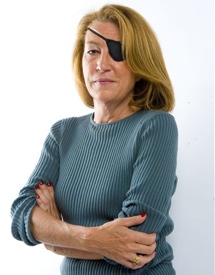
Christopher Dickey remembers his friend, Marie Colvin

Christopher Dickey writes: I am not sure when, exactly, in the last 10 years — perhaps as I started to pull back from combat myself, and she did not — I realized that Marie really was the greatest war correspondent of our generation. She took extraordinary risks and got extraordinary stories year after year, decade after bloody decade. I think nobody can match her record for pushing herself into the middle of the action to witness what war is and what war does and “get the information out.” Because if you really want people to understand, really want them to care — and Marie wanted that very much — then press releases and human-rights reports and anonymous cellphone video vaguely attributed is not going to cut it. There is no substitute for the correspondent who goes and sees for herself what is happening, and tells the world in exact, dispassionate, irrefutable detail.

Last night, probably about the same time she posted that little item on Facebook, Marie also talked to the BBC, and when I heard her voice played back on the air this morning I had to smile. She was so cool — so very cool and exact — describing in measured phrases the terror all around her.

And for some reason, probably because we have to believe this of our friends in this business, I thought that she would never die, no matter what. At least, not this morning. Not now.

And then she did. She was 56 years old.

For those of us who were her friends, and there are many, there will be long talks on the phone about Marie’s life and loves, which were often tempestuous and sometimes tragic. There will be a great wake somewhere to send her off, raising a glass or two, or many, to her memory, which I am sure she would appreciate. Marie wrote so much about death, but she did love to live.

Facebooktwittermail

The U.S. and other ‘Friends of Syria’ still search for a strategy to oust Assad

Tony Karon writes: “It is time we gave them the wherewithal to fight back and stop the slaughter,” said Senator John McCain on Monday, referring to Syria’s opposition amid the carnage being wrought by the Assad regime’s efforts to quash a year-old rebellion. But McCain’s call is unlikely to be heeded by the Obama Administration or other Western governments as they prepare for Friday’s inaugural meeting in Tunis of a “Friends of Syria” forum established to coordinate an international response to the crisis. That’s because Western decision-makers are not quite sure just who the Syrian opposition would be — there is no single leadership that speaks on behalf of those fighting the regime on the ground in cities across Syria, and there are certainly signs that its ranks may include elements deemed hostile to the West. And also, because it’s far from clear just how arming rebel forces would, in fact, “stop the slaughter” and not intensify it.

The problem confronting international stakeholders as they grapple for a response to the slow-moving bloodbath is that there at least three different narratives playing out at the same time in Syria, each of them complicating the others. There’s the narrative of the brutal authoritarian regime confronted by a popular citizens’ rebellion that it has been unable to crush despite a year of slowly escalating repression — a crackdown that has wrecked the country’s economy and made it impossible for the regime to restore stability, much less regain its legitimacy. (Nobody’s expecting the constitutional referendum to be staged by the regime on Sunday to yield a credible popular mandate for Assad’s rule.)

Then there’s the narrative of sectarian warfare, in which Syria’s ethnic and confessional minorities — the ruling Alawites who dominate the regime and its security forces, but also the Christians, the Kurds, the Druze and smaller sects — shudder in the face of a predominantly Sunni rebellion in which they see a specter of sectarian retribution that prompts many of them to remain on the sidelines or support the regime for fear of the alternative.

And finally, there are the geopolitical stakes, as the Sunni monarchies of the Gulf see an opportunity to hobble their Iranian nemesis by helping their indigenous allies overthrow a Tehran-backed regime. Syria also becomes an arena for China and Russia to block the expansion of Western influence in the Middle East through toppling regimes. [Continue reading…]

Facebooktwittermail

U.S., French journalists killed in Homs

Bloomberg reports: An American reporter working for the U.K.’s Sunday Times and a French photographer were killed in the besieged Syrian city of Homs when shells hit them while they were reporting from the city, French officials said.

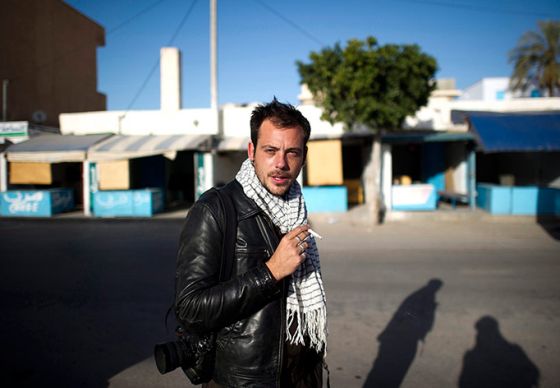
The journalists were Marie Colvin and photographer Remi Ochlik, Valerie Pecresse, budget minister and spokeswoman for France’s government, told journalists in Paris. They were killed during a bombardment of the Baba Amr residential neighborhood of the city by forces loyal to President Bashar al-Assad, the U.K.- based Syrian Observatory for Human Rights said in an e-mailed statement.

Colvin gave the following report on CNN last night:

Neil MacFarquhar writes: Marie Colvin recognized the significant story unfolding in the rebellious Syrian city of Homs. The problem was how to get at it.

She had been hoping for an official visa to visit Damascus, but with none forthcoming, she decided to sneak over the border despite strong misgivings about her safety in the besieged city suffering a constant battering from government tanks and heavy artillery.

“I cannot remember any story where the security situation was potentially this bad, except maybe Chechnya,” Ms. Colvin told me over a dinner of traditional Lebanese fare on her last night in Beirut a week before she was killed in Homs.

In her first dispatch from that besieged city, printed in the latest Sunday Times of London, she detailed the dangers in merely reaching her destination, which lies just across the Lebanese border but now exits in a grim, deadly world apart. Her welcoming party was ecstatic that a foreign reporter had braved the odds to reach them.

“So desperate were they that they bundled me into an open truck and drove at speed with the headlights on, everyone standing in the back shouting “Allahu akbar” — God is the greatest,” she wrote. “Inevitably, the Syrian army opened fire.”

She then transferred into a small car which was again fired upon, speeding into a row of abandoned buildings for cover.

But she found her story.

She described the “widows’ basement” crammed with women cowering in the only shelter they could find in a city where there is only sugar and water to feed a newborn baby.

“Among the 300 huddling in this wood factory cellar in the besieged district of Baba Amr is 20-year-old Noor, who lost her husband and her home to the shells and rockets,” Ms Colvin wrote, etching in stark detail how the woman’s husband and brother died when they went out into the streets to forage for food.

“It is a city of the cold and hungry, echoing to exploding shells and bursts of gunfire,” she wrote, her overall description evoking some of the worst sieges of World War II. There are no telephones and the electricity has been cut off.”

“Few homes have diesel for the tin stoves they rely on for heat in the coldest winter that anyone can remember,” the story said. “Freezing rain fills potholes and snow drifts in through windows empty of glass. No shops are open, so families are sharing what they have with relatives and neighbors. Many of the dead and injured are those who risked foraging for food.

“Fearing the snipers’ merciless eyes, families resorted last week to throwing bread across rooftops, or breaking through communal walls to pass unseen.”

Escape was virtually impossible.

In an address she gave in London in 2010, Colvin said:

Covering a war means going to places torn by chaos, destruction, and death, and trying to bear witness. It means trying to find the truth in a sandstorm of propaganda when armies, tribes or terrorists clash. And yes, it means taking risks, not just for yourself but often for the people who work closely with you.

Despite all the videos you see from the Ministry of Defense or the Pentagon, and all the sanitized language describing smart bombs and pinpoint strikes, the scene on the ground has remained remarkably the same for hundreds of years. Craters. Burned houses. Mutilated bodies. Women weeping for children and husbands. Men for their wives, mothers children.

Our mission is to report these horrors of war with accuracy and without prejudice.

The Guardian reports: Remi Ochlik, 28, who has been killed in Homs alongside the veteran war reporter Marie Colvin, was an award-winning French photojournalist, considered one of the biggest talents of a new generation of photographer-reporters.

Last month he won a World Press Photo award for Battle for Libya, his series from the Libyan uprising.

Born in Lorraine in the east of France, Ochlik had always wanted to be a war photographer. He made his name aged 20 while he was still in photography college in Paris when he went to Haiti in 2004 to document the riots and bloody conflict surrounding the fall of the president Jean-Bertrand Aristide. He won a prestigious award for young reporters and later co-founded his own photography agency, IP3 Press, which covered both foreign news and French politics. In 2008, he covered war in the Democratic Republic of Congo and returned to Haiti in 2010 to document the cholera epidemic.

In 2011, he covered the Arab Spring in Tunisia, Egypt and Libya, publishing work in Paris Match, Le Monde, Time magazine and the Wall Street Journal. Last December his work from the Arab Spring won a major award in Lille.

Jean-Francois Leroy, head of Visa pour l’Image, France’s big international photojournalism festival, had shown Ochlik’s early work from Haiti, saying of him at the time: “Someone showed me this work on the events in Haiti. It was very beautiful, very strong. I didn’t know the guy who’d done it. I asked him to come in. He’s called Remi Ochlik, he’s 20. He worked all alone, like a big guy. There you go. Photojournalism is not dead.”

Facebooktwittermail

‘In Homs we are all wading in blood’

Jonathan Littell reports: The corpse, already waxy, wrapped in its shroud, a crown of plastic flowers around its head, lies in a corner of the mosque. Kneeling next to the coffin, a boy in tears, his brother, strokes his face with infinite tenderness. The dead boy was 13. The night before, around 11 o’clock, he was breaking wood in front of his doorstep. His father, eyes swollen, but upright and dignified among his friends and relatives, tells me what happened: “He probably shone his mobile phone to see what he was doing. And the sniper killed him.”

It was neither an accident nor chance. Their street is constantly under fire from this sniper, who, based in the neighbourhood school, practises on cats when he has no other targets. “We don’t even dare take out the rubbish any more,” a neighbour adds. Another man shows me, on his mobile phone, the corpse of his brother, killed while he was protecting his 11-year-old son, before explaining to me that he had to break down the walls between his house and his neighbours’ to get out without exposing himself to gunfire.

After the burial, I pile into a car with three activists to continue on to a neighbourhood further east, Karam al-Zeytoun. At each avenue, the shawari al-maout or “death streets” as people call them, the driver speeds up, foot to the floorboard, to avoid the gunshots. As if on cue, shots ring out ahead of us. We swerve abruptly into a small street. We find ourselves at a makeshift emergency care centre. The staff are holding down a young man whose lower skull has been pierced by a bullet. He twists, vomits a flow of blood, rears up, vomits again; the man treating him, who isn’t even a doctor, can do nothing; they bandage up his head and bundle him into a taxi, to rush him to a clinic. A witness explains what happened: the victim, 27 years old according to his ID card, was shot in front of the nearby Said ibn Amer mosque as he was carrying medicine to his parents; one hour earlier, another man was killed coming out of the mosque, by a bullet through the neck.

The witness doesn’t even have time to finish his story. New wounded are brought in, an older man hit in the upper chest and a veiled woman, rolling terrified eyes, her jaw split open by a bullet. It’s the same sniper as for the young man and he seems to always aim for the neck; this woman was lucky. The man gasps for breath; he is finally evacuated in a delivery van, with a friend lying next to him to hold up the IV-drip. We are all wading in the blood; one of the activists clutches his head, already at the end of his tether. But this is only the beginning. As we are questioning witnesses at the medical assistant’s home, we hear more honking and run back to the centre. It’s chaos. The two wounded men they had tried to send to a hospital have been brought back, dead; the staff are bustling around three more wounded, hit by a shell blast in front of another first aid point; on the table, a fourth man dies right in front of me, after a brief shudder, without my even realising it. I try to question one of the wounded but then they bring in a baby, hit in the groin.

A little later, after a far-too-long drive down the sniper avenue, I come across a naked man, covered in blood, his hands tied, his head crushed flat, being paraded in triumph on a Free Syria Army (FSA) pickup truck. It is the body of a shabiha, a regime militia man, who was lynched 20 minutes ago. [Continue reading…]

See also Jonathan Littell’s earlier report, “Homs, city of torture.” Both reports originally appeared in Le Monde and have been translated from French by Charlotte Mandell.

Facebooktwittermail

Syria’s draft constitution offers only business as usual for Assad

On February 26, Syrians — at least those who can enter the streets without being shot — will have the opportunity to vote in a referendum on a new draft constitution. Fares Chamseddine examines the details.

The body of the constitution is a rambling and long list of articles – 157 to be precise. Frustratingly, it again insists that the president should be “part of the Muslim faith”. Furthermore, one theme running throughout it is that the lines between the branches of government are blurred, and it is much later in the document that the nature of the relationship is spoken of. Clearly it seems far more important for the framers to lecture on Syria’s Arab identity and imperialism first, as if the people demonstrating on the streets in Syria are doing so for that reason primarily. Throughout the document, rights are not inherent for the citizens, to be protected and enshrined by the constitution, but guaranteed and granted by the state. This is a curious nuance that deserves contemplation.

There are also bizarre articles enshrining physical education, the sacredness of marriage and protection of the environment, while article 40 says that the state undertakes to provide employment for all citizens – I’m not sure why or how a “state” can do that. If the only fault with this draft was that it was poorly written and structured then perhaps Assad could be forgiven. But the most important parts of it, those related to the governing of the country, show us an extremely powerful role for the presidency and a pervasive state apparatus, which is something that many Syrians should be very wary of after 40 years of dictatorship.

In article 55 the legislative authority is placed with a people’s assembly, and while article 100 says that the president must issue laws passed by the people’s assembly, article 111 says that he can also dismiss the people’s assembly for “a reasoned decision issued by him” – so basically because he says so. Article 116 appears to allow for a form of Syrian populism, as the president can appeal to the citizenry through referendums, to pass laws that are immediately binding and that bypass the people’s assembly, which contradicts article 55. Article 117 says that the president cannot be held responsible for what he does in the line of his duties, apart from high treason, in which case he will be tried before a supreme constitutional court. But article 141 states that the president is a member of this same supreme constitutional court, and in fact it also states that he appoints each and every member of it.

Facebooktwittermail

U.S. hints at possibility of arming Syrian rebels

Reuters reports: The United States on Tuesday appeared to open the door to eventually arming the Syrian opposition, saying if a political solution to the crisis were impossible it might have to consider other options.

The comments, made by officials at both the White House and the State Department, marked a shift in emphasis by Washington, which thus far has stressed its policy of not arming the opposition and has said little about alternatives.

U.S. Secretary of State Hillary Clinton will meet with representatives of some 70 countries in Tunis on Friday for the first “Friends of Syria” meeting to coordinate the international community’s next steps to respond the nearly year-long uprising against Syrian President Bashar al-Assad.

“We still believe that a political solution is what’s needed in Syria,” White House spokesman Jay Carney said.

“We don’t want to take actions that would contribute to the further militarization of Syria, because that could take the country down a dangerous path. But we don’t rule out additional measures.”

State Department spokeswoman Victoria Nuland, asked if the United States was shifting its stance on arming the rebels, said Washington did not want to see the violence increase and was concentrating on political efforts to halt the bloodshed.

“That said … if we can’t get Assad to yield to the pressure that we are all bringing to bear, we may have to consider additional measures.”

She declined to elaborate on what those measures might be.

Facebooktwittermail

Frustrated protesters fill streets in Damascus

The New York Times reports: Hundreds and hundreds of antigovernment protesters braved scattered gunfire from Syrian soldiers to march through a middle-class neighborhood in Damascus on Saturday, the biggest demonstration witnessed close to the heart of the capital since the country’s uprising started 11 months ago.

The neighborhood, Mezze, skirts the hill on which the sprawling white presidential palace sits, and as row upon row of demonstrators walked along, wrapped tightly in heavy coats amid a snowstorm, more than a few expressed the wish that President Bashar al-Assad could hear them.

“I hope President Assad opens the window of his office and sees how Damascenes are shouting against him and his regime,” said Usama, 22, a university student from the neighborhood, giving only his first name out of fear of retribution. “The regime thought we were asleep, but it doesn’t know that when we wake up his regime will be gone.”

The relative calm of Damascus, as well as Aleppo, Syria’s largest city, throughout the uprising has been cited repeatedly by the Assad government to buttress its argument that it enjoys wide support in Syria. Officials maintain that the demonstrations and unrest in rebellious cities like Homs, Hama and Dara’a, all sites of brutal government crackdowns, are the work of foreign infiltrators.

That argument will be much harder to sustain if mainstream, middle-class districts of the capital like Mezze begin rising up to demonstrate, as it did on Saturday. The march was prompted by the deaths of three men at a smaller protest a day earlier. Several marchers said it was one thing to deploy tanks in provincial cities to fight antigovernment protesters, but it would be impossible to say that foreign armed gangs had penetrated an area close to the presidential palace.

Facebooktwittermail

Q&A: Nir Rosen on Syria’s armed opposition

Al Jazeera: Who were the first to take up arms?

NR: The armed phenomenon began in rural areas, known in Arabic as the reef, and in the working class urban shaabi areas. Men there were more likely to own guns and were known as qabaday – “tough” men more likely to have the courage (and potential for violence) that one needs to respond violently to security forces. They had more grievances – and less to lose – than middle or upper class activists with university degrees.

AJ: Who do the armed groups target?

NR: From an early stage of the uprising, suspected informants for the regime have been intimidated, expelled and often killed.

These are called mukhbir [“sources”], or in colloquial Syrian awayneh or fasfus. Executions of those suspected of spying for the regime take place regularly all throughout Syria, including in Damascus. By the summer there were regular ambushes of security officers on the roads, as well as attacks against shabiha [“thugs”], as the civilian paramilitary or militia forces of the security agencies are known.

AJ: What methods and weapons do the fighters use?

NR: Initially, individuals responded to the violent crackdown on demonstrations by using any weapons they had at home to take pot shots at security forces. Then groups of demonstrators used rocks, Molotov cocktails, dynamite sticks, knives, shotguns, hunting rifles, pistols and the occasional automatic rifle to defend demonstrations when security forces attacked.

This escalated into attacks on buses, or gatherings of security forces believed to be on their way to attack demonstrations, and evolved into a classic insurgency. In some places, demonstrators also responded to attacks by security forces by attacking buildings belonging to the ruling Baath Party, the police, the security forces or courthouses – and ridding these of any state presence.

The armed groups generally operate secretly and in small groups, conducting ambushes on targets of opportunity using light arms and, increasingly, improvised explosive devices. For the past few months, insurgents have been using improvised explosive devices such as those found in Iraq, Afghanistan or southern Lebanon. Unlike in Iraq, however, the explosives used in these IEDs are fertiliser-based. These have been used in Idlib, Hama and Homs. In addition, rocket-propelled grenades – such as LAW anti-tank shells – have also more recently been used as shoulder-fired anti-armour missiles. The fighters have access to some sniper rifles as well.

I have seen evidence of complex attacks, involving several IEDs followed by heavy machine-gun fire.

AJ: How do armed groups get their arms?

NR: The Syrian insurgency is not well-armed or well-funded. Fighters purchase their weapons locally on the black market, from arms dealers and smugglers who are profiting from the violence in Syria. I have been with insurgents purchasing weapons and seen how they arrange to do so via smugglers from Iraq, Lebanon and Turkey.

They also capture weapons from security forces in attacks on regime arms depots. One armed group in Idlib captured several dozen Kornet anti-tank missiles. Sometimes they even purchase them from corrupt officers within the security apparatus.

AJ: How do the groups finance their arms purchases?

NR: Many fund their arms purchases by turning to their savings or selling what valuables they have, or the products of their shops or farms. Others borrow money from friends. Much of the financing comes from Syrian businessmen inside or outside the country. Some Syrian opposition activists and politicians in exile are sending money to people inside. In addition, diaspora Syrians tied to Islamist movements, such as the Muslim Brotherhood, or to conservative clerics in the Gulf, also send money to certain groups.

The fighters usually belong to small cadres, such as “Abu Muhamad’s Group”, where Abu Muhamad may have access to some money with which he supports his band of fighters. Some groups give their “companies” or “brigades” names – often after “martyrs” or those with “heroic” religious connotations. This creates the false impression in much of the foreign media that there is some national leader, a chain of command, a structure or order of battle and divisions.

The fighters arm themselves and fund themselves as individuals or small groups, not as the “Free Syrian Army”. Nor are they funded directly by any state actor or intelligence agency. Indirectly, however, some Syrian exile religious movements or opposition political figures might be channelling funding from various countries to groups inside Syria.

AJ: How much impact do army defections have?

NR: There is a steady stream of army defectors, and to a lesser extent from the security agencies. Some defect with their weapons.

The regime is in a quandary. Its security agencies alone cannot clear or hold a village or a neighbourhood or a city. They need the Syrian army to back them up. But Syrian conscripts are often from the Sunni majority – and so is most of the opposition – from all over Syria, including from hotspots of the revolution. So it is soldiers’ own brothers and cousins who are demonstrating. Moreover, when the poorly paid Syrian soldiers are deployed to an area, they fraternise with the local population. Locals feed them and let them use their mobile phones to call home. Local activists persuade them to defect and arrange for their safe haven.

Meanwhile, Sunni members of the army are coming under increasing suspicion by the security agencies, and there have been cases of security men killing soldiers for refusing to obey orders to shoot. Hundreds of soldiers and officers have also been arrested.

AJ: What is the rank of the defecting officers?

NR: I did not meet any more senior than lieutenants, but some majors and colonels have also defected.

Local opposition leaders will say that they need fighters more than officers. They are also suspicious of officers who have waited so long to defect. They will ask: “What have they been waiting for?” They are worried that some defecting officers are double agents who would inform on them, which has already happened.

Additionally, opposition leaders claim they are in touch with senior officers who have “made their allegiance to the revolution clear” and who provide them with intelligence – and are thus more valuable to their cause if they remain inside the system. Finally, defecting officers face a logistical challenge. They must arrange for a safe place to flee – and they must arrange protection for their families.

AJ: To what extent is the Syrian uprising a peaceful one?

NR: The debate over whether or not it is peaceful is not based on empirical research but on propaganda from both sides. The pro-regime media wants to portray the revolutionaries as nothing more than armed criminals and terrorist gangs. In response, opposition supporters have, until recently, denied all violence – fetishising the notion of a peaceful revolution – which has hurt not only their credibility, but the credibility of foreign media which often uncritically report their accounts.

The debate is also largely irrelevant. On the ground it was clear that by the end of Ramadan (late August), that there was a growing consensus on the part of opposition supporters that only an armed struggle could overthrow the regime. [Continue reading…]

Facebooktwittermail

For Iraqis, aid to rebels in Syria repays a debt

The New York Times reports: Not so long ago, Syrians worked to send weapons and fighters into Iraq to help Sunnis fighting a sectarian conflict; suddenly, it is the other way around.

A belated celebration of the Prophet Muhammad’s birthday on the outskirts of this western Iraqi city on Saturday quickly took on the trappings of a rally for Syria’s rebels. Young boys waved the old green, black and white flag Syria adopted in the 1930s after declaring independence from the French. Others collected money to send aid and weapons to the fighters opposing President Bashar al-Assad’s government across the border.

“I wish I could go there with my gun and fight,” said Sheik Hamid al-Hais, a tribal leader interviewed at his compound in Ramadi, the capital of Anbar Province.

It is increasingly clear that Syria’s sectarian war is becoming the regional conflict that analysts have long feared. The rush of recent events — including bombings and assassinations in Damascus and Aleppo, and intensifying violence in northern Lebanon coming directly out of the sectarian hostilities in Syria — suggest that the Assad government now also faces antagonists across its borders.

Like Iraq and Afghanistan before it, analysts say, Syria is likely to become the training ground for a new era of international conflict, and jihadists are already signing up. This weekend, Al Qaeda’s ideological leadership and, more troublingly, the more mainstream Jordanian branch of the Muslim Brotherhood, called for jihadists around the world to fight Mr. Assad’s government.

Nowhere is the cross-border nature of sectarian hostilities more clear than in Iraq’s western desert, where Sunni Arabs are beginning to rally to the cause of the Syrian opposition and, in the process, perhaps strengthen their hand in dealings with an antagonistic Shiite-led national government in Baghdad.

A weapons dealer who operates in Anbar, who said he goes by the alias Ahmed al-Masri, said, “Five months ago I was told that the Syrian brothers are in need of weapons. I started to buy the weapons from the same guys that I previously sold to — the fighters of Anbar and Mosul. I used to bring them from Syria; now it’s the other way around.”

Facebooktwittermail

Syria’s slide towards civil war

Paul Wood, reporting for BBC News from Baba Amr in Homs writes: “Is this a civil war?” I was asked from London.

In Baba Amr, it certainly felt like one. But we were seeing a battle over one city. And Homs is not Syria. Not yet, perhaps.

In Homs, the Sunni areas, such as Baba Amr, largely support the uprising. They were being shelled by the Syrian army, from the Alawite and Christian areas, which largely support the regime.

There are Sunnis in the security forces; Christians and Alawites have joined the revolution. It is not yet a purely sectarian conflict. But the pressures for it to become one are enormous.

Yousseff Hannah was a prisoner of the Free Syrian Army (FSA) – the rebel fighters who have defected from government forces.

He was on a mattress, his thigh bandaged, in the basement of a house near the town of Qusayr, about 25 miles (40km) from Homs.

“Law and order,” he told me, groaning from his wound, in reply to my question about his job.

One of his captors angrily interrupted: “No. You are mukhabarat (secret police). Tell them you are mukhabarat.”

The FSA had snatched him a few days before from his home. He had been recovering there from the leg wound, received in Homs.

Aged 45, he was only a corporal, hardly a big fish. The rebels said they had taken him because his family had their own checkpoint in Qusayr that was harassing people.

They wanted it to stop. For too long, they said, people like him – protected by the regime – had felt they were untouchable, able to act with impunity.

Cpl Yousseff was a Christian. After he was taken, his relatives kidnapped six Sunnis, killing one in the process. In return, around 20 Christians were abducted.

“Some hotheads have been kidnapping Christians,” one of the senior FSA commanders in the area told me. “We have got to calm this down.”

After several days of stalemate, everyone was released, unharmed, including Corporal Yousseff. This was done as part of a deal for him and his family to leave Qusayr permanently.

Discussing the past tense few days, one of the Christian residents told me that Qusayr still had Christians who supported the uprising.

About a dozen attended the big Friday protest. In solidarity with them, the entire demonstration walked off when some at the front grabbed the microphone and started shouting Salafi (Islamist) slogans.

Everyone felt the town had come close to tipping over into serious sectarian bloodletting that week.

Is that the future for Syria? Much depends on the character of the FSA.

All of the fighters we met were Sunni. Perhaps that does not matter.

The commander near Qusayr told me they were fighting for all of Syria’s religions and sects: Christian, Muslim, Alawite, Sunni, Druze, Shia.

“We are experiencing freedom for the first time,” said Maj Ahmad Yaya.

But his next words left no doubt, either, that for many, this is a religious – and Islamic – struggle against the secular Baath regime.

“For the first time,” he went on, “we are able to proclaim the word of God throughout this land.”

Facebooktwittermail

Syrian tanks resume shelling despite UN rebuke

The New York Times reports: Syrian government forces on Tuesday brushed aside a stern castigation from the top United Nations human rights official about its deadly attacks on civilians, resuming what one activist described as the “brutal shelling” of the city of Homs.

A day after the official, Navi Pillay, the United Nations’s high commissioner for human rights, offered a grim appraisal of the Syrian conflict, activists said the shelling resumed in earnest at 6 a.m. on Tuesday, with rockets and tank shells whistling into parts of the city as often as every two minutes.

It was the heaviest shelling in at least five days, activists said, particularly targeted at the neighborhood of Baba Amr. Videos uploaded on YouTube showed gray and black smoke billowing high overhead as shells crashed into the buildings, while the staccato rattle of machine gun fire sounded constantly.

“The idea of safety doesn’t exist anymore in Baba Amr,” said Omar Shakir, an activist in the neighborhood reached via Skype. “Scary is all that exists.”

The neighborhood was hit by occasional mortar shells overnight, he said, with the heavier shells starting at first light. Although some people managed to flee the heart of the area, it was hard to leave entirely because it was hemmed in by government forces as it has been since the shelling started on Feb. 4.

Food was running low, despite efforts by residents to open a shuttered mini-market to get what they could. “We are under full siege, it is horrible here,” Mr. Shakir said. “I have not tasted bread for the past five days.” He estimated that some 60 percent of the buildings in the neighborhood had been damaged by the shelling.

Facebooktwittermail