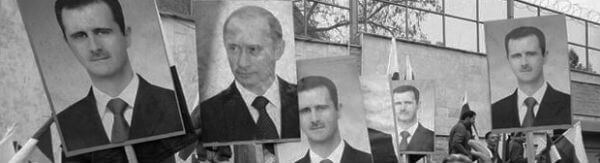
Al Jazeera reports: In early May, hundreds of detainees at Syria’s Hama central prison went into a week-long revolt to protest against the planned transfer of five inmates to the notorious Sednaya prison near Damascus, purportedly so that they could be executed.
The prisoners, many of whom are held without charge, rioted in solidarity.
Seven prison guards were taken hostage. Prisoners demanded “basic rights,” including a fair trial or release.
A deal, however, was soon reached resulting in the release of 83 prisoners held without charge.
Two weeks later, a similar scene played out again when inmates captured a high-ranking police officer to protest at what they say was the government’s reneging on an earlier deal to release several hundred political detainees.
Inmates have previously demanded the restoration of electricity and water amid food shortages and serious medical conditions among prisoners, according to to UK-based Syrian Observatory for Human Rights.
Both incidents highlighted the plight of thousands of detainees who are languishing in government prisons in appalling conditions. Both rights groups and opposition negotiators had hoped the first Hama standoff would push Syria’s forgotten detainees back to the forefront of the Syria peace talks. [Continue reading…]
Jeremy Corbyn, leader of Britain’s Labour party has issued this tribute to Jo Cox:
The whole of the Labour party and Labour family – and indeed the whole country – will be in shock at the horrific murder of Jo Cox today.
Jo had a lifelong record of public service and a deep commitment to humanity. She worked both for Oxfam and the anti-slavery charity, the Freedom Fund, before she was elected last year as MP for Batley and Spen – where she was born and grew up.
Jo was dedicated to getting us to live up to our promises to support the developing world and strengthen human rights – and she brought those values and principles with her when she became an MP.
Jo died doing her public duty at the heart of our democracy, listening to and representing the people she was elected to serve. It is a profoundly important cause for us all.
Jo was universally liked at Westminster, not just by her Labour colleagues, but across Parliament.
In the coming days, there will be questions to answer about how and why she died. But for now all our thoughts are with Jo’s husband Brendan and their two young children. They will grow up without their mum, but can be immensely proud of what she did, what she achieved and what she stood for.
We send them our deepest condolences. We have lost a much loved colleague, a real talent and a dedicated campaigner for social justice and peace. But they have lost a wife and a mother, and our hearts go out to them.
The Guardian reported earlier: The Labour MP Jo Cox is in a critical condition after being shot and stabbed multiple times after a constituency meeting. [“Dee Collins, the chief constable of West Yorkshire police, announces that Jo Cox has died.” The Guardian.]
Armed officers responded to the attack near a library in Birstall, West Yorkshire, on Thursday afternoon. A 52-year-old man was arrested in the area, police confirmed. The suspect was named locally as Tommy Mair.
Police added that Cox, the MP for Batley and Spen, had suffered “serious injuries and is in a critical condition”. She has been taken by helicopter to Leeds General Infirmary.
Police also confirmed a man in his late 40s to early 50s nearby suffered slight injuries in the incident. They are also investigating reports that the suspect shouted “Britain first”, a possible reference to the far-right political party of that name, as he launched the attack. [Continue reading…]
BuzzFeed reports: In parliament Cox has proved herself a committed campaigner on the Syrian crisis. Last October she joined forces with Tory former international development secretary Andrew Mitchell to write an article in The Observer calling for more UK action to help desperate families in the region.
She also launched the all-party Parliamentary Friends of Syria group, which she now chairs. Cox abstained in the House of Commons vote on UK airstrikes in Syria, saying she was not against them in principle but “cannot actively support them unless they are part of a plan”.
Cox has described herself as a “huge President Obama fan” – indeed she worked on his first campaign in 2008 – but she has criticised both him and David Cameron for putting Syria on the “too difficult” pile. She warned last month this had led to the biggest refugee crisis in Europe in a generation and the emergence of ISIS. [Continue reading…]
Here is Cox speaking recently on the need to help Syrians.
Here she was giving her maiden speech last year, describing the diverse West Yorkshire constituency she represented:
Reuters reports: Once Islamic State is defeated, Iraq should be divided into three separate entities to prevent further sectarian bloodshed, with a state each given to Shi’ite Muslims, Sunnis and Kurds, a top Kurdish official said on Thursday.
Iraqi troops have expelled Islamic State from some cities the militants seized in 2014, and are advancing on Mosul, the largest city under IS control. Its fall would likely mean the end of the group’s self-proclaimed caliphate.
But even if Islamic State was eliminated, Iraq would still be deeply divided. Sectarian violence has continued for years and a power-sharing agreement has only led to discontent, deadlock and corruption.
Masrour Barzani, head of the Kurdistan Regional Government’s (KRG) Security Council and son of KRG President Massoud Barzani, said the level of mistrust was such that they should not remain “under one roof”.
“Federation hasn’t worked, so it has to be either confederation or full separation,” Barzani told Reuters in an interview on Wednesday in the Kurdish capital Erbil. “If we have three confederated states, we will have equal three capitals, so one is not above the other.” [Continue reading…]
Haid Haid writes: There have recently been reports warning that the Nusra Front, an al-Qaeda affiliated group in Syria, is determined to declare its own Islamic emirate in Syria in the near future, but these warnings are likely jumping the gun. The argument goes that Nusra’s long term objective is establishing an Islamic emirate in Syria, but unlike the Islamic State (ISIS), they want to do so by winning the hearts and minds of the people. Two main obstacles prevent the Nusra from doing so: Nusra’s affiliation with al-Qaeda, many of whose members do not support the establishment of a caliphate, and most Syrians’ objection to the idea.
Supporting these predictions is the recent arrival of senior al-Qaeda figures to Syria, which is seen as the group’s attempt to secure enough support for the emirate by convincing other groups to join. Analysts have also interpreted al-Qaeda leader Ayman al-Zawahiri’s recent audio message as public approval for Nusra to dissociate itself from its parent organization in order to establish an emirate. Although these arguments are valuable, the Nusra Front is still facing many internal and external challenges, which prevent it from announcing its emirate. Moreover, these developments can also be understood as merely an attempt to help Nusra overcome the increased threats and the lack of support it is facing.
The Nusra Front was established in Syria in late 2011 and it gained a high profile among Syrians due to its valuable military contribution. The group made a name for itself fighting corruption and providing services, while avoiding politics and intervening in people’s lives, the combination of which gained it the support of local communities. However, in 2014, the group started to change its soft power strategy and began attacking some of the opposition groups, including those that receive US support, to eliminate any potential threat and to impose it unilateral control over the areas that will be part of its future emirate. This shift in the group’s strategy damaged Nusra’s public support and created tension with other rebel groups. [Continue reading…]
Hassan Hassan writes: For the past three years, ISIL has tried to establish a footing in southern Syria. It tried in the mountainous Qalamoun region near the Lebanese border, but it was expelled after intermittent clashes with Al Qaeda and Hizbollah. Its attempts to co-opt forces near Damascus did not get far either, particularly as rebels preemptively clamped down on the group’s fledgling cells there.
Following its failure to grow organically, it opted last year for a pincer strategy to link up its pockets of control between Palmyra and Homs to ones in Damascus’s north east, such as Dumayr. That effort also failed since its territory in the Homs desert was largely cleared by the pro-government forces in April. The group was also expelled from the Palestinian Yarmouk camp after a brief takeover in April last year.
But there is now bad news. In Deraa, ISIL may see not only an opening but that the opening could be the first of its kind in the whole of Syria since the group was formed in April 2013.
Last month, three local groups in Deraa formed Jaysh Khaled bin Al Walid. ISIL announced the merger on Friday. The groups — namely the Yarmouk Martyrs Brigade (YMB), Islamic Muthanna Movement (IMM) and Mujahideen Group – operate mainly in western Deraa. Last Thursday, the US state department designated the YMB as a terrorist group.
For ISIL, the south in general is strategically and symbolically important. Deraa borders Israel and Jordan and has historical resonance. The new formation is named after the historical Muslim figure, Khaled bin Al Walid, who commanded a key battle in the Yarmouk Basin against the Byzantine empire in the 7th century.
Nowhere in Syria has ISIL succeeded in growing organically as it has done in Deraa. This is a remarkable development especially since the Southern Front has been hailed as a good example of international support to the opposition. [Continue reading…]
Christian Science Monitor reports: With gelled hair spiked high and wearing a Dolce & Gabbana shirt, the young Afghan man looks more like a fashionista than a religious warrior ready to give his life for jihad in Syria.
The man wanted to leave Afghanistan for personal reasons, but the Afghans and Iranians who facilitated his trip to Iran, and hosted him in Tehran, saw a recruiting opportunity. For two and a half months, an Iranian recruiter visited nearly every day to convince him to fight on the Syrian frontline with an all-Afghan unit in exchange for promises of a better life.
As he felt the pressure grow, he finally acquiesced.
“We will send you to Syria; when you come back we will give you an Iranian passport, a house, and money,” the 21-year-old Afghan was promised when he got to Tehran. He was told he would be fighting a “religious war” in Syria.
His is one of many stories heard here in Herat, an ancient and largely Shiite city in northwest Afghanistan, that gives rare insight into how far the Islamic Republic is going to deploy a largely Shiite mercenary force of Afghans in Syria alongside its own troops, Hezbollah fighters from Lebanon, and Shiites whom Iran has marshaled from Iraq and Pakistan. [Continue reading…]
Evan Barrett writes: It has been rightly observed that the Republican Party’s long tolerance of racist attitudes set the stage for Donald Trump’s rise. But Democrats, too, are using expedient prejudice to drive their political agenda this cycle. Consider how the Obama White House has embraced talk about the “backward” Middle East to account for their own staggering foreign-policy failures there.
The first full embrace of this rhetoric by President Obama himself appeared in Jeffrey Goldberg’s remarkable Atlantic profile, wherein he explicitly cited the notion that conflict and the Middle East are inherently linked. Describing the political fallout of his intervention in Libya, Obama bemoaned “the degree of tribal division” amongst the Libyan people, suggesting that a sort of Libyan sophistication deficiency was responsible for the “chaos” that followed the NATO intervention. Through the article, the President contrasts the people of the Middle East with those in Asian and African societies “filled with striving, ambitious, energetic people who are every single day scratching and clawing to build businesses and get education and find jobs and build infrastructure.” The contrast is, Obama declares, “pretty stark” — leaving the implicit question: What can you do with these people?
This attitude was also reflected in the President’s final State of the Union, when he declared that “The Middle East is going through a transformation that will play out for a generation, rooted in conflicts that date back millennia.” This age-old canard about the “eternal” Sunni-Shia conflict was not only historically inaccurate, but a total departure from the Obama of 2009, the man who made the historic and ill-fated Cairo speech. An intellectual of his sort, and a student of history, surely knows this ugly old lie for what it is, but managed to pronounce it nonetheless in the service of anti-war spin. [Continue reading…]
Natalie Nougayrède writes: While Europe is transfixed by the UK referendum, the crisis that has arguably done the most damage to the continent continues unabated: the war in Syria. Right on Europe’s doorstep, Syria still burns. It is high time to acknowledge that the peace efforts of the US and Russia have failed dismally. Whether there is any chance of this changing after a new US president takes office in early 2017 is anyone’s guess. But that’s precisely the question Europeans need to start preparing for. And the time to do so is now.
If anyone thought Syria had gone away, look again. Massive airstrikes carried out by Russia and Syrian government forces, some using barrel bombs, have picked up again over the besieged city of Aleppo. More hospitals have been destroyed and children killed: there are pictures of this online but they’re not receiving much attention. Let’s face it: we have slowly become numb to the suffering of Syrians.
But we ignore Syria at our peril. Future Arab and Muslim generations, if not today’s, will ask Europeans why they did not do more to help a nation butchered by a dictator’s army and his allies. Europe’s destiny is intertwined with events in its Arab neighbourhood in a way that the US’s is not. For each Syrian refugee who made it to Europe and was treated decently, how many rejected or stuck in the war zone will nurture resentment towards those in the west who preferred to erect barbed wire fences or wring their hands?
Preoccupied with terrorism and refugee quotas, we worry about the spillover effects but have stopped thinking about root causes. These causes are not in Raqqa, the capital of Islamic State’s self-styled “caliphate”. They are in the presidential palace in Damascus. [Continue reading…]
The New York Times reports: Relief trucks delivered food aid for the first time in four years to Daraya, the rebel-held Syrian town just outside of Damascus that has come to symbolize civilian suffering in the war, the United Nations said Friday.
But even as the relief convoy’s success was announced by the World Food Program, the United Nations anti-hunger agency, residents of Daraya were reporting that Syrian military aircraft were bombing the town, making it difficult to distribute the food. They also said the amount delivered was roughly half of what was needed.
“People didn’t come in large numbers to receive the convoy, they were afraid of the bombing,” Amjad Abbar, a member of a local council in Daraya, said by telephone, with sounds of explosions and aircraft heard in the background. “Several barrel bombs have fallen,” he said.
News of the bombing nearly overshadowed the aid delivery, provoking anger among some Western powers hostile to President Bashar al-Assad of Syria.
“It is an extraordinary duplicity of the regime which we are witnessing,” Foreign Minister Jean-Marc Ayrault of France said at the United Nations, where he was visiting to preside over a Security Council meeting on protection of civilians in armed conflict. [Continue reading…]
Mike Giglio reports: The rebel commander was nervous. He had changed phone numbers and been difficult to reach before finally agreeing to meet in Antakya, a city near the border with war-torn Syria that has long swarmed with rebels, refugees, and spies. On the road to an out-of-the-way hotel, he told the driver to avoid the main route through town. “It’s better not to drive among all the people,” he said.
It was an open secret that the commander had once received cash and weapons from the CIA, part of a covert U.S. program that backs rebel groups against both ISIS and the Syrian government of Bashar al-Assad.
When his battalion was eventually driven from Syria by its jihadi rivals, like a number of U.S.-backed groups, he pleaded with his U.S. handlers for better support, but it wasn’t enough. So he was, he said, “out of the game.”
Now, he said, sitting at a quiet table at the hotel, he had received an offer that could bring him back in — and potentially make him even stronger than before.
He was being recruited, he said, to work for the U.S.’s rival in Syria: Russia.
“They told me, ‘We will support you forever. We won’t leave you on your own like your old friends did,’” he said. “Honestly, I’m still thinking about it.”
The commander said that five years into a war that has killed some 400,000 people and created nearly 5 million refugees, Russia is recruiting current and former U.S. allies to its side. His revelation was confirmed by four people who said they, too, had been approached with offers from Russia and by two Syrian middlemen who said they delivered them.
The moves come as Russia ratchets up its involvement in Syria with troops and airstrikes. Russia says its military campaign is designed to target ISIS — in reality it has targeted all rebels, including some who are still backed by the U.S., while also wreaking havoc on civilians.
The secret outreach shows that as it works to muscle the U.S. out of Syria, Russia isn’t just bombing the U.S.’s current and former rebel allies — it’s also working to co-opt them, launching a shadowy campaign that seeks to highlight U.S. weakness in Syria. Ultimately, Russia could be hoping to help Assad win the war by dividing the opposition, driving a wedge between rebel groups and their traditional backers, and getting them to turn their guns on his enemies. [Continue reading…]
Michele Kelemen reports: Syrian President Bashar Assad is sounding rather confident these days. In his first major address in the past two months, he promised that his troops will reclaim “every inch” of Syrian territory.
“We have no other choice but to be victorious,” Assad told Syria’s parliament on Tuesday. He also lashed out at rebels, blaming them for the failure of peace talks backed by the United Nations.
Assad’s speech is calling into question international diplomacy on Syria. One Syria-watcher at the Atlantic Council in Washington, Faysal Itani, says it’s time to go back to the drawing board.
“It is safe to say [the peace effort] has failed,” Itani tells NPR, saying he never thought the prospects for diplomacy were good.
The diplomatic plan relied on Russia and Iran using their influence with Assad to encourage him to agree on a transitional government and make peace with more moderate rebels.
U.S. Secretary of State John Kerry, one of the key architects of this approach, was “trying to pull a rabbit out of his hat,” according to Itani. While Kerry was seeking concessions from Assad, the military balance of power was turning in favor of the Syrian regime.
“The Russians are quite committed to ensuring it stays that way. No one has any incentive to give John Kerry what he’s asking for,” Itani says. [Continue reading…]
Yaroslav Trofimov writes: Two years after Islamic State launched its blitzkrieg on Iraq, exploiting Sunni Arab grievances there and in neighboring Syria, the militant group is steadily losing ground in both countries.
But, instead of local Sunnis reclaiming their lands, forces dominated by other communities — Iraq’s Shiite militias, Syrian and Iraqi Kurds, and the Alawite-run Syrian regime — are inflicting these defeats.
On the only occasion where Sunni Arab rebels attempted a major offensive against Islamic State in recent months, in Syria’s northern Aleppo countryside along Turkey’s border, it ended in a rout and a further loss of territory — partially reversed this week — to the self-proclaimed caliphate.
All of this raises a question: How meaningful are the recent victories if the root cause behind the emergence of Islamic State remains, and as more Sunni towns such as Fallujah become devastated by the fighting?
Fallujah seemed largely pacified following the campaign against al Qaeda in Iraq a decade ago — only to succumb to Sunni Islamist extremists again as the Shiite-dominated government of Nouri al-Maliki in Baghdad turned to sectarian repression.
“We could be looking at a Groundhog Day scenario,” warns Brian Katulis, senior fellow at the Center for American Progress, a Washington think tank close to the Democrats. “The campaign seems to be going well militarily, but it may have extreme costs in the long run. The biggest risk is the re-emergence of radicalism in a few short months, or year or two.”
So far, the few areas repopulated by Sunni Arabs, such as the city of Tikrit, have remained largely peaceful — in part because they are still garrisoned by Shiite militias, with relatives of suspected Islamic State members banned from returning. As more towns become liberated in Iraq and Syria, however, exercising that kind of control will be harder.
A backlash in those areas against victorious Shiites or Kurds would allow Islamic State to keep recruiting new fighters and bombers for a renewed insurgency, warns Robert Ford, a scholar at the Middle East Institute who served as U.S. ambassador in Syria and deputy envoy in Iraq.
“If that happens, the fight against Islamic State doesn’t end, it just morphs into a different kind of battle — and the terrorist threat to the West doesn’t go away,” he says. [Continue reading…]
The New York Times reports: Bombs from airstrikes hit three hospitals on Wednesday in the rebel-held side of Aleppo, Syria, including a pediatrics center supported by the United Nations, in what aid providers and opposition activists called a new atrocity in the fighting that has ravaged the city.
The Middle East regional office of Unicef, the United Nations Children’s Fund, said in a statement that the attacks happened within a space of three hours on al-Bayan and al-Hakeem hospitals and the Abdulhadi Fares clinic.
Unicef provided no details on casualties, damage or who was responsible, but it said the attack was the second on al-Hakeem hospital, which it helps operate.
Others said that at least 10 civilians were killed in the bombings, including children, and that many others were wounded. Activist groups blamed Syrian military forces. Insurgents have no aircraft, which are used to conduct such bombings.
“This devastating pattern of warfare in Syria seems to have no checks and balances,” the Unicef regional director, Dr. Peter Salama, said in a statement posted on Twitter. “Surely this should shake the moral compass of the world. How long will we allow the children of Syria to suffer like this?” [Continue reading…]
After four years, the 4,000 residents of the besieged Damascus suburb of Darayya received their first official multi-agency United Nations aid convoy Wednesday. But documents viewed by The Daily Beast show that the convoy carried items that are largely useless to the population, whose primary concerns are starvation and disease. And even at that, the Assad government gave the convoy permission for the partial delivery in an eleventh-hour concession to stop the UN from staging air drops of desperately needed aid.
Darayya is only 15 kilometers — fewer than 10 miles — from downtown Damascus. Despite extensive social media fanfare by the agencies taking part in the convoy, the first “successful” delivery to the area since 2012 was far from cause for celebration for the besieged residents.
“It is unprecedented in areas of conflict that the UN and the aid community as a whole is not allowed to access an area for four years,” a UN official who did not want to be named for fear of the impact on the work of their organization, told The Daily Beast. [Continue reading…]
The Daily Beast reports: U.S.-backed opposition forces in Syria’s largest city are facing a ferocious Russian-led assault, raising fears that the rebels could be eliminated in a matter of weeks.
So how are the Pentagon and the intelligence community responding?
By catfighting among themselves.
Two Department of Defense officials told The Daily Beast that they are not eager to support the rebels in the city of Aleppo because they’re seen as being affiliated with al Qaeda in Syria, or Jabhat al Nusra. The CIA, which supports those rebel groups, rejects that claim, saying alliances of convenience in the face of a mounting Russian-led offensive have created marriages of battlefield necessity, not ideology.
“It is a strange thing that DoD hall chatter mimics Russian propaganda,” one U.S. official, who supports the intelligence community position, wryly noted to Pentagon claims that the opposition and Nusra are one in the same.
But even if the rebels were completely separated from Nusra, there would still be something of a strategic conflict with U.S. military goals. The rebels in Aleppo, these Pentagon officials note, are fighting the Bashar al-Assad regime; the American military effort, on the other hand, is primarily about defeating the self-proclaimed Islamic State. [Continue reading…]
Reuters reports: The world has become increasingly violent with deaths from conflict at a 25-year high, terrorist attacks at an all-time high and more people displaced than at any time since World War Two, the 2016 Global Peace Index showed on Wednesday.
The annual index, which measures 23 indicators including incidents of violent crime, countries’ levels of militarisation and weapons imports, said intensifying conflicts in the Middle East were mostly to blame.
But beyond the Middle East, the world was actually becoming more peaceful, researchers behind the index said.
“Quite often, in the mayhem which is happening in the Middle East currently, we lose sight of the other positive trends,” said Steve Killelea, founder of the Institute for Economics and Peace (IEP), which produces the index.
“If we look in the last year, if we took out the Middle East … the world would have become more peaceful,” Killelea told the Thomson Reuters Foundation. [Continue reading…]
The New York Times reports: Syria’s president promised to retake “every inch” of the country from his foes on Tuesday in a defiant speech that appeared to reject the humanitarian relief effort and peaceful transition of power that the United States, Russia and more than a dozen other nations have pressed for since last fall.
The speech by President Bashar al-Assad was his first major address since the effort to mediate an end to the civil war broke down in Geneva in April. It reflected his sense that Russian intervention in the war has bolstered his position — and his ability to remain in power for the foreseeable future — as the war enters its sixth year.
Mr. Assad’s defiance was notable partly because of efforts in recent months by Secretary of State John Kerry and other leaders of a 17-nation collaboration, known as the International Syria Support Group, to set a series of deadlines and limits that Syria could not violate.
Every one of the directives has been broken. A cease-fire devised in Munich in February collapsed. Mr. Kerry’s demand at that time — that humanitarian access had to begin within weeks — was briefly observed in a few towns before access was again largely blocked. [Continue reading…]
This website or its third-party tools use cookies, which are necessary to its functioning. By closing this banner, you agree to the use of cookies.