Financial Times reports: An advance by Syrian troops into Raqqa province has raised the prospect of a race to the Isis stronghold between the US-backed opposition and regime forces supported by Moscow.
Supported by Russian air power, Syrian government troops have moved to within 65km to the south-west of the city after clashes with Isis fighters that began over the weekend, according to the UK-based Syrian Observatory for Human Rights.
The fighting comes two weeks after US-backed opposition forces, known as the Syrian Democratic Forces (SDF), began an offensive north of Raqqa, the de facto capital of Isis in Syria, which has also been the centre of its self-styled caliphate since 2014.
Isis now finds itself battling on four different fronts at once: to the north and south-west of Raqqa; around Manbij near the Turkish border with Syria; and in Fallujah in Iraq, where government forces and allied militia are attempting to retake the city. [Continue reading…]
Category Archives: Syria
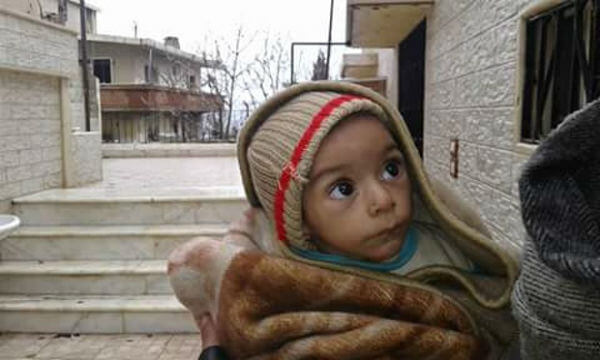
Empty stomachs, empty words: Syria’s children starve as America looks on

In an editorial, the Washington Post says: It’s been nearly six months since the U.N. Security Council passed a resolution demanding an end to the bombing and shelling of civilian areas in Syria and calling for immediate humanitarian access to besieged areas. It’s been four months since Secretary of State John F. Kerry described the sieges as a “castastrophe” of a dimension unseen since World War II and said that “all parties to the conflict have a duty to facilitate humanitarian access to Syrians in desperate need.”
Three weeks ago, a diplomatic conference on Syria joined by Mr. Kerry issued a statement saying it “insisted on concrete steps to enable the provision of urgent humanitarian deliveries,” and warning that if none were taken, it would support airdrops to besieged towns beginning on June 1.
By Monday, there still had been no food deliveries to Darayya in the Damascus suburbs, the al-Waer district of Homs or several other of the 19 besieged areas, with a population of more than 500,000, identified by the United Nations. Nor had there been airdrops. None have been organized, and U.N. officials say none are likely in the coming days. Another deadline has been blown, another red line crossed — and children in the besieged towns are still starving. [Continue reading…]
ISIS members from the West seek help getting home
The Wall Street Journal reports: Westerners who joined Islamic State once enjoyed not only power and social status but also free food, housing and even cars. But that gave way to cowering in basements during air raids, dwindling food stocks and scant medical care, according to Syrians who have fled and diplomats who debriefed defectors.
“Father, help me,” a teenager from Europe said about six months ago in a text message to her father. “I want to get out. But I now have a small child.”
The father, who declined to be identified, said he had previously made several attempts to persuade his daughter to return from Raqqa after she left to join Islamic State in late 2013.
Speaking by phone and Facebook messenger from his home in Scandinavia, the father said he asked his government for help but that there is little authorities can do. She would first have to get to Turkey, according to government officials of her home country who corroborated the father’s story.
She remains in Raqqa, too scared to flee for fear of being caught, according to her father. [Continue reading…]
Chomsky’s outdated view of American power
In a review of Noam Chomsky latest book, Who Rules the World?, Kenneth Roth writes: Chomsky’s book is not an objective account of the past. It is a polemic designed to awaken Americans from complacency. America, in his view, must be reined in, and he makes the case with verve and self-confident assertion, even if factual details are sometimes selective or scarce.
Yet Who Rules the World? is also an infuriating book because it is so partisan that it leaves the reader convinced not of his insights but of the need to hear the other side. It doesn’t help that the book is a collection of previously published essays with no effort to trim the repetitive points that pop up in chapter after chapter. Nor was much attempt made to update earlier chapters in light of later events. The Iranian nuclear accord and the Paris climate deal are mentioned only toward the end of the book, even though the issues of Iran’s nuclear program and climate change appear in earlier chapters.
At times Chomsky’s book suffers from simple sloppiness. For example, he reports that “the Obama administration considered reviving military commissions” on Guantánamo when in fact these commissions have been operating there for most of President Barack Obama’s eight years in office. And in certain places it is simply confused, as when Chomsky quotes from a review by Jessica Mathews in these pages and implies that she subscribes to the view that America advances “universal principles” rather than “national interests,” when in fact she was criticizing that perspective as part of her negative review of a book by Bret Stephens.
In some respects, Chomsky’s preoccupation with American power seems out of date because the limits of American power have become so apparent. When we ask “Who rules the world?” and take account of Syrian atrocities, the emergence of the Islamic State, or the mass displacement of refugees, the answer is less likely to be the American superpower than no one. Obama’s foreign policy has been far more about recognizing the limits of US military power than the exercise of that power, but this merits barely a mention by Chomsky. His America is the one of military adventure — the Vietnam War, the Bay of Pigs, the Central American conflicts of the 1980s, the 2003 invasion of Iraq, the potentially suicidal recklessness of the nuclear arms race.
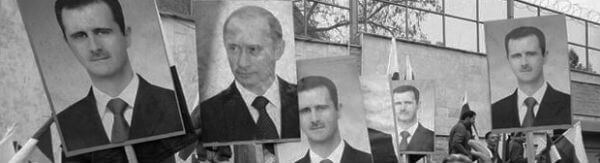
Chomsky’s selective use of history limits his persuasiveness. He blames Middle East turmoil, for example, largely on the World War I-era Sykes-Picot agreement that divided the former Ottoman Empire among British and French colonial powers. He’s right that the borders were drawn arbitrarily, and that the multiethnic and multiconfessional states they produced are difficult to govern, but is that really an adequate explanation of the region’s current turmoil? President George W. Bush’s invasion of Iraq fits his thesis of American malevolence, and the terrible human costs of the war get mentioned, but Syrian President Bashar al-Assad’s decision to fight his country’s civil war by targeting civilians in opposition-held areas, killing hundreds of thousands and setting off the flight of several million refugees, does not. Nor does Russia’s decision to back Assad’s murderous shredding of the Geneva Conventions, since Chomsky’s focus is America’s contribution to global suffering, not Vladimir Putin’s.
Still, it is useful to read Chomsky because he does undermine the facile if comforting myths that are often used to justify US action abroad — the distinction between, as Chomsky puts it, “what we stand for” and “what we do.” His views are held not only by American critics on the left but also by many people around the world who are more likely to think of themselves as targeted rather than protected by US military power. [Continue reading…]

Jihadist legacy still shapes Ahrar al-Sham
Hassan Hassan writes: Over the past five years in Syria, Ahrar al-Sham has emerged as an important political and religious experiment. As one of the most powerful groups in Syria, Ahrar al-Sham has struggled to reconcile the legacy of many of its founders as jihadi veterans with the need for an acceptable political discourse in the war-ravaged country. As the group engages cautiously in the political process for a transition, it is also important to understand whether it has really broken away from Salafi-jihadism.
The ideology of the group is further muddled by the fact that it works closely with al-Qaeda affiliate Jabhat al-Nusra, though Ahrar al-Sham participates in political conferences and pacts that appear to deviate from the canons of jihadist organizations. After the death of its top leaders in an explosion that took place during a high-level meeting in September 2014, Ahrar al-Sham has also sought to present itself to the outside world as a moderate group and an indispensable fighting force on the ground.
Countries involved in the conflict in Syria are split about the organization. Some, primarily Russia and Iran, are pushing for its designation as a terrorist organization. Others, such as Qatar and Turkey, tried to present the organization as a moderate group and include it in the international funding scheme for nationalist rebel forces. The latter effort entailed the involvement of sponsors and clerics close to the group to steer it in that direction, combined with a public relations offensive to present the group as such.
But is Ahrar al-Sham merely a conservative Syrian faction immersed in an armed struggle against the regime of Bashar al-Assad? Or is it still a bastion of Salafi-jihadism, the movement to which its top echelon once subscribed? Ali al-Omar, the group’s deputy leader, answered some of these questions during an hour-long talk he gave on Friday, “The Place of Ahrar al-Sham Among Islamist Currents.” [Continue reading…]
In Turkey, a Syrian child ‘has to work to survive’
The New York Times reports: When he was 9, Ahmad Suleiman watched his father die from a battlefield wound in Syria. Four years later, he now puts in 12-hour shifts at a damp and squalid textile factory in Istanbul as the primary breadwinner for his family, which fled to Turkey after his father’s death.
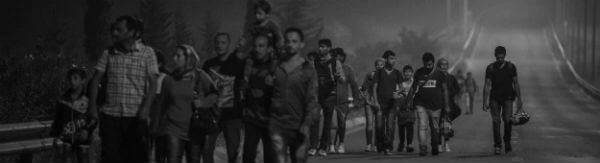
Over one million Syrian children live in Turkey, and thousands of them, like Ahmad, are in sweatshops, factories or vegetable fields instead of in a classroom, members of a lost generation who have been robbed of their youth by war.
Like many others in his situation, while he toils for his family, Ahmad is paying a steep price. “I want to send Ahmad to school because he doesn’t know how to read and write and can’t understand the bus signs,” said his mother, Zainab Suleiman, 33. “But I have no choice. He has to work to survive.”
Many of the children who arrive in Turkey have already lost years of schooling because of the war. Before the conflict, 99 percent of Syrian children were enrolled in primary schools and 82 percent in secondary schools, Unicef has reported. Today, nearly three million Syrian children are out of school, and for those in Turkey, the education gap has either grown longer or become permanent.
While more than a million Syrians have reached Europe, many more — three million in all, including Ahmad’s family — have been forced by poverty to stay in Turkey, where their prospects are bleak. [Continue reading…]
Assad’s media adviser might be even more evil than the man burning Syria
David Blair writes: If there is a Marie Antoinette of our age, it must be Bouthaina Shaaban, the odious “media adviser” to Syria’s regime. When asked about the medieval sieges currently being imposed on a million Syrians in rebel-held enclaves by her master, Bashar al-Assad, she did not actually say “let them eat cake” – but she might as well have done.
There was “no need” for food aid in Syria, declared Ms Shaaban during a press briefing last Thursday, and the inhabitants of the towns and refugee camps blockaded by her regime could do without “macaroni” and “tin fruits” from the United Nations.
One suburb of Damascus, known as Daraya, has been subjected to a particularly pitiless siege since November 2012: during the whole of that time, the regime has allowed only one aid convoy into the area – and even that was prevented from carrying any food.
But the well-nourished Ms Shaaban blithely described Daraya as the “food basket of Damascus”, adding: “There’s nobody starving in Daraya.” [Continue reading…]
Syria: UN won’t break sieges with airdrops without permission from the government imposing those sieges
The New York Times reports: The United Nations on Thursday dimmed any prospect of immediate airdrops of aid to Syrian civilians trapped by the war, despite an expired deadline imposed on Syria’s government to allow unfettered humanitarian access by land.
United Nations officials said the World Food Program, its anti-hunger agency, had no imminent plans for airdrops even though the organization had known for more than two weeks about the deadline, which expired on Wednesday.
Moreover, the officials said, it would be necessary for security reasons for any airdrops to have the consent of the Syrian government.
They also emphasized what they called the logistical challenges and expense of airdropping aid into congested urban settings controlled by insurgents, where thousands of civilians lack access to food and medicine.
The deadline was imposed by the International Syria Support Group, a multinational effort that includes the United States and Russia — Syria’s most important ally — which was thought to have given the demand some coercive effect.
The group said on May 17 that if land access were not granted by President Bashar al-Assad, the World Food Program should “immediately carry out a program for air bridges and airdrops for all areas in need.” [Continue reading…]
ISIS at real risk of losing much of the territory it holds
The Guardian reports: For the first time in the two years since the leader of Islamic State, Abu Bakr al-Baghdadi, proclaimed the existence of an “Islamic caliphate” straddling Syria and Iraq, the jihadi group is at real risk of losing much of the territory it holds.
Four Isis strongholds – two in Syria and two in Iraq – are now under concerted attack, and in all cases the militants defending them are struggling to contain well-organised and resourced assaults planned over many months.
The attacks are heavily backed by the US, which since April has stepped up its campaign to “destroy and degrade” the terrorist organisation in its self-declared heartland of eastern Syria and western Iraq. A two-year project that had been derided by allies and proxies alike as being too limited and cautious now has military momentum. [Continue reading…]
Aid delivered in Syria may be too little, too late
The Washington Post reports: The government siege of a Damascus suburb was broken Wednesday with delivery of medical supplies and a small amount of baby food, after Syria agreed to allow an international aid convoy to enter the area for the first time since 2012.
Arrival of United Nations and Red Cross vehicles in the rebel-held, government-surrounded city of Darayya came just hours into a June 1 deadline, after which the United States and Russia had pledged to organize airdrops for food and medicine to reach starving civilians.
Although U.S. officials said they would continue to prepare for international food delivery by air, in case the access ends, the convoys to Darayya, and to the similarly besieged city of Moadamiya, appear to have averted the latest potential escalation in Syria’s years-long civil war.
But they accomplished little to change a situation in which maintaining the status quo now seems the most optimistic outcome in the near term, and perhaps for the remainder of Barack Obama’s presidency.
What seemed the chance of a political solution in Syria barely three months ago now appears an ever fainter possibility. At the same time, those within the administration who have long advocated a more robust U.S. commitment to the Syrian opposition have largely given up. [Continue reading…]
What happens after ISIS?
The Daily Beast reports: Troops fighting ISIS appeared to on the verge of another victory over the self-proclaimed Islamic State Wednesday, as they moved into a city that has served as the main thoroughfare for ISIS foreign fighters and weapons. But the potential seizure of the Syrian city of Manbij by U.S.-backed forces is only likely to set off a new battle for control — this time pitting Arabs against Kurds.
The battle Wednesday reflected a growing problem for the U.S. and its push to train local fighters, even as those forces take territory from ISIS. Who exactly will govern those towns now? Will it be the Kurds who have led the fight against ISIS? Or will it be what some in the Pentagon have privately called the “token Arabs” trained by the U.S. to accompany them?
Two defense officials told The Daily Beast Wednesday they don’t know. They believe the Arabs would be in charge. But even these officials admit that asking the 5,000-or-so newly-trained Arab fighters to control three or more formerly ISIS-controlled areas — and at the same time move into the ISIS capital of Raqqa — would be difficult.
On the other hand, some worry that a Kurdish controlled Manbij could be ethnically cleansed, creating the kind of Sunni disenfranchisement that led to the rise of ISIS. The fall of Manbij into Kurdish hands, however, would give the Kurds a contiguous region in northern Syria. Moreover, a Kurdish controlled Manbij could draw the ire of U.S.-allied Turkey, which rejects a Kurdish controlled region on its border.
The question “what happens after ISIS?” looms increasingly over the U.S.-led effort. Indeed, defense officials said how the governance question is answered in Manbij could foreshadow the strategy for Raqqa, ISIS’s capital. Local U.S.-backed forces, accompanied by U.S. forces, have moved within 18 miles of the city in the last week. Over the Memorial Day weekend, one U.S. service member was injured while supporting the local fighters. [Continue reading…]
Dozens killed in bombing of national hospital in Idlib
The Guardian reports: At least two dozen people including several children have been killed in northern Syria in the latest apparent attack by forces loyal to the Bashar al-Assad regime on medical facilities in opposition-held areas, UN officials and activists have said.
The bombing of the national hospital and its surroundings in Idlib city, a provincial capital wrested from regime control last year, was the latest incident in a systematic aerial campaign against medical personnel and facilities that has gone unpunished despite its intensification over the last year and a half.
“There is no use to all of this. The bombing of hospitals will continue and cannot be stopped – that much is clear,” said Zedoun al-Zoabi, head of the Union of Syrian Medical Relief Organisations, which operates a number of hospitals in northern Syria. “We have lost hope, and all we can do is build hospitals underground because there is no international decision to prevent the bombing of hospitals.” [Continue reading…]
Syrian troops looting ancient city Palmyra, says archaeologist
AFP reports: Syrian regime troops are looting the ancient city of Palmyra like the Islamic State jihadis who controlled it until March, according to a leading archaeologist.
Hermann Parzinger, president of the Prussian Cultural Heritage Foundation, said off-duty soldiers were conducting illegal excavations and had looted at the Unesco world heritage site. [Continue reading…]
U.S. struggles with goal of admitting 10,000 Syrians

The New York Times reports: President Obama invited a Syrian refugee to this year’s State of the Union address, and he has spoken passionately about embracing refugees as a core American value.
But nearly eight months into an effort to resettle 10,000 Syrian refugees in the United States, Mr. Obama’s administration has admitted just over 2,500. And as his administration prepares for a new round of deportations of Central Americans, including many women and children pleading for humanitarian protection, the president is facing intense criticism from allies in Congress and advocacy groups about his administration’s treatment of migrants.
They say Mr. Obama’s lofty message about the need to welcome those who come to the United States seeking protection has not been matched by action. And they warn that the president, who will host a summit meeting on refugees in September during the United Nations General Assembly session, risks undercutting his influence on the issue at a time when American leadership is needed to counteract a backlash against refugees. [Continue reading…]
America’s Middle East allies could win friends for ISIS
Hassan Hassan writes: The tortuous war against Isis is taking a treacherous turn. Two years after the militant Sunni group declared its brutal caliphate, the US and its allies in Iraq and Syria have begun a two-front offensive to dislodge the militant group from its strongholds in the Iraqi city of Fallujah and Raqqa in Syria. But, while the campaign has made progress, the composition of the forces leading the battles in the two Arab Sunni cities is intensifying sectarian and ethnic tensions in the bitterly divided nations and beyond. The danger is that the US-led action will, ultimately, help Isis gain legitimacy as a defender of Sunnis — even if it cedes territory.
Heightened fears in Syria, Iraq and the wider region about the offensive in Falluja and Raqqa bode ill for the long-term fight against the group. With western help channelled to militias beholden to the Shia regime in Iran and close to Tehran’s allies in Damascus, the fight is widely seen in the region as nakedly sectarian.
The US-backed offensive is the first of its kind since the American-led anti-Isis campaign began soon after the group swept into Iraq. America has long sought to avoid providing air support for Shia and Kurdish militias to fight in two Sunni areas at once: when Baghdad launched the battle to retake the city of Tikrit from Isis in March last year, Washington refrained from providing air strikes in support of the estimated 30,000 Shia fighters until the battle stalled three weeks later. [Continue reading…]
Should Israel negotiate with Hamas?
Syrian opposition negotiator quits peace talks
The Wall Street Journal reports: The chief Syrian opposition negotiator in Geneva resigned, citing both the international community’s failure to make concrete progress toward ending the country’s conflict and continuing hostilities by the regime.
Mohammad Alloush’s departure could be a particularly troubling development for the fractured opposition, which has faced difficulties nominating consensus leaders wielding both political clout with the international community and influence among rebels on the ground.
The High Negotiations Committee, the opposition’s representative body in Geneva, will meet in Riyadh in 10 days to form a delegation for coming peace talks and select his successor, a spokeswoman said.
The resignation is the latest hitch in the continuing peace negotiations, as President Bashar al-Assad’s regime, the opposition and their respective allies appear no closer to finding a mediated solution to the five-year conflict.
The latest cease-fire attempt, brokered by the U.S. and Russia, broke down weeks after it began in February.
“The last three rounds of negotiations in Geneva under U.N. auspices have been unsuccessful because of the unwillingness of the regime to compromise and its continuation in the bombing and aggression against the Syrian people,” Mr. Alloush said Sunday night in the letter to the HNC. “Also, the international community [has been unable] to implement its decisions especially with regard to the humanitarian angle from breaking the siege, allowing aid into besieged areas, the release of detainees and a commitment to cessation of hostilities.” [Continue reading…]
Russia’s draft constitution: End of Syria’s Baath era?

Al Jazeera reports: Last Tuesday, Lebanese daily newspaper, Al-Akhbar, reported that Russia had finished drafting a constitution for Syria that would remove many of the Syrian president’s powers and set up a more decentralised government, both possible concessions to rebel groups fighting the regime of President Bashar al-Assad.
According to the Al-Akhbar report, the new constitution, done with the blessing of the United States, would be put to referendum before the end of the year. This would put the countries on pace to meet their self-imposed deadline to draft a Syrian constitution by August 2016.
The Syrian presidency quickly dismissed the report, describing it as “untrue”.
“No draft constitution has been shown to the Syrian Arab Republic. Everything which has been said in the media about this subject is totally untrue,” a statement on the Syrian Presidency’s official Facebook page said.
Barely six weeks after their military intervention began, Russian officials put forth an eight-point plan called: “Approach to the Settlement of the Syrian Crisis” that provided the basic contours of Russia’s vision for ending the conflict.
This vision was rather narrow, however, as the first five points dealt specifically with the fight against the Islamic State group (ISIL, also known as ISIS), and the remaining three carried vague commitments to a political process carried out under international auspices.
For most observers, the plan represented little more than the fulfilment of the regime’s wish-list and carried with it no substantive political concessions. [Continue reading…]