Category Archives: Syria

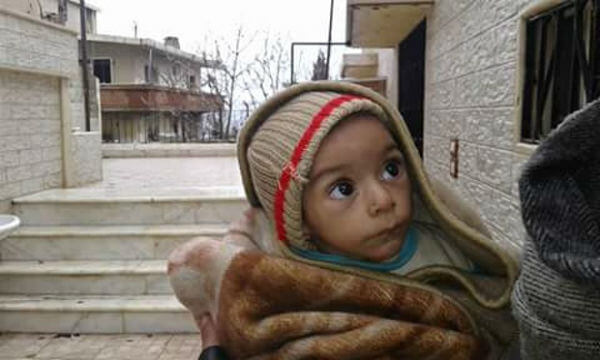
Seeing the starving children of Madaya is shocking – but so is the world’s neglect

starving-child-madaya

Lina Khatib writes: Horrific images and stories of starving children have suddenly flooded the media as the reality of life in the town of Madaya in Syria, besieged by Syrian regime sources and Hezbollah, has surfaced. But what is perhaps more shocking than the images is how the deliberate targeting of the population of Madaya has been taking place since July 2015 without the international community noticing.

This is despite activists in Madaya desperately trying to direct global attention to the atrocities committed there by the Syrian regime and its ally Hezbollah. It is only when the situation in Madaya reached the level of mass starvation that the international media have paid attention.

The Syrian regime and Hezbollah have put Madaya under siege for more than six months now as a response to the siege of the northern towns of Fua and Kefraya by anti-regime forces. In besieging Madaya and neighbouring Zabadani on the Lebanese border, the regime is trying to pressure its rebel opponents to agree to a population transfer between the two sets of towns that would consolidate regime control over Syrian towns bordering Lebanon. The regime’s plan is to empty Zabadani and Madaya from Sunni residents and populate them with Shia who would be brought in from Fua and Kefraya. This “sectarian cleansing” would allow the Shia Hezbollah to consolidate its control over areas serving as supply lines for regime strongholds in Damascus and the Syrian coast (the Sahel) as well as for Hezbollah itself. [Continue reading…]

Facebooktwittermail

For activists fighting ISIS, Turkey has become as dangerous as Syria

The Guardian reports: The past six months have not been good for Isis. In addition to mounting losses on the battlefield, the organisation has been struggling to dominate the information war despite the enormous resources it devotes to shaping its message.

Central to Isis’s anger has been the activist group Raqqa Is Being Slaughtered Silently (RBSS). It numbers roughly 100 members who for more than a year have chronicled airstrikes, terror attacks, executions and other events in the Syrian city, often in real time. Life in the so-called caliphate is detailed without gloss or spin. No one else has been able to offer such insight into the organisation’s stronghold. And none have paid a bigger price for trying.

Late last year, Isis cut the internet and satellite television connections to Raqqa. It announced that anyone caught collaborating with the group would be killed, and it set about trying to weed out agents across the city and within its own ranks. According to one Isis member spoken to by the Guardian, the group has put extra resources into counter-espionage.

Since then at least four prominent activists and journalists have been killed, including three who were living and working in Turkey.

“The situation is getting more and more difficult, especially after the assassinations in Turkey,” said one member of the Raqqa group. “We are under immense pressure inside and outside Syria. Many activists have shut down their accounts and reduced their work in the areas under Isis control. Others [have remained] more driven to challenge Isis and continue their work relying on Thuraya phones and constantly changing their locations and contact details. We can still manage to get information from inside Isis but video has become more difficult now. They have built tremendous fear inside people.”

Another member of the group, who also insisted on remaining anonymous, said: “We have been receiving lots of death threats since 2012 but the situation right now is extremely dangerous. All I can do is move house every month or so and move cities. We ran away from Syria to Turkey for a safe place to work and live in but now Turkey has become as dangerous as Syria. [Continue reading…]

Facebooktwittermail

The Saudi–Iran rift over Syria

Syria Deeply sought the opinion of several experts. Nader Hashemi said: In broad terms, the recent fallout only serves to entrench existing positions. These positions have long solidified over the course of the past five years. The recent deterioration of relations and antagonism between Saudi Arabia and Iran do not, in my reading, fundamentally change this dynamic.

The fallout at this stage does not completely undermine the Vienna Peace Process. Both Saudi and Iran, over a series of several meetings, basically agreed to a broad framework that was enshrined in a U.N. Security Council Resolution 2254 on December 18. Now the ball is out of the court of the Iranians and Saudis and is in the court of the Syrian actors and Staffan de Mistura. That’s the next stage of the Vienna process – to try and bring Syrians from both the Assad regime and the opposition around the table. Thus, at this stage, Iran and Saudi Arabia really don’t have much to contribute. Perhaps, as a result of recent events, they might decide to take a more hardline stance when it comes to determining which Syrian rebel groups are terrorists and can have a seat at the table and which cannot.

I’m very skeptical about the Vienna Process. I think it was essentially dead on arrival because it assumes that after five years of a neo-genocidal war, and having already gone down this road before in Switzerland in January 2014 with Lakhdar Brahimi, that somehow something substantial has changed. Why should anyone assume that just because the regional and international powers have agreed to a broad framework, all of the Syrian participants in this conflict are going to meet in Geneva at the end of January, kiss and make up, and agree to some unity government and peace plan? There is little room for optimism on this point. [Continue reading…]

Facebooktwittermail

Syria agrees to food aid for starving rebel-held town, UN says

The New York Times reports: Amid mounting international dismay over reports of starvation deaths and images of skeletally thin children in the besieged, rebel-held Syrian town of Madaya, the Syrian government agreed Thursday to allow the delivery of humanitarian aid, according to the United Nations.

But no firm date was set, and senior United Nations officials said that while they welcomed the government’s decision to allow the aid to enter, 42,000 people in Madaya remained “at risk of further hunger and starvation, citing “credible reports of people dying from starvation and being killed while trying to leave.”

The announcement came after Syrian opposition leaders issued a blistering statement declaring that silence and inaction from powerful nations and international organizations made them “complicit in starving civilians.” In recent days, Syrians had mounted a social media campaign sharing painful photos and videos: an 8-year-old boy who said he had not eaten for 10 days and longed for sweets; the shriveled body of a man who starved to death, his rib cage jutting out over a caved-in stomach.

Numerous residents of Madaya interviewed in recent days described living on grass and leaves, and seeing family members dying of hunger or killed by snipers as they tried to escape the town, which is surrounded by pro-government forces, primarily from Hezbollah, the Lebanese Shiite group that is allied with the Syrian president, Bashar al-Assad. [Continue reading…]

Facebooktwittermail

Charles Lister interview: ‘ISIS is a convenient obsession’

Der Spiegel reports: British-American terror expert Charles Lister believes that al-Qaida ally Jabhat al-Nusra is more dangerous than Islamic State. In an interview, he warns that most Syrian rebel groups will abort the peace process should Bashar Assad remain in power.

SPIEGEL: A surprising conclusion in your new book [The Syrian Jihad: Al-Qaeda, the Islamic State and the Evolution of an Insurgency] is that while Islamic State (IS) and the regime of Syrian President Bashar Assad are obvious obstacles to ending the Syrian war, in your view the biggest problem is Jabhat al-Nusra, which is allied with al-Qaida. Why is that?

Charles Lister: In the West, the threat posed by IS has become an understandable, but convenient obsession. However, Jabhat al-Nusra has embedded itself so successfully within the Syrian opposition — within the revolution for a long time — that in my view it has become an actor that will be much more difficult to uproot from Syria than IS. Islamic State is all about imposing its will on people, whereas al-Nusra has for the last five years been embedding itself in popular movements, sharing power in villages and cities, and giving to people rather than forcing them to do things. That has lent it a power IS just doesn’t have. The reason I call IS a convenient obsession is that I don’t think anybody in the West knows what to do about Jabhat al-Nusra. There was a period of time where it was relatively clear that al-Nusra had a foreign attack wing that was plotting attacks in the West. They have never let go of their foreign vision, they have explicitly said they want to establish Islamic emirates in Syria, and they belong to an organization, al-Qaida, whose avowed goal is to attack and destroy the West. Not to establish an “Islamic State” and gradually expand it like IS, but explicitly to destroy the West.

SPIEGEL: Yet it was IS that killed 130 people in Paris on Nov. 13, carrying out the bloodiest terrorist attack on foreign soil since 9/11. Are these attacks a sign of strength or a sign of them being under pressure in Syria?

Lister: If these attacks were indeed centrally planned by IS, they have to be a sign of strength. Islamic State certainly is not weakening in Syria and Iraq. Yes, it has lost territory, but as a movement it is in no weaker position than it was 18 months ago. It still has sustainable sources of income, it has large amounts of territory under its control, and now, for the first time it has demonstrated a real ability to carry out what one might call spectacular attacks in the West, with real geopolitical repercussions. It shows its ability to shape international affairs. That in itself is a sign of strength. [Continue reading…]

Facebooktwittermail

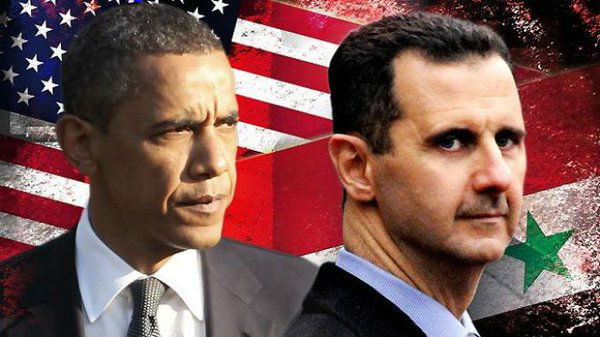
U.S. expects Assad to remain in power longer than Obama

obama-assad

The Associated Press reports: The Obama administration’s best-case scenario for political transition in Syria does not foresee Bashar Assad stepping down as the country’s leader before March 2017, outlasting Barack Obama’s presidency by at least two months, according to a document obtained by The Associated Press.

An internal timeline prepared for U.S. officials dealing with the Syria crisis sets an unspecified date in March 2017 for Assad to “relinquish” his position as president and for his “inner circle” to depart. That would be more than five years after Obama first called for Assad to leave.

The timeline is based on a broad U.N.-endorsed plan that was initially laid out at an international conference in Vienna in November. Syria, according to that strategy, would hold elections for a new president and parliament in August 2017 — some 19 months from now. In the interim, Syria would be run by a transitional governing body. [Continue reading…]

Facebooktwittermail

What now for Lebanon and Syria?

Alex Rowell writes: Lebanon’s Prime Minister Tammam Salam may have declared himself hopeful for positive change in 2016, but if the year continues in the vein of its first five days, he appears destined for disappointment. The execution by Saudi Arabia of leading Shiite cleric and opposition activist, Sheikh Nimr al-Nimr, and the subsequent torching of the Saudi embassy in Tehran, which in turn led Riyadh and a number of its allies to sever or downgrade diplomatic relations with Iran, had by Tuesday escalated into bloodshed, with Sunni mosques bombed and a muezzin gunned down by suspected Shiite militants in Iraq; a Shiite resident of Saudi’s eastern province also fatally shot; and a reported intensification of Saudi air strikes on Shiite rebel targets in Yemen.

In Lebanon, no violence has yet broken out, but the political atmosphere has been considerably poisoned. On Sunday, Tehran ally Hezbollah’s Secretary-General Hassan Nasrallah gave an extraordinarily foul-tempered speech, going far further in criticisms of Saudi Arabia than he ever has previously. Likening the “takfiri and terrorist” state to both ISIS and Israel, he accused the ruling family of being a mass-murdering agent of Western imperialism and Zionism, drawing multiple outbursts of “Death to the Saud family!” chants from the crowd. In an unabashedly sectarian analogy, he compared Sheikh Nimr al-Nimr to the Prophet’s granddaughter, Zainab bint Ali, “speaking truth to Ibn Ziad and Yazid bin Mu`awiya,” thereby overtly tying the controversy into a 1,300-year-old Sunni-Shiite conflict.

Perhaps unsurprisingly, then, officials from Hezbollah’s main Lebanese rival, the Saudi-backed Future Movement, told NOW the new state of affairs would complicate the resolution of various pressing matters, including the twenty-month-long presidential vacuum. [Continue reading…]

Facebooktwittermail

Journalist Ruqia Hassan murdered by ISIS after writing on life in Raqqa

The Guardian reports: Islamic State militants murdered a journalist who wrote about daily life in occupied Raqqa, having accused her of being a spy, activists have confirmed.

Ruqia Hassan, 30, was killed in September, but news of her death became widely known this week after Isis claimed on social media that she was still alive.

Writing under the pen name Nissan Ibrahim, Hassan’s posts described life for residents of Raqqa, Isis’s Syrian stronghold, and the frequent coalition airstrikes against the group.

Hassan studied philosophy at Aleppo University and later joined the opposition to the regime of Bashar al-Assad when the revolution began in Raqqa. She refused to leave after Isis entered the city. [Continue reading…]

Facebooktwittermail

Inside ISIS’s weapons R&D lab

Sky News reports: Terror group Islamic State is employing scientists and weapons experts to train jihadists to carry out sophisticated “spectacular” attacks in Europe, while also modifying weapons systems capable of targeting passenger jets and military aircraft.

From a “jihadi university” in the Syrian city of Raqqa, the scientists have stunned western weapons experts by producing a homemade thermal battery for surface-to-air missiles.

It had been regarded as a virtually impossible feat for terror groups working without a military infrastructure.

But footage exclusively obtained by Sky News shows that IS can now recommission thousands of missiles assumed by western governments to have been redundant through old age. [Continue reading…]

Facebooktwittermail

Militant in ISIS video believed to be British bouncy castle salesman

BBC News reports: The main suspect in the latest propaganda video by so-called Islamic State is thought to be British man Siddhartha Dhar, the BBC understands.

An official source told the BBC Mr Dhar was the focus of investigations into the video, which purports to show the killing of five men IS says were spies.

“A lot of people think it is him,” the source said, although there has been no official confirmation.
Mr Dhar, also known as Abu Rumaysah, fled Britain in 2014 while on bail.

The father-of-four, from Walthamstow in east London, had been arrested on suspicion of encouraging terrorism, but later travelled to Syria. [Continue reading…]

Vice News posted the following report on November 26, 2014:

Facebooktwittermail

The danger in Saudi Arabia’s ongoing sectarian and anti-Iranian incitement is that it is uncontrollable

Toby Craig Jones writes: After the 2003 invasion of Iraq unleashed a new wave of Sunni-Shiite tension across the Middle East, Riyadh started to shift course. But in 2011, as the Arab world exploded in popular protests, the Saudi government cemented its commitment to sectarian confrontation. The Shiite majority population in neighboring Bahrain rose up against the Sunni-dominated monarchy. The Shiite minority in Saudi Arabia also took to the streets, protesting for political reform.

Invoking Iran and Shiites as a terrifying menace, Saudi rulers framed everything from domestic protests to intervention in Yemen in sectarian terms and in the process sought not only to demonize a minority group, but also to undermine the appeal of political reform and protest.

Sheikh Nimr had a long history of challenging the Saudi ruling family, but it was his post-2011 activism that led to his execution. After speaking defiantly about anti-Shiite discrimination, he was chased and arrested by Saudi police in July 2012. The police who apprehended him claimed that he had fired on them. Officially, Sheikh Nimr was executed for sedition and other charges. More likely, he was executed for being critical of power. He was not a liberal, but he gave voice to the kinds of criticisms the Saudi royals fear most and tolerate least.

Still, Sheikh Nimr’s execution was more important for what it communicated to the kingdom’s domestic allies and to potential future dissidents. The emergence of anti-Shiite sentiment over the past decade has not only been used to stamp out efforts by the Shiite minority to gain more political rights. In quashing calls for democracy originating from the Shiite community, Riyadh has also undermined broader demands for political reform by casting protesters as un-Islamic. Many Sunni reformers who cooperated with Shiites in the past have since stopped.

The Saudi authorities have good reason to be concerned about new calls for reform. About a week before Sheikh Nimr’s execution, the kingdom announced that it was facing an almost $100 billion deficit for its 2016 national budget. Declining oil revenues may soon force the kingdom to slash spending on social welfare programs, subsidized water, gasoline and jobs — the very social contract that informally binds ruler and ruled in Saudi Arabia. The killing of a prominent member of a loathed religious minority deflects attention from impending economic pressure.

The danger in Saudi Arabia’s ongoing sectarian and anti-Iranian incitement — of which Sheikh Nimr’s execution is just one part — is that it is uncontrollable. As is clear in Syria, Iraq and even further afield, sectarian hostility has taken on a life beyond what the kingdom’s architects are able to manage. [Continue reading…]

Facebooktwittermail

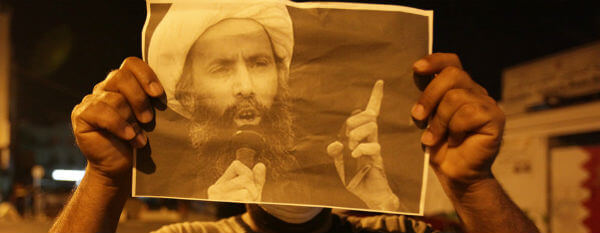
Saudi dissident cleric also said Iran’s ally, Bashar al-Assad, deserved to be overthrown

nimr-poster

The Washington Post reports: Had Saudi Arabia not sentenced Sheik Nimr Baqr al-Nimr to death, it is unlikely his name would have resonated much beyond the Shiite communities of Saudi Arabia and Bahrain, where he helped inspire anti-government protests by disgruntled Shiites in 2011.

As it was, he became synonymous among Shiites across the region with the oppression of Shiite minorities in the Sunni Arab Gulf, and his execution on Saturday put him at the heart of the most dangerous rupture between Saudi Arabia and Iran in decades.

Forgotten in the furor over the trashing of the Saudi Embassy in Tehran and the subsequent rupture of diplomatic relations by Riyadh is Nimr himself, an enigmatic figure onto whom both sides in the regional conflict have projected their dueling visions.

“He would not have reached this level of prominence if the Saudis hadn’t turned him into a martyr by executing him,” said Mohamad Bazzi, a professor at New York University who is writing a book about the Saudi-Iranian rivalry.

Exactly who Nimr was and what he stood for remain something of a mystery, Bazzi said.

To the Saudis, he was as much of a terrorist as any of the al-Qaeda operatives executed the same day, a traitor who had incited violence and called repeatedly for the overthrow of the Saudi royal family.

His execution was every bit as justified as the killing by U.S. Navy SEALs of Osama bin Laden, a Saudi citizen, said Abdullah al-Shammari, a Saudi political analyst. “Osama bin Laden didn’t kill Americans with his own hand, but his role was to incite people to commit terrorism,” he said.

Iran has cast Nimr as a martyr who died for his faith at the hands of a tyrannical and illegitimate Sunni regime, an heir to the legacy of a long line of martyrs to the Shiite cause.

To his followers, he was an inspiration, a man who articulated their demands for a fairer society and in some instances marched alongside them in their protests. He insulted the royal family in language few Saudis would dare to use, saying in one sermon that he hoped that a Saudi prince who had recently died “will be eaten by worms and suffer the torment of hell in his grave.”

In his own words, according to the available records of his sermons and the few interviews he gave, he was an ardent and uncompromising advocate of the rights of the downtrodden, wherever they might be. Defying the sectarian straitjacket into which he has been cast by the uproar that followed his death, he identified Iran’s ally, Syrian President Bashar al-Assad, as being among the tyrants worthy of being overthrown. He favored peaceful protests — “the roar of the word against authorities rather than weapons,” according to an interview he gave to the BBC in 2011 — but did not explicitly rule out violence as a means of defeating tyranny.

He also defined Shiites as intrinsically more peaceful than Sunnis, telling U.S. diplomats in Riyadh that Shiites, “even more than Sunnis, are natural allies for America,” according to a 2008 diplomatic cable from the WikiLeaks website. [Continue reading…]

Facebooktwittermail

‘Children are eating leaves off the trees’: The nightmare of the siege of Madaya, Syria

Vice News reports: In the early hours of Sunday morning, a pregnant woman and her daughter tried to sneak out of Madaya, a mountain village perched in the snow-capped peaks of southwestern Syria.

As they reached the southern edge of town, someone tripped over a landmine, and the loud blast alerted a nearby Hezbollah checkpoint of their escape. The fighters opened fire, and between the explosion and the barrage, both mother and daughter died.

Desperate escape attempts like this one — which was reported by the UK-based Syrian Observatory for Human Rights, and confirmed to VICE News by local residents — have become more and more common in Madaya, a village of 40,000 that’s been under siege since July by a combination of Syrian forces loyal to President Bashar al-Assad and his ally, the Lebanese militia Hezbollah.

In the past month alone, 31 residents have died from starvation, or in attempts to run the Hezbollah-manned blockade that encircles the town. A report compiled by the Syrian-American Medical Society and made available to VICE News found that a kilogram (two pounds)of flour now retails for around $100, while the average Syrian makes less than $200 each month.

“I had strawberry leaves for dinner today,” Rajai, a 26-year old English and math teacher in Madaya, told VICE News by phone, asking that his name be withheld for security reasons. “I haven’t had a real meal in three months.” Since the siege began in July, he’s lost 50 pounds. “Kids are eating leaves off the trees, and the very old and very young are dying,” he said.

As the death toll mounted in December, residents of Madaya began posting desperate pleas on social media, along with disturbing images, reminiscent of Nazi concentration camps. [Continue reading…]

Facebooktwittermail

The Saudi execution will reverberate across the Muslim world

Brian Whitaker writes: Saudi Arabia’s execution of Sheikh Nimr al-Nimr, a prominent Shia cleric, on Saturday was an act motivated more by politics than judicial considerations. Although in a BBC interview William Patey – a former British ambassador in Riyadh – charitably described Nimr’s killing as a Saudi “miscalculation”, the consequences so far have been totally predictable.

In Iran, the headquarters of Shia Islam, the authorities turned a blind eye while demonstrators set fire to the Saudi embassy, and the Saudis have now responded by severing diplomatic relations. Bahrain quickly followed suit and the UAE downgraded its relations too. The execution has also triggered demonstrations among Shia communities elsewhere – including Bahrain, where the Shia majority is ruled by a Sunni minority.

More seriously, but no less predictably, the inflaming of sectarianism will have knock-on effects in Syria and Iraq. In Syria, where Saudi Arabia backs Sunni Islamists and Iran is supporting the President Assad regime, we can expect a hardening of positions at a time when international peace efforts are aimed at softening them and starting a dialogue. [Continue reading…]

Facebooktwittermail

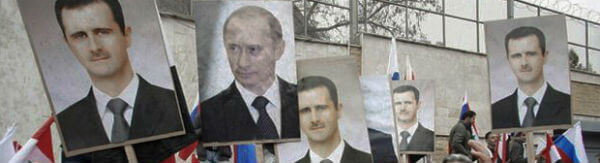
The ten most important developments in Syria in 2015

Assad

Aron Lund writes at length on each of these developments:

10. The Death of Zahran Alloush.
9. The Failure of the Southern Storm Offensive.
8. Operation Decisive Quagmire.
7. Europe’s Syria Fatigue vs. Assad’s Viability
6. The Vienna Meeting, the ISSG, and Geneva III.
5. The Donald.
4. The Iran Deal.
3. The Continuing Structural Decay of the Syrian Government.
2. The American-Kurdish Alliance.
1. The Russian Intervention. [Continue reading…]

Facebooktwittermail

Britain acts to stem flow of young doctors recruited by ISIS in Sudan

The Guardian reports: A British delegation, including an imam from London, have visited Sudan to try to dissuade young British doctors from joining Islamic State (Isis), which has been urgently seeking more foreign medics to help at its hospitals in Syria.

The Foreign Office is coordinating efforts to prevent more Britons travelling from Khartoum’s University of Medical Sciences and Technology (UMST). At least 17 British doctors travelled from there to Syria during 2015 to staff Isis’s health ministry.

It has emerged that a second group of UK doctors who left Sudan for Syria have joined up with members of an earlier group who travelled to join Isis in March. According to family sources, the second group of five Britons, including two brothers from Leicester, are understood to have joined up with 20-year-old Rowan Kamal Zine El Abidine, one of a group of nine British medical staff who journeyed from Khartoum months earlier. [Continue reading…]

Facebooktwittermail