



Helen Pidd writes: “You are not going to like me saying this,” my dad said, “but you need to get a lock on your bedroom door and a lock on your bathroom door. Men can get very frisky when they are away from their wives.”
I rolled my eyes, hung up and panicked. I’d rung my parents to tell them that Yasser, a Syrian refugee, was coming to live with me while he arranged for his wife and baby to join him in Britain. I was a little nervous about the arrangement, but of all the many things worrying me – would he disapprove of my single heathen lifestyle? Could I carry on having bacon butties at the weekend? Should I edit my drinks cupboard? – the possibility of getting molested by my lodger had yet to occur to me.
I first had lunch with Yasser one day in August, after a mutual friend in Turkey told me he had arrived in Manchester and had no mates. She didn’t tell me he was Syrian, or how he had reached our rainy island. So I was gobsmacked when, in very broken English, he told me of his 37-day odyssey across land and sea. He had sailed across the Mediterranean in an inflatable boat in the dead of night, even though he can’t swim; walked from Greece to Macedonia, and crossed Europe until he reached the Jungle in Calais, where he jumped on trucks for six nights before making it to England hidden in the back of a lorry. After 17 hours packed between boxes of toys, he banged on the door. The truck driver was furious: he would face a £2,000 fine were the border police to discover his human cargo. Yasser scarpered. He wasn’t sure he was even in England until a car passed him driving on the left. He walked to the nearest petrol station and asked them to call the police. His new life had begun.
I wondered how I could help him. He was living on £5 a day given to him by Serco, the outsourcing company contracted by the Home Office to process asylum applications. While Yasser waited, he couldn’t take paid work and was living in a Serco house off the Curry Mile with five other asylum seekers: Syrians, Eritreans, a guy from Sudan. I asked if he fancied coming round to help me strip wallpaper on the bank holiday weekend. He agreed, but then I had to go and cover the world gravy wrestling championships in Bacup (try explaining that one to someone whose first language isn’t English), so left him to it.
When I got back, he had almost finished. We had an awkward meal together, then I tried to give him some money. Yasser looked appalled. “No, no,” he said. “I don’t want money. I want friends.”
Two days later, three-year-old Alan Kurdi washed up on a beach in Turkey. The mood in Britain changed. Suddenly the sort of newspapers who usually run stories about immigrants eating swans started showing compassion. David Cameron agreed to resettle 20,000 of the most vulnerable Syrian refugees – and I offered my spare room to Yasser. [Continue reading…]
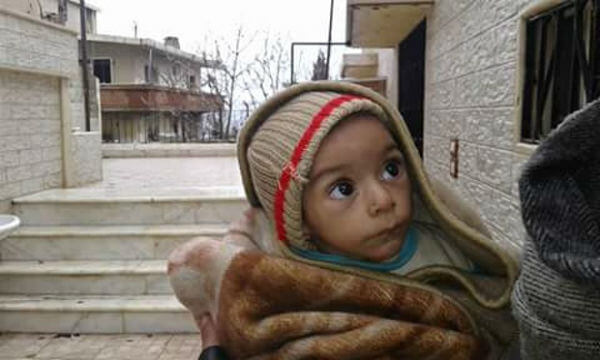
Reuters reports: Residents of a besieged Syrian town have told U.N. investigators how the weakest in their midst, deprived of food and medicines in violation of international law, are suffering starvation and death, the top U.N. war crimes investigator told Reuters on Tuesday.
An aid convoy on Monday brought the first food and medical relief for three months to the western town of Madaya, where 40,000 people are trapped by encircling government forces.
Another United Nations official who oversaw the aid delivery described on Tuesday how he saw malnourished residents, particularly children, some of whom were little more than skeletons and barely moving.
The U.N. commission of inquiry documenting war crimes in Syria has been in direct contact with residents inside Madaya, the commission’s chairman Paulo Pinheiro said in an emailed reply to Reuters questions.
“They have provided detailed information on shortages of food, water, qualified physicians, and medicine. This has led to acute malnutrition and deaths among vulnerable groups in the town.” he said in the email sent from his native Brazil.
The U.N. inquiry, composed of independent experts, has long denounced use of starvation by both sides in the Syrian conflict as a weapon of war, and has a confidential list of suspected war criminals and units from all sides which is kept in a U.N. safe in Geneva. [Continue reading…]

Gordon Brown writes: mid the Syrian chaos of carnage, starvation and evacuation, there is a tiny glimmer of hope. The Lebanese government has declared that it has taken 207,000 Syrian refugee children off the streets and given them places in their country’s public schools.
And today I am setting out a plan to extend the opportunity of education to 1 million refugee boys and girls across Lebanon, Jordan and Turkey during the course of 2016 – with the ambition that by next year every refugee child will be offered a place at school.
Through a combination of generous European Union funding by development commissioner Johannes Hahn and contributions from both public and private sectors in the region itself, $250m has been raised – the first instalment of the $750m we need to deliver this bold initiative. And in the run-up to the UN pledging conference in London on 4 February we are asking donors from public and private sectors to do more.
What has unlocked the chance of hundreds of thousands of extra school places is the introduction of a “double-shift school system”. Local Lebanese children are educated in the morning in their neighbourhood schools but the same classrooms are now being thrown open to refugee children in the afternoon and early evenings.
Because the double-shift system uses existing schools and so avoids the huge capital costs of building, the average cost is just $10 per school place per week. Already 200 Lebanese schools are offering double-shift education and there are now robust plans to offer 400,000 places by doubling the number of schools.
And as a direct result of Lebanon’s success, Turkey and Jordan are now ready to make double-shift schools the centrepiece of this year’s educational efforts for refugees. Working with Unicef, Turkey has set out its goals to double its school places for refugees to more than 450,000 this year. In Jordan, where just over 100,000 refugees are already in school, the aim is to double places. [Continue reading…]
The New York Times reports: The first trucks from a convoy carrying food and medical aid entered the besieged Syrian town of Madaya on Monday, only to discover harrowing scenes of desperation, including 400 people who needed immediate medical evacuation, United Nations officials said Monday night.
The 400 were in the town hospital and included patients who were severely malnourished and were facing other medical complications, the United Nations emergency relief coordinator, Stephen O’Brien, said after briefing members of the Security Council behind closed doors. “They are in grave peril of losing their lives,” he said.
The delivery of food packages, which included rice, lentils and oil, came amid a growing international outcry over the increasing number of deaths from malnutrition in Madaya, which along with neighboring Zabadani, is besieged by pro-government forces, including the Lebanese militia group Hezbollah.
The aid shipment there was being coordinated with a similar delivery to the northern Syrian towns of Fouaa and Kfarya in Idlib Province, which are surrounded by Syrian insurgent groups.
After a last-minute flurry of negotiations as the convoys idled at the entrances to the towns, trucks and sport utility vehicles began rolling in, Pawel Krzysiek, a spokesman for the Syria branch of the International Committee of the Red Cross, said by text message from Madaya. Unloading was expected to last through the night, he said on Twitter. [Continue reading…]
A lesson of Madaya: it was strong public advocacy, not quiet diplomacy, that got convoy in. https://t.co/PGBiFQLpLq pic.twitter.com/iUJpYcMVdH
— Kenneth Roth (@KenRoth) January 12, 2016
The Daily Beast reports: Lebanese Hezbollah field commanders with troops fighting in Syria tell The Daily Beast they are receiving heavy weapons directly from Russia with no strings attached. The commanders say there is a relationship of complete coordination between the Assad regime in Damascus, Iran, Hezbollah, and Russia. At the same time they say the direct interdependence between Russia and Hezbollah is increasing.
The United States and the European Union have both listed Hezbollah as a terrorist organization with global reach and accuse it of serving Tehran’s interests. But there is more to it than that. Organized, trained, funded, and armed by Iran with Syrian help after the Israeli invasion of Lebanon in 1982, it initially gained fame for suicide bombings hitting Israeli, French, and American targets there, including the U.S. Marine barracks in Beirut where 241 American servicemen were killed in 1983.
Over the years Hezbollah grew to be a parallel army in Lebanon, stronger than the national military, and for years it was regarded in much of the Arab world as the avant-garde of the fight against Israeli occupation of Lebanese territory. It also developed into the most powerful political party in the fractured Lebanese parliamentary system. But its reputation as a nationalist force has been tarnished since it began fighting in Syria to defend the Assad regime, and as The Daily Beast reported in December, some of its soldiers have refused to go back.
The Daily Beast met the commanders on separate occasions at the end of December and the beginning of this year in Dahiya, a majority Shia working-class southern suburb of Beirut. They declined to use their real names because they are not authorized to speak to the media, but both say Hezbollah is directly receiving long-range tactical missiles, laser guided rockets, and anti-tank weapons from Russia. [Continue reading…]
Hurriyet Daily News reports: An Islamic State of Iraq and the Levant (ISIL) militant killed at least 10 foreign nationals, most of them Germans, and wounded 15 other people after blowing himself up at a tourist spot in Istanbul’s old city on Jan. 12.
Nabil Fadli, a 28-year-old ISIL militant of Syrian origin who was born in Saudi Arabia in 1988, blew himself up after blending into a tourist group of 33 German citizens on a visit to the Obelisk of Theodosius in Sultanahmet Square near the Blue Mosque in the morning hours of Jan. 12 when the popular square was relatively less crowded compared to the rest of the day.
Tourist sites including the Hagia Sophia and the nearby Basilica Cistern were closed by the Istanbul Governor’s Office following the attack.
Turkish Prime Minister Ahmet Davutoğlu said all victims killed in the Sultanahmet suicide attack were foreigners while the suicide bomber was an ISIL militant. [Continue reading…]
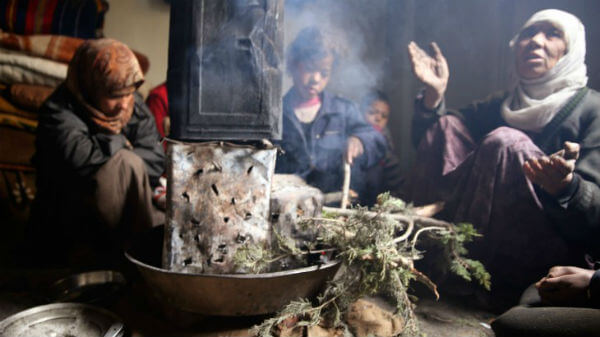
The New York Times reports: In the hills near the Lebanese border, an hour’s drive from downtown Damascus, much of a Syrian town is starving, according to residents and international humanitarian workers.
The town, Madaya, is controlled by rebels and encircled by pro-government forces with barbed wire, land mines and snipers. People there make soups of grass, spices and olive leaves. They eat donkeys and cats. They arrive, collapsing, at a clinic that offers little but rehydration salts. Neighbors fail to recognize neighbors in the streets because their faces are so sunken.
Syria, once classified as a middle-income country, now reports periodic malnutrition deaths. At least 28 people, including six babies, have died from hunger-related causes at a clinic in Madaya aided by Doctors Without Borders, medics there say. And the 42,000 people that the United Nations counts as trapped in Madaya are about a tenth of those stranded in besieged or hard-to-reach areas as conditions grow steadily worse.
Their plight represents a stark failure of international powers that has worsened even as they intensify military and diplomatic activities, all in the name of resolving the conflict.
This is happening as the United Nations plans a new round of peace talks for Jan. 25. It is happening amid escalating military interventions by Russia and the United States. And in some ways, according to diplomats and humanitarian workers, it is happening not just despite those efforts, but also because of them, as the warring parties flout international law while being courted for negotiations.
Yet in Madaya and neighboring Zabadani, once popular mountain resorts, thoughts of political change have receded in the face of hunger. Hamoudi, 27, a business-school graduate who took up arms after the government’s crackdown on protests in 2011, said many people would surrender in order to eat, even though they expected arrests and retribution to follow.
“In the revolution I was dreaming of democracy, freedom,” Hamoudi said slowly in an interview via Skype, exhaustion evident in his voice. “Today all my dreams are food. I want to eat. I don’t want to die from starvation.” [Continue reading…]

Al Jazeera reports: As aid agencies prepare to deliver food to Madaya, on the outskirts of Damascus and two other besieged towns in Idlib province, an estimated 400,000 people are living under siege in 15 areas across Syria, according to the UN.
A deal struck in recent days permits the delivery of food to Madaya, currently surrounded by forces loyal to Syrian President Bashar al-Assad, and the villages of Foua and Kefraya in Idlib, both of which are hemmed in by rebel fighters.
Due to a siege imposed by the Syrian government and the Lebanese Hezbollah group, an estimated 42,000 people in Madaya have little to no access to food, resulting in the deaths of at least 23 people by starvation so far, according to the charity Doctors Without Borders (MSF). [Continue reading…]
Michael Weiss reports: “When I’m sitting here and we hear a plane, which is a lot now, I know from the sound. If the plane is above us—you can tell if it’s above you, because that’s when it’s the loudest—and if it’s a Russian plane, then it doesn’t attack where we are. It attacks two or three kilometers away.”
Rami Jarrah is telling me how he distinguishes which government is now bombing civilians in Syria’s Aleppo City. It’s a question that used to answer itself—but no more, given the presence of Syrian, Russian, and coalition aircraft in the skies. Syrian jets, he says, once flew so low that you could actually see the pilots in the cockpits; Russian fixed-wing aircraft fly at much higher altitudes such that they look like crosses or plus-signs in the clouds. They fire from far away, the better to evade the bullets of the Dushka (the name means “sweetie” in Russian), a Soviet-era antiaircraft machine gun, which is typically all anti-Assad rebels have to deter helicopters and attack jets, sometimes successfully.
Jarrah lives in the war-ravaged provincial capital of Syria’s industrial province, documenting the gruesomeness of multisided civil war for his open source newsgathering service ANA Press. Born in Cyprus and educated in London, he first became famous in 2011 as an English-speaking eyewitness on Western TV channels to what was then still a peaceful protest movement against a Ba’athist dictatorship. He used to call himself Alexander Page, a pseudonym he doesn’t need anymore because what good is a pseudonym against one of Putin’s jets? [Continue reading…]
The Wall Street Journal reports: To most Turks living outside Diyarbakir’s ancient citadel walls, the military operation inside the city [the de facto Kurdish capital in southeastern Turkey] is something they see only in television images of flag-draped solders’ coffins and civilians fleeing urban battle zones.
But the outcome of the broader military operation is likely to have a major impact on the rekindled aspirations of millions of ethnic Kurds in Turkey, whose ancestors’ hopes of building a Kurdish nation were thwarted by world powers after World War I.
Kurdish leaders say they want to make sure they don’t let this new opportunity slip away. “The fate of the Middle East is being rewritten,” said Selahattin Demirtas, the top Kurdish lawmaker whom Mr. Erdogan wants to see stripped of parliamentary immunity. “As Kurds, we don’t want the mistakes made 100 years ago to be made again.”
Mr. Demirtas leads a political group drawing inspiration from the successes of American-backed Kurdish militants in neighboring Syria, where they are governing an autonomous region carved out of parts of the country they’ve seized from Islamic State rivals.
“The Kurds are a growing power in the Middle East,” Mr. Demirtas said in an interview last week with The Wall Street Journal.
Emboldened by the gains in Syria and prodded by Mr. Erdogan’s efforts to marginalize his pro-Kurdish Peoples’ Democratic Party, Mr. Demirtas is stepping up his calls for self-rule, a politically charged stance in Turkey that skeptics see as a precursor to Kurdish demands for outright independence.
That is becoming an increasing concern for Mr. Erdogan, who has championed the expanding military and political crackdown on Kurdish activists and insurgents across the country.
One of the most important battlegrounds is in Diyarbakir, where more than 2,000 Turkish security forces have spent weeks battling small numbers of Kurdish militants who have laid deadly booby traps throughout a neighborhood that is home to some of the oldest mosques in Islamic history.
Since Dec. 2, large parts of Diyarbakir’s Sur District have been under 24-hour curfew. Many of the 24,000 people living in the now-closed military zone have fled, said Huseyin Aksoy, the Ankara-appointed governor of Diyarbakir. About 4,000 residents are believed to be trapped in their homes while Turkish forces try to uproot what the governor estimates to be no more than 100 Kurdish militants.
Since mid-December, when Turkey sent 10,000 members of its security forces into a “decisive” military operation targeting thousands of Kurdish militants who have declared self-rule in parts of cities and towns across southeastern Turkey, more than 440 Kurdish fighters have been killed, according to the military. [Continue reading…]
The Guardian reports: Abdulvakhid Edelgireyev survived for years hiding in the Chechen mountains, launching attacks on Russian security forces and evading capture. He survived the battlefields of Syria, and those of east Ukraine. But in November his life came to an abrupt end in a flurry of bullets: he was shot dead in broad daylight in Istanbul as he embarked on a shopping trip with his three-year-old niece.
Edelgireyev and his niece walked out of their apartment block in Kayasehir, a far-flung suburb of nondescript new towers, shortly before 2pm on 1 November. The 32-year-old Chechen sat the girl in the passenger seat of his car, and was about to start the engine when a white car rammed into them from behind, closing him in. Pushing his niece on to the floor under the seat, Edelgireyev scrambled out and started running. One of the assassins gave chase, firing at him, and he crumpled to the ground. When paramedics arrived a few minutes later he was already dead, in a pool of blood. He had been shot five times.
The dead man’s biography, as set out by family and associates, paints a picture of a key figure in the Caucasus Emirate, the umbrella group of Chechen and other fighters in Russia’s North Caucasus that has resorted to terrorist methods, including suicide attacks on Moscow’s metro and Domodedovo airport. Edelgireyev’s experiences during his year in Syria also revealed how the Chechen resistance fight has slowly grown links to Islamic State , and the infighting and turmoil among the foreign fighters in Syria. [Continue reading…]
The Guardian reports: The Royal Air Force has used Brimstone missiles against Isis in Syria for the first time, Downing Street has confirmed.
Four Brimstone missiles were deployed on two missions on Sunday. One missile was used against enemy positions near Raqqa, including targeting an Isis vehicle. Three Brimstone missiles were also used in an attack on the Omar oilfield on the same day. There were also three other RAF missions in Syria on Sunday that did not use Brimstone missiles, including striking enemy tunnels near Raqqa.
The prime minister’s spokeswoman declined to say whether the strikes had resulted in casualties, saying: “These will all have been focused on either targeting Daesh [Isis]’s resources or targeting Daesh terrorists who are seeking to destabilise Iraq, Syria and threatening other countries.” [Continue reading…]
Could anything, moreover, be stupider than fighting a theocracy with a missile named after the biblical punishment for infidels? (Rev 21:8)
— Alex Rowell (@disgraceofgod) January 11, 2016
CNN reports: Evidence of an unfolding famine in the Syrian city of Madaya continues to mount, with the international rights group Amnesty International publishing accounts of people trying to survive on boiled water and leaves.
Except that now that it’s winter, the leaves are gone.
Even more chilling is the idea that Madaya may not be the exception in Syria today, after nearly five years of civil war: It might be representative of an ongoing catastrophe of larger proportions.
“These harrowing accounts of hunger represent the tip of an iceberg,” said Philip Luther, the Middle East and North Africa director for Amnesty International. “Syrians are suffering and dying across the country because starvation is being used as a weapon of war by both the Syrian government and armed groups.”
Luther accused both sides of “toying with the lives of hundreds of thousands of people,” and noted that starving civilians as a tactic in warfare is a war crime. [Continue reading…]

Hassan Hassan writes: Not long before the Riyadh-Tehran diplomatic row that followed the execution of Saudi Shia cleric Nimr Al Nimr, a showdown between the two countries unfolded in New York. While it is difficult to draw a direct correlation between the two events, the incident can help us understand the depth of the continuing crisis.
On December 18, heated debate ensued between representatives of the two countries at a meeting in New York over the listing of armed groups operating in Syria for possible determination as terrorist organisations. The list, which Jordan was asked to develop, would name extremist groups that must be defeated as part of the UN-sponsored political process for Syria.
A month earlier in Vienna, Saudi Arabia had insisted on including in the list foreign Shia militias fighting on the side of president Bashar Al Assad. Riyadh argued that all foreign fighters must leave Syria, regardless of which side they supported. In New York, Iran, joined by Russia, strongly objected to the demand and the standoff caused a deeper rift between the two countries.
For now, the designation of terror groups in Syria has been referred to a committee comprising several European and regional countries. They first determined indicators and criteria of what constitutes a terrorist organisation, then named armed groups currently fighting in Syria. There is a preliminary list of more than 160 Sunni and Shia organisations.
Iran categorically rejects including any Shia groups in the list. For Tehran, the fate of the Assad regime it supports is critically tied to the presence of those Shia militias. It is a fact that adds to the many issues that compound the conflict in Syria – issues that the international community would seemingly rather sweep under the carpet instead of deal with head on. [Continue reading…]
The Observer reports: Sophie Kasiki stared at the photograph of a young English-speaking boy in a camouflage uniform and black bandana covered in Arabic calling for unbelievers to be killed in the latest Islamic State propaganda.
Her eyes welled and she swallowed hard. “That could have been my son,” she said, her firm voice wavering. “That’s hard for me to say and makes me want to cry. I would have killed us both rather than let him become a killer, rather than let him fall into the claws of those monsters.”
The “monsters” she is referring to are Islamic State, and Kasiki weighs her words; she knows her four-year-old son was only ever at risk of falling into the jihadis’ lair because she had taken him there.
Kasiki is one of the few western women who have been to the capital of the Isis-declared caliphate at Raqqa in Syria and returned to recount the tale. It was, she said in her first interview with a British newspaper, like a journey into a hell from which there seemed no return. [Continue reading…]
The Independent reports: Supporters of the Syrian regime are sharing photos of their dinners to taunt thousands of starving civilians in a besieged town.
The hashtag #متضامن_مع_حصار_مضايا, meaning “solidarity with the siege of Madaya”, has sparked a new wave of outrage over the continuing crisis, with those using it condemned as “sadistic” and “unbelievably disgusting”.
Photos showed people posting with sumptuous-looking spreads of food including kebabs, grilled prawns, whole fish, chips, salad and mountains of bread. [Continue reading…]
Financial Times reports: President Bashar al-Assad’s forces are making a new push in southern Syria with the help of Russian air cover in a move that could not only weaken one of the country’s remaining rebel strongholds, but also threaten the balance of power on a combustible border with Israel.
The growing Russian role in the south has surprised many regional diplomats who believed Moscow had an understanding with Syria’s southern neighbours, Jordan and Israel, not to extend into their sphere of influence.
Rebels from Syria’s Southern Front alliance say they too were surprised to become the target of the new campaign: their forces are directly supplied by the Military Operations Command (MOC), an operations room staffed by Arab and western military forces, including the US.
“They (MOC) should be nervous,” says Abu Ghayath al-Shami, a spokesman for the Southern Front’s Seif al-Sham Brigades. “This area was one of their last cards, the one area where there was still a functioning relationship between the rebels and the international community.” [Continue reading…]