Category Archives: News

She spoke up about cooked ISIS intel. They booted her — for cursing

The Daily Beast reports: She worked on and off for five years identifying targets for the U.S. military’s Central Command.

And then, when, some believe, she spoke up about cherry-picked intelligence in the ISIS war, she was drummed out of her job—allegedly for cursing twice in the span of the year.

Those were just some of the surreal allegations thrown around last week in a Tampa law office conference room turned into a quasi-courtroom.

Had the case not involved the third-highest ranking person at the Defense Intelligence Agency, a two-star general, a military judge, and hours of testimony — all at a cost of thousands of dollars — it would have been hard to take seriously. Even with those high-ranking officials, at times it was hard not to do a double-take about what was happening.

After all, if cursing were really a fireable offense in the military, every soldier, sailor, Marine, and Defense Department civilian would have to be sent home. [Continue reading…]

Facebooktwittermail

The war against ISIS hits hurdles just as the U.S. military gears up

The Washington Post reports: After months of un­expectedly swift advances, the U.S.-led war against the Islamic State is running into hurdles on and off the battlefield that call into question whether the pace of recent gains can be sustained.

Chaos in Baghdad, the fraying of the cease-fire in Syria and political turmoil in Turkey are among some of the potential obstacles that have emerged in recent weeks to complicate the prospects for progress. Others include small setbacks for U.S.-allied forces on front lines in northern Iraq and Syria, which have come as a reminder that a strategy heavily reliant on local armed groups of varying proficiency who are often at odds with one another won’t always work.

When President Obama first ordered U.S. warplanes into ­action against the extremists sweeping through Iraq and Syria in 2014, U.S. officials put a three- to five-year timeline on a battle they predicted would be hard. After a rocky start, officials say they are gratified by the progress made, especially over the past six months.

Since the recapture of the northern Iraqi town of Baiji last October, Islamic State defenses have crumbled rapidly across a wide arc of territory. In Syria, the important hub of Shadadi was recaptured with little resistance in February, while in Iraq, Sinjar, Ramadi, Hit and, most recently, the town of Bashir have fallen in quick succession, lending hope that the militants are on the path to defeat.

“So far, in terms of what we had hoped to do, we are pretty much on track,” said a U.S. official who spoke on the condition of anonymity in order to discuss sensitive subjects. “We’re actually a little bit ahead of where we wanted to be.”

The fight, however, is entering what Pentagon officials have called a new and potentially harder phase, one that will entail a deeper level of U.S. involvement but also tougher targets.

In an attempt to ramp up the tempo of the war, the U.S. military is escalating its engagement, dispatching an additional 450 Special Operations forces and other troops to Syria and Iraq, deploying hundreds of Marines close to the front lines in Iraq and bringing Apache attack helicopters and B-52s into service for the air campaign.

The extra resources are an acknowledgment, U.S. officials say, that the war can’t be won without a greater level of American involvement. The targets that lie ahead are those that are most important to the militants’ self-proclaimed caliphate, including their twin capitals of Raqqa in Syria and Mosul in Iraq and, to a lesser extent, Fallujah, a key concern because of its proximity to Baghdad. [Continue reading…]

Facebooktwittermail

The inconsolable grief of Syrian refugees

The Independent reports: A doctor has revealed the devastating impact the bombing of Aleppo is having on traumatised refugees, with relatives of those killed falling ill and trying to harm themselves in a concerning pattern forming at a camp in Greece.

An Irish medic working in Idomeni, Dr Connor Kenny, described the moment one distraught man was brought to a Doctors Without Borders (MSF) clinic after trying to suffocate himself.

“Before I could even see him, I could hear his screams through the fabric of the field clinic tent, getting closer every second,” he said.

“Carried into the tent in a dark thermal blanket by four young men, he was in tears, screaming and writhing in agony.

“We placed him immediately on our assessment bench. It was clear that this was an emergency. Each of his friends took hold of one limb to control the forcible kicking and lashing out, and to prevent him from hitting objects in the clinical area and causing significant harm to himself.”

Dr Kenny said the refugee, a 22-year-old man called Hamza, only became more agitated as medics tried to treat him.

“Seeing his extreme distress, my initial thought was that it was a surgical problem – possibly a kidney stone or a perforation in the gut,” he added.

“But during my assessment of his airway, it became obvious he was forcibly trying to swallow his tongue, actively holding his breath at the same time. As a result his oxygen levels were falling.”

With the help of translator, friends explained that Hamza had just been told his sister had been killed in an air strike in Aleppo.

“He was so stricken with grief that he was now trying to seriously harm himself,” Dr Kenny said.

“When I first arrived in Idomeni, this might have shocked me, or at least made me feel slightly surprised. But now it doesn’t.”

The doctor said he had seen several refugees become seriously ill after hearing news of their loved one’s deaths, including a 68-year-old woman also from Aleppo who has been carried to the MSF clinic several times after fainting, following the loss of a relative in bombardment of the city.

No “medical reason” for the responses has been found, but a concerning pattern is forming, affecting refugees of all ages who have managed to reach the camp after making the treacherous boat crossing from Turkey to Greece. [Continue reading…]

Facebooktwittermail

Syrian-Russian businessman serves as middleman between ISIS and Assad

The Wall Street Journal reports: In Syria, George Haswani sees himself as a patriot. In the West, he is a wanted man.

Mr. Haswani acts as a middleman between Islamic State and the Syrian government, the terror group’s largest customer, Western security officials allege. Islamic State controls much of Syria’s energy infrastructure and sells stolen oil and natural gas at a discount—even to the regime it is ostensibly battling.

Emerging from the fog of Syria’s multisided civil war, the businessman, 69 years old, says he is helping keep his country from plunging into the dark ages, given that Syria’s power plants run on fuel controlled largely by Islamic State. To the Syrian nuns he helped free from extremist kidnappers, Mr. Haswani is a hero.

U.S. and European Union officials, meanwhile, have sanctioned Mr. Haswani, a dual-Russian-Syrian national, for his alleged role as a broker of crude-oil shipments from Islamic State to the government of President Bashar al-Assad. The sanctions freeze assets held by Mr. Haswani in the U.S. and EU.

“We’ve declared to the world…that we’re going after him,” said Amos Hochstein, a State Department special envoy who oversees U.S. efforts to cripple Islamic State’s energy business.

The role played by men such as Mr. Haswani is one reason why Islamic State has been able to sustain itself financially despite U.S.-led military strikes and plunging oil prices. The group’s energy profits have fallen by as much as half over the past year, officials said, but sales continue to make up a sizable proportion of total revenues, estimated at $1 billion to $2 billion annually, including income from the Assad regime.

Buttressing Mr. Hawsani are his strong ties to Russia. He teamed up years ago with one of President Vladimir Putin’s closest associates to build the sprawling gas-production facility in Syria’s Tuweinan region that caught the attention of the Obama administration.

Administration officials said Moscow’s military and economic alliance with Damascus makes it clear Russia knows of the dealings between the Assad regime and Islamic State. [Continue reading…]

Facebooktwittermail

Muslim leaders wage theological battle, stoking ISIS’ anger

The New York Times reports: As the military and political battle against the Islamic State escalates, Muslim imams and scholars in the West are fighting on another front — through theology.

Imam Suhaib Webb, a Muslim leader in Washington, has held live monthly video chats to refute the religious claims of the Islamic State, also known as ISIS or ISIL. In a dig at the extremists, he broadcast from ice cream parlors and called his talks “ISIS and ice cream.”

Sheikh Hamza Yusuf, an American Muslim scholar based in Berkeley, Calif., has pleaded with Muslims not to be deceived by the “stupid young boys” of the Islamic State. Millions have watched excerpts from his sermon titled “The Crisis of ISIS,” in which he wept as he asked God not to blame other Muslims “for what these fools amongst us do.”

It is a religious rumble that barely makes headlines in the secular West since it is carried out at mosques and Islamic conferences and over social media.

The Islamic State, however, has taken notice.

The group recently threatened the lives of 11 Muslim imams and scholars in the West, calling them “apostates” who should be killed. The recent issue of the Islamic State’s online propaganda magazine, Dabiq, called them “obligatory targets,” and it said that supporters should use any weapons on hand to “make an example of them.”

The danger is real enough that the F.B.I. has contacted some of those named in the Islamic State’s magazine “to assist them in taking proper steps to ensure their safety,” said Andrew Ames, a spokesman for the F.B.I.’s field office in Washington. [Continue reading…]

Facebooktwittermail

ISIS affiliate claims Cairo drive-by killings

The Wall Street Journal reports: An Egyptian Islamic State affiliate on Sunday claimed responsibility for a drive-by shooting that killed eight policemen in a Cairo suburb, the first attack on the capital’s police forces in months.

Four masked gunmen in a pickup truck blocked the path of a minibus carrying plainclothes officers as they patrolled the south Cairo suburb of Helwan, the Interior Ministry said in a statement.

The gunmen then jumped off the truck and sprayed the minibus with bullets, killing all aboard including a ranking supervising officer before driving away, the ministry said, without identifying the suspects.

Investigators found some 120 shell casings at the scene, prosecutors said.

The affiliate, Islamic State Egypt, released a statement calling the attack a retaliation for the Egyptian government’s jailing of “pure” women, an apparent reference to dissident Islamists detained in Egypt.

It identified the slain ranking officer and included five photos of the bullet-riddled minibus with the officers’ bodies inside. It said the assailants had taken some weapons from the scene as “spoils.” [Continue reading…]

Facebooktwittermail

The Israeli generals who shoot and cry and shoot again

Gideon Levy writes: And here they come, those new-old sensitive heroes, soldiers who shoot but cry over it, a 2016 version of the Six-Day War soldiers featured in “The Seventh Day: Soldiers Talk about the Six-Day War.” In the Six-Day War, they were soldiers who shot and cried and were therefore considered moral. After the second intifada that broke out in 2000, there were the old-boy “gatekeepers,” (the former Shin Bet security service directors) who suddenly sobered up and were deemed men of conscience.

Now it’s the turn of the most senior commanders in office who are sobering up and sounding the alarm, the threesome of Defense Minister Moshe Ya’alon, Israel Defense Forces Chief of Staff Gadi Eisenkot and Deputy Chief of Staff Yair Golan. It could have impressed and inspired respect had it not been for one tiny problem. The three aren’t doing a thing to change the situation that they are taking exception to.

These nice and principled military figures are beloved on the center-left, which has always dreamed about ethical generals who make eloquent Holocaust Remembrance Day speeches, but they are nothing more than empty salves to the conscience of the purportedly enlightened tribe.

Ya’alon, Eisenkot and Golan said some things that are correct and resounding. Ya’alon warned against the army becoming bestial. For his part, Eisenkot doesn’t want soldiers to empty their ammunition cartridges on 13-year-old girls. And last week on Holocaust Day, Golan said he saw concerning signs reminiscent of pre-Holocaust Germany in Israel.

It’s hard not to appreciate their courage, but we cannot ignore the fact that these are not three observers from the sidelines. All three bear direct and heavy responsibility for the situation that they are criticizing and have contributed for years to bringing it about.

They head the IDF, which is one of the most major agents of damage to Israeli society. They are in charge of an army most of whose operations consist of maintaining the occupation through brutal force. And anyone who heads an occupation army, who has commanded some of its worst military operations, lacks the necessary moral authority to preach morality — unless they have truly changed. [Continue reading…]

Facebooktwittermail

Twitter bars intelligence agencies from using analytics service

The Wall Street Journal reports: Twitter Inc. cut off U.S. intelligence agencies from access to a service that sifts through the entire output of its social-media postings, the latest example of tension between Silicon Valley and the federal government over terrorism and privacy.

The move, which hasn’t been publicly announced, was confirmed by a senior U.S. intelligence official and other people familiar with the matter. The service — which sends out alerts of unfolding terror attacks, political unrest and other potentially important events — isn’t directly provided by Twitter, but instead by Dataminr Inc., a private company that mines public Twitter feeds for clients.

Twitter owns about a 5% stake in Dataminr, the only company it authorizes both to access its entire real-time stream of public tweets and sell it to clients.

Dataminr executives recently told intelligence agencies that Twitter didn’t want the company to continue providing the service to them, according to a person familiar with the matter. The senior intelligence official said Twitter appeared to be worried about the “optics” of seeming too close to American intelligence services. [Continue reading…]

Facebooktwittermail

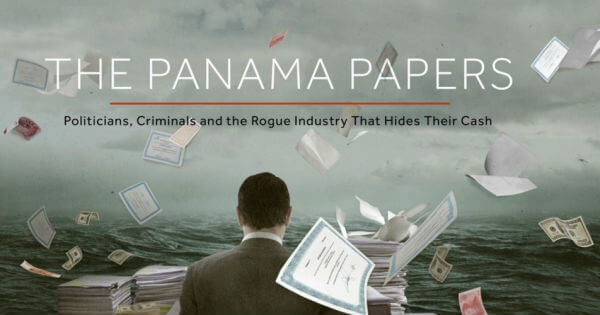
Panama paper trail goes online with massive searchable database

panama-papers

CNET reports: One of the biggest databases of leaked documents has just hit the internet, and what lies within is a massive and complicated web of corporate ownership that spans the globe.

The Panama Papers contain more than 2.5 million files, analysed by the International Consortium of Investigative Journalists and 112 reporters across 58 countries. Today’s data dump is just part of the picture, detailing the relationships between individuals, companies and offshore entities.

Think of it like a searchable corporate registry. But in this case, it’s a network made up of hundreds of thousands of individuals and companies, with seemingly endless links criss-crossing from Australia to Zimbabwe. The question now is which of these links can be used to prove the companies involved were attempting to hide massive wealth overseas.

While there’s no evidence that any of the entities have acted illegally, the “John Doe” behind the leak argues the data dump exposes the names behind growing income inequality, saying “it doesn’t take much to connect the dots.” [Continue reading…]

Facebooktwittermail

Fort McMurray and the fires of climate change

Elizabeth Kolbert writes: No one knows exactly how the fire began — whether it was started by a lightning strike or by a spark provided by a person — but it’s clear why the blaze, once under way, raged out of control so quickly. Alberta experienced an unusually dry and warm winter. Precipitation was low, about half of the norm, and what snow there was melted early. April was exceptionally mild, with temperatures regularly in the seventies; two days ago, the thermometer hit ninety, which is about thirty degrees higher than the region’s normal May maximum. “You hate to use the ​cliché, but it really was kind of a perfect storm,” Mike Wotton, a research scientist with the Canadian Forest Service, told the CBC.

Though it’s tough to pin any particular disaster on climate change, in the case of Fort McMurray the link is pretty compelling. In Canada, and also in the United States and much of the rest of the world, higher temperatures have been extending the wildfire season. Last year, wildfires consumed ten million acres in the U.S., which was the largest area of any year on record. All of the top five years occurred in the past decade. In some areas, “we now have year-round fire seasons,” Matt Jolly, a research ecologist for the United States Forest Service, recently told the Times.

“You can say it couldn’t get worse,” Jolly added, but based on its own projections, the forest service expects that it will get worse. According to a Forest Service report published last April, “Climate change has led to fire seasons that are now on average 78 days longer than in 1970.” Over the past three decades, the area destroyed each year by forest fires has doubled, and the service’s scientists project that it’s likely to “double again by midcentury.” A group of scientists who analyzed lake cores from Alaska to obtain a record of forest fires over the past ten thousand years found that, in recent decades, blazes were both unusually frequent and unusually severe. “This extreme combination suggests a transition to a unique regime of unprecedented fire activity,” they concluded.

All of this brings us to what one commentator referred to as “the black irony” of the fire that has destroyed most of Fort McMurray.

The town exists to get at the tar sands, and the tar sands produce a particularly carbon-intensive form of fuel. (The fight over the Keystone XL pipeline is, at its heart, a fight over whether the U.S. should be encouraging — or, if you prefer, profiting from — the exploitation of the tar sands.) The more carbon that goes into the atmosphere, the warmer the world will get, and the more likely we are to see devastating fires like the one now raging. [Continue reading…]

Bloomberg reports: Wildfires raging through Alberta have spread to the main oil-sands facilities north of Fort McMurray, knocking out an estimated 1 million barrels of production from Canada’s energy hub. Fire officials say the out-of-control inferno may keep burning for months without significant rainfall.

The blaze, forecast to expand to more than 2,500 square kilometers (965 square miles) in the next few days, made an “unexpected” move to the north Saturday, rapidly encroaching bitumen mining operations run by Suncor Energy Inc. and Syncrude Canada Ltd. The fires may soon cover an area the size of Luxembourg.

“It is a dangerous and unpredictable and vicious fire that is feeding off an extremely dry Boreal forest,” federal Public Safety Minister Ralph Goodale told reporters Saturday in Regina, Saskatchewan. He said the swirling fire is not yet a threat to any additional communities.

The wildfires have led to combined productions cuts of more than 1 million barrels of oil a day, or about 40 percent of the region’s output of 2.5 million barrels, based on IHS Energy estimates. The cuts, and the mass exodus of more than 80,000 people from the fires raging in Fort McMurray, represent another blow to an economy already mired in recession from the oil price collapse. [Continue reading…]

The Los Angeles Times reports: Though the cause of the fire has not been determined, the inferno has become symbolic of the tension within Canada over its role in climate change.

Some Canadians see the fire as nature lashing back at those who mistreat it in the name of profit.

Others see the hard science: a wildfire formed in conditions consistent with climate change striking with academic irony, not vengeance, in a place that helps supply the world with a fossil fuel. The evacuees were really climate refugees, they say.

Still others view it as just very bad luck, a setback the oil industry will find a way to overcome.

The debate reflects a country wrestling within itself at a difficult moment — and it is testing that famous Canadian civility.

A provincial politician who called the fire “karmic” was quickly castigated and later apologized. When Canadian Green Party leader Elizabeth May said the fire was “very related to the global climate crisis,” Prime Minister Justin Trudeau suggested she was making “a political argument.”

Some environmentalists have been accused of lecturing to or, worse, condemning people who have lost everything. In Fort McMurray, more than 2,000 structures were consumed by the flames.

“I wish I could kick every person posting ‘That’s what you get for living by the oil sands’ comments,” a young Edmonton woman tweeted Tuesday evening at the peak of the evacuation, when flames were whipping across Highway 63, the only road out of Fort McMurray. “You’re terrible people.”

Janet Keeping, the Green Party leader within Alberta, was among several people who invoked climate change early in the week — and did so without clearly expressing support for fire victims. She soon tried to strike a new chord.

“Caring about people means caring about #climatechange,” Keeping wrote Thursday on Twitter.

Alberta’s oil sands are said to hold the third largest reserves in the world, after Saudi Arabia and Venezuela. They made Alberta rich even as they have made Canada uneasy.

Conservation groups have long despised the intensive extraction process involved in gleaning crude from the sands — Alberta would have been the source for the Keystone XL oil pipeline that President Obama rejected last year — and many Canadians loathe what they view as an excessively capitalist culture in Fort McMurray. [Continue reading…]

Facebooktwittermail

Sadiq Khan: British dream now a reality for London’s first Muslim mayor

By Parveen Akhtar, University of Bradford

In Pakistan, the chances that the son of a bus or rickshaw driver could secure a high-ranking political position in the country’s capital city are minuscule. But now, the people of London have elected Sadiq Khan – the son of an immigrant Pakistani bus driver – to be their first Muslim mayor.

While unable to influence the nation’s foreign or economic policy, Khan will have responsibility for key areas in London, such as transport, housing, policing and the environment. And being directly elected gives the London mayor a personal mandate which no other parliamentarian in Westminster – including those in the cabinet – enjoy.

Khan’s father was one of hundreds of Pakistani men who migrated to Britain in the 1950’s and 1960’s, seeking the UK’s version of the American dream: stable employment, social mobility and opportunities for a better future for themselves and their families. One of eight children, Khan grew up on a council estate in the capital. He went to university to study law and practised as a solicitor in human rights cases before becoming a member of parliament.

Now, at the age of 45, he is mayor of London: the economic and cultural heart of the UK, the largest city in western Europe and one of the most important cities in the world. He is the immigrant success story – for him, the British dream has become a reality.

Continue reading

Facebooktwittermail

Ivy League economist ethnically profiled, interrogated for doing math on American Airlines flight

Catherine Rampell writes: On Thursday evening, a 40-year-old man — with dark, curly hair, olive skin and an exotic foreign accent — boarded a plane. It was a regional jet making a short, uneventful hop from Philadelphia to nearby Syracuse.

Or so dozens of unsuspecting passengers thought.

The curly-haired man tried to keep to himself, intently if inscrutably scribbling on a notepad he’d brought aboard. His seatmate, a blond-haired, 30-something woman sporting flip-flops and a red tote bag, looked him over. He was wearing navy Diesel jeans and a red Lacoste sweater – a look he would later describe as “simple elegance” – but something about him didn’t seem right to her.

She decided to try out some small talk.

Is Syracuse home? She asked.

No, he replied curtly.

He similarly deflected further questions. He appeared laser-focused — perhaps too laser-focused — on the task at hand, those strange scribblings.

Rebuffed, the woman began reading her book. Or pretending to read, anyway. Shortly after boarding had finished, she flagged down a flight attendant and handed that crew-member a note of her own. [Continue reading…]

Facebooktwittermail

U.S.-funded Somali intelligence agency has been using kids as spies

The Washington Post reports: For years they were children at war, boys given rifles and training by al-Qaeda-backed militants and sent to the front lines of this country’s bloody conflict. Many had been kidnapped from schools and soccer fields and forced to fight.

The United Nations pleaded for them to be removed from the battlefield. The United States denounced the Islamist militants for using children to plant bombs and carry out assassinations.

But when the boys were finally disarmed — some defecting and others apprehended — what awaited them was yet another dangerous role in the war. This time, the children say, they were forced to work for the Somali government.

The boys were used for years as informants by the country’s National Intelligence and Security Agency (NISA), according to interviews with the children and Somali and U.N. officials. They were marched through neighborhoods where al-Shabab insurgents were hiding and told to point out their former comrades. The faces of intelligence agents were covered, but the boys — some as young as 10 — were rarely concealed, according to the children. Several of them were killed. One tried to hang himself while in custody.

The Somali agency’s widespread use of child informants, which has not been previously documented, appears to be a flagrant violation of international law. It raises difficult questions for the U.S. government, which for years has provided substantial funding and training to the Somali agency through the CIA, according to current and former U.S. officials.

A CIA spokesman declined to comment on the issue. But in the past the U.S. government has supported Somali security institutions — despite well-known human rights violations — citing the urgent need to combat terrorist groups such as al-Shabab. [Continue reading…]

Facebooktwittermail

Al-Qaeda leader says Syria’s Nusra free to go its own way

Al Jazeera reports: Al-Qaeda leader Ayman al-Zawahiri has released an audio recording, hinting that his organisation has no objection to if its Syrian affiliate, al-Nusra Front went its own way.

In the audio statement posted online, Zawahiri said many people talked and fought about the issue of al-Nusra and its al-Qaeda link.

He said if the people choose their own leadership, the organisational affiliation will not be an obstacle to what he described as “the great hopes of the Islamic nation”.

Al-Nusra, one of Syria’s main armed groups, has been excluded from peace talks between the country’s government and opposition in Geneva because of its affiliation with al-Qaeda and it remains on UN and US terror lists.

Al Jazeera’s Zeina Khodr, reporting from Gaziantep near the Turkey-Syria border, said Zawahiri’s message could be interpreted as a split between al-Qaeda and al-Nusra.

“This is being interpreted as a blessing from the central leadership of al-Qaeda to its branch in Syria, to dissociate itself from the group,” she said.

In recent months there have been several reports suggesting al-Nusra is trying to “rebrand” and present itself to the Syrian people, as well as outside powers such as the US, as a more moderate, purely Syrian force not linked to al-Qaeda.

But the group’s leadership was reportedly unsure about breaking the organisational bond with al-Qaeda. [Continue reading…]

Facebooktwittermail

Egyptian court seeks death penalty against three journalists

Reuters reports: An Egyptian court has recommended the death penalty for three journalists and three others charged with endangering national security by leaking state secrets to Qatar, in a ruling condemned by the Doha-based al-Jazeera channel as shocking.

Jordanian national Alaa Omar Sablan and Ibrahim Mohammed Helal, who both work for al-Jazeera, and Asmaa al-Khateeb, a reporter for Rassd – a pro-Muslim Brotherhood news network, were sentenced in absentia. They can appeal.

The sentence is the latest since a crackdown on the Muslim Brotherhood after an army takeover stripped former president Mohamed Morsi of power in 2013 following mass protests against his rule.

Al-Jazeera said the ruling provoked “shock and anger” and called for international action to safeguard journalists’ rights to report news freely.

“The death sentence against journalists is unprecedented in the history of world media and amounts to a real stab against freedom of expression around the world,” the satellite channel said in a statement posted on its website. [Continue reading…]

In an editorial, the New York Times says: In addition to leading a repressive and abusive regime, President Abdel Fattah el-Sisi of Egypt also appears to be running an increasingly incompetent one. On Tuesday, the Interior Ministry accidentally released confidential guidelines to stop critical reporting by the news media, including instructions not to admit mistakes and a proposed rule to stop all coverage related to the torture and murder of an Italian student.

The leak, which the ministry explained as a “technical malfunction,” offered evidence, if more was needed, of the military government’s brutal and destructive approach to the wave of discontent sweeping Egypt.

Mr. Sisi, the former chief of the Egyptian armed forces, came to power in the political struggle that followed the Arab Spring protests of 2011. The Muslim Brotherhood government of Mohamed Morsi, elected after the ouster of the dictatorial former president, Hosni Mubarak, was overthrown by the military in 2013, and in short order Mr. Sisi began a crackdown on the Brotherhood as well as any form of criticism, including that of human rights activists and independent journalists.

The intensification of political repression has been accompanied by one crisis after another, including an outcry in Italy over the torture and murder of an Italian graduate student, which the Italians believe was carried out by Egyptian security services. The unlikely trigger for the current spate of protests was the transfer of two uninhabited Egyptian islands to Saudi Arabia. With political passions running high, the transfer provoked a furious reaction from Egyptians who believed the government was peddling Egyptian land for Saudi dollars. The ensuing demonstrations led to mass arrests and confrontation with journalists, who rallied again in Cairo on Wednesday, demanding the dismissal of the interior minister.

With the government largely hidden from public view, it is not even clear whether Mr. Sisi has full control over the political repression, abductions, torture and other human-rights violations ascribed to the security services. President Obama has not concealed his frustration with Middle Eastern allies like Saudi Arabia. It’s time for him to make clear to Egypt’s rulers that the United States will not continue pumping military aid into a regime at war with its own people. [Continue reading…]

Facebooktwittermail

Why Sadiq Khan’s victory matters

Muddassar Ahmed writes: the type of aggressive, populist campaign that has so far been successful for Donald Trump in the United States will not necessarily be a blueprint for success elsewhere. Although many on the right in Britain apparently believed that capitalizing on anti-Muslim sentiment is not just acceptable, but a sure ticket to victory, the strategy was found wanting. In short, there is a limit to the ability of bigotry to capture elections.

And it is not just Britain that has demonstrated that resorting to anti-Muslim language can backfire. Take the example of former Canadian Prime Minister Stephen Harper. Last year, he resorted to crude anti-Muslim language as he sought re-election. In contrast, Harper’s opponent, Justin Trudeau, went out of his way to embrace Muslims (and other minorities). Harper didn’t just lose — he was trounced.

Why?

Many non-Muslim Canadians were repelled by seeing this faith-based bigotry in their secular politics. Just as importantly, the Muslim-bashing had another effect that Harper apparently did not seem to see coming — it prompted Canadian Muslims to vote in record numbers. You can bet that these new voters will continue and extend their political involvement, meaning that in a well deserved bit of irony, Harper’s Islamophobic campaign may have created a Canadian Muslim political consciousness where none existed before.

With this in mind, it is likely for good reason that in the United Kingdom, the Conservative group leader of the Greater London assembly, Andrew Boff, criticized Goldsmith’s divisive campaign for damaging his party’s relations with the Muslim community, something that could further hurt it down the road.

In fact, the same thing could happen in America. After all, not only is Donald Trump now a widely detested politician (polls suggest that more Americans disapprove of him than are worried about Muslims), but American Muslims are becoming more politically engaged. And although the American Muslim population is relatively small, it may hold the key to swing states like Virginia, Florida and Ohio. [Continue reading…]

Facebooktwittermail

Zac Goldsmith’s ‘smear’ campaign against Sadiq Khan could increase ‘risk of terrorism and radicalisation’, says prominent Muslim Tory

The Independent reports: An attempt by the Conservatives to “smear” Sadiq Khan during the London mayoral election campaign has increased the chance of terrrorist attacks on the UK and could radicalise more young British Muslims, one of the UK’s most prominent Tory Muslims has said.

Mohammed Amin, chair of the Conservative Muslim Forum – an organisation established to attract more Muslims to the party – wrote on the Conservative Home website that he was “disgusted” by Zac Goldsmith’s “risible” campaign, which repeatedly tried to paint Mr Khan as a security risk and even a friend of terrorist sympathisers.

One such alleged ‘sympathiser’ was Suliman Gani, an imam, who was accused by David Cameron of being a supporter of Isis, comments later reinforced by Defence Secretary Michael Fallon. Mr Gani has now said he is planning to take legal action against Mr Fallon and is seeking a “public retraction” of his comments.

Speaking as he celebrated becoming the new Mayor of London, Mr Khan said he had met many people from ethnic minorities who had told him they were discouraging their children from going into politics because of the tenor of the Tory campaign.

But Mr Amin went much further.

“Zac’s attempts to smear Khan have probably increased our risks of suffering terrorism. Isis are perpetually seeking to radicalise and recruit young British Muslims to their cause,” he said.

“At the margin, I believe there is a risk that young impressionable British Muslims who witnessed Khan being smeared in this manner will thereby be made more vulnerable to radicalisation than they were before.” [Continue reading…]

Facebooktwittermail

The agonies of Aleppo

In an editorial, The Guardian says: Aleppo was once Syria’s second largest city, with 2 million inhabitants and a vibrant tourist industry around its 13th-century citadel, its Umayyad mosque, its ancient souk. After nearly five years of civil war, the city is an open wound, the bleeding symbol of a country’s descent into hell. It has been cleaved by a frontline, endured barrel bombs and artillery fire, and in many places been reduced to a landscape of ruins. Its estimated 300,000 remaining inhabitants struggle daily for bare necessities. And their nightmare has recently got worse. Fighting has again flared up in the past few weeks, destroying two medical facilities that offered rare relief, especially to children. The ceasefire brokered from Wednesday morning promised a mere 48 hours of relief even if it were honoured, and in practice observance has been patchy.

The backdrop is the near collapse of Syria’s two-month-old partial truce, negotiated by Russia and the US. At one level, Aleppo is one battleground of many, in a seemingly endless war of attrition; and yet the fate of a nation could hinge on this city. For Aleppo is a centre for the anti-Assad groups that are meant to be part of the UN-negotiated settlement, if it ever materialises. It is also because of Aleppo’s strategic location, close to the border with Turkey, which has acted as a lifeline for supply lines and refugee movements. If Aleppo falls, all hopes for a genuine peace negotiation will be crushed. Diplomatic efforts in Geneva and elsewhere have never seemed quite so divorced from realities on the ground as they are now. [Continue reading…]

Facebooktwittermail