Category Archives: News

Refugee crisis: Russian withdrawal from Syria won’t let Europe off the hook

By Geoff Gilbert, University of Essex

The first Russian aircraft have already begun to leave Syria following Vladimir Putin’s troop withdrawal announcement. The ceasefire appears to be holding and parties are committed to fresh peace talks in Geneva. But will this development mean anything for the flow of refugees out of the war-torn country? It would be premature to make any assumptions about an early easing of the crisis, given the sheer number of people fleeing the conflict.

When the revolt against the Assad regime started five years ago, it seemed it was another phase in the Arab Spring that was sweeping the region. Little did anyone realise that it would lead to the largest cross-border displacement of a single population in decades.

This at a time when displacement around the globe generally was escalating. The United Nations High Commissioner for Refugees’ resources are stretched – only 2-3% of its budget comes from UN central funds – and it cannot put other crises on the “back burner” while it deals with the Syrian displacement.

The conflict in Syria has challenged Europe in terms of its internal freedom of movement, its core values and, most fundamentally, its adherence to international human rights standards.

The European focus distorts the reality of that crisis. According to the Internal Displacement Monitoring Centre (iMDC), as of December 2015 there were 6.6m internally displaced persons (IDPs) compared to about 4.2m refugees. International organisations and local humanitarian actors were still operating in-country trying to provide relief and protection.

Even when the focus is on those who have crossed an international border, the Euro-centrism of some parts of the media is called into question by the sheer numbers in neighbouring countries. Statistics from UNHCR show instantly how it is neighbouring states that continue to offer protection while Europe persists in closing its doors in some vain hope the problem will somehow resolve itself.


Continue reading

Facebooktwittermail

Jabhat al-Nusra threatened by peace

Charles Lister writes: Ten days ago, under the relative calm of Syria’s cessation of hostilities, hundreds of civilians gathered in the Idlib town of Maarat al-Numan to celebrate the continuation of their populist revolution. For the first time in many months, the world heard Syrian people peacefully protesting in favor of change: “the people are one, and united, the revolution continues!” they chanted, while waving the three star revolutionary flag made popular by the moderate Free Syrian Army (FSA). Similar demonstrations took place in over 100 other towns across the country that day, in a stark reminder to the world that five years of being brutally suppressed by their own government had not defeated their zeal for a just and socially representative future for Syria.

In addition to this heartening protest rebirth, Syria’s two-week cessation of hostilities — or more accurately, its dramatic reduction of hostilities — revealed something else significant. While al-Qaeda may have successfully exploited the Syrian crisis in order to establish a concrete foothold in the heart of the Levant, its affiliate Jabhat al-Nusra lay particularly vulnerable when faced with constrained levels of violence. Although militarily preeminent amid total war with the Assad regime and Russia’s devastating and indiscriminate air bombardment, relative peace saw Jabhat al-Nusra become virtually impotent overnight.

The widespread re-emergence of the revolutionary flag in towns like Maarat al-Numan, where major FSA leaders like Ahmed Saoud and Fares al-Bayoush appeared alongside famed activist Hadi al-Abdullah to lead protests on Friday, March 4, represented a serious challenge to al-Qaeda’s perception of control. Weeks earlier, Jabhat al-Nusra and al-Qaeda front group Jund al-Aqsa had issued an Idlib-wide ban on the flying of anything except white and black flags of Islamic character. [Continue reading…]

Facebooktwittermail

Trump’s long romance with Russia

Josh Rogin writes: When Donald Trump talks about his desire to have good relations between the U.S. and Russia, it’s not a recent attraction. Trump’s attempts to expand his business and his brand there date back decades, and this history casts a shadow over his pro-Russian foreign policy. As a presidential candidate, he courts Putin’s favor, extending the charm offensive intended to build the Trump real-estate empire.

“Wouldn’t it be nice if actually we could get along with Russia?” Trump asked at a recent Republican presidential debate. It’s a line he’s used in rallies as well. Trump and Russian President Vladimir Putin have exchanged praise and Trump said he “would probably get along with him very well.”

Trump’s attraction to Russia seems to be mutual. There is a Russian-language website that collects Trump news and offers sales of Trump books and products. There’s even a Trump 2016 Russian language mock campaign site. [Continue reading…]

Facebooktwittermail

Saudi activists – who are they and what do they want?

Madawi Al-Rasheed writes: Fearing a domino effect from the Arab uprisings in 2011, the Saudi regime adopted multiple strategies to stifle dissent in the kingdom.

First it started using oil wealth to distribute millions of dollars in benefits, job opportunities and other welfare services. Then followed repression, leading to hundreds of peaceful activists for change being rounded up and put in prison. Some were flogged, others executed; many still face the death penalty.

By 2014 new anti-terrorism laws and royal decrees had criminalized practically all forms of dissent, including demonstrations, civil disobedience, criticizing the king or communicating with foreign media without government authorization.

Yet these measures have failed to mute a wide range of activists.

Under stifling conditions, activism has moved to the virtual world, taking advantage of the tremendous proliferation of social media in the kingdom. [Continue reading…]

Facebooktwittermail

Women can land a Boeing 787 in Saudi Arabia but aren’t allowed to drive a car out of the airport

The Washington Post reports: The photograph above may seem relatively innocuous, but to many observers, it shows a rebellion.

The image, which was shared by Royal Brunei’s Instagram account last month, shows the airline’s first all-female flight crew sitting in the cabin of a Boeing 787 Dreamliner. Royal Brunei announced the introduction of its first all-female flight crew late last month, making it the latest in a string of airlines to mark the milestone.

However, it wasn’t just the pilots’ sex that brought attention: It was where they were flying to.

At the time the photograph was taken, Capt. Sharifah Czarena and her two female first officers were about to fly from Brunei to Jiddah, the second-largest city in Saudi Arabia — a country where women are not allowed to drive. [Continue reading…]

Facebooktwittermail

February smashes Earth’s all-time global heat record by a jaw-dropping margin

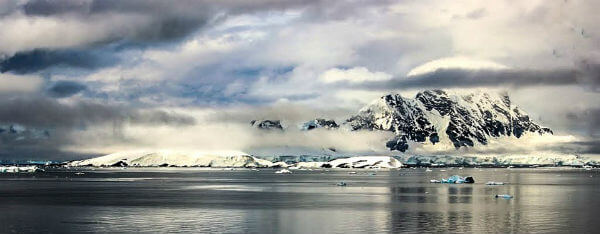
antarctica

Jeff Masters and Bob Henson write: On Saturday, NASA dropped a bombshell of a climate report. February 2016 has soared past all rivals as the warmest seasonally adjusted month in more than a century of global recordkeeping. NASA’s analysis showed that February ran 1.35°C (2.43°F) above the 1951-1980 global average for the month, as can be seen in the list of monthly anomalies going back to 1880. The previous record was set just last month, as January 2016 came in 1.14°C above the 1951-1980 average for the month. In other words, February has dispensed with this one-month-old record by a full 0.21°C (0.38°F)–an extraordinary margin to beat a monthly world temperature record by. Perhaps even more remarkable is that February 2015 crushed the previous February record–set in 1998 during the peak atmospheric influence of the 1997-98 “super” El Niño that’s comparable in strength to the current one–by a massive 0.47°C (0.85°F). [Continue reading…]

Facebooktwittermail

German election: Is this really a verdict on Merkel’s open door to refugees?

By Katharina Karcher, University of Cambridge

Three German federal states have elected new parliaments in regional votes that have seen major gains made by Alternative for Germany (AfD), a right-wing populist party that wants drastically to reduce immigration to Germany.
State parliaments in Baden-Wuerttemberg, Rhineland-Palatinate and Saxony-Anhalt have been reshuffled, although the AfD didn’t actually come first in any of the votes.

These elections were being framed as a verdict on Merkel’s “open-door” refugee policy. Critics of her pro-refugee stance have been eager to observe that it has isolated her in her own party, the Christian Democratic Union (CDU), and alienated many voters. Now, they say, the electorate has punished the whole party for Merkel’s single-handed attempt to help refugees.

At first glance, it seems they were right. The CDU has lost votes in all three federal states, and more than a few former CDU voters have switched to supporting the AfD.

The anti-Merkel, anti-establishment, anti-immigration rhetoric appealed particularly to voters in Saxony-Anhalt, where the AfD became the second-strongest party. It also secured good results in Baden-Wuerttemberg and Rhineland-Palatinate, winning more than 10% of the vote.

But to suggest that Merkel’s refugee policy sent voters “flocking to the populist party” is wrong, even dangerous.

Continue reading

Facebooktwittermail

German elections: AfD’s remarkable gains don’t tell the whole story

The Guardian reports: The results for German anti-refugee party Alternative für Deutschland in Sunday’s regional elections are remarkable: it won 15% of the vote in Baden-Württemberg, 12.5% in Rhineland-Palatinate and more than 24% in the east German state of Saxony-Anhalt – the strongest showing for a rightwing, populist party since the end of the second world war.

The last time these three states voted (in 2011), AfD didn’t even exist. Whatever way you look at the numbers, the AfD result is significant. However, the prevailing narrative in swaths of the press on Monday morning – that the results are a rejection of Angela Merkel’s refugee policy – is simplistic.

Here’s why. In Saxony-Anhalt, where the AfD did best, the vote for Merkel’s CDU held. The party dropped less than three points compared with 2011.

According to an exit poll for the state, a substantial majority of voters across all parties, except the AfD, prefers an open and tolerant society to a traditional one. The strongest source of AfD support, in the east German state and elsewhere, were previous non-voters (in all three states turnout was up by 10 points): [Continue reading…]

The Guardian reports: The German government will stick by its existing refugee policy, a spokesman has said, after the anti-immigrant Alternative für Deutschland made strong gains in regional elections on Sunday.

Asked if the results in three German states, where support for chancellor Angela Merkel’s conservatives dwindled, would lead to a change in policy, Steffen Seibert said: “The German government will continue to pursue its refugee policy with all its might both at home and abroad.” [Continue reading…]

Facebooktwittermail

Putin orders ‘main part’ of Russian army to start Syria pullout

Bloomberg reports: President Vladimir Putin ordered the “main part” of Russia’s military forces to begin withdrawing from Syria, saying it’s completed its primary objectives after an almost six-month campaign.

Russia, which has urged Syrian leader Bashar Al-Assad to be “constructive” during the latest round of peace talks, should begin the pullout on Tuesday, Putin said. A Russian air base and a naval facility will continue to function, he said in Moscow. Assad has been informed of the withdrawal, said Putin’s spokesman, Dmitry Peskov.

“The effective work of our military created the conditions for the beginning the peace process,” Putin said during talks with Foreign Minister Sergei Lavrov and Defense Minister Sergei Shoigu. “I hope today’s decision will be a good signal to all the conflicting sides. I hope this will significantly increase the level of confidence of all participants of the settlement process in Syria and will contribute to the solution of the Syrian issue through peaceful means.” [Continue reading…]

Facebooktwittermail

Obama blithely sells out his allies and millions of Syrians in legacy interview

By Scott Lucas, University of Birmingham

In the last months of his administration, US President Bill Clinton tried to resolve the Israel-Palestine dispute. The effort fell short, but it was the closest anyone came to resolving the conflict since the creation of the Israeli State in 1948.

In the last months of his administration, President Barack Obama is giving interviews to explain how everyone else is to blame for the five-year Syrian conflict – which has supplanted the Israeli-Palestinian issue as the region’s destabilising centre and shows no sign of receding.

Rather than evaluate what could be done to mitigate the damage, Obama has chided allies such as Britain, Germany, and France. He has implicitly lashed out at his former Secretary of State, Hillary Clinton, as she campaigns to succeed him. And he has shown little regard for the hundreds of thousands of Syrians who have been killed and the millions who have been displaced, and who will continue to die and flee in his final months in office.

Continue reading

Facebooktwittermail

How the Syrian revolt went so horribly, tragically wrong

Syria1

Liz Sly reports: From Egypt to Yemen, Libya to Bahrain, the brief flowering of freedom and hope that surged across the Middle East five years ago has failed more spectacularly than could have been imagined back when people chanting for freedom thronged the streets of towns and cities regionwide.

Syria marks the fifth anniversary of its first peaceful protest Tuesday in the shadow of a brutal war that has sucked in global powers and fueled the rise of radicals such as the Islamic State. Libya and Yemen are likewise locked in savage conflicts.

In other countries, such as Egypt, autocratic regimes have reasserted their control with a vengeance, clamping down on liberties even more fiercely than had been the case before the demonstrations were held.

In all of them, except Tunisia, the moderates who dominated the early days of the revolts have been silenced, imprisoned, hunted down or driven into exile, either by the governments that sought to repress them or the extremists who moved into the vacuum created when state authority collapsed.

Whether those early protesters were ever truly representative is in question, said Rami Nakhla, one of the most prominent leaders of the early Syrian protests, directing the Local Coordination Committees from exile in Beirut. He now lives in the southern Turkish city of Gaziantep near Syria’s border, a hub for many of the activists who have been forced to flee.

But he also wonders whether they ever stood a chance. “We are hostage to two choices: either the authoritarians or the extremist Islamists,” he said. “Should we accept this equation? That we endorse either dictatorship or Islamic extremism?”

It is a false choice, but it has served to sustain the twin tyrannies that proved the undoing of the Arab Spring, said Shadi Hamid of the Washington-based Brookings Institution. Since well before the revolts, the region’s dictators have raised the specter of Islamist extremism to scare ordinary citizens into submission and justify their harsh oppression to foreign powers. And extremists exploit the climate of fear to win recruits and justify their own brutal tactics.

“Authoritarian regimes and groups like ISIS both rely on violence and oppression to promote their political objectives,” he said, using another term for the Islamic State. “For regimes, it’s actually a successful strategy, at least in the case of Egypt and Syria. The Assad regime has been able to promote its own narrative very successfully, and many members of the international community say the armed opposition is primarily a radical opposition, that there are no moderate rebels.” [Continue reading…]

Facebooktwittermail

One-third of Syrian children were born during war, Unicef report finds

The New York Times reports: One-third of all Syrian children were born in the five years that conflict has convulsed their country, the United Nations said on Monday in a report that suggests a new lost generation.

More than 300,000 of these children, who total about 3.7 million, were born as refugees, according to the report by Unicef, the United Nations Children’s Fund. It said their lives had been “shaped by violence, fear and displacement.”

In all, Unicef estimated that 8.4 million Syrian children, or 80 percent of Syria’s 18-and-under population, are in urgent need of humanitarian aid, either in Syria or in neighboring countries. [Continue reading…]

Facebooktwittermail

161 chemical weapons attacks in Syria’s war, new report says

The Associated Press reports: As Syria marks five full years of civil war this month, a new report claims that chemical weapons have been used at least 161 times through the end of 2015 and caused 1,491 deaths. It says such attacks are increasing, with a high of at least 69 attacks last year, and 14,581 people have been injured in all.

The Syrian American Medical Society says its report released Monday is the most comprehensive listing of chemical weapons attacks in Syria so far. The U.S.-based nonprofit, which supports more than 1,700 workers at over 100 medical centers in Syria, says the list is based primarily on the reports of medical personnel who have treated victims, aided by NGOs and other local sources.

The organization is asking the 15-member U.N. Security Council and the international community to quickly identify perpetrators and hold them accountable through the International Criminal Court or other means. Much of the report’s documentation has been shared with the global chemical watchdog, the Organization for the Prohibition of Chemical Weapons.

Syria’s government has been repeatedly accused by the United States and other Western countries of using chemical weapons on its own people, even after the Security Council in 2013 ordered the elimination of its chemical weapons program following an attack on a Damascus suburb that killed hundreds of civilians.

The council last year also condemned the use of toxic chemicals like chlorine after growing reports of barrel bombs filled with chlorine gas being dropped on opposition-held areas. Chlorine is widely available and not officially considered a warfare agent, but its use as a weapon is illegal. The new report notes at least 60 deaths from chlorine attacks.

The report also says 77 percent of the chemical weapons attacks it documented occurred after the Security Council’s order in 2013, and 36 percent occurred after the council condemned the use of chlorine last year. [Continue reading…]

Facebooktwittermail

The war on the Syrian insurgency continues in plain sight

Faysal Itani and Hossam Abouzahr write: It has been two weeks since a US-Russia brokered cessation of hostilities in Syria came into effect. Many analysts including these authors were skeptical about its prospects, due to the agreement’s terms and the regime’s perceived interests. Skeptics expected the regime and its allies to exploit a clause allowing attacks on the al-Qaeda affiliate Nusra Front, using it as cover for continuing the air campaign on non-jihadist opposition groups. There is substantial evidence, however, that something rather different is happening. Even as overall violence is greatly reduced, regime forces are openly bombing and in some cases launching ground operations to capture key rebel territory, without making any pretense of attacking the Nusra Front. This behavior offers some insight into long-term regime plans, and highlights how little leverage outside powers including the United States will have in shaping the new status quo in Syria.

The Syria Campaign established the Syria Ceasefire Monitor to monitor military operations and report alleged violations during the cessation of hostilities. It compiles data from multiple local sources including the Syrian Civil Defense, the Syrian Network for Human Rights, and local coordination committees in opposition-held territory. The standard caveats about the reliability of reporting from the Syrian war zone apply. Nevertheless the Syrian Ceasefire Monitor seems to be the best open-source monitoring effort on ceasefire violations, covering geography, weapons used, casualties inflicted, and identifying violators and whether they had aimed to capture ground.

The Syria Ceasefire Monitor reports 111 violations as of March 9–almost all perpetrated by regime or Russian forces. Attacks mostly targeted insurgent territory in Homs, Hama, Idlib, Latakia, Aleppo, Damascus, and Deraa. Air strikes and ground operations in Idlib very likely targeted the Nusra Front, but the regime and Russia also attacked opposition territory in which the Nusra Front had little or no presence. The clearest examples were attacks on a large, encircled opposition pocket in southern Hama and northern Homs provinces. [Continue reading…]

Facebooktwittermail

Al-Qaida seizes weapons, bases from U.S.-backed Syrian rebels

The Associated Press reports: Al-Qaida militants swept through a rebel-held town in northern Syria in a display of dominance Sunday, arresting U.S.-backed fighters and looting weapons stores belonging to the Free Syrian Army.

The militants belonging to the al-Qaida-affiliated Nusra Front along with allied jihadists have been moving to exert their authority over rebel-held areas in Idlib province since a partial ceasefire to the country’s five-year conflict took effect two weeks ago, extinguishing patriotic demonstrations and sidelining nationalist militias.

The FSA’s 13th Division said on Twitter Sunday that Nusra fighters were going door to door in the town of Maarat Numan and arresting its cadres after Nusra, alongside fighters from the Jund al-Aqsa faction, seized Division 13 posts the night before. [Continue reading…]

Facebooktwittermail

Why Trump’s endorsements should scare your pants off

Matt Taibbi writes: Earlier this week, an African-American protester was sucker-punched by a 78-year-old man in a cowboy hat at a Trump rally in North Carolina. The video went viral, and reporters later tracked down John McGraw, the red-faced Trumpthusiast who’d thrown the punch. McGraw explained why he’d belted Rakeem Jones:

“Number one, we don’t know if he’s ISIS,” McGraw said.

One has to commend the Inside Edition reporter doing the interview for not bursting out laughing, or dropping to the ground in shock, at this moment. McGraw went on:

“The next time we see him, we might have to kill him,” he said. “We don’t know who he is. He might be with a terrorist organization.”

That same night, Trump told Anderson Cooper he wasn’t backing down from his plan to bar all Muslims from entering the country. “I think Islam hates us,” he said, adding, “It’s very hard to separate because you don’t know who is who. We have to be very vigilant.”

These episodes are like a child’s game of “telephone,” only played with bone-ignorant adults. The game starts when Trump personifies “Islam” under one label, apparently not realizing that this represents an awesomely diverse collection of people who collectively represent about a quarter of the world’s population. [Continue reading…]

Facebooktwittermail

The Bernie Sanders voters who would vote for Trump over Clinton

The Guardian reports: n this most bizarre of presidential election cycles, every day seems to bring another jaw-dropping development. Donald Trump on the size of his genitals, Ben Carson and the Egyptian pyramids, Bernie Sanders’ socialist revolution, Hillary Clinton and the cloth she used to wipe her private email server clean.

But it’s not just the candidates who have raised eyebrows in 2016.

The latest startling phenomenon is the voter who is feeling the Bern, but also has eyes for the Donald.

This week the Guardian sought out Sanders fans who are contemplating switching their allegiance to Trump if Hillary Clinton secures the Democratic nomination.

Almost 700 people replied to the call-out, and some 500 of them said they were thinking the unthinkable: a Sanders-Trump switch.

They explained their unconventional position by expressing a variety of passionately held views on their shared commitment for protecting workers and against new wars, on their zeal for an alternative to the establishment, and on their desire to support anyone but Hillary Clinton.

As one respondent, a 34-year-old male IT technician, put it: “Bernie and Trump agree a lot on healthcare, Iraq war, campaign finance and trade. I really want to move on to something new, new ideas from outside the box. Maybe Donald Trump can provide that.”

The Guardian call-out was not a poll, but controlled surveys by polling companies have identified this small but not insignificant slice of the Sanders crowd who would consider backing Trump.

In an NBC News/Wall Street Journal survey conducted by Hart Research Associates this month, 7% of Sanders voters said they could see themselves supporting Trump. Some 66% said the same for Clinton. [Continue reading…]

Facebooktwittermail

To many in the Middle East, Trump looks like their own rulers: heavy-handed, vain, and rich

trump

Joyce Karam writes: When Donald Trump announced his candidacy on June 16, 2015, my editors at the London-based pan-Arab newspaper Al-Hayat, like most Americans, shrugged it off. “This is not serious; send something very small to page eight,” I was told.

Nine months later, Trump’s rise is the story in the Middle East when it comes to the American presidential race. My work as a journalist for Al-Hayat sends me traveling frequently in the region, and when people hear I cover US politics, their first instinct has often been to ask me about Donald Trump: “Is Trump for real?” “Why is he winning?” “Is he going to be president?” and “What will happen to us if he does?”

As Trump attracts more support in America, he gets more attention in the Middle East. And there are a few reactions to Trump that I hear over and over. Almost all are negative, some are as much about the US as they are about Trump himself, and all are a revealing look at how the Middle East perceives and thinks about American politics.

Some see in Trump a reflection of their own political figures, from dictators to buffoonish and controversial entertainers. Some take him more seriously and see him, should he become president, as a nightmare for the Middle East. [Continue reading…]

Facebooktwittermail